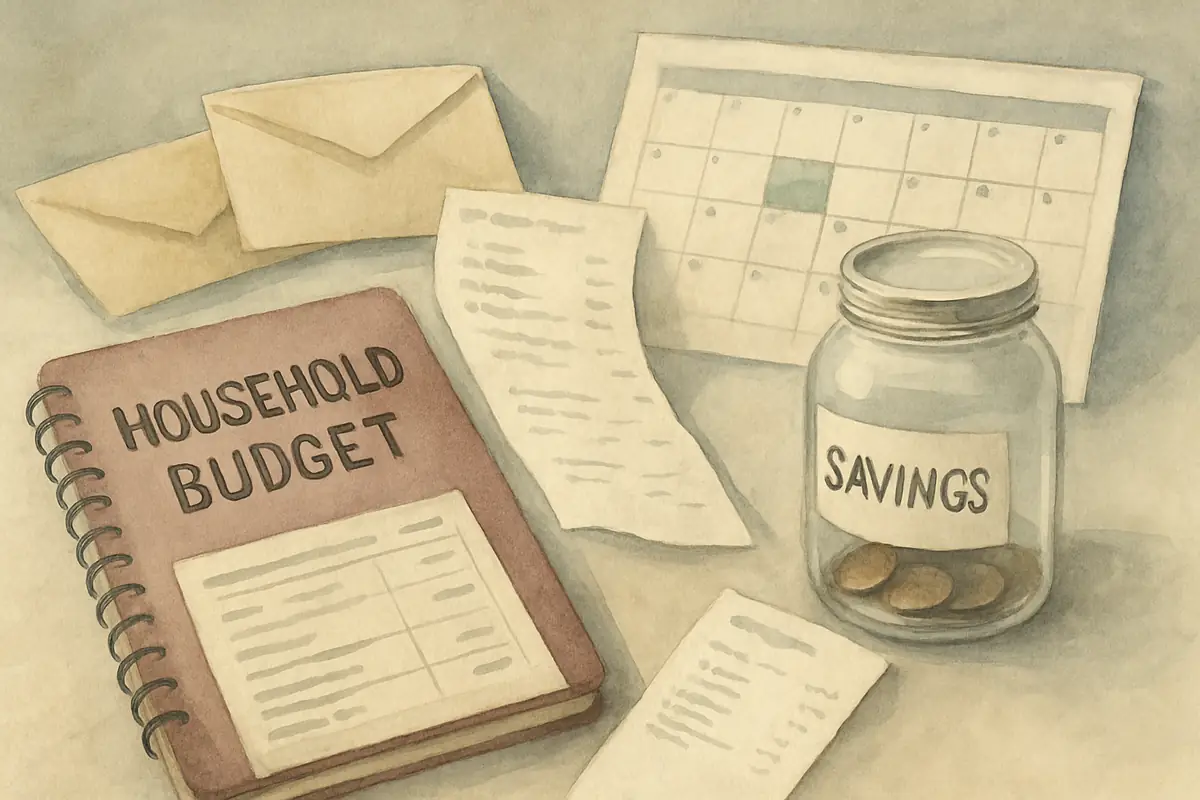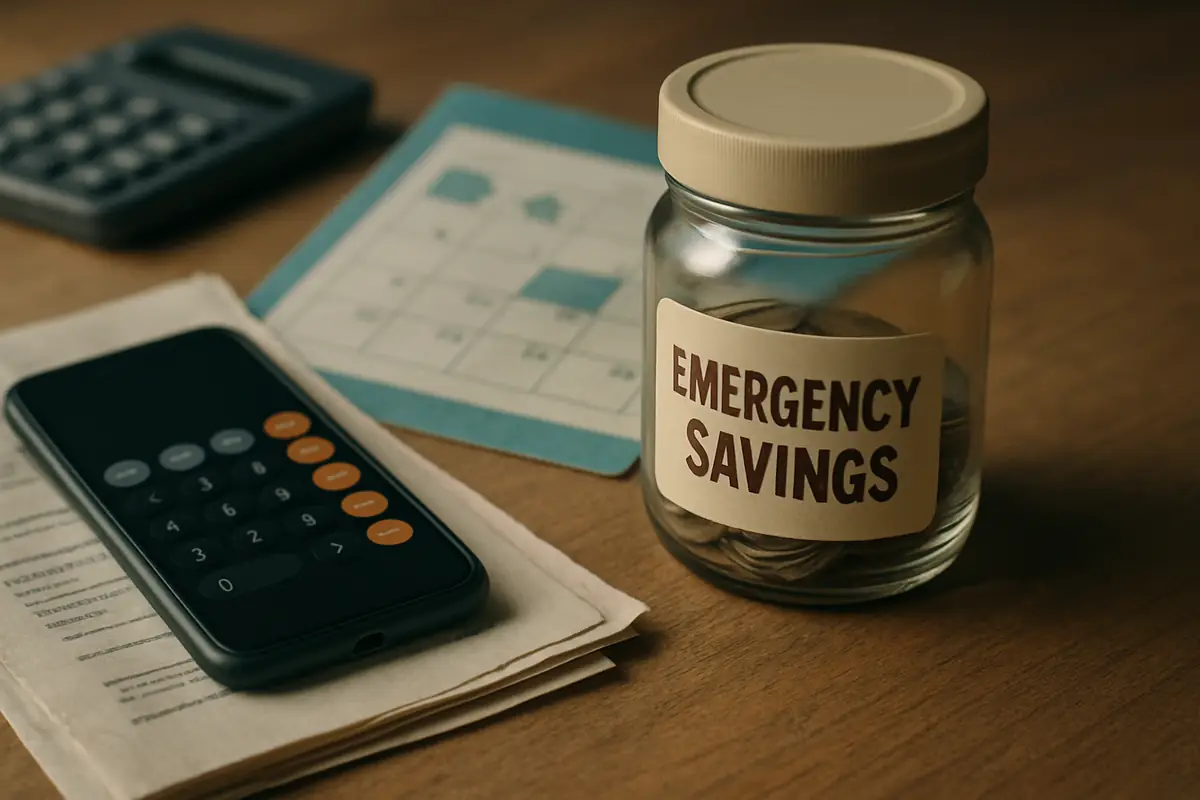
Imagine Sarah and Mike, a couple juggling monthly bills, an irregular income, and the desire to save for their children's education. They face a typical dilemma: how much money should they keep within easy reach for emergencies without sacrificing their long-term goals? This article walks through the balancing act of maintaining short-term liquidity while steadily building long-term savings, using relatable household examples and clear financial principles.
Why is balancing immediate cash needs with future savings so challenging?
Many households find themselves stretched between covering urgent expenses and saving for distant goals. Short-term liquidity means having enough cash available to pay unexpected bills or cover income gaps—commonly referred to as emergency savings. Long-term savings, on the other hand, often grow in less liquid accounts aimed at retirement or education funds. The challenge is that funds kept for emergencies typically earn very low interest, sometimes below inflation rates, meaning their value can erode over time. Conversely, money tied up in long-term accounts may not be accessible without penalties or delays, leaving families vulnerable if a sudden expense arises.
Households with irregular income streams, such as freelancers or seasonal workers, feel this tension intensely. Their cash flow varies month to month, making it harder to predict how much liquidity to keep versus how much they can safely invest for future needs. For example, an occasional bonus or freelance payment might tempt them to allocate more toward savings when times are good but leave them exposed during leaner months.
What financial concepts help explain this trade-off?
Understanding some key terms clarifies how to approach this balance. Liquidity refers to how quickly an asset can be converted into cash without significant loss of value. Cash itself is the most liquid asset. Emergency funds ideally sit in liquid accounts such as checking or savings accounts insured by agencies that protect deposits up to $250,000 per account holder per bank, ensuring safety in case of bank failure.
Annual Percentage Rate (APR) is the yearly cost of borrowing money. While it applies mostly to debt management, knowing typical APRs—often between 18% and 30% on credit cards—helps households decide when holding liquid reserves might be cheaper than borrowing during emergencies. Inflation reduces purchasing power over time; if your emergency fund earns only 0.5% annual interest but inflation averages 2%, your real savings decrease each year.
Budgeting frameworks encourage allocating income between fixed expenses (like rent), variable costs (such as groceries), debt payments, emergency savings, and long-term contributions. Behavioral factors also influence choices—stress around liquidity shortages can prompt impulsive spending or high-cost borrowing.
How can a typical household set up an emergency fund without derailing long-term savings?
A common guideline is to maintain three to six months’ worth of essential living expenses in an emergency fund. For instance, if Sarah and Mike’s average monthly expenses—including rent, utilities, groceries, insurance premiums, and minimum debt payments—total $3,500, their target emergency fund would range from $10,500 to $21,000. Achieving this level may take time; they might start aiming for $1,000 first and build gradually.
Where should this money live? Liquidity and safety matter most here. High-yield savings accounts are preferred because they allow quick access while offering interest rates typically between 0.5% and 1% annually—better than traditional checking accounts but still modest compared to investments aimed at growth.
Consider this worked example: Sarah deposits $300 monthly into a high-yield savings account paying 0.75% annual interest compounded monthly. After two years of consistent contributions plus accrued interest, her balance will be roughly $7,360—a calculation derived from summing each month's principal plus interest earned on the previous balance.
(Step-by-step calculation: Monthly rate = 0.75%/12 ≈ 0.0625%; After n months balance = P × [(1 + r)^n - 1] / r where P = $300 monthly deposit; r = monthly interest rate; n = 24 months.) This practical approach underscores that steady habits build resilience without requiring a large lump sum upfront.
What compromises arise when prioritizing liquidity over long-term growth?
"Parking" too much money in low-yield liquid accounts limits potential gains from higher-return investments like retirement accounts or diversified stock funds where average returns historically range between 6% and 8% annually over decades. However, these assets come with volatility risk and may require holding periods before withdrawal without penalties.
"Over-liquid" portfolios may lose purchasing power due to inflation—a hidden cost that often goes unnoticed by households focusing solely on available balances rather than real value growth. Conversely, placing all surplus funds into investments jeopardizes access during emergencies and may force selling assets at unfavorable times.
Benefits of Maintaining Adequate Short-Term Liquidity
- "Immediate access to funds reduces stress during unforeseen events."
- "Avoidance of high-interest borrowing which can exceed 20-30% APR."
- "Peace of mind knowing bills can be covered despite income fluctuations."
Drawbacks of Excessive Liquidity Focus
- "Lower returns compared to investing in retirement or education funds."
- "Erosion of purchasing power due to inflation outpacing account interest."
- "Possible delay in reaching important long-term financial milestones."
How do household income stability and expense timing affect liquidity needs?
"Stable" households with regular salaries may safely maintain emergency funds closer to the lower end of recommended ranges because predictable paychecks enable better short-term planning. Irregular earners need larger buffers—potentially six months or more of expenses—to cover periods without income.
"Expense timing" also complicates matters—for example, a quarterly insurance premium payment or annual property tax bill requires either earmarked funds or confidence in upcoming income flows. Households like Sarah’s often use budgeting envelopes or digital accounts segregated by purpose to avoid accidentally spending money needed later.
"Can routine budgeting reduce pressure on savings allocation?"
"Regular budgeting helps households identify discretionary spending areas where adjustments free up funds for both liquidity and growth goals." For example, Sarah tracked grocery spending monthly and realized she could save around $150 by meal planning instead of impulse buys or eating out frequently.
"Cash flow monitoring tools categorize transactions allowing comparisons against budgets in real time. While no budget perfectly matches every week’s actuals due to unexpected events like car repairs costing several hundred dollars occasionally," accepting slight variances prevents frustration while highlighting areas needing attention."
What real-life trade-offs do families face when adjusting liquidity versus long-term saving priorities?
Consider the Ramirez family managing two young children’s activities while repaying a $15,000 car loan at approximately 7% interest rate annually over five years. Their monthly budget includes $600 for loan payments alongside typical expenses.
They want to increase contributions toward a college fund but struggle without cutting into their emergency cushion which currently covers four months’ essentials ($14,000). Reducing liquidity risks forcing them onto credit cards if another unexpected cost arises—credit card interest rates commonly run between 18% and 25%, making debt expensive quickly.
Where readers should be careful
Avoid depleting your emergency fund completely even for tempting long-term investments; losing access during a crisis leads often to costly borrowing cycles that compound financial stress.
| Factor | Description | Typical Range |
|---|---|---|
| Emergency Fund Size | Months of essential expense coverage | 3–6 months |
| Credit Card APR | Annual Percentage Rate on unpaid balances | 18%–30% |
| High-Yield Savings Interest Rate | Annual yield on liquid savings accounts | 0.5%–1% |
| Long-Term Investment Returns | Average annual growth after inflation | 6%–8% |
| Inflation Rate | Annual increase in consumer prices | 1.5%–3% |
Questions You Can Use To Reassess Your Own Financial Balance
Reflecting on your current situation helps refine your approach: How many months’ worth of expenses do you have set aside? Is your household income consistent enough to consider lowering emergency reserves safely? Could you automate small transfers toward long-term goals without risking day-to-day stability? Are you aware of the real costs of borrowing versus keeping money liquid? Understanding these factors allows tailoring financial decisions instead of following rigid rules detached from personal context.
Understanding the Impact of Economic Cycles on Liquidity and Savings
Economic cycles significantly influence personal financial strategies, especially with regard to balancing short-term liquidity and long-term savings. During periods of economic downturn or recession, access to credit may tighten, and income stability can diminish. In these times, maintaining higher liquidity is essential to cover unexpected expenses or temporary income loss. Conversely, during economic expansions, individuals often experience increased income and employment opportunities, which can facilitate more aggressive contributions to long-term savings and investment accounts. Recognizing where we are in the economic cycle can help tailor our approach — for example, prioritizing building a more substantial emergency fund during uncertain times or reallocating excess liquid assets into growth-oriented instruments during stable periods.
Additionally, inflation plays a critical role in managing liquidity and savings. High inflation erodes the purchasing power of cash reserves held for liquidity. While it is important to keep enough readily accessible funds, holding too much cash during inflationary periods can result in a net loss in real value. This reality encourages individuals to consider inflation-protected assets or short-term investments that offer some growth potential while maintaining relatively low risk and liquidity. Balancing these considerations requires ongoing assessment of both personal needs and broader economic indicators.
Incorporating Behavioral Finance Principles into Fund Allocation
Behavioral finance sheds light on how psychological factors affect decisions around liquidity and savings. For many people, the fear of losing access to money or underestimating future expenses leads to an overemphasis on liquid assets at the expense of long-term wealth accumulation. Conversely, some individuals may exhibit optimism bias and underprepare for emergencies by allocating too little to liquid savings. Understanding common cognitive biases such as loss aversion, present bias, and mental accounting can empower people to structure their finances more effectively. For example, actively separating accounts designated for emergencies from those earmarked for retirement can reduce impulsive spending and improve discipline.
Practical applications include automating transfers to different accounts based on purpose and timeline or using budgeting apps that provide visual cues about liquidity status versus long-term goals. These behavioral insights encourage deliberate allocation rather than reactive decision-making during emotional moments like market volatility or sudden personal expenses.
Leveraging Technology to Optimize Personal Financial Management
Modern financial technology offers numerous tools that facilitate maintaining an optimal balance between short-term liquidity and long-term saving goals. Budgeting platforms can track real-time spending patterns alongside upcoming bills and income schedules, helping users avoid overdrafts or liquidity shortages before they occur. Robo-advisors often include features that automatically adjust asset allocations based on changing market conditions or life events, ensuring long-term investments remain aligned with evolving risk tolerance.
Moreover, mobile banking apps now enable instant transfers between checking accounts meant for daily expenses and high-yield savings accounts designed for emergency funds or goal-based saving. Notifications reminding users when their liquid reserves fall below a pre-set threshold prompt timely replenishment without requiring constant manual oversight. Embracing these technologies reduces friction in managing multiple financial buckets and enhances overall discipline through automation.
Case Study: Balancing Liquidity During a Career Transition
"Jennifer," a mid-career professional, faced a voluntary job transition that involved a few months without steady income but promised longer-term career growth. She approached this period by increasing her liquid reserves well in advance—building up six months’ worth of essential expenses in an easily accessible account. To maintain her long-term savings momentum despite reduced contributions during unemployment, Jennifer automated smaller monthly deposits into her retirement account through catch-up contributions once she secured new employment.
"Jennifer’s" case exemplifies how proactively adjusting liquidity buffers provides peace of mind amid uncertainty while preserving long-term financial health through consistent albeit modified saving habits. By carefully forecasting upcoming needs associated with her career move—such as relocation costs—and setting up separate dedicated funds she avoided dipping into retirement savings prematurely or accumulating high-interest debt.
Strategies for Different Life Stages: Young Adults vs. Retirees
The balance between liquidity and savings naturally shifts across life stages as financial priorities evolve. Young adults typically benefit from maintaining moderate liquid reserves combined with aggressive growth-oriented investments given their longer time horizons to recover from market fluctuations. They might prioritize building an emergency fund equivalent to three to six months of living expenses while maximizing contributions to employer-sponsored retirement plans or tax-advantaged accounts.
In contrast, retirees often emphasize preserving capital with higher liquidity levels because they rely more heavily on withdrawals for day-to-day living costs without regular earned income replenishing accounts. Their portfolio adjustments generally include lower-risk fixed-income instruments or annuities that provide steady income streams alongside sufficient cash reserves for unexpected medical bills or home repairs.
The Role of Insurance in Enhancing Financial Flexibility
"Insurance policies play a pivotal role in reducing the need for excessively large liquidity buffers by shifting certain risks away from personal funds." Health insurance mitigates catastrophic medical expenses that could otherwise quickly deplete liquid savings; disability insurance protects against lost income due to illness; property insurance covers major repairs resulting from unforeseen events like fire or flood.
"By strategically utilizing insurance products appropriate to personal circumstances," individuals free up funds that might otherwise be locked away as emergency cash reserves and redirect them toward longer-term wealth-building vehicles such as stocks or bonds." This approach complements an integrated financial management plan where protection mechanisms reduce vulnerability while enabling more efficient capital deployment.