When Jamie signed up for a $15,000 personal loan to renovate a kitchen, she focused on the advertised 8% interest rate and manageable monthly payments. Months later, unexpected fees and rigid repayment terms started inflating her costs and straining her budget. This article uncovers the less visible but critical loan contract elements every borrower should evaluate before committing.
Scenario: The Hidden Dimensions of Loan Costs in Household Borrowing
Consider Mark and Sarah, a couple borrowing $250,000 through a 30-year mortgage with a fixed 4% interest rate advertised as affordable. While their bank showed monthly payments near $1,200, they overlooked closing costs that added $6,000 upfront and an appraisal fee of $500. These fees increase the effective cost of borrowing beyond just monthly installments. Additionally, Mark and Sarah’s loan required private mortgage insurance (PMI) for the first five years because their down payment was under 20%, adding about $150 monthly. Such fees can cumulatively add thousands over the loan life if not anticipated.
Loan contracts often bundle fees such as origination charges (typically ranging from 0.5% to 1.5% of the loan amount), prepayment penalties, late payment charges, and insurance requirements that borrowers may fail to factor into their budget calculations. These aspects influence not just the total repayment but also financial flexibility.
Understanding APR Versus Advertised Interest Rates
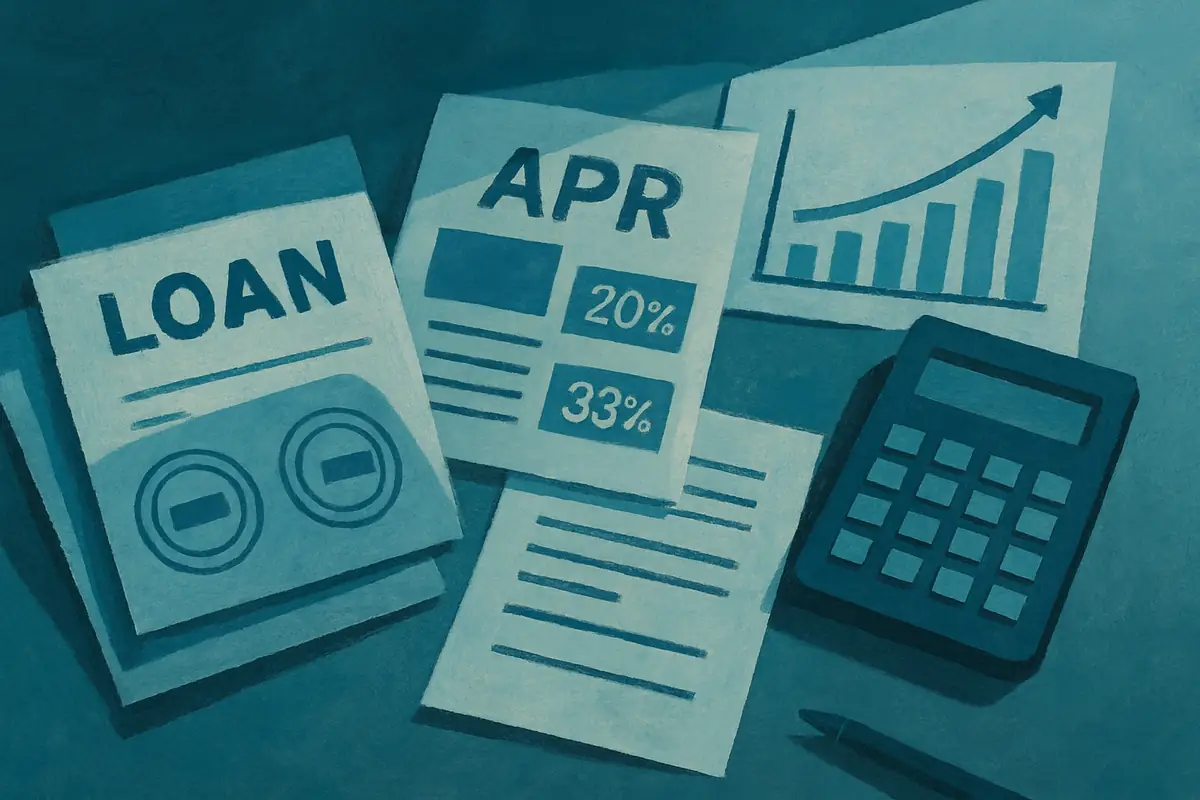
APR stands for Annual Percentage Rate; it reflects the total yearly cost of borrowing, including interest plus most fees expressed as a percentage. When Jamie saw an interest rate of 8%, the APR was actually closer to 9.2% after including origination fees and closing costs she paid upfront. Many lenders highlight the nominal interest rate because it seems lower, but APR offers a more accurate comparison across different loans with varying fee structures.
For example, borrowing $3,000 on a personal loan with a fixed interest rate of 10% over two years results in roughly $330 in pure interest if payments are evenly spread out (amortized). However, adding a 5% origination fee of $150 to upfront costs increases effective expenses. Calculating APR captures this: if the total finance charge is about $480 including fees over two years on $3,000 principal, the APR rises accordingly to nearly 12%. This higher rate better reflects true cost.
Where Emphasizing APR Helps Borrowers
- Provides comprehensive measure combining interest and fees.
- Enables side-by-side comparison between different loan offers.
- Accounts for one-time fees embedded in borrowing cost.
Where APR Can Be Misleading or Limited
- May exclude some irregular or contingent fees like late payment penalties.
- Calculation assumes full loan use for entire term without early payoff.
- Can mask varying effects of variable-rate loans if APR is fixed initially.
The Impact of Term Length and Repayment Schedules
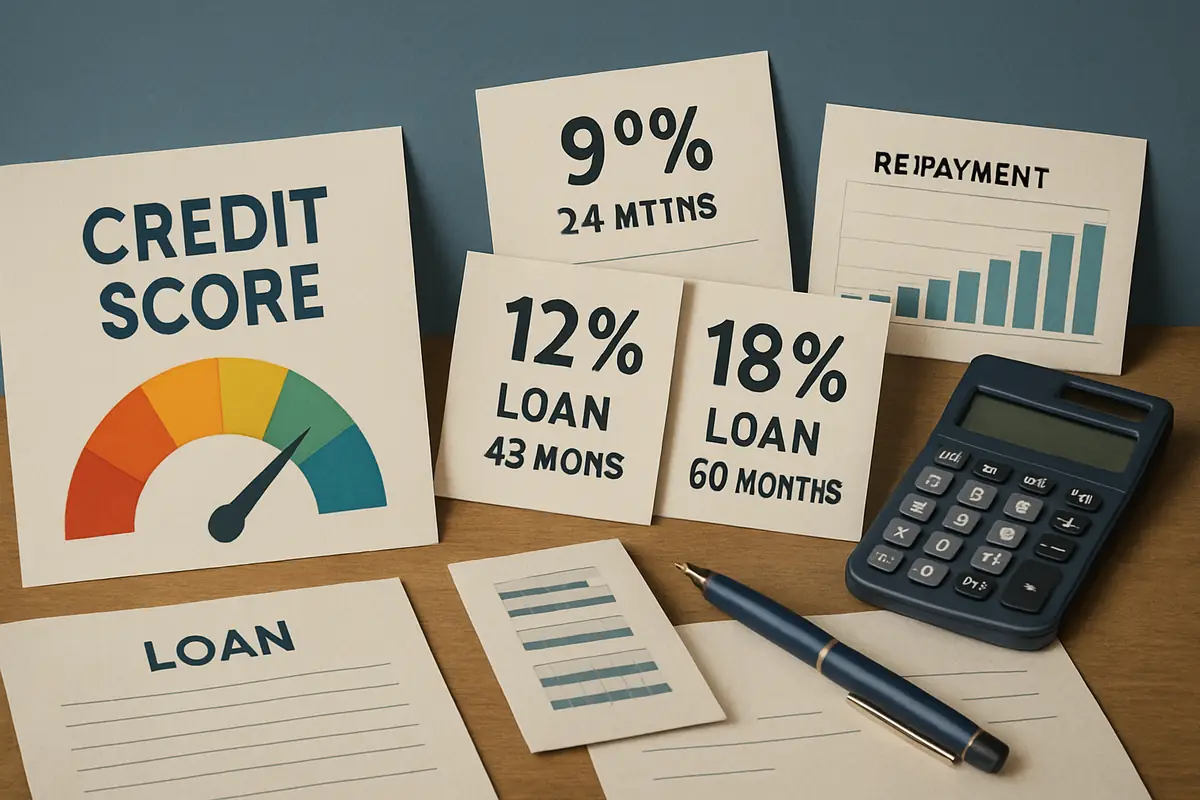
"Longer terms mean smaller monthly payments," is conventional wisdom that often hides increased total interest paid. Jessica took out a $20,000 auto loan at 7% APR either on a 36-month or 60-month term option. The monthly payment dropped from around $615 for three years to about $395 stretched over five years—but total interest nearly doubled from approximately $1,150 to over $2,700 due to prolonged financing.
"Amortization" refers to how each payment divides between principal repayment and interest expense over time. Early payments mostly cover interest; principal reduces slowly at first unless accelerated by larger payments or refinancing. Borrowers should examine amortization tables when available to understand how quickly equity builds or debt shrinks.
| Term Length | Monthly Payment | Total Interest Paid |
|---|---|---|
| 36 months | $615 | $1,150 |
| 60 months | $395 | $2,700 |
Where readers should be careful
"Choosing lower monthly payments can lock borrowers into paying substantially more in total interest over time—and increase exposure to changing financial conditions during longer repayment horizons."
Variable Versus Fixed Rates: The Risk of Future Payment Uncertainty
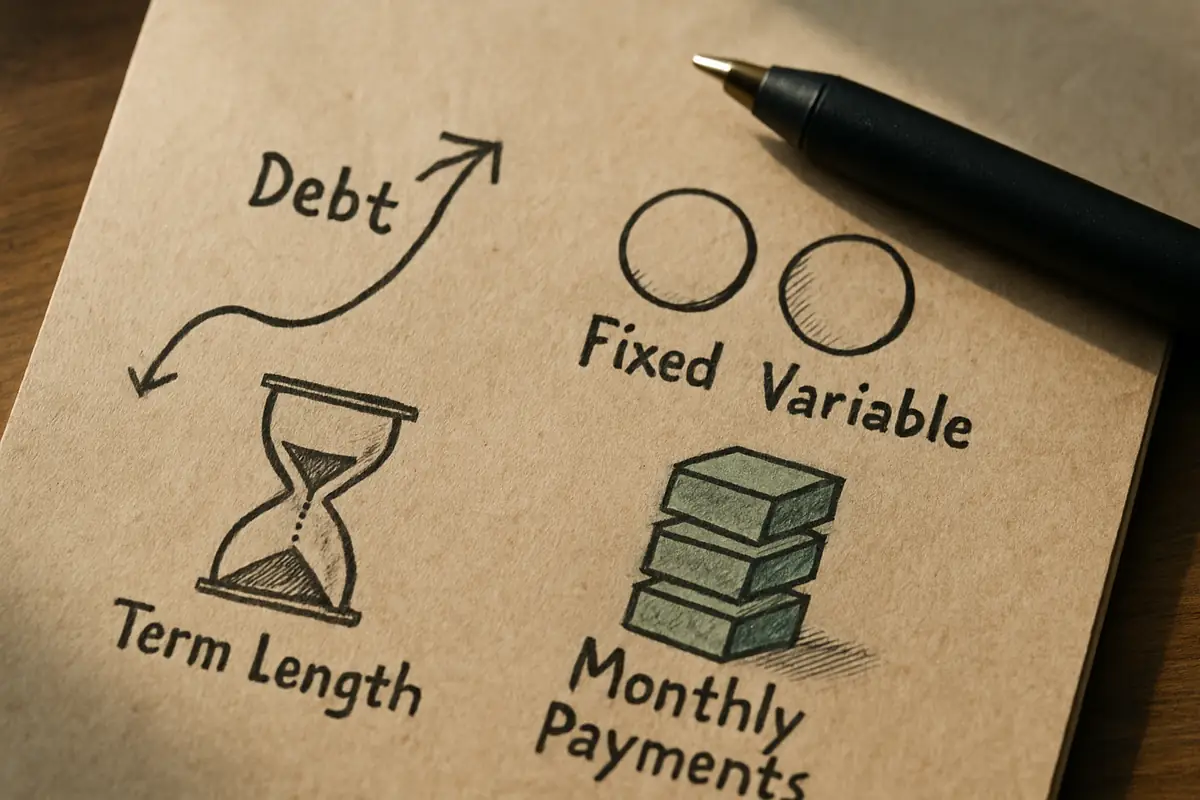
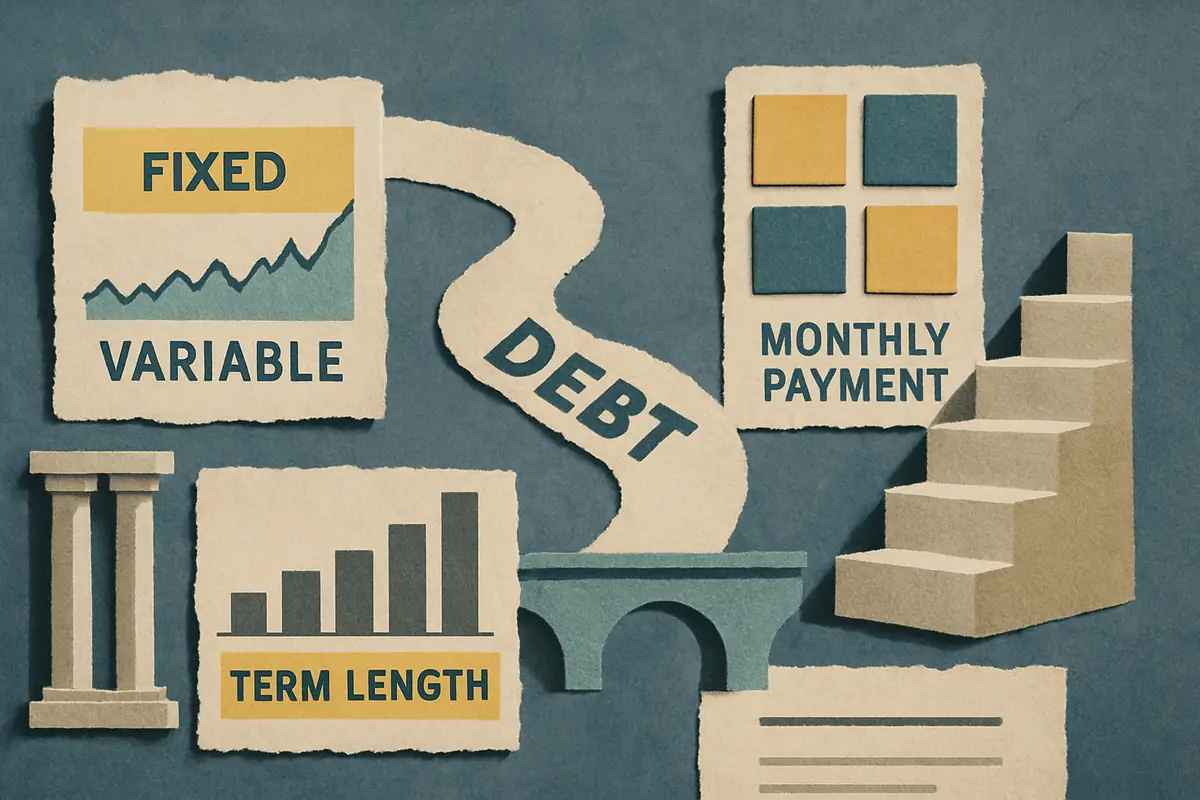
"Fixed-rate loans maintain consistent interest rates and payments throughout the term," explains the Consumer Financial Protection Bureau guidance. In contrast, "variable-rate loans have rates that can fluctuate based on benchmarks like prime or LIBOR plus a margin." Variable rates commonly start lower than fixed ones—sometimes by 1–2 percentage points—but they introduce uncertainty as market rates change.
"Maria accepted a variable-rate student loan at an initial APR of 4%, linked to an index currently at 3%. If that index rises by one percentage point in two years due to economic changes, her new APR adjusts upward to approximately 5%, raising monthly payments proportionally." Without preparing for these shifts, borrowers risk repayment pressures if income does not keep pace.
"Collateral Requirements and Legal Liability Risks"
"Secured loans require collateral—assets pledged against default such as homes or vehicles." For instance, home mortgages use property as collateral; auto loans typically secure against the vehicle itself. These protections reduce lender risk but elevate borrower stakes: failure to repay can lead to asset repossession or foreclosure.
"Unsecured loans do not demand collateral but usually come with higher interest rates reflecting increased lender risk." Borrowers with limited assets may prefer unsecured products despite costlier financing but must recognize stricter terms on defaults including collection actions or lawsuits.
Understanding Prepayment Penalties and Their Impact
One crucial aspect often overlooked in loan contracts is the presence of prepayment penalties. These fees are charged by lenders when borrowers pay off their loans early, either partially or in full. While repaying debt ahead of schedule sounds financially advantageous, prepayment penalties can negate potential savings by imposing hefty charges. For example, a borrower who refinances their mortgage to secure a lower interest rate might find the upfront penalty fees eating into the expected benefits. It's vital to scrutinize this clause, as some loans impose penalties for only a specific initial period, while others charge throughout the loan term. Understanding whether your loan includes such fees helps you plan refinancing strategies or early repayments more effectively, ensuring that your financial decisions truly lead to cost reductions rather than unexpected expenses.
Moreover, prepayment penalties vary widely among different types of loans and lenders. Some loans feature percentage-based fees calculated on the remaining principal, while others have fixed sums regardless of outstanding balances. This variation means that identical loan amounts can result in dramatically different penalty costs if paid off early. Additionally, certain government-backed loans might prohibit prepayment penalties altogether, offering borrowers greater flexibility. When evaluating a loan offer, asking about these penalties and how they are computed is essential. Borrowers should request explicit examples illustrating potential penalty scenarios based on anticipated repayment timelines to fully grasp long-term financial impacts.
Evaluating Loan Covenants and Borrower Obligations
Loan covenants represent conditions embedded within the contract that borrowers must adhere to throughout the loan's duration. These obligations often include maintaining minimum financial ratios or refraining from taking on additional debts without lender consent. Violating covenants can trigger default clauses even if payments are current, leading to accelerated repayment demands or increased interest rates. For individual borrowers, covenants might involve stipulations like maintaining insurance coverage or using loan proceeds exclusively for specified purposes. A thorough evaluation of these conditions is critical because they limit borrower flexibility and may impose administrative burdens such as regular reporting requirements or audits.
For example, a small business owner obtaining a working capital loan might encounter covenants mandating maintenance of specific liquidity ratios or restrictions on asset sales without prior approval. Such terms can constrain operational decisions and require proactive financial management to avoid inadvertent breaches. Borrowers should carefully assess whether they can realistically comply with these obligations over time without jeopardizing business growth or personal financial health. Consulting legal or financial advisors to interpret complex covenant language can provide clarity and help negotiate more favorable terms where possible.
Hidden Fees and Charges That Affect Loan Affordability
Beyond interest rates and monthly payments, many loans include additional fees that significantly impact overall affordability but may not be immediately visible during initial comparisons. Origination fees, processing charges, document preparation costs, and late payment penalties cumulatively add to borrowing expenses. For instance, an origination fee of 1-3% on a sizable loan increases upfront costs substantially but is sometimes glossed over in marketing materials focused primarily on low interest rates.
Late payment fees deserve special attention as they can escalate quickly if financial difficulties arise unexpectedly. Some lenders also impose administrative fees for payment method changes or statement copies. Evaluating these ancillary costs requires carefully reading the fine print sections of loan agreements and asking lenders for comprehensive fee schedules before commitment. Comparing total cost including all applicable charges gives a more accurate picture of which loan truly offers value rather than selecting based solely on headline interest figures.
Loan Flexibility: Options for Modifications and Hardship Accommodations
Another important consideration in evaluating loan contracts is understanding how flexible the lender is regarding modifications if your financial situation changes adversely. Life events such as job loss, medical emergencies, or other unexpected expenses can affect your ability to meet original payment terms. Loans that include provisions allowing temporary payment reductions, deferments, or restructuring without severe penalties provide valuable breathing room during tough periods.
Some lenders offer formal hardship programs with clear eligibility criteria and procedures for applying adjustments. Others might handle requests on a case-by-case basis but lack transparency about outcome probabilities or timelines involved. Investigate whether these options exist before signing contracts because being locked into rigid terms without remedies could lead to default or damage your credit score unnecessarily during temporary setbacks.
Term Length Variability and Its Long-Term Consequences
While monthly payments are often highlighted when choosing loans, paying close attention to the length of repayment terms is equally important as it directly influences total interest paid over time and overall debt burden durations. Shorter terms usually mean higher monthly payments but less total interest expense; conversely longer terms reduce monthly cash flow requirements but increase cumulative costs substantially.
Certain contracts allow term adjustments post-closing under specified conditions—such as refinancing options or extensions—but these changes might come with new fees or altered rates affecting affordability and payoff timelines negatively if used imprudently. Evaluating your capacity for consistent payments considering income stability helps decide appropriate term lengths aligning with your long-term financial goals instead of focusing solely on initial affordability metrics.
Collateral Requirements and Risks Involved
Secured loans require collateral—assets pledged against the borrowed amount—which lenders may seize upon default to recover losses. Understanding what assets are acceptable as collateral (e.g., real estate, vehicles, savings accounts) and their valuation methods is essential before entering into agreements containing such provisions.
Collateralized loans tend to have lower interest rates due to reduced lender risk but expose borrowers to significant losses beyond just monetary repayment obligations if they cannot maintain regular payments. It’s crucial to assess personal comfort with risking particular assets as well as their liquidity since repossession processes can be lengthy and disruptive financially and emotionally.
Where readers should be careful
Warning: Committing key personal assets as collateral without fully understanding repercussions may lead to losing homes or essential property during unforeseen financial hardships—evaluate carefully!
FAQs About Evaluating Loan Contract Terms
Understanding Prepayment Penalties and Their Impact
While many borrowers focus on interest rates and monthly payments, prepayment penalties are an important but often overlooked aspect of loan contracts. These penalties are fees charged by lenders if a borrower pays off their loan earlier than the agreed term, which might happen if you refinance or sell your property. Although they vary widely in amount and duration, prepayment penalties can add unexpected costs that counteract the benefits of early repayment. For instance, a penalty might be a percentage of the outstanding balance or a fixed fee for a certain number of months after loan origination. Understanding whether your loan includes this clause and how it is structured can influence your flexibility to manage debt efficiently.
Consider the scenario where a borrower secures a mortgage at a competitive rate but later finds an opportunity to refinance at an even lower rate. If the original loan carries a hefty prepayment penalty, the potential savings from refinancing might be negligible or even negative. This risk underscores the importance of reviewing loan contracts carefully for such clauses before committing. It also highlights why some lenders may mask these penalties within fine print or provide unclear explanations during the application process. Borrowers should proactively ask for explicit details about prepayment terms to avoid costly surprises later.
Late Payment Fees and Grace Periods: More Than Just Minor Inconveniences
Late payment fees and grace periods can significantly affect your financial planning and credit standing but are frequently underestimated in loan contract assessments. Grace periods refer to short spans after the payment due date during which no late fee is charged, allowing some flexibility for delayed payments. However, once this period expires, late fees—often ranging from a fixed amount to a percentage of the missed payment—are applied immediately. Beyond direct financial penalties, late payments can trigger negative marks on your credit report, increasing future borrowing costs.
For example, imagine a borrower who encounters temporary cash flow issues and assumes paying just a few days late is harmless because they’re mindful of their finances overall. Without recognizing the exact length of the grace period or fee structure, they may incur unnecessary charges that further strain their budget. Some loans impose escalating fees or multiple penalties on repeated late payments, compounding the problem quickly. Therefore, clearly understanding these terms helps borrowers prioritize timely payments and possibly negotiate better conditions upfront with lenders.
Evaluating Collateral Requirements and Risks in Secured Loans
Collateral forms the backbone of secured loans by providing lenders assurance against default risks, but it introduces unique considerations for borrowers. Loan contracts specify what assets are pledged as collateral—commonly real estate, vehicles, or other valuables—and outline lender rights if repayments aren’t met. Understanding these provisions is critical because failure to meet loan obligations could lead to loss of essential property with significant personal or business impacts.
Take the case of an entrepreneur who uses business equipment as collateral for a working capital loan. While this arrangement might offer favorable rates compared to unsecured options, it also places high-value business assets at risk. Should cash flow worsen unexpectedly, repossession could halt operations entirely. Additionally, some contracts include clauses allowing lenders to accelerate repayment demands upon default or even sell collateral without prior notice in certain jurisdictions. Borrowers must assess whether such risks align with their tolerance levels and long-term plans before agreeing to secured loans.
Hidden Costs: Origination Fees and Administrative Charges
Beyond interest rates and monthly payments lie less visible charges such as origination fees and administrative costs baked into many loan agreements. Origination fees are typically assessed upfront as a percentage of the total loan amount to cover processing expenses incurred by the lender during underwriting and approval phases. These fees can range from 0.5% to upwards of 3%, adding hundreds or thousands of dollars to borrowing costs depending on loan size.
Administrative charges may include document preparation fees, credit report costs, or maintenance fees throughout the life of the loan. Though individually small compared to principal and interest amounts, these can cumulatively increase total repayment substantially if not accounted for when comparing different loan offers. From a practical standpoint, borrowers should request an itemized breakdown of all fees prior to signing contracts to evaluate true affordability accurately and avoid being caught off guard by unexpected expenses.
Loan Covenants: Restrictions That Can Affect Your Financial Freedom
Loan covenants are contractual clauses requiring borrowers to meet specific conditions or refrain from certain actions while the loan is outstanding. These are common in commercial lending but also appear in personal loans under various forms. Covenants might include maintaining particular financial ratios, restrictions on additional borrowing, or requirements for insurance coverage on collateralized assets.
"For example, a business owner obtaining a term loan might face covenants mandating that debt-to-income ratios stay below predefined thresholds throughout repayment." Violating such terms may result in penalty fees, increased interest rates, or acceleration clauses demanding immediate full repayment. Understanding these restrictions helps borrowers anticipate operational limitations imposed by lenders and plan accordingly to avoid inadvertent breaches that could jeopardize their financial stability.
References
- https://www.federalreserve.gov/releases/h15/
- https://www.consumerfinance.gov/ask-cfpb/what-is-apr-en-45/
- https://www.consumerfinance.gov/consumer-tools/
- https://www.consumerfinance.gov/ask-cfpb/what-is-the-difference-between-a-fixed-rate-and-adjustable-rate-mortgage-arm-loan-en-100/
- https://studentaid.gov/manage-loans/repayment/plans