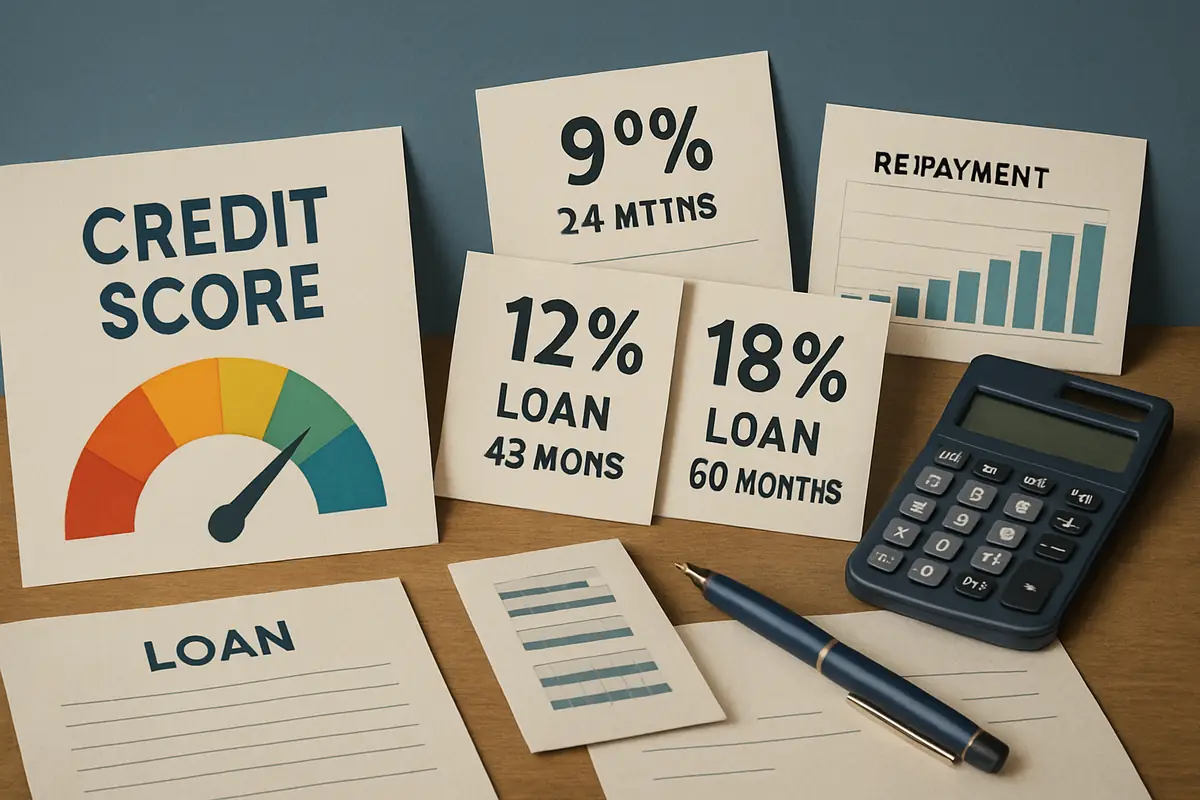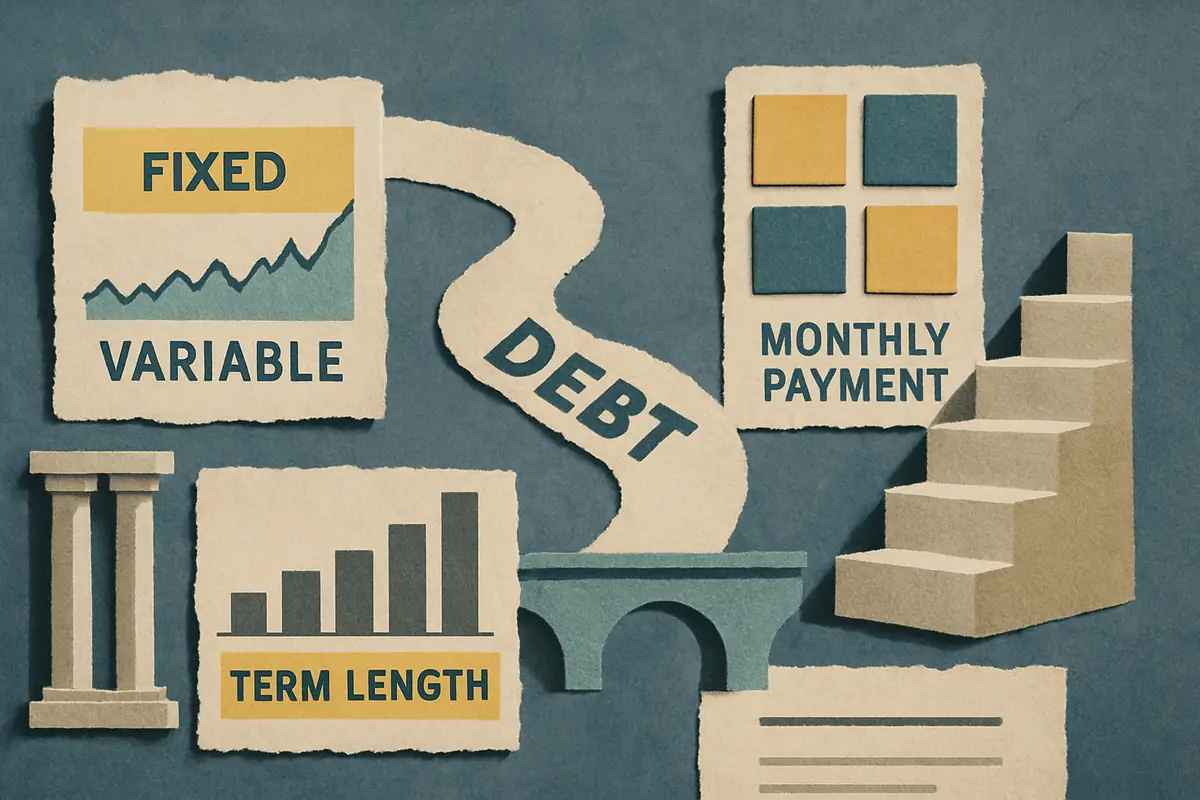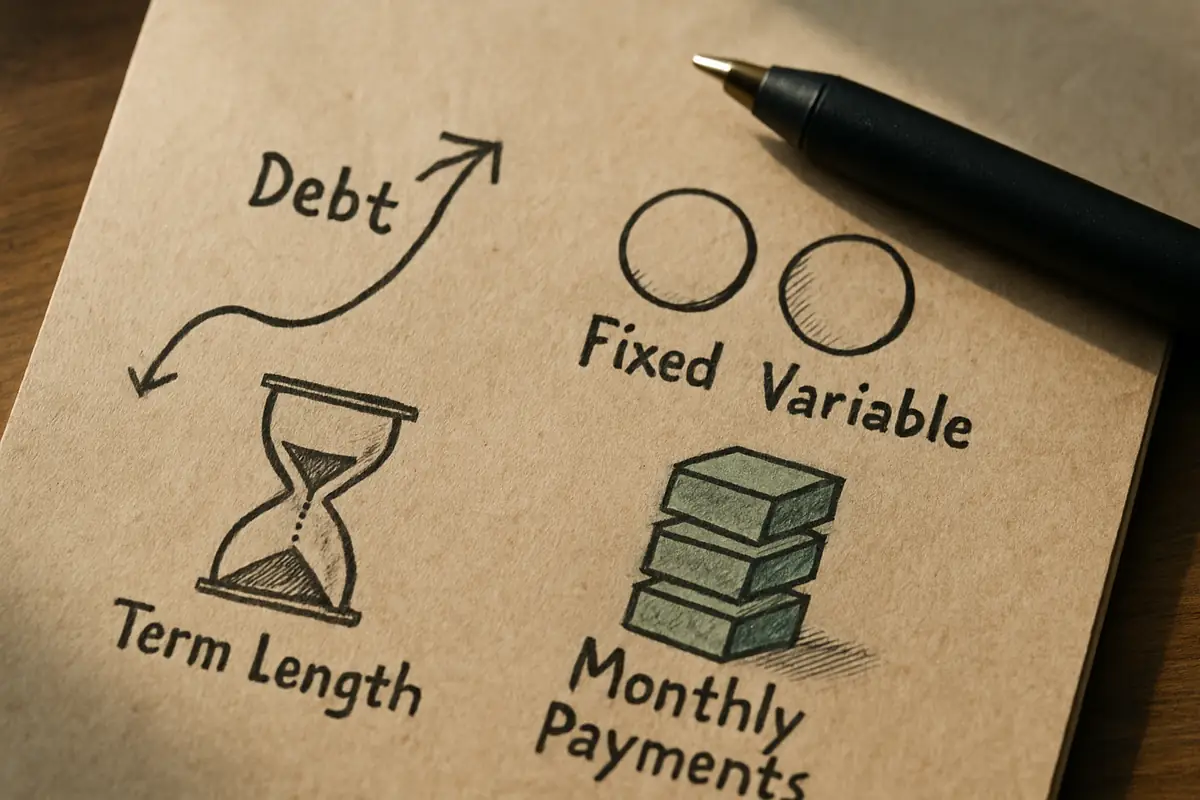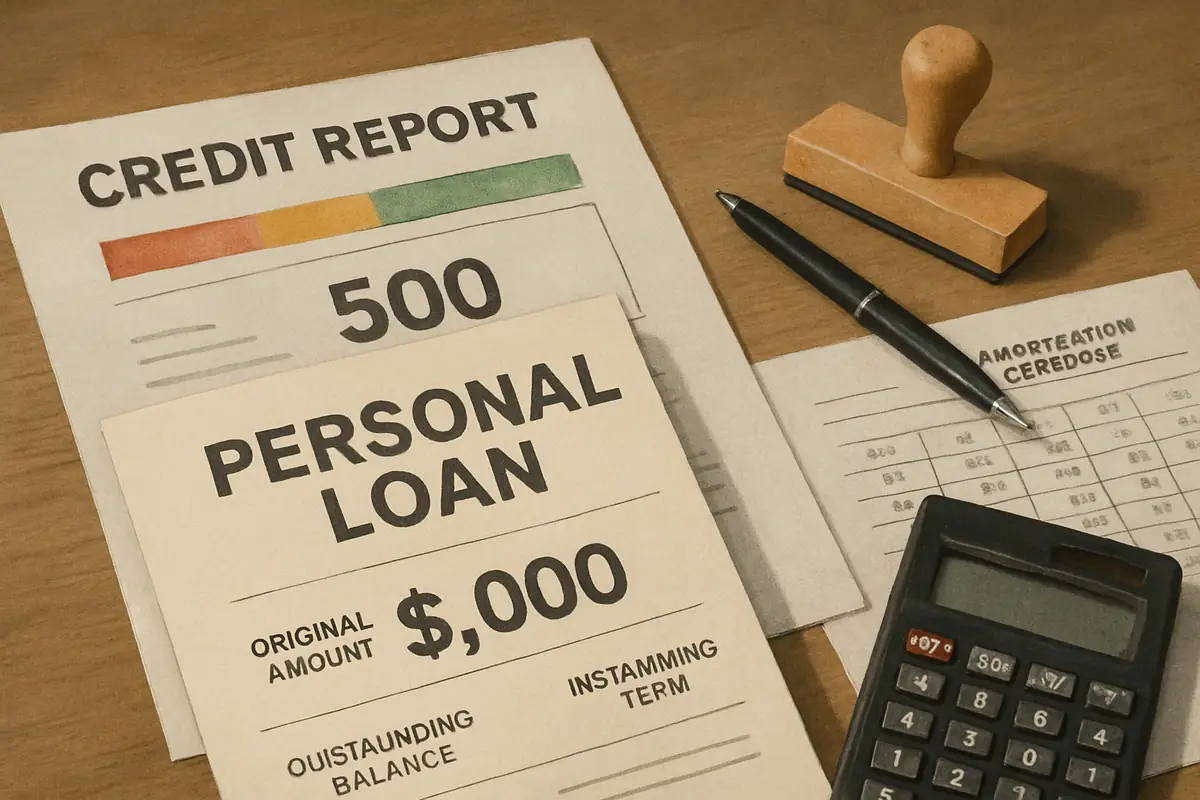
Loan amortization schedules are often misunderstood by borrowers, leading to costly mistakes and overlooked repayment risks. Many assume that monthly payments spread evenly over time mean predictable costs and low risk — but real loan mechanics tell a more complex story. This article examines widespread myths about amortization, clarifying essential details about fees, interest allocation, collateral impact, refinancing pressure, and borrower obligations.
What Is a Loan Amortization Schedule, and Why Does It Matter?
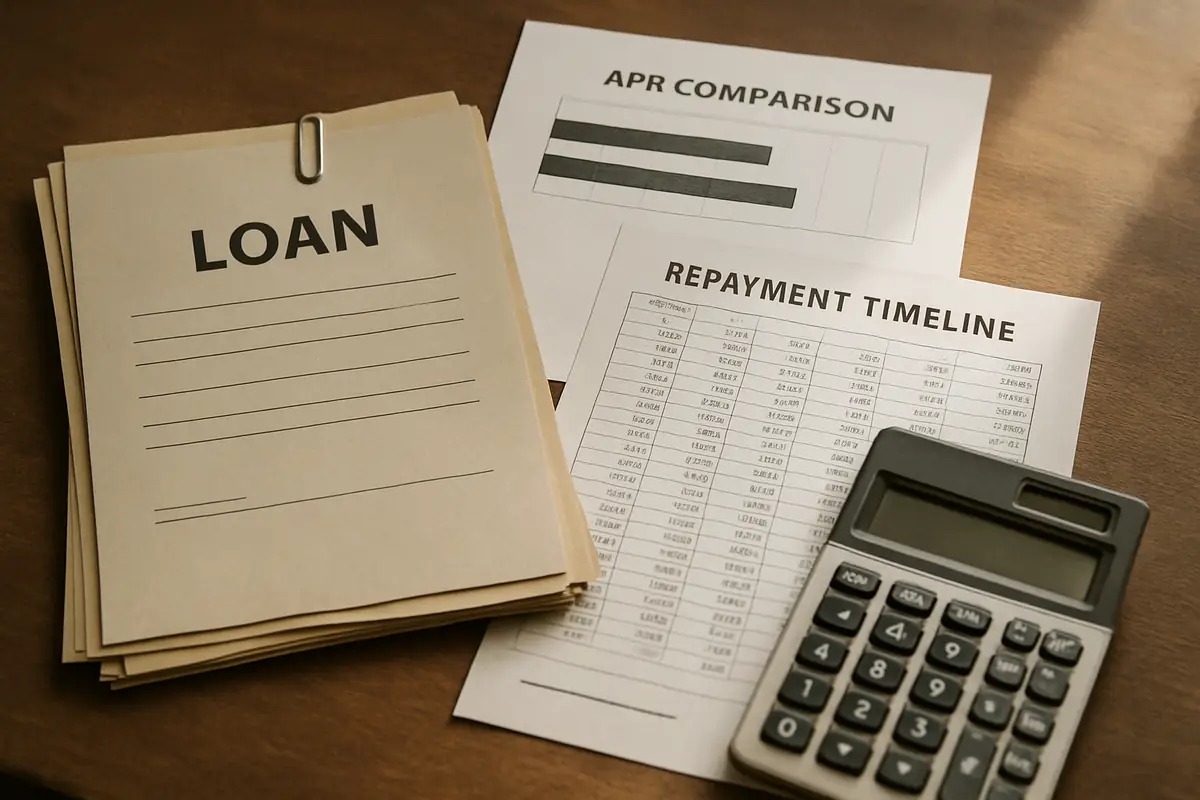
At its core, an amortization schedule is a detailed table showing each periodic payment on a loan over its term. Each payment splits between principal—the amount borrowed—and interest, the cost charged by the lender for borrowing. For typical fixed-rate installment loans such as mortgages or auto loans, schedules cover terms lasting from as short as 12 months to as long as 30 years. Understanding this schedule helps borrowers grasp how their debt balance declines and how much interest they pay over time.
However, amortization is not just about dividing payments equally. Early payments usually consist mostly of interest with only a small portion reducing principal. For example, on a $250,000 30-year mortgage at a 5% annual percentage rate (APR), the first monthly payment is about $1,342. Of this amount, around $1,042 covers interest while only approximately $300 lowers the principal balance. This imbalance shifts gradually so that by the final years of the loan most of the payment reduces principal.
Myth 1: Monthly Payments Stay Constant in Amount and Composition
Many borrowers mistakenly believe that monthly payments on an amortized loan remain the same both in total cost and in what portion goes toward principal versus interest throughout the loan term. While fixed-rate loans feature consistent total payments if made on time, the internal composition changes significantly. Early payments are heavily weighted toward interest charges; principal reduction accelerates much later.
For instance, on an auto loan of $20,000 with a five-year term at an APR of 7%, monthly payments approximate $396. But during the first year, almost two-thirds of each payment covers interest costs rather than lowering the principal balance. This front-loading of interest increases total borrowing cost and delays building equity in financed assets.
Where Understanding Payment Composition Helps Borrowers
- Avoids surprises about why early loan balances appear to change slowly despite steady payments.
- Encourages borrowers to plan for higher overall costs when considering longer terms with more front-loaded interest.
- Supports decisions to make extra principal payments early to reduce total interest paid.
Risks When Borrowers Misinterpret Constant Payment Assumptions
- Underestimating how long it takes to build equity or reduce owed principal.
- Failing to recognize refinancing or early payoff benefits due to front-loaded interest.
- Misjudging affordability if variable rate or adjustable loans alter payment amounts later in the term.
Myth 2: The APR Fully Captures All Loan Costs
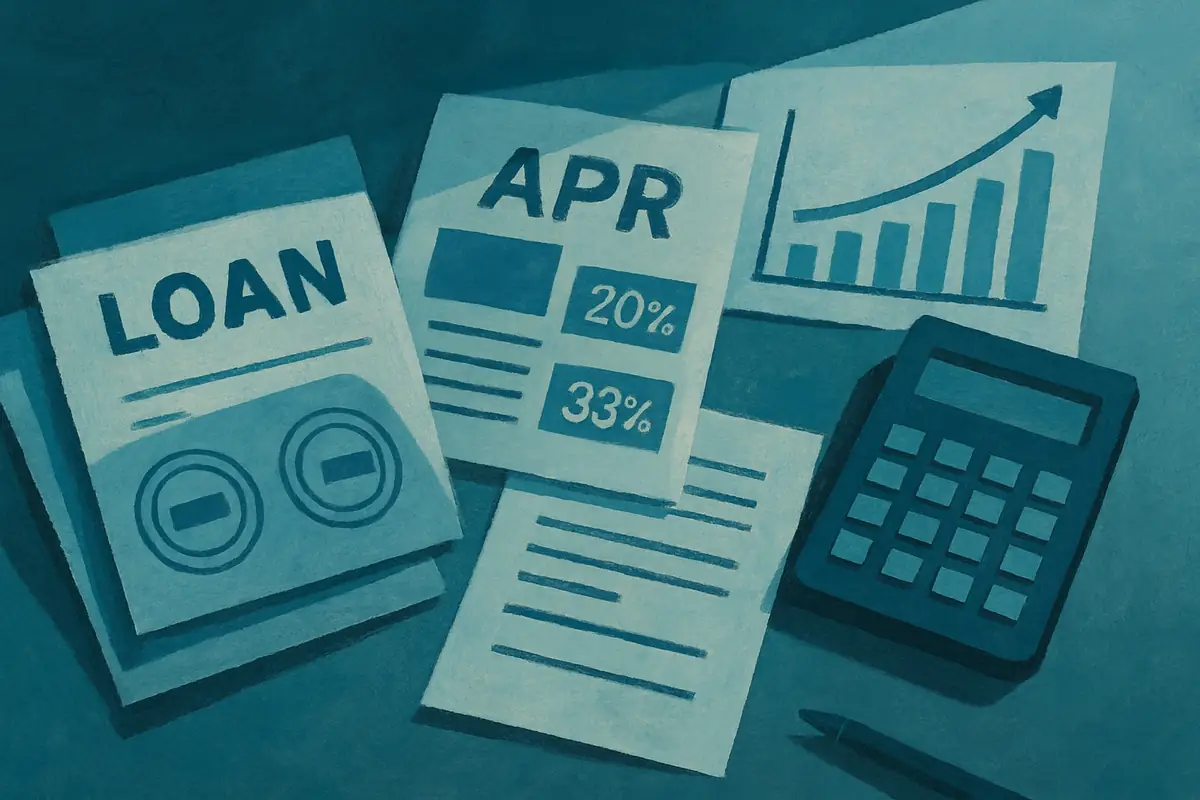
"Annual Percentage Rate" (APR) intends to represent the total yearly cost of borrowing including interest and some fees expressed as a percentage rate. While APR is a useful standardized measure comparing different loans’ costs for consumers, it does not always capture all expenses borrowers face.
Upfront fees such as origination charges typically ranging from 0.5% to 3% of the loan amount often get included in APR calculations if paid at closing. But other recurring fees—late payment penalties often around 5%–10% of missed amounts or prepayment penalties sometimes reaching several months’ equivalent interest—may not be reflected clearly in APR figures. Such fees add complexity and potential cost increases beyond advertised APR.
"Hidden" administrative or document preparation fees sometimes add another $100–$400 depending on lender policies. Borrowers should carefully review loan disclosures which separate finance charges from incidental fees to understand their true repayment obligation.
Where readers should be careful
"Do not rely solely on APR when evaluating loan affordability; always request full disclosure of all possible fees and penalty conditions before signing."
"Amortization Means Equal Payments Over Time" — How Variable Rates Change This Expectation
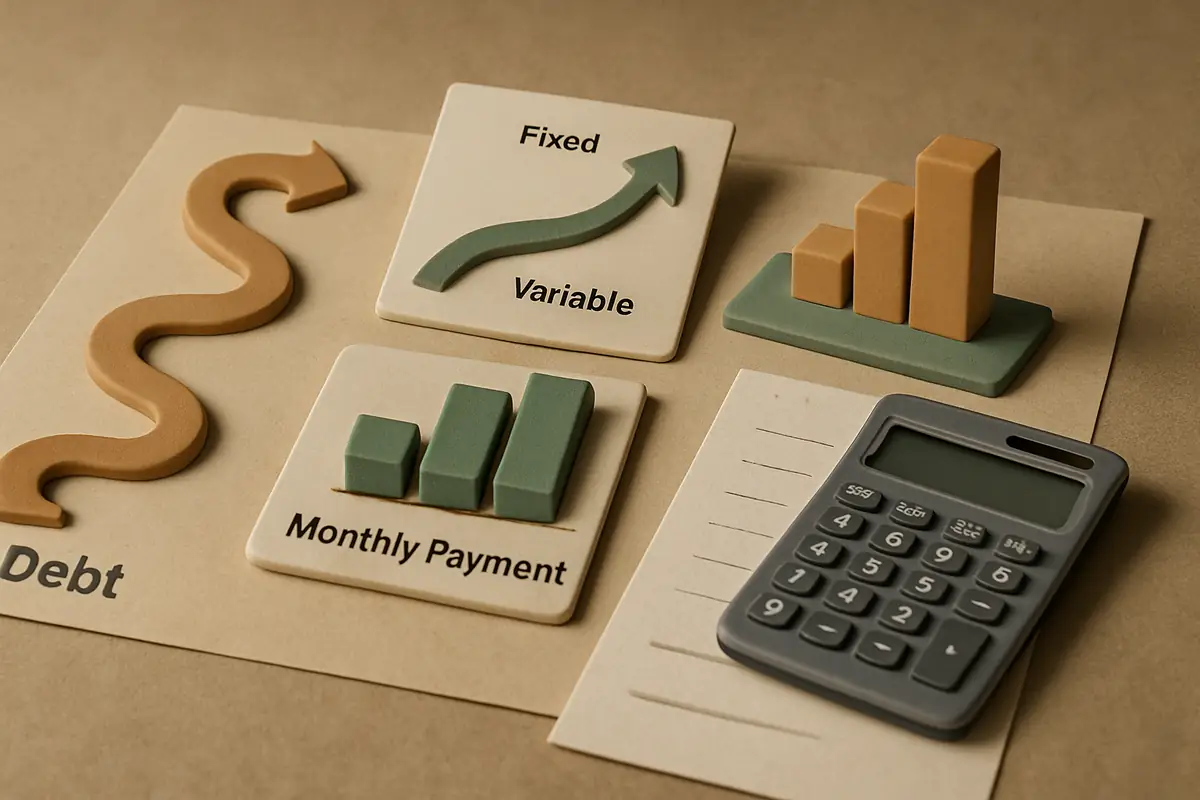
"Fixed-rate" amortized loans lock in an interest rate for the entire term so repayment schedules remain predictable assuming no missed payments. However, many loans employ "adjustable" or variable rates that reset periodically depending on benchmarks such as prime rate plus margin or LIBOR equivalents commonly fluctuating several times annually.
"Adjustable-Rate Mortgages" (ARMs), auto loans with floating rates, or business term loans indexed to market rates can see monthly payments rise or fall after initial fixed periods lasting a few years or less. For example, a borrower may start with a 3% fixed introductory rate on a $250,000 mortgage for three years but face increases up to 6% thereafter depending on market conditions—doubling monthly interest expense from approximately $625 initially to roughly $1,250 after reset.
Collateral Impact on Amortized Loans: What Borrowers Often Overlook
Secured loans require collateral—typically real estate for mortgages or vehicles for auto loans—as insurance against borrower default. While amortization schedules outline repayment steps, collateral affects risk exposure if borrowers miss payments or default before full payoff.
For instance, a borrower with a $15,000 car loan may see slow principal reduction early in amortization due to front-loaded interest and thus retain less equity than expected if contemplating sale or trade-in within initial years. Since repossession can occur once payments are missed beyond grace periods (often 10–15 days late), borrowers may confront negative equity scenarios where owed balances exceed asset resale value—a risk increasing financial stress during economic downturns or unexpected income loss.
Where readers should be careful
Installment loans secured by depreciating assets require vigilance regarding amortization pace relative to asset value loss; otherwise borrowers may face forced sales at losses or continued debt burdens even after asset loss.
How Refinancing Can Affect Amortization and Cost Trade-Offs
Refinancing replaces an existing loan with new terms often to secure lower rates or adjust repayment timelines. While this can reduce monthly payment pressures or total interest costs under favorable conditions—such as dropping from an initial 6% APR mortgage rate to around 4%—refinancing resets amortization schedules anew.
For example, consider refinancing halfway through a $250,000 30-year mortgage originally at 5%. The remaining balance might be roughly $220,000 with 15 years left versus initiating a new 30-year term at a lower rate like 4%. Although monthly installments decrease due to lower rate and extended time frame (e.g., from about $1,300 down to nearly $1,050), resetting amortization length increases total accrued interest if plan durations extend substantially.
Advantages of Refinancing Amortized Loans
- Potentially lower monthly payments easing cash flow constraints.
- Opportunity to lock in fixed rates before anticipated market increases.
- Chance to shorten total term reducing overall interest paid.
Drawbacks Borrowers Should Consider
- Extending term may increase lifetime borrowing costs despite lower immediate installments.
- Upfront refinancing fees typically range between 2%–5% of remaining balance.
- Resets equity accumulation schedule delaying full ownership.
How Do Fees and Penalties Affect Repayment Pressure Within Scheduled Payments?
Regular amortized repayments assume timely full payments according to schedule without late penalties or missed dues influencing balances. In practice however many lenders impose late fees commonly ranging from $25 up to $50 per occurrence plus additional daily default interest accruing at rates several points above contracted APR (for example adding up to 10% annual penalty rates). This quickly increases borrowing cost beyond scheduled amounts while increasing psychological and financial pressure on borrowers.
Prepayment penalties remain another hidden cost risking borrower flexibility especially with some fixed-rate mortgages where early payoff penalties of three months’ equivalent interest (potentially thousands of dollars) discourage refinancing or accelerated repayment strategies that would otherwise reduce total interest burden substantially.
Where readers should be careful
Ignoring penalty clauses tied to amortization schedules can lead borrowers into unanticipated additional financial strain even when following standard repayment plans closely.
Practical Example: Calculating True Cost of Amortized Loan With Fees and Prepayment
Suppose you borrow $10,000 with an annual percentage rate (APR) of 8%, repaid over five years via equal monthly amortized installments. Origination fees are charged upfront at 2%, totaling $200 deducted from disbursed funds so you effectively receive $9,800 but owe $10,000 plus accrued interest based on nominal amount.
Monthly payment calculation uses formula for fixed installment loans: P = [r * PV] / [1 - (1 + r)^-n] where P is monthly payment; r is monthly rate; PV is present value borrowed; n is number of months.
Monthly rate r = annual rate/12 = 8%/12 = approx 0.006667.
Number of months n = 5*12 =60.
Plug values: P = [0.006667 *10000] / [1-(1+0.006667)^-60] ≈ [$66.67]/[1 - (1/1.48985)] ≈66.67/(1-0.67156) ≈66.67/0.32844 ≈$203.
Total amount paid over five years: $203 *60 = $12,180.
Total finance cost: Total paid - Principal borrowed = $12,180 -$10,000 = $2,180 including all scheduled interest.
Adding origination fee ($200) raises effective cost above formula assumption; prepaid fee reduces initial usable funds without lowering owed amount.
Loan Term Length
Longer terms reduce monthly amounts but increase total accrued interest due to longer exposure.
APR Importance
Higher APR increases share of early payments going toward interest rather than principal reduction.
Upfront Fees
Origination fees directly reduce net proceeds without reducing repayment obligations.
Where readers should be careful
Borrowers frequently underestimate cumulative effects when combining multiple cost components such as upfront fees plus refunding penalties alongside scheduled amortized payment totals.
What Alternatives Exist To Traditional Amortized Loans?
For some scenarios requiring flexibility or short-term borrowing needs consumers may consider non-amortizing options such as revolving credit where minimum payments cover mostly accrued interests allowing principal balances some variability month-to-month instead of strict scheduled reductions.
However revolving credit lines exhibit significantly higher APRs commonly between 18%–30%, increasing risk unless managed carefully through disciplined repayments.
When Alternative Credit Facilities May Help:
- Flexible access avoiding locked-in fixed repayment amounts.
- No forced collateral requirement for unsecured lines.
- Useful for unpredictable income streams needing variable cash flow management.
When Risks Are Heightened:
- Higher effective borrowing costs due to elevated APRs.
- Lack of forced amortization may lead to growing debt burdens if only minimum payments made.
- Increased vulnerability during economic downturns without structured repayment discipline.
A Borrower's Checklist When Assessing Amortized Loan Options
- Confirm whether your loan uses fixed-rate or adjustable-rate terms affecting future payment predictability.
- Request detailed amortization schedules illustrating principal versus interest allocation across the term.
- Inquire specifically about all upfront fees including origination charges and document preparation costs.
- Verify presence and scale of prepayment penalties restricting refinancing or accelerated repayments.
- Assess collateral type securing your loan and understand implications for default risks.
- Elicit clear information about late payment penalties including flat fees and penalty APR additions.
- Calculate total estimated repayment amount including all associated fees rather than focusing solely on advertised APR.
- Earmark contingency plans for possible changes in variable rates affecting your budget mid-term.
- If considering refinancing later in the term evaluate trade-offs between reduced rates versus extended maturity resetting amortization anew.
What Behavioral Mistakes Do Borrowers Commonly Make Surrounding Amortized Loans?
A common behavioral pitfall involves assuming that regular fixed payments imply stable financial burden ignoring gradual shifting composition towards more principal over time which some interpret as reduced necessity for proactive monitoring until later stages where accumulated unpaid interests inflate balances unexpectedly.
Ignoring detailed contract review before agreeing leads many borrowers into commitments containing costly clauses like balloon payments requiring large lump sum final payouts inconsistent with regular schedule impressions caused by incomplete understanding of installment plans acting like shell games hiding true liability timing.
What Questions Should You Ask Yourself Before Finalizing Any Loan With an Amortization Schedule?
{ "type": "bullet_list", "items": [ "Do I fully know how my monthly payment divides between principal and interest throughout the term?", "Have I accounted for all additional fees not captured by advertised APR?", "Is my loan fixed-rate or variable-rate? How could changing rates affect my budget?", "What are my options if I want to pay off early? Are there penalties or restrictions?", "Could my collateral depreciate faster than I reduce principal creating negative equity risks?", "What happens if I miss one or two payments — what exact penalties apply?", "Have I compared refinancing scenarios realistically considering reset amortizations?", "Am I prepared for possible increased financial pressure due to unforeseen changes in terms?" ] },
References
- https://www.consumerfinance.gov/consumer-tools/
- https://www.consumerfinance.gov/consumer-tools/auto-loans/
- https://www.fdic.gov/consumer-resource-center/loans
- https://www.consumerfinance.gov/consumer-tools/mortgages/
- https://www.consumerfinance.gov/ask-cfpb/what-is-the-difference-between-a-fixed-rate-and-adjustable-rate-mortgage-arm-loan-en-100/