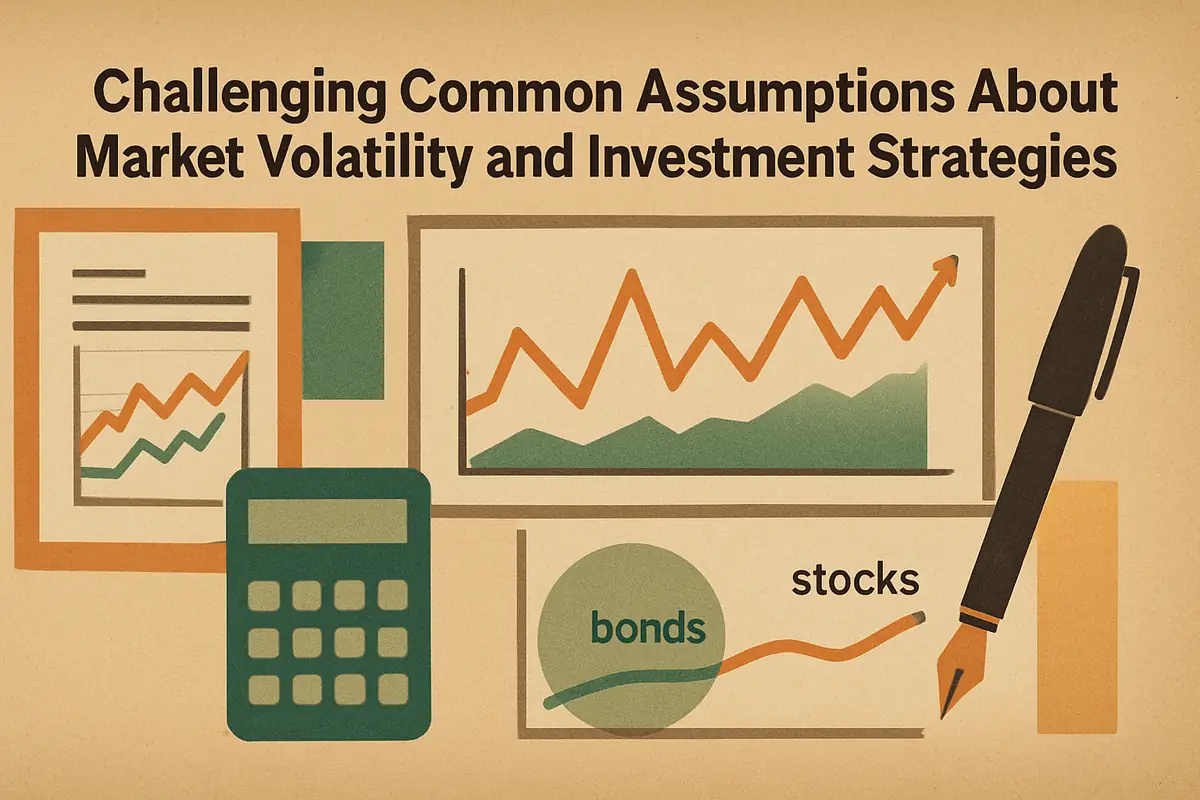
Market volatility is often perceived solely as a threat—an unpredictable force disrupting investment returns and prompting knee-jerk reactions. Conventional wisdom suggests that volatility signals imminent losses or market instability harmful to long-term portfolios. However, this assumption overlooks the nuanced roles volatility plays in asset pricing, risk compensation, and portfolio construction. This article critically examines these common beliefs by piecing together market mechanics, behavioral patterns, and macroeconomic contexts to provide a grounded perspective on volatility's actual implications for investors.
Market Volatility: Definitional Clarity and Prevailing Assumptions
Volatility represents the degree of variation in trading prices over time, typically measured by standard deviation or average price fluctuations. In practical terms, it quantifies how much and how quickly prices move within a given period. Daily swings of 1% to 3% in major equity indexes are commonly observed during normal market environments, while spikes beyond 5% often indicate heightened uncertainty or stress. Despite this quantification, many investors conflate volatility with risk in a simplistic manner—assuming more volatility invariably means greater chances of permanent loss. Yet, volatility itself is neither inherently positive nor negative; rather, it reflects underlying information flow and market liquidity dynamics.
A prevalent misconception is that high volatility spells doom for long-term investors or that markets must be timed to avoid turbulent periods. Indeed, headline media often amplify sharp daily drops without contextualizing the difference between transient price movements and fundamental value shifts. This perspective neglects the empirical reality that even highly volatile markets can deliver solid multi-year returns if investors maintain discipline and appropriate diversification.
Mechanics Behind Price Fluctuations: Order Matching and Liquidity Considerations
At its core, market prices emerge from the continuous matching of buy and sell orders. This process is influenced by several factors including investor sentiment, macroeconomic news, corporate earnings reports, and institutional trading strategies. When liquidity—the ease with which assets can be bought or sold without impacting price—diminishes, even modest imbalances in order flow can trigger outsized price swings. For instance, during periods of monetary tightening when benchmark interest rates increase from historical lows (often ranging between roughly 0% to 5%), fixed income yields become more attractive relative to equities, prompting reallocations that can elevate short-term volatility.
Understanding this microstructure reveals why sudden price drops do not necessarily imply catastrophic valuation shifts but may reflect temporary liquidity mismatches or behavioral overreactions. For example, if a large mutual fund executes sizable sell orders in a thinly traded security segment, prices can fall rapidly without changes to the issuer’s fundamentals.
Investor Behavior Amid Volatility: The Fallacy of Timing Markets
Investment decisions based on attempts to time markets often fail because they underestimate the complexity of volatility patterns and overestimate predictability. Historical data shows that missing just the best 10 trading days in a 20-year period can reduce cumulative equity returns by nearly half. This statistic underscores how fleeting rebounds often follow steep declines unexpectedly—and how staying invested through volatile intervals typically benefits long-term performance.
"Dollar-cost averaging" (DCA) exemplifies a strategy designed to mitigate timing risk by investing a fixed amount periodically regardless of price levels. Suppose an investor contributes $1,000 monthly to an index fund; during months when prices drop 10%, they acquire more shares than during rising months. Over time, this approach lowers average cost per share compared to lump-sum investments made at potentially unfavorable valuations.
| Month | $ Invested | $ per Share | # Shares Bought |
|---|---|---|---|
| January | $1,000 | $100 | 10.0 |
| February | $1,000 | $90 | 11.11 |
| March | $1,000 | $110 | 9.09 |
| April | $1,000 | $80 | 12.5 |
"Risk premiums" embedded in asset returns compensate investors for enduring such variability rather than avoiding it altogether; equities generally yield higher expected returns than government bonds because they bear greater price unpredictability over months and years.
Where readers should be careful
"Beware of equating short-term volatility with lasting impairment of capital. Attempts to 'time' entry or exit points based on perceived market stress often erode returns more than volatility itself."
"Volatility as Risk": Clarifying What Risk Means for Investors
"Risk" in investment discourse carries multiple interpretations—chief among them are "volatility risk" (price fluctuations) and "permanent loss risk" (capital impairment). Investors frequently mistake all swings as permanent danger rather than acknowledging that price oscillations are natural reactions to new information that seldom translate into irreversible declines if diversified exposure is maintained.
"Drawdowns" illustrate this concept: a typical equity portfolio might experience peak-to-trough declines between 15% and 30% during bear markets lasting from several months to two years. Historical recovery times vary widely but often range between one and four years before previous highs resume—emphasizing patience rather than panic.
Long-Term Planning Amid Volatility: Strategic Implications for Asset Allocation
Effective portfolio construction requires accepting some degree of volatility as intrinsic to financial markets rather than attempting futile avoidance. Diversification across asset classes—such as equities ranging from domestic large caps (typically showing annualized returns around 7–10%) to international stocks with additional currency considerations—fixed income instruments offering lower but steadier yields (often between approximately 2% and 6% depending on maturity), commodities providing inflation hedges despite episodic spikes—and real estate assets known for mixed correlations—can smooth aggregate portfolio volatility without eliminating potential growth.
Periodic rebalancing helps maintain target allocations amid shifting valuations and market conditions but entails trade-offs including transaction costs typically ranging from fractions of a percent up to around 1% annually depending on vehicle choices and tax considerations facing taxable accounts. A hypothetical scenario illustrates this: an investor starting with $250,000 evenly split between stocks and bonds experiences a stock drawdown of −20% while bonds rise by +4%. Without rebalancing, the portfolio skews heavily toward bonds reducing future growth potential; rebalancing realigns holdings but sells appreciating assets possibly increasing tax burden if realized gains occur.
| Asset Class | Typical Annualized Return Range | Typical Annualized Volatility Range | Role in Portfolio |
|---|---|---|---|
| Large-cap US Equities | 7-10% | 15-20% | ['Growth engine with moderate-to-high volatility'] |
| Investment-grade Bonds | 2-6% | 3-7% | ['Income provider with lower volatility'] |
| Commodities | Variable | 20-40% | ['Inflation hedge with cyclical behavior'] |
| Real Estate Investment Trusts (REITs) | 6-8% | 12-18% | ['Diversifier correlated partially with equities'] |
Where readers should be careful
Overreliance on any single asset class exposes portfolios to idiosyncratic shocks; diversification reduces but does not eliminate downside risk inherent in volatile markets.
The Role of Macroeconomic Variables: Inflation, Interest Rates, and Liquidity Conditions
Inflation trends strongly influence investor expectations regarding nominal versus real returns across asset types; sustained inflation above central bank targets usually compresses fixed income values while pressuring corporate profit margins variably across sectors. Simultaneously, central banks adjust benchmark interest rates according to inflation trajectories—short-term federal funds rates commonly oscillate within ranges like near-zero up to mid-single digits depending on policy cycles—which alters discount rates applied by market participants.
Liquidity conditions fluctuate greatly through economic cycles; periods marked by tight monetary policy cause credit spreads—the difference in yield between corporate debt and comparable government bonds—to widen typically by hundreds of basis points during stress episodes versus usual spreads around one percent or less in benign times.
Behavioral Responses: Herding Versus Disciplined Rebalancing
Investor psychology amplifies volatility effects through collective behaviors such as herding into popular assets or panicking out in downturns—responses often driven by loss aversion biases or recency effects rather than fundamentals-based reasoning. These behaviors exacerbate price swings beyond justified valuation revisions.
Conversely, disciplined investors adopt pre-established trigger rules for portfolio rebalancing or contributions independent of short-term noise—a practice underscored by academic evidence supporting systematic investing methods including dollar-cost averaging which mitigates timing risks.
Advantages of Systematic Strategies Amid Volatility
- Reduces emotional decision-making prone to costly errors.
- Facilitates accumulation at lower average costs over time.
- Preserves allocation consistent with risk tolerance enhancing long-run outcomes.
Limitations and Caveats
- Does not guarantee protection against significant drawdowns.
- Transaction costs may accumulate over frequent adjustments.
- Discipline required can be psychologically challenging during stress periods.
Practical Takeaways: Balancing Volatility Understanding With Long-Term Objectives
Volatility should be viewed neither as an enemy nor as a free lunch but as an inherent feature demanding thoughtful navigation through strategic allocation choices aligned with personal objectives and constraints. Recognizing that periods of elevated fluctuation frequently coincide with structural adjustment phases allows investors to contextualize setbacks within broader economic narratives rather than react impulsively.
For instance, an investor with a $100 monthly contribution plan across diversified funds replicates dollar-cost averaging benefits while avoiding pitfalls associated with market timing attempts which studies suggest reduce compounded returns by up to several percentage points annually if mistimed consistently.
Where readers should be careful
'Investors should remain vigilant around trade-offs including tax consequences from frequent rebalancing or over-concentration risks amid apparent ‘safe haven’ chasing — no approach eliminates all uncertainty.'
Rethinking the Relationship Between Volatility and Risk
Market volatility is often equated directly with investment risk, leading many investors to adopt overly cautious strategies during turbulent periods. However, this equation oversimplifies the complex relationship between price fluctuations and actual financial risk. Volatility represents the degree of variation in asset prices over time, but risk should be understood in terms of the likelihood and magnitude of permanent capital loss. For example, a technology stock might experience sharp daily swings due to news cycles or speculative trading but still have strong fundamentals suggesting long-term growth potential. Meanwhile, a low-volatility utility stock might have steady price movements but be vulnerable to regulatory changes affecting dividends. By decoupling volatility from risk, investors can better assess which price variations are noise and which signal genuine threats to portfolio value.
Furthermore, labeling all volatility as negative can lead investors to miss opportunities for gains created by market fluctuations. Tactical investors and traders often seek out volatile environments precisely because they offer chances to buy undervalued assets or sell overvalued ones at advantageous prices. This approach requires a disciplined framework that distinguishes between noise-induced volatility and fundamental shifts in asset value. Integrating metrics such as value at risk (VaR), maximum drawdown, and stress testing scenarios alongside volatility measures allows for a more nuanced understanding of risk exposure. Ultimately, acknowledging that volatility is not synonymous with risk empowers investors to harness market movements rather than be paralyzed by them.
Challenging Buy-and-Hold Orthodoxy in Dynamic Markets
The buy-and-hold strategy has long been championed as a cornerstone of successful investing, particularly during volatile market phases. Its simplicity and historical effectiveness in capturing long-term growth have earned it widespread acceptance. However, rigid adherence to this approach may underperform in certain economic regimes characterized by prolonged uncertainty or structural shifts. For instance, during periods of rapid technological innovation or geopolitical upheaval, sectors that previously drove portfolio returns might falter while emerging industries offer superior growth prospects. In such contexts, passive buy-and-hold investors risk missing critical inflection points or enduring protracted drawdowns without adjustment.
Adapting the buy-and-hold philosophy to incorporate periodic portfolio reassessments and tactical reallocations can enhance resilience. This hybrid strategy maintains long-term focus while allowing flexibility to respond to changing market dynamics or valuation anomalies. Importantly, this does not imply frequent trading or market timing but rather disciplined evaluation using data-driven criteria such as valuation multiples, earnings revisions, and macroeconomic indicators. By integrating adaptive elements into buy-and-hold frameworks, investors can better navigate volatility-induced disruptions without sacrificing the benefits of compounding returns over time.
Volatility as a Tool for Strategic Asset Allocation
Contrary to perceptions of volatility as merely a challenge to overcome, it can serve as an informative input for strategic asset allocation decisions. Shifts in volatility levels across different asset classes often reflect evolving investor sentiment and economic conditions. For example, rising equity volatility accompanied by declining bond volatility might suggest increased risk aversion coupled with flight-to-quality behavior among market participants. Investors who monitor these signals can adjust allocations proactively to balance return expectations against changing risk appetites.
Volatility-targeting strategies that dynamically adjust portfolio exposure based on measured or implied volatility can reduce drawdowns during turbulent periods while preserving upside potential when markets stabilize. Such approaches employ quantitative models that scale investment positions inversely with realized volatility metrics or use options-based overlays to hedge downside risks selectively. While these tactics require sophisticated implementation and incur additional costs, their capacity to smooth portfolio returns makes them valuable components within broader investment frameworks—particularly for individuals seeking capital preservation without foregoing growth opportunities.
Behavioral Biases Amplify Misinterpretations of Market Movements
Investor psychology plays a significant role in shaping responses to market volatility, often exacerbating reactions beyond what fundamentals warrant. Cognitive biases such as loss aversion—the tendency to feel losses more intensely than gains—can lead individuals to exit positions prematurely amid short-term price swings. Confirmation bias may cause selective attention toward information that supports negative forecasts during volatile episodes while discounting contrary evidence.
These behavioral tendencies contribute to market phenomena like panic selling or herding behavior that amplify price swings beyond intrinsic value changes. Recognizing how emotional responses distort interpretations of volatility allows investors to implement strategies that mitigate impulsive decisions—for instance, setting predetermined rebalancing rules or automating contributions regardless of market environment. Furthermore, financial advisors and educators have a role in framing volatility narratives constructively to reduce anxiety and encourage rational decision-making focused on long-term objectives.
Incorporating Alternative Data Sources Enhances Volatility Insights
Traditional measures of market volatility primarily rely on historical price data or implied volatility derived from option prices; however, supplementing these with alternative data sources can provide richer context for investment decisions. Social media sentiment analysis, for example, captures real-time shifts in public mood toward specific securities or sectors that may precede measurable price moves. Similarly, economic indicators such as consumer confidence indexes or employment reports contribute forward-looking perspectives on potential catalysts affecting market stability.
Machine learning models trained on diverse datasets—including news articles, earnings call transcripts, and geopolitical event timelines—offer emerging tools for detecting subtle patterns preceding heightened volatility periods. By integrating these multidimensional inputs into portfolio management processes, investors gain enhanced situational awareness enabling preemptive adjustments aligned with evolving risk landscapes rather than reactive responses after large price movements occur.
References
- https://www.investor.gov/introduction-investing/investing-basics/glossary/volatility
- https://www.investor.gov/introduction-investing/investing-basics/how-stock-markets-work
- https://www.federalreserve.gov/releases/h15/
- https://www.finra.org/investors/investing/investing-basics/asset-allocation-diversification
- https://www.finra.org/investors/insights/dollar-cost-averaging