Periods of economic contraction present distinct challenges for investors seeking stability or growth. Between sectors like consumer staples, utilities, healthcare, and fixed income, which hold up better when GDP contracts and market volatility rises? This article compares underlying factors shaping sector resilience during downturns, including cash flow stability, valuation shifts, rate sensitivity, and investor risk appetite.
Economic Downturns and Sector Vulnerabilities: What Drives Performance?
Recessions typically accompany rising unemployment, declining consumer spending, and tighter credit conditions. Such macroeconomic stress translates unevenly across sectors. For example, cyclical industries like technology and discretionary retail often see earnings compress sharply due to falling demand. Meanwhile, sectors providing essential goods or regulated services tend to experience more stable revenues. Inflation dynamics further complicate sector outlooks; sectors with pricing power may maintain margins despite input cost rises, whereas others face margin pressure. Interest rates also influence sectors differently by affecting borrowing costs and discount rates applied to future earnings.
Investor behavior during downturns tends toward capital preservation. Liquidity becomes a prime concern as margin calls and portfolio rebalancing create selling pressure. Defensive sectors often benefit from flight-to-safety flows but may trade at premiums that limit upside once recovery begins. Conversely, high-beta sectors might offer rebounds but carry elevated risk of permanent impairment if the economic slump prolongs or corporate solvency deteriorates.
Comparing Defensive Sectors: Consumer Staples Versus Utilities and Healthcare
Consumer staples include companies producing everyday necessities like food, beverages, and hygiene products. Historically, their revenue streams remain relatively inelastic to economic cycles since demand for these goods persists even amid income declines. Utilities provide electricity and water services under regulated frameworks ensuring consistent cash flows but can face political or regulatory risk. Healthcare companies encompass pharmaceuticals, medical devices, and providers; demand is less elastic but reimbursement policies and R&D cycles add complexity.
From a valuation standpoint, these defensive sectors often trade at price-to-earnings (P/E) ratios between 15 and 25 during stable periods. During recessions, staples and healthcare may sustain these multiples or even expand slightly due to lower risk premiums; utilities sometimes contract due to rate sensitivity and concerns over regulatory changes. Dividend yields tend to be higher in utilities (commonly around 3% to 5%) compared to staples (2% to 4%) and healthcare (1.5% to 3%). Yield appeal can attract income-focused investors amid low general interest rates.
| Sector | Typical Revenue Sensitivity | Valuation Range (P/E) | Dividend Yield (%) |
|---|---|---|---|
| Consumer Staples | Low | 15 - 25 | 2 - 4 |
| Utilities | Very Low | 12 - 20 | 3 - 5 |
| Healthcare | Low | 14 - 24 | 1.5 - 3 |
Liquidity profiles differ as well: consumer staples firms generally maintain robust cash flow generation with moderate operating leverage; utilities exhibit stable but capital-intensive operations requiring steady debt financing; healthcare's innovation-driven model entails variable R&D expenses impacting free cash flow unpredictably.
Advantages of Defensive Sectors During Downturns
- Steady cash flows supporting earnings resilience.
- Attractive dividend yields relative to general market rates.
- Lower volatility reducing portfolio drawdowns.
- Investor preference for essentials ensures baseline demand.
Risks and Limitations
- Potential valuation compression if interest rates rise.
- Limited growth prospects constraining total returns.
- Regulatory risks notably in utilities and healthcare.
- Dividend sustainability can be challenged under severe economic stress.
"Flight-to-Safety" Fixed Income Instruments: Bonds as Portfolio Anchors
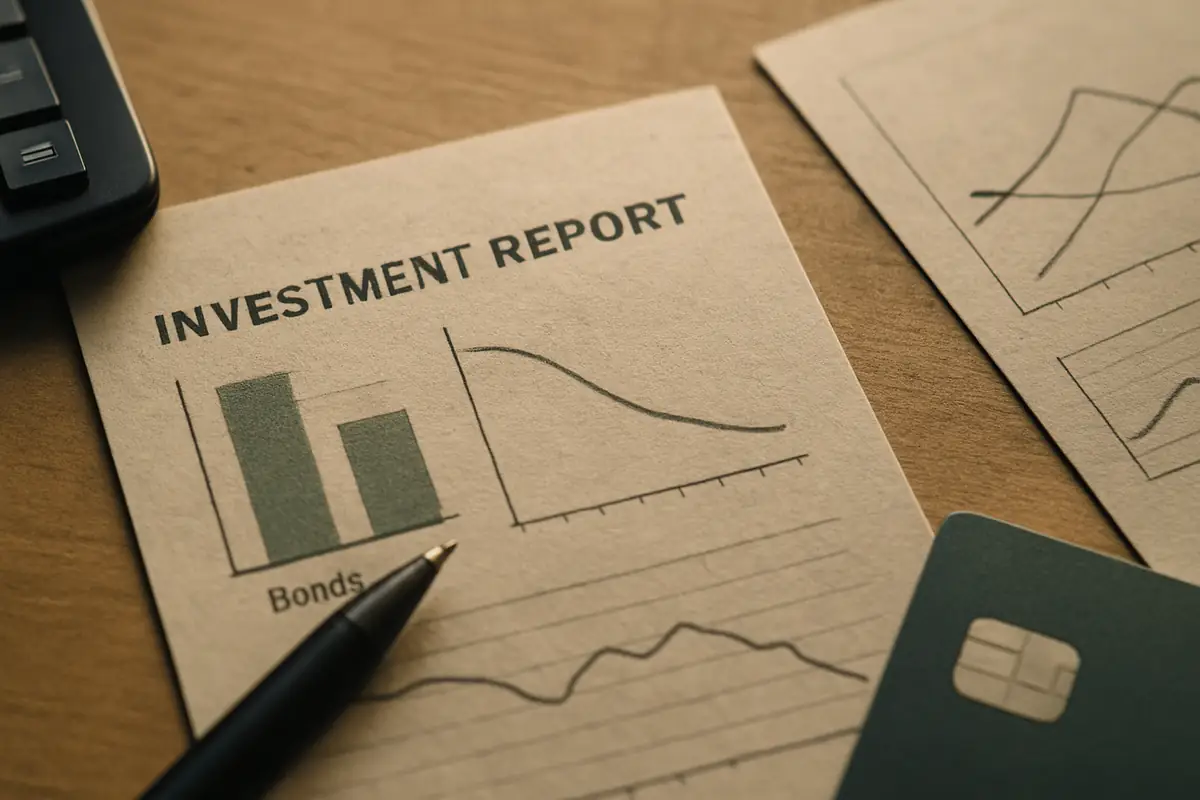
"Flight-to-safety" bond allocations usually increase during recessions as investors seek principal protection and predictable income streams. U.S. Treasury securities are considered benchmarks with minimal credit risk but are sensitive to changes in benchmark policy rates set by the Federal Reserve. Corporate bonds offer yield premiums reflecting credit risk; investment-grade bonds typically yield between 3% and 6%, while high-yield bonds yield from about 6% up to 10% or more depending on credit quality.
"Yield," short for yield-to-maturity (YTM), is the annualized return an investor expects if holding a bond until maturity considering purchase price versus coupon payments. A worked example: an investor buys a $10,000 corporate bond with a 5% coupon paying $500 annually. If purchased at par ($10,000), the YTM equals the coupon rate of 5%. If bought at a premium for $10,500, YTM falls below coupon rate because the investor paid extra upfront but receives fixed coupons; conversely buying at a discount increases YTM above coupon rate.
How this can look in practice
Increased Fed policy rates during tightening cycles elevate overall bond yields but depress existing bond prices inversely; longer-duration bonds are more sensitive because their fixed coupons lose relative value as new bonds offer higher rates. For example, a 30-year Treasury bond priced at $1,000 with a fixed coupon of $40 annually will fall in market value if benchmark rates rise from 2% to 4%, as investors prefer new issues with better yields.
Credit risk also intensifies during recessions as firms face earnings pressure potentially affecting debt servicing capacity. Default probabilities rise particularly for speculative-grade issuers; historical default rates range from under 1% in strong economies to above 5% during deep downturns over one-year horizons. Consequently, bond investors weigh the trade-off between higher yields on lower-quality debt versus safety in Treasuries.
Where readers should be careful
Rising interest rates create price volatility risks in fixed income portfolios; investors focused on liquidity must consider duration exposure carefully since bonds can lose significant market value before maturity if sold early.
Cyclical Sectors Under Pressure: Technology and Consumer Discretionary
Sectors reliant on discretionary spending such as technology hardware/software and retail discretionary goods experience pronounced earnings volatility during recessions. Consumer budgets tighten causing delayed purchases or substitutions toward cheaper alternatives. Technology firms often rely on capital expenditures from businesses that decline amid uncertainty. Valuations are highly sensitive to discount rate changes because expected growth is embedded far into future cash flows.
Typical price-to-earnings ratios in technology can span widely—from below 15 during stress periods up to above 30 in expansion phases—reflecting growth expectations' variability. During recessionary contractions with rising interest rates driven by inflation control efforts at central banks, valuation compressions can be swift.
Potential Upside Factors for Cyclicals Despite Downturns
- Faster recovery potential when economic growth resumes.
- Capitalizing on innovation led by leading technology firms.
- Opportunities for consolidation among weakened competitors.
Downside Risks During Recessions
- Earnings highly sensitive to consumer/business spending cuts.
- Valuation declines aggravated by rising discount rates.
- Greater likelihood of write-downs or impairments reducing book values.
- Increased financing costs impairing expansion plans.
Inflation’s Role in Sector Performance During Economic Slowdowns
Inflation affects purchasing power directly influencing consumer behavior while also shaping monetary policy responses that impact financial conditions broadly. In times when inflation remains elevated despite slowing growth—a scenario termed stagflation—some sectors gain pricing power while others struggle with cost pass-through challenges.
For instance, materials companies producing raw commodities often benefit from higher prices but face demand destruction risks if inflation triggers severe economic weakness. Energy sector firms may see revenue boosts due to commodity price surges but must manage operational cost pressures including capital expenditures needed for production maintenance.
Conversely, sectors like consumer discretionary suffer margin erosion when input costs rise faster than prices consumers are willing or able to pay. Fixed-income instruments perform variably depending on whether yields adjust upward swiftly enough to compensate investors for inflation risks embedded in longer maturities.
Behavioral Dynamics: Investor Preferences Shifting With Market Cycles
Investor sentiment strongly influences sector performance during downturns beyond fundamental factors alone. Heightened volatility leads many market participants toward safer assets perceived as preserving capital or generating reliable income streams—typically defensive equities or short-duration bonds.
This crowding effect drives valuation anomalies where certain sectors become overbought relative to fundamentals while cyclical areas undergo overselling exacerbating downside movements before eventual mean reversion occurs post-recovery phase.
The Resilience of Consumer Staples During Recessions
Consumer staples represent one of the most defensive sectors in the market during economic downturns. These companies produce or sell essential goods such as food, beverages, household products, and personal care items—products that consumers continue to purchase regardless of economic conditions. This consistent demand offers relative stability to companies within this sector, making them attractive for investors seeking lower volatility and more predictable earnings in turbulent times. For instance, during the 2008 financial crisis, giants like Procter & Gamble and Coca-Cola managed to maintain stable revenue streams despite widespread economic contraction. The sector’s resilience stems not only from the necessity of its products but also from the broad geographic diversification many large consumer staples firms enjoy, which can buffer localized downturns.
Investors should consider that while consumer staples tend to outperform during recessions compared to cyclical sectors like consumer discretionary or industrials, they do not typically deliver high growth. Instead, their value lies in capital preservation and dividend income. Many companies in this sector have strong balance sheets and generate robust cash flows, enabling them to continue paying dividends even when earnings are under pressure. This characteristic has made consumer staples a popular choice for income-focused portfolios during market stress. Additionally, the sector often benefits from effective cost management strategies implemented by management to navigate slowing demand without sacrificing profitability.
Healthcare Sector: A Defensive Haven with Growth Potential
Healthcare is another sector known for its defensive characteristics during economic downturns. Demand for healthcare services and pharmaceutical products remains relatively stable regardless of economic cycles because health needs do not diminish when recessions hit. Moreover, an aging global population and increasing chronic disease prevalence add secular growth drivers that provide additional long-term investment appeal. Unlike some defensive sectors, healthcare also offers opportunities for innovation-driven growth through biotechnology advances, medical devices development, and new drug discoveries. For example, companies focusing on breakthrough treatments or vaccines have shown strong performance even in uncertain macroeconomic environments.
During recessions, healthcare stocks generally experience less severe declines compared to broader market indices. However, investors must be aware of regulatory risks and reimbursement pressures that can impact profitability within this sector. Companies with diversified product lines across pharmaceuticals, medical devices, and healthcare services tend to be better positioned to absorb shocks. Furthermore, healthcare ETFs or mutual funds can provide diversified exposure that mitigates company-specific risks while benefiting from the sector's overall defensive qualities.
Utilities: Stability Through Essential Services
Utilities are traditionally viewed as one of the most recession-resistant sectors due to the essential nature of electricity, gas, and water services they provide. Consumers and businesses alike need these utilities irrespective of economic conditions, resulting in stable demand and predictable cash flows for utility companies. This reliability often translates into steady dividends with relatively low volatility in stock prices compared to other sectors during economic downturns. The regulated nature of many utilities also limits competitive pressures and provides a clear framework for revenue generation.
In recent years, the utilities sector has also begun incorporating renewable energy sources such as wind and solar power into their portfolios. This transition offers growth potential alongside traditional stability but may introduce new regulatory complexities or capital expenditure requirements that investors should monitor. Additionally, utilities typically carry higher debt levels due to infrastructure investment needs; thus, interest rate fluctuations can influence their financial health and stock performance during different phases of the economic cycle.
Financial Sector: Opportunities Amid Challenges
While financial stocks might initially seem vulnerable during recessions due to increased credit risks and reduced lending activity, certain sub-sectors within finance can outperform or present unique opportunities. For example, firms specializing in asset management may see inflows into safer investments as market volatility rises. Similarly, insurance companies often benefit from stable premium income streams that are less sensitive to short-term economic fluctuations. Moreover, strong banks with conservative lending practices and robust capital buffers can weather downturns effectively and capitalize on eventual recoveries.
Investors should exercise caution with financial stocks during downturns given the potential for rising loan defaults and compressed net interest margins caused by central bank policy changes aimed at stimulating economies. Credit quality deterioration remains a key risk factor affecting bank profitability in recessions. Nonetheless, understanding specific business models within financials—such as boutique investment firms versus traditional commercial banks—can help investors identify areas where downside risk is limited while positioning for recovery-driven gains.
Information Technology: Growth Amid Volatility
The technology sector is often viewed as cyclical due to its sensitivity to changes in corporate spending on IT infrastructure and consumer electronics demand fluctuations. However, certain technology subsectors demonstrate resilience even in slower economic periods by providing indispensable products or services that support digital transformation trends accelerating globally. Cloud computing providers, cybersecurity firms, and software-as-a-service (SaaS) companies typically exhibit steady recurring revenues that cushion against downturn impacts better than hardware manufacturers reliant on discretionary spending.
"During previous recessions such as early 2000s or the COVID-19 pandemic-related slowdown," many tech firms focused on subscription models managed relatively stable cash flows despite broader market contractions." This resilience is driven by businesses prioritizing operational efficiency improvements through technology investments even amidst budget constraints. Nevertheless, investors should be aware of valuation risks since technology stocks frequently trade at premium multiples reflecting anticipated growth rather than near-term earnings stability." Diversification within tech holdings helps balance growth potential against cyclical vulnerabilities inherent in this dynamic sector."
References
- https://www.bls.gov/cpi/
- https://www.federalreserve.gov/monetarypolicy.htm
- https://www.finra.org/investors/investing/investment-products/bonds
- https://www.federalreserve.gov/releases/h15/
- https://www.federalreserve.gov/faqs/economy_14400.htm
- https://www.investor.gov/introduction-investing/investing-basics/glossary/bond