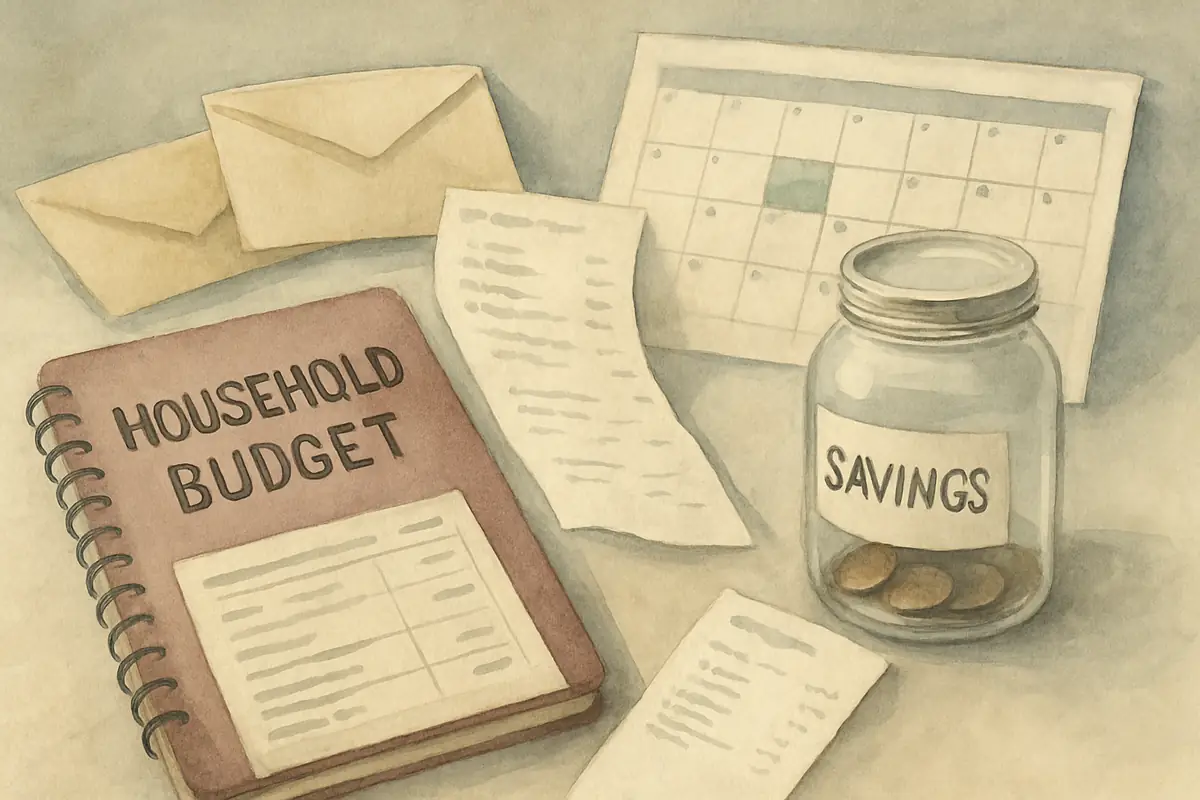
Imagine Sarah, a single mom juggling part-time shifts and freelance gigs, trying to cover $3,200 in monthly expenses. Some months bring $3,500 in income; others barely $2,800. How does this ups-and-downs rhythm affect her ability to keep the lights on, feed her kids, and save for emergencies? This is the everyday experience of many households facing cash flow variability—when income or expenses shift unpredictably—and its ripple effect on monthly financial stability.
What does cash flow variability really mean for households?
Cash flow represents the movement of money into and out of a household within a set period, typically monthly. Variability means this flow isn’t steady — income may come irregularly from gig work, commissions, or seasonal jobs, while expenses can spike unexpectedly due to medical bills or car repairs. Unlike a fixed paycheck and stable bills scenario, households with variable cash flows must navigate wider swings that complicate budgeting. For example, someone earning between $2,500 and $4,000 monthly faces a 60% range in take-home pay, making it difficult to plan expenses that reliably cover essentials and build savings.
Households with variable expenses might see their costs jump from $2,800 one month to $4,000 the next due to irregular bills such as property taxes or insurance premiums paid quarterly or annually. When income timing doesn’t align with expense dates, even those who earn enough over time can find themselves short on cash at critical moments.
Why is managing variable cash flow so challenging in practice?
The main difficulty lies in balancing unpredictability with fixed obligations like rent or mortgage payments that rarely adjust to income fluctuations. Many households experience stress because they must decide whether to delay payments, borrow short-term using credit cards or payday loans (often with annual percentage rates between 18% and 35%), or cut back drastically on non-essential spending. This juggling act can lead to cycles of debt or missed opportunities for saving.
Another challenge is imperfect budgeting systems that assume consistent monthly income. Traditional budgets rarely accommodate spikes or dips well; they focus on averages which can mask underlying volatility. For example, a family averaging $3,000 monthly income but fluctuating between $2,200 and $3,800 may budget as if they have steady $3,000 every month — leading to overspending during low-income months.
What practical systems help households handle cash flow swings?
One common approach is creating buffer accounts — savings set aside specifically to smooth out gaps when income drops or unplanned expenses occur. A typical recommendation is emergency savings covering three to six months of essential living costs. For a household spending around $3,000 a month on essentials like housing, utilities, groceries, and transportation, this means building $9,000 to $18,000 in liquid savings over time.
Another practical tool is aligning payment timing with expected income inflows. Households can negotiate bill due dates when possible or use automated transfers timed just after paychecks arrive. This reduces stress caused by needing cash before regular income lands.
For variable-income earners such as freelancers or commission-based workers who receive payments irregularly throughout the year, tracking gross receipts versus net spendable amounts helps clarify how much can truly be spent without dipping into reserves prematurely.
What trade-offs do families face when managing variable cash flow?
Households confront compromises between financial safety nets and lifestyle flexibility. Building significant savings buffers requires reducing discretionary spending for extended periods — less dining out, postponed vacations, or fewer impulse purchases. However, cutting too deeply risks impacting quality of life and mental well-being.
Alternatively, relying heavily on credit cards during lean months introduces debt burdens that become costly over time given credit card APRs commonly fall between 18% and 30%. Paying these off diverts money away from savings goals or essential spending.
"Control versus freedom" is another tension: strict budgeting controls reduce surprise costs but can feel restrictive. Flexible budgets allow more day-to-day choice but increase risk of overspending when income dips.
Where buffering cash flow variability helps
- Prevents missed bill payments that damage credit scores.
- Reduces reliance on high-interest short-term loans.
- Provides peace of mind amid unpredictable job schedules.
- Supports gradual progress toward longer-term goals like homeownership.
Where caution is needed in managing variability
- "Savings pressure" may limit immediate spending enjoyment.
- "Credit dependence" can escalate if buffers aren’t sufficient.
- "Budget rigidity" may diminish adaptability during crises.
- "Income forecasting" remains difficult despite best efforts.
"Could you walk me through an example of managing variable income month-to-month?"
"Sure," says Olivia Hayes—a household finance planner—"Let’s consider Mark and Emily who have combined monthly expenses averaging about $4,500 but earn irregular income as consultants." In January they earn $5,200; February brings just $3,400; March rebounds to $6,000; April drops again near $3,600. They track all inflows and outflows daily using an app tied to their bank account.
Benefits of Buffering Cash Flow Variability
- Helps avoid late payments that hurt credit scores and incur fees.
- Reduces dependence on expensive short-term borrowing options such as payday loans with APRs often above 300%.
- Creates peace of mind knowing there’s a cushion against unexpected expenses like car repairs or medical bills.
- Enables better long-term planning by smoothing out income fluctuations over several months.
Challenges of Managing Cash Flow Variability Buffers
- Building sufficient savings often requires sacrificing discretionary spending for months or years.
- Overreliance on credit cards during low-income months can lead to costly debt cycles given typical APRs ranging from 18% to 30%.
- Rigid budgeting may limit lifestyle flexibility and spontaneity.
- Predicting exact cash flow needs remains difficult despite careful tracking.
How do real families cope with uneven monthly incomes?
Taking the case of Jennifer and Luis: their combined earnings vary each month between roughly $3,400 and $5,200 due mainly to freelance contracts paid irregularly. Their fixed expenses tally up to about $3,100 including rent of $1,500 plus utilities around $350 and food averaging $700 monthly. They keep an emergency fund equal to about four months’ worth of essentials — roughly $12,400 — which they only tap when lean months hit under $3,500 total earnings.
Despite their prudent buffer planning though, some months require making tough choices like deferring non-urgent dental care or postponing replacing worn household items until inflows rebound. Their method involves detailed weekly budget reviews where they track actual spending against planned amounts but leave room for minor adjustments allowing some personal treats occasionally while closely monitoring credit card usage which they strive to pay off monthly at an APR usually around 20%.
What questions should readers ask themselves about their own cash flow stability?
When assessing your own financial situation amid variable cash flows consider asking: How predictable is my monthly income? What are my fixed essential expenses each month? Do I have liquid savings covering at least three months of those essentials? Can I adjust bill payment dates if needed? What’s my average credit card interest rate if I rely on borrowing during low-income periods? How comfortable am I with tightening discretionary spending temporarily when cash runs low? These reflections help identify strengths in your system as well as areas where adjustments improve resilience without undue hardship.
Assessing Income Stability
Track your income over six months to identify patterns or gaps that could impact budgeting reliability.
Prioritizing Expenses
Separate essential fixed costs (housing/utilities/food) from flexible discretionary items for clearer focus during tight months.
Building Emergency Savings Gradually
Aim for three months’ worth of essential expenses initially; add more buffer as possible over time.
Balancing security with flexibility in day-to-day money management
Striking an effective balance between financial security through buffers and maintaining everyday lifestyle choices involves accepting imperfection in planning processes while incorporating strategies that foster both control and adaptability. For instance, choosing flexible budgeting methods such as the envelope system—allocating cash into labeled envelopes for categories like groceries or entertainment—gives tactile spending limits while allowing visual adjustments if priorities shift mid-month.
Moreover, setting up automatic alerts from banking apps helps households catch low balances early before overdrafts occur enabling corrective steps sooner rather than later. Many banks waive overdraft fees if customers maintain an average daily balance over certain thresholds — typically between $300 and $500 — reinforcing discipline without harsh penalties when managed closely.
What does the math say about cost impacts when borrowing during shortfalls?
For example: Imagine Lisa with a monthly shortfall of $500 who uses her credit card charging an APR (annual percentage rate) of about 24% compounded daily. Step one: The approximate daily periodic rate equals annual APR divided by 365 days — so about 0.0658% per day. Step two: If Lisa pays off the entire balance after one month (30 days) without additional charges: Interest = Principal × (1 + daily rate) ^ number of days - Principal = $500 × (1 + 0.000658) ^30 - $500 = $500 × (1.0200) - $500 = about $10 in interest. This modest interest grows quickly if only minimum payments are made extending repayment periods significantly increasing total cost over time. Understanding such calculations emphasizes why relying continuously on borrowing without buffers increases financial strain substantially.
Strategies for Managing Cash Flow Variability
To effectively manage cash flow variability, one must adopt a proactive and strategic approach. The first step involves establishing a robust budgeting process that accounts for fluctuating income and expenses. Rather than relying solely on average monthly figures, individuals and businesses should use conservative estimates or scenario-based budgets to prepare for potential dips in cash inflows. This means setting aside funds during high-income months to cover shortfalls in leaner periods. Additionally, creating an emergency fund dedicated specifically to cash flow disruptions can serve as a financial buffer. This fund should ideally cover three to six months of essential expenses, providing peace of mind and stability when unexpected variations occur.
Another key strategy is improving cash flow forecasting accuracy by incorporating historical data and external factors. For example, seasonal trends, client payment patterns, and economic indicators can provide valuable insights into potential future cash flow scenarios. Businesses might employ software tools or financial advisors specializing in cash flow management to enhance forecasting precision. On a personal level, tracking income streams diligently—especially for freelancers or those with multiple part-time jobs—helps identify patterns and prepare accordingly. The goal is not just to anticipate variability but to create flexible financial plans that adapt quickly to changing conditions without causing undue hardship.
The Role of Diversification in Stabilizing Cash Flow
Diversification is often discussed in investment contexts, but its principles apply equally well to managing cash flow variability. By cultivating multiple independent sources of income, individuals reduce their exposure to fluctuations from any single stream. For instance, a freelance graphic designer might supplement project work with passive income from licensing designs or teaching online courses. Similarly, small business owners can explore additional product lines or services that generate steady revenue alongside more seasonal offerings. This approach balances the peaks and troughs naturally inherent in certain industries or job arrangements.
Diversifying expenses can also contribute to cash flow stability. Negotiating flexible payment terms with suppliers or service providers allows businesses greater control over timing their outflows to match income variations better. On the personal finance side, automating savings and bill payments ensures critical obligations are met on time while smoothing out spending across the month. However, diversification strategies require careful analysis to avoid overextending resources or complicating finances unnecessarily. Thoughtful planning ensures that each income source or expense adjustment provides complementary benefits rather than additional risk.
Understanding the Psychological Impact of Cash Flow Variability
Beyond practical financial implications, cash flow variability can exert significant psychological stress on individuals and families. The uncertainty surrounding irregular income can lead to anxiety, reduced confidence in financial decision-making, and even impact mental health negatively. People may feel trapped in a cycle of constant worry about meeting basic needs during low-income periods, which can erode motivation and overall well-being.
Recognizing this emotional aspect is crucial when designing responses to cash flow challenges. Financial education programs should incorporate stress management techniques alongside budgeting skills, emphasizing the importance of mindset and resilience. Support networks—including family members, financial advisors, or peer groups—can provide encouragement and practical advice. Moreover, maintaining transparent communication about finances within households helps distribute responsibility and foster collective problem-solving rather than isolation.
Leveraging Technology to Monitor and Manage Cash Flow
Advancements in financial technology have created powerful tools for real-time monitoring and management of cash flows. Mobile apps allow users to track spending instantly, categorize transactions automatically, and send alerts when balances approach critical thresholds. These features help prevent overspending during volatile periods by increasing awareness of current financial status.
For businesses, integrated accounting systems can provide comprehensive dashboard views combining sales data, receivables aging reports, and expense schedules into actionable insights. Artificial intelligence algorithms are increasingly capable of predicting short-term liquidity risks by analyzing patterns beyond human intuition alone. Utilizing these technologies not only improves operational efficiency but also enables earlier interventions before cash flow problems escalate into crises.
| Tool Type | Key Features | Best Use Case | Cost Range |
|---|---|---|---|
| Personal Budgeting Apps | Automated expense tracking; notifications | Individuals with variable incomes | $0 - $15/month |
| Business Accounting Software | Invoicing; receivables tracking; forecasting | Small-to-medium enterprises | $20 - $100/month |
| AI-Powered Forecasting Tools | Pattern recognition; predictive analytics | Businesses with complex cash flows | $50 - $300/month |
Adapting Financial Goals Amid Cash Flow Fluctuations
Cash flow variability often necessitates revisiting one's financial goals regularly to ensure they remain realistic and achievable under changing circumstances. For example, ambitious savings targets may need adjustment during months with limited income without sacrificing essential expenditures or emergency reserves. Flexibility becomes a vital skill; instead of rigidly aiming for fixed amounts monthly, adopting percentage-based savings relative to actual earnings allows smoother progress toward long-term objectives despite short-term variability.
This adaptive approach also applies when planning debt repayment strategies or investment contributions. Prioritizing high-interest debts during surplus periods while maintaining minimum payments during tighter months helps optimize interest savings without risking default. Similarly, investment contributions might pause temporarily if necessary but resume promptly once cash flows stabilize again—preserving growth potential without undermining immediate financial security.