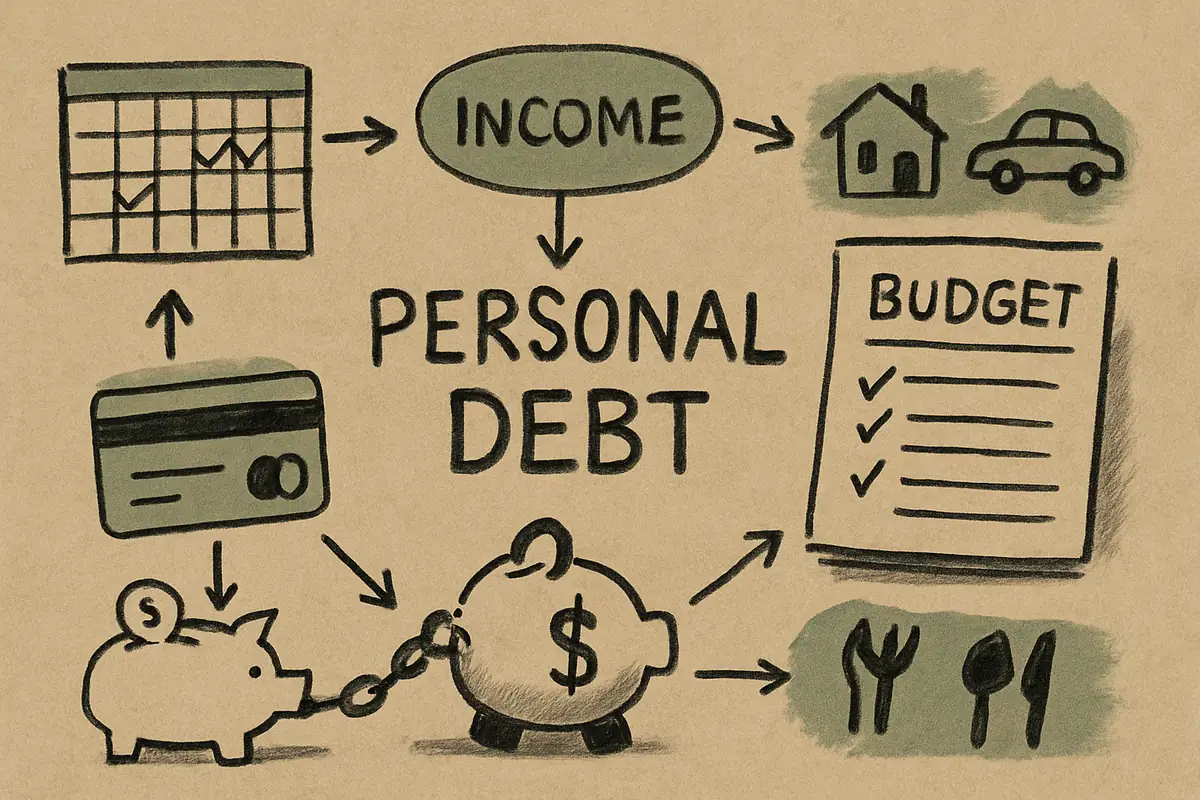
Imagine Sarah and Mike, a couple juggling a $4,500 credit card balance alongside monthly expenses of $3,800 and an irregular income that dips unexpectedly every other month. They’ve heard plenty of advice: pay off the highest-interest debt first, avoid touching savings, or never transfer balances. But in practice, these rules often clash with real-life cash flow ups and downs and the pressure of unexpected costs. This article untangles common myths about personal debt strategies to help you find practical approaches grounded in everyday household realities.
The Myth That All Debt Is Bad and Should Be Eliminated Quickly
Debt often feels like a burden—interest adds up, payments reduce cash available for essentials, and stress mounts. Yet treating all debt as equally harmful oversimplifies the reality. For example, a $250,000 30-year fixed-rate mortgage with an interest rate around 4% is different from a $3,000 credit card balance charging 20% APR (annual percentage rate). The mortgage spreads out payments over time allowing manageable monthly budgets, while credit card debt compounds quickly if not paid down promptly. Households balancing education loans or mortgages alongside emergency savings may find paying off low-interest debts slower but wiser than draining safety nets.
Consider John’s family with steady income but tight cash flow due to childcare costs. They maintain minimum payments on a car loan at 5% interest while gradually building a $1,000 emergency fund. Rushing to eliminate all debt might force them to skip savings contributions and increase vulnerability to unexpected expenses like medical bills or car repairs.
Why Paying Off the Highest-Interest Debt First Isn’t Always Best
Financial advisors commonly recommend the “avalanche method”: prioritize debts with the highest APRs to save on interest over time. While mathematically sound in many cases, it can conflict with behavioral realities. For households with multiple small debts, aggressively targeting the highest APR loan may leave several minimum payments stretched thinly across various accounts, increasing stress and risk of missed payments.
Take Maria’s situation: she carries two credit cards—one at 19% APR with $2,500 balance and another at 23% APR with $600 balance—and a student loan at 6%. Focusing only on the 23% card ignores the psychological relief gained from quickly clearing the smaller $600 balance. This 'snowball effect'—paying off smaller debts first—can improve motivation and free monthly cash flow quicker despite slightly higher total interest paid.
| Debt Type | Balance | APR | Minimum Monthly Payment |
|---|---|---|---|
| Credit Card A | $2,500 | 19% | $75 |
| Credit Card B | $600 | 23% | $25 |
| Student Loan | $12,000 | 6% | $150 |
In this case, paying off Credit Card B first saves Maria from juggling an additional payment each month. After it’s cleared in about 25 months by paying $100 monthly (minimum plus extra), she can redirect funds towards higher-rate debt more confidently.
The Danger of Using Emergency Savings to Pay Down Debt
"Just use your savings to kill that debt," some say—but this advice ignores household risk management. An emergency fund typically holds between three and six months’ worth of essential expenses (usually $9,000 to $18,000 for an average U.S. household). Depleting this cushion to pay off debt leaves families exposed to unexpected events such as job loss or urgent home repairs.
"Lisa had $5,000 saved but was overwhelmed by a $3,200 credit card bill," recalls her experience. "I dipped into my savings thinking I’d refill it later—but then my car broke down unexpectedly two months later." Struggling without backup funds meant relying on new credit at high APRs close to 25%, worsening her overall financial position.
Where readers should be careful
"Do not exhaust your emergency fund solely to pay off personal debt unless you have guaranteed income stability or other secure liquidity sources."
"Balance Transfers Are Always a Smart Solution" — A Closer Look
"Balance transfers" let borrowers move high-interest card balances onto lower-interest or zero-interest promotional accounts. While tempting as a way to cut interest costs temporarily — often zero percent for periods between six and eighteen months — these moves come with potential pitfalls.
"For instance," explains Tom’s situation: "He transferred a $3,000 balance onto a zero-percent offer but forgot about the 3% transfer fee ($90) upfront." Worse yet, he missed the promotional deadline by a month after paying only minimum amounts. His remaining balance started accruing interest at over 22%, adding hundreds of dollars in unexpected charges."
"Where Balance Transfers Help"
- "Lower immediate interest rates can reduce monthly payments.",
- "They provide breathing room when cash flow is temporarily tight.",
- "Can consolidate multiple debts into one manageable payment."
"Where Caution Is Needed"
- "Upfront fees increase overall cost.",
- "Promotional rates expire; missed deadlines lead to high retroactive interest.",
- "Require disciplined repayment plans; otherwise costs escalate."
"Minimum Payments Are Enough" — The Reality Check
"It’s tempting to just stick to minimum monthly payments," says Jamal who juggled medical bills during an unstable work period. However, many rely on minimums that cover primarily interest plus a small principal amount—meaning balances shrink slowly while total interest paid balloons.
"For example," Jamal calculates: "My $3,200 credit card at 21% APR required just $64 minimum per month initially—but if I only paid that amount consistently without extra contributions, it would take over ten years and cost nearly double in total payments due to accrued interest."
| Payment Strategy | # Months to Pay Off | # Total Interest Paid |
|---|---|---|
| Minimum Payments Only ($64) | >120 months | ~$3,100 |
| $150 Monthly Payments | ~28 months | ~$800 |
| $250 Monthly Payments | ~14 months | ~$350 |
"Clearly," Jamal reflects, "pushing beyond minimum payments cuts payoff time drastically and reduces total interest dramatically—even if budgets are tight." However, achieving this requires deliberate budgeting trade-offs elsewhere.
"Debt-Free Means Financial Freedom" — What It Really Takes
"Many believe clearing all debts instantly opens doors to financial freedom," explains Olivia Hayes from her experience helping households plan realistically. Yet freedom depends on more than just no monthly bills—it involves stable income streams, sustainable saving habits for emergencies and future goals, and manageable expenses aligned with lifestyle preferences.
The Psychological Impact of Debt Misconceptions
Understanding the psychological impact of common debt misconceptions is crucial for reshaping how individuals approach their financial health. Many people experience anxiety and stress due to misunderstandings about personal debt, which can lead to avoidance behaviors such as ignoring bills or delaying conversations with creditors. This avoidance, often fueled by myths that debt is inherently shameful or that only irresponsible people fall into debt, exacerbates financial problems instead of resolving them. When these negative emotions take hold, they can create a cycle where fear prevents proactive management and negotiation, ultimately worsening credit scores and increasing interest costs. Recognizing that debt is a manageable financial tool and not a character flaw can help reduce the stigma and encourage healthier decision-making.
Moreover, the belief that debt should be paid off as quickly as possible without regard to other financial priorities can cause additional stress. Individuals may sacrifice emergency savings or retirement contributions in favor of aggressive debt repayment, leaving themselves vulnerable to unexpected expenses that could lead back into debt. By dispelling myths around the urgency and absolute nature of debt repayment, people can adopt balanced strategies that both reduce liabilities and maintain financial resilience. Financial education that addresses emotional responses to debt alongside practical advice helps foster a more empowered mindset, enabling individuals to tackle their obligations constructively rather than reactively.
Why Minimum Payments Are Not Always a Poor Strategy
One widespread misconception is that making only minimum payments on credit cards or loans is a terrible financial habit that should be avoided at all costs. While it’s true that paying minimum amounts leads to higher interest costs over time and extends the repayment period, this strategy can sometimes be a practical short-term solution depending on individual circumstances. For example, if someone is facing an unexpected reduction in income or has multiple debts with varying interest rates, focusing on minimum payments allows them to stay current on obligations without risking late fees or damage to their credit score. Simultaneously, this approach frees up cash flow for essential expenses like housing or healthcare during difficult periods.
Additionally, minimum payments are often structured to keep borrowers in good standing while they arrange more sustainable repayment plans or seek professional advice. Paying only the minimum temporarily doesn’t mean one is reckless; it can be part of a broader strategy when combined with budgeting adjustments and long-term planning. Of course, prolonged reliance on minimum payments isn’t ideal because it accrues significant interest cost and delays becoming debt-free. However, debunking the myth that minimum payments are always financially destructive helps individuals avoid unnecessary guilt and understand how to use this option strategically without fear.
The Role of Debt Consolidation: Advantages and Cautions
Debt consolidation is often misunderstood as a quick fix for managing personal debt problems when in fact it requires careful consideration and planning. At its core, debt consolidation involves combining multiple debts into one loan or payment plan with the intention of simplifying finances and potentially reducing interest rates or monthly payments. This approach can be particularly beneficial for individuals juggling high-interest credit cards or several small loans by creating one manageable payment schedule. Additionally, consolidation may improve one’s ability to budget effectively since it replaces multiple due dates with a single deadline.
However, it’s important to recognize the limitations and risks associated with consolidation strategies. For example, some consolidation loans extend repayment terms significantly, which might lower monthly payments but increase total interest paid over time. Moreover, consolidating unsecured debt into secured loans—such as home equity loans—can put valuable assets at risk if repayments falter. There’s also the danger of accumulating new debts after consolidation if underlying spending habits aren’t addressed through education and discipline. As such, while consolidation is a powerful tool when applied appropriately, it’s not an automatic solution and should be coupled with behavioral changes for lasting impact.
Misunderstandings About Debt Settlement Programs
Debt settlement programs are frequently portrayed negatively in popular discourse as scams or traps; however, understanding their nuances reveals they can offer legitimate relief options for certain individuals facing overwhelming unsecured debts. In these programs, consumers negotiate with creditors to reduce the total amount owed in exchange for lump-sum settlements or structured payment plans that are less than full balance amounts. While this approach might affect credit scores temporarily and usually involves upfront fees charged by service providers, it can provide a path out of unmanageable debts when bankruptcy isn’t desirable or necessary.
It is critical for consumers considering debt settlement to thoroughly research reputable companies and understand all contractual terms before committing. Some misconceptions arise from unscrupulous operators exploiting vulnerable clients who don’t fully grasp potential consequences like tax liabilities on forgiven amounts or longer repayment horizons than initially expected. When approached carefully with realistic expectations and professional counseling support, settlement programs represent an alternative worth exploring compared to more drastic measures such as bankruptcy filings.
"Good Debt" Versus "Bad Debt": A More Nuanced View
"Good debt" versus "bad debt" classifications are common but oversimplified frameworks that fail to capture complexities inherent in personal finance decisions. Often labeled as good are student loans or mortgages because they invest in future earning potential or asset accumulation; bad debts typically include high-interest consumer credit used for discretionary spending like vacations or luxury items. Although useful as broad guidelines, these categories do not consider variables such as individual income stability, interest rates relative to investment returns, tax implications, or personal goals.
For instance, taking on moderate consumer debt could make sense if it enables access to necessary transportation for employment or covers urgent medical needs that would otherwise compromise wellbeing or earning capacity. Conversely, carrying mortgage balances beyond affordable limits might cause prolonged financial stress despite being traditionally viewed as good debt. By moving beyond simplistic labels toward an individualized assessment incorporating risk tolerance and cash flow analysis, borrowers develop more effective strategies tailored to their unique situations rather than adhering rigidly to generalized myths.
The Role of Interest Rates in Debt Management
One of the most misunderstood aspects of personal debt strategies is the influence of interest rates on repayment plans. Many individuals assume that paying off any debt as quickly as possible is always the optimal route, but this approach overlooks how interest rates can drastically affect total repayment amounts. For example, high-interest credit card balances accrue interest daily, causing the debt to balloon if minimal payments are made. Conversely, low-interest debts like some student loans or mortgages might be less urgent to pay off immediately if you have other debts with higher costs. Understanding how to prioritize debts based on their interest rates can save significant money over time and improve overall financial stability.
A practical application of this insight is the 'avalanche method' for debt repayment, which focuses on paying down debts with the highest interest rates first while maintaining minimum payments on others. This strategy minimizes total interest paid and accelerates becoming debt-free. However, it requires discipline and financial tracking. Alternatively, some prefer the 'snowball method', focusing on smaller debts first for psychological wins despite potentially higher costs. Each method suits different personality types and financial situations, but awareness of interest rate impacts should guide decision-making rather than emotions alone.
Furthermore, monitoring changes in interest rates, especially for variable-rate loans or credit products, is critical. Economic fluctuations can alter your repayment landscape significantly. For instance, if a variable-rate loan's interest climbs, its monthly obligations may increase unexpectedly, making it harder to stay current and avoid penalties. Proactively refinancing or consolidating high-rate debts when favorable terms arise can be a savvy move to reduce costs and simplify payments.
Myth: Debt Consolidation Always Solves Financial Problems
Debt consolidation is often promoted as a universal fix to personal debt woes, but this perception can be misleading. While consolidating multiple debts into a single loan with a lower interest rate or monthly payment can streamline finances and reduce stress, it doesn't inherently resolve underlying spending habits or financial shortfalls. If the root causes of accumulating debt—such as overspending or insufficient income—are not addressed alongside consolidation efforts, there's a risk of falling back into debt even faster.
Moreover, some consolidation options come with hidden costs or risks. For example, consolidating unsecured credit card debts into a secured loan using your home as collateral might lower monthly payments but places your property at risk if payments are missed. Additionally, extending the repayment period reduces monthly strain but often results in paying more interest overall. It's crucial to carefully evaluate loan terms and consider whether consolidation aligns with long-term financial goals rather than offering only short-term relief.
Debt consolidation can also impact credit scores differently depending on how it's executed. Opening new accounts to consolidate may cause temporary dips in credit scores due to hard inquiries and account ages changing. On the flip side, successfully managing consolidated loans by making timely payments can improve credit profiles over time. Consulting with a financial advisor or counselor before pursuing consolidation ensures that decisions are informed by personalized circumstances rather than general hype.
The Psychological Dimensions of Debt Repayment
Personal debt isn’t solely a numbers game; psychological factors play a powerful role in how individuals approach repayment strategies. Misconceptions about discipline and self-control often ignore emotional influences such as stress, fear, and optimism bias—the tendency to believe one will earn more in the future and thus delay aggressive repayments today. Recognizing these mental barriers is essential because they shape behaviors that impact financial outcomes.
For example, some people experience paralysis from feeling overwhelmed by multiple debts and avoid confronting their financial realities altogether. Others may adopt an overly aggressive payoff plan that leads to burnout or neglecting other important expenses like emergency savings or health care. Balancing emotional well-being with pragmatic planning supports sustained progress toward reducing debt without sacrificing quality of life.
Incorporating behavioral techniques such as setting small achievable milestones, celebrating incremental successes, or automating payments can enhance motivation and consistency in managing debts. Moreover, seeking support through peer groups or professional counseling provides accountability and reduces isolation—two factors that significantly improve persistence in long-term financial commitments.
Common Misconceptions About Debt Forgiveness Programs
Debt forgiveness programs are often seen as quick escapes from overwhelming financial burdens; however, they come with specific conditions that many overlook. For instance, student loan forgiveness programs might require continued employment in certain public service fields for years before benefits apply. Additionally, forgiven amounts may be considered taxable income by tax authorities unless specific exemptions exist.
Similarly, credit card companies sometimes offer hardship programs that reduce balances or freeze interest temporarily during financial emergencies but usually require evidence of hardship and consistent communication to avoid defaulting later on. Blanket assumptions that forgiveness equates to complete debt erasure without consequences can lead individuals to misunderstand eligibility criteria or become complacent about managing overall finances.
"Knowing exactly which debts qualify for forgiveness and under what circumstances allows consumers to make informed choices rather than relying on hearsay or incomplete information." Consulting official program guidelines or reputable financial counselors is advisable before pursuing such options so that expectations align realistically with outcomes.
References
- https://www.fdic.gov/resources/consumers/
- https://www.fdic.gov/resources/consumers/money-smart/
- https://www.mymoney.gov/
- https://www.consumerfinance.gov/consumer-tools/educator-tools/your-money-your-goals/
- https://www.federalreserve.gov/consumerscommunities/shed.htm
- https://www.fdic.gov/resources/deposit-insurance/