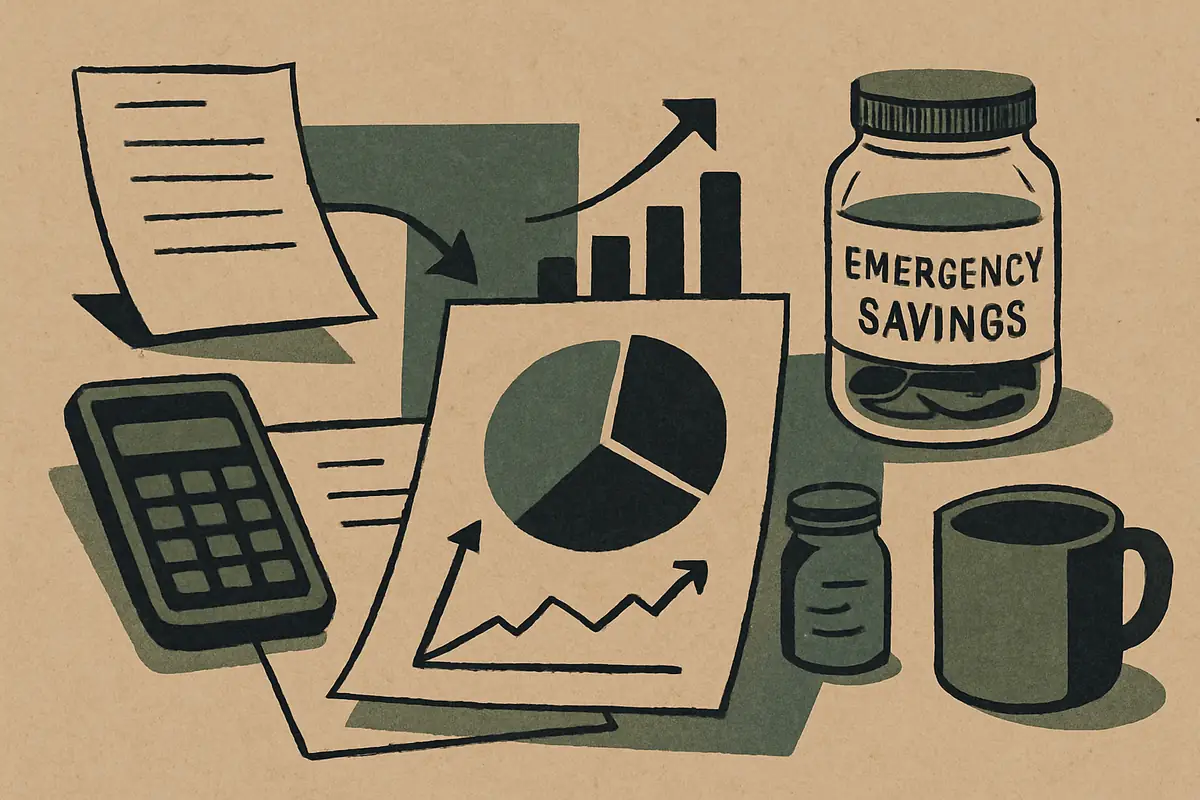
Financial discipline is more than a matter of personal resolve—studies show that nearly 60% of adults struggle to consistently stick to a budget due to a mix of emotional, environmental, and practical factors. Everyday routines, stress, and the constant trade-offs required by modern life have a far greater impact on money management than sheer willpower alone. Even households with steady incomes and good intentions report that maintaining discipline is an ongoing process shaped by both predictable routines and unexpected events.
Misconception: Discipline Is About Unyielding Budgets, Not Adaptable Strategies
Many envision financial discipline as a strict system—never overspending, tracking every cent, and never making mistakes. In reality, only a small fraction of households (typically under 20%) report adhering perfectly to a fixed budget each month. Most people face fluctuating expenses, such as medical bills, car repairs, or seasonal costs, which can range from $200 to over $1,000 unexpectedly. The notion that discipline means perfection ignores the reality that most budgets require frequent adjustments.
For example, if a family’s monthly savings goal is $300 but an urgent $450 car repair arises, reallocating funds for the repair is not a failure—it is a practical response. Over a year, such one-off expenses can total between $1,500 and $3,000 for an average household. Recognizing that flexibility is a core part of discipline helps reduce frustration and supports long-term persistence.
Scenario: How a Weekend Budget Slip-Up Typically Happens
How this can look in practice
Consider a household that carefully tracks their spending throughout the week, allocating $150 for groceries and $100 for utilities. On Friday, after a demanding workweek and multiple children’s activities, they opt for $40 takeout instead of the planned home-cooked meal. Initially, guilt sets in—they exceeded their $50 weekly dining-out budget. But by reviewing their overall spending, they see that this occasional choice doesn’t derail their monthly goals if balanced elsewhere.
This scenario illustrates how emotional exhaustion and timing can undermine even well-laid financial plans. Surveys suggest that 65% of adults make at least one unplanned purchase per week, often triggered by stress or fatigue. Rather than viewing these moments as total setbacks, accepting them as normal parts of life can prevent the all-or-nothing mentality that leads to abandoning budgets altogether.
Emotion Often Overrides Logic in Financial Choices
Emotions such as fear, pride, shame, and hope deeply influence money decisions. For instance, nearly 70% of people admit to spending more when feeling anxious or seeking a mood boost, a behavior commonly called "retail therapy." Avoiding bills due to anxiety is also widespread, with up to 35% of adults delaying checking account balances after stressful events. These emotional responses can easily overpower rational financial plans, especially when immediate comfort or relief is at stake.
Psychological research indicates that short-term emotions often outweigh long-term objectives. For example, the prospect of building an emergency fund—typically recommended at $1,000 to $3,000 for initial security—rarely feels as urgent as the instant gratification of a $60 night out or a $120 new gadget. This emotional mismatch helps explain why only about 40% of households have even one month’s worth of expenses saved.
Emotional triggers
Identify which moods or situations prompt your spending or saving habits; for example, note if boredom leads to online shopping or if stress results in skipping bill reviews.
Stress awareness
Recognize when high stress—such as after work deadlines or family emergencies—makes it harder to stick to planned spending limits.
Goal reminders
Use visible reminders, like a note on your fridge or a phone alert, to reinforce long-term goals such as saving $200 monthly for emergencies.
Comparing Willpower and Habit Formation in Money Management
The belief that willpower alone drives financial success overlooks the power of habits—automatic behaviors shaped by repetition. For example, setting up automatic bill payments or reviewing budgets every Sunday evening reduces decision fatigue and makes discipline more sustainable. Habit formation, which can take anywhere from 21 to 66 days according to behavioral science, gradually automates positive financial behaviors.
Small, consistent steps—such as increasing savings by $25 per paycheck—are more effective than drastic, short-lived efforts. Consider this calculation: If you save $25 from each biweekly paycheck, that’s $50 per month. Over a year, this adds up to $600. If you increase your savings by $10 every three months, by the end of the year, you’ll be saving $55 per paycheck, totaling $1,260 annually. This incremental approach aligns with how the brain forms habits and is easier to maintain than sudden, large sacrifices.
Time Constraints Significantly Influence Financial Management
"Time poverty"—the feeling of having too little free time—impacts over 40% of adults who say they struggle to prioritize money management amid work, childcare, and household tasks. Expecting to spend an hour each week on detailed budgeting is unrealistic for many. As a result, streamlined strategies tend to be more effective: setting up automatic bill pay, using banking apps for quick balance checks, or scheduling 10-minute weekly reviews can help maintain control without overwhelming your schedule.
For example, a simple alert for a $100 utility bill due date can prevent late fees (which often range from $25 to $40 per missed payment). More than half of adults (55% to 65%) now use digital reminders or budgeting apps to simplify their routines. Overly complex systems, on the other hand, can backfire—leading to avoidance and missed payments.
Why One-Size-Fits-All Financial Solutions Rarely Work
Financial advice often assumes universal applicability, but individual needs and emotional styles vary widely. For instance, zero-based budgeting—which allocates every dollar of income to a specific expense or savings goal—can be effective for those with predictable incomes, but may feel restrictive to people with variable pay or high unexpected costs. Flexible systems, such as the envelope method (dividing cash into categories like groceries, gas, and entertainment), suit those with fluctuating income but may lack precision, increasing the risk of overspending.
For families with irregular income, budgeting for a "buffer" of $200 to $500 monthly can help absorb surprise expenses. Others may prefer broad spending limits—such as capping monthly dining out at $150—rather than tracking every purchase. Tailoring methods to your circumstances can reduce burnout: about 30% of people abandon strict systems within six months if they feel too restrictive, while those who personalize their approach are more likely to stick with it.
| Approach | Who It Fits | Possible Pitfalls |
|---|---|---|
| Strict Monthly Budgeting | Those with steady income who enjoy detailed plans | Can cause guilt if unexpected expenses arise |
| Flexible Envelope System | People with irregular income needing adaptable spending categories | May lack precision leading to overspending |
| Automated Savings & Bills | Busy individuals needing low-effort solutions | Less immediate control may cause oversight |
| Simple Spending Limits | Those preferring broad guardrails instead of detailed tracking | May allow unnoticed creeping expenses |
Takeaway: Realistic Financial Discipline Starts With Self-Awareness
Understanding your own spending triggers—like stress-induced splurges or procrastinating on bill payments—enables you to make gradual, meaningful changes. Pairing financial tasks with enjoyable routines, such as reviewing your budget over Saturday morning coffee, can transform chores into positive habits. This approach is supported by behavioral science, which shows that coupling new habits with existing ones increases the likelihood of long-term success.
Identify Your Spending Patterns
Track your expenses for two weeks to see where money naturally flows—many find that 10–15% of their budget goes to discretionary purchases, often unnoticed.
Set Flexible Goals
Allow for adjustments, such as shifting savings targets by $50–$100 in months with higher expenses.
Create Supportive Routines
Choose regular, low-stress times for money tasks—such as a 15-minute check-in each Sunday evening.
A Closer Look: Emergency Savings Are Challenging But Essential
While experts recommend having three to six months’ worth of living expenses in an emergency fund, 45% to 55% of households have less than $1,000 saved. Competing priorities—like paying down credit card debt (with average APRs, or annual percentage rates, between 18% and 30%) or covering day-to-day costs—often push savings lower on the list. Even small, regular contributions can add up: saving just $20 per week builds over $1,000 in a year, providing a crucial buffer against unexpected setbacks such as medical bills or car repairs.
Habit Formation Is the Foundation of Financial Discipline
Financial discipline depends heavily on the science of habit formation. A habit is an automatic behavior triggered by a specific cue—for example, transferring $50 to savings every payday. Once established, habits require far less conscious effort. Neuroscience shows that repeating an action strengthens neural pathways, making the behavior more automatic over time. For money management, automating savings or scheduling weekly budget reviews can reduce the need for constant decision-making and help bypass impulsive spending urges.
Building habits also shapes identity. When someone consistently saves, they begin to see themselves as a "saver," reinforcing disciplined behavior. Linking new financial habits to existing routines—such as reviewing expenses during a daily coffee break—makes them easier to maintain. Using reminders or small rewards, like enjoying a favorite snack after paying bills, can further anchor these habits. Gradual habit building, rather than drastic changes, is more likely to result in lasting financial discipline.
Emotional Triggers Strongly Influence Spending Decisions
Emotions are a powerful force in spending behavior, often overriding rational plans. For example, "retail therapy"—spending to boost mood—accounts for 20% to 35% of unplanned purchases. Recognizing emotional triggers such as anxiety, boredom, or excitement can help prevent impulsive spending. Techniques like mindfulness or pausing for five minutes before a purchase can reduce reactionary spending by up to 30% according to behavioral studies.
Positive emotions tied to saving or achieving financial goals should also be encouraged. Celebrating milestones, such as reaching a $500 savings goal or paying off a $1,000 credit card balance, reinforces good habits through the brain’s reward system. Increasingly, financial education includes emotional intelligence training, helping individuals identify triggers and build resilience for more consistent money management.
Social Norms and Peer Influence Affect Financial Decisions
Community standards and peer behaviors significantly shape individual financial choices. In environments where visible consumption is common, people may feel pressure to spend more on clothing, dining, or technology—sometimes exceeding their budgets by 10% or more. Conversely, being part of a group that values saving and long-term planning can support disciplined financial habits.
Social media amplifies these effects, with curated images of luxury lifestyles setting unrealistic benchmarks. Awareness of these influences allows for more intentional choices. Joining peer groups focused on shared financial goals or participating in online budgeting communities can increase accountability. Open conversations about money within families or friend circles also help normalize budgeting challenges and encourage collaborative problem-solving.
Cognitive Biases Create Obstacles to Financial Discipline
Cognitive biases—mental shortcuts that simplify decision-making—can distort financial judgments. For example, hyperbolic discounting (preferring small immediate rewards over larger future gains) explains why many people choose a $50 dinner out today over adding the same amount to retirement savings. Loss aversion, the tendency to feel losses more strongly than equivalent gains, can lead to overly conservative investing or reluctance to cut unnecessary expenses, even when it would be beneficial.
Overcoming these biases involves creating pre-commitment strategies, such as automatic savings transfers or setting spending caps. Cognitive behavioral techniques, like visualizing the benefits of long-term saving, can help reframe decisions. Educating yourself about common biases increases self-awareness, making it easier to manage money reflectively rather than reactively.
Goal Setting Drives Sustainable Financial Discipline
Clear, specific financial goals are essential for maintaining discipline. For example, saving $2,000 for a vacation over 12 months requires setting aside about $167 per month. Breaking large goals into smaller milestones—such as saving $40 each week—makes progress more visible and attainable. Writing down goals activates commitment and increases the likelihood of follow-through: people who document their goals are up to 40% more likely to achieve them.
Effective goal setting includes measurable targets and regular check-ins. For instance, reviewing progress every month and adjusting as needed—such as lowering a savings target during a high-expense period—keeps goals realistic and motivation high. This approach helps anchor daily decisions in long-term priorities, making it easier to resist impulsive spending and stay on track.
Takeaway: Applying Psychological Insights to Everyday Financial Planning
References
- https://www.fdic.gov/resources/consumers/money-smart/
- https://www.fdic.gov/resources/consumers/
- https://www.consumerfinance.gov/consumer-tools/educator-tools/your-money-your-goals/
- https://www.federalreserve.gov/consumerscommunities/shed.htm
- https://www.mymoney.gov/
- https://www.consumerfinance.gov/consumer-tools/