Imagine you’re standing in front of a wall filled with dozens of credit card options. Each one promises rewards, low interest, or no fees—but how do you know which offer truly fits your financial habits? Choosing the right credit card is more than picking the shiniest reward or the splashiest sign-up bonus. It involves looking closely at how fees, interest rates, statement cycles, and your spending behavior all work together to affect your wallet and credit score. This article walks you through what matters most so you can decide on a card that serves you well over time.
What’s the real cost of borrowing on a credit card?
When evaluating any credit card offer, start with the Annual Percentage Rate (APR). The APR represents the yearly cost of borrowing if you carry a balance. Credit cards typically advertise APRs ranging from about 18% to 30%. For example, if you carry a $3,000 balance on a card with a 24% APR, you could pay roughly $60 in interest each month if you don't pay down principal—because 24% annually breaks down to about 2% monthly interest (24% ÷ 12 months). That means carrying a balance is expensive and can quickly add up.
Understand that APR isn’t just about the number. It matters when it starts to apply. Most cards have grace periods—often around 21 to 25 days after your statement closes—during which you can pay off your balance without interest. But if you don’t pay in full by then, interest accrues retroactively on purchases made during the billing cycle. So even if the APR looks low compared to others, missing payments or carrying balances erodes the benefit.
How do statement cycles and payment timing affect my costs?
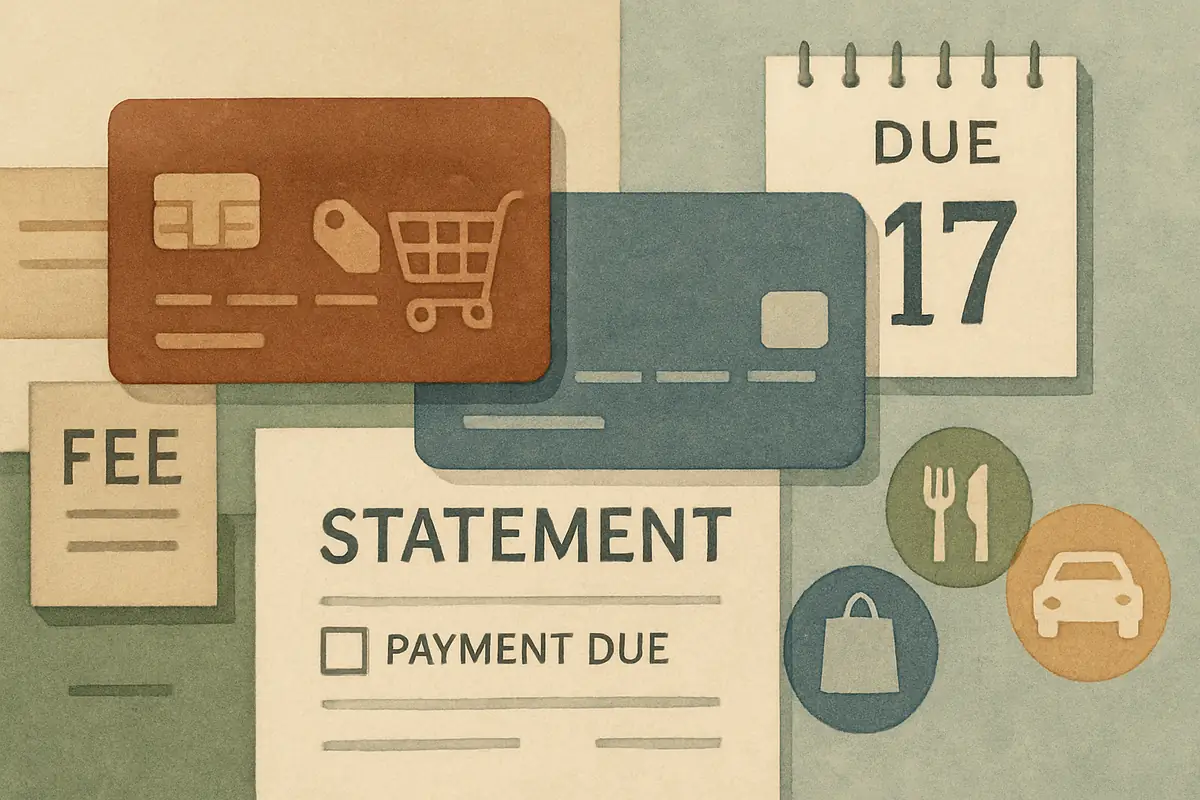
Credit cards operate on billing or statement cycles that usually last about 28 to 31 days. Each cycle ends with a statement date that summarizes your transactions and outstanding balance. After that date, you'll have a payment due date—typically 20 to 25 days later—to pay off all or part of your balance.
Understanding this timeline matters because your minimum payment amount depends on your balance as of the statement date. Minimum payments are often calculated as around 1% to 3% of the outstanding balance plus any fees or accrued interest. For example, if your statement shows a $2,500 balance and the minimum payment is 2%, you’ll owe $50 this month. Paying only minimums stretches out repayment and greatly increases total interest paid over time.
What hidden fees should I watch out for when choosing a card?
Besides interest, many credit cards come with fees that may catch consumers off guard if not carefully checked. Common fees include annual fees ranging from $0 up to $550 for premium travel cards. Some cards waive this fee for the first year but charge later.
Other fees include: balance transfer fees (typically 3% to 5% of transferred amount), cash advance fees (usually around $10 or 5%), late payment penalties (commonly $25–$40), and foreign transaction fees often around 1% to 3%. Each can add unexpected costs depending on how you use your card.
Where this helps
- Knowing fees prevents surprise charges that damage budgets.
- Comparing fee structures helps match cards to spending habits.
- Awareness encourages timely payments and fee avoidance.
Where caution is needed
- Ignoring small fees can lead to expensive long-term costs.
- Some cards’ rewards don’t offset high annual fees.
- Balance transfers can become costly if overlooked.
How important are rewards programs compared to costs?
Rewards like cash back, points, or miles attract many consumers. While these perks add value, they rarely outweigh high interest rates or heavy fees if you carry balances or miss payments.
Look closely at reward earning rates—typical cash back ranges from 1% to 5%. For example, spending $1,000 monthly at a 2% cash back rate earns $20 per month in rewards. However, if carrying a $1,000 balance at an APR of 22%, monthly interest charges would amount to approximately $18 (22% ÷ 12 × $1,000), nearly wiping out those rewards if not paid in full each month.
How does credit utilization impact my credit score?
Credit utilization is the ratio of your current credit card balances relative to your total credit limits. It’s a key factor in calculating credit scores and generally recommended to keep below 30%. For someone with a combined credit limit of $10,000 across all cards, maintaining balances under $3,000 helps maintain good scoring.
If you max out or regularly use over half of available credit on one card—even if paying on time—credit scoring models may penalize your utilization ratio as higher risk. Choosing cards with sufficient limits lets you manage utilization better without overspending.
What role does fraud protection and security play in card selection?
Scenario: Spotting fraud fast saves money and stress
Jennifer noticed an unfamiliar charge on her mobile banking app showing $350 from an online store she didn’t shop at. Thanks to her card’s zero-liability fraud policy and quick reporting procedures, she contacted her issuer immediately and had the charge removed within days without being responsible for payment. Her new card also offered instant transaction alerts via text message — helping catch issues early.
Look for features like zero liability on unauthorized charges and real-time alerts when evaluating offers. These protections reduce potential losses and stress—and they don’t usually cost extra but vary by issuer.
Are introductory offers worth considering carefully?
Many cards offer low introductory APRs on purchases or balance transfers—often between zero percent and around 5%, lasting from six months up to eighteen months. These deals help save money if used strategically but come with fine print.
'Introductory' means that after this period ends, regular APRs apply—and those are often quite high. Also watch out for upfront balance transfer fees around 3%-5%, which can offset savings if transferring large amounts.
| Feature | Typical Range | Consumer Tip |
|---|---|---|
| Introductory Purchase APR | 0%-5%, lasting 6-18 months | Use only for planned purchases; pay off before period ends |
| Balance Transfer Fee | 3%-5% | Calculate upfront cost vs expected interest saved |
| Post-Introductory APR | 18%-30% | Avoid carrying balances beyond intro term |
How does making only minimum payments affect me over time?
'Minimum payments' are set at a small percentage of your balance—usually between 1% and 3%. Paying only these amounts slows down payoff dramatically while increasing total interest paid.
'Let’s say Sarah has a $3,000 balance with an APR of 24%. With a minimum payment rate at 2%, her initial payment would be $60.'
If she continues paying only minimums without adding extra funds towards principal each month, it could take years—sometimes over ten years—to clear the debt fully while incurring thousands in interest alone. Increasing monthly payments reduces cost and payoff time significantly.
How do annual fees compare against no-fee options?
Some credit cards charge annual fees ranging from $25 up to $550 for premium benefits like travel perks or higher reward rates. While these benefits may add value for frequent users who redeem rewards often or travel regularly, casual users may find no-fee cards more economical overall.
For example, suppose you spend about $1,200 per month on a no-fee card earning 1.5% cash back—that’s roughly $18 earned per month ($216 annually). If a comparable card charges a $95 annual fee but offers rewards worth about $150 annually based on spending patterns plus perks like free checked bags or lounge access that you use regularly—that may justify the fee.
Where annual-fee cards help
- Higher reward earning rates justify fee with enough spending.
- Premium benefits valuable for travelers or specific needs.
- Sometimes better fraud protection or concierge services included.
Where caution applies
- Fees add ongoing cost even if spending fluctuates.
- Benefits may remain unused by infrequent users.
- Can increase break-even requirements for net rewards gain.
What behavioral habits maximize benefits from credit cards?
Choosing the right card is only half the story—you also need good habits to avoid hidden costs:
- Pay full balances during grace periods whenever possible to avoid interest.
- Never skip payments; late fees add unnecessary expenses.
- Keep utilization below about 30%; spread spending across multiple cards if needed.
- Review statements carefully each billing cycle; report unfamiliar charges fast.
- Match reward categories with regular spending patterns to get consistent returns.
- Avoid excessive cash advances due to high fees and immediate interest starts.
- Consider how statement dates align with pay cycles for easier budgeting.
These simple behaviors prevent excessive finance charges while letting rewards earn steadily—helping build positive credit history without costly pitfalls.
Does applying for multiple cards hurt my credit score?
Each application results in a hard inquiry which may lower scores slightly temporarily (typically by few points). Multiple inquiries within short time frames (about two weeks) often count as one under newer scoring models. However, opening several new accounts rapidly may signal riskiness in some cases.
Can I negotiate terms like APR or fees?
Sometimes yes—especially if you have good standing with an issuer already. Calling customer service after receiving an offer can help lower rates or waive certain fees occasionally based on history.
What happens if I miss a payment due date?
Missing payments triggers late fees ($25-$40), raises APR possibly into penalty ranges above standard rates (upwards of ~30%), hurts scores due to negative reports after about 30 days delinquent, and impacts reward eligibility until caught up.
Understanding Interest Rates and How They Affect Your Wallet
Interest rates are one of the most critical factors when evaluating credit card offers, yet many consumers overlook their long-term impact. The annual percentage rate (APR) determines how much you will pay in interest if you carry a balance beyond the grace period. It’s important to distinguish between different types of APRs on a card: purchase APR, balance transfer APR, cash advance APR, and penalty APR. These rates can vary widely depending on the issuer and your creditworthiness. For someone who tends to pay off their balance monthly, the interest rate might seem less relevant, but for those who occasionally carry balances, understanding the true cost of these rates is essential for making an informed choice.
Moreover, some credit cards offer variable APRs linked to an index rate like the prime rate, meaning your interest costs could increase over time. Others feature introductory 0% APR periods that can save money during initial months but revert to higher rates later. If you anticipate needing to carry a balance or transfer existing debt, assessing both the standard and introductory rates alongside their duration helps avoid unexpected expenses. Comparing APRs across different cards should be paired with considering fees and rewards to identify which offer aligns best with your financial habits and goals.
In addition to the numerical value of the APR, it’s wise to understand how interest is calculated—daily balance method versus average daily balance method—as this affects your monthly charges. Some issuers may compound interest daily, which can increase costs if balances aren’t paid in full promptly. Knowing these nuances provides greater clarity on the true affordability of a credit card and enables better financial planning.
Evaluating Rewards Programs: More Than Just Points and Cash Back
Rewards programs are often the headline feature in credit card marketing, but not all rewards are created equal. When assessing rewards offers, consider how they fit with your spending patterns and lifestyle. For example, a card offering high cashback on dining and travel may be highly beneficial for frequent travelers or food enthusiasts but less valuable for someone who spends primarily on groceries or gas. Analyzing category bonuses and limits on rewards earning can help you maximize benefits without overspending just to reach thresholds.
Additionally, look closely at redemption options for points or miles. Some cards allow flexible use across various travel partners or statement credits, while others restrict redemptions to specific products or services with unfavorable conversion rates. Consider whether you prefer simple cashback returns or are willing to navigate complex loyalty programs that might require strategic planning to extract maximum value.
Remember that high rewards rates sometimes come with trade-offs such as annual fees or higher interest rates. Calculating whether your expected rewards earnings will outweigh these costs is crucial before committing. For instance, if a card charges a $95 annual fee but offers substantial perks like airport lounge access or enhanced purchase protections that you value, the net benefit might justify the expense.
Finally, assess any caps or expiration policies linked to rewards points to avoid losing accrued benefits unexpectedly. Some programs expire points after a period of inactivity or limit how many points can be earned per category each billing cycle. Understanding these rules prevents frustration and ensures you get full value from your chosen credit card.
Weighing Fees Beyond the Annual Charge
While annual fees are often the most obvious charges associated with credit cards, other fees can quietly erode your savings if unnoticed. Common fees include late payment fees, over-the-limit fees, foreign transaction fees, balance transfer fees, and cash advance fees. Each type serves different purposes but can significantly add up depending on your usage patterns.
For example, if you travel internationally regularly, foreign transaction fees—usually around 3% per purchase—can quickly inflate costs on everyday expenses abroad. In contrast, some premium cards waive this fee entirely as part of their perks. Similarly, balance transfer fees typically involve a percentage of the transferred amount and should be factored into calculations when consolidating debt.
Another consideration is how strict issuers are with late payments or going over your credit limit. Frequent late payment penalties not only hurt your wallet but also damage your credit score over time. Paying close attention to grace periods for payments and knowing any potential waiver policies during hardships can help manage costs effectively.
Assessing Credit Limits and Their Impact on Financial Flexibility
Credit limits signal how much borrowing power you have available on a given card and affect utilization ratios important for credit scores. When evaluating offers, consider whether the issuer typically grants limits that meet your anticipated needs without tempting excessive spending beyond means.
A higher credit limit can provide financial flexibility during emergencies or large purchases but comes with responsibility to avoid ramping up debt levels unfavorably. Conversely, lower limits might encourage disciplined spending habits yet risk maxing out quickly if unexpected expenses arise.
Some cards allow users to request limit increases after demonstrating responsible use over time; knowing this policy upfront might influence your choice if initial limits seem insufficient. Additionally, balancing limits across multiple cards can optimize overall utilization ratios while providing backup options when one card reaches its cap.
Understanding Additional Card Benefits That Enhance Value
Beyond basic features like interest rates and rewards, many credit cards now offer supplementary benefits which can add substantial value depending on individual circumstances. Examples include travel insurance coverage for trip cancellations or lost luggage, purchase protection against theft or damage within certain timeframes post-purchase, extended warranties beyond manufacturer guarantees, rental car insurance waivers, concierge services for event bookings or reservations, and fraud liability protection minimizing consumer risk in case of unauthorized transactions.
When evaluating these perks, consider how frequently you might utilize them versus paying separately for equivalent services elsewhere. A card offering comprehensive travel insurance could save hundreds during unforeseen events abroad while also providing peace of mind at no additional cost each year beyond any annual fee charged.
However attractive these benefits seem initially, always read fine print carefully since coverage limits and exclusions vary widely among issuers and products. Some protections require enrolling specific purchases using your card; others exclude certain categories like expensive electronics or pre-existing conditions for medical coverage claims.
The Importance of Customer Service Quality in Credit Card Selection
While tangible features often dominate decision-making criteria when choosing credit cards, customer service quality should not be underestimated as it directly influences user experience during routine account management or crisis situations such as disputed charges or fraud alerts.
Assess factors like availability of 24/7 support via phone or chat platforms; responsiveness based on consumer reviews; clarity in communication regarding statements and billing disputes; ease of accessing online portals; mobile app functionality allowing swift payments or monitoring; as well as proactive fraud detection measures alerting users quickly about suspicious activity.
Having reliable customer support reduces stress when addressing problems promptly prevents escalation into financial losses or negative credit impacts resulting from unresolved issues. Testimonials from friends or trusted online communities can provide insight about real-world support experiences beyond glossy marketing promises.
Where this helps
- Potential savings through introductory APR offers
- Reward opportunities tailored to spending habits
- Additional protections like travel insurance
- Convenient access via digital banking apps
- Possibility of increasing credit limits over time
Where caution is needed
- Hidden fees such as foreign transaction charges
- Complex reward redemption rules
- High penalties for late payments
- Variable interest rates that may rise unexpectedly
- Annual fees potentially outweighing benefits