Imagine carrying a $3,000 credit card balance for a few months. How much will you pay in interest if your card has a fixed APR versus a variable APR? Which structure could lead to surprises or savings? This article explores these questions by comparing fixed and variable credit card APRs in everyday terms, using concrete examples and real cost calculations.
What Exactly Are Fixed and Variable APRs?
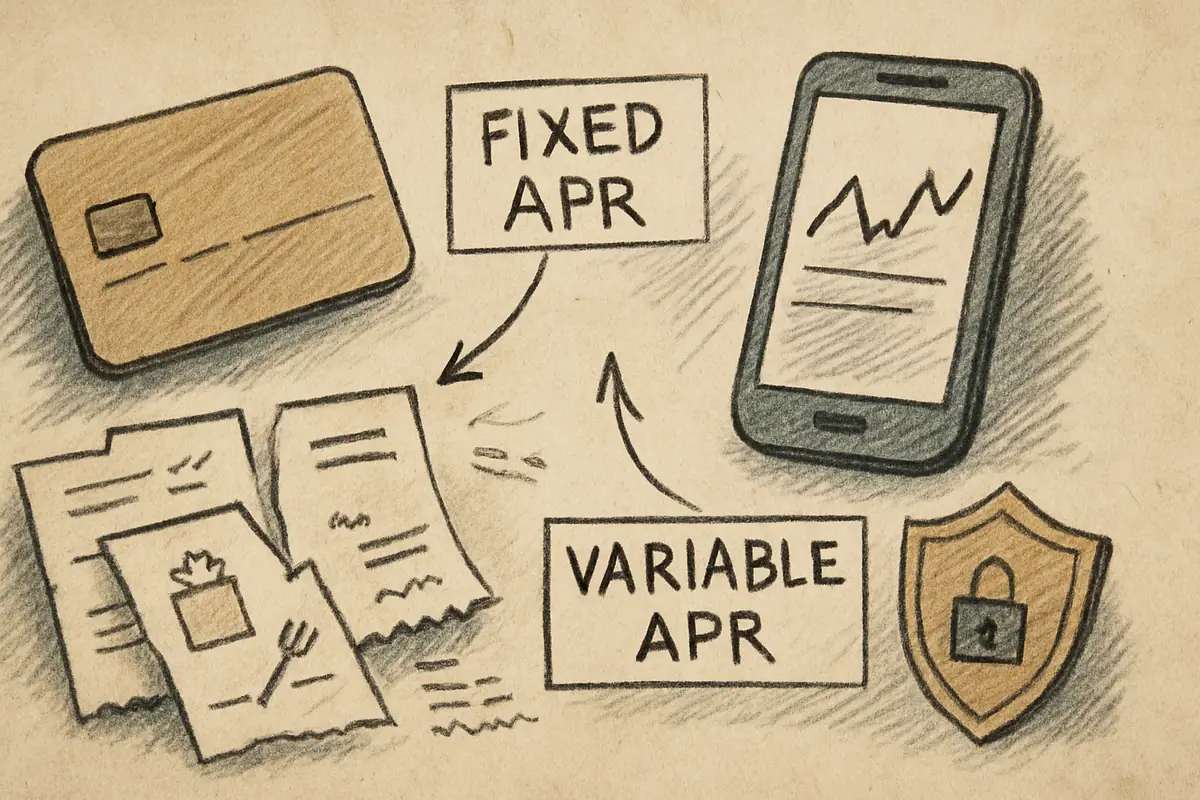
APR stands for Annual Percentage Rate. It's the yearly interest cost you pay on any outstanding credit card balance. A fixed APR means the interest rate is set by the card issuer and typically doesn’t change frequently during your account’s life. Variable APR, however, changes based on an external benchmark — usually the prime rate set by financial markets — plus a margin. So, if the prime rate moves up or down, your variable APR changes along with it.
Most credit card APRs fall within 15% to 30%. For a fixed APR card, you might see something like 19.99% that stays steady for years unless the issuer notifies you of a change. Meanwhile, a variable APR might start at 17%, but if the prime rate rises by 1%, your APR jumps accordingly, possibly increasing your monthly interest costs.
How Do Fixed and Variable APRs Impact Your Monthly Interest?
Let’s say you have a $3,000 balance carried over from last month with no new purchases or payments yet. With a fixed APR of 20%, your monthly interest is roughly (20% ÷ 12) × $3,000 = 1.67% × $3,000 = $50.10 for that month. If instead you have a variable APR starting at 18%, your monthly interest would be about (18% ÷ 12) × $3,000 = 1.5% × $3,000 = $45.
Now imagine the prime rate rises by 1%, pushing your variable APR to 19%. Your monthly interest becomes (19% ÷ 12) × $3,000 = 1.58% × $3,000 = $47.40 — higher than before but still slightly less than the fixed rate example. However, if rates climb more over time or if your fixed rate is unusually high, your cost dynamics shift.
| APR Type | Starting Annual Rate | Monthly Interest on $3,000 | Interest After Prime Rate Increases by 1% |
|---|---|---|---|
| Fixed | 20% | $50.10 | $50.10 (unchanged) |
| Variable | 18% | $45.00 | $47.40 |
The Pros and Cons: Stability Versus Flexibility
"Fixed" sounds stable — and it often feels reassuring because you know what to expect on monthly interest charges if your balance remains constant. But 'fixed' doesn’t mean unchangeable forever; issuers can adjust it after notices, sometimes raising rates due to economic conditions or missed payments.
"Variable" rates reflect market fluctuations which can be good or bad news depending on economic trends. When rates fall, so does your interest cost — potentially saving you money without needing to apply for a new card or negotiate terms.
Where readers should be careful
"Beware of sudden jumps in variable APRs that can increase minimum payments unexpectedly." Because many cardholders pay only minimum payments—which often hover around 2%-4% of balance—a higher rate can substantially extend payoff time and increase total interest paid.
How Your Credit Behavior Intersects With Interest Structures
"Behavior matters more than just rates alone." For example, regularly paying off your full statement balance avoids any interest charges regardless of whether your card has a fixed or variable APR. Carrying balances month to month invites interest — making even a small difference in rates meaningful over time.
"Minimum payments mask true costs." Paying only the minimum on a $3,000 balance with a 20% fixed APR could mean years of repayments and hundreds more in interest than paying larger amounts sooner. A variable rate rising above your initial number makes this effect worse.
How this can look in practice
"Meet Lisa: She carries a $3,000 balance and pays just the minimum—about $90 monthly—with her fixed-rate card at 19%. It takes her approximately four years to clear the debt while paying nearly $900 in interest alone." Now imagine Lisa had a variable-rate starting at 17% but rising to 22%. Without adjusting her payment habits, she risks significantly higher total costs over time.
"Credit Score Impact: Does Rate Type Matter?"
"Your choice between fixed and variable APR doesn’t directly impact your credit score," but how much balance you carry relative to credit limits does—called credit utilization ratio. High utilization (above about 30%) can lower scores temporarily regardless of rate type.
"Interest cost influences behavior that affects scores." Higher interest bills may tempt some to miss payments or carry higher balances longer — both harmful for credit scores that typically range from 300 to 850.
% Credit Utilization Importance
"Keeping utilization below roughly one-third of your available credit helps maintain healthier credit scores."
"Statement Cycles & Payment Timing"
"Understanding when your statement closes and payment is due can help avoid unnecessary interest charges."
"Payment History Impact"
"Consistently on-time payments over two years significantly improve credit profiles."
"Fees and Rewards: How They Interact with Fixed and Variable Rates"
"APR is just one piece of wallet math." Many cards charge annual fees ranging from $0 up to $550 on premium cards. Others waive fees but offer lower rewards or have higher base APRs — sometimes variable ones.
How Fixed APRs Affect Your Monthly Payments
Fixed APRs offer predictability in your credit card payments, as the interest rate remains constant for extended periods unless the issuer notifies you of a change. This stability can make it easier to budget your monthly expenses since the interest charges won’t fluctuate wildly with market conditions. However, 'fixed' does not mean 'permanent'; credit card companies can still adjust the rate, typically after providing proper advance notice. For consumers, the advantage lies in knowing that sudden spikes in interest rates are less common compared to variable APR cards. When planning your debt repayment strategy, a fixed APR can provide peace of mind by limiting unexpected increases in finance charges, which might otherwise derail your budgeting efforts.
Moreover, fixed APRs tend to benefit those who carry a balance month to month because they shield cardholders from rising market interest rates during economic shifts. If inflation or federal rate hikes occur, your fixed APR remains unchanged until the issuer implements a revision. This can lead to cost savings over time and reduce stress associated with unpredictability. On the downside, fixed APRs might initially be set higher than variable rates as a risk premium for the lender, so it’s crucial for consumers to compare offers carefully. The key takeaway is that if you prefer steady expenses and want to avoid surprises in finance charges, selecting a card with a fixed APR could be advantageous.
Variable APRs: Opportunities and Risks
Variable APRs are tied to an underlying benchmark interest rate—often the prime rate—which fluctuates based on macroeconomic factors and decisions by central banks. This means your credit card's interest rate can rise or fall periodically, directly impacting how much you pay in finance charges if you carry balances. Variable rates often start lower than fixed rates, making them attractive initially; however, this benefit comes with increased uncertainty. Depending on market conditions, your payments could increase significantly over time if benchmark rates trend upward. For consumers comfortable monitoring economic trends and prepared for potential rate increases, variable APR cards may offer savings during periods of stable or declining interest rates.
Furthermore, variable APR structures sometimes include caps that limit how high your interest rate can go within a given period, offering some protection against runaway costs. Yet these caps vary widely between issuers and specific card products. Using a variable rate credit card strategically requires active financial management: paying down balances promptly during low-rate phases minimizes exposure when rates climb. For example, if you anticipate central bank policy tightening and rising prime rates, carrying large balances on a variable APR card might become costly quickly. In contrast, savvy borrowers who time their credit usage around favorable interest environments might save money compared to fixed-rate cards.
Understanding How Interest Rate Changes Are Communicated
Credit card issuers are legally obliged to inform customers about changes to their APRs through written notifications well before any adjustments take effect. Typically, you will receive such communication 45 days prior to an increase or decrease in interest rates according to the Credit CARD Act of 2009 regulations. Reviewing these notices carefully allows you to decide whether continuing with that particular credit card makes financial sense under the new terms or if it’s better to explore other options. Sometimes an issuer may lower your rate as part of promotional offers or customer retention efforts—a scenario worth capitalizing on if you have good credit standing.
However, it’s important not to overlook these alerts because ignoring them might lead you into higher-cost debt unknowingly. Monitoring statements regularly and setting calendar reminders around known review dates help maintain awareness of any pending changes. Additionally, maintaining open lines of communication with your credit card provider can sometimes result in personalized offers or negotiations for better terms based on your payment history and loyalty.
Real-World Scenarios: Choosing Between Fixed and Variable APR Cards
How this can look in practice
Consider Maria, who carries a moderate balance on her credit card monthly due to ongoing medical expenses. She prefers predictable finances and selects a fixed APR card despite its slightly higher initial rate because she values consistent monthly payments without surprises. In contrast, Jake is a frequent traveler with excellent credit who pays his balance in full every month but occasionally utilizes promotional financing offers linked to variable APR cards with introductory low rates. His tolerance for fluctuating rates is higher because he avoids carrying balances long-term and benefits from potentially lower costs during low-rate environments.
These scenarios underscore how personal financial habits and risk tolerance influence which interest structure suits an individual best. Fixed APR cards tend to align well with consumers needing budget certainty or those likely to carry balances over extended periods. Meanwhile, variable APR cards may appeal more to disciplined users seeking lower initial costs who can adapt easily when rates change.
Pros and Cons Summary: Fixed Versus Variable APRs
How Fixed APRs Impact Your Budgeting and Financial Planning
One of the most significant advantages of a fixed APR is the predictability it offers to consumers. When planning your monthly budget, knowing that your interest rate will remain constant allows for better financial forecasting. This stability can be particularly beneficial if you carry a balance on your credit card from month to month. Fixed APRs help prevent sudden spikes in interest costs, providing peace of mind during uncertain economic times or personal financial fluctuations. However, it’s important to note that 'fixed' does not mean the rate never changes; issuers can adjust fixed rates but must notify you in advance. This means while your rate is stable for extended periods, it is not immune to changes triggered by policy revisions or market conditions.
For individuals who prefer to avoid surprises and want to maintain tight control over their finances, fixed APR credit cards are often a favorable choice. This approach enables users to plan debt payoff strategies more accurately since they can estimate exactly how much interest will accrue with each billing cycle. Furthermore, in long-term financial planning scenarios, such as saving for major purchases or managing other debts, having a consistent APR reduces the risk of unexpected increases that could derail these plans. Still, potential cardholders should weigh this benefit against typically higher initial rates found in some fixed APR cards compared to variable options.
The Flexibility and Risks Associated with Variable APRs
Variable APR credit cards offer a different experience by linking your interest rate to an external benchmark, usually the prime rate set by financial institutions. This means your APR can fluctuate based on broader economic conditions such as changes in monetary policy or inflation expectations. While this variability exposes cardholders to potential rate hikes during rising interest environments, it also presents opportunities for lower costs when rates decline. For savvy consumers who actively monitor market trends and adjust their spending habits accordingly, variable APRs can sometimes lead to savings over time.
However, the inherent uncertainty with variable rates requires disciplined financial management. If rates increase unexpectedly due to shifts in economic policy or market volatility, consumers might face substantially higher finance charges. This unpredictability can complicate budgeting efforts and may contribute to mounting debt if balances are carried forward without careful oversight. Additionally, promotional offers linked with variable APR cards—such as introductory zero-percent periods—can sometimes reset at higher rates once those promotions end, leading to sticker shock if customers are unprepared.
Despite these risks, many credit card issuers incentivize variable APR products with features like rewards programs, sign-up bonuses, or lower introductory rates precisely because of this flexibility. For consumers comfortable managing these fluctuations and understanding the underlying financial environment, variable APRs might provide greater value especially if they frequently pay off balances before interest accrues or use balance transfer deals strategically.
Comparative Scenarios: Choosing Between Fixed and Variable APRs
How this can look in practice
Consider two hypothetical consumers: Jane prefers stability and plans her finances meticulously every month without carrying debt longer than necessary. For Jane, a fixed APR card offers reassurance that her rates won’t suddenly increase and disrupt her budget plans. On the other hand, Tom monitors economic indicators closely and is comfortable adjusting his spending habits when market conditions shift. Tom might benefit more from a variable APR card that could reduce his overall interest expenses if rates drop.
These contrasting examples highlight how personal financial habits and tolerance for risk should strongly influence one’s choice between fixed and variable APR structures. A risk-averse individual may prioritize predictability even at the cost of slightly higher rates, while someone seeking lower average costs over time might accept variability paired with proactive account management.
Practical Tips for Managing Credit Card Interest Effectively
Understanding your credit card’s interest structure is only part of managing its impact on your finances. Regardless of whether you have a fixed or variable APR card, paying attention to your monthly statements and avoiding unnecessary balances can greatly reduce interest charges. Making payments early or multiple times within a billing cycle minimizes the average daily balance on which interest accrues. Additionally, regularly reviewing terms for any rate adjustments—especially in variable rate agreements—and staying informed about economic shifts can empower you to make timely decisions about your credit usage.
"Another helpful strategy involves considering balance transfers strategically when faced with high-interest cards." Transferring outstanding balances to cards offering low or zero introductory rates can provide breathing room to pay down principal amounts without excessive interest buildup. Just be sure to evaluate transfer fees alongside potential savings to ensure it’s worthwhile. Lastly, maintaining a good credit score often translates into access to better credit card offers with more favorable interest terms—making responsible borrowing behavior rewarding beyond immediate cost savings."
References
- https://www.consumerfinance.gov/ask-cfpb/what-is-apr-en-45/
- https://www.consumerfinance.gov/consumer-tools/credit-cards/
- https://www.fdic.gov/consumer-resource-center/credit-cards
- https://www.consumerfinance.gov/consumer-tools/credit-reports-and-scores/
- https://www.consumerfinance.gov/ask-cfpb/what-is-a-credit-score-en-315/