Many consumers chase credit card rewards without realizing that the value they get can be overshadowed by hidden fees, interest charges, or poor payment habits. For example, a card that offers 2% cashback might seem like a good deal until late payments trigger penalties and high APRs inflate your balance. This article highlights the risks that often come with rewards programs and shows how different cards match various spending patterns.
Why Rewards Alone Don’t Tell the Full Story
It’s tempting to pick a credit card based on its advertised rewards—like points, miles, or cashback percentages—but this can be misleading. Rewards are only part of a larger financial picture that includes interest rates (APR), annual fees, statement cycles, and credit utilization. For instance, if your card charges an annual fee of $95 but you only spend $500 per month on it, the rewards you earn might not cover that cost. Worse, carrying a balance past the due date can cause interest charges between 18% and 30%, which quickly erase any benefits gained from rewards.
Understanding these components helps avoid common pitfalls. The Annual Percentage Rate (APR) is the yearly interest rate applied to unpaid balances. If you don’t pay your statement in full each month, even a small purchase can grow expensive. The timing of your billing cycle also matters; purchases made right after your statement closes may take almost two months before payment is due, offering some breathing room but requiring disciplined spending.
Types of Rewards Programs and Their Typical Benefits
Credit cards generally offer three main types of rewards: cashback, travel points or miles, and store-specific discounts or perks. Cashback cards return a percentage of what you spend—usually between 1% and 5%. Travel cards award points redeemable for flights or hotels but often require more careful planning to use effectively. Store cards provide discounts or loyalty perks at specific retailers but usually have limited use elsewhere.
Cashback cards work best for everyday expenses like groceries and gas. For example, a 1.5% cashback on $1,200 monthly spending yields $18 monthly or $216 annually before taxes. Travel cards might offer higher earning rates on airfare purchases—say 3 miles per dollar spent—but these miles add value only if you redeem them smartly and don’t let them expire. Store cards can save money for frequent shoppers but may tempt buyers into overspending just to earn discounts.
The Hidden Costs That Reduce Rewards Value
Rewards programs often come with trade-offs. Annual fees range from $0 up to $550 or more on premium travel cards. Foreign transaction fees can add around 2-3% on purchases abroad unless waived by the issuer. Interest charges kick in if you carry a balance beyond the grace period—typically about 21 to 25 days from the statement closing date.
Let’s consider an example: You hold a cashback card with a 2% reward rate and a $95 annual fee. You spend $1,000 monthly but pay only the minimum payment each month on an average balance of $1,000 at an APR of 22%. The interest for one month would be approximately (22% ÷ 12) × $1,000 = $18.33 added to your balance. Over time, interest accrues quickly and erodes reward earnings—in this case, $20 cashback monthly loses ground against rising finance charges.
Where readers should be careful
Warning: Carrying balances on reward cards can turn benefits into losses. Rewards only save money when you pay off your full statement balance every month to avoid interest charges.
Matching Cards to Spending Habits
"One size fits all" rarely applies to credit cards and rewards programs. Knowing your typical spending categories helps pick a card that maximizes value while avoiding unnecessary costs.
- If most spending is on daily essentials like groceries and gas, look for flat-rate cashback cards offering between 1.5% and 2% back with no annual fee. - Frequent travelers benefit from cards offering bonus points on airfare and hotels but should be prepared for annual fees starting around $95 with potential foreign transaction fees unless waived. - Occasional shoppers who spend less than $300 monthly might avoid annual fees altogether by choosing no-fee cashback or store-specific cards. - If you tend to carry balances or miss payments occasionally, it’s better to prioritize low APR and penalty terms over rewards because interest costs can outweigh perks.
| Card Type | Typical Reward Rate | Annual Fee Range | Best For |
|---|---|---|---|
| Flat-rate Cashback | ~1.5%-2% | $0 - $95 | Everyday spending |
| Tiered Cashback | ~3%-5% in categories | $0 - $95+ | "Category-focused spenders" |
| Travel Points/Miles | ~2-5 miles per dollar + bonus offers | $95 - $550+ | "Frequent travelers", "Travel planners" |
| Store Cards | ~5-10% discount/points | $0 - varies | "Loyal store shoppers", "Low outside use" |
"The Statement Cycle: Timing Your Purchases and Payments"
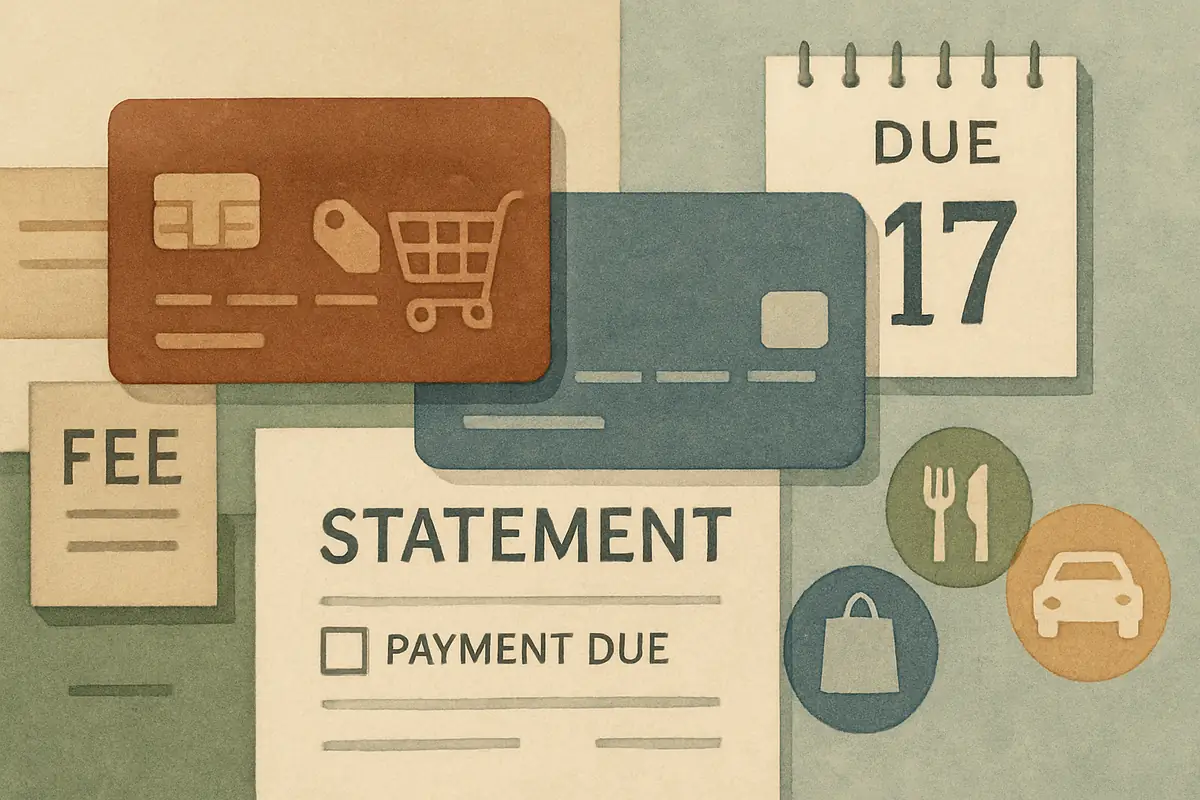
"Statement cycle" refers to the period between billing statements—usually about one month long—and determines when purchases appear in your bill and when payment is due. Understanding this cycle helps manage cash flow and maximize reward timing."
"For example: If your billing cycle ends on May 15th and your payment due date is June 10th (about 25 days later), purchases made from May 16th onward will appear in the next statement with a later due date around July 10th." That means purchases made right after a statement closes enjoy extra time before payment is required."
"Sarah’s Smart Spending with Billing Cycles"
"Sarah plans her large furniture purchase right after her credit card's statement closes on July 10th. She buys a sofa on July 11th costing $2,000. This purchase will appear in her August statement due around September 5th, giving her nearly two months before she has to pay it off without incurring interest."
"How Fees Can Offset Rewards: Understanding Annual Fees and Penalties"
"Annual fees vary widely—from no fee up to several hundred dollars on premium travel cards offering lounge access or concierge services—but paying a large fee makes sense only if your spending aligns with those perks."
When Rewards Fail Without Responsible Behavior
Even the best rewards program cannot offset poor financial habits such as making only minimum payments or exceeding recommended credit utilization ratios — generally below 30%. High utilization increases credit risk signals reported to credit bureaus, potentially lowering your score within its usual range of about 300–850 points.
For example: Suppose you have a credit limit of $10,000 and consistently carry balances near $9,000 — that’s a 90% utilization rate well above best practices. Regardless of rewards earned on this spending level (say 1.5%), lenders could view this as risky behavior affecting future loan eligibility.
John’s Experience With High Utilization
John earned bonus points each month but didn't pay more than his minimum payments while keeping high balances close to his limit at times. After several months he noticed his credit score dropped by over 50 points due largely to high utilization plus some late payments – making future borrowing harder.
Tips for Maximizing Rewards Without Extra Costs
To truly benefit from any reward program consider these five tips: 1. Pay your full balance every month before the payment due date. 2. Choose cards matching your top spending categories. 3. Track when billing cycles end so large purchases get maximum payoff time. 4. Avoid cash advances which often have high fees and immediate interest. 5. Check for annual fees: ensure rewards earned exceed these costs.
Also remember: Not all rewards are equal in flexibility or ease of redemption — some require minimum point thresholds or specific gift partners which may reduce actual benefit.
Understanding Cashback Rewards and Their Best Uses
Cashback credit cards remain one of the most popular reward types due to their straightforward value proposition. These cards offer a percentage of your spending back as cash rewards, which can either be redeemed as statement credits, direct deposits, or gift cards. The simplicity of cashback programs makes them ideal for users who want tangible value without the hassle of tracking points or miles. However, it’s essential to analyze which spending categories earn the highest cashback rates since many cards feature rotating categories or tiered reward structures. For example, a card might offer 5% cashback on groceries during certain months but a base 1% on all other purchases. Understanding your regular spending habits can help you leverage these category bonuses effectively, maximizing your overall return.
Additionally, some cashback cards provide flat rates across all spending without category restrictions. While this may result in lower peak returns compared to category-specific offers, it suits those with unpredictable spending patterns who want consistent rewards regardless of where they shop. Certain premium cashback cards also come bundled with perks such as no foreign transaction fees, purchase protections, and extended warranties, adding extra value particularly for frequent travelers or buyers of high-ticket items. When evaluating cashback cards, consider both the reward rate and the accompanying benefits to determine which aligns best with your lifestyle.
Travel Rewards Cards: Maximizing Value for Frequent Travelers
Travel rewards credit cards often appeal to consumers who spend regularly on flights, hotels, and related travel expenses. These cards typically accumulate points or miles that can be redeemed for airfare discounts, hotel stays, upgrades, or even experiences like rental cars and events. The real value of travel rewards lies in strategic redemption; savvy users can convert points into higher-value tickets or use travel partners to stretch their rewards further than their face value suggests. For example, transferring miles from a card’s loyalty program to an airline partner can sometimes yield award flights worth significantly more than the original points’ cash equivalent.
Many travel rewards cards come with ancillary benefits that enhance the travel experience and justify annual fees. These include airport lounge access, free checked bags, travel insurance coverage, and priority boarding privileges. When choosing a travel card, it is crucial to assess not only the earning potential but also how often you’ll use these perks since their value can exceed the raw point accumulation alone. Moreover, some cards offer elevated rewards on dining and streaming services—categories popular among travelers—while others emphasize hotel bookings or gas station purchases.
Store-Specific and Co-Branded Cards: Niche Benefits for Loyal Shoppers
Co-branded credit cards partnered with specific retailers or brands deliver tailored rewards that maximize value for dedicated shoppers at those outlets. These cards often provide elevated rewards on store purchases alongside exclusive promotions such as members-only discounts or early access to sales events. For example, a department store card might offer 5% back on all store purchases plus occasional bonus points on special product categories throughout the year. This concentrated approach suits consumers who consistently spend within a particular retail ecosystem and want to deepen their loyalty benefits.
However, these niche cards tend to have limited utility outside their partner brand and sometimes include restrictions like minimum purchase requirements or expiration dates for earned rewards. They also might lack broader travel or dining benefits found in general-purpose credit cards. Before applying for a co-branded card, it’s important to evaluate your shopping patterns honestly—if your spending is diverse across multiple retailers, such a card may offer less overall value compared to flexible cashback or travel options.
Evaluating Annual Fees Versus Reward Potential
An often overlooked factor in comparing credit card rewards programs is the impact of annual fees on net benefit. While no-fee cards are attractive because they pose no upfront cost barrier, premium cards charging $95 or more per year regularly deliver enhanced rewards rates and exclusive perks that can easily offset the fee if you use them wisely. For instance, a card offering 3% cashback on all spending but charging a $95 fee will only be worthwhile if your annual spend surpasses roughly $3,200 compared to a no-fee 1% cashback alternative.
Furthermore, many premium rewards cards include credits that reduce effective costs—for example airline fee credits up to $200 yearly or statement credits for streaming services—effectively lowering the net annual fee while increasing overall value. To make an informed decision about whether an annual fee is justified by higher rewards potential and perks requires careful calculation of your own spending profile and anticipated usage of included benefits. Ignoring these factors could lead to paying unnecessary fees that erode your total return.
How Spending Habits Influence Reward Optimization Strategies
Your unique spending habits should be the primary guidepost when selecting between different types of credit card reward programs. For example, individuals who allocate most expenses toward essentials like groceries and gas may benefit most from category-focused cashback cards offering accelerated returns in these segments rather than flat-rate alternatives. Conversely, consumers with varied purchases spanning dining out, entertainment subscriptions, and travel may prefer flexible points programs that allow redemption across multiple categories including merchandise redemption options.
Moreover, timing matters: some reward programs feature rotating quarterly categories that require activation and mindful planning each period; failure to track these could result in missed opportunities for higher returns. It’s advisable for users to periodically review their statements and adjust credit card usage accordingly—perhaps carrying multiple complementary cards simultaneously—to maximize total rewards haul without overspending just to chase bonuses.
References
- https://www.consumerfinance.gov/consumer-tools/credit-cards/
- https://www.fdic.gov/consumer-resource-center/credit-cards
- https://www.consumerfinance.gov/consumer-tools/credit-reports-and-scores/
- https://www.consumerfinance.gov/ask-cfpb/what-is-a-credit-score-en-315/
- https://consumer.ftc.gov/articles/what-know-about-identity-theft