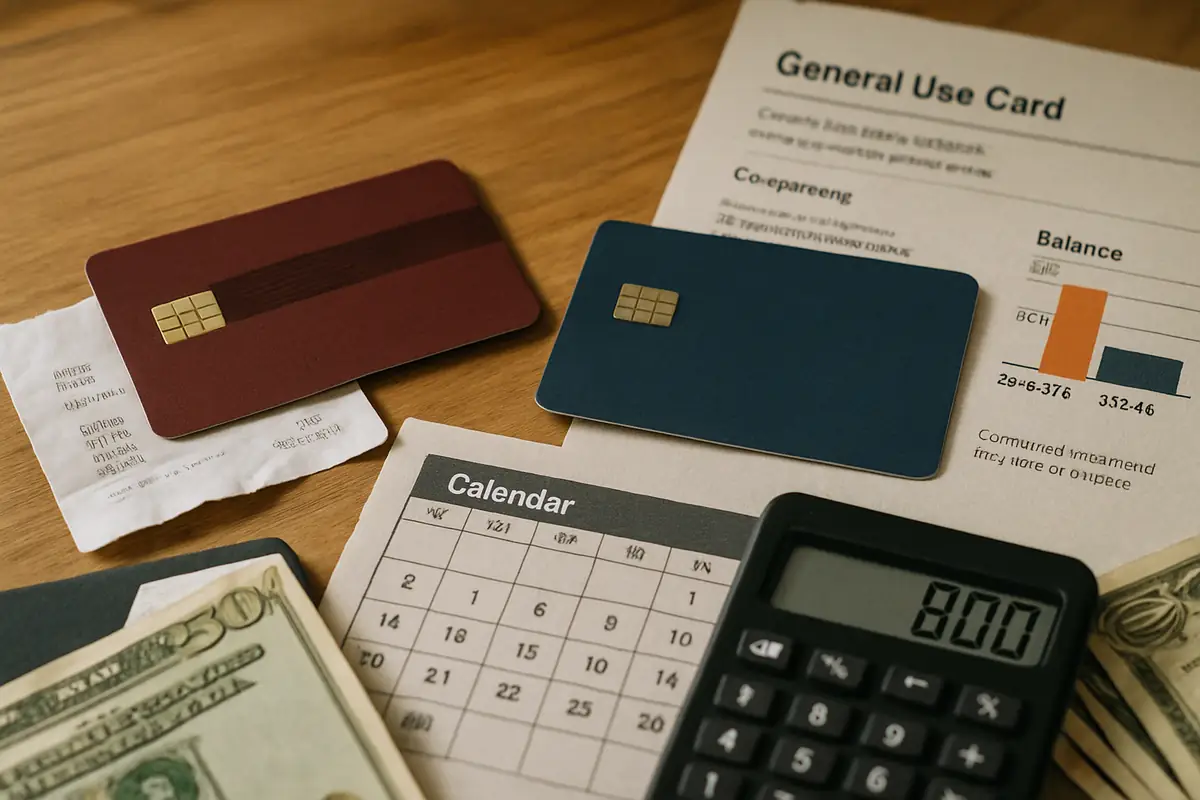
Charging $800 on a store credit card with a 24% annual percentage rate (APR)—the yearly cost of borrowing expressed as a percentage—without a grace period can lead to significantly higher interest costs compared to using a general use credit card with a 19% APR and a 25-day grace period. While store cards often promote instant savings or special financing, failing to pay the full balance promptly results in interest charges that accumulate daily and compound, quickly offsetting any discounts. This article highlights the hidden risks of store cards, including how interest accrues, fees accumulate, and how these factors compare to general use cards.
Understanding Store Credit Cards Versus General Use Cards
Store credit cards are typically issued by retailers or in partnership with financial institutions and are designed for use primarily or exclusively at the issuing retailer or its affiliates. These cards often come with perks such as immediate discounts at checkout, promotional financing offers like deferred interest, or bonus points redeemable for merchandise at that store. In contrast, general use credit cards, issued by major banks or payment networks such as Visa, Mastercard, or American Express, can be used at millions of merchants worldwide and generally provide more flexible rewards programs that apply across a broad range of spending categories.
Both store and general use credit cards report account activity to credit bureaus, impacting credit scores based on payment history, credit utilization, and account age. However, their terms differ significantly in interest rates, fees, rewards structures, and billing cycles. For example, store card APRs commonly range from 20% to 30%, reflecting their higher risk profile and limited acceptance. General use cards typically have APRs between 15% and 25%, depending on an individual's creditworthiness. Additionally, many store cards offer little to no grace period—the time between the end of a billing cycle and the due date during which no interest accrues—whereas general use cards often provide 21 to 30 days of grace.
Common Misconceptions About Store Cards
Many consumers assume that store credit cards are excellent deals because of immediate discounts or "special financing" offers. A widespread misunderstanding involves deferred interest promotions, where interest is said to be waived if the balance is paid in full before the promotional period ends—often 6, 12, or 18 months. However, if the balance is not fully paid by that time, interest is typically charged retroactively on the entire original balance from the purchase date, which can substantially increase costs.
Another misconception is that store card rewards always outperform those of general use cards. For instance, earning five points per dollar spent at one retailer sounds lucrative, but if those points are worth only about 0.5 cents each when redeemed, the effective cashback rate is roughly 2.5%. Meanwhile, general use cards might offer a flat 1% to 2% cashback on all purchases, including stores where the store card is not accepted, providing more consistent value across a diversified spending pattern.
How Interest Rates and Fees Differ
Interest rates and fees are crucial in determining the true cost of credit card borrowing. Consider a scenario where you carry a $1,000 balance on a store card with a 25% APR and make only the minimum monthly payment, typically 2% to 3% of the balance. Interest on credit cards is usually compounded daily, meaning that unpaid interest is added to the balance and accrues further interest, increasing the total cost.
For example, with a $1,000 balance at 25% APR and a $30 minimum payment each month (about 3%), it would take approximately 46 months—nearly four years—to pay off the debt completely, assuming no additional charges. Over this period, you would pay roughly $260 in interest. By contrast, if you had the same $1,000 balance on a general use card with an 18% APR and made the same $30 monthly payment, it would take about 38 months to pay off the balance, with approximately $180 in interest paid.
How this can look in practice
"Sarah purchases $1,200 of winter gear using a store card with a 26% APR and no grace period. She assumes her deferred interest promotion will cover her balance if she pays within six months, but she misses the full payment deadline. As a result, she is charged retroactive interest from the purchase date until she pays off the balance, adding nearly $160 in unexpected interest to her bill."
Rewards Programs and Redemption Realities
Rewards come in various forms, including points per dollar spent, cashback percentages, or exclusive discounts. Store credit cards often offer higher point multipliers or cashback rates on purchases made at their stores but provide little or no rewards for spending elsewhere. General use cards typically offer consistent rewards across multiple categories such as groceries, dining, travel, and gas, with cashback rates ranging from 1% to 3% depending on the category.
For example, John shops twice a month at an electronics retailer where his store card earns five points per dollar, but only one point per dollar on other purchases. If he spends $300 monthly at that store and $700 elsewhere, using a general card that offers two points per dollar across all spending categories, his total rewards from the general card may exceed those from the store card despite the lower point multiplier at the specific retailer.
"Reward point valuation"
"Points from store cards often have lower redemption values, such as 0.5 cents per point toward merchandise, whereas general rewards programs typically value points at around 1 cent each when redeemed for statement credits or travel."
"Category limits"
"Store cards generally restrict high rewards to purchases made exclusively at their stores; spending outside these merchants often yields minimal or no rewards."
"Redemption hurdles"
"Store card points may require accumulating a minimum number before redemption or be limited to specific merchandise, reducing flexibility."
Fees Beyond Interest That Add Up
Store cards often do not charge annual fees upfront, but they may impose other fees such as late payment fees ranging from $25 to $40, returned payment fees of similar amounts, or inactivity fees after 12 to 24 months without usage—though inactivity fees are less common. General use cards vary widely, with annual fees from $0 to over $500 depending on card benefits, and similar penalty fees for late or returned payments. Some premium general use cards waive annual fees for the first year or offer credits that offset fees, which is less typical for store cards.
Understanding the True Costs of Store Credit Cards
Store credit cards attract customers with promises of instant discounts and exclusive offers, but the true cost extends beyond initial savings. Higher APRs—typically 20% to 30%—mean that carrying a balance even briefly can lead to substantial interest charges that erode benefits. Additionally, fees such as late payment penalties ($25 to $40) or annual fees that may begin after a promotional period add to the overall expense. For frequent shoppers loyal to a particular retailer, these costs might be offset by rewards and discounts, but casual shoppers or those who carry balances risk paying more in interest and fees than they save.
Another often overlooked cost is the impact on credit scores. Store cards usually have lower credit limits—often between $300 and $1,500—which can lead to higher credit utilization ratios if balances accumulate. Credit utilization, the percentage of available credit used, is a key factor in credit scoring models and ideally should stay below 30%. Opening multiple store cards simultaneously can also result in several hard inquiries on your credit report, temporarily lowering your score. Consumers should consider both immediate costs and long-term credit implications when evaluating store cards.
Weighing Benefits: Exclusive Rewards vs Flexible Rewards
Store credit cards offer exclusive rewards tailored to a retailer’s merchandise, including cashback rates of 3% to 5%, special financing offers such as 0% APR for 6 to 18 months, and early access to sales. For shoppers with predictable, high-volume spending at one retailer, these perks can translate into meaningful savings. However, these benefits are typically limited to that retailer's products and cannot be applied elsewhere, restricting their usefulness.
General use credit cards provide broad rewards programs across many spending categories, such as 1% to 3% cashback on groceries, dining, gas, and travel. Some cards allow points to be redeemed for travel, statement credits, or merchandise, providing greater flexibility. Although the rewards rate for any single category may be lower than store cards’ targeted offers, their versatility suits consumers with diverse spending habits. Choosing between exclusive and flexible rewards depends on individual shopping patterns and financial goals.
Common Misconceptions About Store Credit Cards
Contrary to popular belief, store credit cards are not inherently detrimental to credit scores if used responsibly. While mismanagement—such as missed payments or high balances—can damage credit, timely payments and low utilization help build credit history, especially for individuals with limited credit profiles. Many store cards are designed to be accessible to consumers rebuilding credit, serving as stepping stones toward more favorable general use cards.
Another myth is that store cards only provide savings during impulsive sale events. In fact, strategic use, such as making purchases during double rewards periods or combining promotional financing with planned expenses, can maximize benefits without incurring unnecessary interest. However, understanding terms like deferred interest is critical because unpaid balances at the end of promotional periods often trigger retroactive interest charges that can be costly.
Practical Considerations When Choosing Between Store and General Use Cards
Choosing between a store card and a general use card requires evaluating personal shopping habits and financial discipline. Frequent, substantial purchases at a single retailer combined with a commitment to pay balances in full monthly can make store cards advantageous. Conversely, consumers who shop across multiple categories or occasionally carry balances may benefit more from general use cards offering lower APRs and broader rewards.
It is also important to consider how each card aligns with broader financial goals, such as building credit or managing debt. General use cards often include additional protections like fraud monitoring, travel insurance, and purchase protection, which are less common with store cards. For individuals prone to overspending or difficulty managing multiple accounts, limiting the number of credit lines may reduce the risk of financial strain.
Comparing Impact on Credit Scores
Both store and general use credit cards affect credit scores through factors such as credit utilization, length of credit history, and account mix. Store cards tend to have lower credit limits, typically $300 to $1,500, which can increase utilization ratios if balances are high. However, responsibly managing multiple cards can increase total available credit, potentially improving utilization ratios and credit scores.
Opening several new accounts simultaneously lowers the average age of credit accounts, temporarily reducing scores. Regardless of card type, consistent on-time payments are the most important factor, making payment history critical to maintaining or improving credit. Consumers should monitor their credit reports regularly and consider using credit simulators to understand how new credit applications might impact their scores.
Understanding the Impact of Interest Rates and Fees
Interest rates and fees are major determinants of the cost of using store versus general use credit cards. Store cards frequently have APRs between 20% and 30%, which can be manageable for those paying balances in full each month but costly for those who carry debt. General use cards often offer APRs from 15% to 25% and may include introductory 0% APR periods lasting 6 to 18 months on purchases or balance transfers, advantageous for planned larger expenses.
Many store cards do not charge annual fees initially but may impose them after a promotional period or include fees for late payments ($25 to $40), returned payments, or inactivity. General use cards vary widely in fee structures, with some premium cards charging annual fees up to $550 but providing extensive benefits that can offset these costs. Understanding the full fee schedule—including penalty APRs that can reach 29% or higher after missed payments—is essential to avoid unexpected expenses.
For example, consider a consumer who carries a $2,000 balance on a store card with a 26% APR and makes only minimum payments of 3% ($60) monthly. It would take roughly 56 months to pay off the balance and cost over $1,000 in interest. By comparison, carrying the same balance on a general use card with an 18% APR and making $60 monthly payments would result in payoff in about 44 months with approximately $700 in interest paid.
Consumers should carefully review terms and conditions, including payment due dates, minimum payment amounts, and grace periods, to manage costs effectively and avoid penalties.
Evaluating Rewards Programs: Value Beyond Discounts
Rewards programs are a key benefit of both store and general use credit cards, but their value depends on how well they match spending habits and redemption preferences. Store cards often provide higher cashback rates—typically 3% to 5%—and exclusive promotions like early sale access or special financing tailored to the retailer. For loyal shoppers, these rewards can translate into meaningful savings.
General use cards offer broader rewards across multiple spending categories such as groceries, gas, dining, and travel, with cashback rates ranging from 1% to 3% and opportunities to redeem points for travel, statement credits, or merchandise. Additionally, premium general use cards may include benefits like travel insurance, purchase protection, extended warranties, airport lounge access, and concierge services, adding value beyond points accumulation. Store cards rarely provide such extensive benefits, focusing primarily on driving store sales.
Debunking Common Misconceptions About Store Credit Cards
Some consumers believe store credit cards inevitably harm credit scores or encourage overspending due to tempting discounts. While misuse of any credit card can negatively impact credit, responsible use of store cards—such as paying balances in full and maintaining low utilization—can build credit history and improve scores over time. Many store cards are designed for individuals with limited credit history, serving as a pathway to better credit products.
Another misconception is that store cards only provide savings during sales. Strategic use—such as timing purchases during double rewards events or combining promotional financing with planned expenses—can maximize benefits without accruing interest. However, understanding the fine print on deferred interest and promotional offers is critical to avoid costly retroactive charges.
Practical Tips for Choosing Between Store Cards and General Use Cards
Consumers deciding between store-specific and general use credit cards should consider their purchasing behavior, payment discipline, and credit goals. Frequent shoppers at a single retailer who pay off balances monthly may find store cards advantageous. Those with diverse spending patterns or occasional balances may benefit more from general use cards with lower APRs and broader rewards.
Reviewing credit scores and understanding eligibility requirements is important, as general use cards often require higher credit scores for approval but may offer superior rewards and benefits. A hybrid approach—using a general cashback card for everyday spending and a store card for targeted promotions—can balance flexibility with focused savings. Ultimately, informed choices based on thorough understanding of terms, costs, and benefits help consumers optimize credit card use.