Imagine carrying a $3,000 credit card balance with an interest rate that could change as often as every month. How would that affect your monthly payments? Would you prefer the certainty of a steady rate or the flexibility of a variable APR that might drop if market rates fall? Many cardholders face this choice without fully understanding how variable and fixed APRs work, how fees, statement cycles, rewards, and credit behavior interact with these rates, and what risks lie beneath the surface.
What Exactly Is an APR, and Why Does It Matter?
APR stands for Annual Percentage Rate. It's the yearly cost of borrowing money on your credit card, expressed as a percentage. For example, if you have a 20% APR on a $1,000 balance, you could roughly expect to pay about $200 in interest over 12 months if you carried that balance without paying it down. But remember, credit card interest compounds daily or monthly depending on issuers, so the actual interest can be slightly higher than the simple annual calculation.
Knowing your APR is crucial because it impacts how much interest you pay if you don’t pay off your full balance each month. Credit card APRs commonly fall between 15% and 30%, depending on creditworthiness and card type. The two main types of APRs are fixed and variable — each with its own pros, cons, and surprises for everyday users.
What’s the Difference Between Fixed and Variable APRs?
A fixed APR means the rate generally stays the same throughout your account’s life unless the issuer notifies you of a change — which usually requires a formal notice period, often 45 days before any new rate kicks in. However, even 'fixed' APRs are rarely permanent; they can adjust based on things like late payments or changes in your credit profile.
Variable APRs fluctuate based on an underlying benchmark rate or index like the prime rate plus a set margin. Since prime rates can move monthly or quarterly based on economic conditions, variable APRs can go up or down accordingly — meaning your borrowing costs might rise unexpectedly or fall if rates drop.
Why Would a Cardholder Choose One Type Over the Other?
Sometimes people assume fixed means cheaper or safer—but that’s not always true. A fixed APR may offer peace of mind because your interest won’t spike without warning during good behavior periods. Variable APR cards might start lower but carry risk if rates rise sharply—potentially increasing your interest expense significantly.
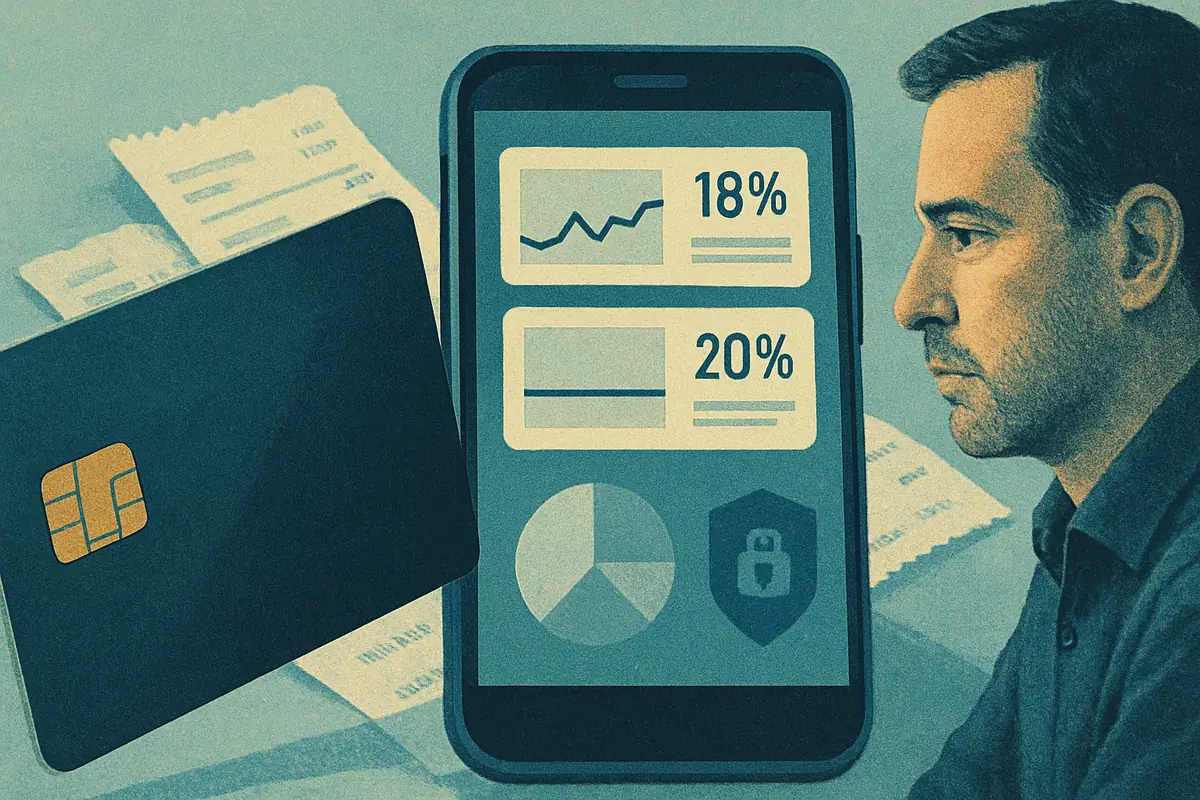
For example, say you have a $2,500 balance with a fixed 18% APR versus a variable APR currently at 16% tied to prime plus margin. If prime rises by 2 percentage points within six months due to economic changes, your variable rate jumps to around 18%. Suddenly, both cards cost similar amounts in interest—but that initial lower teaser rate didn’t last.
Benefits of Fixed APR Cards
- Predictable monthly interest charges help with budgeting.
- Less exposure to sudden market-driven rate hikes.
- Typically easier to understand for first-time card users.
Drawbacks of Fixed APR Cards
- "Fixed" isn’t permanent—rates may still increase due to issuer policies or missed payments.
- "Fixed" cards may have higher initial rates compared to teaser variable offers.
- "Fixed" cards don’t benefit if market rates decline.
Benefits of Variable APR Cards
- "Introductory" lower variable rates can reduce costs initially.
- "Variable" cards may follow market trends downward—potential savings if rates fall.
- "Variable" structure allows some issuers to offer more flexible rewards or perks tied to rates.
Drawbacks of Variable APR Cards
- "Surprise" rate increases raise your monthly payments unexpectedly.
- "Variable" means less certainty in budgeting over time.
- "Variable" cards depend heavily on economic conditions beyond your control.
How Do Statement Cycles Affect Your Interest Charges?
"Statement cycle" refers to the billing period for your credit card account—usually about one month long. It determines when purchases post and when payments are due. Your card issuer calculates interest daily but only adds it once per statement cycle after the due date passes without full payment.
"Timing matters," especially with variable APRs. Suppose your statement closes on April 30th with a $1,000 balance subject to a 15% variable rate. If market rates increase May 1st raising your APR to 17%, interest charged for April’s statement is calculated using the old rate because it applies only up to April 30th. New higher rates affect balances carried into future cycles.
"The Surprising Impact of Payment Timing"
"Jessica has a $3,000 balance on a card with a variable 19% APR tied to prime plus margin. Her statement closes May 10th when the prime rate is 3%. Two weeks later, prime rises by half a point causing her new APR to jump above 20%. Jessica makes her minimum payment late in June instead of before June’s due date. Because her payment covered part of May’s balance after the rate increase took effect, she ends up paying more in interest on that delayed amount than she expected — about $30 extra for that cycle alone."
"Hidden Costs": Fees and Rate Triggers You Might Not Expect
"Fixed" doesn’t mean no surprises either; many fixed-rate cards have penalty rates that jump sharply upon late payments. These penalty APRs often range between 25% and 30%, much higher than standard purchase rates—doubling or tripling your borrowing costs until you bring the account current.
"Variable" cards sometimes similarly impose penalty rates but also expose you to unexpected seasonal changes through their index linkage. Additionally, some cards apply different variable rates for cash advances (often above 25%) or balance transfers regardless of whether their purchase rate is fixed or variable.
"Watch Out for Rate Increase Triggers!"
['"Late minimum payments can trigger penalty APRs regardless of whether your standard rate is fixed or variable."', '"Going over your credit limit may cause immediate temporary hike in APR until resolved."', '"Some cards reset promotional low variable rates after certain months back to higher baseline rates."']
"How Does Your Behavior Affect Your Effective Interest Rate?"
"Credit utilization" is how much of your available credit you're using at any time — usually expressed as a percentage. Carrying high balances (like above 30%) can increase risk for lenders and potentially lead them to raise your card's rates—even those advertised as "fixed."
When Fixed Rates Make Sense
- You prefer steady monthly payment expectations.
- You dislike surprises from market-driven changes.
- You usually pay bills on time avoiding penalty triggers.
When Fixed Rates Can Backfire
- You miss potential savings during falling market rates.
- You might pay higher starting APRs than promotional variables.
- Late payment penalties can still cause spikes.
Know Your Billing Cycle
Understand when statements close and payments are due.
Monitor Rate Changes
Keep an eye on notices about variable index adjustments.
Avoid Penalty Triggers
Make at least minimum payments on time every month.
How Rewards Programs Link With Variable vs Fixed Rates
Some reward-rich cards use variable APR structures allowing issuers flexibility to fund perks but also tie costs directly to market fluctuations. Meanwhile, many no-fee fixed-rate cards sacrifice lucrative bonuses for stability. Consider Maria who uses two cards: one fixed-rate no-fee card at an 18% flat APR earning modest cashback and another with variable APR starting at 15%, offering double points but exposed to rising prime index. During stable economic periods Maria enjoys better rewards benefits with the variable card while managing occasional spikes by paying balances promptly before monthly statements close.
Can Understanding These Differences Protect Your Credit Score?
Absolutely. Your repayment behavior combined with how well you manage balances under either type affects utilization ratio—a key factor in credit scoring models responsible for about 30% of FICO scores. High utilization ratios above roughly 30-35% often lead to noticeable score drops even if all payments are timely.
Moreover, frequent late payments triggering penalty rates hurt score history length and payment consistency—the most significant factors making up approximately 35% of most models. If rising variable rates force you into only minimum payments rather than full payoff each month because interest balloons unexpectedly, this can extend debt duration harming scores further.
| Factor | Impact on Borrower Costs and Credit Impact |
|---|---|
| APR Type (Fixed vs Variable) | Affects predictability; variability can increase costs unexpectedly. |
| Billing Cycle Timing | Determines which rates apply when; affects accrued interest calculations. |
| Penalty Rate Triggers | Late/missed payments cause steep increases impacting costs & scores. |
| Credit Utilization Ratio | High balances relative to limits lower scores & may prompt issuer action. |
| Rewards Programs Linkage | Certain programs tie benefits closely to underlying interest structure. |
Key Questions To Help You Evaluate Your Current Card’s APR Type
- Do I feel comfortable budgeting monthly without surprises from my current scheme?
- Have I monitored recent changes in my card’s index-based variables or penalty triggers?
- Is my behavior consistent enough (payments/timely) to avoid sudden rate hikes?
- Does my current rewards strategy align well with my chosen fixed/variable structure?
What Steps Can You Take Now To Manage Risks Around Your Card’s Interest Rates?
Start by reviewing your last few statements carefully—check what exact APR(s) applied each month along with any notices about upcoming changes or penalties. Track when statement cycles end so you know which days' purchases affect next month’s bill. This helps avoid surprises especially around market shifts affecting variables.
Next, calculate how much total interest you’re paying annually given current balances and payment patterns. For instance: If you carry $2,000 at an average effective annualized cost of roughly 20%, that’s approximately $400 in yearly interest (2000×20%=400). If switching from variable that recently rose from 17% could save you $50–100 annually by moving balances faster — knowing this quantifies potential gains clearly.
Also consider setting alerts for payment due dates via mobile apps so you never miss minimum amounts required — avoiding costly penalty triggers which can push both fixed and variable cards’ rates sky high temporarily.
Finally assess whether swapping from one form of card (variable/fixed) makes sense based on lifestyle changes like income stability or spending habits as well as anticipated macroeconomic trends such as expected Fed rate hikes influencing prime indexes commonly affecting variables.
Managing Fixed Rate Cards Effectively
- Stick rigorously to payment schedules preventing penalty spikes.
- Use predictable budgeting strategies around known billing cycles.
- Regularly check statements for unusual fees despite stable base rate.
Cautions When Managing Fixed Rates
- Be alert for issuer notifications announcing future base increases.
- Don’t ignore increasing balances which may eventually trigger setbacks.
- Avoid complacency assuming ratchets cannot happen.
Managing Variable Rate Cards Effectively
- Monitor relevant index movements influencing your card cost monthly.
- Pay down large balances quickly during rising rate environments.
- Use mobile banking tools alerting upcoming statement closings / payments.
Cautions When Managing Variables
- Beware rapidly rising prime-led fluctuations causing sudden cost jumps.
- Don’t rely solely on introductory low teaser APYs lasting only few months.
- Adjust spending before anticipated Federal Reserve announcements.
Simple Checklist To Control Your Credit Card Interest Costs
- Know if your card’s purchase rate is fixed or variable (check disclosures).
- Mark statement closing dates clearly on calendar every billing cycle.
- Always make at least minimum payment before due dates avoiding penalties.
- Aim to keep total credit utilization under about one-third available limit.
- Watch announcements affecting prime index which relate directly to variables.
- Review rewards benefits alongside cost structures ensuring net positive value.
- Use online calculators occasionally researching expected amortization over time including possible future rate increases.
Did I Miss Something? Questions To Reassess Your Understanding
'Is my current understanding accurate about how my particular card calculates interest given its fixed or variable nature?' Sometimes product terms differ subtly between issuers so clarifying details avoids miscalculations.'
'Have I factored all possible fees—not just base purchase interest but also cash advance fees or penalty-only surcharges? These frequently impact overall borrowing costs strongly.'
'Am I tracking my personal spending habits relative to billing cycles carefully enough? Small timing shifts could sharply change which amounts incur higher charged interest.'
'Do my card’s reward earnings provide genuine value netted against likely escalating borrowing costs during periods of rising indices?'
References
- https://www.consumerfinance.gov/consumer-tools/credit-cards/
- https://www.consumerfinance.gov/ask-cfpb/what-is-apr-en-45/
- https://www.fdic.gov/consumer-resource-center/credit-cards
- https://www.consumerfinance.gov/consumer-tools/credit-reports-and-scores/
- https://consumer.ftc.gov/articles/what-know-about-identity-theft