You check your latest credit card statement and notice two things: a $95 annual fee posted, and your interest rate has crept up to over 24%. Yet every month, you’re earning small but steady cash back or travel points from routine grocery and gas spending. Are these rewards still worth it when costs keep rising? Or are you effectively paying more than you get back? This article gives a side-by-side look at the key numbers and risks of using credit card reward programs in a real-world, cost-sensitive environment.
Why Credit Card Reward Math Feels More Complicated as Costs Go Up
Banks issue credit cards with reward programs designed to encourage everyday spending—offering between 1% and 5% back in the form of points, miles, or cash. But these programs don’t exist in a vacuum. As inflation pushes up prices on everything from groceries to gas, the cost of carrying a balance also climbs. Credit card annual percentage rates (APRs), which are simply the yearly cost to borrow expressed as a percentage, commonly now range from about 18% to 30%, much higher than even five years ago. At the same time, some cards have hiked annual fees (often $95–$550), reduced bonus categories, or added redemption restrictions. This means every dollar you earn in rewards is increasingly offset by higher potential borrowing costs—and those fees add up fast if you aren’t careful.
Many consumers end up carrying at least part of their balance forward month to month, especially during times of higher living costs. The average revolving debt per U.S. credit card user sits between $3,000 and $7,000 depending on the survey period—a number that makes reward chasing riskier if you're not paying off your bill in full each cycle. Meanwhile, grace periods (the window between your statement closing date and payment due date) usually last between 21 and 25 days; miss this window even once, and interest can quickly erase months' worth of earned rewards.
Comparing Reward Earning vs. Real Costs: A Simple Calculation
Let’s put some numbers to it with a realistic example. Imagine you have a card with a $95 annual fee that offers 2% cash back on all purchases. Over the course of a year, you spend $1,000 per month ($12,000 total). Your total rewards would be $240 (2% of $12,000). Subtract the $95 fee, and that’s $145 in net cash-back rewards for the year—if you always pay your bill in full and never incur interest.
Now let’s see what happens if you carry an average monthly balance of $2,500 at an APR of 25%. Over one year, you’d pay roughly $625 in interest (calculated as $2,500 x 25% = $625). That amount is more than four times your net rewards. Even if your monthly balance is closer to $1,000, your interest for the year would be about $250—still much more than what you’re getting back after accounting for the fee. This simple arithmetic shows why rising costs turn small lapses into expensive mistakes.
| Factor | Typical Range | How It Impacts Rewards |
|---|---|---|
| Annual Fee | $0–$550 | Reduces your net gain before considering interest |
| Cash Back Rate | 1%–5% | Higher rates speed up payback but may come with caps or limits |
| APR (Interest) | 18%–30% | Interest charges can easily wipe out all earned rewards if balance isn’t paid monthly |
| Redemption Minimums | $25–$100+ | Can delay access to rewards |
| Bonus Categories | May require tracking or rotating activation |
This table makes clear that while headline reward rates sound appealing on paper, even moderate fees or occasional interest charges can make them far less valuable in practice. For many households feeling pressured by rising prices elsewhere, these shifting numbers mean what used to be 'free money' from cards is now often just compensation for taking on extra financial risk.
How Spending Patterns Shape Risk: Everyday Scenarios
$2,000 Monthly Groceries and Gas: Two Different Outcomes
[['- Spends $2,000/month = $24,000/year.', '- Uses a no-annual-fee card with 1.5% cash back.', '- Earns $360/year in cash back; pays zero interest.', '- Net reward: $360 (real value achieved).'], ['- Same spending as above.', '- Pays 22% APR on carried balance.', '- Yearly interest ≈ $770 (calculated as $3,500 × 22%).', '- Net outcome: Added cost erases all rewards plus adds out-of-pocket losses.']]
'Which scenario fits you most months?' That’s really the question that matters more than the flashy headline rates or sign-up bonuses big cards promote. For consumers who reliably pay off their entire balance each statement cycle—never carrying any portion into the next month—the effective return from rewards can genuinely help offset daily expenses. But for those who sometimes roll over balances or face months where only minimum payments are possible, higher costs now swamp any potential gains.
Credit Utilization: The Hidden Factor That Impacts Your Score—and Rewards
"Credit utilization" refers to how much of your available credit limit you’re using at any point—expressed as a percentage (for example: if you owe $1,500 on a card with a $5,000 limit, that’s 30% utilization). Most experts suggest keeping this below 30%, but lower is better for your credit score health. When costs rise and balances creep up just to keep up with expenses—even without missing payments—your utilization can climb quickly.
"Why does this matter?" Because high utilization can bring down your credit score by dozens of points even if you always pay on time. Lower scores mean less access to future loans or better cards—and may cause lenders to reduce existing credit limits or raise your APR further. So while chasing extra points for spending more might seem like an easy win short-term, it could have lasting negative effects that make every other financial task harder (like qualifying for car loans or refinancing).
"Zero Interest" Only Works If You Never Carry a Balance
"Grace period" means no interest accrues only if your statement is paid in full before the due date every cycle.
"Minimum Payment Trap" Can Make Rewards Pointless
"Minimum payment" usually covers just new interest plus about 1–3% of principal—so carrying big balances means interest keeps building faster than rewards accumulate.
"Utilization Spike" May Cost You More Than Just Points
"Utilization ratio" over 30% for multiple months can temporarily drop your score by double digits—even with no late payments.
'Just one costly month' can undo years of careful reward collecting if it puts your utilization near maxed-out territory or triggers penalty APRs—which can shoot as high as 29%+ after missed payments.
"Paying for Perks": When Annual Fees Are—or Aren’t—Worth It
"Is an annual fee ever justified these days?" Only if you’re sure you’ll use enough high-earning bonus categories (like travel or groceries at an elevated rate) *and* always avoid carrying balances or paying late fees. Many premium cards offer tempting perks like airport lounge access or special insurance coverage—but unless these features match how you actually live and shop right now (not just aspirations), it’s easy to end up spending more just to justify keeping the card.
"Break-even math" helps here: tally up all likely benefits (cash back earned plus bonuses used plus savings from perks) minus all known costs (annual fee plus any expected interest charges). If that number stays positive even during tougher months—or drops deep into negative territory when life gets busy—this tells you whether keeping such a card truly delivers value.
"Chasing Rewards": How Incentives Can Lead You To Spend More Than Planned
Statement Cycles and Missed Payments: Where Timing Becomes Costly
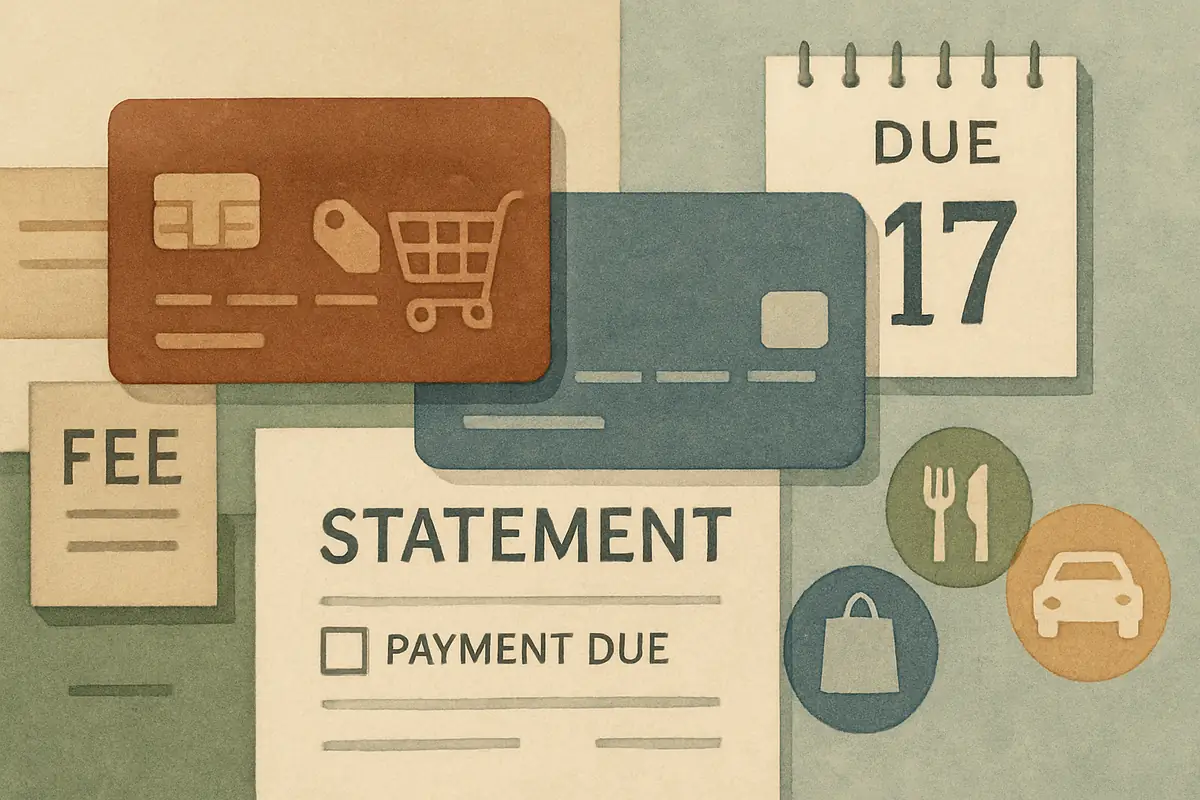
Every credit card operates around fixed billing cycles—usually monthly—with statements showing new charges made since the last closing date plus any carried-over amount owed from previous cycles. The 'due date' tells you exactly when full payment must arrive to avoid new interest charges; most banks give between three weeks (21 days) and nearly a month as grace period after statements close. Miss this deadline by even one day and all new purchases start accruing daily compound interest until completely paid off—not just that single missed charge. Late payment fees typically range from about $29 up to $40 per incident; repeated misses can also reset promotional zero-interest offers early or trigger penalty APRs above regular rate bands (often near maximum legal limits). These mechanics mean good intentions alone are rarely enough; disciplined calendar reminders—and prompt action whenever life throws off routines—are essential tools for actually reaping long-term benefit from reward programs without hidden cost surprises.
The bottom line is that even experienced cardholders occasionally face unexpected schedule slips—a sick child at home during payday week; an unexpected repair draining checking account funds right before autopay runs—or simply missing an alert buried under marketing emails. These realities highlight why tight day-to-day management matters so much more when overall costs rise; it’s not just about being generally good with money but about not letting small timing lapses cost far more than any reward benefit ever delivered.
Fraud Protections Still Matter—but Don’t Offset Higher Routine Costs
One real non-financial advantage credit cards offer compared with debit cards is strong consumer protection against fraud or unauthorized charges—with liability capped at $50 by federal law (and most issuers waiving even that). Fast digital dispute processes help limit stress if your card is lost or used without permission—the bank will usually remove disputed transactions pending investigation within days. However: these protections don’t transform reward chasing into actual profit when other program costs keep rising—they’re simply baseline safety features now expected across all modern cards regardless of fee level or reward scheme. In short: don’t pick premium reward programs based only on fraud safeguards—they’re peace-of-mind features but not true added value compared with core questions about fees vs earnings vs risk exposure each year.
Can I still earn meaningful rewards if I usually only make minimum payments?
Probably not—in fact, any interest from carried balances almost always outweighs typical cash-back earnings unless total spending is very small and never exceeds available funds.
Is it safer now just to use debit instead of chasing credit card points?
Debit avoids future debt risk but usually lacks purchase protections/rewards; consider hybrid strategies but remember only full-credit payment eliminates all borrowing risk.
Should I downgrade premium cards instead of canceling them outright?
Often yes—a downgrade reduces ongoing annual fees without closing accounts that could shorten your credit history; always check whether perks lost will actually affect your real habits.
Will using my card more frequently help my score if I pay in full?
Regular responsible use can support healthy scores—but only if utilization stays low (<30%) and bills are always paid off before due dates.
How Household Behavior Changes Long-Term Value
Hidden Costs and Less Transparent Structures
One of the major challenges for consumers in evaluating credit card reward programs—especially as costs rise—is the increasing complexity and opacity of program rules. In recent years, issuers have introduced more restrictions, reduced the value of points or miles, and changed redemption processes in ways that aren’t always straightforward. For example, some cards now use dynamic pricing for travel redemptions, meaning the number of points required for a flight or hotel room can fluctuate dramatically depending on demand, inflation, or partner arrangements. Meanwhile, blackout dates and tiered redemption rates add further complication. These changes make it harder for cardholders to calculate the real-world value they’re getting from their points or miles. Additionally, annual fees may go up without proportional improvement in rewards, and new surcharges or foreign transaction fees can erode net gains. As a result, cardholders must scrutinize terms and stay vigilant about program updates to avoid being caught off guard by hidden costs.
The movement toward less transparent structures is not limited to travel rewards: even cash-back cards are seeing tweaks to earnings categories, caps on bonus rates, and more requirements for higher returns. Some cards now require linking accounts with partner retailers, enrolling quarterly for rotating categories, or meeting monthly spending minimums to access maximum cash-back rates. These hoops can cause consumers to miss out on advertised rewards if they fail to keep up with the rules. Moreover, point devaluation is a subtle but widespread trend: a point worth one cent today might be worth only 0.8 cents next year after a quiet program change. Consumers who do not track these changes closely may find themselves earning less value over time even if their habits remain the same.
Are Premium Credit Cards Still Worth It?
Premium credit cards typically come with hefty annual fees—often $400 or more—but also offer enhanced rewards structures and luxury perks like airport lounge access or travel credits. In an environment of rising costs, many consumers are re-evaluating whether these benefits still justify the high price tag. For frequent travelers who use all available perks—such as TSA PreCheck reimbursement, hotel elite status upgrades, and annual airline credits—the value proposition may still work out favorably. However, with pandemic-driven travel slowdowns and increased competition among lounge users (sometimes leading to overcrowding), some perks aren’t as valuable in practice as they appear on paper. Additionally, premium card issuers have started scaling back or restricting certain benefits in response to cost pressures of their own; for example, limiting free guest access at lounges or capping trip insurance coverage.
For occasional travelers or those who don’t maximize every perk, premium cards may no longer make financial sense when costs rise. The break-even point—the amount you need to spend or the frequency you must use benefits—keeps climbing as fees rise and perks shrink or become harder to use. It’s essential for consumers to do an honest audit of their own habits: Are you really using that $200 airline credit each year? Do you get consistent value from lounge access? Or are you paying for perks that sound impressive but go largely unused? In many cases, switching to a no-fee or lower-fee card with straightforward cash-back rewards could offer better overall value.
The Impact of Inflation on Redemption Value
Rising inflation plays a subtle but significant role in diminishing the value delivered by credit card reward programs. As prices increase for flights, hotels, groceries and other goods and services that can be purchased through rewards portals, the effective purchasing power of your points dwindles unless issuers adjust redemption rates accordingly—which they often do not. For example, if a hotel night that used to cost 25,000 points now requires 32,000 due solely to higher underlying prices—not because your spending earned fewer points—you’re effectively receiving less real-world value per dollar spent. This erosion is particularly evident in travel-based programs linked directly to fluctuating market prices.
This ‘silent devaluation’ means even diligent point collectors need to pay close attention not just to how many points they have but what those points can actually buy today versus last year. Some issuers have started providing calculators or charts showing current redemption values compared with past years—a helpful tool for consumers looking to understand trends over time. Yet most programs shift these values incrementally enough that busy cardholders might not notice until their next big purchase falls short of expectations.
New Strategies for Maximizing Value
Given these challenges—rising costs, shifting rules, inflationary pressure—credit card users who want to keep reaping meaningful rewards need new strategies for optimization. First and foremost: focus on flexibility. Cards that allow points transfers between multiple loyalty partners (like airline alliances) offer more options when one partner devalues its chart or raises redemption thresholds. Similarly, consider cards that provide cash-back options or statement credits without complicated restrictions; these typically hold their value better during periods of inflation or volatile prices.
Another useful approach is periodic portfolio review: at least once a year (or after any major life change), audit which cards are delivering genuine net value based on your actual spending patterns and travel habits. Don’t let inertia keep you paying annual fees for products no longer suited to your lifestyle—it’s common for people’s financial situations and preferences to shift over time without a corresponding update in their wallet lineup. Finally, take advantage of sign-up bonuses when available but read fine print carefully: introductory offers can inflate perceived value while ongoing rewards lag behind.
Warning: Watch Out for “Breakage”
Where readers should be careful
"Breakage" is industry jargon for unredeemed rewards—points lost when users forget expiration dates or neglect small balances that are difficult to use efficiently. As programs become more complex and redemption thresholds rise alongside costs, breakage becomes more common—and it represents direct lost value for consumers while benefiting issuers’ bottom line. Stay organized by tracking balances across all cards you own (using apps if needed) and scheduling regular reminders before points expire so you don’t leave hard-earned rewards behind.
References
- https://www.consumerfinance.gov/consumer-tools/credit-cards/
- https://www.fdic.gov/consumer-resource-center/credit-cards
- https://www.consumerfinance.gov/consumer-tools/credit-reports-and-scores/
- https://consumer.ftc.gov/articles/what-know-about-identity-theft
- https://www.consumerfinance.gov/ask-cfpb/what-is-a-credit-score-en-315/