By the middle of the month, many households discover that a significant portion of their paychecks—often 60% to 80%—has already been allocated to essential bills, groceries, and daily spending. This recurring squeeze is not just a matter of arithmetic; it’s deeply influenced by how we think and feel about money. Navigating monthly expenses means confronting both the numbers and the psychological patterns that drive them. This article explores why monthly costs often spiral, the mindsets at play, and practical, realistic strategies for regaining control—grounded in the real mechanics of household finance.
Emotional Spending Patterns Drive Monthly Outflows
Money decisions are rarely made with pure logic. Emotional responses—such as stress, relief, or guilt—often trigger spending. For instance, after a demanding workweek, it’s common for individuals to spend $20 to $60 on takeout or online shopping as a quick mood boost. These purchases may seem minor, but over a month, emotional spending can add $100 to $300 to household expenses. Recognizing these triggers is essential: identifying when you’re likely to spend impulsively (such as after stressful events) can help you pause and reflect before making a purchase.
Another common pattern is ‘present bias,’ where immediate rewards are favored over future benefits. This might mean choosing to buy a $200 gadget now instead of contributing that amount to a savings account. While each decision feels reasonable in isolation, the cumulative effect can divert hundreds of dollars monthly from long-term goals. By reframing budgeting as a tool for achieving freedom—rather than as a restriction—you can begin to make choices that balance current enjoyment with future security.
Common Mistakes That Increase Monthly Expenses
One widespread mistake is underestimating irregular or seasonal costs. For example, car maintenance might only occur twice a year, but each visit can cost $300 to $800. Holiday gifts, averaging $500 to $1,000 annually, can strain budgets if not planned for. Failing to account for these expenses can force last-minute borrowing or cutbacks elsewhere, disrupting cash flow and increasing reliance on credit cards, which often carry annual percentage rates (APRs) between 18% and 30%—the APR is the yearly interest rate charged on borrowed funds.
Subscription services are another silent drain. The average household now has between 5 and 10 active subscriptions—ranging from $7 to $40 each per month. These recurring charges can quietly absorb $50 to $200 monthly, especially if left unchecked after initial enthusiasm fades. Reviewing these subscriptions quarterly can help reclaim funds for more meaningful uses.
Timing expenses with pay cycles is also a frequent challenge. If most bills are paid immediately after payday, but discretionary spending is not aligned, it’s easy to run short of cash by the third week of the month. This misalignment often leads to rushed decisions, overdraft fees (typically $30 to $35 per occurrence), or increased credit card utilization—utilization being the percentage of your available credit that you’re using, which can impact your credit score.
Scenario: Sarah's Surprise Subscription Charges
Sarah enjoys exploring new cooking apps and, over several months, signs up for three meal delivery subscriptions. Each service charges $25 to $35 monthly. When she reviews her statements, she realizes these recurring charges total nearly $90 per month—more than 10% of her typical grocery budget. This discovery prompts her to reassess which services she truly values.
Making Practical Adjustments to Monthly Spending
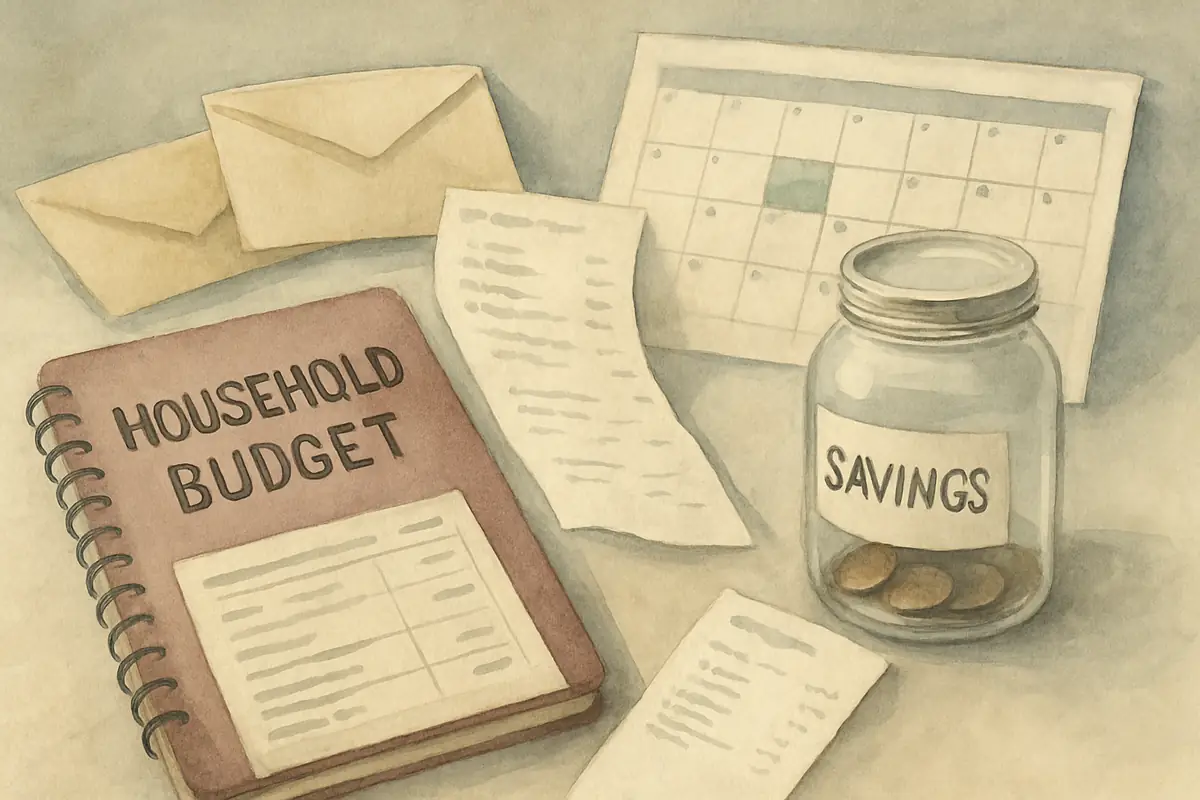
Addressing these patterns doesn’t require a dramatic overhaul. Small, targeted changes are often most effective. For example, using the envelope method—physically or digitally—helps categorize spending and makes irregular expenses visible. If you expect $600 in annual car repairs and $1,200 for holiday gifts, divide by 12 and set aside $50 and $100 per month, respectively. This proactive approach smooths out large, infrequent costs.
Quarterly subscription reviews are another practical fix. Ask yourself: “Did I use this service in the last month? Does it still fit my routine?” Canceling unused subscriptions can free up $20 to $80 monthly. Many services offer easy reactivation, reducing the fear of missing out (FOMO).
Aligning major purchases with paydays helps avoid cash flow crunches. For example, plan grocery shopping and utility payments for the week after your paycheck arrives, and delay discretionary spending until later in the cycle. This pacing reduces the risk of overdrawing your account or resorting to credit cards with high APRs.
Where these corrections help
- Creates a clearer view of true monthly cash flow, including hidden costs.
- Reduces financial surprises by spreading out irregular expenses.
- Limits waste from unused or forgotten subscriptions.
- Improves expense timing to reduce end-of-month stress.
- Balances practical budgeting with the realities of emotional decision-making.
Where caution is needed
- Requires consistent review habits, which may feel tedious at first.
- May uncover uncomfortable truths about spending habits that require patience to address.
- Canceling subscriptions can result in temporary FOMO.
Mental Accounting Traps and Their Impact on Budgets
Mental accounting is the habit of categorizing money based on its source or intended use, rather than treating all funds as equally valuable. For example, treating a $1,200 tax refund as “bonus” money can lead to splurging, even though that sum could cover a month’s rent or pay down debt. This bias can distort spending choices, making it easier to overspend on windfalls while neglecting routine obligations or savings goals.
In the context of monthly expenses, mental accounting can cause you to overlook the impact of certain payments—like annual subscriptions or irregular bills—because they don’t fit into the usual categories. Recognizing this bias allows you to approach all expenses with a unified perspective, improving overall financial health.
Building Awareness and Control Over Spending
Tracking every expense—even those under $5—for a full month reveals patterns that memory alone can’t capture. Many individuals discover that impulse purchases and small fees add up to $50 to $150 monthly. Use a notebook or an app to log every outflow, then review for surprises.
Set realistic budget targets based on your actual spending history. For example, if you spent $400 on groceries last month, aim for a $380–$400 range, leaving a $20 buffer. Avoid setting arbitrary goals that are too restrictive, as these are less likely to be sustainable.
Mid-month check-ins are key. If you’ve already spent 70% of your discretionary budget by day 15, adjust plans for the remainder of the month. This approach turns budgeting into a dynamic process, rather than a static forecast.
| Factor | What it means for monthly expenses | Practical tip |
|---|---|---|
| Impulse Purchases | Small, spontaneous buys can total $50–$150 monthly. | Pause for 24 hours before making non-essential purchases. |
| Subscription Services | Recurring charges may drain $50–$200 per month if unmonitored. | Review and cancel unused services every 3 months. |
| Irregular Costs (repairs/holidays) | Annual expenses like $600 car repairs or $1,000 holidays can cause budget shocks. | Divide estimated yearly cost into monthly savings amounts. |
| Payment Timing vs Paychecks | Poor alignment can cause cash flow gaps and overdraft fees of $30–$35. | Schedule bills right after payday when possible. |
| Mental Accounting Biases | Separating funds mentally leads to overspending on windfalls. | Treat all money as part of one overall budget pool. |
Worked Calculation Example: Suppose you want to prepare for $1,200 in annual holiday expenses and $600 in car repairs. Divide $1,200 by 12 months to get $100/month, and $600 by 12 to get $50/month. By setting aside $150 monthly in a separate savings category, you can cover both expenses without disrupting your regular monthly budget or resorting to high-interest credit cards.
Trade-Offs and the Reality of Imperfect Budgets
No budget is perfect. Life events—like a $500 medical bill or a $1,000 home repair—can appear without warning. Instead of panicking or feeling guilty, focus on adjusting priorities. For example, skipping two $40 restaurant visits and reducing entertainment spending by $30 can free up $110 to help cover an unexpected cost.
Buffer zones are essential: allocating 5% to 10% of your monthly income as a contingency fund can help smooth out these surprises. For a household earning $4,000 per month, this means setting aside $200 to $400 as a safety net, reducing reliance on credit cards or payday loans, which often carry high APRs and fees.
Mark's Balancing Act After Unexpected Car Repairs
Mark faced an $800 car repair mid-month, which temporarily wiped out his grocery fund. Instead of turning to credit, he opted for lower-cost meal options and skipped two $15 movie outings, saving $30. By making these trade-offs, he avoided debt and regained control without harsh self-judgment.
Timing Plays a Key Role in Expense Management
Timing isn’t just about bill due dates; it also involves when discretionary spending happens. Spreading out purchases—such as splitting grocery trips into two $100 visits instead of one $200 spree—can help manage cash flow and reduce the temptation to overspend early in the month.
Many households find that scheduling financial reviews within three days of payday improves clarity and motivation. This habit helps ensure that fixed expenses (like rent or utilities) are covered first, while discretionary spending is paced throughout the month, reducing the risk of overdrafts or last-minute borrowing.
Frequently Asked Questions About Expense Psychology
Why do I feel guilty about necessary expenses?
Guilt can arise from viewing spending as a loss rather than an investment in well-being. Reframing essential costs—like healthcare or education—as valuable investments helps reduce this feeling.
How can I reduce impulse buying triggered by stress?
Recognize emotional triggers and substitute alternative coping strategies, such as walking or journaling. Delaying purchases by 24 hours can reduce impulsivity by up to 50% for many people.
Is it problematic to have several subscriptions?
Multiple subscriptions are manageable if their total cost fits your budget and they provide ongoing value. However, if they exceed 10% of your discretionary spending or go unused, it’s wise to reconsider them.
How do I balance enjoyment with budgeting discipline?
Allocating 5% to 10% of your budget as “fun money” helps prevent burnout. This balance supports sustainable habits while allowing for occasional rewards.
Summary: Actionable Steps for Managing Monthly Expenses
Effective management of monthly expenses blends psychological awareness with practical steps. Track all costs—including hidden ones like subscriptions—plan ahead for irregular expenses by dividing annual amounts into monthly savings, align spending with pay cycles, and regularly review emotional spending patterns. Build buffer zones of 5% to 10% for unexpected events, and accept that imperfection is normal. By making check-ins a routine part of your financial life, you can reduce stress, regain control, and make progress toward your goals—even when life throws a curveball.
Emotional Triggers and Social Influences on Spending
Emotional triggers—such as stress, boredom, or excitement—commonly lead individuals to spend impulsively, sometimes adding $50 to $200 per month in unplanned expenses. For example, a stressful workday may prompt a $30 online purchase as a reward. These behaviors often operate below conscious awareness, fueled by the brain’s desire for instant gratification. Recognizing these triggers is the first step toward changing them. Techniques like mindfulness and journaling about purchases can help identify when emotions influence spending, supporting more intentional budgeting.
Social and cultural influences also shape spending patterns. Social media exposure can encourage purchases to keep up with trends, leading to FOMO and potentially raising entertainment or dining-out costs by $100 or more per month. Understanding how external pressures affect your internal motivations empowers you to make choices that align with your values, not just societal expectations. Developing a personal financial philosophy, rooted in mindful decision-making, reduces vulnerability to emotional triggers from advertising and peer comparison.
Habit Formation Shapes Monthly Expense Patterns
Financial habits, formed through repeated behaviors, have a powerful impact on monthly expenses. Routine actions—like ordering $25 takeout every Friday—can add $100 or more to monthly spending. While some habits, such as transferring $200 to savings each month, are beneficial, others can lead to financial strain over time. Understanding the psychology of habit loops—cue, routine, reward—enables you to disrupt negative cycles and build constructive alternatives.
Breaking larger goals into smaller, actionable steps increases motivation. Instead of vaguely planning to “save more,” commit to saving $50 per week or reducing discretionary spending by $20 each month. Rewarding yourself for reaching these milestones—such as treating yourself to a $15 movie night after hitting a savings goal—reinforces positive habits. Over time, these deliberate choices reduce anxiety and promote a healthier relationship with money.
Cognitive Biases That Influence Budget Decisions
Cognitive biases can skew how you set and manage your monthly budget. Optimism bias—the tendency to overestimate positive outcomes—may lead you to expect a bonus or raise, resulting in premature spending. This can leave you short if anticipated income doesn’t materialize. Building in a 5% to 10% buffer for unexpected costs helps counteract this tendency.
Loss aversion, where the pain of losing money outweighs the pleasure of gaining it, can make it hard to cut recurring costs like $15 streaming services, even when they go unused. Recognizing this bias enables you to evaluate expenses more logically. Tools such as peer accountability groups or financial coaching can offer objective perspectives, helping you make decisions that align with long-term goals rather than short-term emotions.
Strategies to Align Spending with Core Values
Aligning expenses with personal values increases satisfaction and reduces guilt. Reflect on what matters most—family, health, education, or community—and prioritize spending accordingly. For example, if health is a priority, allocating $50 to $100 per month for nutritious groceries or wellness programs becomes a meaningful investment, not a splurge.
Open communication within households about financial priorities helps avoid conflict and fosters cooperation. Joint budgeting sessions or shared finance apps can promote transparency and support shared goals, such as saving for a down payment or reducing debt. Integrating psychological insights with practical money management builds a stronger foundation for controlling monthly expenses and achieving lasting well-being.