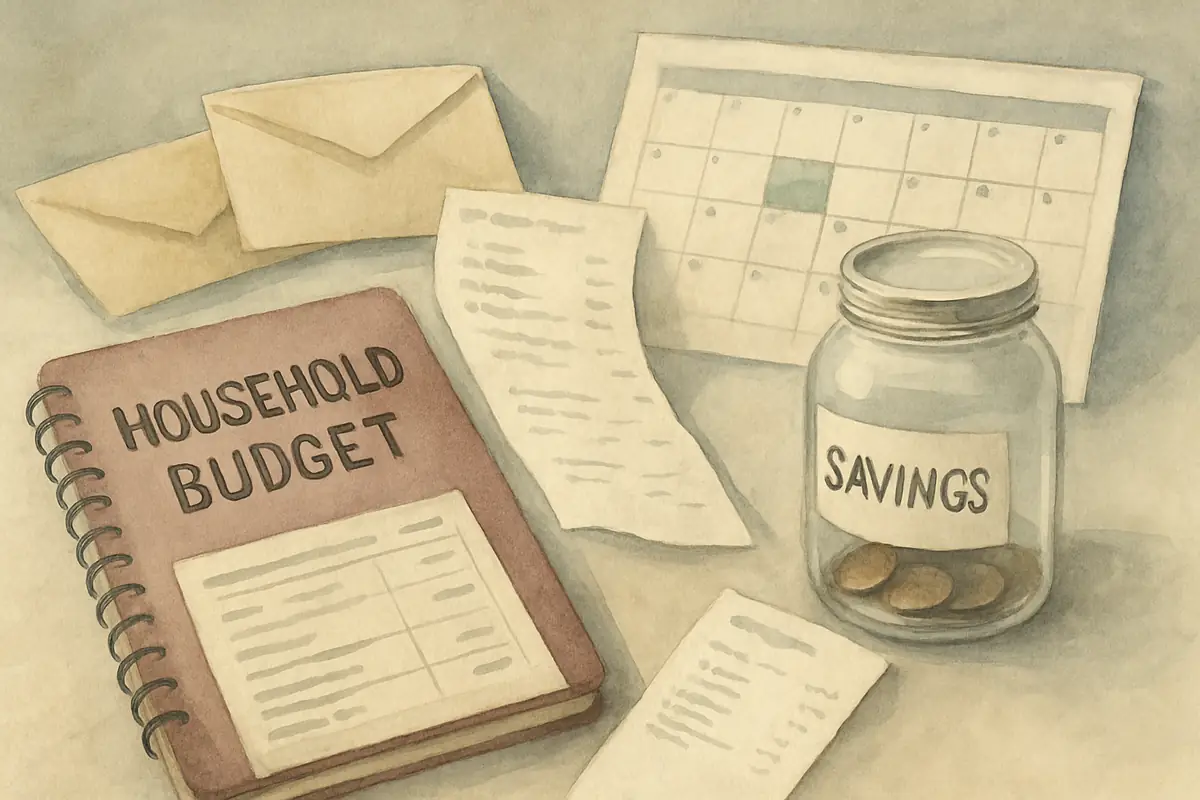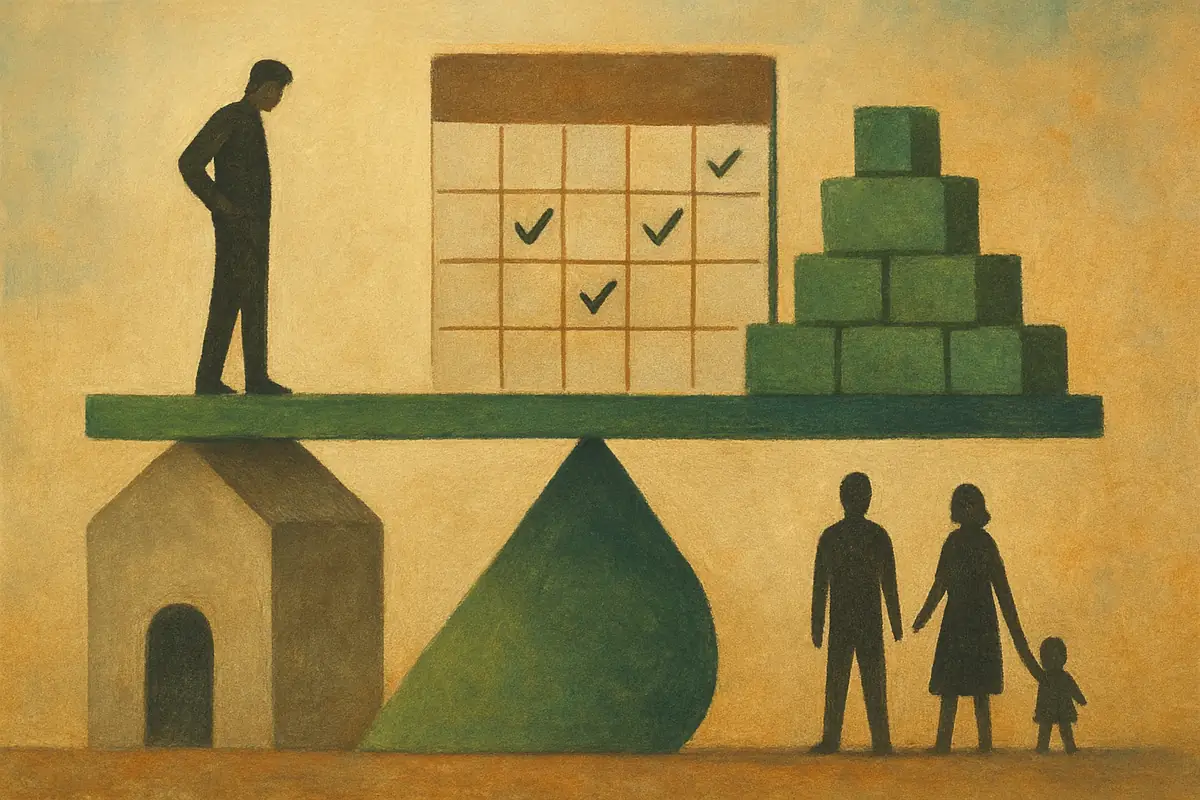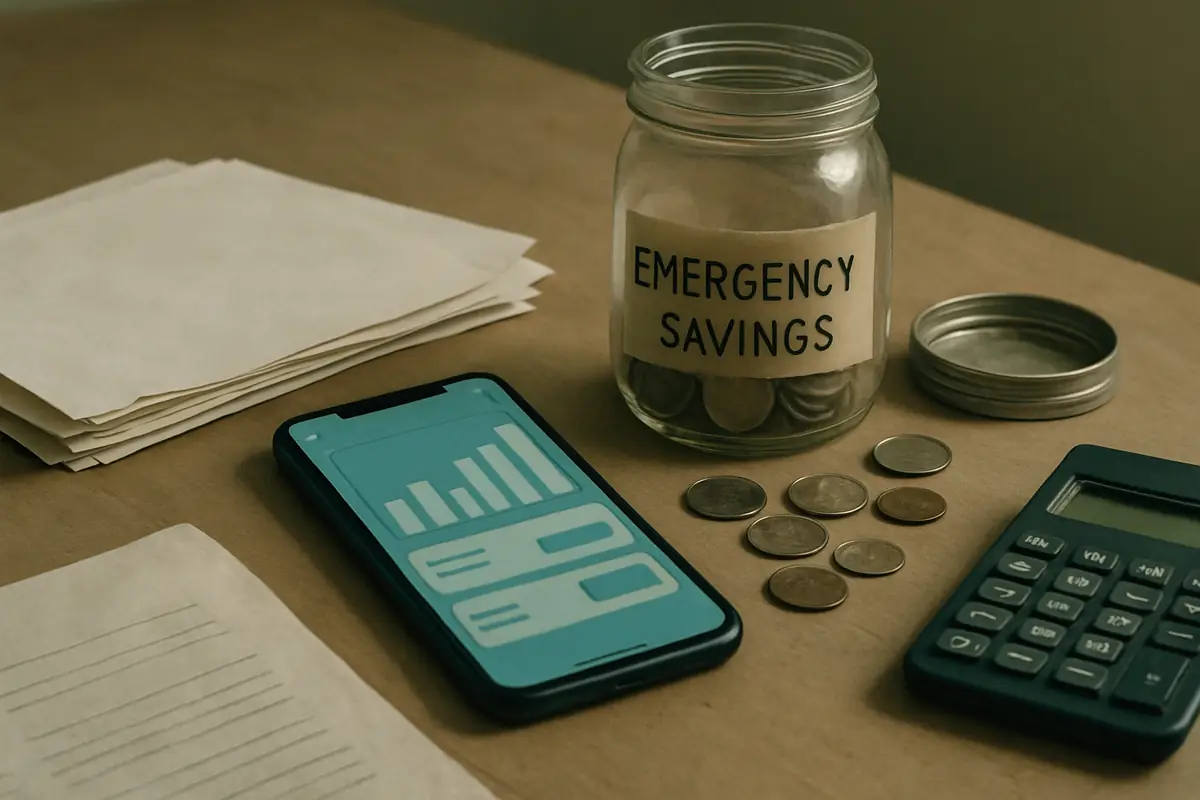
Roughly 4 in 10 American adults say they would struggle to cover a surprise $400 expense with cash on hand — and the Carson family knows the feeling. On a chilly Tuesday evening they gather around the kitchen table amid a scatter of bills, receipts, and a blinking calculator: a $389 car payment due Friday, a credit card carrying a 24% APR balance, and a furnace repair quote for $1,150. This routine scene masks a tension most loan applications never capture: how the timing of money moving through a household — not just the total earned — transforms the way families borrow, repay, and plan for surprises.
Understanding Household Finance Beyond Income
Household finance encompasses far more than a simple tally of income and expenses. It is the choreography of managing irregular earnings, unexpected costs, savings priorities, and debts inside a fixed frame of time and money. A common budgeting shorthand, the 50/30/20 rule, directs about 50% of after-tax income to needs, 30% to wants, and 20% to savings and debt paydown — but that framework assumes income arrives in smooth installments. Gig workers, tipped employees, and seasonal workers may see monthly inflows swing 30% or more, which complicates every line of that tidy formula.
For borrowers especially, cash flow timing can matter as much as the amount available. One paycheck spread thin across a month is very different from a sporadic windfall followed by three lean weeks. This is why standard emergency-fund guidance shifts with income type: 3 to 6 months of essential expenses for steady earners, but 6 to 9 months for households with variable income. Where that cushion sits matters too — high-yield savings accounts have recently paid roughly 3.5% to 4.5% APY, while many large traditional banks still pay under 0.5%, a meaningful gap for a household that borrows to bridge shortfalls. Recognizing these dynamics early steers borrowing toward manageable commitments rather than overextension.
Scenario: The Wilsons’ Cash Flow Juggle With New Borrowing Needs
How this can look in practice
The Wilson family balances two part-time incomes with varied schedules — some months bring in $4,800 combined, others closer to $3,600. An unexpected $1,800 medical bill lands in a lean month. Their emergency savings hold about $700, and rent of $1,450 plus utilities are due within two weeks. Looking to borrow without derailing those fixed obligations, they confront the core problem: aligning a repayment schedule with inflows they cannot fully predict.
This common scenario shows how irregular cash flow forces borrowers to weigh short-term options carefully. A personal installment loan — where typical APRs run from about 7% for strong credit to 36% at the subprime end, sometimes with an origination fee of 1% to 8% deducted up front — locks in a fixed monthly payment that could strain a low-income week. A revolving credit line offers flexibility, but credit card APRs commonly sit between 18% and 30%, so a lingering balance gets expensive fast. The option to avoid at nearly any cost is the payday loan, where fees on a two-week advance frequently translate to 300% to 400% APR.
Their situation underscores why lenders and counselors increasingly look past static income snapshots: a borrowing plan built on the average month fails in the below-average one, and a single missed due date triggers fees and credit damage that outlast the original emergency.
Comparing Household Finance Metrics: Income Versus Cash Flow Analysis
Traditional underwriting leans on fixed income figures — monthly salary, annual wages — and on the debt-to-income ratio, or DTI, which is simply total monthly debt payments divided by gross monthly income. These numbers set a baseline for eligibility, and benchmarks such as keeping housing costs to roughly 28% to 30% of gross income remain useful guardrails. But averages miss real liquidity: seasonal jobs, commission delays, freelance invoices paid 45 days late. Cash flow analysis instead tracks when money actually enters and leaves accounts, revealing the surplus and shortage windows that determine whether a payment clears on time.
The distinction cuts both ways. A borrower with a steady $5,200 monthly salary but essential expenses that spike unpredictably may run short despite looking qualified on paper. Conversely, a household with variable but well-managed inflows can protect the two factors that dominate credit scoring — payment history, which drives roughly 35% of most scoring models, and credit utilization, which experts generally advise keeping below 30% of available limits. Lenders that incorporate transaction-level cash flow data see a fuller risk picture, and that increasingly shapes product design and approval criteria.
Quote: Insights From Financial Counselor Marissa Nguyen
Marissa Nguyen’s observation captures a subtle but expensive reality. A timing mismatch of even a few days converts affordable debt into penalty territory: credit card late fees typically run $30 to $41 per incident, and paying after the grace period — usually 21 to 25 days between statement close and due date — means interest accrues on the full balance. Her advice centers on a simple audit: list every due date, list every pay date, and move the former toward the latter — most card issuers and many loan servicers will shift a due date on request at no charge.
Pros and Cons: Flexible Credit Options for Fluctuating Cash Flow Households
Advantages of Flexible Borrowing Tools
- Allow borrowers to scale repayment up or down with current cash availability rather than a fixed installment.
- Provide breathing room during low-income weeks without immediate penalties, since only a minimum payment — often 1% to 3% of the balance plus interest — is required.
- Encourage matching debt servicing to actual inflows, paying aggressively in surplus months.
- Keep an open credit line available for the next emergency without a new application.
Potential Drawbacks to Consider
- Higher interest rates than fixed installment loans — revolving rates of 18% to 30% versus personal loan APRs starting near 7% to 12% for good credit — raise total cost if balances linger.
- Minimum-payment flexibility invites revolving debt that can take years to clear.
- Variable rates can rise with the broader rate environment, which has kept short-term benchmark rates elevated since the 2022–2023 hiking cycle pushed them above 5%.
- Complex terms may confuse borrowers accustomed to one fixed monthly payment.
Flexible products such as personal lines of credit cater well to households with unpredictable inflows. They let debt servicing mirror real financial rhythms instead of forcing rigid schedules onto incomes with gaps. But the convenience carries a discipline requirement: a borrower who pays only the 2% minimum on a $3,000 balance at a 24% APR will remain in debt for many years, while one who front-loads payments in strong months can pay a fraction of that interest.
Before choosing flexibility, a household needs a realistic map of its own income pattern — which weeks are reliably strong, which are thin — so the flexibility becomes a tool rather than a trap.
Household Routine Realities: Imperfect Budgeting Under Stress
Many households build detailed budgets only to watch them collapse under a $600 brake job or an urgent-care visit. Layer psychological stress on top and the picture grows more complicated than any spreadsheet suggests. Practical money management is lived-in and compromised: the grocery run that slides to a credit card, the overdraft that turns a $12 purchase into a $47 expense once a typical $25 to $35 fee attaches.
Rigid loan terms add anxiety because a single miss triggers fees quickly, and negative marks hit credit reports once a payment is 30 days past due. Small timing adjustments help more than heroic discipline: paying the card the day after the larger paycheck lands, or splitting one payment into two halves aligned with biweekly pay. Cash flow awareness, not budgeting perfection, keeps these households current.
Takeaway: Align Borrowing Plans With Real Household Cash Rhythms
Successful borrowing depends less on perfect budgeting discipline than on practical alignment: shifting due dates toward paydays, choosing installment plans that bill just after income arrives, enrolling in autopay where many lenders offer a 0.25% rate discount for doing so, and keeping a buffer — even $500 to $1,000 — between incoming funds and outgoing bills so an ordinary surprise does not cascade into fees. The goal is a repayment schedule that survives the household's worst typical month, not just its average one.
Warning: The Hidden Pitfalls of Ignoring Cash Flow Timing
Where readers should be careful
Borrowers who focus solely on total annual income risk repeated late payments despite earning enough on paper. The compounding costs are steep: late fees of $30 to $41 per occurrence, potential penalty APRs that can push a card rate toward the top of the 18% to 30% band, negative marks on credit reports that linger up to seven years, and — because payment history carries roughly 35% of scoring weight — score drops that raise the price of every future loan. Timing blindness also starves savings: overspending in flush weeks leaves nothing for the lean ones, so the emergency fund that should hold 3 to 6 months of expenses never forms, and the next surprise becomes the next debt.
Borrowing smart means mapping the paycheck calendar against the installment calendar before signing — not just qualifying on the gross numbers an application requests. Miss that nuance and debt that looked affordable at signing becomes a chronic monthly scramble.
Scenario Revisited: How the Wilsons Adapted Their Approach
How this can look in practice
After a session with a nonprofit credit counselor who mapped their fluctuating weekly incomes against upcoming expenses, the Wilsons restructured their plan. Instead of a five-year fixed installment loan demanding the same payment in a $3,600 month as in a $4,800 month, they opened a modest $2,500 personal line of credit at a mid-teens APR. They drew $1,800 for the medical bill, paid $150 minimums in thin months, and pushed $500 or more toward the balance in strong ones — clearing the debt in under a year while keeping the line open for future emergencies.
The recalibration eased pressure across the whole household routine. With no missed payments and utilization falling as the balance dropped, their credit standing improved, and the money once lost to overdraft and late fees — over $200 in the prior year — began flowing into a rebuilt emergency cushion instead. The Wilsons’ story illustrates how attention to timing transforms borrowing outcomes beyond anything a static income calculation reveals.
Evaluating Household Finance in the Context of Borrowing Decisions
When borrowers assess capacity for new debt, a comprehensive evaluation of household finances matters as much as this month's liquidity. Cash flow focuses on immediate inflows and outflows; household finance takes the wider view — assets, liabilities, long-term goals, and risk management. A borrower with a stable income but $18,000 in high-interest card balances and no emergency savings may be far more fragile than positive monthly cash flow suggests. Net worth — everything owned minus everything owed, including home equity and retirement accounts — reveals resilience that a checking-account balance cannot. Even where reserves sit belongs in the picture: deposits are federally insured up to $250,000 per depositor, per insured bank, per ownership category, which is why counselors treat insured savings as the foundation layer of resilience.
In practical terms, borrowers should maintain a simple balance sheet alongside the monthly budget: every asset on one side, every liability on the other, updated quarterly. This wider view exposes hidden opportunities and risks — the home equity that could refinance an expensive debt, or the cluster of high-interest balances quietly eroding borrowing capacity. Advisors increasingly fold household-finance reviews into borrowing decisions so that loan affordability aligns with long-term stability, not just this quarter's liquidity.
The Impact of Changing Cash Flow Patterns on Borrowers
Cash flow is inherently dynamic. Seasonal work, variable bonuses, or a sudden medical expense can swing a household from surplus to shortage within weeks — and the backdrop shifts too, with consumer price inflation recently running around 2.5% to 3.5% annually after peaking near 9% in mid-2022, a reminder that expense lines rarely hold still even when income does. Borrowers with inconsistent income streams need projections across time, not just averages, and lenders often respond to irregular income with requests for longer documentation histories — commonly two years of records for self-employed applicants — or with tighter terms to offset perceived risk.
Self-employed households can adapt on both sides of the ledger. On the borrowing side: choosing flexible terms, or making outsized payments in surplus months to buy slack for lean ones. On the reserve side: holding the larger 6-to-9-month cushion that variable income warrants, and parking medium-term reserves in instruments recently yielding roughly 4% to 5%, such as certificates of deposit or Treasury bills, so idle cash still works. Forecasting tools that model best-case and worst-case months help set realistic borrowing limits and prevent the overextension that turns one slow quarter into a default.
Integrating Household Finance Management Tools for Better Borrowing Outcomes
Modern financial technology has moved well past simple budgeting apps. Aggregation platforms now pull accounts from multiple institutions into one view, track net worth in real time, and run predictive scenarios — what happens if income drops 20% for two months, or a $1,500 repair lands in March. Borrowers using them see cause and effect clearly: a rising card balance pushing utilization past the 30% guideline, or an extra $200 monthly payment improving DTI before a mortgage application.
Many platforms add alerts — a warning ten days before a projected shortfall, a nudge when a balance nears a limit — letting borrowers adjust before a lender ever sees a problem. The same standardized reports sharpen conversations with counselors, replacing guesswork with a shared, current picture of the household's finances.
How Interest Rates and Loan Terms Interact with Household Finance
Interest rates and term length jointly determine what a loan costs and what it does to monthly cash flow. The trade-off is easiest to see with concrete numbers. Consider a $20,000 personal loan at 11% APR. Step one: the monthly rate is 11% divided by 12, about 0.92%. Step two: on a 36-month term, the amortized payment works out to roughly $655; total repaid is $655 × 36 = $23,580, so interest costs about $3,580. Step three: stretch the same loan to 60 months and the payment falls to about $435, but total repaid becomes $435 × 60 = $26,100 — roughly $6,100 of interest. Step four: compare. The longer term frees about $220 of monthly cash flow but costs approximately $2,520 more over the life of the loan. The right choice depends on whether the household's cash rhythm can absorb the higher payment without risking a miss.
The same logic scales up to housing, where 30-year fixed mortgage rates have recently hovered around 6% to 7%. A longer mortgage term lowers the payment and eases short-term cash flow but slows equity building and raises lifetime interest; a shorter term does the reverse. Down-payment structure matters too — government-backed programs allow as little as 3.5% down while the conventional 20% benchmark avoids mortgage insurance. Borrowers who run these numbers against their own pay calendar, not just a lender's qualification ceiling, choose products serving both immediate affordability and long-term wealth.
Behavioral Factors Influencing Borrower Decisions: Beyond Numbers
Quantitative assessment only goes so far; behavior fills the gap. Attitudes toward debt, risk tolerance, and cultural expectations about saving versus spending all shape how people borrow and repay. Some households rationally pay a modestly higher rate to preserve liquidity — keeping the 60-month payment instead of the 36-month one — because the buffer itself prevents costlier emergencies like overdrafts and payday borrowing.
Financial stress — the persistent anxiety of not knowing whether money will stretch to the next inflow — is its own behavioral force. Under stress, people miss payments they could have made, avoid opening statements, and defer planning entirely. Recognizing these patterns lets lenders and advisors respond with structural fixes rather than lectures: due-date changes, hardship programs, biweekly payment splits, and counseling that treats the human factors as seriously as the arithmetic.
Policy Implications: How Changes in Regulation Affect Borrower Dynamics
Regulatory frameworks translate household finance into borrowing capacity in concrete ways. Debt-to-income limits are the clearest example: many qualified-lending standards cluster around total DTI ceilings of roughly 36% to 43%, which constrains credit for high-cash-flow but heavily indebted applicants because the rules weigh total obligations, not just liquidity. Disclosure requirements work from the other direction, mandating that APR — the annualized cost of credit including certain fees, not just the interest rate — be stated plainly so borrowers can compare a 9% loan with a 2% origination fee against an 11% loan with none.
Recent regulatory momentum favors holistic underwriting: combining cash flow analysis with net worth, obligations, and realistic earning projections rather than a single income snapshot. The aim is fewer defaults by keeping loans affordable across the full repayment horizon — including the job change or slow season that averages conceal. For households like the Carsons and Wilsons, that shift means lending decisions that finally reflect how money actually moves through a home: not in smooth averages, but in the uneven, timed pulses that determine whether the next payment clears.