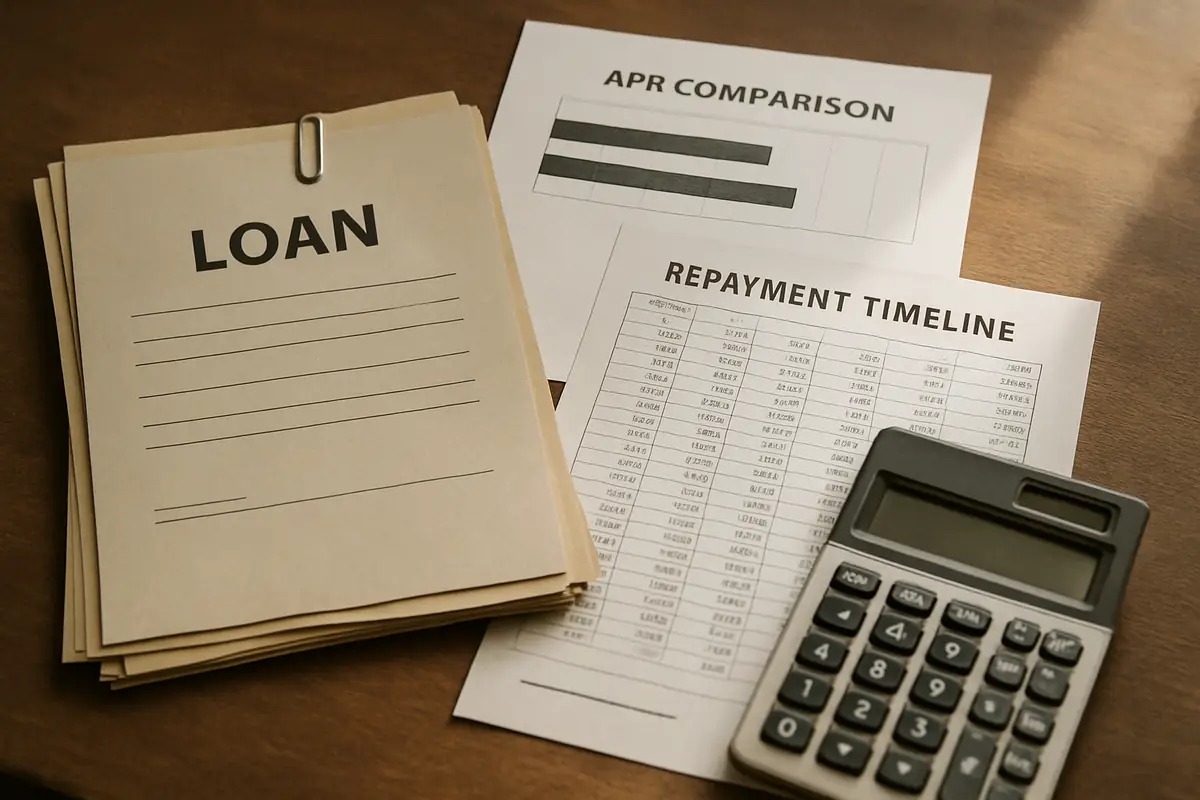
When Mia and her partner began searching for a personal loan to consolidate $12,000 in credit card debt, they encountered a maze of offers with rates, fees, and terms that were far from straightforward. While some lenders advertised enticing rates as low as 4.5%, a closer inspection revealed variable APRs, origination fees ranging from 1% to 8%, and prepayment penalties that could add hundreds of dollars to the total cost. Their experience highlights the growing complexity borrowers face as lending products and comparison tools proliferate.
Scenario: Mia’s Search for Clarity Amid Varied Loan Offers
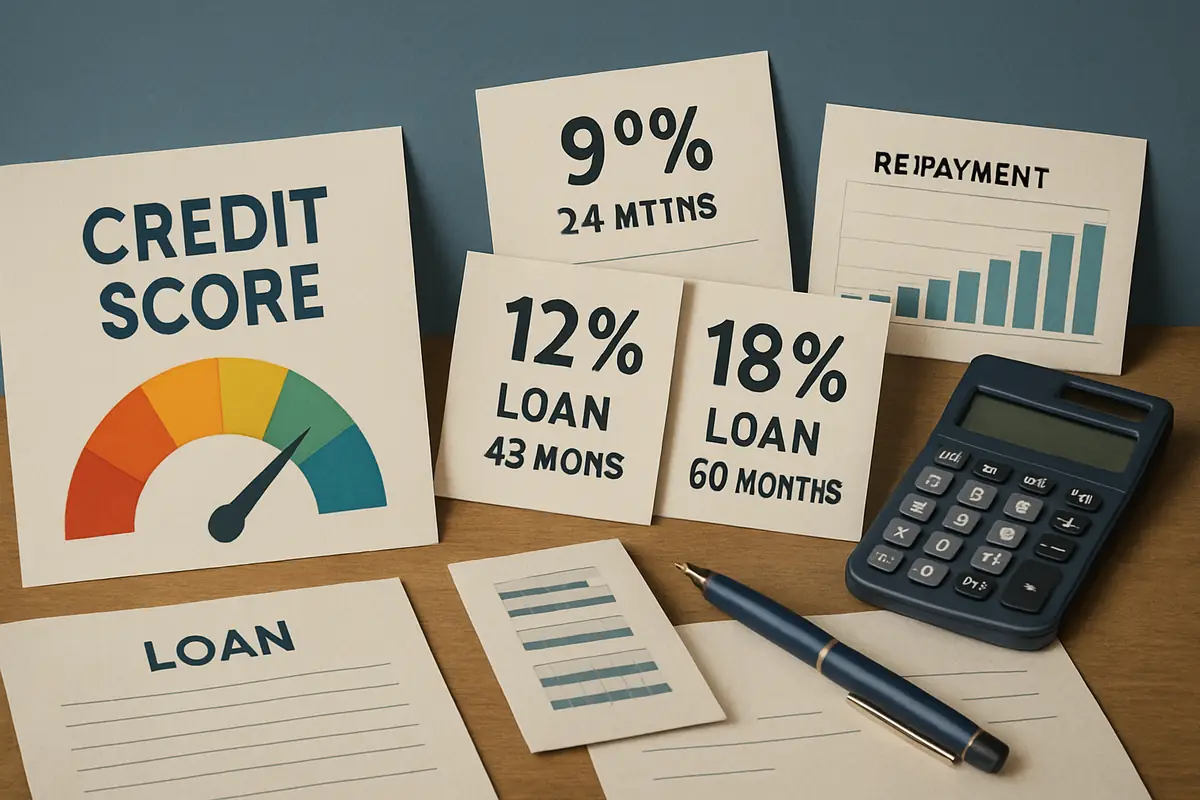
Mia, a salaried professional with moderate savings and a credit score around 690, aimed to reduce her monthly payments by consolidating five credit cards into a single personal loan. She used online lender comparison sites and saw advertised APRs (Annual Percentage Rates, the yearly cost of borrowing including interest and some fees) starting at 4.5% for top-tier applicants, while others reached 8% or more for average credit. However, Mia quickly realized many headline rates excluded origination fees—often $300 to $800 on a $10,000 loan—or did not clarify if the rate was fixed or variable. Some lenders required collateral, such as a vehicle or savings account, and imposed prepayment penalties of $100 to $500 for early payoff. These factors, not always visible in comparison snapshots, could substantially affect her total repayment amount and risk exposure.
Mia’s experience reflects a widespread challenge: lender comparison tools often provide only a partial picture. Borrowers must dig deeper into the fine print to understand how fees, term lengths, and collateral requirements influence the real cost of borrowing and the risk of financial strain.
Key Loan Comparison Factors: How APR, Fees, Terms, and Collateral Shape Costs
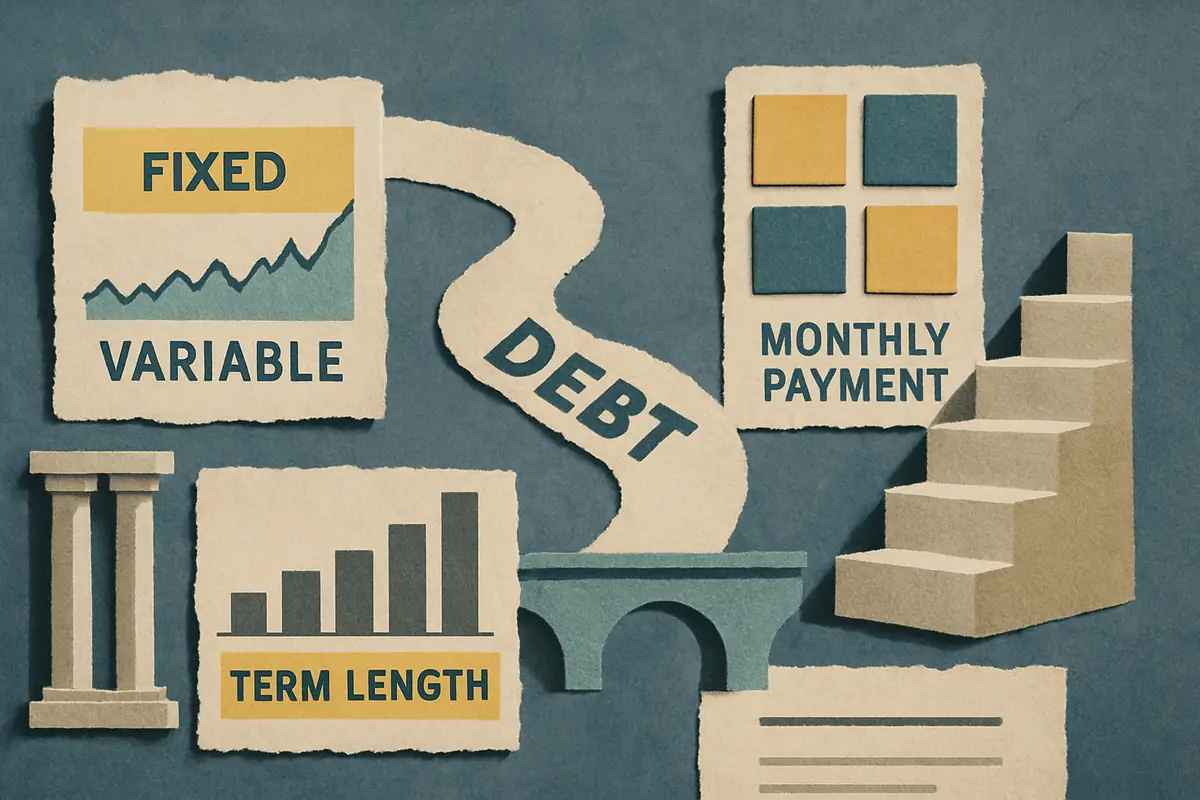
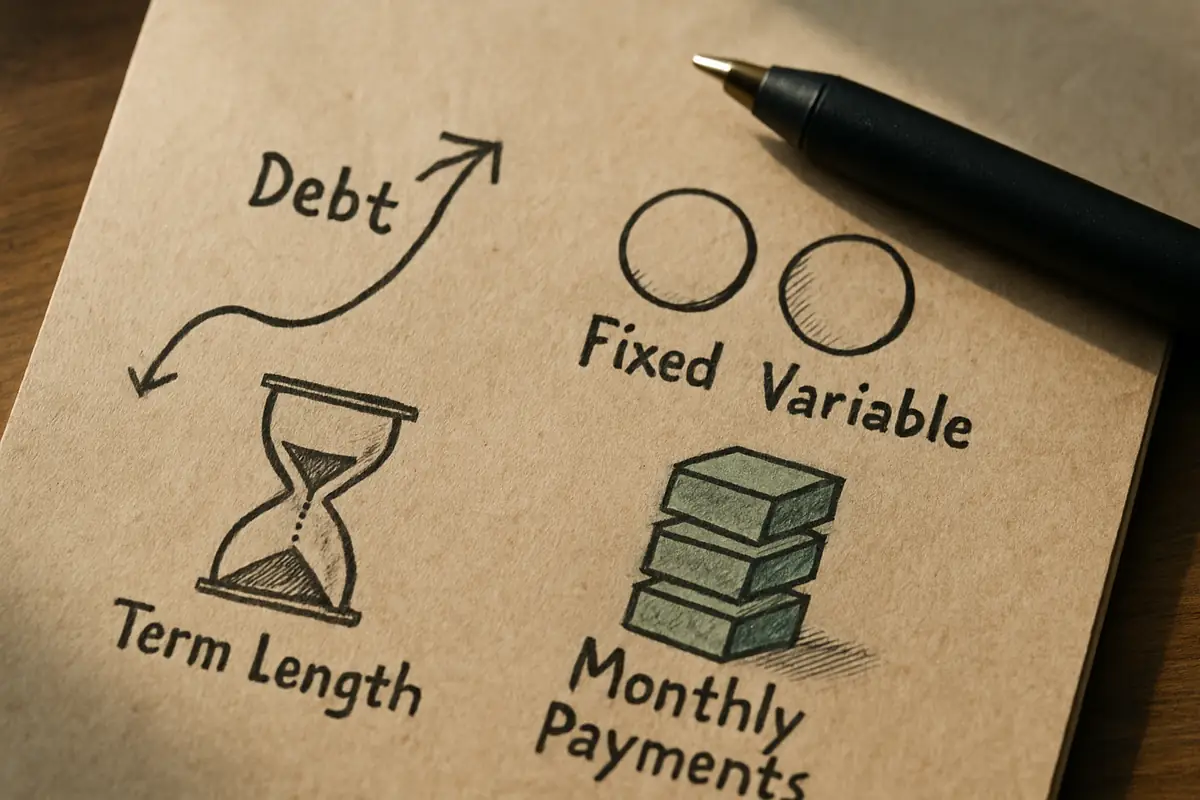
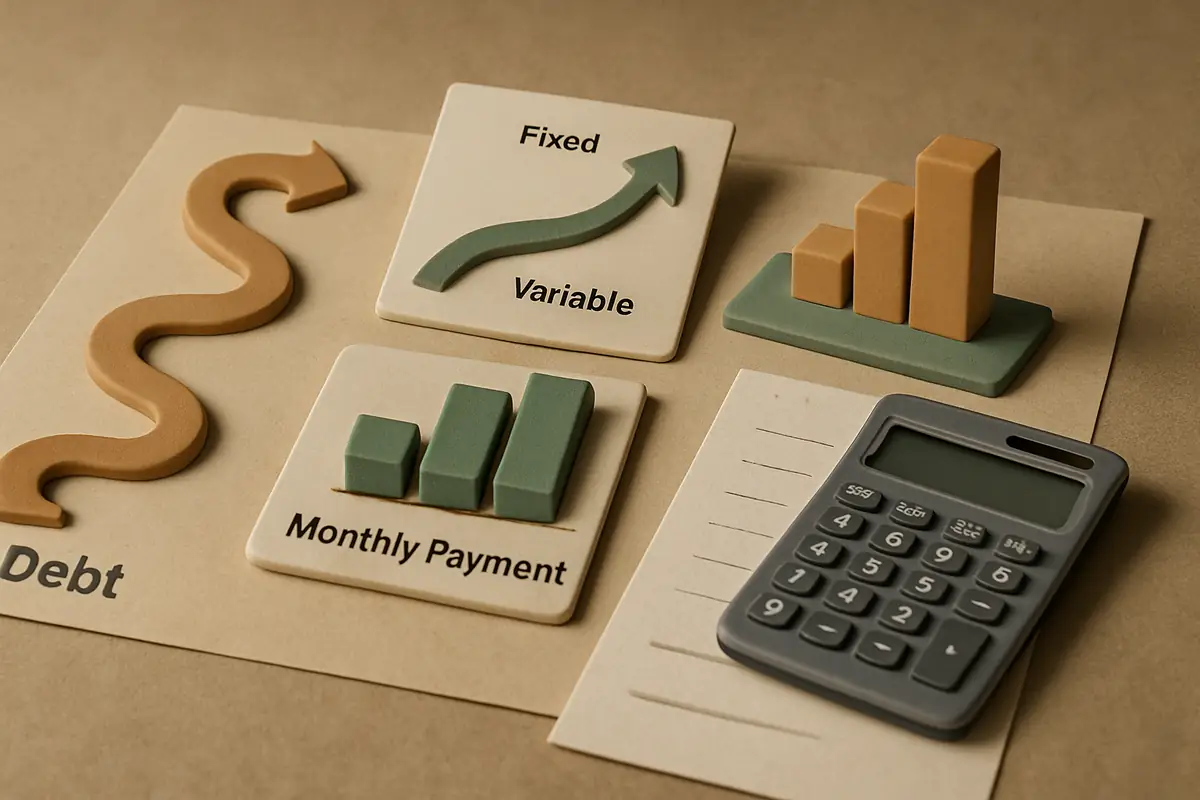
APR, or Annual Percentage Rate, is a critical metric for comparing loans. It expresses the yearly cost of borrowing as a percentage, including interest and certain mandatory fees. Yet, APR calculations may omit some costs, such as late payment fees or optional insurances, and do not distinguish between fixed rates (which remain constant) and variable rates (which can change based on market indices like the prime rate). Variable APRs can start low but rise several percentage points over the loan term, unexpectedly increasing monthly payments.
Term length—the period over which the loan is repaid—also plays a significant role. For example, a 3-year loan may have higher monthly payments but a lower total interest cost than a 5-year loan. On a $10,000 loan at 8% APR, a 3-year term yields monthly payments around $313 and total interest of about $1,268. Stretching to 5 years lowers monthly payments to roughly $203 but increases total interest to about $2,184—over $900 more in interest for the convenience of lower payments.
Origination fees, often 1% to 8% of the loan amount, are charged upfront and can significantly increase the real borrowing cost. On a $10,000 loan with a 5% origination fee, $500 is deducted immediately, meaning the borrower receives only $9,500 but owes payments on the full $10,000. Prepayment penalties, typically $100 to $500 or a percentage of the remaining balance, can limit flexibility for those who wish to pay off loans early.
Collateral requirements are another key aspect. Secured loans, which require assets like a car or savings account as security, often offer lower APRs—sometimes 2 to 3 percentage points below unsecured loan rates—but place the asset at risk if payments are missed. Unsecured loans do not require collateral but frequently come with higher APRs (often 8% to 20% for average credit) and stricter terms.
| Factor | What It Means | Borrower Risk |
|---|---|---|
| APR | Annual borrowing cost combining interest and select fees | Can be understated if fees excluded or variable rates apply |
| Origination Fees | Upfront charges for processing the loan | Increase effective borrowing cost beyond APR |
| Term Length | Duration over which loan is repaid | Impacts total interest paid and monthly affordability |
| Collateral | Assets pledged against the loan | Risk of asset loss if unable to meet payments |
| Prepayment Penalties | Charges for early loan payoff | Limits flexibility and can increase overall cost |
Worked Example: Suppose Mia considers a $10,000 loan at 7% APR for 4 years with a 4% origination fee. The origination fee is $400, so she receives $9,600 but repays $10,000 plus interest. The monthly payment is about $239.50. Over 48 months, she pays $11,496 in total, meaning $1,496 in interest. Factoring in the $400 fee, her real cost is $1,896. If she pays off the loan early and faces a $200 prepayment penalty, her total cost rises to $2,096. This demonstrates how fees and penalties can add 15% to 20% to the expected borrowing cost.
How Modern Comparison Tools Influence Borrower Choices
Online comparison platforms now aggregate data from dozens of lenders, displaying side-by-side offers with standardized metrics like APR and estimated monthly payments. These tools help borrowers quickly filter options by credit score, loan amount, or term length. However, many platforms simplify their models and may exclude key elements such as variable rate triggers, balloon payments, or detailed penalty structures. For example, advertised APRs often assume perfect on-time payments and no early repayment, which rarely reflects real-life borrower behavior.
Some platforms omit third-party fees or mandatory insurance tied to certain loans, potentially understating the total cost by $100 to $500 or more. Additionally, comparison tools may not account for rate increases on variable loans, which can rise by 2 to 5 percentage points over a few years if market rates climb. Without reviewing full loan agreements and using conservative estimates, borrowers risk underestimating their obligations and exposing themselves to unexpected financial pressure.
Bridging the Gap: Real Cost Versus Advertised Loan Offers
The "real cost" of a loan includes every dollar paid over its life: principal, interest, all fees, and penalties, adjusted for likely payment behavior. Advertised offers typically show best-case scenarios, omitting late fees (often $25 to $40 per missed payment), escalations in variable rates, or penalties for early payoff. If a borrower misses two payments on a $10,000 loan, late fees alone could add $50 to $80, while a variable APR rising by 3% could increase monthly payments by $20 to $30, adding $240 to $360 per year in extra costs.
This disconnect means borrowers who base decisions on optimistic marketing figures can face financial stress later. A prudent approach involves scrutinizing contracts for fee schedules, rate change triggers, and repayment flexibility. For example, variable-rate personal loans may be tied to the prime rate, which can fluctuate by 1% to 4% in a single year, directly impacting payment amounts.
Practical Strategies for Risk-Aware Loan Comparison
Borrowers like Mia can reduce risk by taking a methodical approach. First, verify that quoted APRs include all mandatory fees, not just interest. Request a full fee breakdown—origination, administrative, late payment, and prepayment fees—which can collectively add 3% to 10% to the loan’s cost. Understanding term length trade-offs is crucial: shorter terms mean higher monthly payments but less total interest, while longer terms lower payments but increase total outlay by $500 to $1,500 on typical $10,000 loans.
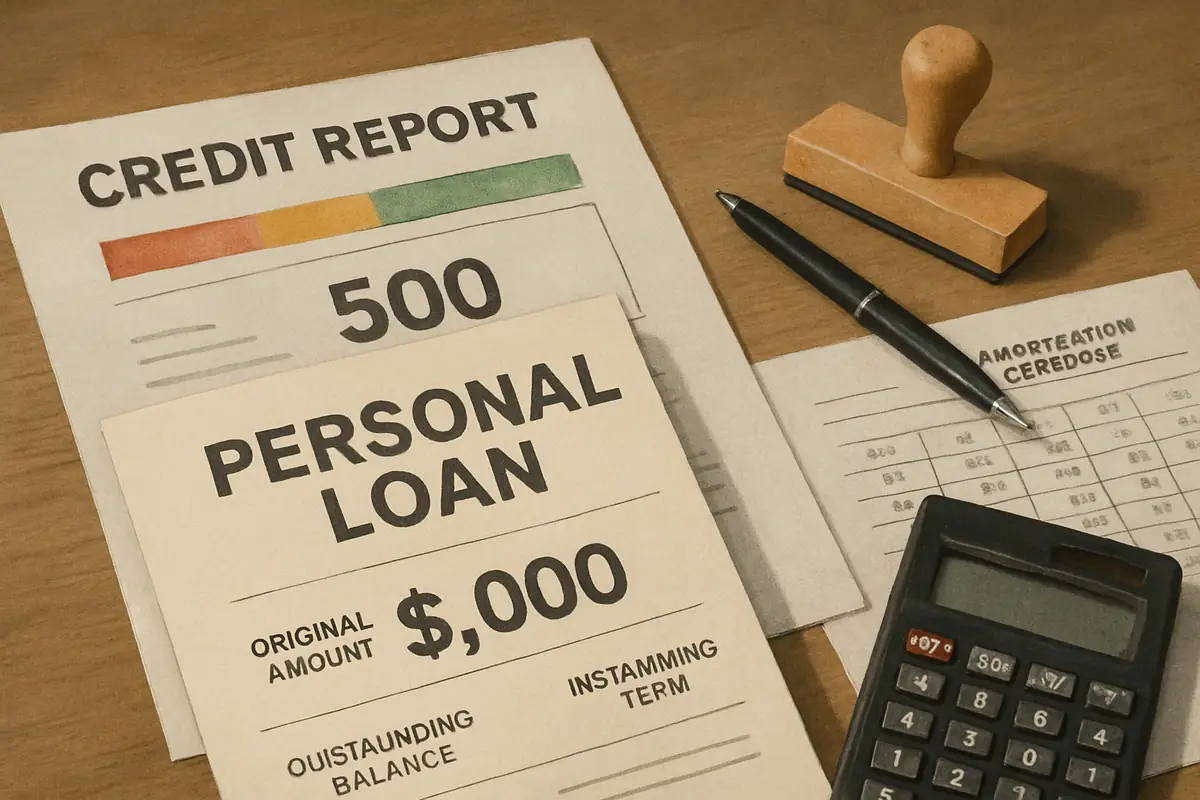
Collateral requirements should be weighed carefully. Secured loans may offer APRs 2% to 4% lower than unsecured loans, but defaulting could result in the loss of a vehicle or savings. Penalty clauses for late payments or early payoffs can add $25 to $500, depending on the lender. Requesting an amortization schedule—a table showing each payment’s breakdown between interest and principal—under various payment scenarios helps clarify the full cost. Amortization schedules can reveal, for example, that in the first year of a 5-year loan, over 60% of each payment may go toward interest rather than principal.
Check Full Contract Terms
Request detailed loan documents beyond summary pages to understand all obligations, including fee schedules and penalty triggers.
Analyze Variable Rate Triggers
Identify which market indices (such as the prime rate) influence rate adjustments and how frequently rates can reset—often every 6 or 12 months.
Project Worst-Case Costs
Estimate the maximum possible fees and interest under scenarios like missed payments or early payoff, which could add $300 to $1,000 to total expenses.
Regulatory Trends: How Disclosure Rules Shape Lender Transparency
Regulators in many countries now require lenders to provide clearer disclosures of loan costs. In the past five years, regulations have increasingly mandated that lenders itemize all fees included in APR calculations and explicitly state the existence of penalty provisions. Some jurisdictions require lenders to present standardized comparison tables, showing total cost over the loan term for typical scenarios, to help consumers make apples-to-apples comparisons. However, contract details—such as variable rate formulas or unique penalty clauses—remain decisive in the final cost and risk profile. These regulatory trends aim to reduce information asymmetry and help borrowers avoid costly surprises.
Technology’s Growing Impact on Lender Comparison Tools
Technological advances are reshaping how borrowers compare lenders. Artificial intelligence (AI)-driven platforms now analyze thousands of data points—credit scores, income patterns, and spending behavior—to match borrowers with loans tailored to their profiles. These tools can highlight likely approval odds and flag risky contract clauses automatically. For example, AI can simulate repayment outcomes under different interest rate scenarios, helping users see how a 2% rate increase on a $15,000 loan could raise monthly payments by $25 to $40.
Blockchain technology is emerging as a tool for verifying lender credentials and loan terms, providing immutable records that help reduce fraud and increase trust. Mobile technology has made lender comparison accessible anywhere, with apps providing real-time notifications about rate changes or new offers. APIs (Application Programming Interfaces) enable secure data exchange between banks, credit bureaus, and comparison platforms, allowing for instant credit decisions and pre-filled applications. However, borrowers should remain vigilant about data privacy, seeking platforms with strong encryption and transparent privacy policies.
Voice-activated assistants are beginning to offer hands-free lender comparison, potentially lowering barriers for less tech-savvy users or those with disabilities. As these technologies mature, the accuracy of voice recognition and secure authentication will be critical to adoption in sensitive financial tasks.
Borrower Implications: Navigating Opportunities and Risks in a Changing Landscape
While technology enhances convenience and personalization, borrowers must remain critical and informed. Automated recommendations are only as good as the data and assumptions behind them; input errors or outdated credit reports can skew results. Cross-verifying key details—APRs, repayment schedules, all fees, and lender reputation—remains essential. The proliferation of niche products, such as green loans or peer-to-peer lending, adds choice but can complicate comparisons, especially when regulatory protections differ.
Timing matters as well: interest rates on personal loans can fluctuate by 1% to 3% in a year due to central bank policy or inflation trends. Advanced comparison tools may alert borrowers to favorable conditions for locking in fixed rates, but understanding the broader economic context is still important. Continuous education—using reputable resources or consulting certified counselors—empowers borrowers to make sound decisions amid evolving options.
Editorial Takeaway: Embracing a Smarter Borrowing Future
References
- https://www.consumerfinance.gov/consumer-tools/
- https://www.fdic.gov/consumer-resource-center/loans
- https://www.consumerfinance.gov/consumer-tools/auto-loans/
- https://www.consumerfinance.gov/consumer-tools/mortgages/
- https://www.consumerfinance.gov/ask-cfpb/what-is-the-difference-between-a-fixed-rate-and-adjustable-rate-mortgage-arm-loan-en-100/