Personal loans are valued for their flexibility. Unlike mortgages or auto loans, which are tied to specific assets, a personal loan can be used for nearly any purpose: home renovations, medical bills, travel, consolidating debt, education, or bridging a temporary cash shortfall. This versatility is useful but also risky. Because the funds are unrestricted, borrowers must clearly define their purpose and borrowing amount before taking on new debt.
A sound personal loan decision starts before the application. The key question: will this loan strengthen my financial position, or simply postpone financial pressure to the future?
Personal Loans Remain Popular in Volatile Economic Times
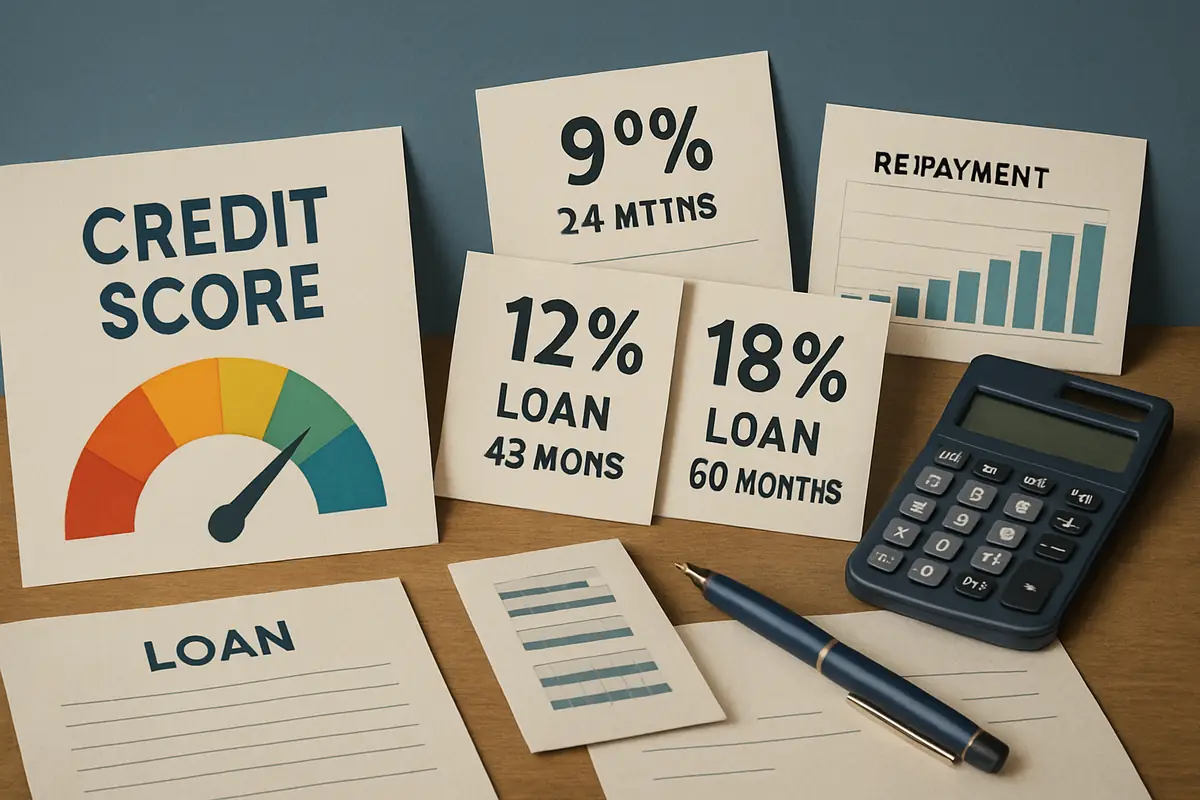
In periods of economic uncertainty, many households and self-employed workers face expenses that don’t fit neatly into their monthly income. For example, an urgent car repair costing $1,500 may be essential to keep working, while a $4,000 roof leak repair could prevent even greater long-term damage. Debt consolidation is another common scenario: a borrower juggling three credit cards with APRs (annual percentage rates, which reflect the total yearly cost of borrowing including interest and fees) between 18% and 30% may use a personal loan to combine these into a single, lower-rate installment.
The biggest advantage of personal loans is predictability. Most operate with fixed monthly payments, so the borrower knows exactly what will be paid each month and when the obligation ends. For example, a $10,000 loan at a 10% APR over 36 months results in roughly $323 due monthly, with the loan fully repaid at the end of the term.
However, predictability does not guarantee affordability. A fixed payment can still strain a budget if it exceeds 15%–20% of monthly net income. Meanwhile, a low monthly payment can disguise a high total cost if the loan stretches over five or more years. That’s why borrowers should always evaluate personal loans based on total repayment, not just monthly comfort.
Understanding the Structure and Real Cost of a Personal Loan
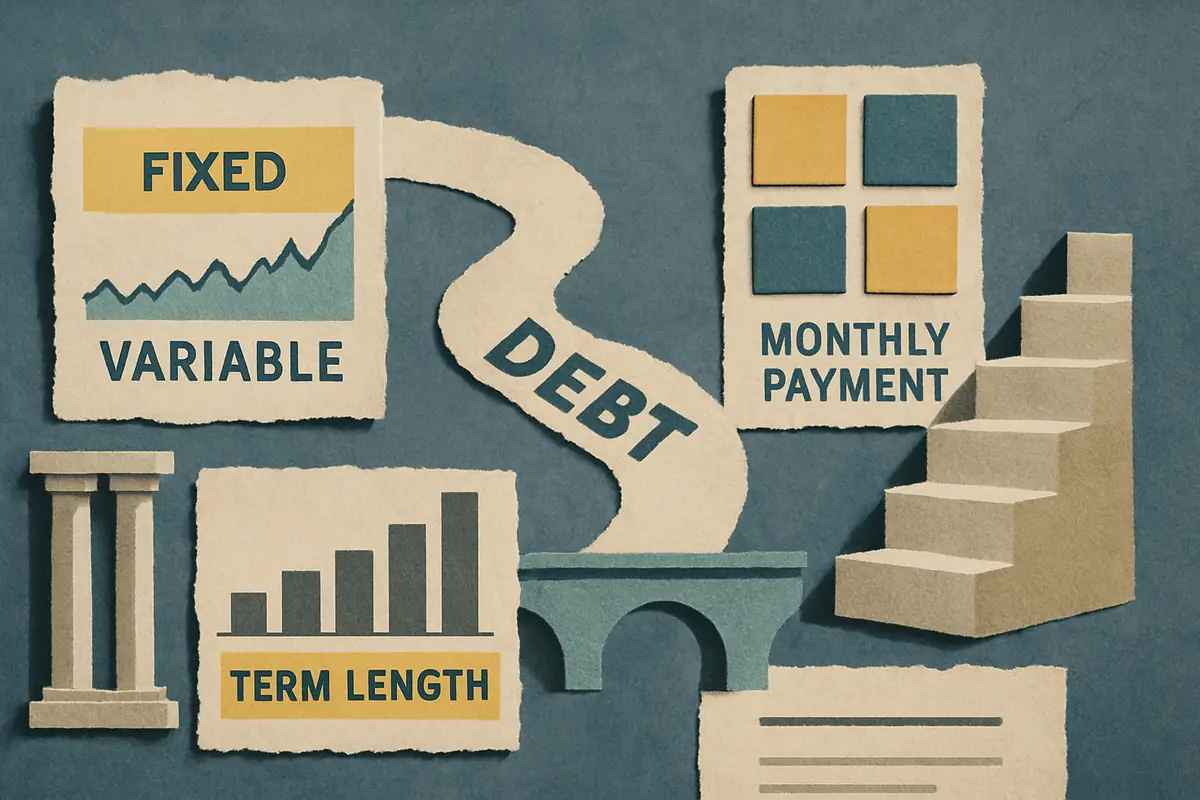
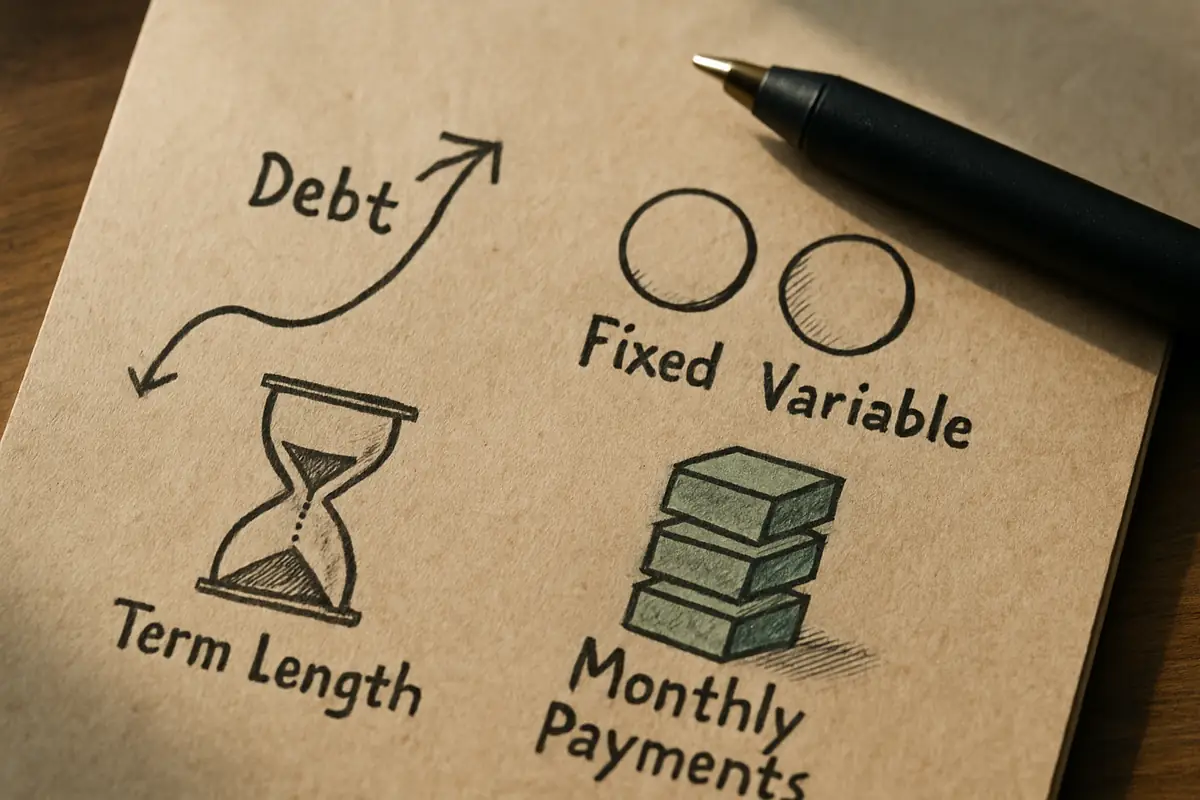
Every personal loan includes several key components that determine its actual cost:
- Principal: The initial amount borrowed, typically ranging from $2,000 to $50,000.
- Repayment term: The period over which the loan is repaid, usually 1 to 7 years.
- Nominal interest rate: The stated yearly interest, not accounting for fees.
- Annual Percentage Rate (APR): A comprehensive rate that includes interest and most mandatory fees, giving a clearer picture of the loan’s annual cost.
- Fees: Origination or opening fees often range from 1% to 6% of the loan amount, while late payment fees can add $15–$40 per missed installment.
- Early repayment rules: Some lenders charge prepayment penalties, which may equal one to three months’ interest.
Visible Loan Elements
- Borrowed amount
- Monthly installment
- Nominal interest rate
Often Overlooked Elements
- Opening fees
- Linked products
- Early repayment penalties
- Total repayment cost
Focusing only on the monthly payment can lead to poor choices. For example, extending a $10,000 loan from 3 years at 10% APR (monthly payment ~$323, total repayment ~$11,628) to 6 years at 10% APR (monthly payment ~$185, total repayment ~$13,320) lowers the monthly burden but adds nearly $1,700 in extra interest. The short-term relief comes at a long-term price.
APR Is a More Reliable Cost Indicator Than the Nominal Rate
Many advertisements highlight a low nominal rate, such as “7.5% interest.” However, this figure often excludes mandatory fees. The APR, or annual percentage rate, is a standardized measure that incorporates both the interest rate and most required fees, such as origination charges and sometimes insurance. This makes APR the best tool for comparing loan offers.
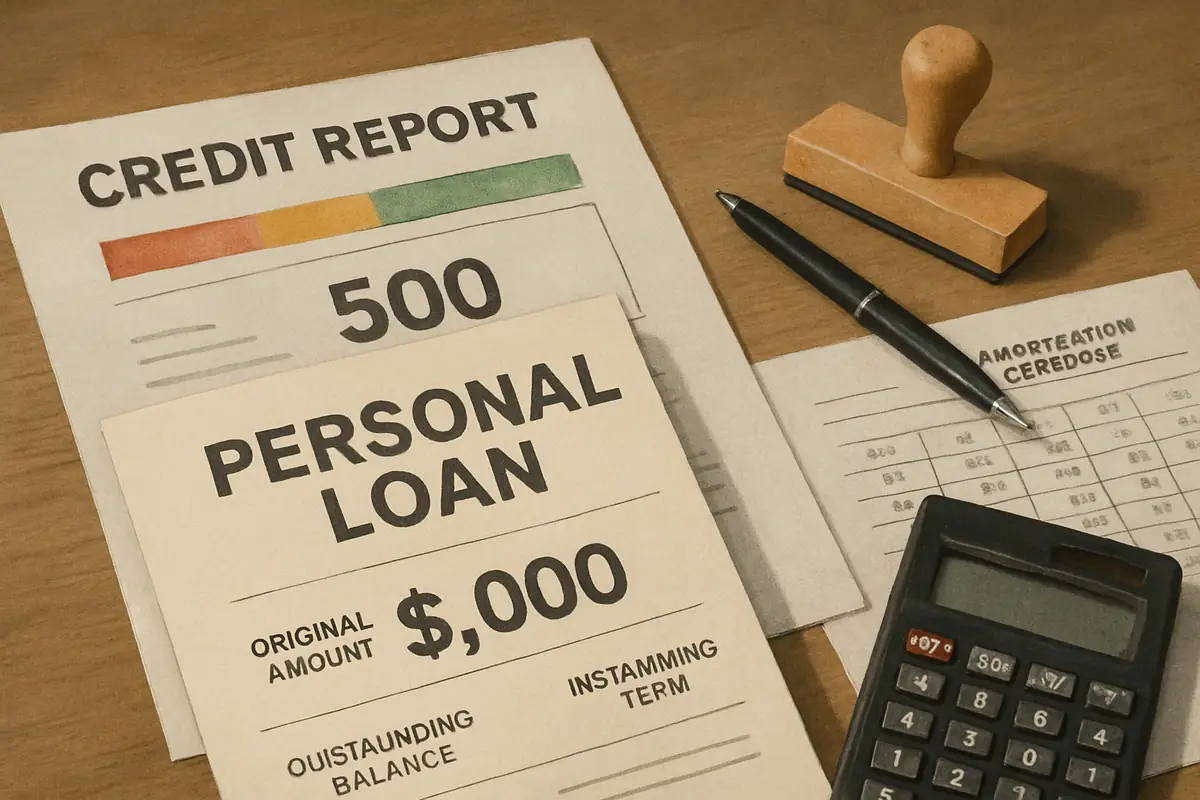
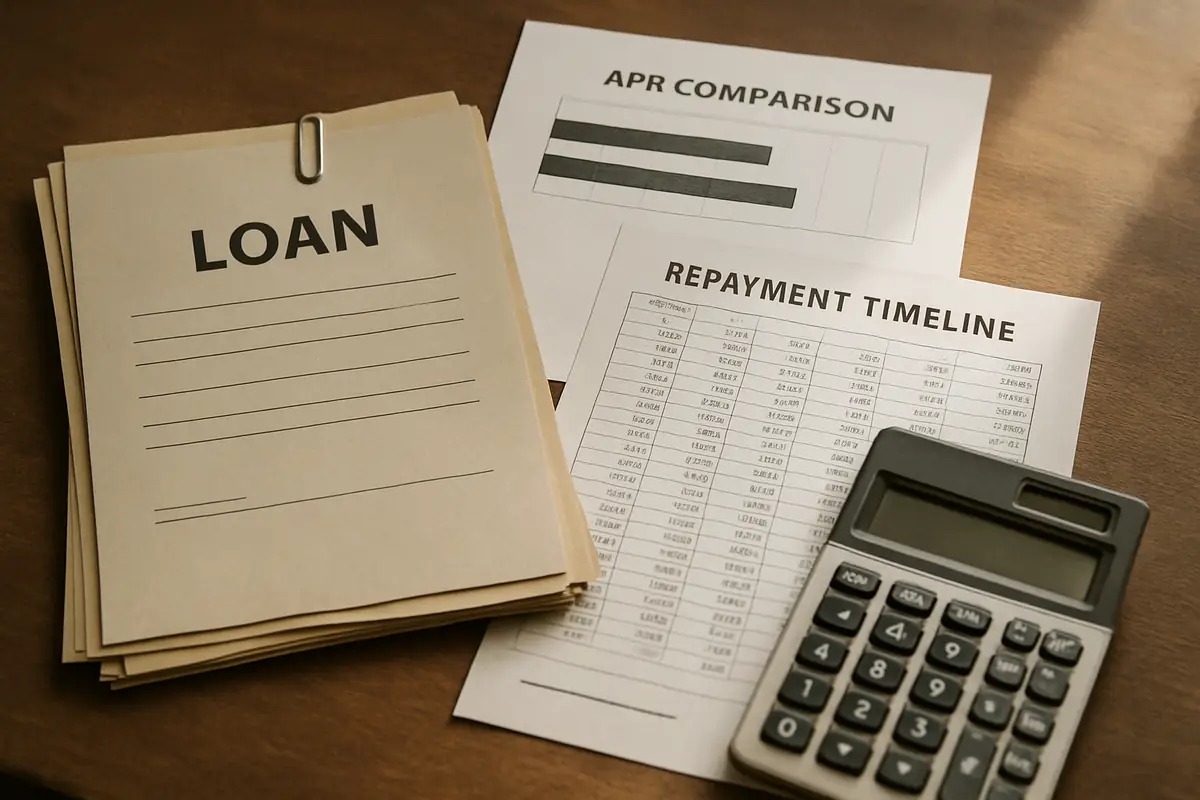
For instance, two lenders may both advertise a 7.5% nominal rate. But if Lender A adds a 5% origination fee and Lender B charges no fee, the cost to the borrower is significantly different. With a $10,000 loan, that’s a $500 difference upfront. Always ask for the full repayment schedule, which should detail the monthly payment, interest paid over time, fees, and the total repayment amount by the end of the term.
A worked example: Suppose you borrow $8,000 for 48 months at a 9% nominal rate, with a 3% ($240) origination fee. The monthly payment is about $199. Over 48 months, you pay $9,552 in installments plus the $240 fee, totaling $9,792. The APR, which blends the interest and fee costs, will be higher than the nominal 9%. This illustrates why APR is a more accurate comparison metric.
How to Determine the Right Amount to Borrow
A common mistake is accepting the maximum amount approved by the lender. Approval is not a recommendation—it’s simply the lender’s assessment of acceptable risk, sometimes allowing debt-to-income ratios up to 35%–40%.
Borrowers should identify the specific need and calculate the minimum required amount. For a home project, add a 10%–15% buffer for unexpected costs. For debt consolidation, total all balances to be repaid and avoid rolling in discretionary expenses. For emergencies, resist the temptation to add nonessential purchases.
Every extra $1,000 borrowed adds $90–$200 in total interest over a typical 3- to 5-year loan at common rates. A personal loan should address a defined problem, not serve as a general spending reserve.
Choosing the Repayment Term: Balancing Monthly Comfort and Total Cost
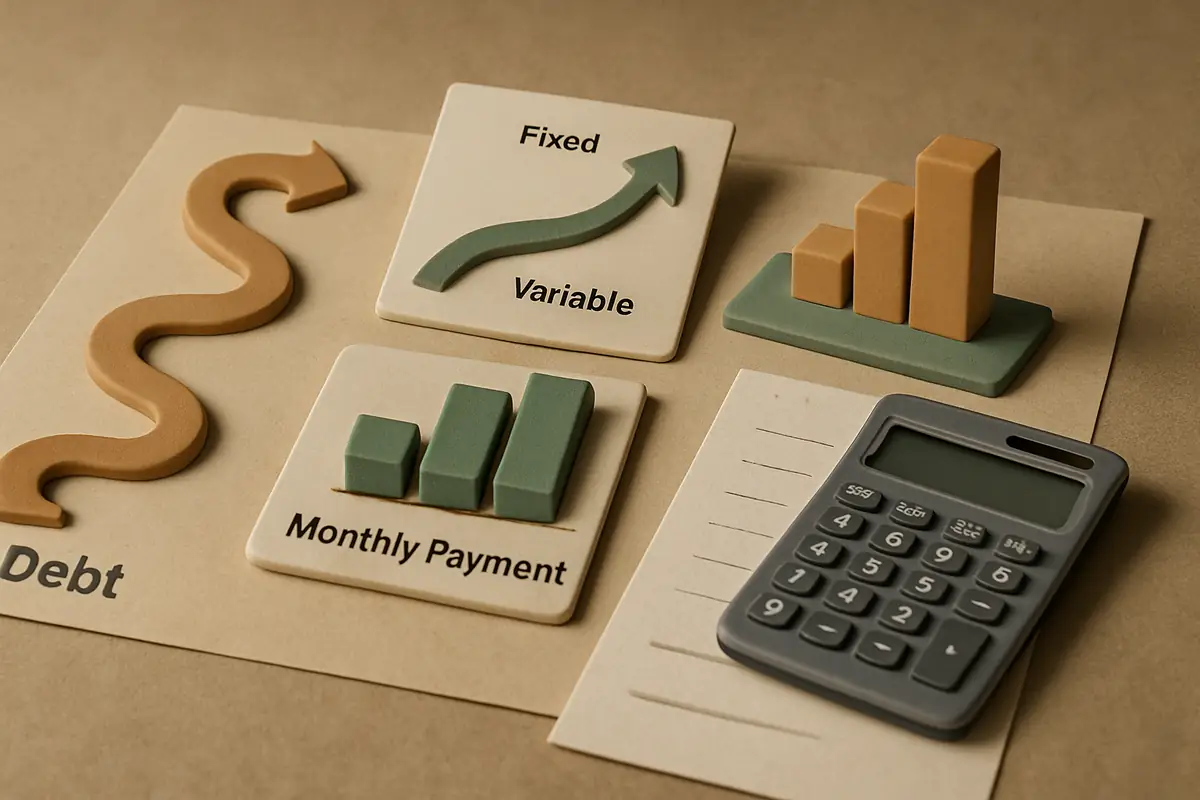
The repayment term—commonly between 12 and 84 months—is one of the most powerful levers in a personal loan. A shorter term raises the monthly payment but reduces total interest paid. A longer term lowers monthly payments but increases total interest, sometimes by 30%–50% or more over the life of the loan.
The optimal term depends on your cash flow. If the monthly payment exceeds 15%–20% of your net income, even a low-rate loan can strain your budget. Conversely, stretching a loan to the maximum allowed term can inflate the total cost unnecessarily.
Short term
Best if income is stable and higher payments (often $300–$500/month for mid-size loans) won’t erode emergency savings.
Medium term
Often balances affordability and cost, with payments that fit within 10%–15% of income and moderate interest accumulation.
Long term
Useful for larger loans ($20,000+), but total interest can exceed $5,000–$10,000, so choose carefully and review total repayment.
How Personal Loans Can Improve Financial Structure
Personal loans are strategically effective when they bring clarity and order to a confusing financial situation. This is especially true for debt consolidation. For example, replacing three credit card balances with rates of 20%–28% with a single personal loan at 9%–12% APR can reduce total interest, simplify payments, and set a fixed payoff date.
However, consolidation is only beneficial if the new loan’s total cost is lower and the term is not excessively extended. High origination fees or stretching repayment from 3 to 7 years can erase the savings from a lower rate.
Personal loans can also fund investments that improve earning power or household efficiency—such as $3,000 for professional tools, $5,000 for urgent dental work, or $8,000 for energy-saving home upgrades. In these cases, the loan supports future capacity rather than discretionary consumption.
The Dangers of Using Personal Loans for Unsustainable Spending
Personal loans become risky when used to maintain spending that outpaces income. A loan should not function as a substitute salary. If monthly expenses already exceed income, adding a loan may simply delay a larger financial problem.
Warning signs include:
- Frequently using loans to cover routine bills (utilities, groceries)
- Borrowing without a clear repayment plan or source
- Selecting the longest available term solely for lower payments
- Ignoring high credit card utilization (above 30%–40% of credit limits)
- Accepting bundled insurance or linked products without reviewing their cost, which can add $20–$50 monthly
Key Borrower Requirements Lenders Evaluate
Most lenders review several factors before approving a personal loan. Typical requirements include legal adulthood (age 18 or 21+), legal residence, proof of stable income (such as three recent payslips or tax returns), acceptable debt-to-income ratio (often below 35%–40%), and a satisfactory credit history with no recent defaults or bankruptcies.
For employees, documentation may include employment contracts and recent bank statements. For self-employed applicants, lenders may request tax filings from the last two years, invoices, and evidence of recurring income. The stronger the borrower’s financial profile, the better the offered rates and terms—sometimes 2–4 percentage points lower than for riskier applicants.
Lenders use these criteria to assess the likelihood of on-time repayment, not just to verify identity. A borrower with stable income, low existing debt, and a clean payment record will typically receive more favorable conditions than someone with irregular income or frequent late payments.
Digital Personal Loans: Convenience and Speed Require Caution
Online lenders and fintech platforms have made personal loans more accessible than ever. Applications can be completed in 10–20 minutes, with digital document uploads and approval decisions in as little as one business day. Funding may arrive within 24–72 hours after approval.
While this speed is convenient, it increases the risk of hasty decisions. Borrowers may overlook key details in the rush. Always review the APR, full repayment schedule, all fees (including late and prepayment penalties), the lender’s reputation, and complaint history before signing. Confirm that early repayment is possible without excessive penalties—some online lenders charge 1%–2% of the remaining balance for prepayment.
Simulators and Comparison Tools Help Clarify Loan Choices
Loan simulators are valuable tools that turn abstract loan conditions into concrete monthly numbers. By entering different amounts, terms, and rates, borrowers can see how changes affect their monthly payment and total repayment.
A good simulator should answer these questions:
- What will my monthly payment be?
- What is the total amount I will repay over the life of the loan?
- How does shortening or lengthening the term affect the total cost?
Comparison platforms are also useful, showing multiple offers side by side. However, initial results are estimates. The final offer may change after the lender reviews your full application and credit profile.
A Borrower’s Checklist for Smart Personal Loan Decisions
Before accepting a personal loan, review your decision in two layers:
Financial Fit
- Purpose is specific and justified
- Monthly payment fits within 10%–20% of net income
- Total repayment cost is understood and acceptable
- Emergency savings (ideally 3–6 months of expenses) remain intact
Contract Quality
- APR and all fees are clearly disclosed
- Early repayment rules are transparent
- No unwanted bundled products or insurance
- Repayment schedule is provided in writing
This checklist helps prevent emotional borrowing and encourages the borrower to treat the loan as a structured commitment, not just a quick cash solution.
A Well-Used Personal Loan Ends Cleanly and Predictably
A well-managed personal loan should have a clear beginning, a defined purpose, and a clean conclusion. It should not create dependency, force a cycle of refinancing, or consume so much income that daily life becomes unstable.
Disciplined borrowers compare offers, focus on the APR, borrow only what’s needed, choose a realistic term, and preserve emergency savings. Personal loans are neither inherently good nor bad—they are financial tools. Used wisely, they provide structure and flexibility. Used carelessly, they can create long-term financial strain far beyond the original need.
Ultimately, the outcome depends on the quality of the borrower’s decision before signing the agreement—not just the product itself.