A sudden job loss, medical bill, or car repair can cost anywhere from $400 to $2,000—and for millions of Americans, having no emergency savings means these expenses often lead straight to new debt.
While many personal finance guides champion aggressive debt payoff, especially for high-interest credit cards with annual percentage rates (APRs) commonly between 18% and 30%, this approach can overlook the reality that life’s surprises rarely wait for debts to be cleared. Without a financial buffer, even minor emergencies can force people to borrow at steep rates. Establishing a modest emergency fund—often as little as $500 to $2,000—can break this cycle, preventing new debt, lowering anxiety, and supporting steadier financial progress.
Consider Hannah, a single mother earning $1,200 a month from a part-time job. When her $1,100 car broke down, she had no savings and had to charge the repair to a credit card with a 25% APR (the yearly cost to borrow money, expressed as a percentage of the amount borrowed). Had she set aside $1,000 in advance, she could have avoided adding to her revolving credit card balance, which could take years to pay off if only minimum payments are made. This scenario is not rare—according to many financial counselors, unexpected expenses of $500 or more are among the top reasons for new consumer debt.
Why Emergency Savings Often Take Precedence Over Debt Payoff
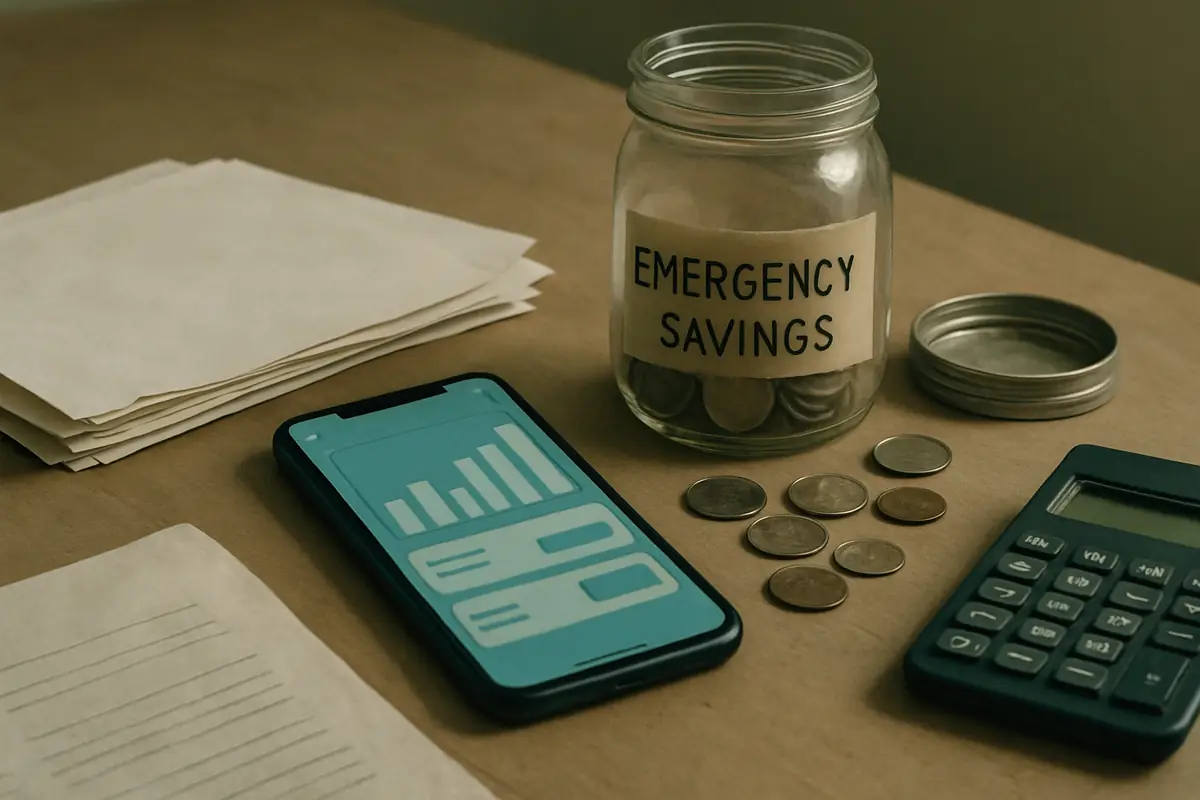
Emergency savings serve as a financial shock absorber, providing a cash reserve that can cover unplanned expenses like medical bills, home repairs, or temporary job loss. For households without employer-provided benefits or disposable income, lacking this cushion means relying on high-interest borrowing options, such as payday loans with APRs sometimes exceeding 300%, or credit cards with rates typically between 18% and 30%. These options can quickly compound debt, making it harder to break free from the cycle.
Unlike debt payoff strategies focused solely on reducing principal balances—the original amount borrowed—emergency savings strategies are about building resilience. Even a fund covering one month of essential expenses (often $1,500 to $3,500 for a single adult) can prevent setbacks that would otherwise require new loans or credit card charges. This foundation supports sustainable progress, allowing you to weather life’s unpredictability without derailing your long-term goals.
The Psychological Toll of Living Without a Safety Net
Debt isn’t just a mathematical challenge; it carries significant emotional weight. The ongoing worry about how to handle the next emergency can lead to chronic stress, decision fatigue, and even health issues. Without an emergency fund, every unexpected bill—like a $600 appliance breakdown or $350 urgent care visit—can feel like a crisis, forcing risky decisions such as skipping bills or increasing credit utilization (the ratio of your credit card balances to your credit limits, which impacts your credit score).
Having even a small emergency fund, such as $500 to $1,000, can break this pattern. It turns money from a source of anxiety into a practical tool for problem-solving. This security can improve decision-making, reduce the temptation to rely on high-interest debt, and help you maintain focus on broader financial goals.
Situations Where Aggressive Debt Payoff Is the Best Move
While prioritizing emergency savings is essential for many, there are scenarios where aggressively paying down debt is warranted—particularly when facing high balances with interest rates above 20% APR, or when minimum payments consume over 25% of your monthly income. For example, if you owe $8,000 on a credit card at 24% APR, the interest alone could cost you roughly $1,900 in a single year if not addressed quickly.
However, even in these situations, maintaining a minimal emergency reserve—often $500 to $1,000—remains crucial. Without this buffer, any setback can force you to borrow more, negating your progress. A balanced approach prevents the common trap of paying off debt only to accrue new balances during each crisis.
Budgeting Realistically: Fitting Savings and Debt Payments Into Your Plan
"Budgeting isn’t about perfection," says Olivia Hayes. "It’s about making choices that reflect your real life." For households living paycheck-to-paycheck or with variable income (such as gig workers), rigid plans often fail. Instead, starting with small, regular savings—$20, $50, or even $75 a month—can build momentum while still allowing for minimum debt payments.
"One lesson I’ve learned from readers is that flexibility is key," Olivia adds. "If an unexpected $400 expense comes up but you’ve set aside $600, you can pause extra debt payments briefly without panic. But with no savings, even a minor hiccup can derail your plan." This approach acknowledges that most families can’t follow strict formulas, but can still make steady progress over time.
"Juggling Bills After A Medical Emergency"
Maria had been aggressively paying off student loans when her toddler needed $900 in urgent care visits, only $500 of which was covered by insurance. With just $200 in savings, she faced $200 in new medical debt and had to reduce her loan payments temporarily. After talking with her loan servicer about forbearance (a pause on required payments), she shifted focus to building her emergency fund to $1,000 before resuming extra loan payments.
Making the Shift: Deciding When to Move From Savings to Debt Payoff
The transition from building emergency savings to accelerating debt repayment is not always straightforward. Many financial planners recommend first securing an emergency fund equal to one month of essential expenses—typically $1,500 to $4,000, depending on rent, utilities, groceries, and transportation. Others suggest increasing this to three months’ expenses (often $4,500 to $12,000) for greater security, especially if your job or income is unstable.
Life changes can affect this timing. For instance, a new full-time job with health benefits might make it safer to ramp up debt payments sooner, while a period of unemployment could justify keeping a larger emergency reserve. Reviewing your budget every three to six months helps ensure your strategy matches your current circumstances.
Reassess after major life events
Events like job loss, illness, or family changes can increase your need for a larger emergency fund.
Start small but steady with emergency savings
Consistently saving $25 to $50 per pay period builds momentum and forms a habit.
Balance minimum debt payments with growing your cushion
Keep up with minimums to avoid late fees (often $25–$40 per missed payment) while preparing for surprises.
The Hidden Costs of Skipping Emergency Savings
Neglecting emergency savings can trigger costs beyond the obvious. Financially, repeated reliance on high-interest credit lines can lower your credit score by increasing your credit utilization ratio above 30%, which lenders often view as risky. Over time, this can raise the cost of future borrowing or even impact rental applications. Emotionally, the stress of living without a safety net can lead to missed work, strained relationships, and health problems such as insomnia or anxiety—costs that don’t show up on a bank statement but are very real.
For example, a single $1,000 car repair charged to a card at 25% APR will add about $250 in interest if paid off over one year, not counting any late fees or additional purchases. Repeating this cycle multiple times a year can easily add $500 or more in avoidable interest costs annually.
Where readers should be careful
Skipping the emergency fund step risks creating larger debt problems later—even if short-term debt payoff feels rewarding now.
How to Build Emergency Savings While Managing Debt
Begin by listing core monthly expenses—rent or mortgage ($800 to $2,500), utilities ($100 to $300), groceries ($250 to $600), transportation ($100 to $400)—to estimate your emergency fund goal. Next, look for small, recurring costs to trim, such as a $15 streaming subscription or $30 in weekly dining out. Redirect these amounts to savings.
Automate transfers to a savings account, even if it’s just $25 per week. Over six months, this adds up to $650. At the same time, continue making minimum debt payments—typically 1% to 3% of your balance each month—to protect your credit score. This balanced approach reduces risk while maintaining progress.
Example Calculation: Suppose you earn $2,500 a month after taxes, spend $1,800 on essentials, and have $700 left. If you allocate $200 per month to emergency savings and $500 to debt payments, you’ll have $1,000 saved after five months. If an emergency arises, you can cover it without using credit. If not, you can then shift the $200 per month toward debt, accelerating your payoff schedule.
Staying Motivated When Progress Feels Slow
Building an emergency fund before tackling debt may seem slow, especially when you see others making rapid progress on social media. But achieving $500 in savings, covering your first $300 car repair with cash, or simply feeling less anxious about the mail are all real milestones. These small wins reinforce positive habits and build confidence.
Remember, financial stability is deeply personal. Typical recommendations, like saving 10% to 15% of income or keeping credit utilization below 30%, are guidelines—not rules. Give yourself permission to adapt your plan as your situation changes, rather than aiming for perfection.
Balancing Emergency Savings with Debt Repayment: Practical Strategies
Striking a balance between emergency savings and debt repayment is essential to long-term financial health. While aggressively paying down debt can reduce interest costs and speed up your path to being debt-free, neglecting savings can leave you exposed to unexpected expenses that could undo months of hard work.
One approach is to allocate 20% to 30% of any extra monthly cash flow to emergency savings, with the remaining 70% to 80% going toward debt payments. For example, if you free up $300 per month after covering essentials, putting $90 toward savings and $210 toward debt allows you to build a $1,000 emergency fund in about a year, while still making headway on your balances.
Adjust this split as your situation changes. If you refinance debt to a lower APR—say, from 22% to 12%—you might temporarily prioritize savings. Conversely, if your emergency fund is depleted by a $700 home repair, pause extra debt payments to rebuild your cushion before resuming an aggressive payoff plan. Flexibility is key to navigating both short-term shocks and long-term goals.
The Psychological Benefits of an Emergency Fund
Beyond the numbers, having an emergency fund brings significant psychological advantages. Knowing you have $500, $1,000, or even $3,000 set aside can reduce financial stress, improve sleep, and support mental health. Behavioral finance research suggests that people with even a small cash reserve are less likely to experience anxiety, depression, or stress-related illnesses tied to money worries.
This peace of mind can lead to better financial decisions, such as negotiating lower rates with creditors or avoiding panic-driven borrowing. It also helps foster a mindset of preparedness, making it easier to set and achieve other financial goals—like saving for retirement or a down payment—without fear of setbacks derailing your progress.
With a safety net in place, you’re more likely to stick to your plan, avoid impulsive spending, and manage debt with confidence rather than dread.
Case Studies: Emergency Savings in Action
Consider Sarah, a single mother earning $2,200 a month, who focused on paying down her $5,000 credit card debt at 26% APR. When her $1,200 car needed repairs, she had no savings and had to take out a $1,000 personal loan at 18% APR. Her monthly debt payments increased by $50, delaying her goals for years and costing over $200 in extra interest in the first year alone.
By contrast, Mark set aside two months’ expenses—about $4,000—before attacking his $9,000 student loan. When his water heater failed, costing $1,100 to replace, he used his savings and avoided new debt. This allowed him to keep his debt repayment plan on track, demonstrating how a modest emergency fund can prevent costly setbacks and reduce stress.
Practical Steps to Build an Emergency Fund Without Halting Debt Progress
You don’t have to choose between saving and paying off debt. Start by automating small deposits—such as $25 per paycheck—into a dedicated savings account. Review your budget for discretionary expenses: skipping one $10 lunch per week and one $30 monthly subscription could free up $70 monthly for your emergency fund.
When you receive windfalls, like a $500 tax refund or $300 bonus, consider allocating at least half to your emergency fund and the rest to debt. Communicate your plan with household members so everyone understands the priorities and can support temporary changes in spending or repayment schedules. This transparency can reduce misunderstandings and help maintain morale during the process.