A 30-year fixed mortgage that could be locked near 3% in 2021 now typically prices between 6% and 7%, and that single shift has redrawn the affordability math for an entire generation of borrowers. Whether you are financing a home, a car, or a debt consolidation, the choice between a fixed rate and a variable one determines your monthly payment, your lifetime interest cost, and how exposed you are if the economy turns. Fixed rates trade flexibility for certainty, and the price of that certainty keeps moving with inflation, central bank policy, lender technology, and even climate regulation. Understanding where fixed interest rates are headed—and how they actually work—is essential to making a borrowing decision you can live with for years.
Fixed Interest Rates Defined: How They Work
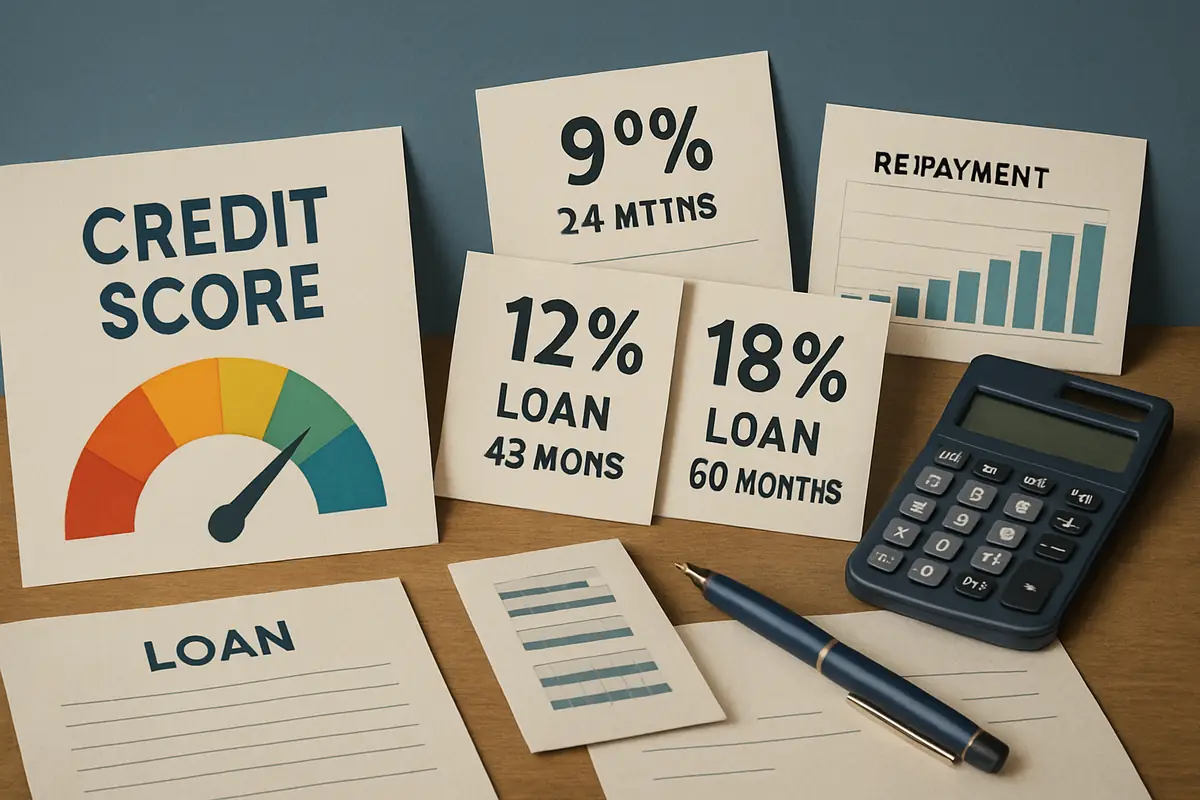
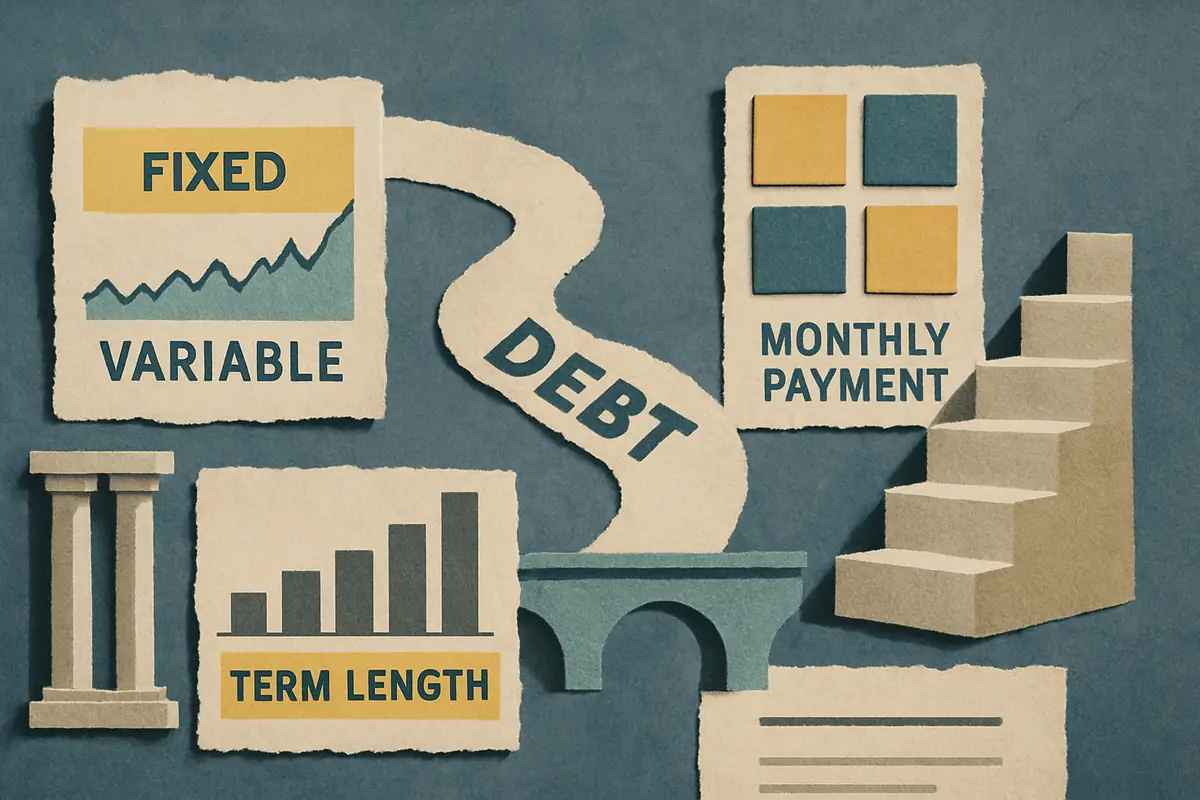
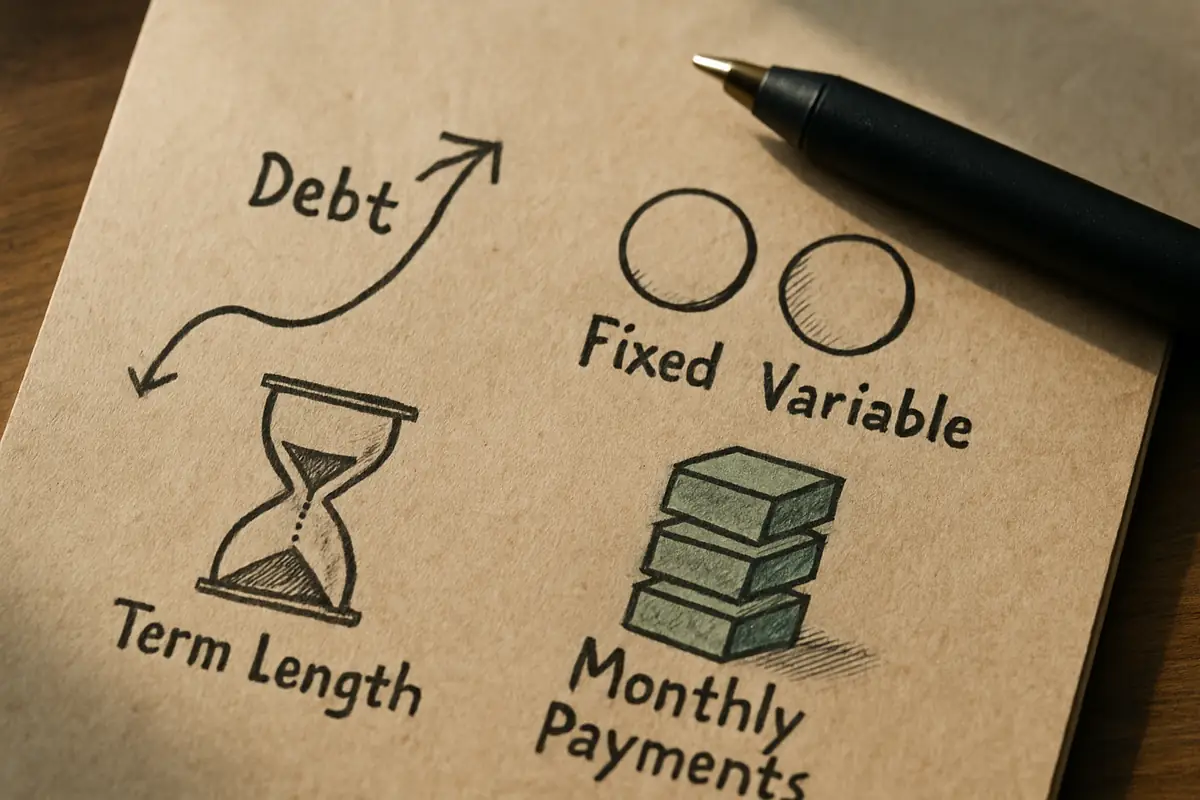
A fixed interest rate stays the same for the entire loan term, or for a defined introductory period, so the principal-and-interest portion of your payment never changes. A variable rate, by contrast, moves with an index—a published benchmark such as the prime rate—so your payment can rise or fall after you sign. The gap between those two worlds is wide. Most credit cards carry variable APRs between 18% and 30%, while fixed-rate personal loans generally run from 7% to 36% APR depending on credit profile and term. APR, or annual percentage rate, expresses the full yearly cost of borrowing including certain fees, which makes it a better comparison tool than the bare interest rate alone. Always confirm whether a quoted fixed rate reflects every charge: origination fees on personal loans typically run 1% to 8% of the amount borrowed and are often deducted from your proceeds before the money ever reaches your account.
Common fixed-rate products include 30-year and 15-year mortgages, auto loans, and most personal installment loans. Typically, the longer the money is at risk, the higher the rate: a 15-year mortgage often prices half a percentage point or more below its 30-year counterpart because the lender is exposed for less time. New-car financing for well-qualified buyers has recently clustered in the 6% to 9% range, and many lenders shave 0.25% off the rate on installment loans simply for enrolling in autopay. These fractions look trivial on paper, but on a six-figure balance repaid over decades, a quarter point can move the total cost by thousands of dollars.
Technological Advancements and Their Influence on Fixed Interest Rates
Financial technology is steadily changing how fixed rates are set, quoted, and managed. Machine-learning underwriting models digest cash-flow data, payment histories, and real-time economic indicators far faster than the manual reviews of a decade ago, letting lenders price borrower risk with more precision. The practical effect shows up in dispersion: on any given day, two lenders can quote the same borrower fixed rates that differ by 0.25 to 0.50 percentage points, because each institution's model weighs income stability, credit utilization, and loan purpose differently. Sharper models can also reward borrowers previously lumped into broad risk buckets, such as those with thin credit files but steady deposit histories. Automation is also compressing operating costs, and in a competitive market a share of those savings tends to flow back to borrowers as lower fixed offers.
Beyond the banks themselves, fintech platforms are building alternative marketplaces where fixed rates emerge from supply and demand rather than a single institution's rate sheet. Peer-to-peer lending platforms use algorithms to match borrowers directly with investors, setting fixed rates that reflect each platform's own funding costs and appetite for risk. These channels pressure traditional lenders to sharpen pricing, particularly on unsecured personal loans where a difference of two or three percentage points in APR is common between the most and least competitive offers for the same credit tier. Borrowers who understand that fixed pricing is no longer uniform—and who collect several quotes instead of one—are the ones who benefit from this fragmentation.
Global Economic Trends Affecting Fixed Interest Rate Stability
Fixed-rate pricing is anchored to forces far larger than any single lender. When U.S. consumer inflation peaked near 9% in mid-2022, the policy response pushed the benchmark short-term rate above 5% by 2023—the fastest tightening cycle in four decades—and consumer fixed rates repriced upward within months. Inflation has since cooled into the 2.5% to 3.5% range, but long-term rates have not returned to their pre-2022 lows. That is because 30-year fixed mortgages track the 10-year Treasury yield, which has held between roughly 4% and 4.5%, plus a lender spread that has recently hovered around two to three percentage points. Any global event that moves Treasury yields—trade disputes, sovereign debt worries, a flight to safety—moves the fixed rates offered on Main Street.
Emerging markets add another layer. When investors perceive rising risk in developing economies—political instability, currency swings, default scares—capital tends to flow into U.S. government debt, which can pull Treasury yields down and, with a lag, nudge domestic fixed loan rates lower. The reverse also happens: heavy government borrowing worldwide competes for the same pool of savings and can push long-term yields up everywhere at once. The lesson: a fixed rate quoted in Ohio or Texas partly reflects decisions made on trading floors thousands of miles away, which is why waiting for a perfect moment to lock is usually a gamble rather than a strategy.
Environmental Considerations Influencing Future Lending Practices
Sustainability is quietly becoming a pricing variable in fixed-rate lending. ESG criteria—environmental, social, and governance standards that investors use to judge how responsibly money is deployed—now shape which loan portfolios institutional investors want to fund. That demand has produced green loan products: solar installation loans, energy-efficient home improvement financing, and mortgage programs that offer modest rate concessions, often 0.125 to 0.25 percentage points below standard fixed pricing, for homes meeting efficiency benchmarks. On a $40,000 solar loan repaid over 15 years, even a small discount meaningfully lowers the total cost, and lenders market these products aggressively because sustainable portfolios are easier to sell to yield-hungry investors.
Regulation is reinforcing the trend. Governments are experimenting with capital treatment and tax incentives tied to green financing, which changes the economics of how banks allocate lending capacity across their whole book—including conventional fixed-rate loans. A borrower replacing a furnace with a heat pump or adding insulation may find that the efficiency angle unlocks a cheaper fixed rate than a generic personal loan would carry. Documentation of energy performance may soon be as routine in loan files as proof of income, and borrowers who have it will negotiate from strength.
Demographic Shifts and Their Impact on Loan Demand and Fixed Rates
Demographics move loan demand slowly but relentlessly. Aging populations in developed economies mean more households near or in retirement, and those borrowers overwhelmingly prefer predictable obligations—fixed-rate mortgages, fixed home equity products, and installment loans with no payment surprises. At the other end, the median age of a first-time homebuyer in the U.S. has drifted toward the late 30s, nearly a decade older than in the early 1980s. Younger adults are carrying student loan balances that commonly fall between $20,000 and $40,000, renting longer, and approaching homeownership with more caution, all of which reshapes the volume and type of fixed-rate borrowing lenders can expect.
Lenders respond by segmenting products. Long-dated fixed mortgages and conservative refinancing options are aimed at older borrowers guarding against volatility, while lower-entry programs target younger buyers: an FHA loan requires as little as 3.5% down, compared with the 20% traditionally needed on a conventional mortgage to avoid PMI—private mortgage insurance, an added charge that typically costs 0.5% to 1.5% of the loan balance per year until sufficient equity is built. Immigration adds new borrower cohorts with thin U.S. credit files but strong income and payment behavior, prompting lenders to build alternative underwriting paths. Each of these currents feeds into how fixed rates are priced for specific products and regions.
Policy Changes: Central Banks’ Role in Shaping Fixed Interest Rates
Central bank decisions remain the single biggest lever on borrowing costs, but the transmission is indirect for fixed products. The 2022–2023 hiking cycle lifted the overnight policy rate from near zero to above 5%, and variable-rate debt—credit cards, HELOCs, adjustable loans—repriced almost immediately. Long-term fixed rates behaved differently: they are set off long-maturity bond yields, which reflect where markets expect policy and inflation to sit over the next decade, not just this quarter. That is why 30-year mortgage rates sometimes fall while the central bank holds steady, or barely budge when a single cut arrives. A borrower watching only the headline policy announcement is watching the wrong dial; the 10-year Treasury yield is the better tell for fixed mortgage pricing.
Unconventional tools complicate the picture further. Forward guidance—public signaling about the likely path of future policy—can move long-term yields before any actual rate change occurs. Quantitative easing, in which a central bank buys bonds to push long-term rates down, and its reversal, quantitative tightening, directly alter the supply-demand balance in the very markets that anchor fixed loan pricing. Layer on post-crisis capital rules that require banks to hold larger reserves against long-dated loans, and the room for aggressive fixed-rate discounting narrows. Borrowers who follow policy statements and bond market reaction gain a genuine edge in timing a lock.
Practical Advice for Borrowers Navigating Future Fixed Interest Rate Markets
Timing has a measurable price, so it pays to run the numbers before deciding to wait. Consider a $300,000, 30-year fixed mortgage. Step 1: at 6.5%, the monthly principal-and-interest payment is about $1,896. Step 2: if you delay and the market moves to 7.0%, the same loan costs about $1,996 a month. Step 3: that $100 monthly difference compounds to roughly $35,900 over 360 payments, with total interest climbing from about $382,600 to $418,500. Half a percentage point, in other words, can cost more than many households earn in several months. This is why rate locks matter: a lock is a lender guarantee holding your quoted rate for a set window, usually 30 to 60 days, while your application closes. Extensions are available but typically carry a fee, so align the lock period with a realistic closing timeline.
Beyond timing, comparison is the highest-return hour a borrower can spend. Because pricing models now differ meaningfully between institutions, collecting at least three quotes on the same day—rates move daily—regularly surfaces spreads of a quarter to half a percentage point for identical credit profiles. Check whether each quote includes discount points, which are optional upfront fees paid to buy the rate down, so you compare like with like. Finally, ask specifically about program-based pricing: efficiency-linked discounts, autopay reductions of 0.25%, relationship pricing for existing deposit customers. None of these appear automatically; they surface when the borrower asks.
Technological Innovations Shaping Fixed Interest Rate Models
The next generation of pricing technology is blurring the line between fixed and dynamic. Lenders increasingly feed live market data—Treasury yields, inflation readings, regional housing indicators—into models that refresh fixed-rate sheets daily or even intraday, rather than weekly. For borrowers, this means the fixed rate quoted on Monday morning genuinely may not exist by Thursday, and it rewards those who arrive with documents ready and can lock quickly. It also means offered rates track economic reality more tightly: when the 10-year Treasury drops 0.20 percentage points on soft inflation data, well-automated lenders pass much of that through within a day, while slower institutions lag.
Blockchain applications, while earlier in adoption, point toward more transparent loan mechanics. A smart contract—a self-executing agreement coded to carry out terms automatically when conditions are met—could handle interest accrual, payment application, and payoff calculations on a shared ledger visible to both sides, shrinking disputes over how a balance was computed. The same rails make hybrid structures easier to administer: a loan could hold a fixed rate for its first phase and then adjust only if a pre-agreed, objectively measured trigger occurs, with the logic visible to the borrower up front rather than buried in servicing systems.
Startup lenders are already testing customization that traditional rate sheets cannot match. Peer-to-peer and marketplace platforms let borrowers trade off term length, payment date, and rate structure in exchange for pricing tuned to their exact profile, and some offer fixed-rate loans with built-in, penalty-free early payoff. The pressure of these entrants tends to lift standards market-wide, which is quietly good news even for borrowers who never leave their hometown bank.
Global Economic Trends Impacting Fixed Interest Rates
The long stretch of near-zero policy rates that followed 2008 trained both lenders and borrowers to treat cheap fixed money as normal. That era compressed lender margins and, when rates jumped in 2022–2023, left institutions holding long-term fixed loans that yielded far less than their new funding costs. Those scars linger: lenders now carry less long-dated fixed exposure and price in cushions—wider spreads, stricter underwriting on the longest terms—against another sharp move.
Inflation cuts both ways in a fixed-rate contract. A borrower who locks 6.5% and then watches inflation run hot is effectively repaying the loan with cheaper dollars while wage growth lifts income against a frozen payment; the lender absorbs that erosion. If inflation instead falls sharply and new loans price lower, the locked borrower pays an opportunity cost until refinancing makes sense. Underwriting standards absorb some of this risk in advance, which is one reason lenders test whether housing costs stay within roughly 28% to 30% of gross income—a payment that fits comfortably today is the best protection against tomorrow's surprises on either side.
Geopolitical shocks—trade ruptures, regional conflicts, climate-driven disruptions—now hit capital markets with little warning, and long-term yields swing accordingly. In choppier periods, demand rises for shorter fixed commitments: three- and five-year fixed personal loans, shorter mortgage locks, and products with built-in modification options. Borrowers should expect menus to keep diversifying, with the classic 30-year fixed remaining the anchor product but no longer the only reasonable default.
Consumer Behavior and Fixed Rate Loan Demand
Payment stability is not an abstract preference in the U.S.—it is a budgeting necessity. Surveys have long found that roughly 4 in 10 adults would struggle to cover a $400 surprise expense from cash on hand, which means a loan payment that can jump without warning is a genuine hazard for a large share of households. For a family budgeting around a $1,900 mortgage payment, the certainty that it will read $1,900 in year twelve is worth a premium, and demand for fixed products strengthens in every uncertain stretch of the economy.
Younger borrowers, though, increasingly want security and flexibility in the same product. That appetite explains the persistence of hybrid structures like the 5/1 or 7/1 ARM—an adjustable-rate mortgage that fixes the rate for the first five or seven years, then adjusts annually, usually with caps that limit each adjustment to around two percentage points and the lifetime increase to about five. For a buyer who realistically expects to relocate within six years, paying a premium for thirty years of certainty may be the more expensive form of caution. Life-stage planning, not ideology about fixed versus variable, is what should drive the structure.
Lenders are responding with tiered fixed offers—different lock-in lengths at different prices—and incentives such as penalty-free early repayment. Education is the missing layer: a borrower comparing structures should first have a cushion of three to six months of expenses in a high-yield savings account earning 3.5% to 4.5% APY rather than the under-0.5% common at the largest banks, because that buffer is what makes any payment structure survivable when income hiccups.
Regulatory Developments Influencing Fixed Interest Rate Policies
Consumer protection rules have made fixed-rate borrowing far more transparent than it was two decades ago. Mortgage applicants must receive a standardized Loan Estimate within three business days of applying, laying out the rate, APR, projected payments, and closing costs in the same format across lenders—purpose-built for side-by-side comparison. Disclosure rules for personal loans and auto financing similarly require the APR, not just the note rate, to be stated plainly, so the cost of origination fees of 1% to 8% cannot be hidden inside an attractive headline number.
On the institutional side, stress-testing regimes require lenders to model how their portfolios—especially long-term fixed-rate books—would perform under severe scenarios such as sharp rate spikes or deep recessions, and to hold capital against those outcomes. This discipline nudges product design toward sustainability: fewer aggressively underpriced long-term fixed offers, more realistic underwriting, and features that share rate risk more sensibly between lender and borrower.
Regulators are also experimenting with incentives that link favorable fixed-rate treatment to sustainable lending—preferential capital treatment for verified green loans, or disclosure standards for efficiency-linked mortgage products. Meanwhile, consumer rules in many states cap or prohibit prepayment penalties on residential loans; where such penalties are allowed, they typically run 0% to 2% of the balance and phase out after the first few years. The direction of travel is consistent: clearer costs, safer structures, and more room for borrowers to exit when it serves them.
Practical Strategies for Borrowers Considering Fixed Interest Rate Loans
Start with an honest audit of your own stability rather than a forecast of the market's. A hospital administrator with a predictable $95,000 salary, ten years into a career, and planning to stay put is a textbook candidate for locking a fixed rate: the certainty aligns with the life. The value grows if the payment fits well inside the 28% to 30% housing guideline, leaving room for retirement contributions and the emergency fund that makes the whole structure resilient.
Borrowers expecting change—a move within five years, a variable commission income, a likely inheritance or business sale—should weigh hybrids and shorter fixed terms honestly instead of defaulting to the longest lock available. A fee-only financial planner or housing counselor can pressure-test the scenario math, and the cost of that advice is usually trivial next to the stakes: on a $300,000 loan, choosing the wrong structure can easily swing lifetime costs by five figures.
Finally, read the exit doors before you walk in. Confirm whether the loan carries a prepayment penalty and how it decays over time, and price out what a future refinance would actually cost—closing costs typically run 2% to 5% of the loan amount, which is why a refinance usually needs a rate drop of roughly three-quarters of a point or more, plus a few years of staying put, to pay for itself. A fixed rate is a commitment, not a trap; sign knowing exactly what leaving would cost.
References
- https://www.consumerfinance.gov/ask-cfpb/what-is-apr-en-45/
- https://www.federalreserve.gov/releases/h15/
- https://www.consumerfinance.gov/ask-cfpb/what-is-the-difference-between-a-fixed-rate-and-adjustable-rate-mortgage-arm-loan-en-100/
- https://www.consumerfinance.gov/consumer-tools/
- https://www.fdic.gov/consumer-resource-center/loans
- https://www.consumerfinance.gov/consumer-tools/auto-loans/