Maria, a single mother in her mid-30s, manages three credit cards with interest rates between 15% and 24%, plus a personal loan at 12%. Her combined monthly debt payments consume more than 20% of her income—well above the 10%–15% threshold often considered manageable for household debt. Facing mounting pressure, Maria explores debt consolidation, weighing the potential benefits of a lower annual percentage rate (APR) against possible hidden fees and restrictive contract terms. Her situation highlights the layered decisions borrowers face as consolidation products become more complex and varied.
Scenario: How Maria Navigates Debt Consolidation Choices
How this can look in practice
Maria’s three credit cards carry APRs—meaning the annual cost of borrowing, including interest and some fees—ranging from 15% to 24%. Her $8,000 in total balances generate minimum payments that, together with her $3,000 personal loan at 12%, push her monthly debt obligations above $600. When a lender offers a consolidation loan at a headline 11% APR, Maria is tempted by the prospect of a single, lower payment. However, the contract includes a 3% origination fee (a charge deducted from the loan upfront), a variable-rate clause tied to the prime rate (which has fluctuated between 3% and 8% in recent years), and a 2% prepayment penalty for early payoff. Maria must look beyond the advertised APR to account for all fees, potential increases in her payment if interest rates rise, and whether she would need to pledge collateral such as her car. This scenario mirrors the real-world complexity borrowers encounter when evaluating consolidation offers.
Debt consolidation is commonly marketed as a way to simplify repayment by merging several high-interest debts into a single loan with a lower APR. In practice, credit card APRs often fall between 18% and 30%, while personal consolidation loans may advertise fixed rates from 7% to 15% for borrowers with strong credit. Yet, these headline rates may not reflect the full cost. Many modern consolidation loans include introductory rates that reset after 12 to 36 months, origination fees ranging from 1% to 8% of the principal, or variable interest rates that can increase if market benchmarks rise. Borrowers like Maria must analyze the true annual percentage rate (APR), all upfront and recurring fees, and contract terms related to repayment flexibility and collateral requirements.
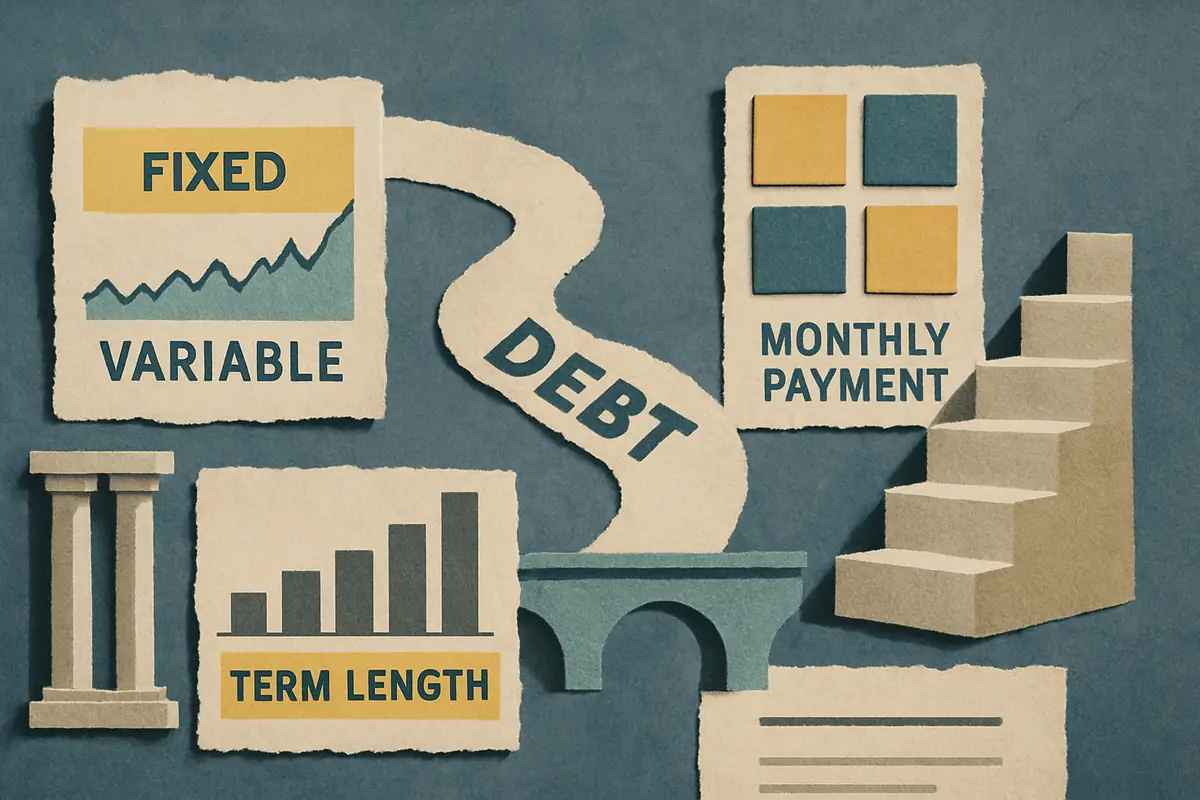
APR, or annual percentage rate, is a standardized metric meant to reflect the yearly cost of borrowing, including interest and some mandatory fees. However, some fees—like origination or processing charges—may not be included. For example, if a lender deducts a 3% origination fee from the loan principal, the actual funds received are less than the amount on which interest is charged, raising the effective borrowing cost. Variable interest rates, often pegged to indices like the prime rate or SOFR, introduce unpredictability: a rate that starts at 8% could climb to 12% if market rates rise, increasing monthly payments.
Dissecting Cost Mechanics: Fees, APR, and Effective Interest Explained
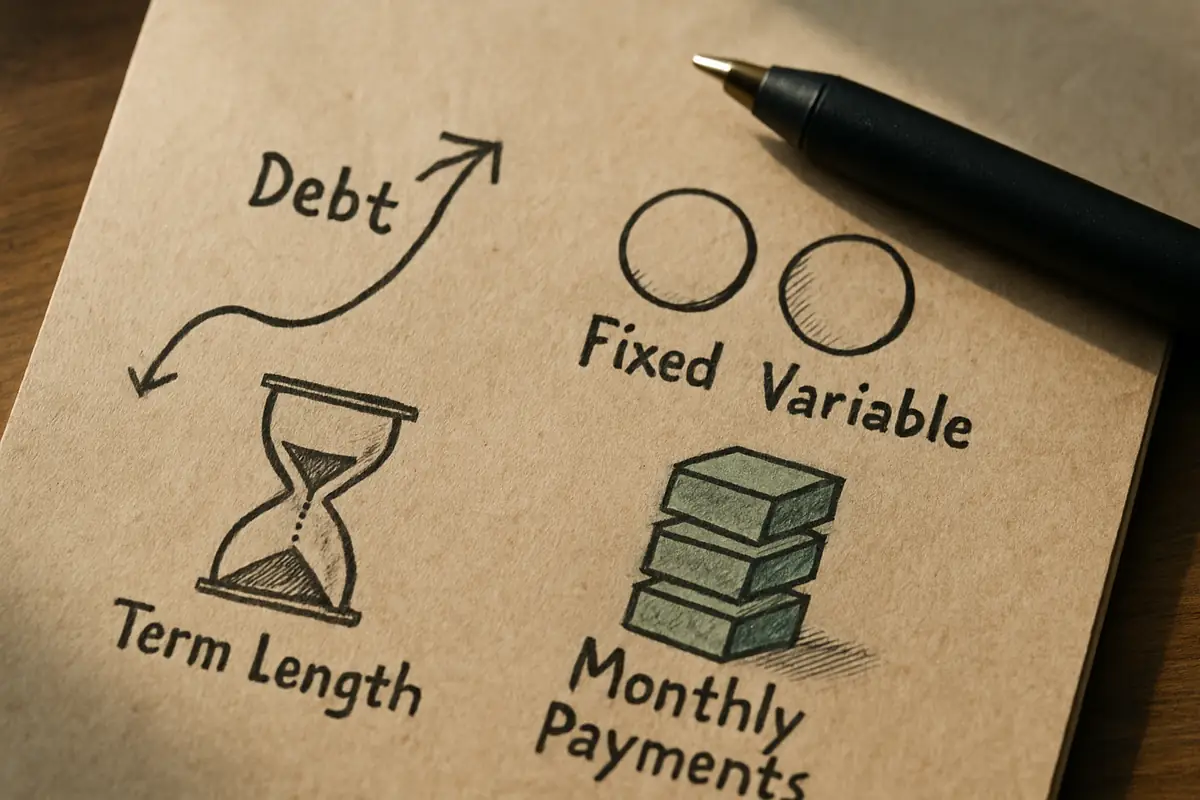
To properly evaluate debt consolidation offers, borrowers must break down the advertised APR and all associated fees. The APR is intended to represent the total annual cost of a loan, but not all fees may be included, and it may be calculated based on an introductory period. Typical fee categories include:
- Origination or processing fees: Often 1%–8% of the loan amount, deducted upfront.
- Late payment penalties: Can range from $25 to $40 per missed payment.
- Prepayment penalties: Sometimes 1%–5% of the outstanding balance if the loan is paid off early.
- Bundled insurance products: Optional, but can add $10–$50 per month to payments.
For example, consider a $10,000 consolidation loan at a 10% nominal interest rate with a 3% origination fee. The borrower receives $9,700 after the $300 fee is deducted. However, interest accrues on the full $10,000. Over a 4-year (48-month) term, the monthly payment is about $253.63. Total payments over 48 months are $12,214.24. Adding the $300 origination fee, the true total cost is $12,514.24, making the effective interest rate higher than the headline 10% APR.
Variable-rate loans add further uncertainty. If the initial rate is 8% but rises to 12% after two years, monthly payments can increase by $40–$60 on a $10,000 balance, depending on the remaining term. Borrowers should always request an amortization schedule—a table showing how each payment is split between interest and principal—under both best- and worst-case rate scenarios to understand possible future costs.
| Factor | What it means | Risk |
|---|---|---|
| APR | Annual cost of borrowing, including interest and some fees | May exclude upfront/hidden fees; can misrepresent true cost |
| Origination Fee | Upfront charge (1%–8%) deducted from loan principal | Reduces funds received; interest applies to full loan amount |
| Variable Interest Rate | Rate that changes with market benchmarks (e.g., prime rate) | Future payment uncertainty; rates may rise over time |
| Prepayment Penalty | Fee (1%–5%) for paying off loan early | Limits refinancing options; increases cost if repaid sooner |
| Collateral Requirement | Asset (e.g., car or home) pledged against loan | Risk of asset loss if borrower defaults |
Contractual Risks: Collateral, Penalties, and Refinancing Pressures
Consolidation loans often come with contract clauses that can increase long-term risk. Collateralized loans—those secured by assets like vehicles or home equity—may offer lower interest rates, sometimes 2–4 percentage points below unsecured loan rates. However, if the borrower defaults, the lender can repossess or foreclose on the asset. For example, a $15,000 home equity loan at 7% may sound attractive, but missing payments could put the home at risk.
Penalty clauses are common. Prepayment penalties (fees for paying off a loan early) can reduce the benefit of refinancing if interest rates drop or if the borrower’s financial situation improves. For instance, a 3% prepayment penalty on a $10,000 balance would cost $300. Late payment penalties can trigger penalty APRs, increasing the interest rate by 5–10 percentage points after a missed payment. Some contracts allow lenders to accelerate the repayment schedule, demanding immediate payment of the remaining balance if certain conditions are breached.
Variable-rate loans can create "refinancing pressure" if interest rates rise. For example, if a loan’s rate increases from 8% to 13% in the third year, monthly payments on a $12,000 balance could jump by $50–$75, forcing borrowers to seek another consolidation loan—often with new fees and possibly less favorable terms. This cycle can extend indebtedness and increase the total amount repaid over time.
Managing Repayment Pressure and Payment Schedules
Repayment pressure refers to the strain that consolidated loan payments can place on a household budget. While combining debts streamlines payments, it can also introduce rigidity. For example, fixed-term loans rarely allow payment skips, and variable-rate loans can cause monthly payments to rise unpredictably. If a borrower’s income fluctuates—common for gig workers or those with variable hours—meeting a $400 consolidated payment each month may be more difficult than juggling several smaller minimum payments.
Variable-rate loans may cause monthly payments to increase by $30–$80 on a $10,000 loan if rates rise by 3–5 percentage points. Prepayment penalties can discourage borrowers from paying off loans early, even when they secure extra income, keeping them locked into higher interest costs. Late payment penalties, typically $25–$40 per missed payment, can quickly add up and extend the repayment timeline.
Monthly Payment Timing
Ensure your paycheck aligns with your consolidated loan due dates to avoid late fees.
Rate Adjustment Notices
Request clarity on how and when variable rate changes will be communicated.
Alternatives and a Borrower's Checklist for Safer Consolidation
Before consolidating, borrowers should consider alternatives such as negotiating directly with creditors for lower rates or extended payment plans—sometimes reducing interest by 3–8 percentage points without incurring new fees. Nonprofit credit counseling agencies can help assess whether consolidation is the best fit, particularly for those with total unsecured debt below $15,000 or who can repay within 2–3 years through budgeting adjustments.
A practical checklist for evaluating consolidation includes:
- Requesting a full amortization schedule (a table showing principal and interest for each payment) with all fees included, under both fixed and variable rate projections.
- Comparing total fees—origination, late, prepayment, and any insurance products—across at least three lenders.
- Confirming whether collateral is required and what assets are at risk of repossession or foreclosure.
- Reading fine print for prepayment penalties and penalty APR triggers.
- Aligning repayment schedules with income timing to avoid late fees.
- Checking for hardship provisions, such as payment deferral or temporary interest reduction in case of job loss.
Verify Total Loan Cost
Request full amortization schedules including all fees under fixed and variable rate projections.
Understand Contract Terms
Carefully read clauses about collateral requirements, prepayment penalties, and penalty APR triggers.
Assess Repayment Flexibility
Ensure payment due dates match your cash flow cycles and check provisions for temporary hardship relief.
Maria’s Outcome: Weighing Real Costs Versus Quick Relief
Maria’s initial attraction to a quick-fix consolidation loan shifted after she mapped out all associated costs. The 3% origination fee meant $300 was deducted upfront, yet interest accrued on the full $10,000. She discovered that the "fixed" 11% APR could reset to a variable rate after 24 months, exposing her to possible payment increases of $40–$70 per month if market rates rose. The contract’s prepayment penalty limited her ability to refinance if her credit improved or if she received a windfall.
After factoring in these risks, Maria chose to negotiate directly with her creditors, securing a 4% reduction in interest rates and spreading payments over an additional 18 months. She also implemented stricter budgeting, reducing discretionary spending by $200 per month. By avoiding new fees and collateral risks, Maria preserved her refinancing options and positioned herself for improved credit in the future, demonstrating the value of a cautious, informed approach over seemingly quick solutions.
How Technology Is Transforming Debt Consolidation
Technology is rapidly reshaping debt consolidation. Artificial intelligence (AI) and machine learning are now used by financial platforms to tailor debt management plans to individual borrower profiles, factoring in spending habits, income trends, and credit utilization rates (the percentage of available credit in use, typically recommended to stay below 30%). Fintech apps allow users to instantly compare consolidation offers from multiple lenders, often revealing differences in APRs of 2–5 percentage points and highlighting hidden fees. Peer-to-peer (P2P) lending platforms, which connect borrowers directly with investors, have grown since the early 2010s, sometimes offering rates 1–4 percentage points below traditional banks for qualified borrowers.
Blockchain technology is emerging to enhance the security and transparency of lending contracts, reducing fraud and providing immutable records of loan terms. Mobile banking apps now enable borrowers to track their repayment progress in real time, set payment reminders, and receive instant notifications of rate changes. These advances empower borrowers to make more informed choices and put pressure on traditional lenders to offer more competitive and transparent products.
Regulatory Shifts Affecting Debt Consolidation Practices
Regulatory frameworks for debt consolidation have tightened in the past decade to protect consumers. Many jurisdictions now require lenders to disclose all fees and interest rate structures upfront, often using standardized loan estimate forms. Interest rate caps are sometimes set between 24% and 36% for unsecured personal loans, and some regions have banned certain penalty fees or limited prepayment penalties to 2% of the balance. These changes aim to reduce predatory lending and ensure that consumers fully understand their obligations before signing.
Legislative reforms in some areas have introduced government-supported debt management programs, offering structured repayment plans with capped fees and regulated interest rates—sometimes as low as 6%–10%—for qualifying borrowers. Partnerships with nonprofit credit counselors have expanded access to unbiased advice, particularly for those with limited financial literacy or credit histories. As regulators continue to balance innovation with consumer protection, the industry is moving toward greater transparency and fairness.
Financial Literacy: A Key to Successful Debt Consolidation
Financial literacy—the ability to understand concepts like interest rates, loan terms, and credit scoring—remains essential for effective debt consolidation. Borrowers with a basic grasp of how APR is calculated, how amortization works (the gradual repayment of principal and interest over time), and how credit utilization affects their score are better equipped to choose the right product. Educational initiatives, such as online courses and community workshops, are increasingly offered by lenders and nonprofit organizations to close knowledge gaps.
Improved financial literacy can help borrowers avoid common pitfalls, such as extending repayment periods unnecessarily (which can increase total interest paid by thousands of dollars) or accumulating new debt after consolidation. Learning to budget, limit discretionary spending, and set aside emergency savings—ideally 3–6 months’ worth of expenses—supports long-term financial health and reduces the risk of repeating the debt cycle.
Social Impacts of Rising Debt Consolidation Adoption
As more households turn to debt consolidation—national surveys suggest up to 20% of consumers with unsecured debt consider it annually—the broader social effects become more visible. Effective consolidation can reduce default rates and financial stress, supporting neighborhood stability by helping families avoid foreclosure or eviction. However, easy access to consolidation products can also enable some borrowers to accumulate additional debt, especially if credit limits are not reduced after old accounts are paid off.
Disparities in access remain a challenge. Lower-income households or those with thin credit files may face higher interest rates—often 20%–30%—or be excluded from the most favorable products. Addressing these gaps requires targeted outreach, inclusive design, and partnerships between lenders, regulators, and nonprofit organizations to ensure equitable access to safe, affordable consolidation options.
Evaluating Debt Consolidation Methods: Practical Considerations
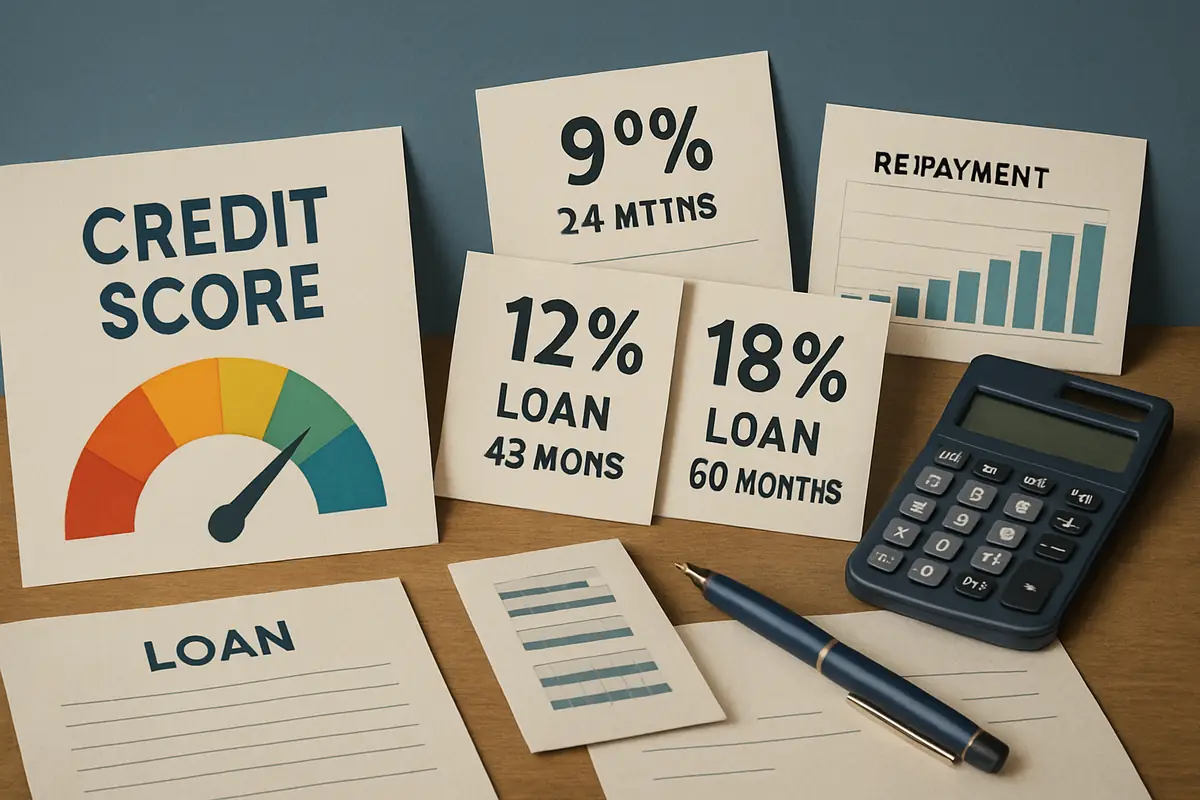
Choosing the right debt consolidation method depends on several factors: credit score (with the best rates typically available to those above 700), total debt amount (most lenders offer consolidation loans between $5,000 and $50,000), income stability, and preferences for fixed versus variable rates. Common options include:
- Balance transfer credit cards: Promotional 0% APR for 6–21 months, but 3%–5% transfer fees and rates rising to 18%–29% after the promo period.
- Fixed-term personal loans: Rates from 7%–15% for strong credit; terms of 24–60 months.
- Home equity loans: Rates from 5%–9%, but risk of foreclosure if payments are missed.
Each method has trade-offs. For example, balance transfer cards offer short-term relief but can lead to high rates if the balance is not paid off before the promotional period ends. Personal loans provide predictable payments but may include origination and prepayment fees. Home equity loans offer lower rates but put the borrower's home at risk. Consulting with a certified credit counselor—often available for free or low cost—can help borrowers compare options and avoid aggressive marketing tactics that obscure true costs.
Future Trends: Innovations and Evolving Debt Consolidation Practices
The debt consolidation market is evolving rapidly, driven by advances in data analytics, automation, and consumer demand for transparency. AI-powered advisory services are increasingly able to customize recommendations based on real-time changes in borrower profiles and market conditions. Financial wellness platforms are beginning to bundle debt management with savings optimization and retirement planning, offering a holistic approach to money management.
Sustainability and ethical lending are gaining traction, with some lenders incorporating environmental and social criteria into their underwriting and reporting processes. As consumers become more financially literate and technology continues to lower barriers to entry, the debt consolidation landscape is likely to become more competitive, transparent, and responsive to individual needs—provided that borrowers remain vigilant about the real costs and risks behind every offer.