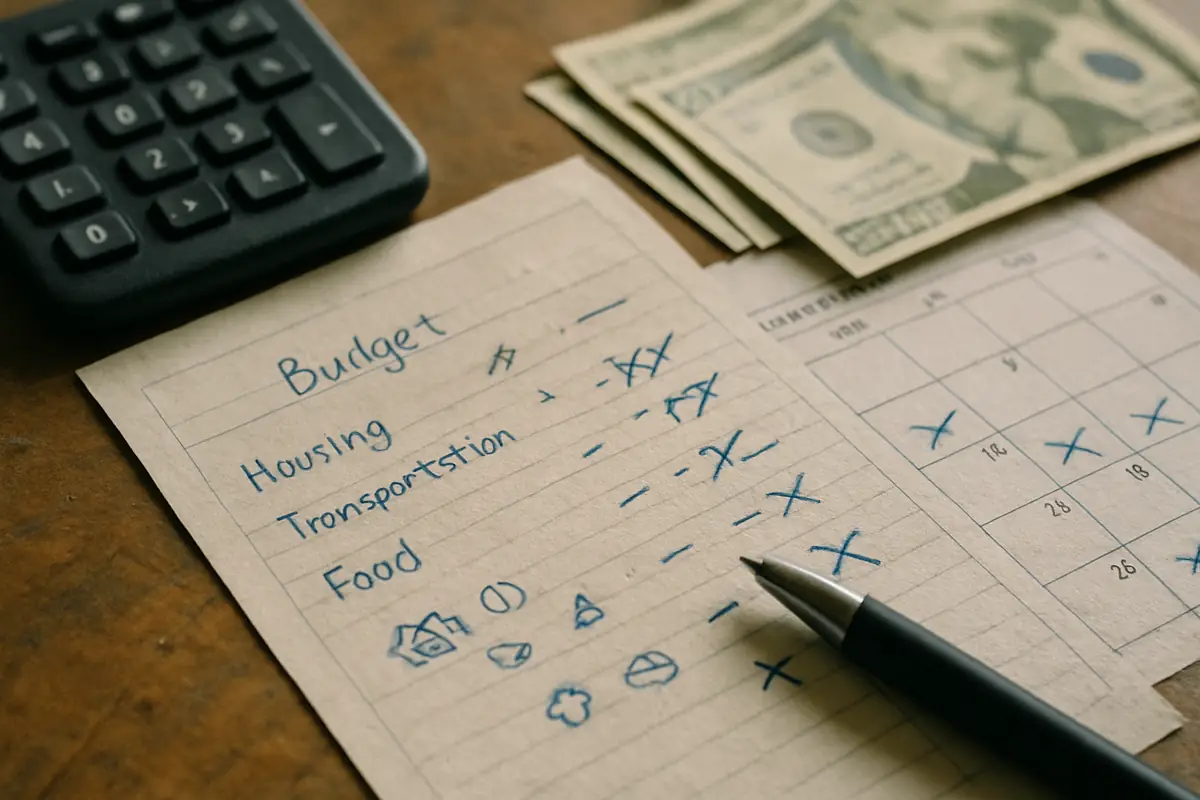
A household bringing home $65,000 a year loses roughly $1,950 of real buying power in any twelve months when prices rise 3% and pay stays flat. That quiet arithmetic defines the mid-2020s: inflation has cooled from its mid-2022 peak near 9% to a calmer 2.5-3.5% range, yet it keeps compounding. A stable income that once felt like a financial fortress now works more like a weathered shield against a slow, persistent storm of rising living costs.
The Illusion of Safety in a Steady Paycheck
For many households, a dependable monthly income is the cornerstone of financial planning. It creates a rhythm to life — rent or mortgage on the same day, bills scheduled with regularity, groceries budgeted with familiarity. Yet beneath that security lurks a challenge steady paychecks alone cannot resolve: inflation, the general rise in prices that shrinks what each dollar buys. Even at a "normal" 3% annual pace, prices double roughly every 24 years; at the ~9% pace briefly reached in mid-2022, the doubling compresses to about eight. Real income — pay measured by what it actually purchases rather than its dollar figure — can fall steadily while the nominal deposit never misses a payday. Hence a telling statistic: roughly 4 in 10 US adults say they could not cover a $400 surprise expense with cash or its equivalent, and many of them hold steady, full-time jobs.
Consider Sarah and Mark, a suburban couple in their early thirties with a combined income of $92,000. Both hold full-time jobs with predictable salaries, yet each month they adjust the grocery list, skip small luxuries, or delay minor repairs. Their grocery spending climbed from about $680 to $760 a month in eighteen months, and their auto insurance renewal arrived 11% higher. Their income has not dipped, but their spending flexibility has narrowed — a scenario playing out across countless households where rising costs chip away at the purchasing power anchored by steady earnings.
Scenario One: The Single-Income Family Coping With Inflation
How this can look in practice
Meet Lisa, who manages all household finances on her own $58,500 salary as a school administrator. Her family's monthly expenses have crept up by nearly 8% over two years — electricity from $140 to $168, groceries from $650 to $715, car insurance from $135 to $158. Her annual raises of roughly 3% track headline inflation almost exactly, yet her budget leaves little room for unexpected expenses or savings. The balance she maintains feels precarious.
Lisa's experience highlights a gap that pay stubs never show: a household's personal inflation rate can run well above the headline consumer price index, the standard yardstick that averages price changes across the whole economy. The index may print 2.5-3.5% in a given year, but a family whose budget is concentrated in utilities, food, and insurance can feel something closer to 5-6%. Steady pay does not mean steady buying power when your actual basket outruns the statistical average. Families like hers weigh daily trade-offs — filling the pantry or paying for car maintenance — often deferring repairs or downgrading nutrition in ways that add stress on top of strain.
Her budgeting involves constant vigilance: swapping brands, timing purchases with sales, rationing heat in winter to hold down energy bills. A common planning benchmark holds that housing should absorb no more than 28-30% of gross income; Lisa's mortgage and utilities now consume 33%, so every other category must compress to compensate. The emotional toll of these narrowing choices goes largely unnoticed, but it accumulates alongside the arithmetic.
Scenario Two: Dual-Income Household Facing Subtle Squeeze
How this can look in practice
Tom and Jenna are dual-income earners whose combined $104,000 in salaries has grown only about 2% a year for three years. They live in an urban apartment where rent surged 12% in two years, from $1,900 to $2,128 a month. Steady incomes initially gave them comfortable margins; now essential costs rise faster than their earnings.
Despite both working full time, Tom and Jenna find themselves compromising — delaying vacations, cutting dining out from weekly treats to occasional indulgences, trimming hobby spending. Run the ratio and the squeeze becomes visible: rent alone has climbed from about 27% of gross pay to just over 31%, past the 28-30% housing benchmark planners treat as a warning line. Their steady incomes provide stability but not growth, while essentials consume a larger slice of every paycheck.
Their situation shows how even dual-income households feel squeezed when living costs outpace salary increases — and it challenges the assumption that resilience flows from income stability alone rather than from flexibility within the budget itself.
Where Income Stability Helps
- Provides predictable cash flow for meeting fixed expenses on time.
- Offers psychological reassurance through routine paycheck arrivals.
- Enables better planning of bills and debt; payment history drives roughly 35% of common credit scoring models, so on-time consistency compounds.
- Supports creditworthiness by demonstrating steady employment history.
Where Caution Is Needed
- Rising costs may outpace income growth, reducing real purchasing power.
- Can create complacency that leaves emergency savings underfunded.
- May mask budget inflexibility — card balances above the 30% utilization guideline quietly drag credit scores even when payments are on time.
- Does not protect against sudden spikes in variable expenses such as medical bills.
The Reality of Budgeting: Imperfect and Ever-Changing
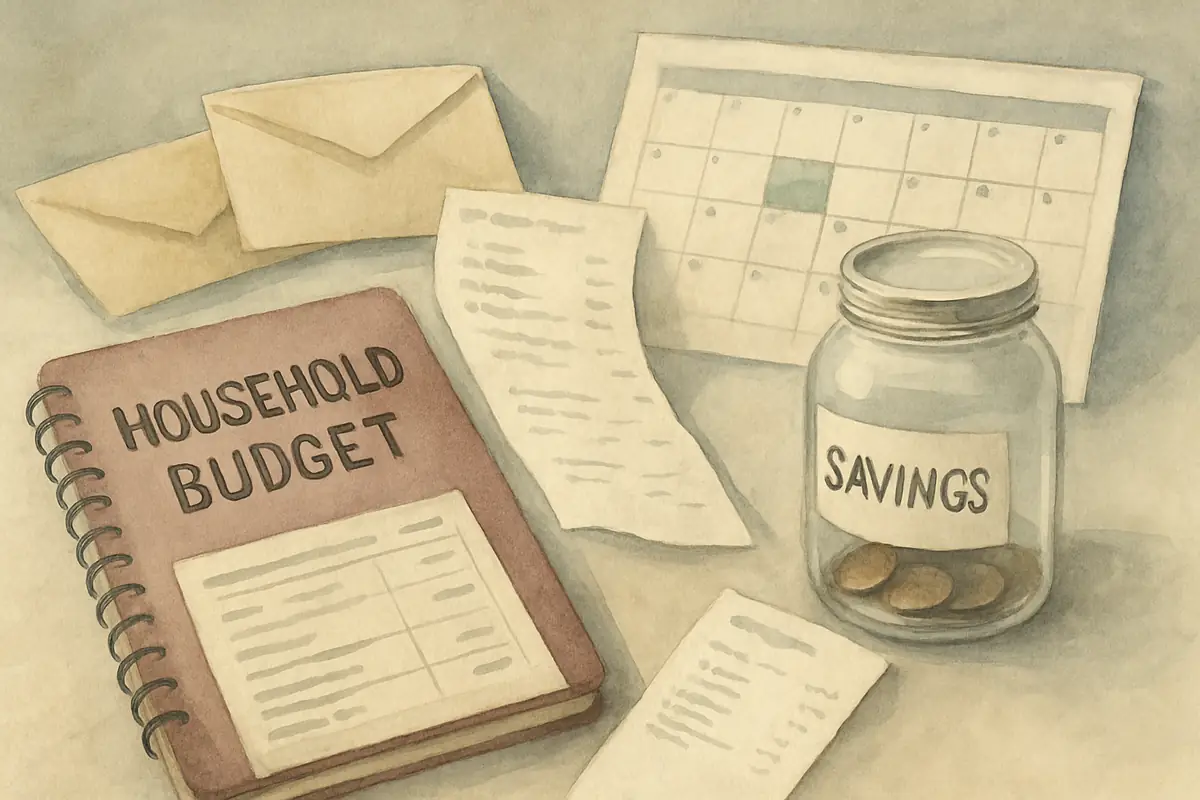
"Budgeting" conjures images of neat spreadsheets and flawless tracking, but reality is messier. The popular 50/30/20 rule — 50% of after-tax income to needs, 30% to wants, 20% to savings and debt payoff — looks tidy on paper, yet in high-cost metro areas needs alone can consume 60-65% of take-home pay, making the formula a direction of travel rather than a rule. Most households juggle fluctuating bills, unplanned purchases, and timing quirks like paydays landing after due dates. Take Marcus and Eliza — their budget rarely matches actual spending because Eliza's freelance work arrives irregularly while Marcus's commission bonuses vary by season.
"They try to keep a safety cushion," Marcus explains, "but some months it feels like we're chasing our tails." A single bill clearing two days before payday can trigger a $25-$35 overdraft fee, turning a timing problem into a real cost. Because their income varies, the standard guidance shifts too: irregular earners are generally advised to hold 6-9 months of expenses in reserve rather than the 3-6 months suggested for salaried workers. Their experience reflects many who budget imperfectly under human constraints — forgetfulness, immediate needs crowding out long-term goals — while rising costs leave little wiggle room.
"Hidden" Trade-Offs: What Stability Can Mask
"Making ends meet" often means invisible trade-offs — skipping preventative healthcare to save $25-$50 copayments, postponing vehicle repairs until problems worsen, downgrading internet plans despite home schooling needs. A deferred $180 brake pad replacement has a way of returning months later as an $800 rotor-and-caliper job. These decisions never appear on an income statement, but they erode quality of life and often cost more in the end.
"Income stability can create a false sense of security," warns Olivia Hayes, who writes about household money struggles. "The steady paycheck is comforting but doesn't immunize families from incremental financial erosion caused by inflationary pressures." Recognizing these hidden sacrifices explains why many feel stretched even without an obvious income shock.
How this can look in practice
"Consider Alex and Priya," Olivia continues. "Their incomes haven't changed much in years, but childcare costs rising by roughly $250 a month forced Priya to cut her hours from 40 to 28 per week — an indirect hit of several thousand dollars a year to household earnings, while their nominal salaries stayed perfectly stable on paper."
Finding Space Within Tight Budgets
Households facing climbing costs often find creative ways to stretch stable incomes without cutting essentials outright: meal prepping to curb restaurant spending, or stocking up during seasonal sales. David and Marie schedule bulk grocery trips every few weeks rather than daily convenience buys — a small adjustment that trims roughly $90-$120 from their monthly food spending. Batch-cooking two extra dinners a week saves another $60 or so in default takeout.
However practical, these tactics demand time and discipline — resources not everyone has amid work and family stressors. An hour of coupon-matching that saves $12 is a poor trade for a parent working two jobs. Balancing budget pressure against mental wellbeing is an ongoing negotiation many households quietly navigate.
When Income Stability Meets Unexpected Shocks
Stable incomes buffer some one-off shocks, since regular paychecks maintain cash flow continuity. But when unforeseen expenses arrive — a sudden car repair, an emergency room visit — the impact still destabilizes a household unless emergency savings exist.
Take Carmen's family: her husband's income is secure, but when the heating system failed midwinter, the $1,850 repair arrived with no warning. Without a fund, they put it on a credit card at 24% APR — squarely inside the 18-30% range typical of cards in 2025-2026. Paying only the minimum, commonly 1-3% of the balance, would stretch that single repair across years and roughly double its cost in interest. The card's 21-25 day grace period only shields borrowers who pay the statement in full, and one missed due date adds a $30-$41 late fee. It could have been worse: the payday loans some cash-strapped households turn to carry effective APRs of 300-400%.
Income Stability Shields Against Some Risks
- Predictable money flow reduces anxiety during normal months.
- Facilitates regular saving habits when paired with discipline and automation.
- Eases access to credit at better rates through proven repayment ability.
Limitations Exposed By Unplanned Expenses
- Does not prevent the need for high-interest debt during emergencies.
- May lull families into under-saving for contingencies.
- Unexpected costs hit harder when budgets are already stretched thin.
Understanding Inflation's Role Beyond Paychecks
Inflation hits expense categories unevenly — some costs climb rapidly while others hold steady or fall. Rents rise fastest in urban areas; food prices swing seasonally; fuel reacts sharply to geopolitical events. Borrowing costs add another layer: after the 2022-2023 hikes pushed the central bank's policy rate above 5%, 30-year mortgage rates settled around 6-7% and card APRs drifted toward the top of their 18-30% band, so households that lean on credit to bridge gaps pay more for the privilege.
This patchwork means a simple cost-of-living raise is no magic bullet; what stabilizes in one category can squeeze harder elsewhere. Families must track evolving patterns month to month — not just nominal wage increases — to sense where the pressure points actually lie.
Why Emergency Savings Matter Besides Stable Income
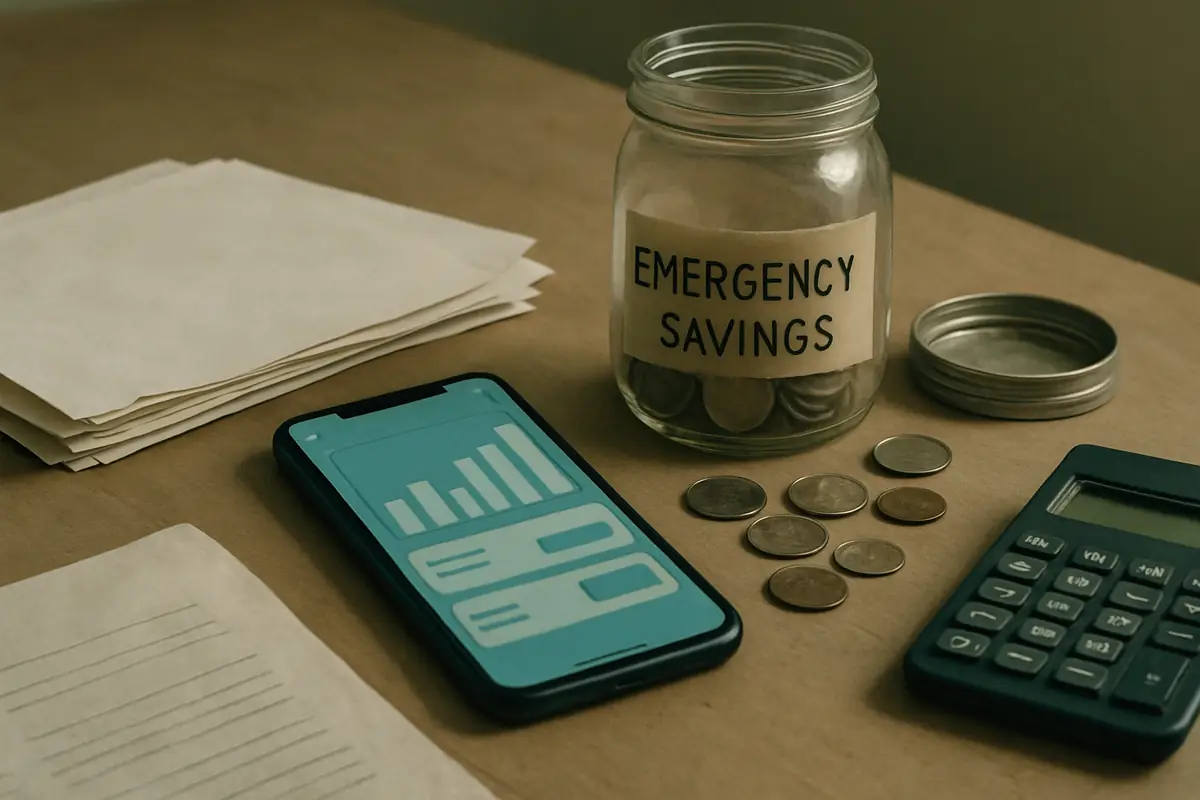
An emergency fund is the difference between a $1,850 furnace repair being an annoyance and becoming a multi-year debt. Where the money sits matters too: high-yield savings accounts have recently paid 3.5-4.5% APY (annual percentage yield, the interest rate including compounding), while many large traditional banks still pay under 0.5%. Certificates of deposit and Treasury bills in the 4-5% range can hold the portion not needed immediately, and deposits at insured banks are federally protected up to $250,000 per depositor, per institution.
Here is the target math, step by step, for a family in Carmen's position. Step one: total essential monthly costs — $1,650 rent, $620 groceries, $290 utilities, $360 transportation, $380 insurance and minimum debt payments — for $3,300 a month. Step two: multiply by three for the minimum cushion ($3,300 x 3 = $9,900) and six for the full buffer ($3,300 x 6 = $19,800). Step three: divide the goal by a realistic deposit — $275 a month reaches $9,900 in contributions after 36 months. Step four: add yield — at 4% APY those deposits earn roughly $600 in interest, so the three-month floor arrives about two months early. That $9,900 cushion could absorb Carmen's furnace failure five times over without a dollar of 24% card interest.
The Hidden Costs of Income Stability
While a steady income is undeniably important, it does not guarantee financial security when living costs keep rising. Many families sit inside a paradox: the paycheck stays consistent while purchasing power erodes through everyday essentials — food, housing, transportation, healthcare. A 5% increase on $1,800 rent is $90 a month, or $1,080 a year, quietly diverted from savings into the same four walls. The squeeze is subtle, relentless, and easy to misread as personal failure rather than arithmetic.
Compounding the problem, many employers do not automatically adjust salaries for inflation. A 2% raise in a year when prices climb 3% is, in real terms, a 1% pay cut — and three such years compound to roughly a 3% loss of buying power that never showed up as a smaller deposit. Employees rarely notice immediately, but over time the gap between earnings and expenses widens. The impact lands hardest on those living paycheck to paycheck — the population overrepresented among the 4 in 10 adults who would struggle with a $400 surprise. Without wage adjustments or supplemental income, households risk falling behind on bills and accumulating debt that compounds at card rates far above wage growth.
Strategies to Safeguard Financial Well-being Amid Rising Costs
Given these challenges, protecting financial health matters even when income appears stable. One practical approach: review the budget quarterly against current prices rather than last year's assumptions, and attack the largest recurring lines first. Concrete moves add up — switching grocery stores can trim 10-15% off a food bill, negotiating an internet plan from $85 down to $60 saves $300 a year, and swapping a commute to public transit can free up a car payment's worth of fuel and parking. Tracking expenses turns rising prices from vague dread into a list of specific, addressable items.
Another vital tactic is building the emergency reserve described above — 3-6 months of expenses for steady earners, 6-9 months for variable income — in an accessible account earning a competitive yield rather than idling near 0.5%. The reserve exists so a price spike or broken appliance never forces a choice between an 18-30% APR card and a 300-400% APR payday loan. Small automatic transfers grow into a real buffer; consistency matters more than the starting amount.
Supplemental income can counteract stagnant wages directly. Side gigs, freelance work, or part-time jobs built on existing skills commonly add $200-$500 a month for a few evening hours a week — enough to close the entire gap a 3% inflation year opens in a $65,000 budget. Platforms make it easier than ever to monetize writing, design, tutoring, or driving, and a second stream doubles as insurance against disruption in the first.
The Role of Policy and Employer Support
Beyond individual actions, systemic factors determine whether income stability becomes real economic security. Public policy measures like inflation-indexed minimum wages or tax credits aimed at low- and middle-income households can blunt rising costs. On the employer side, a cost-of-living adjustment, or COLA — an automatic raise tied to an inflation index rather than performance — does the same work privately: a 3% COLA on a $60,000 salary preserves $1,800 a year of buying power that would otherwise silently evaporate. Transparent wage policy lets workers plan instead of guess.
Workplace financial education programs also equip employees for changing conditions — how compounding works for savings and against card balances, why utilization below 30% protects a credit score, how to ladder short-term CDs. When employers treat financial wellness as part of well-being, they support both individual stability and productivity, since money stress reliably bleeds into focus, absenteeism, and turnover.
Long-Term Implications of Ignoring Cost Increases
Ignoring the incremental effects of rising living costs despite stable incomes carries profound long-term consequences. Personally, persistent underfunding of daily needs pushes people into debt cycles that are hard to escape once interest at 18-30% outruns any plausible raise. Chronic financial stress is linked with poorer physical and mental health — anxiety, depression, hypertension — which compounds the hardship through medical bills arriving at the worst possible time.
The pattern also drags on the broader economy by suppressing consumer spending, a key driver of growth. As households tighten budgets and delay non-essential purchases, business revenues soften, hiring slows, and wage freezes spread — perpetuating limited economic mobility that lands hardest on single-parent families and retirees on fixed incomes.
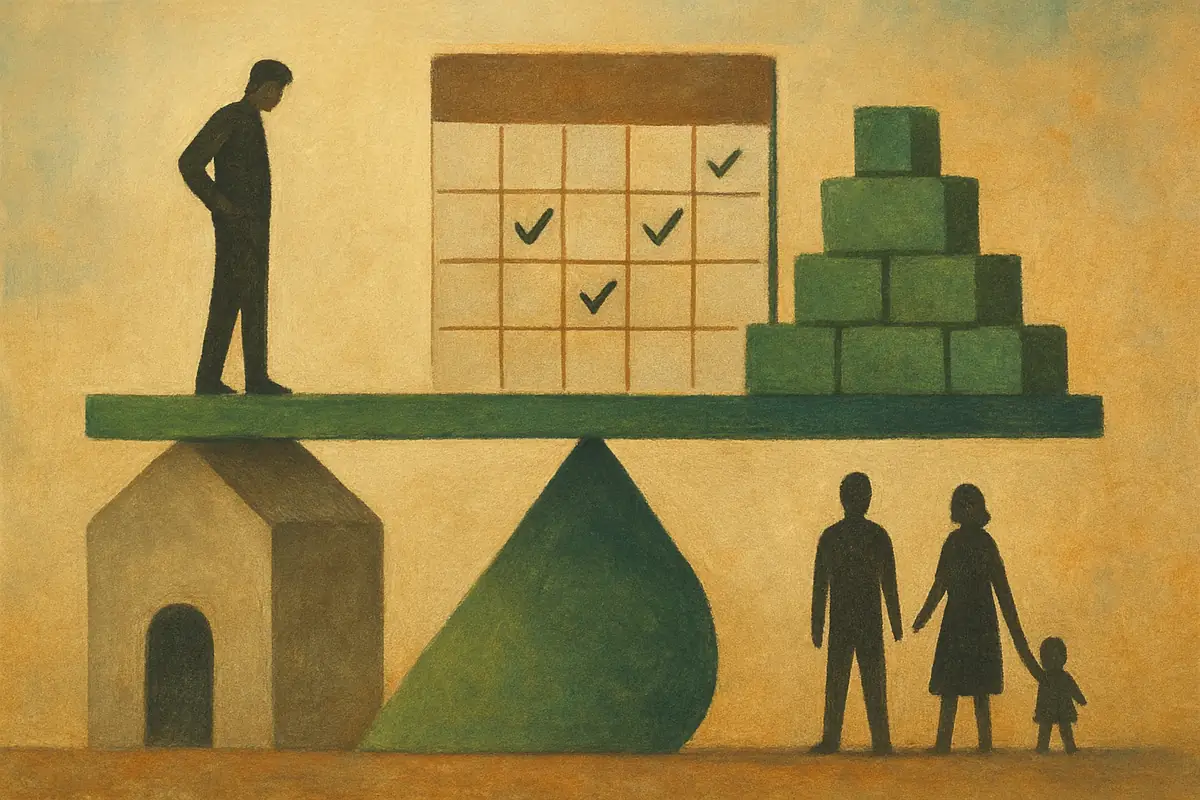
Finally, without meaningful adjustments in wage policies or social supports, wealth inequality deepens. Households that own assets can hedge inflation — stocks have returned roughly 10% a year nominally over the long run, and real estate appreciates alongside the rents it charges — while workers whose only asset is a stable paycheck watch its real value drift downward. Income stability is a foundation worth having; it is simply not the whole house.
References