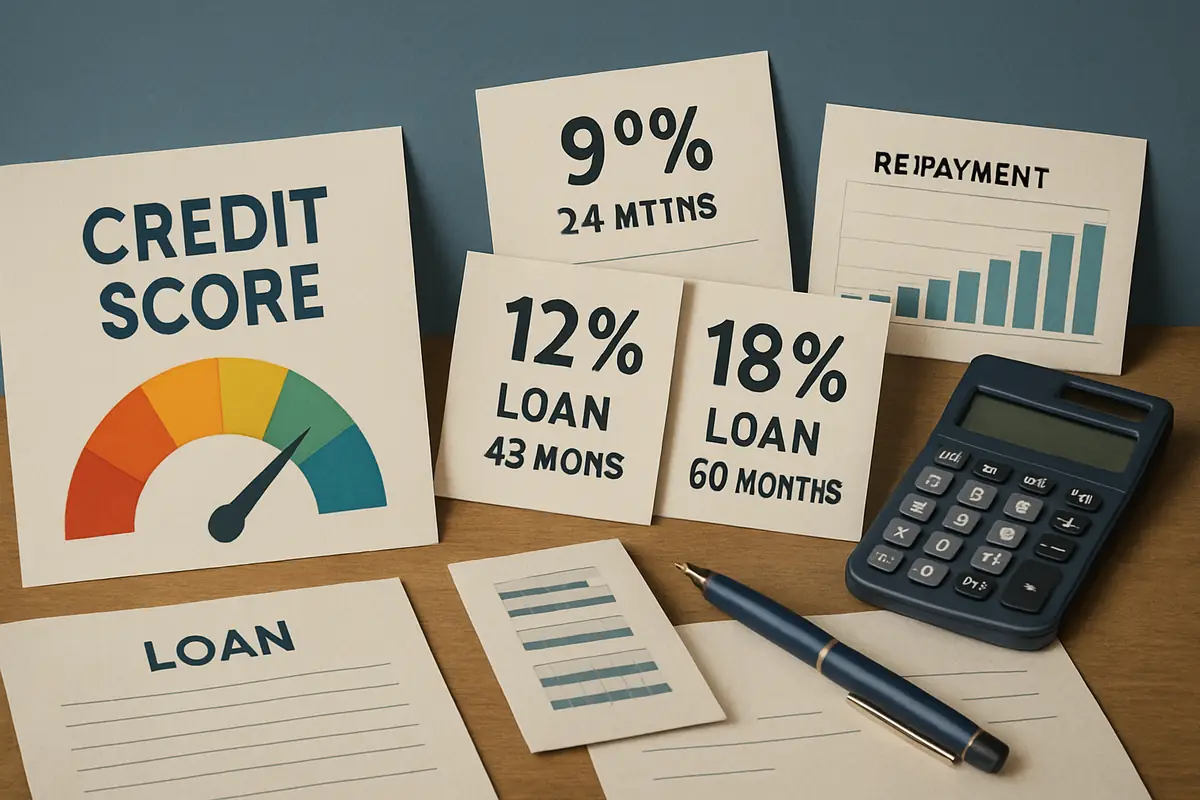
Personal loan APRs in the US currently run from about 7% for strong credit to 36%, while a high-yield savings account pays roughly 3.5–4.5%. That gap makes early repayment look like an automatic win. Add prepayment penalties of up to 2% of the balance, lost tax deductions, and the value of keeping cash liquid, though, and the math gets more interesting. Paying a loan off ahead of schedule is often smart—but not always, and the difference hides in your contract's fine print and your broader financial picture.
Understanding What Early Repayment Means in Loan Agreements
Early repayment means retiring all or part of a loan before its scheduled maturity date. The starting point for judging it is the annual percentage rate (APR)—the yearly cost of borrowing expressed as one number that folds in interest and most mandatory fees. On personal loans, APRs typically land between 7% and 36% depending on credit profile, and many carry an origination fee of 1–8% that is deducted from proceeds up front. That fee is sunk—prepaying never recovers it.
How that future interest accrues matters enormously. Most US mortgages, personal loans, and credit cards use simple interest calculated daily on the outstanding balance, so every dollar of principal you retire stops generating interest the day it posts. Some subprime auto loans and small installment contracts instead use precomputed interest, where the total finance charge is fixed at signing and early-payoff refunds are figured on schedules that favor the lender. On those loans, paying off two years early may return far less than the straight-line math suggests.
The Role of Prepayment Penalties and Fees
A prepayment penalty is a charge the lender imposes to recoup interest income it loses when you pay early. Where they exist, penalties generally run 0–2% of the remaining balance, and on mortgages they are typically confined to the first three years of the loan, stepping down over time. Most mainstream personal loans now advertise no penalty at all, but a minority still charge flat fees in the $50–$250 range. Before scheduling a payoff, get the penalty terms in writing—if the charge exceeds the interest you would avoid, early repayment raises your total borrowing cost instead of lowering it.
Smaller administrative charges nibble at the margin, too. Payoff-statement fees of $10–$40, lien-release or recording fees of $25–$75, and wire charges can all attach to an accelerated payoff even when no formal penalty exists. If your projected interest savings are only a few hundred dollars on a loan that is nearly mature, these incidentals can erase a meaningful share of the benefit. Reading the fee schedule prevents a seemingly smart move from becoming an expensive one.
Comparing Interest Savings Versus Opportunity Cost
Prepaying debt earns a guaranteed return equal to the loan's rate, and a worked example shows the stakes. Take a $20,000 personal loan at 11% APR over 60 months. Step one: the required payment comes to about $435 a month, and total interest over the full term runs roughly $6,090. Step two: add $200 a month, paying about $635 instead. Step three: the loan now retires in roughly 37 months rather than 60, with lifetime interest near $3,720. Step four: subtracting, the extra payments save about $2,370 and cut almost two years off the term. Step five: had that same $200 a month gone into savings at 4% APY, it would have earned only about $460 over those 37 months—roughly a fifth of the interest avoided.
The comparison flips when alternative returns credibly beat the loan rate. Stocks have returned around 10% a year nominally over long periods, but with bear-market drawdowns of 20–50% along the way—2008 alone erased about 37%. Prepaying an 11% loan is a risk-free 11%; no diversified portfolio promises that. The real trade-off is liquidity, meaning cash you can actually reach: money sent to the lender is locked away, while money in savings stays available for emergencies.
How Term Length Impacts Early Repayment Benefits
Long terms magnify the payoff from prepaying. A 30-year fixed mortgage priced in today's typical 6–7% range accumulates staggering interest—a $300,000 loan at 6.5% costs about $383,000 in interest over the full term, more than the amount borrowed. Loans like that are prime candidates for extra principal. A 12- or 24-month loan, by contrast, accrues comparatively little interest before maturity, so penalties or lost liquidity can outweigh modest savings.
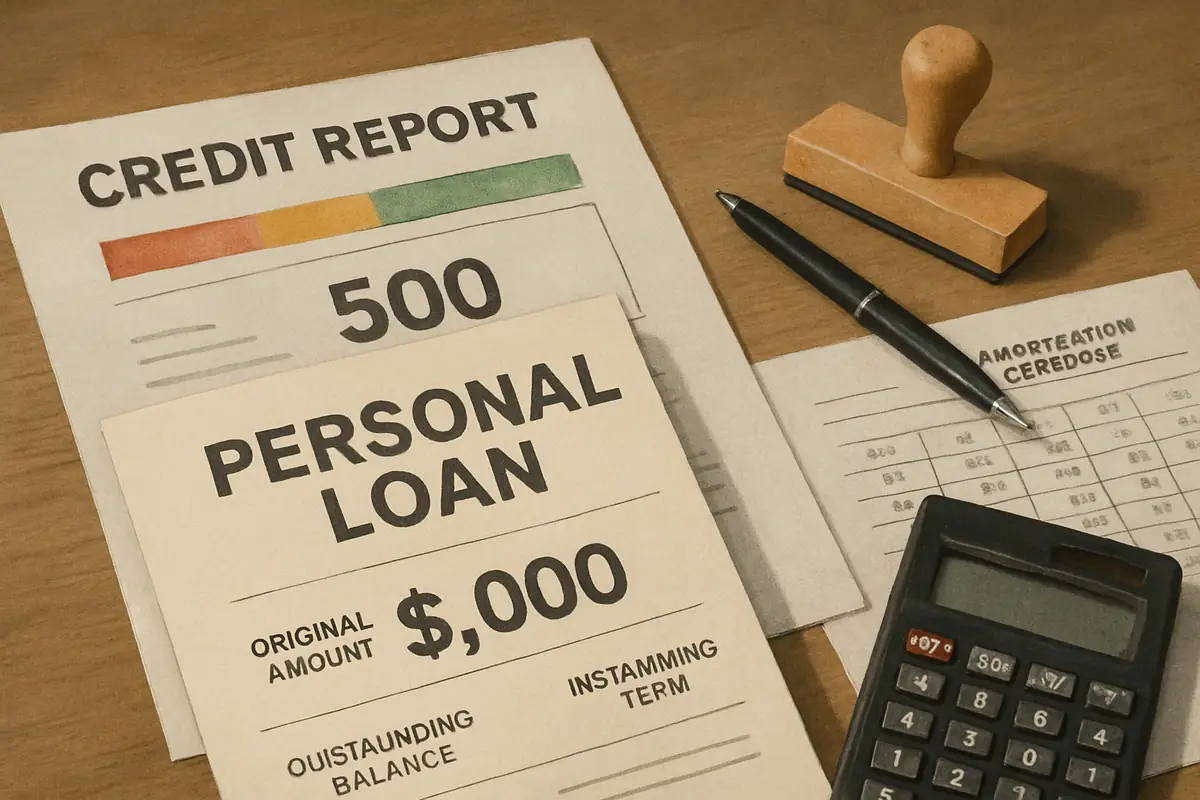
Where you stand in the amortization schedule—the built-in timetable that splits each payment between interest and principal—matters just as much. Early in a 30-year mortgage, roughly 80–85% of each payment goes to interest; near the end, almost all of it retires principal. An extra $1,000 applied in year two eliminates principal that would have generated interest for decades, while the same $1,000 in year twenty-eight saves only a sliver.
Collateral Considerations When Repaying Early
Secured loans add a legal layer: the lender holds a lien, a recorded claim on the pledged asset, until the balance clears. After a full payoff, lien releases and title transfers typically process within 10 to 30 business days, and mortgage escrow refunds usually follow within about a month. Until the release is recorded, insurance requirements—full-coverage auto policies, hazard coverage on homes—remain contractually binding, so canceling coverage the day you send the payoff check can put you in breach.
Partial prepayments on secured debt behave differently. Most mortgage servicers apply extra principal without adjusting the required payment, but some offer a recast—re-amortizing the reduced balance over the remaining term for a fee of roughly $150–$500, which lowers the monthly obligation. Confirm whether a large principal payment triggers any reassessment of terms or escrow changes before wiring the money.
Psychological Effects and Repayment Pressure
Debt is not only a line item; it is a stressor, and eliminating a payment can deliver relief no spreadsheet captures. That intangible benefit sometimes justifies a faster payoff even when the pure numbers are close. But context matters: surveys consistently find that roughly 4 in 10 US adults would struggle to cover a $400 surprise expense from cash. Draining savings to kill a loan can move you into that group overnight.
The standard guardrail is an emergency fund of three to six months of expenses—six to nine for households with variable income—kept in accounts you can tap within a day or two. Rushing repayment past that cushion trades one anxiety for another: the loan is gone, but a transmission failure or layoff now lands on a credit card at 18–30% APR. Emotional relief is legitimate; it should not override staying solvent through a bad month.
Payment timing
An extra payment marked "principal only" cuts the balance immediately; left unmarked, many servicers simply apply it to next month's installment, which saves nothing.
Loan type
Unsecured personal loans rarely carry payoff penalties today; mortgages may in the first three years, and precomputed auto loans sharply limit early-payoff savings.
Penalty structure
Penalties come as flat fees of roughly $50–$250 or as 1–2% of the outstanding balance—the structure changes your break-even point.
When Early Repayment Is Clearly Advantageous
The clearest wins combine no prepayment penalty with a rate far above anything cash could safely earn. Credit cards are the textbook case: variable APRs of 18–30%, interest compounding daily, and minimum payments set at just 1–3% of the balance, a formula that can stretch a modest balance into decades of payments. Payday loans, with effective APRs of 300–400%, are even more urgent. Every dollar thrown at debt like this earns a guaranteed return equal to the APR—an unbeatable, tax-free yield.
Early repayment also shines when cash flow is the constraint. A household with steady income but thin margins gains real stability by retiring a $435 loan payment for good. Killing a payment can also pull total housing and debt obligations back inside the common benchmarks of 28–36% of gross income, which matters both for daily breathing room and for qualifying for future credit.
Situations Where Early Repayment May Backfire
The strategy backfires when fees swallow the savings or the payoff strips your cash buffer below the three-to-six-month line. It can also backfire on cheap, flexible debt. Federal student loans issued in recent years carry fixed rates of roughly 5–8%, and older ones sit at 3–5%; they also offer income-driven repayment, deferment, and potential forgiveness that vanish once paid. Prepaying a 4% subsidized loan while T-bills yield 4–5% locks in a small guaranteed loss of both money and options.
Rate direction cuts the same way. Variable-rate loans are priced off benchmarks that climbed above 5% during the 2022–2023 hiking cycle; if policy rates fall, that debt gets cheaper to hold on its own. The mirror image is the homeowner with a 2.75–3.5% pandemic-era mortgage: routing extra cash into 4–4.5% Treasuries or a 4% savings account out-earns the mortgage rate with zero risk, making aggressive prepayment the mathematically weaker choice.
How Lenders Advertise Early Repayment Versus Real Contract Costs
Marketing leads with freedom—"pay off anytime, no penalty"—while the operative rules live in the agreement. A lender can truthfully advertise no penalty yet require prepayments in minimum increments of $100–$500, accept them only on scheduled due dates, or demand written notice 15–30 days ahead. Some price loans with a 0.25% autopay discount that is recalculated or forfeited if you disturb the payment schedule. None of these are penalties by name; all of them blunt the flexibility the headline promises.
The practical safeguard is a formal payoff quote, which lenders must produce on request and which is typically valid for about 10 days. It states the exact balance plus per-diem interest—the daily interest that keeps accruing until funds actually post. Compare that document against the promotional language and confirm whether partial prepayments are permitted or only full settlement.
Practical Steps Before Deciding on Early Loan Repayment
Start with the contract: locate the sections covering prepayment, fees, and payment application, then request a written payoff statement so you are working from the lender's numbers, not an estimate. Next, compare projected interest savings against every charge the payoff triggers, and against what the same cash could earn elsewhere—CDs and Treasury bills in the 4–5% range set a useful risk-free floor for that comparison.
Then audit your reserves. If the payoff would leave less than three months of expenses on hand, the timing is wrong regardless of the rate. Finally, rank competing uses for the money: unmatched retirement contributions, insurance gaps, or higher-rate balances elsewhere may deserve the dollars first.
Understanding Loan Terms and Conditions
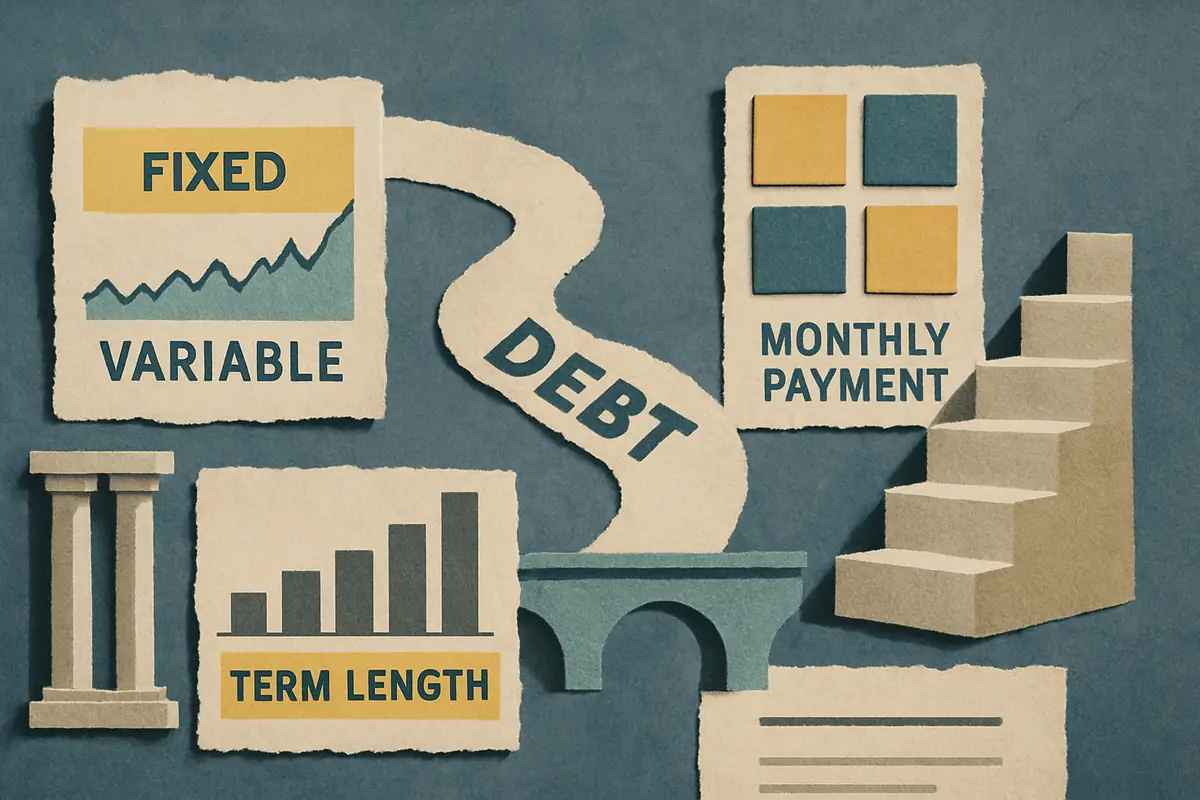
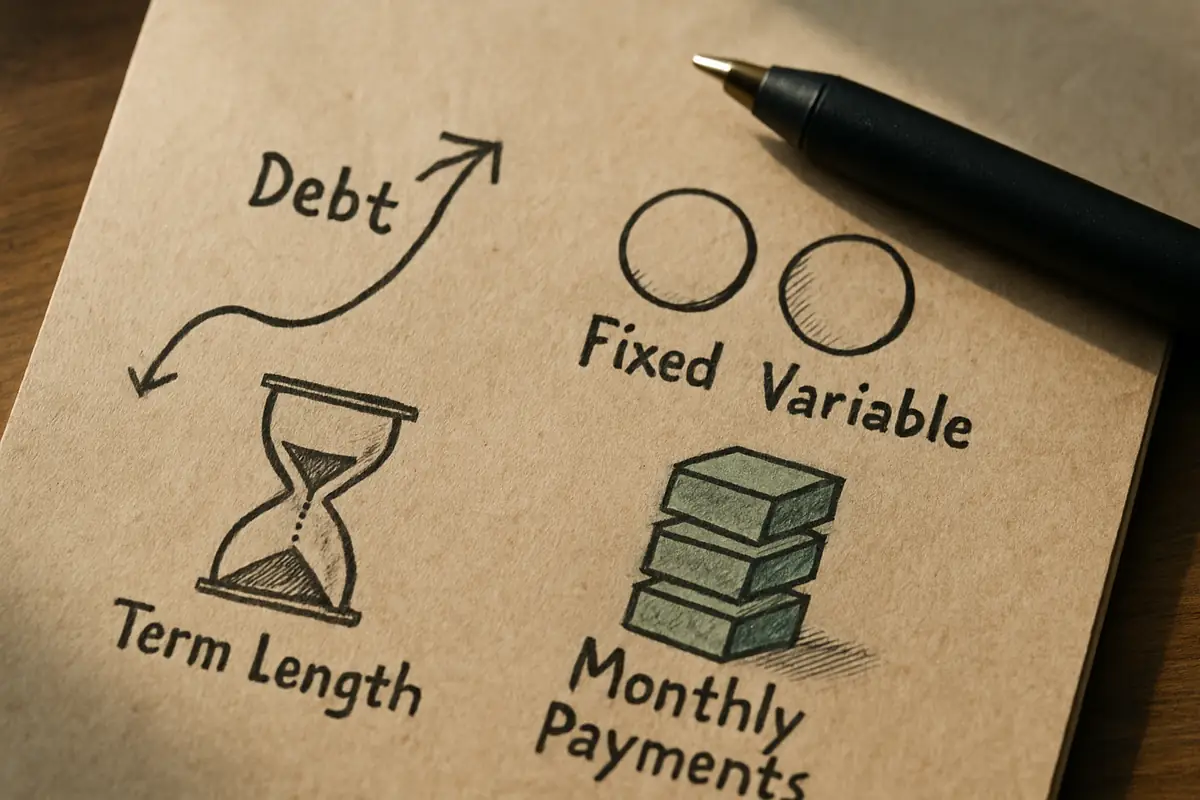
Before committing to early repayment, nail down exactly what kind of loan you hold. A fixed rate stays constant for the life of the loan; a variable rate resets periodically off a benchmark index plus a margin, which means today's cost is not tomorrow's. Penalty exposure differs by product: where mortgage prepayment penalties are permitted at all, they are commonly capped near 2% of the balance in the first two years and about 1% in the third, then prohibited afterward, while most unsecured loans carry none. A meaningful penalty can offset much of the interest a payoff would avoid, so this single contract clause often decides the question.
Interest mechanics deserve equal attention. Simple interest accrues only on outstanding principal, so each early dollar directly shrinks future charges; that describes most modern US consumer loans. Compound interest—interest charged on previously accrued interest—governs credit cards, where a daily periodic rate is applied to the balance every day and unpaid interest joins the principal. Compounding makes prepayment more powerful, not less, because you are shutting down interest-on-interest. Payment timing inside the billing cycle matters too: on daily-accrual loans, a payment posted on day 5 saves more than the same payment on day 25.
Opportunity Cost: Alternative Uses for Extra Funds
Every extra dollar sent to a lender is a dollar not deployed elsewhere, and the alternatives currently pay real money. High-yield savings accounts offer 3.5–4.5% APY while big-bank checking pays under 0.5%; CDs and T-bills sit at 4–5%; the 10-year Treasury yields 4–4.5%. Above all of these stands the employer 401(k) match, typically 50–100% of the first 3–6% of pay—an instant 50–100% return that no loan prepayment can rival. A practical hierarchy: capture the match first, then attack debt above roughly 8%, invest instead of prepaying debt below roughly 5%, and treat the zone between as a judgment call.
Liquidity is the other side of the ledger. Cash in savings can cover a furnace failure tomorrow; equity trapped in a paid-down loan cannot be retrieved without new borrowing, often at worse terms and with fresh origination fees of 1–8%. A balanced plan weighs your income stability, your reserve level, and your timeline before concluding that debt reduction beats every alternative use of the same funds.
Psychological Benefits Versus Financial Reality
The behavioral dimension is real and measurable in how people actually pay. The debt-avalanche method—highest APR first—minimizes total interest, while the debt-snowball—smallest balance first—produces quick, visible wins that keep people paying. On paper the avalanche always wins; in practice, a plan you abandon saves nothing, which is why many households knowingly accept a slightly costlier order for the motivation. Being debt-free also carries a real peace-of-mind dividend.
Emotional satisfaction still should not cannibalize protection. Skipping disability coverage, pausing retirement contributions, or running reserves to zero in pursuit of a payoff date trades durable security for a milestone. When the trade-offs feel murky, a fee-only advisor—paid a flat $150–$400 an hour or around 1% of assets annually rather than commissions—can pressure-test the plan without a sales incentive attached.
Impact on Credit Scores and Future Borrowing
Credit scores run on a 300–850 scale, and the major models weight payment history at about 35%, amounts owed around 30%, length of history near 15%, and credit mix and new credit roughly 10% each. Paying an installment loan early keeps the payment-history record spotless and cuts total debt, both positives, and the account continues to appear on your reports for up to 10 years after closure.
The wrinkle is that closing an installment account can thin your active credit mix, occasionally producing a temporary dip of a handful of points—usually 5 to 20, and short-lived. Revolving accounts follow different logic: keep paid-off credit cards open, because their limits hold your utilization ratio (balances divided by total limits) down, and staying below 30% utilization—ideally under 10%—supports the score. If a mortgage or auto application is weeks away, sequence the payoff so any transient dip lands after the lender pulls your file.
Tax Implications Related to Early Repayment
Mortgage interest on a primary residence is deductible on up to $750,000 of acquisition debt for loans originated in recent years—but only for households that itemize. With the standard deduction near $30,000 for joint filers, most taxpayers no longer itemize, which means the celebrated mortgage-interest deduction saves them nothing and should not deter a payoff. For an itemizer in the 24% bracket, a 6.5% mortgage costs closer to an effective 4.9%, which genuinely narrows the gap against 4–4.5% safe yields.
Student loan interest is deductible up to $2,500 a year without itemizing, though the break phases out at higher incomes; early payoff simply ends that deduction sooner. The sums involved are modest—a few hundred dollars of tax saved per year at most—so tax effects should refine the decision, not drive it. Compare the after-tax rate on the debt against the after-tax yield on the alternative and let that settle the timing.
When Early Repayment Makes Strategic Sense
Some situations remove the ambiguity. Debt priced at 18–30%—typical card APRs—or at triple-digit payday rates should be attacked as fast as cash flow allows, because no reliable investment clears those hurdles. Prepayment also makes sense ahead of a major application: mortgage underwriters generally want total debt payments below 43% of gross income, and preferably under 36%, so retiring a $400 monthly obligation months before applying can move you from decline to approval or into a cheaper pricing tier.
Life-stage timing matters as well. Households expecting a squeeze—a new baby, a business launch, a planned move to one income—benefit from clearing required payments before the squeeze arrives. And borrowers within roughly five years of retirement often prioritize entering it debt-free: on a fixed income built from Social Security and withdrawals, eliminating a payment is equivalent to buying guaranteed income.
Practical Tips for Managing Early Repayments Wisely
Execute deliberately. Confirm every fee with the lender in writing, keep your three-to-six-month reserve intact, and fit extra payments inside a budget framework—the 50/30/20 rule, which routes 50% of after-tax income to needs, 30% to wants, and 20% to savings and debt beyond minimums, is a workable default. Favor steady incremental prepayments over one dramatic lump sum: $150 extra each month, always designated principal-only, lowers the balance relentlessly while preserving the option to pause if income wobbles.
On mortgages, a biweekly schedule—half the payment every two weeks—produces 13 full payments a year instead of 12 and can trim roughly four to six years and tens of thousands of dollars in interest from a 30-year loan. Track the falling balance monthly; visible progress sustains the habit. Then revisit the whole plan annually, because a rate cut, a raise, or a 4.5% savings yield turning into 2% can change whether prepayment is still the best use of your next dollar.
References
- https://www.consumerfinance.gov/consumer-tools/
- https://www.fdic.gov/consumer-resource-center/loans
- https://www.consumerfinance.gov/consumer-tools/student-loans/
- https://studentaid.gov/manage-loans/repayment/plans
- https://www.consumerfinance.gov/ask-cfpb/what-is-the-difference-between-a-fixed-rate-and-adjustable-rate-mortgage-arm-loan-en-100/
- https://www.consumerfinance.gov/consumer-tools/auto-loans/