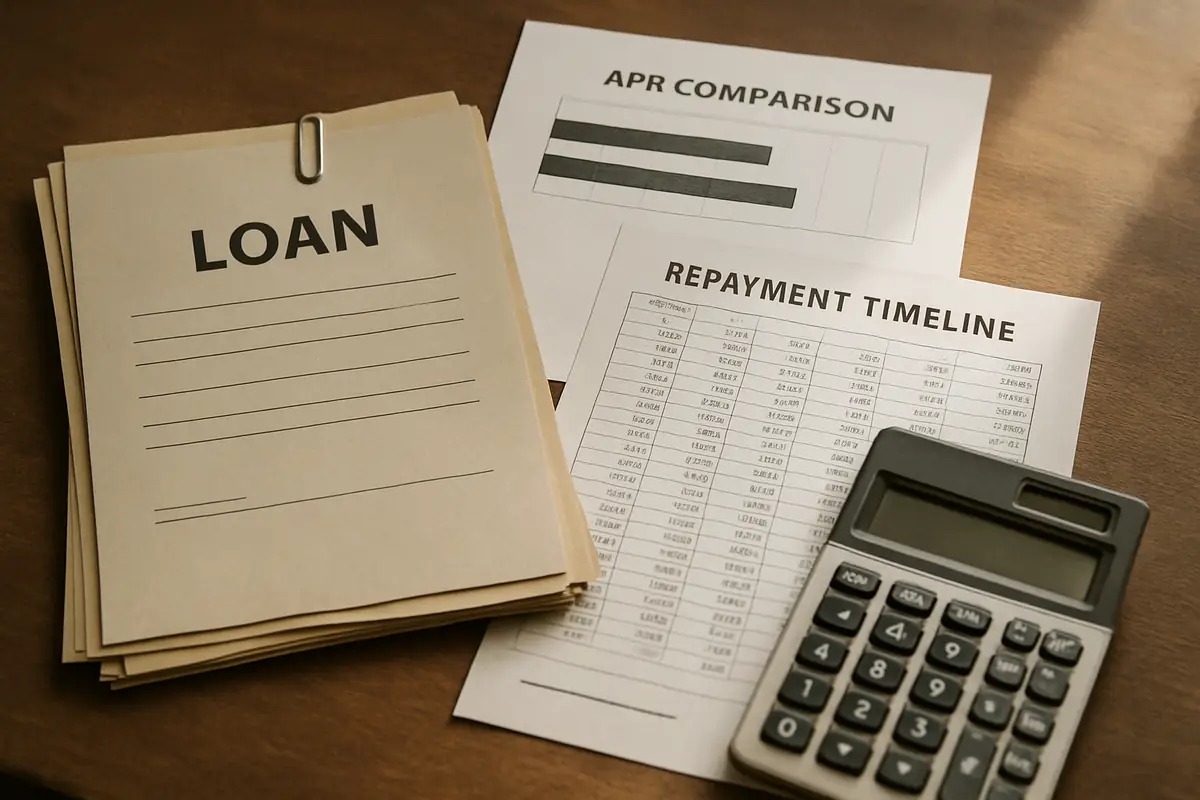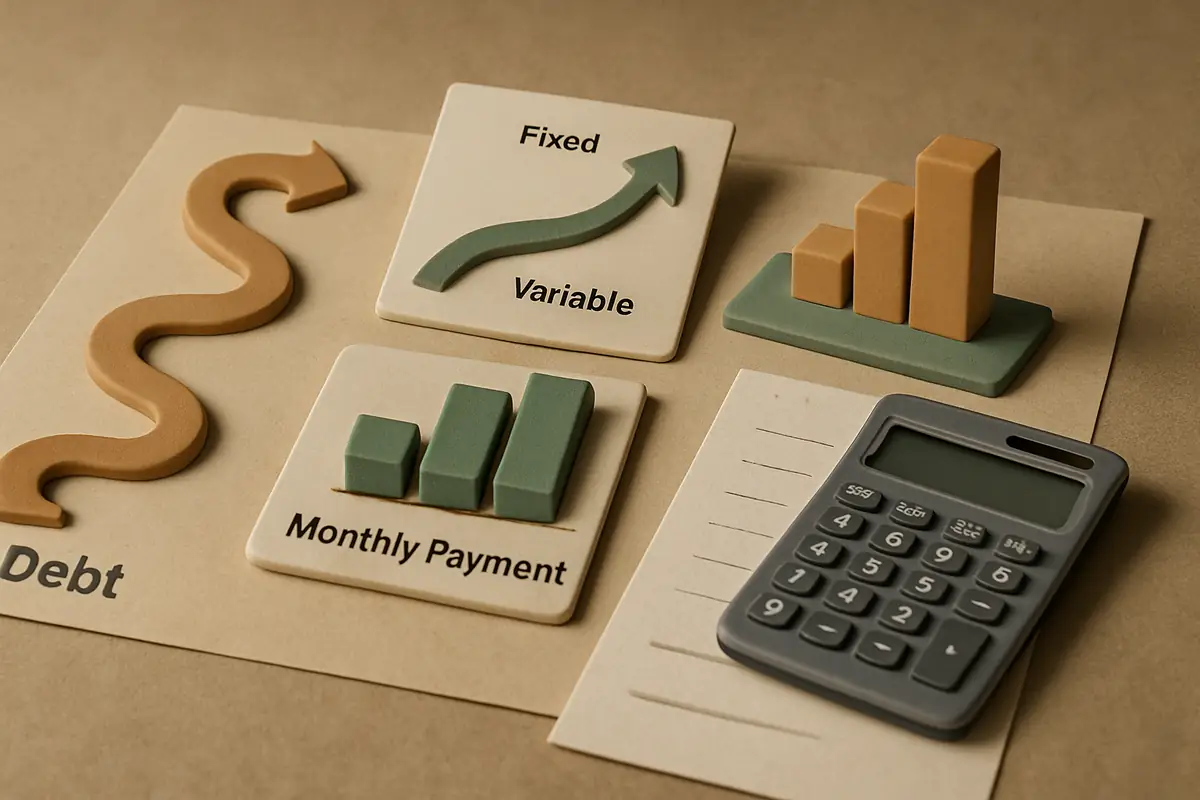
A prospective borrower seeking a $15,000 personal loan from different lenders faces advertised interest rates from 6% to 12% APR alongside varying fees and contract terms. Which offer carries the least long-term financial risk once all factors are considered? This article examines how to decode lender offers beyond headline rates, focusing on APR, fees, term length, collateral demands, repayment penalties, and refinancing pressures. It lays out a practical checklist that borrowers can use to compare lenders critically and avoid common costly mistakes.
Understanding the True Cost of Borrowing: Beyond the Advertised APR
Annual Percentage Rate (APR) represents the yearly cost of borrowing expressed as a percentage of the loan amount. It incorporates the interest rate plus mandatory fees such as origination or document fees over the life of the loan. However, many lenders advertise nominal interest rates without adequately disclosing additional fees or compounding effects. For example, a lender might offer 8% interest with a $300 origination fee on a $10,000 loan paid over two years. While the nominal rate seems low, adding fees increases the effective APR substantially—sometimes pushing it towards 10% or more. Borrowers should calculate or request an APR figure that includes all expected costs to see an apples-to-apples comparison.
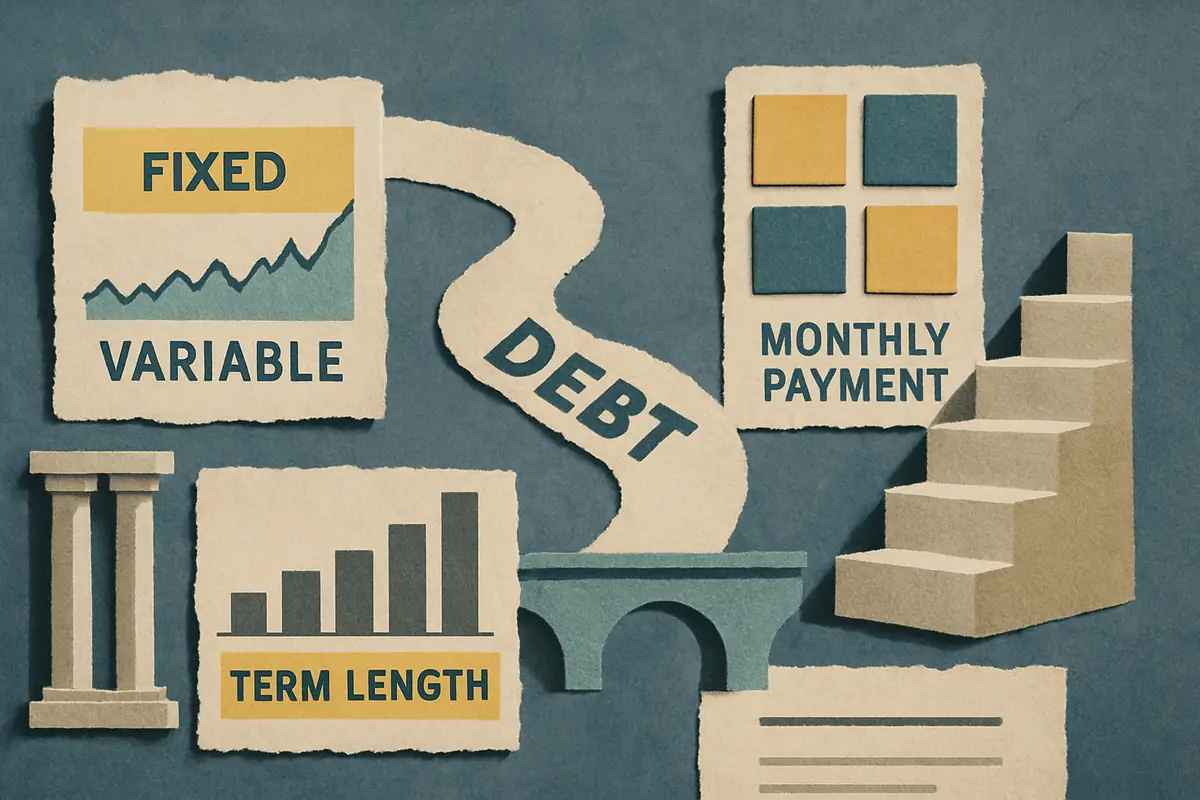
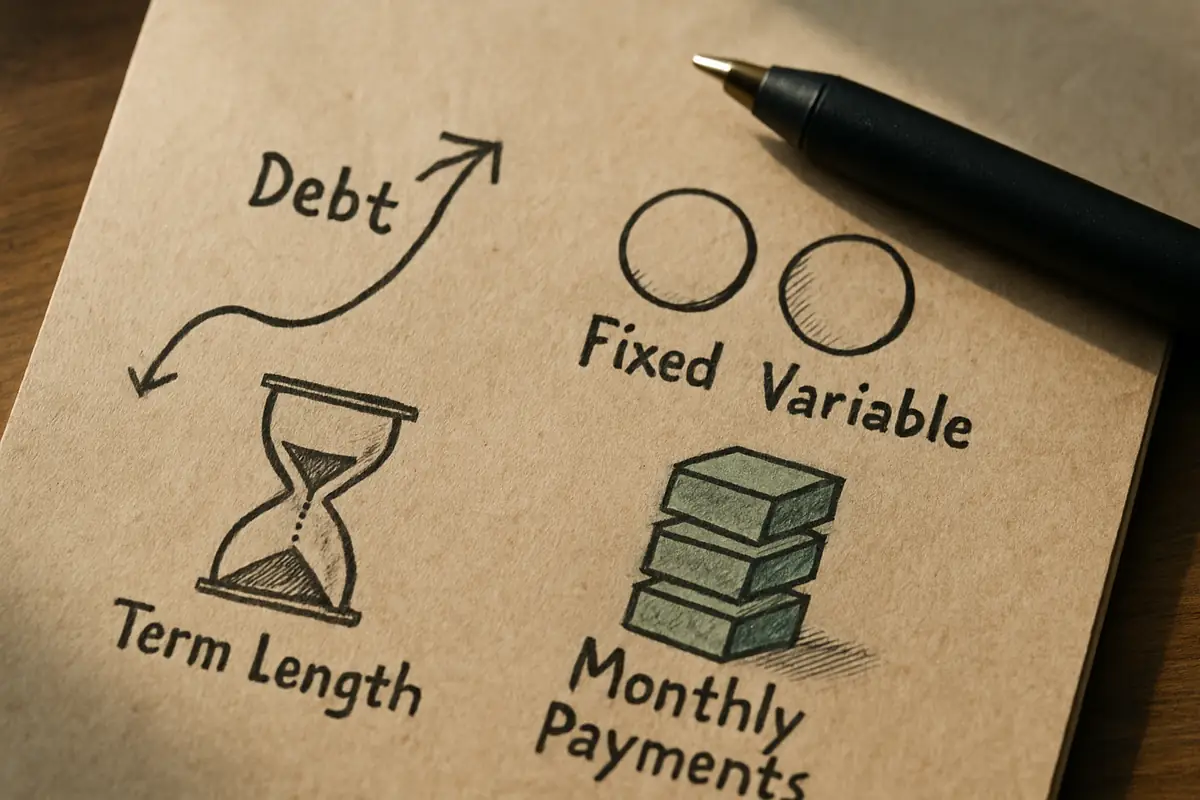
Term length also affects total cost. Longer terms reduce monthly payments but increase total interest paid. Shorter terms raise payments but lower overall interest expense. Choosing the lowest monthly payment option without assessing total interest and fees can lead to higher long-term costs and extended repayment pressure.
How this can look in practice
Consider two loans: Loan A is $15,000 at 7% APR for three years with no origination fee. Loan B is $15,000 at 6% nominal interest but with a $600 origination fee for four years. Monthly payments on Loan A are approximately $463; Loan B’s are $359. On the surface, Loan B looks cheaper per month and in interest rate, but total cost including fees over four years (about $17,900) exceeds Loan A's total payment (about $16,700). This illustrates how monthly payment focus may mislead about total cost.
| Factor | Explanation | Impact on Borrower |
|---|---|---|
| APR | Annual percentage rate including interest plus mandatory fees | Higher APR means more total borrowing cost |
| Interest Rate | Nominal yearly interest charged on principal | Lower rate reduces accrued interest but may hide fees |
| Fees | One-time or recurring charges such as origination or prepayment penalties | Fees increase effective cost beyond stated rate |
| Term Length | Loan duration until full repayment | Longer terms raise total interest paid despite lower monthly payment |
Collateral Requirements: Security That Increases Risk
Loans secured by collateral—such as home equity mortgages or auto loans—offer lenders protection if borrowers default. However, collateral increases risk for borrowers who may lose valuable assets like homes or vehicles if unable to meet repayment schedules. Collateralized loans typically have lower nominal rates because of reduced lender risk but introduce significant pressure to prioritize timely payments.
For example, an auto loan for $20,000 at 5% APR with vehicle as collateral requires consistent payments over five years. Defaulting could lead to repossession within months after missed payments. By contrast, unsecured personal loans may carry higher interest rates (often 8%–15%) but do not threaten asset seizure directly.
Where readers should be careful
Warning: Borrowers accepting secured loans must evaluate the likelihood of consistent cash flow under expected terms because missed payments can result in loss of essential assets. Lower rates do not justify exposing vital property unless repayment capacity is assured.
Penalty Clauses and Repayment Pressure: What Contracts Often Hide
"Prepayment penalties" impose fees if borrowers repay early—limiting flexibility to reduce debt faster or refinance at better rates. These penalties typically range from 1% to 5% of outstanding principal depending on lender policies and state laws. Including these penalties in the loan agreement can trap borrowers into longer financial commitments even when market conditions improve.
"Late payment fees" frequently add fixed charges ($25–$50 per incident) plus increased default interest rates up to 29% in some cases after a missed payment period exceeding 30 days. Such penalties quickly escalate outstanding balances and increase repayment pressure during temporary hardship.
"Refinancing Pressure" Risks Hidden in Contract Fine Print
"Refinancing pressure" describes situations where borrowers feel compelled to extend or replace existing loans due to unaffordable monthly payments or contract terms that escalate costs over time. Some contracts include clauses requiring automatic renewal of loans at increased rates or penalties for failure to refinance within set periods. These features can create a cycle of debt far more expensive than initially planned.
"Balloon payments" represent another risk factor — large lump-sum repayments due at loan maturity that exceed regular installment ability. Borrowers unable to pay may resort to high-cost refinancing or default entirely under severe financial strain.
How this can look in practice
"Balloon Payment Trap": A borrower takes out a $25,000 five-year business loan structured with small monthly payments covering only interest and part of principal but faces a balloon payment of $8,000 at term end. Without sufficient reserves or refinancing options free of punitive conditions, this borrower risks default or expensive new loans.
Where readers should be careful
"Caution: Carefully inspect contracts for clauses mandating refinancing or balloon payments; these can rapidly increase your debt burden beyond affordable levels."
"Comparing Offers Systematically: The Practical Borrower's Checklist"
"Checklist item one: Request full disclosure of APR including all mandatory fees rather than relying solely on nominal interest rates." Understanding true annual borrowing costs prevents surprises during repayment.
Checklist item four: Confirm whether collateral is required; if yes, realistically assess your ability to maintain stable income since default risks asset loss and adds considerable stress over the loan term.
Checklist item five: Carefully review refinancing clauses including provisions for automatic rollovers or balloon payments that might create debt cycles harder to escape when circumstances change.
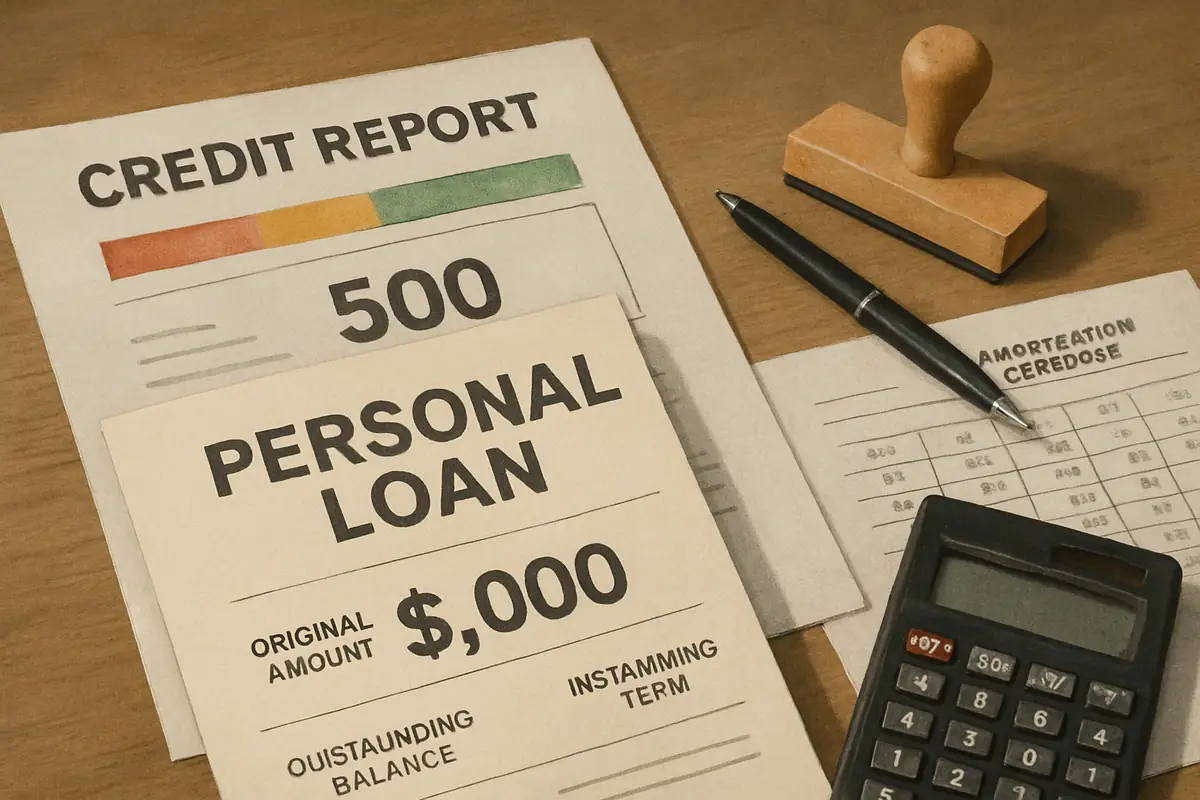
Checklist item six: Ask lenders for full amortization schedules showing how each payment breaks down between principal and interest over time; this helps understand true payoff timeline and cumulative costs.
| Comparison Factor | What to Check | Potential Hidden Risks |
|---|---|---|
| APR calculation | Includes all mandatory fees beyond base rate | Excluding fees inflates affordability |
| Collateral requirement | Whether secured by property/vehicle | Risk of asset loss upon default |
| Prepayment penalties | Charges for paying off early | Limits flexibility & increases total cost |
| Late payment fees & default rates | Extra charges after missed deadlines | Rapid debt growth due to penalty rates |
| Refinancing clauses & balloon payments | Automatic renewals/large end sums | Debt cycle risks & unexpected obligations |
Worked Example: Calculating Total Cost With Fees and Term Differences
Suppose you borrow $12,000 from Lender X quoting a nominal interest rate of 9%, no prepayment penalty but charging a one-time $360 origination fee upfront; term is three years with fixed monthly installments.
Monthly payment calculation uses standard amortization formulas based on principal + nominal rate + term:
Monthly Interest Rate = 9% / 12 = 0.75%. Number of payments = 36 months.
Monthly payment = P * r * (1+r)^n / ((1+r)^n -1), where P = principal ($12,000), r= monthly rate decimal (0.0075), n= number months (36).
Calculating numerator: 12000 * 0.0075 * (1+0.0075)^36 ≈ 12000 *0.0075 *1.308 ≈ 118.
Denominator: (1+0.0075)^36 -1 =1.308 -1 =0.308.
Monthly payment ≈118 /0.308 ≈383 dollars/month.
Total scheduled payments = 383*36=13,788 dollars.
Add origination fee ($360) upfront; actual cash outflow becomes $12,360 but borrower's obligation remains fixed monthly amount.
Effective APR considering fee rises above nominal rate; estimated around 10%-11%, demonstrating how fees elevate real borrowing cost despite advertised nominal rate.
Frequently Asked Questions From Borrowers Comparing Lenders
Can I rely solely on advertised interest rates?
No; advertised rates often exclude mandatory fees which raise effective APR significantly.
Are secured loans always cheaper?
They usually have lower nominal rates but carry added risks of losing collateral if you default.
What happens if I miss a payment?
You may face late fees plus increased default rates which escalate debt quickly; timely payment is critical.
How do prepayment penalties affect my flexibility?
They discourage early payoff even if financially advantageous and can increase total borrowing costs.
Final Takeaway: The Remaining Trade-Off When Comparing Lenders
Understanding Loan Terms Beyond Interest Rates
While comparing interest rates is often the initial focus for borrowers, it's essential to delve deeper into the specific terms and conditions of each loan offer. Factors such as repayment schedules, prepayment penalties, and variable versus fixed rates can significantly affect the total cost of borrowing. For instance, a loan with a slightly higher interest rate but no prepayment penalties could be more advantageous for someone planning to pay off the loan early. Moreover, understanding how interest is calculated—whether on a declining balance or flat rate basis—can also influence your decision. Evaluating these nuances helps prevent unexpected expenses and ensures you select a loan aligned with your financial goals.
Another critical aspect is the loan tenure and its flexibility. Some lenders offer options to extend or shorten the repayment period without steep penalties, which can provide valuable breathing room in case of fluctuating income or unexpected expenses. It's also important to assess whether the loan terms allow for payment holidays or restructuring during financial hardship. Borrowers should carefully review these provisions and clarify any uncertainties with their lender before committing. By doing so, you minimize risks associated with rigid contract terms that might otherwise lead to default or additional charges.
To illustrate, consider two hypothetical loans: Loan A offers a 5-year term with fixed repayments and no prepayment penalty, while Loan B provides a 7-year term at a lower interest rate but imposes significant fees for early repayment. If you anticipate an income increase in the near future allowing quicker repayment, Loan A might save you money despite its higher rate. This example highlights how a thorough examination of loan conditions beyond headline rates supports smarter borrowing decisions tailored to your personal circumstances.
Evaluating Lender Reputation and Customer Service
Beyond numerical comparisons, assessing the reputation of potential lenders is crucial for a positive borrowing experience. Reliable customer service can ease communication challenges, especially during complex processes like loan restructuring or dispute resolution. Reading customer reviews, seeking recommendations from trusted sources, and checking regulatory body records can provide insights into lender conduct and responsiveness. A lender who promptly answers inquiries and transparently explains loan features reduces stress and builds trust throughout the borrowing timeline.
Additionally, consider how accessible lender support is across different channels such as phone, email, or online chat. In times of financial strain or uncertainty, easy access to knowledgeable representatives can make a significant difference in managing repayments effectively. Some lenders also offer educational resources or financial counseling services which may add value if you're new to borrowing or want to improve money management skills. Prioritizing lenders with strong reputations and supportive services contributes not only to securing favorable loan terms but also maintaining long-term financial health.
Be cautious about lenders that impose unclear fees or use aggressive tactics to encourage quick commitments without full disclosure. Transparent communication about all charges including origination fees, late payment penalties, and administrative costs is fundamental. Borrowers should request detailed fee schedules upfront and confirm these in writing before signing agreements. Such diligence helps avoid surprises that could inflate borrowing costs unexpectedly.
Incorporating Credit Score Impact Into Your Comparison
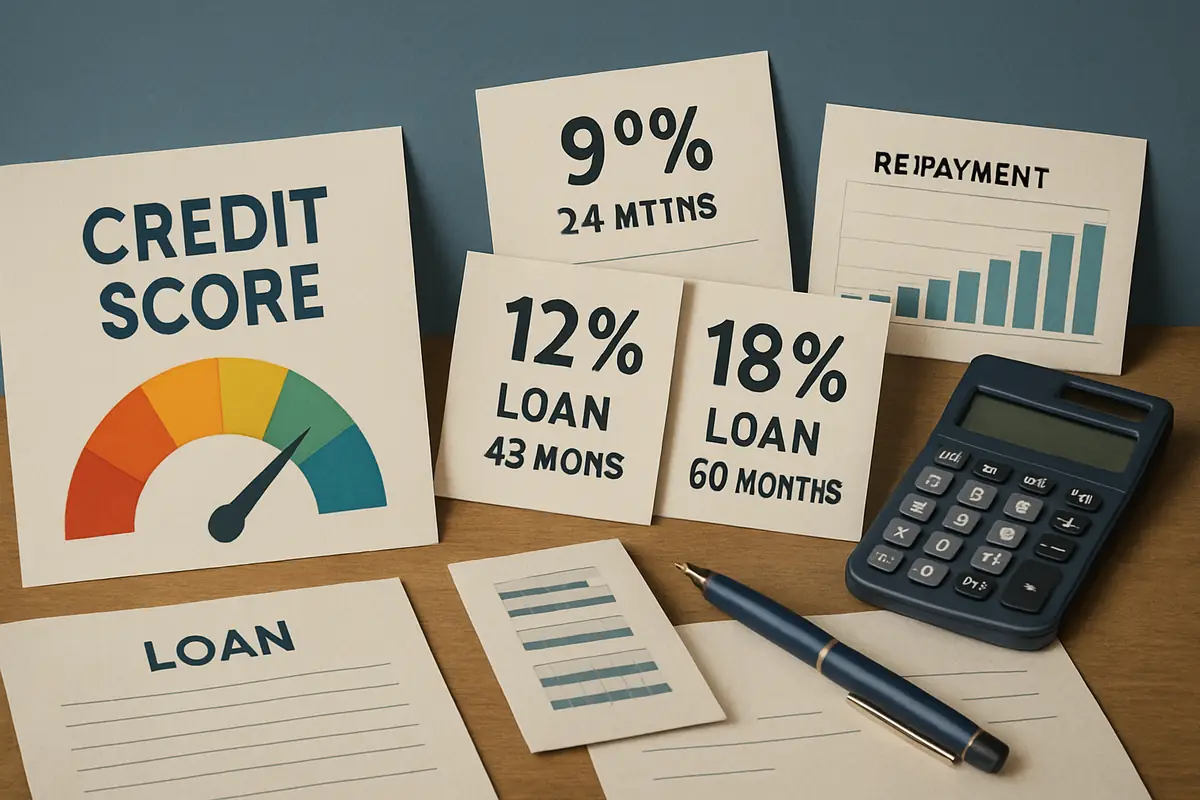
Your credit score plays an influential role when comparing loans because it affects both the interest rates offered and approval likelihood. Different lenders have varying criteria for creditworthiness; some may be more lenient while others impose strict requirements resulting in higher rates or outright denial for those with lower scores. Understanding how each lender evaluates credit reports allows you to target applications where you stand a better chance of approval without multiple hard inquiries that could temporarily reduce your score.
Moreover, some loans report monthly payments to credit bureaus consistently, potentially helping you build credit if payments are made on time. Others might not report this data regularly or at all, which means they won't contribute positively toward improving your credit history despite responsible repayment behavior. Therefore, when selecting between loans with similar rates but different reporting practices, consider which option supports your longer-term goal of enhancing your credit profile.
For borrowers with less than ideal credit scores, exploring options such as secured loans backed by collateral or co-signed loans might unlock better terms than standard unsecured personal loans. However, these alternatives carry additional risks that must be fully understood before proceeding—for example, losing pledged assets in case of default or exposing co-signers to liability—underscoring the importance of weighing benefits against potential drawbacks carefully.
Analyzing Total Cost Through Annual Percentage Rate (APR)
"Interest rate" alone doesn't reveal the full picture of what you'll pay over time; instead look at the Annual Percentage Rate (APR) which includes interest plus all fees expressed as an annualized figure. This comprehensive metric enables apples-to-apples comparisons between different loan offers regardless of fee structures or compounding methods used by lenders. For example, two loans might advertise similar nominal interest rates but vary significantly in APR due to differing origination fees or insurance premiums embedded within their cost structure.
"Calculating APR manually can be complex since it incorporates timing of payments and fee amortization; however many lender disclosures provide this figure upfront given regulatory requirements in most jurisdictions. Always ask for APR if it's not readily available when reviewing offers since relying on interest rate alone often underestimates true borrowing costs leading to costly mistakes." Additionally consider scenarios where fees are refundable under certain conditions which could modify effective APR when factoring expected outcomes rather than worst case assumptions.
Practical Tips for Organizing Your Loan Comparison
"By systematically organizing information this way borrowers gain clarity enabling confident decision-making instead of relying on incomplete impressions gathered from ads or initial conversations alone." Such preparation also streamlines discussions with financial advisors if you seek professional guidance before committing resources." Ultimately investing time upfront into thorough comparison not only safeguards finances but also fosters empowerment through informed choices."
Understanding Loan Terms and Conditions
When comparing lenders, it’s crucial to meticulously analyze the terms and conditions associated with each loan offer. Beyond just the interest rate, borrowers should pay close attention to the repayment schedule, prepayment penalties, late fees, and any clauses that might alter the loan’s cost over time. For example, some lenders may offer a low introductory interest rate that spikes after a few months, which could significantly increase your monthly payments. Understanding these nuances upfront can prevent unpleasant surprises and help you select a lender whose terms align with your financial capabilities and goals.
Additionally, look for flexibility in payment options. Some lenders allow bi-weekly payments or offer the possibility to skip a payment during financial hardship without incurring penalties. Others might be strict about due dates or charge hefty fees for modifications. Evaluating these conditions within your personal financial context is vital because even small differences can have long-term impacts on your loan affordability and stress levels.
Be mindful of the fine print regarding collateral requirements if applicable. Secured loans involve pledging assets like a car or home, so understanding what happens in case of default is essential. Some lenders have stricter repossession policies than others. Therefore, reading all documentation carefully and asking clarifying questions before signing can save you from costly misunderstandings later on.
Evaluating Lender Reputation and Customer Service
While financial metrics provide objective data for comparison, the qualitative aspects of dealing with a lender are equally important. Researching lender reputation through reviews, testimonials, and ratings from trusted consumer protection agencies gives insight into how they treat borrowers beyond just numbers. A lender known for transparent communication and quick problem resolution can reduce stress throughout your loan term.
Customer service responsiveness is especially critical when unexpected issues arise—such as payment difficulties or questions about account status. Imagine facing an emergency and needing to renegotiate payment terms; an empathetic lender who offers personalized support may provide more flexible solutions than one that strictly enforces policies without consideration.
Consider reaching out directly to prospective lenders before applying to gauge their professionalism and willingness to answer queries fully. This interaction itself can serve as a practical test of customer experience quality. Remember that borrowing isn’t just a transaction—it’s an ongoing relationship where trust and clarity matter immensely.
Factoring in Total Loan Costs Beyond Interest Rates
A common pitfall in lender comparison is focusing solely on interest rates while overlooking other costs embedded in the loan structure. Origination fees, processing fees, insurance requirements, and mandatory account maintenance charges all add to the total expense you will bear during repayment. For instance, a loan with a slightly higher interest rate but zero origination fees could end up cheaper overall than one with a low rate but substantial upfront costs.
Moreover, insurance products tied to loans—like credit life or payment protection insurance—might be optional or required depending on the lender. These add-ons increase monthly obligations but might also provide peace of mind in case of unforeseen events such as disability or job loss. Carefully assess whether such products are necessary for your situation or if opting out makes more financial sense.
To get an accurate picture of total loan costs, request an itemized breakdown of all charges from each lender and calculate the effective annual percentage rate (APR). The APR incorporates most fees and offers a standardized way to compare different loans comprehensively rather than focusing narrowly on base rates alone.
Considering Loan Term Lengths and Their Impact
Loan term length plays a pivotal role not only in determining monthly payment amounts but also influencing the total interest paid over the life of the loan. Longer terms generally lower monthly payments by spreading principal over many months but result in paying more interest overall due to extended accrual periods. Conversely, shorter terms increase monthly installments but reduce total interest expense significantly.
When deciding between different lenders offering various term lengths, think about your current income stability and future earnings prospects. If you anticipate increased income soon or want to minimize debt duration aggressively, opting for shorter terms might be preferable despite higher monthly commitments. Alternatively, if cash flow tightness requires smaller payments now, longer terms could ease immediate financial pressure while ensuring manageable repayments.
Also consider potential life changes within your loan period—such as job changes, family expansions, or other expenses—that might affect your ability to maintain consistent payments. Balancing term length choices with these personal scenarios helps create realistic repayment plans tailored to evolving circumstances rather than fixed rigid schedules imposed by lenders.
Practical tip: Always simulate amortization schedules provided by lenders to visualize principal versus interest components over time.
Leveraging Comparative Tools and Resources
In today’s digital age, numerous online platforms enable side-by-side comparisons of loan offers from multiple lenders based on customized criteria such as loan amount, term length, credit score requirements, and APRs. Utilizing these tools can streamline your decision-making process by highlighting differences in cost structures and lending policies transparently.
However, it’s important not to rely solely on automated calculators or rankings without cross-verifying information directly from lender disclosures. Sometimes algorithms miss nuances like eligibility restrictions or hidden fees not captured adequately online. Cross-checking ensures you avoid surprises post-application.
Preparing Your Financial Profile Before Applying
Before approaching lenders with your checklist ready, invest time in organizing your financial documents comprehensively. This includes recent pay stubs, tax returns, credit reports, bank statements, and any evidence supporting your ability to repay loans responsibly. Being prepared not only expedites approval processes but also strengthens your bargaining position when negotiating terms.
Maintaining good credit health is equally essential; reviewing your credit report ahead allows you to dispute inaccuracies detrimental to your score potentially improving eligibility for better offers. Moreover, knowing your exact credit standing enables realistic expectations about interest rates accessible through various lenders.
In some cases where credit scores are less than ideal, consider strategies like securing co-signers or exploring government-backed loans designed for risk mitigation purposes before committing to high-interest private lending options.