Cashback credit cards are a popular tool for earning rewards on everyday purchases, but they come with real financial tradeoffs. For example, while a typical cashback card might offer 1% to 5% back on spending, interest charges and fees can quickly outpace these benefits if balances aren't paid in full. This article breaks down the main risks, mechanics, and practical strategies for using cashback cards so borrowers can make informed decisions and avoid common financial pitfalls.
Understanding the True Cost of Cashback Cards
Cashback cards promise a percentage of your spending returned as a reward, typically between 1% and 2% for general purchases, with some cards offering up to 5% in select categories. However, the cost of borrowing on these cards can easily exceed any earned rewards. Credit card annual percentage rates (APRs)—the yearly interest rate charged on carried balances—commonly fall between 18% and 30%. If you carry a $1,000 balance at a 24% APR, you could pay roughly $20 in interest each month, quickly erasing a $10 cashback reward from $1,000 in spending at 1%.
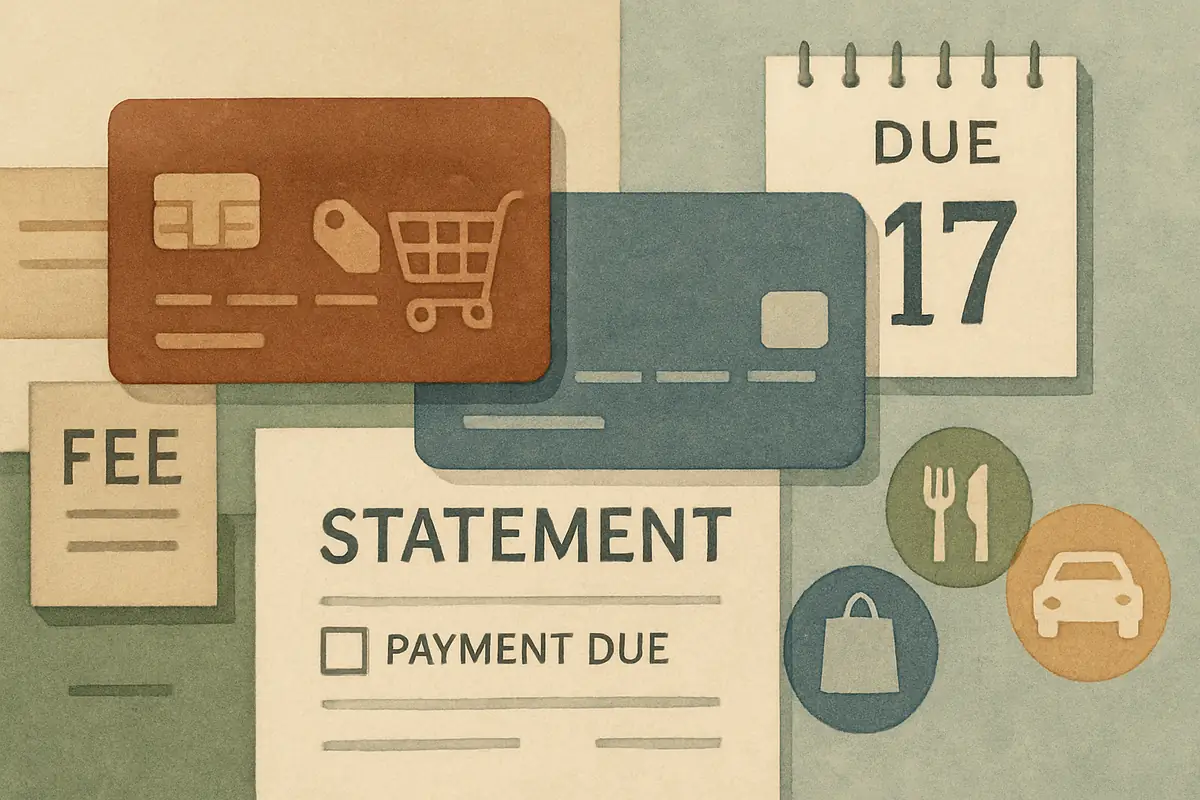
Annual fees can also reduce your net benefit. Some cards charge between $0 and $95 per year, while premium cards may ask for $100 or more. Other charges, like foreign transaction fees (often 2% to 3% of each purchase made abroad or online in foreign currency), and late payment fees (typically $25 to $40), further cut into your rewards. To maximize cashback, it’s essential to pay your full statement balance by the due date each month, as this avoids interest and penalty APRs—which can be 5 to 10 percentage points higher than your standard rate and apply after a single missed payment.
Key Fees That Can Undermine Cashback Benefits
Many borrowers overlook the fine print on cashback cards, which often details fees that can outweigh the rewards. Annual fees may be waived for the first year but can range from $25 to over $100 annually after the introductory period. Foreign transaction fees, usually 2% to 3%, can add significant cost for international purchases. Late payment fees typically fall between $25 and $40 for each missed due date, and repeated late payments may trigger penalty APRs above 29%.
For example, if you earn $60 in cashback over a year but pay a $95 annual fee, you end up losing $35. Always reassess your card’s value after any promotional period ends, and carefully review all fees before applying or renewing to ensure the rewards outweigh the costs.
Where readers should be careful
Warning: Carrying a monthly balance on a cashback card can result in interest charges that far exceed any rewards earned. To truly benefit from cashback, avoid carrying balances whenever possible.
How Reward Structures Affect Borrowers Differently
Cashback reward programs come in several structures. Some cards offer a flat-rate—usually 1.5% to 2%—on all purchases, while others provide higher rates (up to 5%) in specific categories such as groceries, gas, or dining. If your spending does not align with these categories, your effective cashback rate may be much lower than advertised.
Many cards impose quarterly or annual caps, often limiting bonus category rewards to $1,500 to $2,000 in spending per quarter. Once you exceed these caps, purchases may revert to a base rate of 1%. For example, if a card offers 5% cashback on groceries up to $1,500 per quarter, you can earn a maximum of $75 in that category before the rate drops. Understanding these limits ahead of time helps you avoid overestimating your potential rewards and prevents surprises at the end of the year.
Flat-rate cashback
Earn a consistent percentage—typically 1.5% to 2%—on every purchase, regardless of category.
Tiered categories
Higher cashback percentages (such as 3% to 5%) in select spending categories; lower rates elsewhere.
Rotating categories
Quarterly-changing bonus categories requiring activation; rewards apply only after opt-in, with caps often set at $1,500 per quarter.
Timing Payments to Avoid Interest and Maximize Rewards
Paying your statement balance in full every month is the most effective way to avoid interest charges and maximize rewards. The grace period—the time between your statement closing date and payment due date, typically 21 to 25 days—lets you pay for purchases interest-free. Missing a due date eliminates this grace period and triggers interest on both new and existing balances.
When rewards post can also affect redemption timing. Some issuers credit cashback only after the statement closes, meaning a purchase made just after the closing date won’t earn rewards until the next cycle. Planning larger purchases just after your statement closes can help you take advantage of the full grace period and stretch your reward-earning potential.
Worked Example: Suppose you spend $2,000 in a month on a card offering 2% cashback, earning $40 in rewards. If you pay your balance in full by the due date, you keep the entire $40. If you only pay the minimum and carry the $2,000 balance at a 24% APR, you accrue about $40 in interest for one month—wiping out all your cashback. If you pay late, a $35 fee could further increase your costs, resulting in a net loss.
Reward Chasing Can Lead to Costly Mistakes
Signing up for multiple cashback cards to maximize rewards across categories may seem attractive, but it increases complexity. Managing several due dates and balances raises the risk of missed payments, which can lead to penalty APRs—sometimes over 29%—and additional fees. Applying for too many cards in a short period can also temporarily lower your credit score, as each application results in a hard inquiry on your credit report.
Benefits of Strategic Cashback Card Use
- Earn passive returns of 1% to 5% on regular spending
- Access sign-up bonuses worth $100 to $300 for meeting initial spending requirements
- Build positive credit history with timely payments and low credit utilization (the percentage of available credit you use, ideally kept below 30%)
Potential pitfalls without careful management
- High interest costs if balances carry over at rates of 18% to 30% APR
- Fees may erase small reward gains, especially with annual fees of $95 or more
- Complexity increases risk of missed payments and negative credit impact
When Carrying a Balance Makes Cashback Cards Risky
The primary cost for borrowers who carry balances is interest. With APRs often between 18% and 30%, any reward—typically 1% to 5%—is quickly outweighed by borrowing costs. For instance, carrying a $2,000 balance for a year at 24% APR results in about $480 in interest, while 2% cashback on $2,000 of spending only yields $40.
Paying an annual fee on top of high interest compounds the problem. No-fee cards or debit cards, which do not accrue interest, may be better options if you are unable to pay in full each month. Consider whether the potential rewards justify the costs, especially if your repayment discipline is uncertain.
Simple Strategies Borrowers Can Use Right Now
Choose a card that matches your everyday spending habits—such as 3% cashback on groceries or 2% on gas—so you earn the most without altering your routine. Commit to paying your full statement balance each month to avoid interest. Set up automatic payments for at least the minimum due to prevent late fees, and use your card’s mobile app to monitor spending and rewards in real time.
Avoid making unplanned purchases just to earn rewards. Instead, focus on regular expenses and stick to a monthly budget. For example, if your typical monthly grocery bill is $500 and your card offers 3% cashback on groceries, you can expect $15 in rewards each month—without spending extra.
Where this helps
- Keeps borrowing costs manageable by avoiding interest
- Maximizes effective cashback returns, often $100 to $300 per year for disciplined users
- Improves credit score over time by maintaining low utilization and on-time payments
Watchpoints still include
- Annual fees may offset small-scale benefits if you spend less than $500 per month
- Reward caps limit upside potential, e.g., $75 per quarter in bonus categories
- Requires disciplined budgeting and regular tracking of due dates and spending
When To Consider No-Reward Alternatives
Borrowers who often carry balances or struggle to make monthly payments may be better off with no-fee credit cards that do not offer rewards, or debit cards linked to checking accounts. These options eliminate the risk of interest charges and late fees, though they do not provide cashback incentives.
Secured credit cards—requiring a refundable deposit as collateral—can help build credit safely for those with limited or poor credit history. While these cards rarely offer rewards, they often have lower fees and more manageable terms, making them suitable for rebuilding credit without added costs.
Where readers should be careful
If you’re unsure about your ability to pay in full each month, avoid high-reward cards with significant annual fees or high APRs, as costs can quickly outpace any earned benefits.
Checking Your Card’s Fine Print Before You Commit
Every cashback card comes with detailed terms that can significantly affect its value. The APR (annual percentage rate) for purchases may differ from the rate for cash advances, and penalty APRs can apply after missed payments. Annual fees can start at $0 but may rise to $100 or more after the first year. Foreign transaction fees, typically 2% to 3%, can add up quickly for international purchases.
Reward expiration policies and redemption thresholds also matter. Some cards require you to reach a minimum of $25 in rewards before redemption, or may expire unused rewards after 12 to 36 months. Others only allow cashback as statement credits, or offer higher value for gift card redemptions. Carefully read the terms to understand when and how you can use your rewards, and what restrictions may apply.
APR Terms
Understand the difference between regular purchase rates (often 18% to 25%) and penalty APRs (which can exceed 29%)
Annual Fee
Check when the annual fee is charged and how much it is—commonly $0 to $95 after the first year
Reward Caps & Expiry
Review annual or quarterly earning limits (e.g., $1,500 per quarter in bonus categories) and how long you have before rewards expire (often 12–36 months)
Final Checklist: Are You Ready To Benefit Without Overspending?
Understanding the Fine Print: Fees and Conditions to Watch
Cashback cards are widely marketed for their rewards, but the fine print can hide significant costs. Annual fees typically range from $0 to $95, and can offset rewards if you spend less than $8,000 to $10,000 per year on the card. Foreign transaction fees of 2% to 3% make some cards unsuitable for international use. Minimum spending requirements for sign-up bonuses or higher cashback tiers can push cardholders to spend $500 to $3,000 within a few months, potentially leading to unnecessary debt. Always review all fee and spending thresholds before applying.
Some cards impose expiration dates on earned rewards—often 12 to 36 months—or require you to redeem cashback in increments of $25 or more. Others may automatically convert rewards to gift cards instead of cash, reducing flexibility and value. Introductory cashback rates may drop after the first year, so check how ongoing rates compare to your typical spending. Understanding these details helps you avoid losing rewards or facing unexpected costs over time.
Balancing Cashback Benefits With Responsible Credit Use
One major challenge with cashback cards is avoiding overspending to chase rewards. The promise of earning back 1% to 5% can tempt cardholders to make extra purchases, but carrying a balance at 20% APR or higher will quickly erase any benefit. Responsible credit use means setting a personal spending cap—ideally based on your ability to pay in full each month—and using the card only for planned, necessary expenses such as $200 to $800 monthly on groceries or gas.
Budgeting apps and alerts can help you track spending and stay within your limits. Reviewing your monthly statements allows you to spot trends and adjust habits before debt accumulates. By focusing on regular, essential purchases and monitoring your balance, you can enjoy cashback rewards while minimizing financial risk.
Strategies to Maximize Cashback Without Incurring Extra Costs
Strategic card selection and disciplined use are key to maximizing cashback. Choose cards that offer the highest rates—such as 3% to 5%—in your top spending categories, and consider pairing cards only if you can track due dates and balances without confusion. For example, using one card for groceries and another for gas can boost your total rewards, but only if you consistently pay both in full and avoid late fees.
Introductory offers may provide $100 to $300 in bonus rewards for spending $500 to $3,000 within 90 days. Use these bonuses for planned expenses, not impulse buys. Automate payments to ensure you never miss a due date, and set up reminders for statement closing dates so you can plan purchases to maximize rewards. Avoid chasing every offer; focus on those that fit your natural spending patterns to prevent unnecessary debt.
Considering Alternative Reward Structures
Flat-rate rewards cards—offering 1.5% to 2% cashback on all purchases—simplify earning and reduce the need to track bonus categories or activate offers. This straightforward approach can be more effective for borrowers with consistent, broad spending patterns. Some issuers offer hybrid programs that combine cashback with flexible points redeemable for travel, merchandise, or statement credits, often with annual fee caps or expiration protections built in.
Evaluate whether a simple flat-rate or hybrid structure aligns better with your lifestyle and financial habits. Simplicity often reduces the risk of missed rewards or costly mistakes, especially for those who prefer not to track rotating categories or manage multiple cards.
The Role of Credit Scores in Cashback Card Effectiveness
Your credit score—a numerical representation of your creditworthiness, typically ranging from 300 to 850—directly influences your eligibility for premium cashback cards and the rewards you can access. Higher scores, often above 700, unlock cards with more generous rewards, lower fees, and additional benefits like extended warranties or purchase protection. Lower scores may limit you to cards with higher APRs and fewer rewards.
Maintaining a strong credit profile requires on-time payments, keeping your credit utilization ratio (the percentage of available credit used) below 30%, and monitoring your credit report for errors or fraud. Building a history of paying in full each month not only saves on interest but also positions you for future card upgrades and better loan terms in other areas, such as auto loans or mortgages.
Practical Tips: Avoiding Common Cashback Pitfalls
References
- https://www.consumerfinance.gov/consumer-tools/credit-cards/
- https://www.fdic.gov/consumer-resource-center/credit-cards
- https://www.consumerfinance.gov/consumer-tools/credit-reports-and-scores/
- https://consumer.ftc.gov/articles/what-know-about-identity-theft
- https://www.consumerfinance.gov/ask-cfpb/what-is-a-credit-score-en-315/