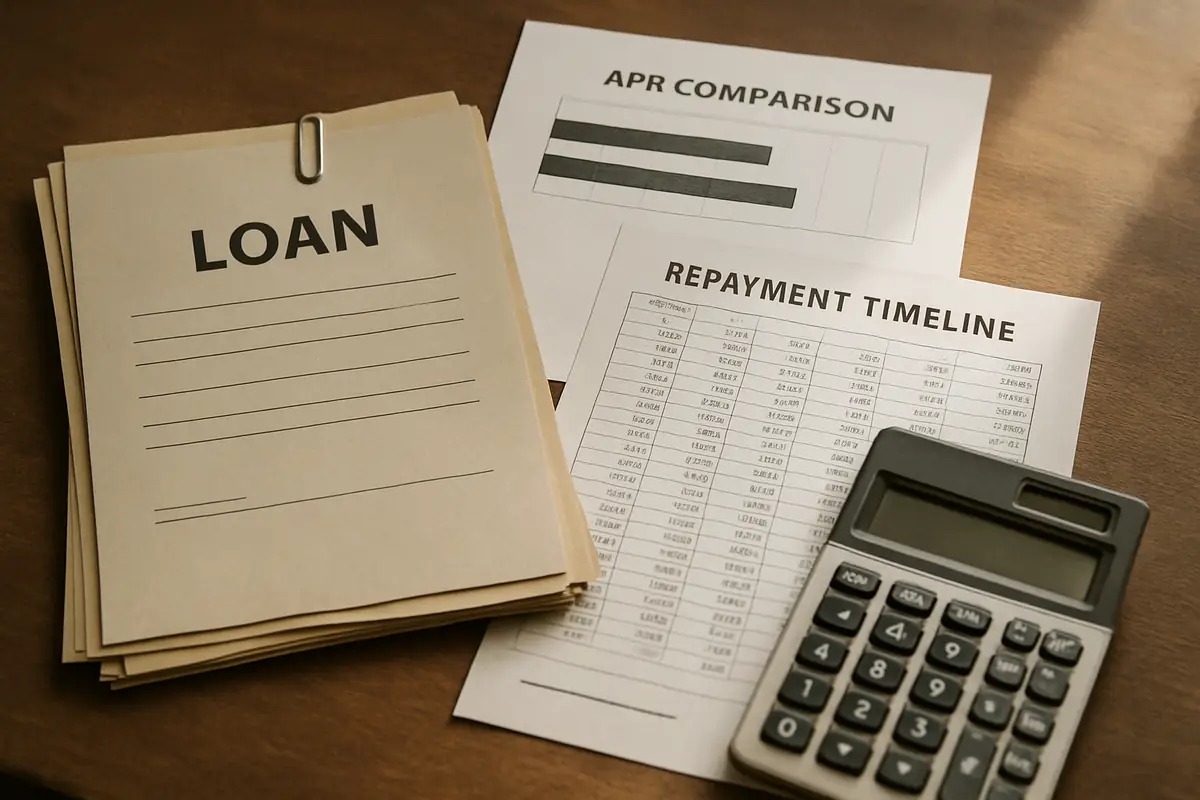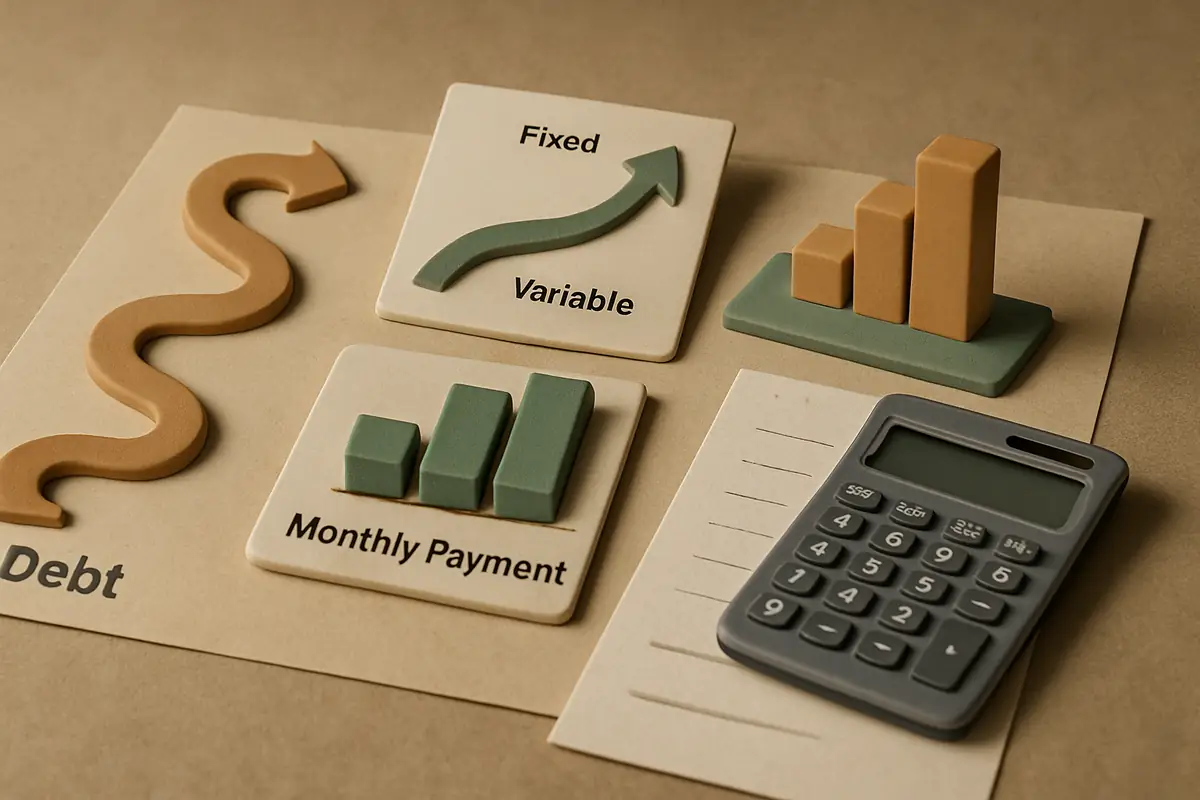
Anna, a single mother with three credit cards carrying balances from $2,500 to $4,200 each at APRs ranging from 22% to 28%, considers consolidating her debts into one loan. Her goal is simplifying payments and reducing monthly expense. However, the new loan comes with origination fees and a longer term. How will this trade-off play out financially and legally for Anna?
Understanding Loan Consolidation in Practical Terms
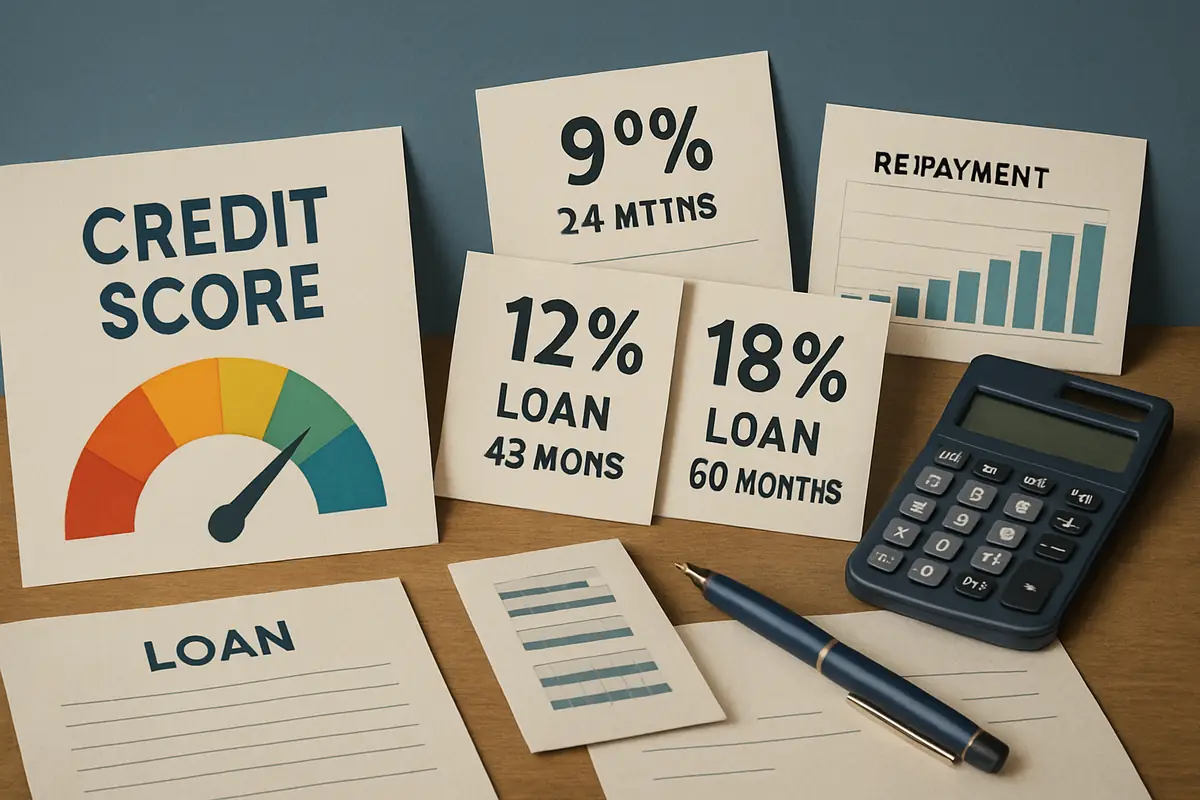
Loan consolidation means replacing multiple separate debts with a single loan. The new loan typically combines outstanding balances into one payment schedule. This process can involve refinancing through secured or unsecured loans, often with different interest rates, fees, and repayment terms than the original debts. The annual percentage rate (APR) — the true yearly cost of borrowing including fees — usually ranges between 8% and 24% in consolidation offers depending on borrower creditworthiness and loan type. Consolidation is not automatic debt forgiveness; it is a restructuring tool that changes payment mechanics but may add new costs or risks.
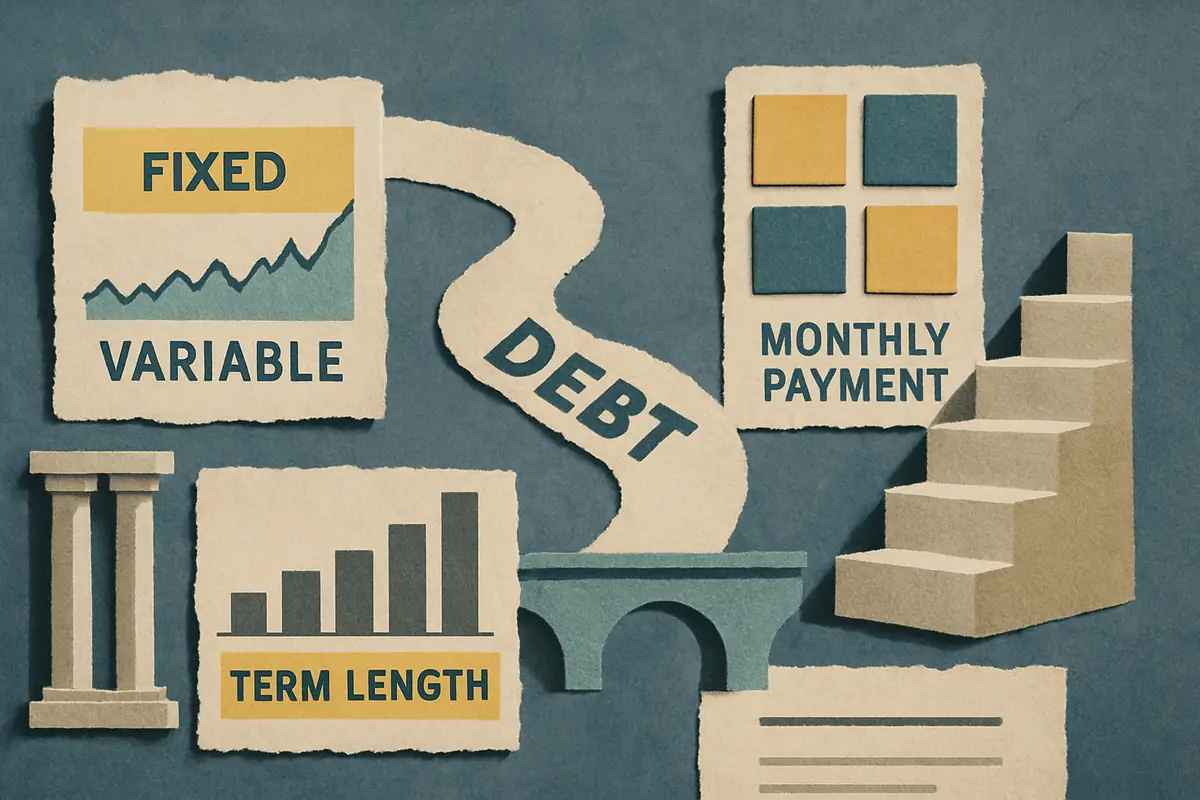
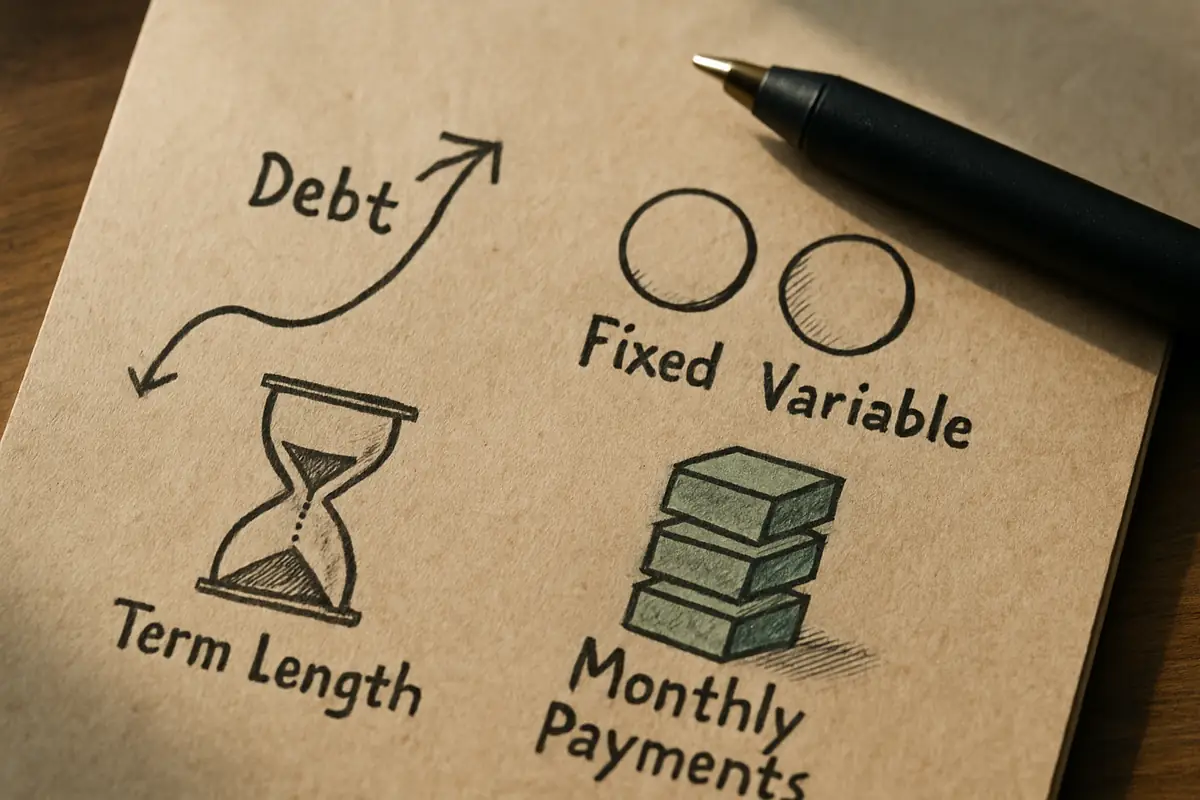
Key financial factors include the total principal consolidated, the APR applied to the new loan, any upfront fees such as origination charges commonly between 1% and 5% of the loan amount, and the term length which can extend from 12 months up to 60 months or longer. Extending term length lowers monthly payments but may increase total interest paid over time. Borrowers must also be alert to collateral requirements; some consolidation loans are secured against assets such as vehicles or homes, exposing borrowers to repossession risk if payments are missed.
How this can look in practice
Consider Mark, who has $15,000 in combined credit card debt at an average APR of 24%. He consolidates via a personal loan with a fixed APR of 14%, a 3% origination fee, and a 48-month term. While his monthly payments drop from roughly $600 to $400, he will pay an extra $1,200 in fees upfront plus about $2,000 more in interest due to the longer term compared to aggressively paying off credit cards in two years.
| Factor | What It Means | Typical Range | Risk for Borrower |
|---|---|---|---|
| APR | Annual cost including interest and fees | 8% to 24% | Misreading APR can underestimate total cost |
| Origination Fee | Upfront charge for processing loan | 1% to 5% of loan amount | Increases initial debt load |
| Term Length | Duration of repayment | 12 to 60+ months | Longer terms mean more total interest |
| Collateral Requirements | Assets securing loan | Vehicle, home or none | Risk of asset loss upon default |
| Monthly Payment | Amount due each month | $100s to $1000s depending on balance | Too low may extend debt burden |
Scenario Analysis: When Consolidation Simplifies But Adds Financial Pressure
Anna’s initial situation: Credit cards totaling $9,700 balance at variable APRs between 22% and 28%, minimum monthly payments aggregating roughly $350. She considers a consolidation loan for $10,000 at a fixed APR of 16%, with a six-month deferred payment option but a required origination fee of 4%. The loan term proposed is five years (60 months).
"The advertised monthly payment" for Anna's consolidation would be about $231 before fees. However, adding the fee ($400 upfront) effectively increases her principal to $10,400. Over five years at 16% APR compounded monthly, her actual monthly payment would be closer to $246 when accounting for the fee amortized over the term. This reduces monthly cash flow stress but lengthens repayment nearly double from typical credit card amortization schedules where minimum payments might clear balances in under three years if maintained above minimum.
Extending repayment terms often increases total interest paid despite lower monthly obligations. For Anna, if she continued paying just above minimums on credit cards averaging around 24% APR without consolidation, she might clear debt in about three years paying roughly $450 per month with no origination fee. This highlights the trade-off between immediate affordability versus long-term financial burden.
Contractual Considerations: Fees, Penalties, and Legal Obligations
"Loan agreements often include clauses that borrowers overlook but carry significant contract pressure," warns Foster. Common pitfalls include prepayment penalties—which range from none up to several months’ interest—reducing flexibility if borrowers pay off early; variable interest rates that cause monthly payments to rise unexpectedly; and collateral provisions that increase risk dramatically if default occurs.
"A borrower consolidating unsecured credit card debt into a secured auto title loan may reduce interest rates nominally but exchange unsecured risk for potential loss of a vehicle if payments fall behind," Foster explains. Transparency on collateral exposure is critical since repossession thresholds vary by lender and state law.
"Origination fees are another contractual cost embedded in many consolidation loans," Foster adds. "While advertised APR might appear competitive, factoring in fees increases effective borrowing costs significantly." For example, a $5,000 loan with a 3% origination fee adds $150 upfront plus amortized interest on this additional amount over time.
"Repayment Pressure": Psychological and Financial Impacts
While consolidation reduces payment count and sometimes monthly amount owed, it can introduce repayment pressure by locking borrowers into longer terms with steady obligations. Missing even one payment on consolidated loans—especially those secured by collateral—can trigger late fees typically ranging from $25 to $50 per occurrence plus accelerated principal demands.
Additionally, some borrowers experience "payment fatigue" when extended timelines delay debt freedom psychologically. Financial advisors note that seeing progress on principal reduction motivates sustained effort; longer amortization schedules diminish this effect as visible payoff slows.
For example, Jared consolidated $12,000 credit card debt into a three-year personal loan at 13% APR with no fees. His monthly payment increased slightly from previous credit card minimums but he valued faster payoff despite tighter cash flow demands. His decision reflects recognizing repayment pressure but prioritizing long-term savings.
Alternatives to Loan Consolidation: What Else Can Borrowers Consider?
Before committing to consolidation loans with potentially hidden costs or contract constraints, borrowers might explore alternatives such as negotiating directly with creditors for lower interest or hardship plans; prioritizing higher-interest debts through targeted payments; or seeking professional credit counseling services offering structured repayment plans without added fees.
Some households may consider balance transfer credit cards offering introductory zero-percent APR periods lasting typically from six up to eighteen months but should beware of balance transfer fees usually around 3% to 5%. These can reduce short-term interest costs if full paydown occurs before promotional expiration.
Negotiating Interest Rates
Contact lenders directly to request reduced rates or hardship programs.
Balance Transfers
Use promotional offers carefully considering transfer fees.
Credit Counseling
Nonprofit agencies can help organize manageable repayment schedules.
Borrower Checklist: Key Questions Before Consolidating Loans
Where readers should be careful
Ignoring contract details such as variable rates or collateral clauses can lead to unexpected financial strain or asset loss even after successfully consolidating multiple debts.
Timeline Analysis: How Costs Evolve in Consolidation Versus Original Debts
Returning to Anna’s Household Reality: Weighing Simplification Against Long-Term Cost
Anna faces concrete choices: keep juggling multiple high-rate cards paying over $350 monthly potentially clearing balances in about three years versus consolidating into a single lower-rate but longer-term loan that reduces payment below $250 yet extends debt life by two more years with added upfront fees. This simplification aids budgeting but accumulates more total interest near $3,000 additional versus aggressive payoff strategies.
The legal contract requires careful review—no prepayment penalties appear but missing payments triggers late charges starting at $30 plus potential credit score damage affecting future borrowing options. Anna must also evaluate whether she can sustain steady payments without lapses given her income volatility.
Understanding the Impact of Interest Rates in Loan Consolidation
One of the most critical factors to consider when consolidating loans is the interest rate applied to the new consolidated loan. While consolidation can simplify payments by merging multiple debts into a single loan, it doesn’t automatically guarantee a lower overall interest cost. In some cases, borrowers may find that their consolidated loan carries an interest rate that is higher than some of their original loans, especially if those were federal or subsidized loans with low rates. The key is to carefully compare the weighted average interest rate of all existing debts against the consolidation loan’s rate. Borrowers should also consider whether the new interest rate is fixed or variable, as variable rates may introduce future uncertainty in payment amounts. Evaluating these nuances helps ensure that consolidation does not inadvertently increase the long-term financial burden.
For example, a borrower consolidating credit card debts and personal loans might secure a lower fixed interest rate through a home equity loan or a personal consolidation loan offered by banks or credit unions. However, this option often requires good credit scores and collateral, which might not be feasible for everyone. Additionally, some lenders offer promotional rates that temporarily reduce monthly payments but may reset to higher levels after an introductory period. It’s essential to read the fine print and understand these terms fully before committing to consolidation, as the immediate savings might be outweighed by heightened costs later on.
Evaluating Loan Consolidation’s Effect on Credit Scores
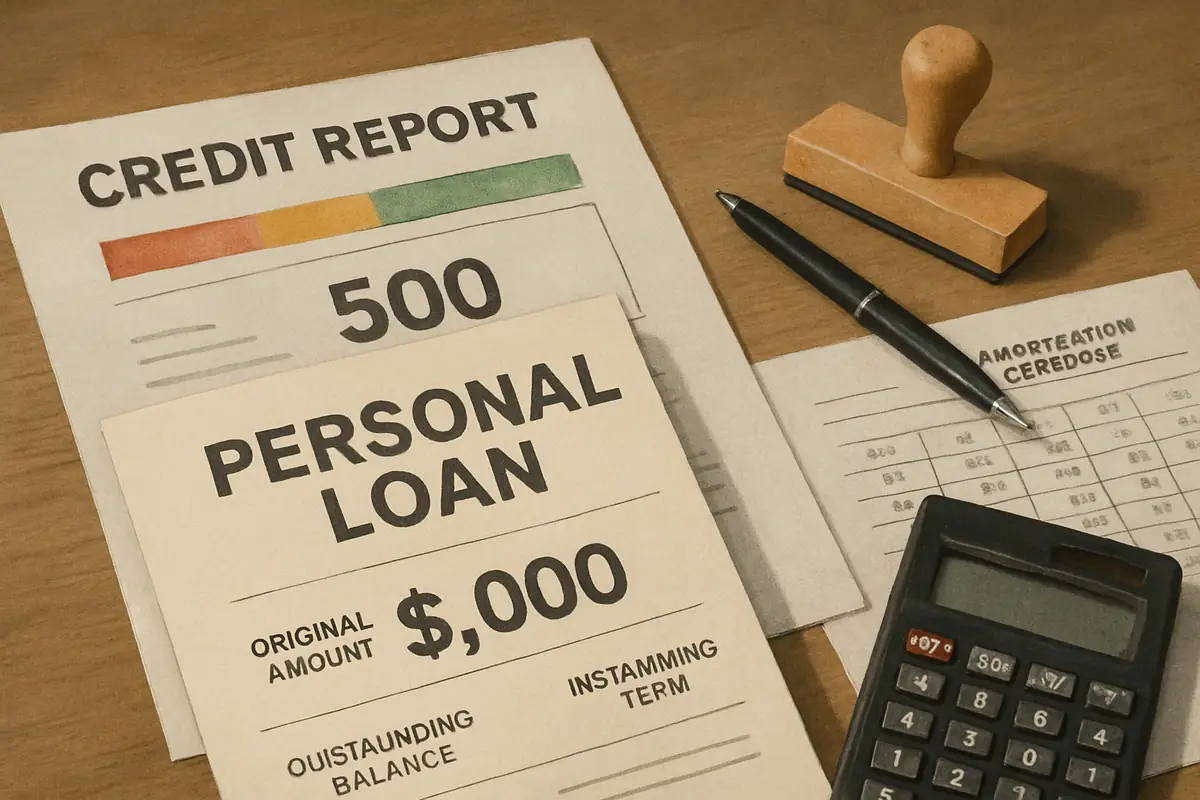
Loan consolidation can have varied effects on a borrower’s credit score depending on how it is managed and reported. Initially, applying for a consolidation loan results in a hard inquiry on your credit report, which can cause a slight dip in your score. However, over time, managing one consolidated loan responsibly can demonstrate improved debt management skills to credit bureaus. By reducing multiple monthly payments into one, borrowers are less likely to miss payments or default – both actions that negatively impact credit scores. Moreover, if consolidation leads to lower overall utilization ratios for revolving credit accounts like credit cards, it may positively influence your credit profile.
On the other hand, consolidating federal student loans into a private loan could result in loss of certain federal benefits such as income-driven repayment plans or deferment options. This shift might indirectly affect your financial stability and thus your ability to maintain timely payments, impacting your creditworthiness negatively. It’s important to factor in these qualitative elements alongside quantitative metrics when considering how consolidation will influence your credit score in both the short and long term.
The Role of Fees and Costs Associated with Loan Consolidation
While consolidating multiple debts can streamline finances and potentially reduce monthly payments, borrowers must remain vigilant about any fees associated with the process. Some lenders charge origination fees for issuing the new consolidated loan; these fees can range from 1% to 5% of the loan amount and add to the total debt burden if rolled into the principal balance. Additionally, prepayment penalties might apply if you pay off existing loans early during consolidation. These penalties vary widely depending on lender policies and type of loan.
Besides direct fees, there are indirect costs such as lost discounts or benefits tied to original loans. For instance, certain student loans provide interest rate reductions for automatic payments or loyalty incentives that may disappear upon consolidation. It’s crucial to calculate these potential losses alongside any immediate convenience gains from consolidating debts so you don’t overlook hidden expenses that could reduce overall financial advantage.
When Consolidation May Not Be the Best Strategy
Despite its advantages, loan consolidation is not always suitable for every borrower or debt situation. For those who are close to paying off their existing debts within a year or two, extending repayment through consolidation could lead to paying more interest over time without proportional benefits from lowered monthly obligations. Additionally, some types of debt—like certain federal student loans—carry protections or forgiveness programs that may be forfeited upon consolidation into private loans.
Another scenario where consolidation might not be ideal involves poor spending habits that contributed to accumulating multiple debts initially. Without addressing underlying financial behavior such as budgeting issues or impulse purchases, consolidating debts could mask problems temporarily but risk deeper future indebtedness if new loans are added on top of old ones without strategic planning.
Practical Steps for Effective Loan Consolidation
Approaching loan consolidation strategically requires thorough preparation and informed decision-making. Start by gathering detailed information about all current debts including balances, interest rates, payment schedules, and any special terms or protections attached. Tools such as online calculators can help estimate cost savings by comparing current payments against potential consolidated loan terms.
Next, research various lenders and types of consolidation products available – federal government programs for student loans differ significantly from private bank offerings aimed at consumer debt consolidation. Seek prequalification offers when possible to avoid unnecessary hard inquiries affecting your credit score prematurely. Finally, consult with financial advisors or credit counselors who can offer personalized insights based on your unique financial profile and goals before signing any agreement.
Where this helps
- "Simplifies multiple payments into one monthly obligation"
- "Potentially lowers monthly payments by extending repayment period"
- "May secure lower interest rates compared to high-rate debts like credit cards"
Where caution is needed
- "Could result in paying more interest over longer term"
- "Possible loss of borrower protections tied to original loans"
- "Origination fees and other charges may increase total debt"