Every month, your credit card issuer tallies up all your purchases, payments, fees, and interest over a set period—typically 28 to 31 days. This statement cycle determines when your charges appear on your bill, how long you have before payment is due, and how much interest you might pay. If you’re not tuned into the mechanics of these cycles, you could pay more in interest, lose out on rewards, or miss payment deadlines. Understanding the timing behind statement cycles can help you manage cash flow, avoid extra charges, and use your card more strategically.
Understanding Credit Card Statement Cycles
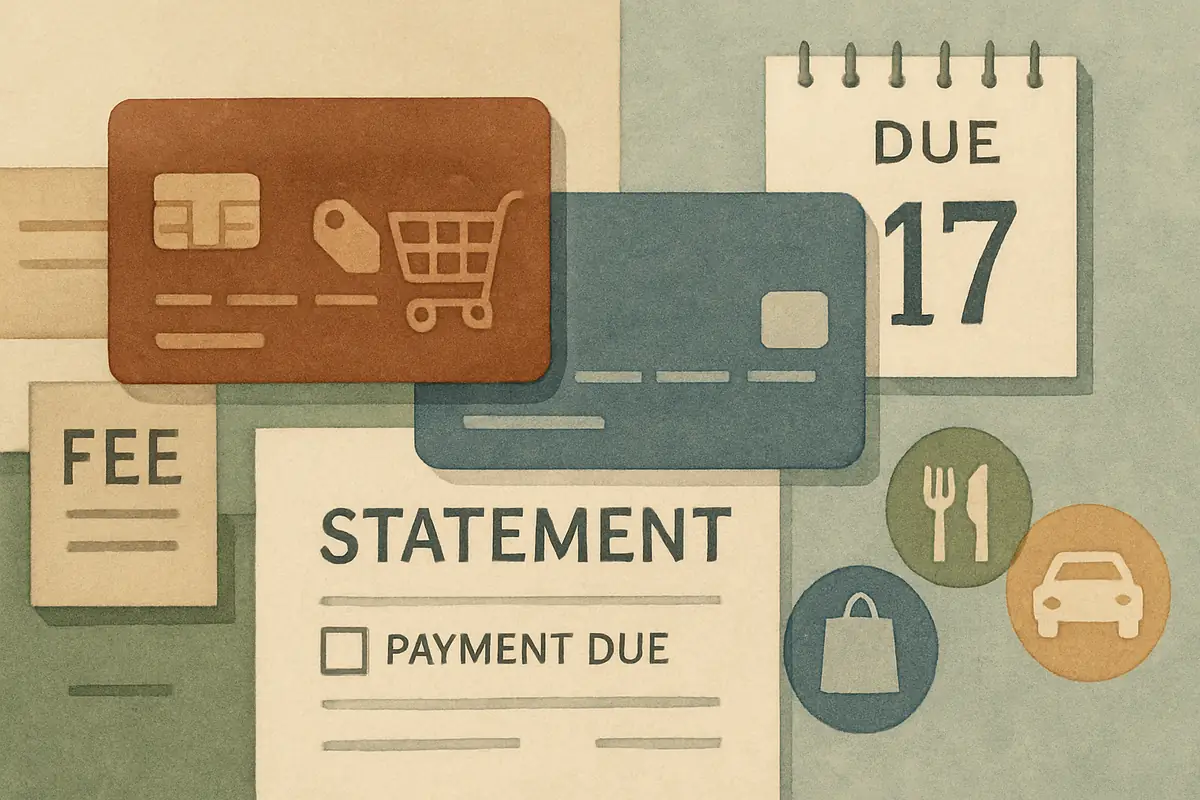
A credit card statement cycle is the recurring window, usually 28 to 31 days, during which your card issuer tracks all account activity. At the end of each cycle, you receive a statement summarizing your total purchases, payments, fees, and interest charges. The statement also lists your payment due date, which is typically 21 to 25 days after the cycle closes. Knowing exactly when your cycle starts and ends is crucial, as it directly affects your payment timeline and how interest is calculated.
For example, if you make a purchase on the first day of your cycle, you could have up to 51 to 56 days before payment is due—about a month until your statement closes plus a grace period of roughly three weeks. Purchases near the end of the cycle, however, may only give you 21 to 25 days before payment is required. This timing can make a difference if you’re managing tight cash flow or planning to maximize rewards. Additionally, some 0% APR (Annual Percentage Rate—the interest rate charged on unpaid balances) promotions are tied to statement cycles, so knowing your cycle dates helps you avoid unexpected interest charges when those offers expire.
Statement Cycle Timing and Its Impact on Interest
Credit card interest is generally calculated using your average daily balance—the sum of your daily balances divided by the number of days in the cycle. APRs (Annual Percentage Rates) for credit cards commonly fall between 18% and 30%. If you don’t pay your full statement balance by the due date, interest accrues daily on any unpaid amount, and purchases made earlier in the cycle rack up more interest than those made later.
Let’s see how this works with a concrete example:
- Suppose your card has a 24% APR, and your statement cycle is 30 days.
- On Day 1, you make a $1,000 purchase. On Day 15, you make another $500 purchase. You pay only the minimum payment at the due date.
- To calculate interest, the issuer adds up your daily balances: Days 1-14, your balance is $1,000. Days 15-30, your balance is $1,500. That’s (14 days x $1,000) + (16 days x $1,500) = $14,000 + $24,000 = $38,000 in total daily balances.
- Divide $38,000 by 30 days to get an average daily balance of $1,266.67.
- The daily periodic rate is 24% ÷ 365 = 0.0658% per day.
- Multiply $1,266.67 x 0.0658% x 30 days = about $25 in interest for the month.
This example shows that purchases made earlier in the cycle contribute more to your interest charges if you don’t pay in full. Waiting until after the statement closes to make a big purchase can extend your interest-free period by nearly a month, provided you pay your balance by the due date.
Trade-Offs of Longer Versus Shorter Statement Cycles
Advantages of Longer Statement Cycles
- Provides up to 56 days between purchase and payment, depending on timing.
- Improves short-term cash flow, especially for large expenses.
- Allows more time to accumulate rewards within a single cycle—helpful for meeting $500 to $3,000 minimum spend requirements on signup bonuses.
Disadvantages of Longer Statement Cycles
- Delayed payment can disrupt budgeting if not tracked closely.
- Greater risk of forgetting payment due dates, leading to late fees that typically range from $25 to $40.
- If you carry a balance, interest accrues over more days, increasing total finance charges.
Advantages of Shorter Statement Cycles
- Payments are due sooner, which can help enforce disciplined budgeting.
- Reduces the number of days for interest to accrue if you carry a balance.
- Encourages more frequent review of spending, as statements arrive more often.
Disadvantages of Shorter Statement Cycles
- Less flexibility to delay payment after a purchase.
- Shorter window to meet spending goals for rewards or bonuses.
- May increase pressure to pay quickly, which can be challenging if cash flow is tight.
Distinguishing Billing Dates from Payment Due Dates
It’s easy to confuse your statement (billing) date with your payment due date. The statement date is when your issuer finalizes the list of charges for the cycle. The payment due date is usually 21 to 25 days later. This period is called the grace period—if you pay your full statement balance by then, you won’t owe interest on new purchases for that cycle.
Missing this distinction can result in late fees or loss of the grace period. For example, paying right after the statement date but not again by the due date won’t reduce your required minimum payment for that period. However, early payment can lower your credit utilization ratio—the percentage of your credit limit you’re using, which is a key factor in credit scores—because it reduces your reported balance before the statement closes.
Timing Large Purchases for Maximum Financial Benefit
Maximizing Time Before Payment Due Date
Suppose you’re planning a $1,000 electronics purchase and your statement closes on the 15th. If today is the 10th, waiting until the 16th to make the purchase means it won’t appear until the next statement. You could have nearly 25 days (grace period) plus another full cycle—up to 55 days total—before payment is due. This approach can help with cash flow, but only if you track your spending to avoid overextending yourself.
Minimizing Interest with Last-Minute Purchases
If you make that same $1,000 purchase on the 14th, it appears on your current statement and payment is due in about three weeks. If you carry a balance, interest starts accruing almost immediately. The difference of just a few days can mean up to 30 more days of interest charges at rates of 18% to 30% APR if you don’t pay in full—potentially adding $15 to $25 in interest for that cycle alone.
How Rewards Programs Interact with Statement Cycles
Credit card rewards—whether points, miles, or cash back—typically post after the statement closes. Purchases made just after the cycle ends may not earn rewards until the next statement, meaning it could take up to 60 days for points to appear, depending on your cycle length. If you’re working toward a minimum spend bonus, such as $3,000 within 90 days, knowing your statement timing ensures your purchases count toward the correct period.
Some issuers calculate rewards based on statement cycle totals, not calendar months. This distinction matters if you’re trying to maximize rewards in a specific quarter or promotional period. For example, if a promotion ends on June 30 but your statement closes on June 25, only purchases through June 25 may qualify for that bonus.
Payment Timing
Your statement’s closing date determines which purchases appear on that bill. Paying your full statement balance by the due date—typically 21 to 25 days later—avoids interest charges.
Interest Calculation
Interest compounds daily on unpaid balances, with earlier purchases in the cycle accruing more interest if not paid off by the due date.
Rewards Posting Delay
Rewards often post after the statement closes, so purchases made at the end of a cycle may see points or cash back delayed by up to two months.
The Hidden Risks of Carrying Balances Across Cycles
Where readers should be careful
Paying only part of your statement balance may seem manageable—especially with longer cycles providing extra time—but this can trap you in rolling debt. Each month, new purchases add to your balance while interest, compounding daily at rates between 18% and 30% APR, increases what you owe. For example, carrying a $2,000 balance at a 25% APR can add over $40 in interest in just one cycle. Overlapping cycles make it difficult to see the true cost, and partial payments reduce your principal slowly, making it easy for debt to grow unnoticed.
Even financially savvy cardholders can underestimate how their spending timing interacts with billing cycles. Use your knowledge of statement cycles as a budgeting tool—not an excuse to delay full payments and risk costly compounding interest.
Tips for Managing Statement Cycles Effectively
- Check your billing cycle start and end dates on your statement or through customer service.
- Set calendar reminders for both statement closing and payment due dates to avoid late fees.
- Time large purchases just after your statement closes to maximize your interest-free period—potentially up to 55 days before payment is due.
- Avoid carrying balances to prevent daily compounding interest from increasing your debt.
- Track how your issuer posts rewards relative to statement cycles so you know when to expect points or cash back.
- Use budgeting tools or apps that organize spending by statement cycle for more accurate expense tracking.
- Set up autopay for at least the minimum payment to avoid late fees, which can range from $25 to $40 per missed payment.
- Review statements promptly—within a few days of receipt—for errors or unauthorized charges, as disputes are easier to resolve early.
Being proactive with these strategies reduces surprises and helps you stay in control of your credit card use.
How Payment Posting Dates Affect Your Account
Paying your bill before midnight on the due date might seem sufficient, but payment processing times vary. Payments made late at night or on weekends may not post until the next business day. If your payment posts after the due date, you risk late fees or a reported late payment, even if the funds leave your account on time. To avoid these issues, try to pay at least one business day before the due date, especially for larger payments or when using external bank transfers.
Pros of Changing Your Billing Date
- Aligns your payment schedule with paychecks or monthly bills for easier budgeting.
- Provides flexibility to manage cash flow around major expenses.
- Can help you optimize when rewards post or when payments are due across multiple cards.
Cons of Changing Your Billing Date
- Increases risk of missing new payment deadlines during the transition.
- Requires updating autopay settings and monitoring statements closely to avoid errors.
- May cause temporary confusion, raising the risk of late fees during the adjustment period.
Statement Cycles Shape Spending Behavior
Credit card statement cycles, which last 28 to 31 days, exert subtle but powerful influence on consumer spending habits. Many people unconsciously time large purchases just before the statement closes, hoping to delay payment by as much as 50 to 56 days. This can create the illusion of extended credit, but if not managed carefully, it may lead to overspending and higher utilization rates—using more than 30% of your credit limit can negatively affect your credit score.
Statement cycles can also encourage impulsive or reward-driven spending. For instance, chasing a $150 cash back bonus or a 40,000-point travel reward might prompt extra purchases within a single cycle. While these perks can be valuable, they sometimes tempt cardholders to spend beyond their means, undermining long-term budgeting goals. The psychological effect of timing expenses for rewards can mask the true impact on your finances.
Additionally, transaction posting delays can cause confusion about available credit and outstanding balances. A purchase made on the last day of the cycle may not post until the next statement, leading you to believe you have more available credit than you really do. This mismatch can result in accidental overspending, late fees, or exceeding your credit limit—which can trigger penalty APRs as high as 29.99%.
Practical Strategies to Avoid Statement Cycle Pitfalls
To break the cycle trap, align major purchases with your income and budget—not just the statement closing date. For example, plan large expenses around your paycheck schedule instead of relying on the grace period. Marking both statement closing and due dates on your calendar keeps you aware of deadlines without letting them drive your spending decisions.
If you use multiple credit cards, consider staggering their cycles—if your issuers allow it—so your large expenses are spread out, reducing the risk of high balances and giving you more time before payments are due. This approach can help you manage cash flow and avoid exceeding 30% utilization on any single card, which is a common credit score threshold.
Regularly monitoring your account through online or mobile banking gives you real-time insight into your spending and available credit, helping you catch errors or overspending before they become problems. Statements only provide a snapshot after the fact, so proactive tracking is key to staying ahead.
How Statement Cycles Affect Credit Scores and Financial Health
The timing of your payments and balances within statement cycles can impact your credit score and overall financial health. Credit utilization—the percentage of your credit limit used at the time your statement closes—is a major factor in credit scoring models. If your balance is over 30% of your limit at statement close, your score may drop, even if you pay in full after the due date. For example, a $3,000 balance on a $10,000 limit is 30% utilization; keeping this ratio lower can improve your score.
Missing payments due to confusion over cycle dates can trigger late fees and penalty interest rates, which can rise to 29.99% APR. Setting up automatic payments for at least the minimum due ensures you never miss a deadline, protecting your score from negative marks that can stay on your credit report for up to seven years.
Consistently maxing out your card just before the statement closes—even if you pay in full—can signal higher risk to lenders, potentially limiting your access to new credit or better rates. Lenders may view high balances as a sign of financial strain, so it’s wise to keep your reported balances low whenever possible.
The Psychology Behind Statement Cycle Decisions
Statement cycles influence more than just your payment schedule—they shape how you think about spending. The "framing effect" means you might view purchases differently depending on whether they appear on the current or next statement, making it easier to justify spending when consequences seem distant.
"Mental accounting"—the tendency to separate spending into different categories, like statement cycles instead of total monthly income—can lead to fragmented budgeting and less effective money management. This can make it harder to see the full picture of your finances, increasing the risk of overspending.
"Loss aversion"—the fear of missing out on rewards that expire within a billing window—can push you to make unnecessary purchases just to earn points or cash back. This psychological pressure, combined with the mechanics of statement cycles, can cloud judgment and lead to decisions that don’t align with your true financial priorities.