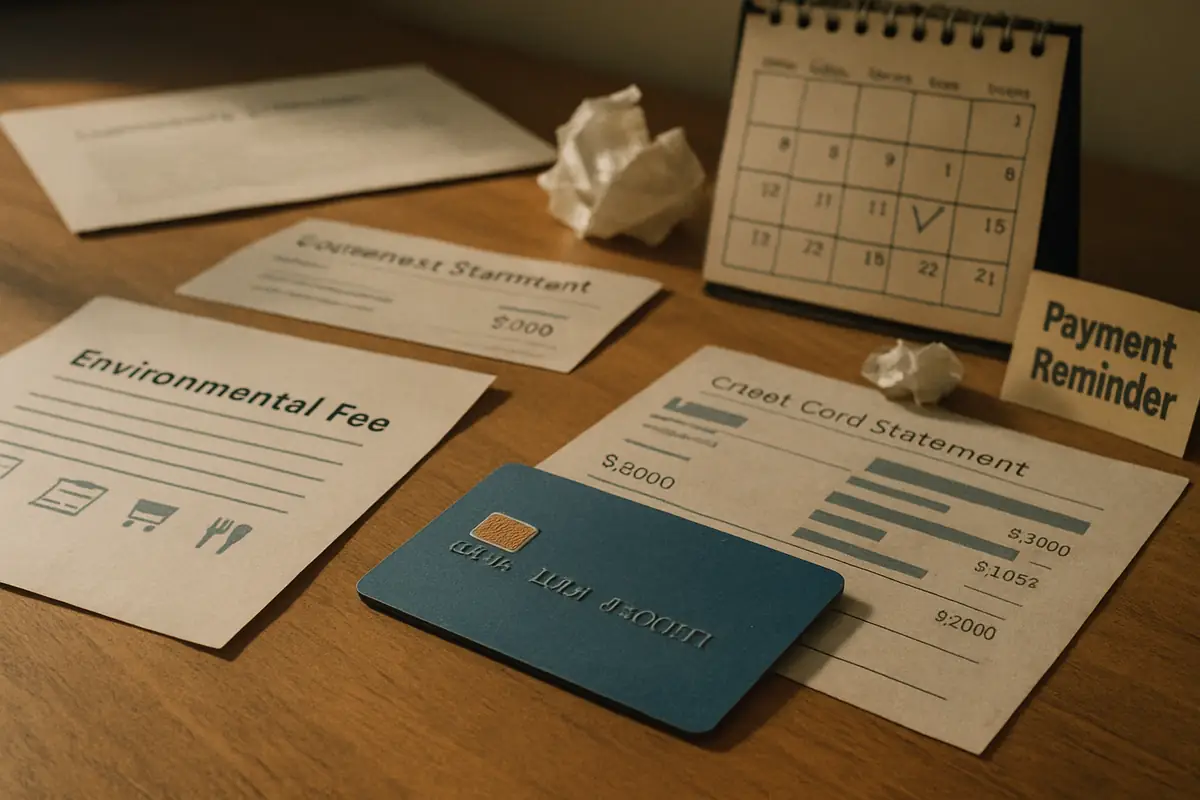
Credit card statement cycles play a pivotal role in household financial management—affecting when bills are due, how much interest accrues, and how quickly rewards points become available. In 2023, more households than ever are actively rechecking their statement cycles to better align bill payments with income schedules, minimize unexpected fees, and optimize rewards. As credit card APRs commonly fall between 18% and 30%, even a small misstep in timing can have a noticeable impact on monthly costs. This guide explores what statement cycles are, how their timing influences your finances, and practical ways to use this knowledge for better cash flow and cost control.
Understanding the Credit Card Statement Cycle and Its Financial Impact
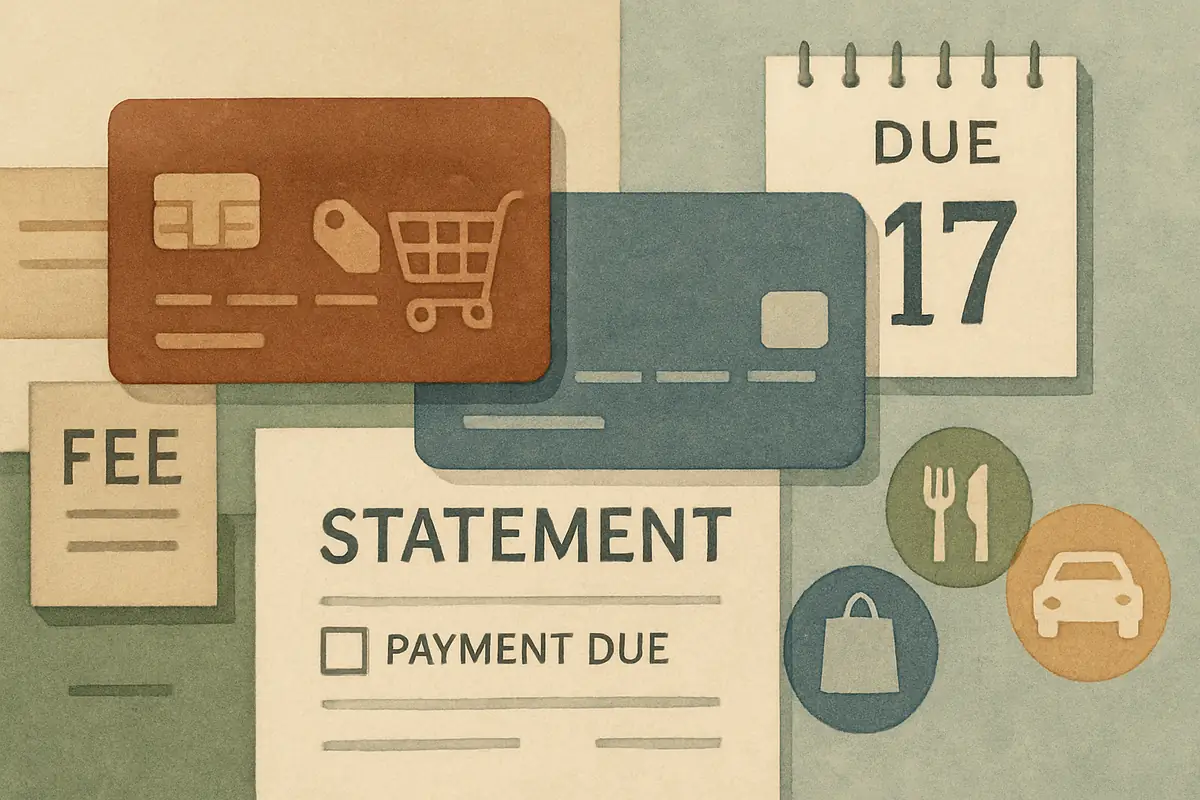
Each credit card operates on a statement cycle—a recurring period, typically lasting 28 to 31 days, during which transactions are grouped before a bill is generated. The statement cycle determines when your purchases, payments, and fees are summarized, and it directly sets the payment due date, which usually falls 20 to 25 days after the statement closes. This timing is crucial because it dictates your grace period—the window during which you can pay your balance in full to avoid interest charges.
For example, if your statement closes on the 15th, and your payment due date is the 10th of the following month, you have about 25 days to pay without interest if you pay in full. However, if your statement cycle shifts, your due date—and thus your payment planning—shifts as well. For households with variable income or tight budgets, understanding and potentially adjusting this cycle can help avoid late fees, which typically range from $25 to $40 per incident, and keep interest charges in check.
Statement Cycles and Their Influence on Fees and Interest
The length and timing of your statement cycle have a direct impact on finance charges, especially if you carry a balance. Credit card interest is calculated using the Annual Percentage Rate (APR)—the yearly cost of borrowing, expressed as a percentage, often ranging from 18% to 30% for most cards. If you don’t pay your full balance by the due date, interest begins accruing on the remaining amount, and a longer statement cycle can mean more days for interest to accumulate before you pay.
Late payment fees are another risk. Missing the due date, even by one day, can result in a penalty of $25 to $40. If your statement cycle doesn’t match your pay schedule, you might find yourself short on funds when the bill comes due. Reviewing your cycle helps ensure your payment aligns with your cash flow, reducing the chance of incurring these avoidable fees.
| Factor | What it means | Risk |
|---|---|---|
| Statement cycle length | Number of days between statement openings and closings (typically 28–31 days) | Longer cycles can lead to more interest if balances aren’t paid in full |
| Payment due date timing | Date by which payment must be made post-cycle close (usually 20–25 days after close) | Misalignment may cause late fees of $25–$40 |
| Billing date variability | How much the closing date changes month to month (can vary by 1–3 days) | Irregular dates can complicate budgeting and increase risk of missed payments |
How Statement Cycle Timing Impacts Rewards and Points
For those using credit cards for rewards—whether cashback, points, or miles—the statement cycle determines when these perks are credited. Many issuers only post rewards after the statement closes, while some may credit them weekly or even daily. This means the timing of large purchases can affect how quickly you can access your rewards.
Suppose you make a $1,000 purchase the day before your statement closes and your card offers 2% cashback. If your statement closes today, you’ll see $20 in rewards credited when the bill is generated. If you make the purchase just after the close, you might wait another 28–31 days to see those rewards. This timing can be critical if you’re planning to redeem points for a specific event or travel window.
Benefits of Monitoring Statement Cycles for Rewards
- Allows faster posting of $10–$100+ in monthly rewards for active users
- Enables planning of large purchases to maximize reward timing
- Improves tracking of points earned per cycle, which is useful for reaching signup bonuses (often $500–$1,000 in value)
Potential Downsides to Watch Out For
- Requires tracking billing dates and transaction posting times
- Cycle changes can complicate budgeting if not monitored
- Some issuers only credit rewards at statement close, limiting flexibility
Why More Households Are Rechecking Statement Cycles
Households are increasingly reviewing their statement cycles due to tighter budgets and variable income sources. For example, in the past five years, gig and remote work have become more common, leading to paychecks arriving on irregular dates. Aligning statement cycles with these paydays can help avoid cash shortfalls and reduce the risk of late fees.
Issuers now frequently allow cardholders to adjust their statement closing date—sometimes as often as once every 90 days, depending on the bank. This flexibility is particularly valuable for families managing multiple cards or those who receive government benefits on fixed dates each month. Additionally, as average U.S. credit card debt per household now ranges from $5,000 to $8,000, even small tweaks in billing cycles can have a noticeable impact on monthly interest costs and payment planning.
Families paying down debt or managing several cards may also recheck cycles to prevent two large bills from coming due in the same week, which could otherwise strain a monthly budget by $500 or more. Understanding and adjusting cycles is becoming a standard part of household financial checkups.
How to Change Your Statement Cycle: Process and Considerations
Most major credit card issuers allow you to request a change to your statement closing date online or by phone. However, the transition isn’t always seamless. The change usually takes effect in the next billing period, and during the transition, your cycle may be temporarily shortened or lengthened—sometimes by as much as 10–15 days. This can result in two payments falling within a 30-day period or, conversely, a longer gap between bills.
Some issuers may restrict changes to once every 6 or 12 months, and a few may charge a fee—often $5 to $15 per change. It’s important to check your issuer’s policy before making adjustments, especially if you rely on automatic payments. Failing to update your autopay schedule can result in missed payments and late fees.
Worked Example: Suppose your statement currently closes on the 15th and your payment is due on the 10th of the next month. You request to move your closing date to the 25th. This month, your cycle is only 20 days (from the 16th to the 25th), and your new payment due date shifts to the 20th of the following month. If you have a $2,000 balance and your card’s APR is 24% (or 2% monthly), carrying a balance into the shortened cycle means you’ll pay interest on the $2,000 for only 20 days instead of 30, resulting in about $13 in interest versus $20 for a full month (calculated as $2,000 x 2% x 20/30 = $13.33). This shows how the transition month can change your interest costs.
Practical Steps for Choosing the Right Statement Cycle
To determine if adjusting your statement cycle is beneficial, start by mapping your income and expense timing. List all credit cards, noting their current statement closing and due dates. Record your paycheck or benefit deposit dates for at least two months. Identify recurring bills—such as rent, utilities, or subscriptions—that are charged to your cards, and note when these typically post.
If your paycheck arrives just after your statement closes, you may find yourself short on cash when your payment is due. Adjusting the cycle to better match your income can help avoid overdrafts, which often incur fees of $30 to $35, and reduce reliance on short-term credit. If you carry a balance, aligning your payment due date with your payday can minimize interest charges and late fees.
- List all credit cards with current closing and due dates (e.g., Card A: closes 15th, due 10th; Card B: closes 28th, due 23rd).
- Record paycheck deposit days for at least two months (e.g., 1st and 15th, or every other Friday).
- Identify recurring bills posted to cards (e.g., $120 utility bill posts 12th monthly).
- Estimate time from purchase posting until payment due (typically 20–25 days).
- Check your issuer’s policy on cycle changes, including any fees or limits (e.g., one change every 6 months, $10 fee).
Scenarios Showing Statement Cycle Effects on Cardholder Outcomes
Consider a household with two cards: Card 1 closes on the 5th and Card 2 on the 25th. Their paychecks arrive on the 1st and 15th. By shifting Card 1’s cycle to close closer to the 15th, they ensure both cards’ due dates fall just after paydays, reducing the risk of cash shortfalls. Alternatively, a freelancer with irregular income may stagger card cycles so that payments are spread throughout the month, smoothing out cash flow and avoiding a single large outflow of $1,000 or more at once.
Key Warnings When Adjusting Statement Cycles
Where readers should be careful
['Changing your billing cycle isn’t always beneficial; be cautious about potential overlaps causing double payments within short periods.', 'Some issuers limit how many times you can switch per year or may charge fees for changes.', 'Adjusting close dates without updating automatic payment schedules risks missed payments if not monitored carefully.', 'Don’t assume all cards behave identically—always confirm specifics with each issuer before making adjustments.', 'Beware that shifting cycles may temporarily shorten grace periods increasing interest costs if balances aren’t paid off fully during transition months.']
Summary Comparison: The Pros and Cons of Rechecking Your Statement Cycle
Where this helps
- Aligns payments with cash flow for easier budgeting, especially for households with $1,000–$3,000 in monthly credit card spending
- Can accelerate reward point posting for faster use—valuable for those earning $200–$500 in annual rewards
- May reduce risk of $25–$40 late fees by syncing due dates with income
- Improves awareness of spending patterns and credit utilization (percentage of available credit used, ideally kept under 30%)
Where caution is needed
- Requires active monitoring and occasional adjustments, especially with 3+ cards
- Risk of confusion if multiple card cycles differ by more than 10 days
- Possibility of temporary higher interest costs during transition months (up to $20–$30 extra)
- Some issuers restrict frequency or charge fees for changes (usually $5–$15 per change)
Statement Cycle Fundamentals and Their Broader Role in Financial Planning
A credit card statement cycle is the fixed interval—usually 28 to 31 days—at which your issuer summarizes your transactions, payments, and balances. This cycle determines your payment due date, when interest begins accruing, and when rewards are credited. By monitoring and adjusting these cycles, households can better time their payments to maximize grace periods (the interest-free period, typically 20–25 days after statement close) and minimize costs.
For instance, making a $500 purchase the day after your statement closes can give you nearly two months before payment is due—maximizing your grace period. In contrast, buying just before the statement closes may require payment in as little as three weeks. As average household credit card debt continues to hover between $5,000 and $8,000, understanding and leveraging cycle timing can yield real savings.
Issuers increasingly allow cycle adjustments, sometimes up to once per quarter, to help cardholders manage cash flow. This is especially useful for those with income deposited on specific days, or for small business owners aligning expenses with accounting periods.
How Statement Cycle Awareness Improves Credit Management
Knowing your statement cycle helps manage your credit utilization ratio—the portion of your available credit you’re using, ideally kept below 30% for a healthy credit score. Since utilization is often calculated based on the balance reported at the statement close, making a payment just before the cycle ends can lower your reported balance and improve your credit profile, even if you use your card heavily during the month.
Synchronizing statement cycles across multiple cards can simplify budgeting, especially for families juggling $2,000–$4,000 in monthly expenses. Alternatively, staggering cycles can help spread payments and avoid large lump-sum bills. Financial advisors often recommend reviewing statement cycles as part of an annual credit checkup, and with the rise of digital banking, it’s easier than ever to stay informed about upcoming due dates and amounts.
Digital Tools and Their Role in Statement Cycle Management
Modern banking apps and online platforms now offer features like customizable alerts, which can notify you of upcoming statement closes or payment due dates—helping prevent late payments and associated fees. Some apps analyze your spending patterns relative to your billing cycle and suggest optimal payment times, potentially saving you $50–$100 in annual interest or fees for active users.
Integration with budgeting software allows for real-time tracking of how current purchases will appear on upcoming statements. As machine learning tools become more advanced, expect even more personalized recommendations for optimizing payment and purchase timing based on your unique financial habits.
Debunking Common Myths About Statement Cycles
Several misconceptions persist about statement cycles. One is that all purchases in a calendar month appear on the same statement, when in fact, cycles often cut off mid-month. Another is the belief that payments must be made immediately after a statement arrives; in reality, a grace period of 20–25 days is standard. Some fear that changing their cycle will hurt their credit score or always incur a fee, but most issuers allow at least one free change per year. Finally, many misunderstand when interest starts accruing—it’s only after the grace period ends if the balance isn’t paid in full, not from the date of purchase.
By clarifying these points, households can make better use of their statement cycles, improving both cash flow and credit outcomes.
Actionable Tips for Households Reviewing Statement Cycles
Households can take control by regularly reviewing statement cycles alongside monthly budgets. Set calendar reminders for statement close and due dates, update automatic payment schedules after any cycle changes, and use digital alerts to stay ahead of deadlines. By actively managing these details, families can minimize fees, optimize rewards, and maintain strong credit health—especially important during periods of economic uncertainty or fluctuating income.
References
- https://www.consumerfinance.gov/consumer-tools/credit-cards/
- https://www.fdic.gov/consumer-resource-center/credit-cards
- https://www.consumerfinance.gov/data-research/consumer-credit-trends/
- https://www.consumerfinance.gov/consumer-tools/bank-accounts/
- https://www.consumerfinance.gov/consumer-tools/credit-reports-and-scores/