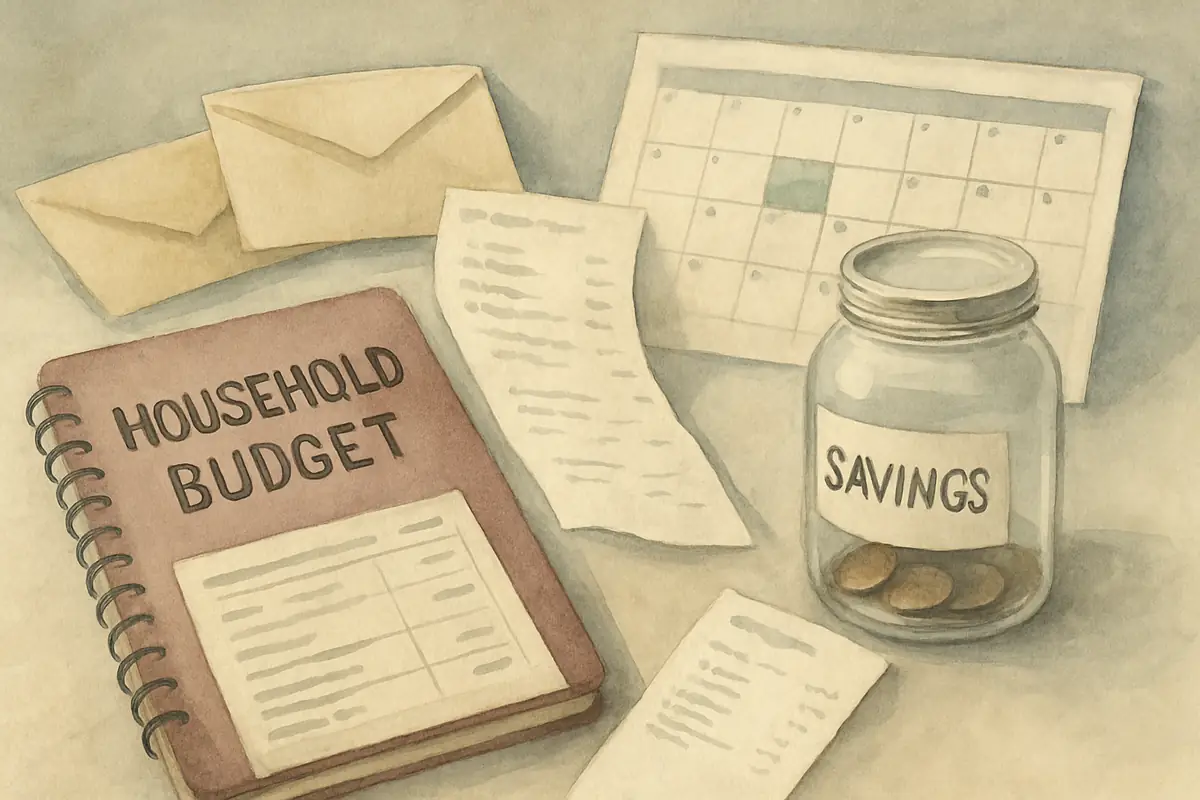
A single overdraft — the charge a bank applies when a payment pulls an account below zero — commonly costs $25 to $35, and households that overdraw once often repeat it several times a year, turning a $60 timing mistake into $100 or more in fees. Better cash flow habits don’t just prevent those charges; they create a quiet backbone for household stability, easing tension and providing flexibility when life throws curveballs.
Why Cash Flow Matters More Than Income
It’s a common misconception that a higher income automatically translates to fewer financial worries. Cash flow — the movement of money into and out of a household, and just as importantly the timing of each arrival and departure — often matters more than the raw amount earned. A family bringing home $85,000 a year, roughly $5,300 to $5,600 a month after taxes, can still scramble before payday if rent lands on the 1st, the car payment hits on the 5th, and the second paycheck doesn’t arrive until the 15th. Plenty of households with decent earnings live this way, one mistimed bill from stress.
Consider a family paid twice a month whose largest bills cluster in the first ten days. Without aligning payment dates or holding a cushion, they can run short for essentials even when total monthly income comfortably exceeds total expenses. The mismatch triggers quick fixes: swiping a credit card at an annual percentage rate (APR, the yearly cost of borrowing) that commonly falls between 18% and 30%, or delaying the electric bill and eating a late penalty that often runs 1.5% to 5% of the balance. Each patch is small. Stacked across a year, they add real money and real anxiety.
Payment timing
Mapping when money arrives against when bills come due exposes cash gaps before they become emergencies. A rent payment due the 1st against a paycheck landing the 3rd is only a 48-hour gap, but it is exactly the kind of gap that generates overdrafts.
Expense grouping
Recurring obligations — bills that repeat on a fixed schedule, like rent, insurance, streaming services, and loan payments — are easier to manage in clusters. Most households carry somewhere between 8 and 15 of them, and grouping them by due date simplifies tracking dramatically.
Buffer savings
Even a modest cushion of $300 to $500, built from leftover funds, absorbs mistimed bills and small surprises without requiring drastic lifestyle changes.
Common Cash Flow Challenges Facing Households
Cash flow challenges usually stem from a mix of irregular income, unplanned expenses, and spending habits shaped by daily pressure. Gig workers and commission-based earners routinely see monthly income swing 20% to 40% from one month to the next, which makes budgeting feel like aiming at a moving target. Fixed-income households face the opposite problem: rigid expenses that don’t flex when needs change. Layer on impulse purchases and poor communication about money within the family, and frequent shortages become almost inevitable.
Take Maria’s household as an example. She juggles two part-time jobs with fluctuating schedules while caring for her children, and her combined take-home pay ranges from about $2,900 in a slow month to $3,600 in a good one. Careful planning during strong weeks helps, but a $640 brake job or a $150 urgent-care copay can absorb months of small savings in a single afternoon. Without predictable inflows, she postpones bill payments or borrows informally from relatives to bridge gaps — patterns familiar to many people who live close to the financial edge but avoid formal credit out of fear of a debt spiral.
Advantages of Recognizing Cash Flow Issues Early
- Creates two to three weeks of lead time to adjust spending before a crunch develops
- Improves communication among household members about money priorities
- Prevents reliance on high-cost borrowing such as payday loans, which often work out to 300% to 400% on an annualized basis
Risks of Ignoring Cash Flow Problems
- Mounting late fees — commonly $30 to $41 on credit cards, and often 5% to 10% of the monthly rent on housing
- Strained family relationships due to constant financial stress
- Payments reported 30 or more days late can sit on a credit report for up to seven years, limiting future borrowing options
Realistic Habit Changes That Make a Difference
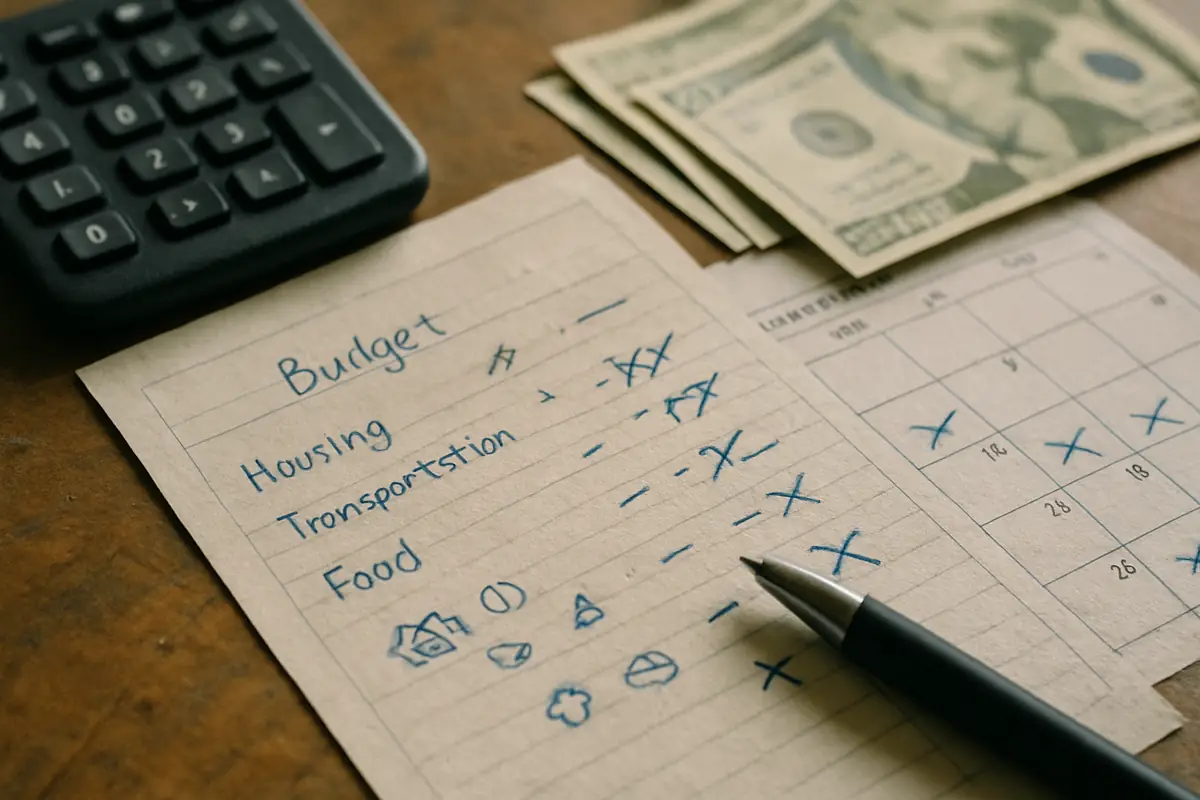
Changing cash flow habits rarely happens overnight — especially when juggling imperfect budgets and emotional spending triggers. Small practical shifts tend to yield the most reliable results. One effective habit is a weekly spending review of just 15 to 20 minutes: comparing actual purchases against the plan often enough to catch drift, but loosely enough to avoid burnout. Simple tools like handwritten expense notes or the envelope system — dividing cash for groceries, gas, and fun into labeled envelopes — connect the numbers directly to daily purchases without digital overwhelm.
Another practical move is syncing bill due dates closer to paycheck arrivals. This doesn’t require renegotiating every contract; most utilities, card issuers, and loan servicers will move a due date on request, typically allowing one change every 6 to 12 months. Shifting a subscription renewal or a utility autopay date so it lands two or three days after payday removes a surprising amount of friction. Enrolling in autopay itself can pay too: many lenders offer a 0.25% interest-rate discount for automatic payments. Over several months, these tweaks reduce last-minute scrambling and build genuine confidence.
The Role of Communication in Household Money Management
Money conversations rarely come naturally in families, yet they are essential to stable cash flow. Open dialogue about upcoming expenses or goals creates shared understanding rather than isolated worry. Even a 15-minute weekly check-in can surface challenges early — a $250 school activity fee due next month, or a $480 transmission diagnostic the mechanic warned about — before they force emergency borrowing at card rates north of 20%.
Consider households where partners keep finances separate without discussing irregular costs: one believes there’s an ample buffer while the other quietly faces an immediate shortfall. Money disagreements consistently rank among the most common sources of conflict for US couples, and the pattern usually starts with silence, not overspending. Acknowledging the reality without blame encourages joint problem-solving instead of hidden stress. It also builds trust around the occasional setbacks inherent in imperfect budgeting rather than burying mistakes.
Where readers should be careful
Avoid assuming silence means all is well financially. A partner quietly carrying a $2,000 card balance at a 25% APR adds roughly $40 a month in interest to the household’s costs, and undisclosed balances like this tend to grow for months before they surface. Lack of communication often masks tensions that make cash flow problems worse over time.
Navigating Trade-Offs: Prioritizing Essentials Over Wants
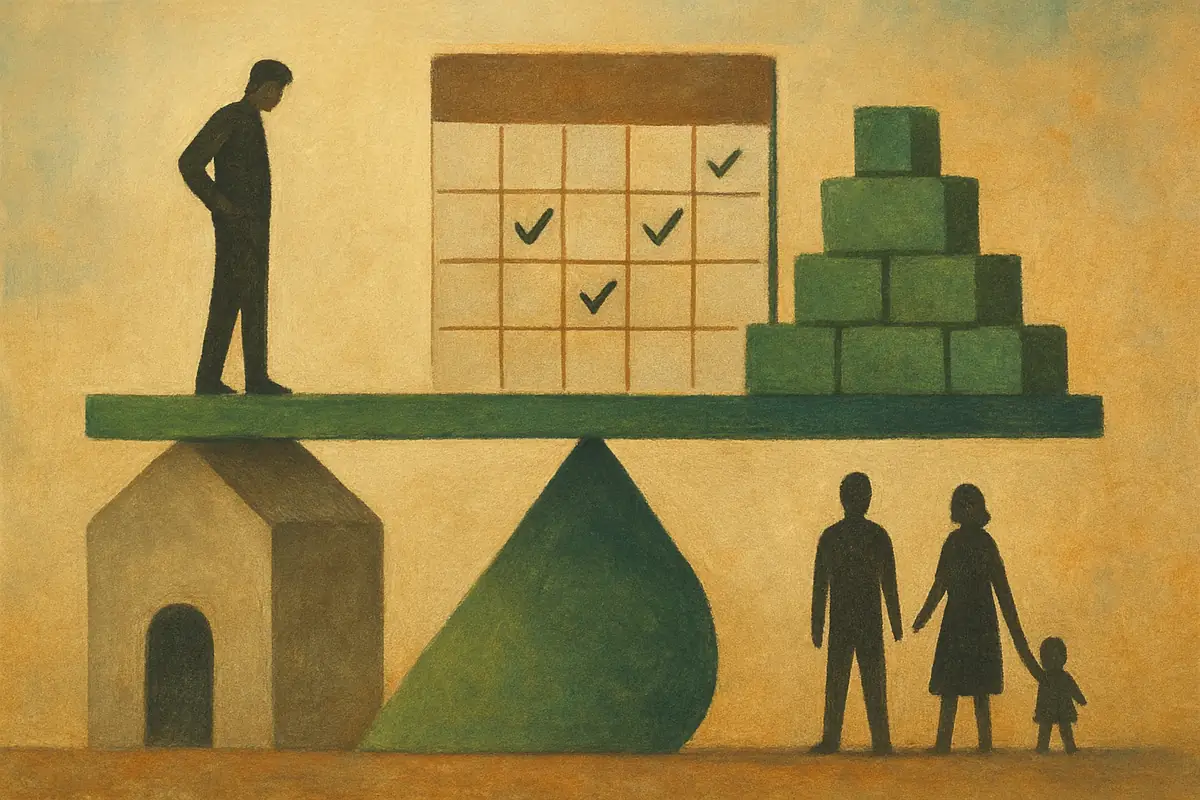
Every household faces trade-offs when income meets expense reality. Prioritizing essentials — housing, utilities, food, transportation — before discretionary spending (the flexible, optional purchases like dining out, hobbies, and entertainment) is fundamental, but harder than it sounds amid social pressure and emotional needs. Common planning benchmarks help: many budgeters aim to keep housing near 28% to 30% of gross income, and the popular 50/30/20 framework routes roughly 50% of take-home pay to needs, 30% to wants, and 20% to savings and debt payments. Real households rarely hit those numbers exactly, and that’s fine — the value is in knowing how far off you are and why.
Real-life budgeting means balancing competing needs while accepting imperfection. Rather than strict austerity, households do better with flexible plans that include a modest planned allowance — often $50 to $150 per adult per month — for non-essentials, so money management doesn’t feel like relentless deprivation. Skipping every small treat seems easy until it chips away at morale during a long tough stretch. The challenge is setting realistic limits that protect core stability without triggering guilt or resentment over everyday choices.
Benefits of Prioritizing Essentials First
- Keeps critical bills current, avoiding utility reconnection fees that often run $25 to $75 and rent late charges of 5% to 10%
- Creates a clearer picture of what is genuinely available for discretionary spending
- Promotes healthier long-term financial habits
Challenges When Wants Get Sacrificed Too Often
- Can cause emotional fatigue that undermines motivation to stick with the plan
- May lead to feelings of social exclusion when peers spend freely on leisure
Building Flexibility Through Buffer Savings
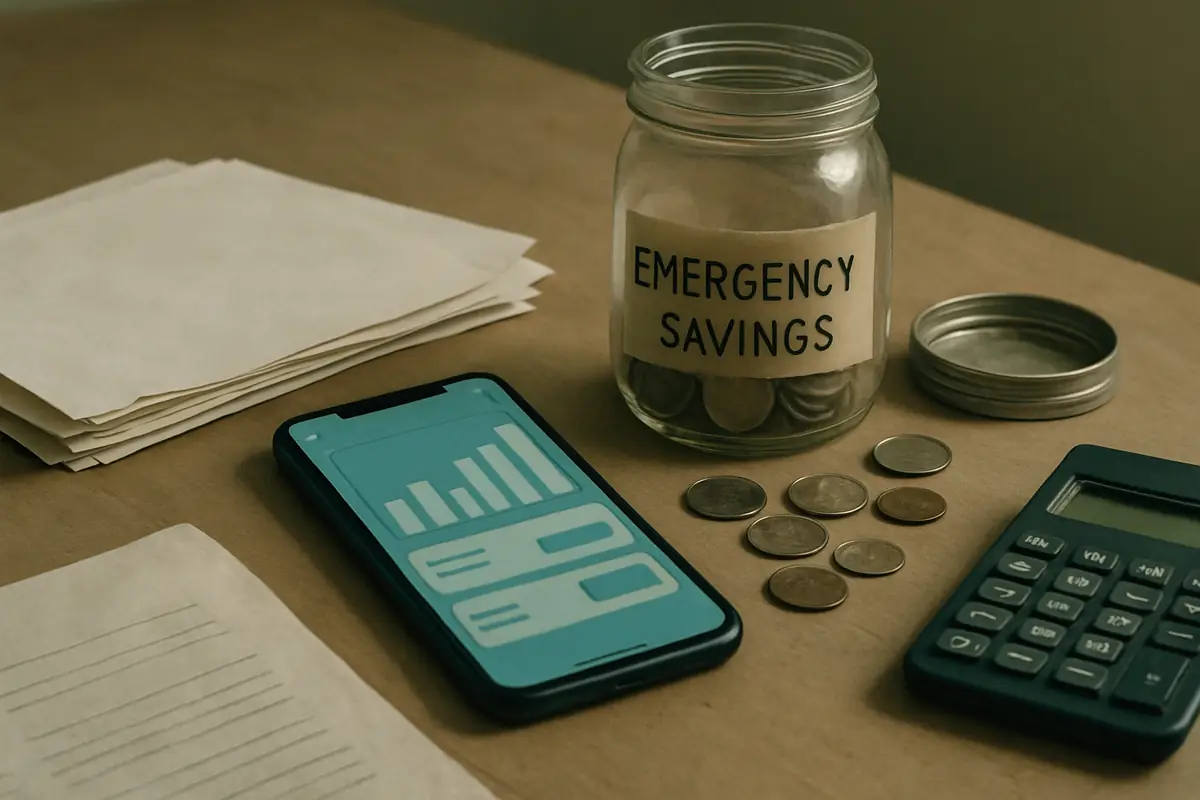
Establishing even a modest buffer — $500 to $1,000 reserved solely to absorb mistimed bills and small surprises — can be transformative. A buffer differs from a traditional emergency fund: it isn’t meant to survive a job loss, just to smooth the ordinary timing gaps between income and expenses so a Tuesday bill doesn’t depend on a Friday paycheck. Where an emergency fund can feel like a distant goal, a buffer is immediately practical, and for many households it eliminates overdrafts entirely within two or three months of being funded.
Many households underestimate how much peace of mind a small cushion provides until they try living without one again. The strategy is incremental: setting aside $25 to $50 a week from leftover budget money — roughly $1,300 to $2,600 over a year — rather than waiting for windfalls that rarely arrive on schedule. Park the buffer somewhere liquid, meaning it can be turned into spendable cash within a day or two without penalty. A high-yield savings account paying roughly 3.5% to 4.5% in the current rate environment works well, compared with the under-0.5% many large banks still pay on basic savings. Treat it as untouchable except for true cash flow timing disruptions.
Timing Is Everything: Aligning Income With Expenses
Timing isn’t jargon; it’s the core mechanic that makes cash flow smoother. Households benefit when paydays closely precede significant bills instead of lagging far behind them. Anyone paid biweekly receives 26 paychecks a year, which quietly produces two months with a third paycheck — months that can fund a buffer or an extra debt payment if they’re anticipated rather than absorbed. Achieving alignment takes awareness plus, sometimes, a phone call to a service provider to shift a payment cycle. Even partial alignment — moving two of eight bills so they fall within three days after payday — improves predictability noticeably.
Timing also means planning spending around expected inflows: delaying discretionary purchases until funds actually clear rather than charging impulsively at 18% to 30% interest. In practice, that might mean doing the big grocery run the day after payday instead of mid-cycle as funds dwindle, or holding a $200 online cart for 48 hours until the deposit posts. Small behavioral adjustments, repeated weekly, compound into steadier day-to-day cash management.
Integrating Budgeting Tools for Enhanced Cash Flow Management
One of the most effective ways to develop better cash flow habits is integrating budgeting tools into daily routines. These can be digital apps — many are free, and paid versions typically cost $5 to $15 a month — or spreadsheets, or a plain pen-and-paper ledger tailored to the household. The payoff is visibility. Tracking small recurring charges often reveals that streaming, apps, and memberships quietly total $50 to $100 a month, including one or two forgotten subscriptions still billing $10 to $20 each. Tools also help set spending limits that flex with income, and many apps push low-balance alerts that prevent a $28 coffee-shop overdraft before it happens. Over time, consistent tracking builds the discipline and awareness that sustained stability requires.
Tracking also enables proactive planning rather than reactive coping. Here is what one month looks like for a household with $5,200 in monthly take-home pay, received as $2,600 on the 1st and $2,600 on the 15th:
- List fixed recurring obligations: rent $1,650, car payment $430, insurance $185, utilities averaging $320, phone and internet $150, subscriptions $85, minimum debt payments $240 — a total of $3,060.
- Add variable essentials: groceries $760, fuel $260, household and pharmacy items $180 — another $1,200, bringing total planned outflow to $4,260.
- Subtract from income: $5,200 minus $4,260 leaves a $940 monthly surplus on paper.
- Check the timing: the first $2,600 check must cover rent plus the car payment ($2,080), leaving $520 for roughly $600 of first-half groceries and fuel — an $80 mid-month shortfall despite the healthy surplus.
- Fix it: move the car payment’s due date to the 17th, which shifts $430 of pressure to the second check and turns the squeeze into slack.
- Assign the surplus on purpose: $500 to the buffer, $300 extra toward the highest-rate card, $140 left flexible.
That $80 squeeze is invisible in a monthly budget and obvious in a cash flow view — which is exactly why the timing check matters. Households that map inflows against outflows this way can anticipate tight stretches like the holidays or back-to-school season and set aside small amounts months in advance instead of leaning on high-interest credit when the bill arrives.
The Psychological Benefits of Improved Cash Flow Habits
Beyond the tangible financial gains, better cash flow habits contribute significantly to psychological well-being. Money stress consistently ranks among the leading sources of anxiety for US adults, and it seeps into sleep, health, and relationships. Dependable routines — allocating each paycheck to bills, savings, and spending in a set order — restore a sense of control. That control reduces uncertainty when surprises hit: knowing a $900 buffer exists changes how a sudden $400 car repair feels, even before a dollar moves. Improved habits also normalize money conversations at home, which defuses the tension that misunderstandings and hidden balances tend to create.
Consistent positive reinforcement keeps the habits alive. Celebrating small victories — clearing a lingering $300 balance, finishing a grocery week at $170 against a $200 plan, watching the buffer cross $1,000 for the first time — sustains motivation far better than guilt does. When households stop treating money management as a burdensome chore and start seeing it as an achievable goal with visible wins, stress drops and family support strengthens. The mental clarity that follows stable cash flow feeds directly into better decisions.
Building Emergency Funds: A Pillar of Household Stability
The systematic building of an emergency fund is an essential element of household stability. An emergency fund is a dedicated pool of savings meant to cover major disruptions — job loss, a medical event, a failed furnace — without derailing the regular budget or forcing new debt. The widely used target is three to six months of essential living expenses: for a household spending $3,000 to $4,500 a month on essentials, that means an eventual goal of roughly $9,000 to $27,000. The number sounds daunting, which is why a first milestone of $1,000 matters — it already covers the majority of common household surprises.
Practical strategies center on automation: scheduling a transfer of $100 to $200 into a dedicated savings account the day each paycheck arrives, before discretionary spending can claim it. Paying yourself first this way removes the temptation to spend what looks like excess cash. Reviewing monthly expenditures regularly may also uncover nonessential costs — an unused $45 gym membership, a duplicate streaming plan — that can be redirected to reserves. Keep the fund accessible within one or two business days but separate from everyday checking, so it stays liquid without being accidentally spent.
Reducing Debt Through Strategic Cash Flow Allocation
Improved cash flow habits let households do more than cover daily expenses; they create the surplus that shrinks debt. High-interest balances are the most corrosive: credit card APRs commonly sit between 18% and 30%, and a $6,000 balance at typical rates accrues roughly $110 to $150 in interest in a single month before a dollar of principal is touched. Minimum payments — often set at about 1% to 2% of the balance plus interest — are designed to stretch repayment across many years. Careful tracking of inflows and outflows identifies surplus that can be redirected to repayment without squeezing essentials.
Two established methods help once tracking reveals room: the snowball approach, which pays off the smallest balances first to build momentum, and the avalanche method, which targets the highest interest rate first to minimize total cost. Either way, directing an extra $150 to $300 a month at a mid-size card balance typically shortens the payoff timeline by years, not months. Every retired balance frees income that had been feeding interest, strengthening household liquidity, and a cleaner payment history — the single largest component of most credit scoring models — gradually improves access to better borrowing terms if they’re ever needed.
The Role of Income Diversification in Strengthening Cash Flow
A critical component often overlooked in discussions of household stability is income diversification — deliberately building more than one stream of income alongside a primary job. Relying on a single paycheck leaves the entire cash flow exposed to one employer’s layoffs or hour cuts. Common second streams include freelance or part-time work that realistically nets $200 to $500 a month in the early stages, rental income, dividends from investments (broad stock funds have typically yielded in the neighborhood of 1.5% to 3% annually), or a small side business built around existing skills.
Diversifying pushes households to approach money with creativity and adaptability, which is especially valuable during economic uncertainty. The honest trade-off is time: most side income takes 5 to 10 hours a week and often three to six months before it produces steadily. Once established, though, a supplementary stream acts as a living buffer — increasing saving capacity in good months and softening the blow of a lost shift or slow season without resorting to borrowing at high cost.
Balancing Income Growth With Expense Management
Increasing income only improves stability if spending doesn’t rise to meet it. The trap is lifestyle inflation — the tendency for expenses to climb in step with earnings, so a raise disappears into a nicer car lease and more takeout within a few months. It’s worth remembering the scale involved: typical annual merit raises run about 3% to 5%, which on a $65,000 salary is roughly $160 to $270 a month before taxes. Absorbed into daily spending, that money vanishes without a trace; directed deliberately, it funds a buffer in months.
A workable rule is to pre-commit at least half of any raise, bonus, or new side income to savings or debt reduction before it ever reaches the checking account. Keeping essential spending priorities steady while channeling surplus toward reserves ensures that income growth becomes durable financial security — not a temporary comfort upgrade that unwinds painfully in the next downturn.