
Many people assume that holding multiple credit cards automatically hurts their credit score. But the reality isn’t so clear-cut. While juggling several cards can affect your credit in different ways, the outcome depends largely on how you manage balances, payments, and credit limits. Let’s unpack this complex topic with everyday examples and clear explanations.
Common Misconceptions About Multiple Credit Cards
A frequent belief is that opening or using several credit cards leads to a lower credit score because it appears risky to lenders. However, having more than one card can sometimes improve your score if you handle them responsibly. For example, spreading charges across cards can keep your credit utilization ratio – the percentage of your available credit you use – low, which is good for your score. On the other hand, failing to pay multiple bills on time or maxing out several cards could damage your credit.
It’s also often assumed that each new card application results in a permanent score drop. In truth, a hard inquiry from applying for a card usually lowers your score by just a few points and the effect fades within about a year. So opening two or three cards within 12 months might cause minor short-term dips but won’t necessarily tank your credit.
How Credit Scores Work: Key Factors That Multiple Cards Influence
Credit scores typically range from 300 to 850 and are influenced by five main factors: payment history (35%), amounts owed (30%), length of credit history (15%), new credit accounts (10%), and types of credit used (10%). Owning multiple credit cards impacts especially the amounts owed and new credit categories.
"Amounts owed" includes your overall balance relative to total available credit — known as credit utilization ratio. Experts recommend keeping this below 30%. If you have three cards with $1,000 limits each and carry $3,000 in total balance across them, your utilization is 100%, which can lower your score. But if you spread $900 in balances evenly ($300 per card), utilization is only 10% overall, which tends to help your score.
Scenario Breakdown: The Wilson Family’s Experience With Multiple Cards
The Wilsons’ Three-Card Setup
The Wilson family has three credit cards: Card A with a $2,000 limit, Card B with $3,000 limit, and Card C with $5,000 limit. Their monthly spending totals about $1,800 split unevenly: $1,200 on Card C for groceries and utilities; $400 on Card B for dining out; and $200 on Card A for gas.
They always pay their statement balances in full each month before due dates to avoid interest charges. Their combined available credit is $10,000 ($2K + $3K + $5K). Their average balance during statement closing dates is around $1,500 total. This gives them an overall utilization rate of 15%, well under the recommended maximum of 30%.
Because their utilization is low and payments are timely across all three cards, their credit score sits comfortably above 700. This example shows that multiple cards don’t inherently hurt scores when usage is strategic.
Understanding Statement Cycles and How They Affect Your Reported Balances
"Statement cycle" refers to the billing period for a card — often around 28 to 31 days — after which a statement showing your balance and minimum payment due is generated. The amount reported to the credit bureaus is typically the statement balance or the balance as of the closing date.
If you make large purchases early in a billing cycle but pay down much of it before the statement closes, your reported balance will be lower. Conversely, if you wait until after the statement date to pay down balances, high balances get reported and could increase your utilization ratio temporarily.
"Payment Timing"
"Paying before or after statement closing dates influences what balance gets reported to bureaus."
"Credit Utilization"
"Utilization is calculated based on reported balances divided by total limits."
"Hidden" Costs When Managing Multiple Cards
"Fees" are a major consideration when juggling several cards. Annual fees may range from $0 up to around $550 depending on card type and rewards program. Some users hold fee-free cards alongside premium ones with fees justified by benefits.
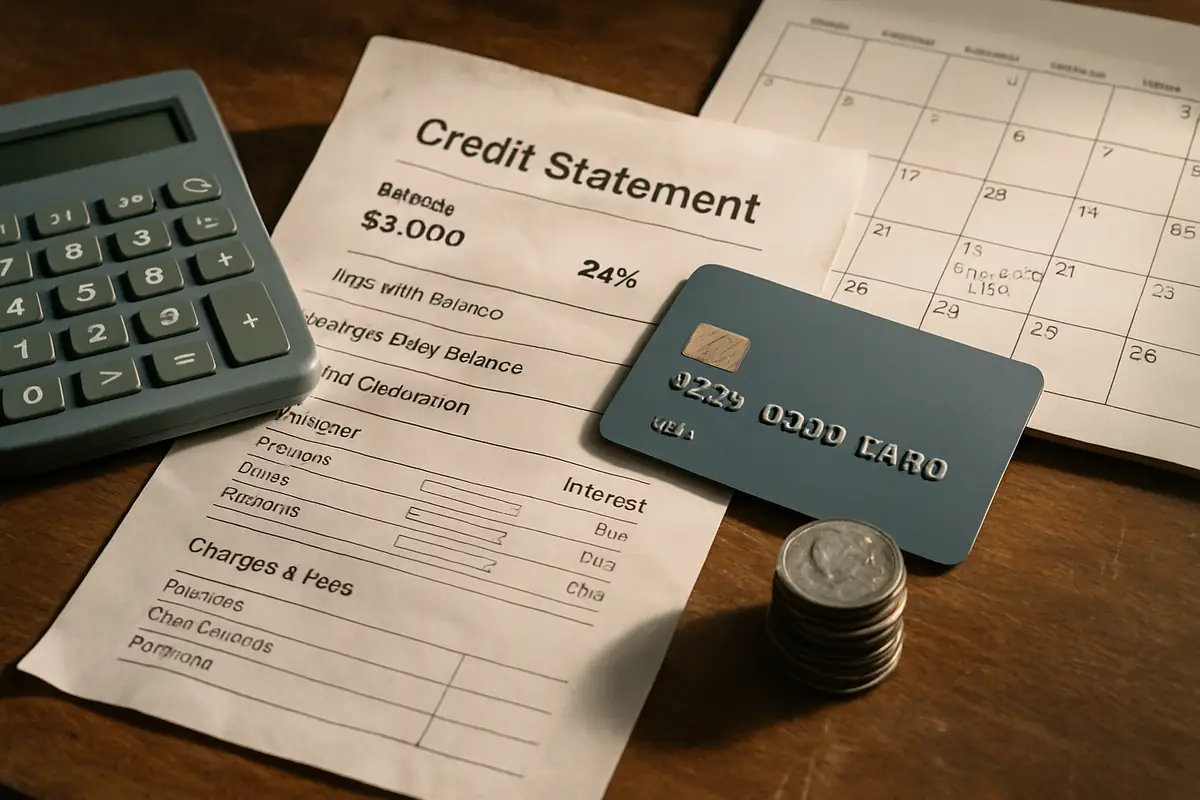
"Interest costs" add up quickly if you carry balances past due dates. Typical annual percentage rates (APR) on credit cards commonly fall between about 18% and 30%. For instance, if you carry an average $3,000 balance on one card at 24% APR without paying it off promptly, interest adds roughly $60 per month or more.
"Worked Example: Calculating Interest Cost on One Card"
"Samantha carries a $3,000 balance on her card with a 24% APR. Wanting to know her monthly interest cost if she pays only the minimum due (typically around 2% of balance), she calculates as follows." First, convert APR to monthly rate: 24% ÷ 12 = 2% per month interest rate.
"This means Samantha’s debt reduces very slowly if she pays minimums only; most bills are interest charges rather than principal repayment."
Behavioral Scenarios: What Happens When You Miss Payments Across Multiple Cards?
The Johnsons’ Late Payment Headache
The Johnson family has four open cards with limits totaling approximately $12,000. Life got busy last month and they missed payments on two cards while paying minimums on others.
When they miss payments even once by more than 30 days after due date, those late payments get reported to bureaus and can reduce their score significantly—often by 50 points or more within months depending on prior standing.
In addition to rating impact described earlier (affecting about 35% of score), penalties may include late fees averaging $25–$40 per incident plus increased APRs up to penalty rates around 29–30%, compounding costs.
Pros and Cons of Carrying Several Credit Cards
Where This Helps
- Spreading spending keeps individual card utilization low.
- Access to various rewards programs tailored by category.
- Having backup options reduces risk during fraud or lost card situations.
- Diversification can improve length-of-credit-history factor over time.
Where Caution Is Needed
- More due dates increase risk of missing payments leading to penalties.
- Higher chance of accumulating annual fees unless monitored closely.
- Temptation to overspend especially when limits add up significantly.
- Complexity increases likelihood of confusion about timing affecting reported balances.
Checklist: Managing Multiple Cards Without Harming Your Credit Score
- Keep total balances under roughly 30% of combined credit limits at all times.
- Pay off statements fully whenever possible before due dates to avoid interest.
- Monitor each card’s billing cycle so payments reduce reported balances effectively.
- Avoid applying for too many new accounts in short periods – space applications over months.
- Set calendar reminders or automatic payments aligned with each statement's due date.
- Be mindful of annual fees versus rewards value; close unused costly accounts thoughtfully.
- Check statements regularly for errors or fraud since multiple accounts increase exposure risk.
- Track how each card’s behavior affects your overall financial picture rather than focus on one alone.
Does opening many cards hurt my credit permanently?
No; hard inquiries from new applications cause small temporary drops lasting about a year.
Is it better to have one big-limit card or several smaller-limit ones?
It depends—multiple cards help keep utilization low if spending spreads well; single card easier to manage but risks higher utilization percentage.
Will closing old unused cards impact my score?
Closing old accounts can shorten average account age affecting length-of-credit-history negatively but reduces available limit which may increase utilization ratio.
How does reward redemption affect my balances?
Rewards generally don’t add debt but redeeming cashback or points doesn’t reduce reported balance unless used directly toward statement credits.
Impact of Credit Utilization Across Multiple Cards
When managing multiple credit cards, credit utilization becomes a more complex but critical factor in determining your overall credit score. Credit utilization refers to the ratio of your outstanding balances to your total available credit limits. Instead of just looking at individual cards, credit scoring models assess the aggregate utilization across all your cards. For example, if you have three credit cards each with a $5,000 limit and carry a balance of $1,000 on one card only, your overall utilization is roughly 6.7%, which is considered excellent. However, if you spread out $3,000 of debt evenly across all three cards, your utilization still remains 20% overall but each card individually shows 20%, which can sometimes be viewed less favorably by lenders. The key takeaway is that maintaining low utilization on all cards helps improve your creditworthiness since it signals responsible credit management.
Moreover, some credit scoring models also look at the highest utilization on any single card as a separate factor. Even if your total utilization is reasonable, maxing out one card while having low balances on others may negatively impact your score. It's important to monitor how you distribute balances among multiple cards and avoid maxing out any single card. Proactively paying down balances or redistributing payments can help maintain a healthy balance profile and optimize your scores. This nuance highlights why simply having multiple cards isn’t inherently harmful; rather, how you manage those accounts plays a pivotal role.
Credit Mix and Its Influence on Your Score
One often overlooked advantage of having multiple credit cards lies in the improvement of your credit mix, which accounts for approximately 10% of most FICO scoring models. Credit mix refers to the variety of credit types you possess such as installment loans (auto loans, mortgages) and revolving credit (credit cards). By holding several credit cards alongside other forms of debt, you demonstrate an ability to manage different types of financial obligations responsibly. For example, an individual with a mortgage, an auto loan, and three active credit cards typically has a more diverse portfolio than someone with only one revolving account.
This diversity signals to lenders that you are experienced with various borrowing mechanisms and can handle different payment schedules and debt structures effectively. However, it’s important to note that merely opening many cards for the sake of increasing this mix without proper usage or payment history will not enhance your score significantly. The quality of management across those accounts matters more than quantity alone when considering the positive influence on your creditworthiness.
Potential Drawbacks: Risks of Overextension
While multiple credit cards offer benefits for building credit, there are notable risks associated with overextending yourself financially. Having access to large cumulative credit limits can tempt some consumers into accumulating excessive debt beyond their repayment capacity. This increased debt burden can lead not only to higher interest payments but also negatively impact credit scores due to rising utilization rates or missed payments.
Additionally, managing multiple card statements monthly increases the chance of missing due dates or losing track of payment amounts. Even one missed payment can severely damage your score for months or years afterward because payment history comprises about 35% of most scoring models. It’s essential that individuals with several open accounts implement disciplined budgeting techniques and possibly use digital tools such as calendar reminders or automated payments to mitigate these risks.
Hard Inquiries and Their Cumulative Effect
Every time you apply for a new credit card, a hard inquiry is recorded on your credit report. Hard inquiries generally cause a small temporary dip in your score—usually around five points or less—but accumulating several hard inquiries within a short period may amplify this negative effect. Lenders might perceive multiple recent inquiries as signs that you are actively seeking new debt or experiencing financial stress.
However, it’s worth noting that the impact of hard inquiries diminishes over time and usually disappears entirely after two years from the report date. If you plan on opening multiple cards for strategic reasons such as maximizing rewards or increasing available credit limits, spacing out applications over several months rather than applying en masse can help minimize adverse impacts on your score.
Strategic Management Tips for Multiple Credit Cards
To harness the benefits while minimizing downsides of multiple credit cards, adopting strategic management practices is essential. First, always pay balances in full each month when possible to avoid interest charges and maintain low utilization ratios. Second, keep track of each card’s billing cycle and due dates using digital apps or calendar alerts to prevent missed payments.
Third, consider consolidating smaller unpaid balances onto one card with favorable terms rather than spreading debt thinly across many accounts — this can simplify repayment efforts and improve scoring factors related to high utilizations per account. Fourth, regularly review annual fees versus benefits offered by each card; closing underused high-fee accounts might make sense once their positive impact wears off compared to associated costs.
Common Misconceptions About Multiple Credit Cards
A widespread myth is that having numerous credit cards automatically damages your credit score because lenders see it as risky behavior. In reality, responsible usage—such as timely payments and prudent balance management—is far more significant than the number of accounts held. In fact, many seasoned financial advisors recommend maintaining at least two or three active cards to build a robust profile with diversified usage patterns.
Another misconception is that closing old unused accounts improves scores by reducing temptation or simplifying finances; however, closing older accounts can shorten average account age—a key scoring factor—and reduce available credit which may increase utilization ratios unfavorably. Unless there are compelling reasons (such as high annual fees), keeping longstanding accounts open usually benefits long-term scoring outcomes.
Where this helps
- Improved overall available credit leading to lower utilization ratios.
- Diversified credit mix enhancing score stability.
- Access to varied rewards programs tailored to spending habits.
- Increased financial flexibility in emergencies.
Where caution is needed
- Higher risk of overspending leading to debt accumulation.
- Increased complexity managing multiple due dates.
- Multiple hard inquiries negatively affecting score temporarily.
- Potential fees from unused but open accounts.