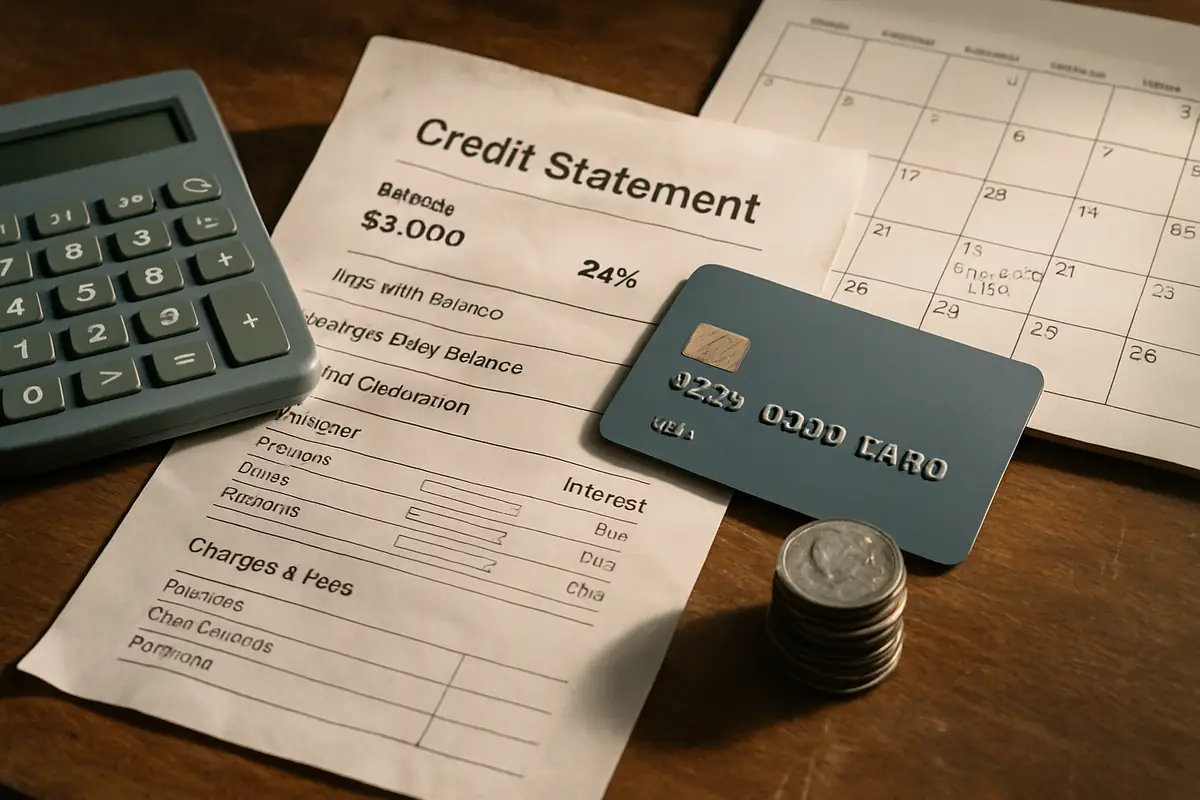
Imagine you have a credit card balance of $3,000 and an APR (Annual Percentage Rate) of 24%. But did you know that the way your credit card company calculates interest could mean hundreds of dollars difference in what you owe over a few months? This article compares common interest calculation methods used by credit card issuers, explaining how each works, what it means for your balance, and how your payment habits influence the final cost.
How Credit Card Interest Is Calculated: The Basics
When you carry a balance on your credit card past the due date, the issuer charges interest on that balance. The APR is the yearly cost of borrowing expressed as a percentage. For example, a 24% APR means if you carried a $1,000 balance for a full year without paying any down, you'd owe about $240 in interest before payments or fees. However, the real cost depends on how the issuer applies this APR—daily, monthly, or another method—and when they calculate your balance during the billing cycle.
The 'grace period' is key to understanding credit card interest. Many cards offer about 21 to 25 days after your statement closes before payment is due. If you pay your full balance by then, no interest accrues. Carrying any balance forward starts interest charges immediately after that due date. But even when interest applies, how it’s calculated can vary widely.
Daily Periodic Rate (DPR) vs Monthly Periodic Rate (MPR): What’s the Difference?
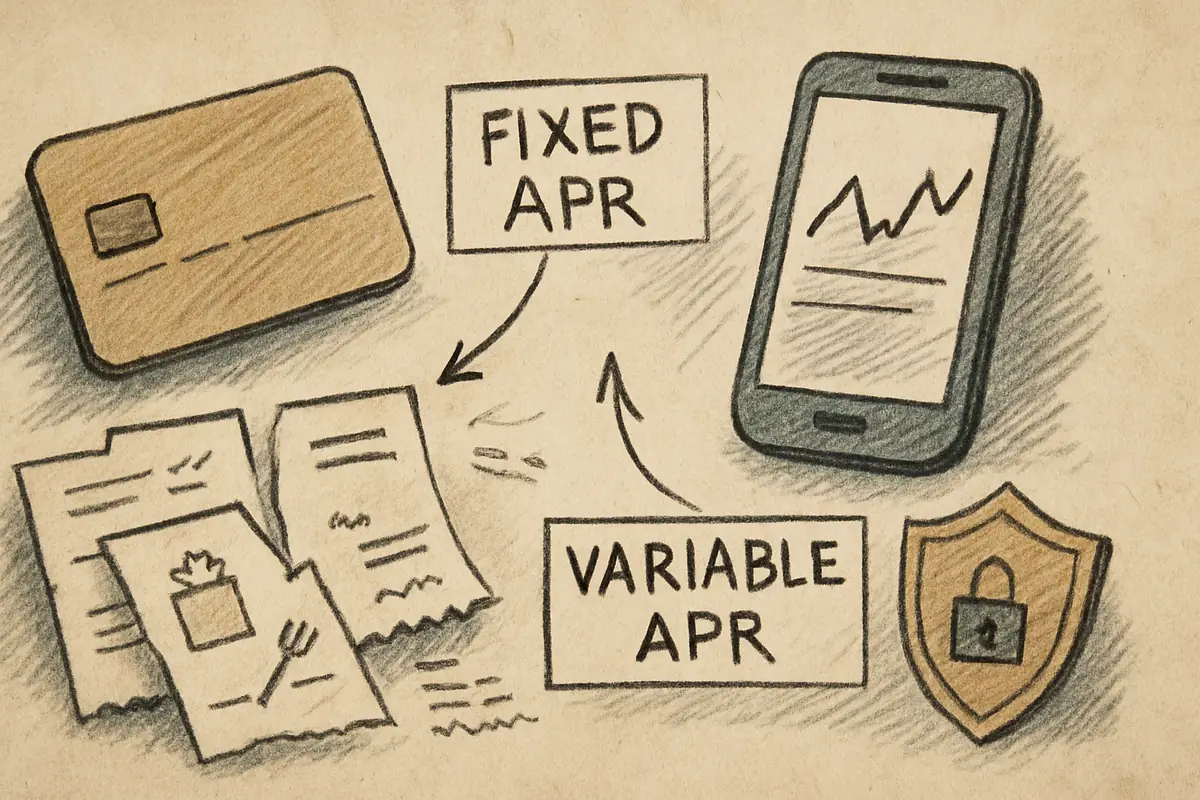
Most credit cards don’t just divide the APR by 12 months to get monthly interest; instead, many use a Daily Periodic Rate (DPR). To get DPR, the APR is divided by 365 days. For example, with a 24% APR, the DPR would be approximately 0.0658% per day (24% ÷ 365). Each day’s outstanding balance earns this daily rate of interest.
With DPR, interest compounds daily because each day’s accrued interest adds to the balance for calculating the next day’s interest. Over one month, this leads to slightly more total interest compared to simply dividing APR by 12 and charging that monthly rate once.
Monthly Periodic Rate (MPR) divides APR by 12 directly—for example, 24% ÷ 12 = 2% per month—and applies that rate once at the end of the billing cycle on your average daily balance or statement balance.
Which method a card uses can affect how much interest you pay when balances fluctuate within a cycle or if you make payments mid-cycle.
Worked Example: Calculating Interest With Both Methods
Let’s say you carry a $3,000 balance with an APR of 24%, and you make no new purchases or payments during a 30-day billing cycle. Using DPR:
- Daily Periodic Rate = 24% / 365 = approx. 0.0658% per day
- Interest in one day = $3,000 × 0.000658 = $1.97
- Accumulating over 30 days with compounding: Total Interest ≈ $60.71
(This is calculated as $3,000 × [(1 + 0.000658)^30 –1])
Using MPR:
- Monthly Periodic Rate = 24% /12 = 2%
- Interest for the month = $3,000 × 2% = $60
Though close in this simple scenario, DPR will generally yield slightly higher interest costs because of daily compounding.
"Average Daily Balance" vs "Adjusted Balance": What You Should Know
"Average Daily Balance" means issuers calculate interest based on your balance each day through the billing cycle and then average those amounts before applying the periodic rate. Any payments or new purchases during the month change that average and thus affect interest owed.
"Adjusted Balance" method subtracts payments made during the billing cycle from your starting balance before calculating interest once at cycle end. It doesn’t factor in purchases made during that same cycle until next time.
"Average Daily Balance" usually benefits consumers who pay down balances early because it lowers their daily averages faster than "Adjusted Balance." Conversely, "Adjusted Balance" can sometimes delay benefits from payments until after statement closing.
"Two-Cycle Billing" and Other Less Common Methods That Cost You More
"Two-cycle billing" calculates interest based on balances from two previous billing cycles rather than just one current cycle. This method can significantly increase what you pay in interest if you carried high balances recently but lowered them in the current month.
"Previous balance method" charges interest on the entire statement balance at cycle end without averaging or factoring payments made during that period—often making it costlier than average daily calculations.
| Interest Calculation Method | How It Works | Impact On Your Balance |
|---|---|---|
| Daily Periodic Rate with Average Daily Balance | Calculates daily interest based on each day's balance; compounds daily. | Can result in slightly higher interest due to compounding; rewards early payments. |
| Monthly Periodic Rate with Adjusted Balance | Applies monthly rate once based on starting balance minus payments. | Simpler but may delay benefit from payments; less sensitive to spending changes. |
| Two-Cycle Billing | Uses balances from two prior cycles instead of current. | Often results in higher unexpected charges if balances fluctuated. |
| Previous Balance Method | Calculates interest on statement balance ignoring mid-cycle activity. | Tends to be more costly if payments are made mid-cycle; less flexible for consumer. |
How Payment Timing Influences Your Credit Card Interest
Your payment timing within a billing cycle affects both how much interest you accrue and how much shows up on your statement. For example, paying off part of your $3,000 balance early in the cycle reduces your average daily balance and cuts down total interest under DPR methods.
If you wait until just before your statement closes to pay down balances or only make minimum payments close to due dates after statements issue, you'll generally pay more overall interest. A single mid-cycle payment might reduce principal used for future calculations but won't prevent prior days' accrued costs.
How Interest Charges Affect Your Credit Utilization And Score
Credit utilization is the ratio of your credit card balances relative to their limits and accounts for about 30% of most credit scoring models. Carrying high principal balances—even temporarily due to accrued interest—increases utilization ratios reported to credit bureaus.
For example, if you have a $5,000 limit and carry a $3,000 principal plus $60 accrued interest as part of your statement balance, your reported utilization would be roughly ($3,060 ÷ $5,000) ×100 = ~61%. Utilization above about 30-35% typically lowers scores until balances drop.
Minimizing Hidden Costs: Fees Interacting With Interest Calculations
Beyond pure interest calculations there are other hidden costs that can increase what you pay overall: late fees (commonly $25–$40), returned payment fees ($30+), over-limit fees (if applicable), and cash advance fees which often start accruing immediate daily compounded interest at higher rates (25–30%).
These fees add directly to your principal and also influence average daily balances affecting subsequent interest calculations—especially under DPR methods.
Understanding Statement Cycles and Their Role in Interest Charges
Your statement cycle length is usually about 28-31 days but varies by issuer and account setup. The key dates are statement closing date—when issuers calculate what appears on your bill—and due date—when payment must arrive to avoid late penalties and additional finance charges.
If you make purchases after closing date but before due date these appear on next statement without extra charges until then—but if unpaid past due date they trigger fresh accruals immediately.
Behavioral Scenarios: How Different Habits Influence Your Interest Costs
Where Paying Early Helps Most
- Lowers average daily balances reducing compounded interest.
- Keeps utilization ratio lower improving potential credit score.
- Avoids escalating minimum payment traps tied to growing principal.
Challenges Of Early Payments
- Requires budgeting discipline and cash flow management.
- Payments made very early may reduce available funds for emergencies.
- Not all issuers provide real-time updated statements reflecting early payments.
Payment Timing
Pay early within billing cycles whenever possible to minimize average daily balances and reduce compounded finance charges.
Statement Closing Date
Know when your statement closes so you can plan purchases or payments effectively.
Minimum Payments
Understand minimum payment formulas often include accrued interests plus fixed percentages which can extend debt duration.
What is APR exactly?
APR stands for Annual Percentage Rate—the yearly cost of borrowing expressed as a percentage including all finance charges except fees.
Why does my card use Daily Periodic Rates?
Daily calculations allow issuers to charge accurate interests based on usage patterns including purchases and repayments within each billing cycle.
Can I avoid paying any finance charge?
Yes—by paying your full statement balance by due date within grace period most cards waive all monthly interests on purchases.
Does making only minimum payments affect my score?
Yes—because slower payoff keeps high utilization longer which may lower credit scores over time despite timely minimum payments.
How Daily vs. Monthly Interest Calculations Affect Your Credit Card Balance
Understanding whether your credit card issuer calculates interest daily or monthly can have a significant impact on the amount you end up paying in interest charges. With daily interest calculation, the issuer computes interest on your outstanding balance each day, which means that any new purchases, payments, or fees immediately affect how much interest accrues. This method often results in higher overall interest since the balance compounds every day. On the other hand, monthly calculation means the issuer sums up your average daily balance or statement balance over the billing cycle and applies interest just once per month. While this might seem simpler, it can sometimes lead to larger lump-sum interest being added if you carry a high average balance during the month. Knowing which method your card uses allows you to strategize payments more effectively—for instance, making payments early in the billing cycle can reduce daily accrued interest more than waiting until the statement due date.
Consider a scenario where two credit cards have the same annual percentage rate (APR) but different interest calculation methods: Card A uses daily compounding and Card B uses monthly compounding. If you maintain a balance of $1,000 over a month without making payments, Card A’s daily compounding will result in slightly higher total interest because each day’s accrued interest is added to the principal before calculating the next day’s interest. Over time, this difference grows and can cost you tens or hundreds of dollars more annually if you carry balances consistently. Therefore, even small nuances in how interest is calculated can translate into meaningful financial differences.
Another important factor to consider is how grace periods interact with these calculation methods. Most credit cards offer a grace period during which no interest is charged if you pay your full balance by the due date. However, if you only pay part of your balance or carry a balance from one period to another, daily interest calculations can begin accruing immediately on any remaining balance plus new purchases. This makes it crucial to understand that with daily compounding cards, even small unpaid amounts accrue more rapidly than with monthly compounding cards. Being aware of this helps cardholders prioritize paying off balances early or choosing payment timing strategically to minimize costly accrual.
To put this into practical context, let’s say you made a $500 purchase right after your statement closed and did not pay off that amount during the current billing cycle. If your card calculates interest daily, from that moment forward every dollar starts accumulating interest until paid off. In contrast, with monthly calculation cards, those new purchases might not start incurring new interest charges until after the next billing cycle ends if you clear previous balances in full. This subtle difference highlights why some consumers prefer cards with monthly compounding for managing large purchases while planning payoff timing carefully.
The choice between simple versus compound interest also plays a role alongside calculation frequency. Some credit cards use compound interest, meaning accrued interest itself earns further interest during subsequent periods; others apply simple interest solely on principal balances without compounding within a single billing cycle. Compound interest generally increases what you owe faster but can be managed effectively through timely payments and reducing carried balances early. Cards with simple interest might appear more straightforward but could still lead to substantial charges if balances remain unpaid over multiple cycles.
Strategies to Minimize Interest Impact Based on Calculation Methods
One of the most effective strategies to mitigate costly credit card interest charges is understanding how your card calculates and compounds interest and adjusting payment habits accordingly. For example, if your card uses daily compounding, making multiple smaller payments throughout the month rather than one lump sum at due date helps lower average daily balances faster and decreases total accrued interest significantly. Additionally, paying off recent purchases immediately after they post reduces days on which those amounts start earning additional interest charges.
Conversely, if your credit card calculates and applies interest monthly based on average daily balances or statement balances without intra-cycle compounding, focusing payments just before statement closing dates may yield benefits by lowering reported balances when interests are calculated. This approach requires careful budgeting and awareness of billing cycles but can reduce overall costs for those disciplined enough to track dates closely.
Furthermore, planning large purchases around billing cycles can provide an advantage regardless of calculation method. For instance, buying items shortly after statement closing gives you maximum time before those charges begin accruing substantial finance charges—especially critical with daily compounding cards where earlier purchase dates mean longer exposure to accruing interests.
Comparing Different Lenders’ Interest Calculation Disclosures
"Interest calculation methods vary widely among credit card issuers and are typically outlined in their terms and conditions under sections labeled “How We Calculate Interest” or “Finance Charges.” Some lenders clearly specify whether they use average daily balance with daily compounding or simpler monthly methods; others may provide less transparency requiring consumers to inquire directly or read fine print carefully." Understanding these differences empowers consumers to make informed choices when selecting credit cards based on their spending habits and payoff strategies.
"For example, some major banks use average daily balance methods combined with daily compounding for most revolving credit cards because it maximizes revenue from carried balances compared to monthly calculations alone. Conversely, smaller issuers or credit unions might favor monthly calculations with no intra-cycle compounding as part of competitive offerings aimed at financially cautious customers seeking predictable costs." Recognizing these distinctions helps avoid surprises in bill amounts and facilitates better financial planning.