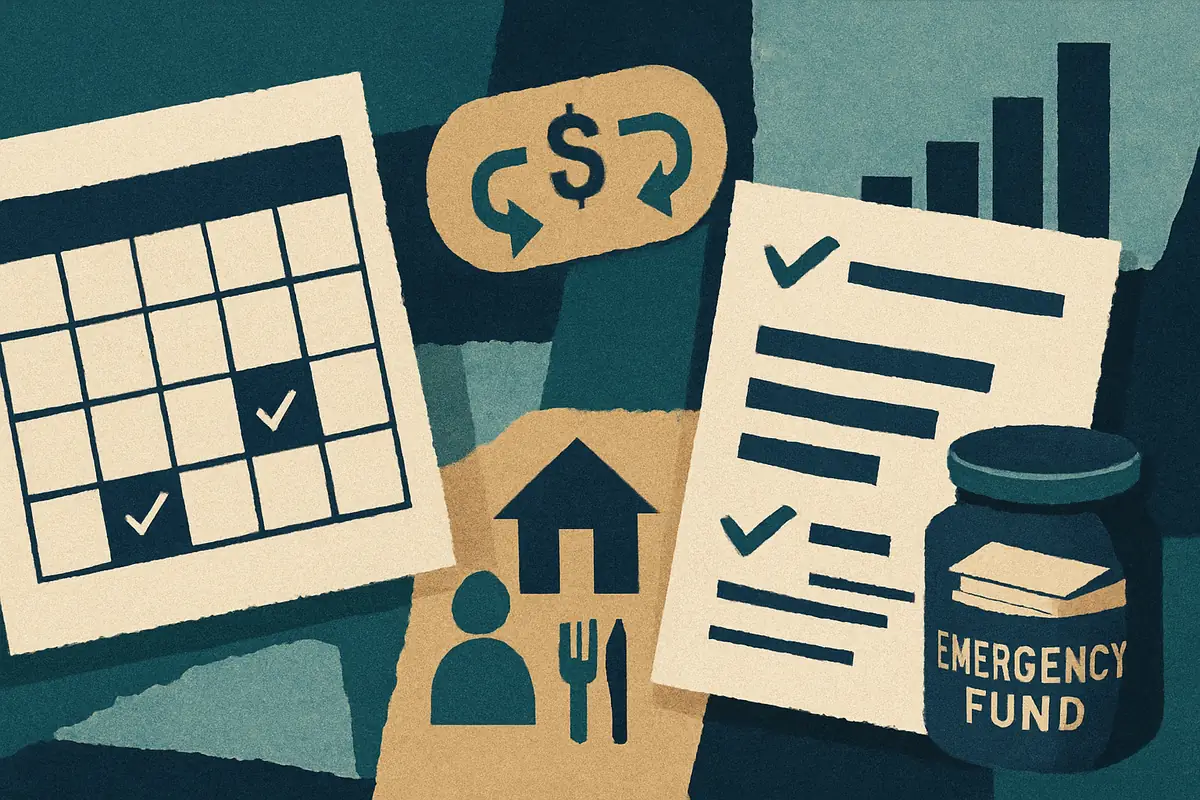
A $640 transmission repair can undo a flawless spreadsheet in one afternoon. That is the gap between monthly budgeting and financial resilience: a budget tells you where this month's dollars go, while resilience—the capacity to absorb a shock without borrowing at 18–30% credit card interest—determines whether next month survives the surprise. For borrowers with loan payments, the difference between a $35 overdraft spiral and a calm transfer from reserves comes down to which system was built first.
The Limits of Monthly Budgeting for Borrowers
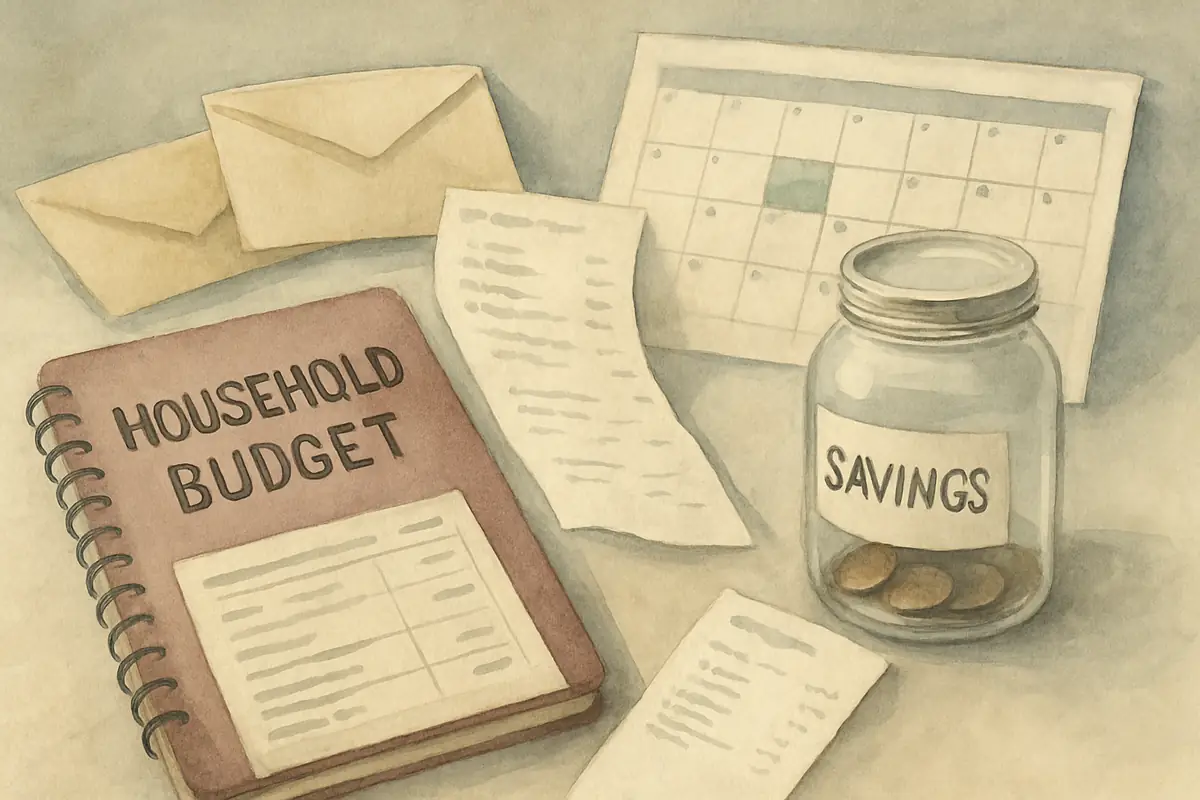
Monthly budgets have long been the default framework for keeping spending in check, and the popular 50/30/20 rule—roughly 50% of take-home pay to needs, 30% to wants, 20% to savings and debt payoff—gives that framework a tidy shape. But tidiness assumes expenses arrive on schedule. Borrowers juggling loan payments alongside commission swings or gig income face timing mismatches a calendar-month plan cannot see: a card statement due on the 3rd when the paycheck clears on the 15th. When the math fails by even $80, the fallbacks are expensive: a single overdraft typically costs $25–$35, and carrying the shortfall on a credit card means paying an annual percentage rate—the yearly cost of borrowing, or APR—that commonly runs 18–30%, with 22–24% typical.
Take Sarah and Mark, who borrowed $12,000 through a personal loan for medical expenses, at $265 a month. Their budget covered the loan, rent, and regular bills precisely but ignored life's irregular middle layer: pharmacy refills swinging between $45 and $90, a $380 vet visit, a school activity fee. Income covered everything annually—the problem was timing. Twice in one quarter they put a shortfall on a card at 24% APR because cash arrived five days late. That is monthly budgeting's chief limitation: it manages expenses month by month but builds no capacity to absorb shocks or shift payment timing.
Introducing Financial Resilience: Flexibility Over Fixed Deadlines
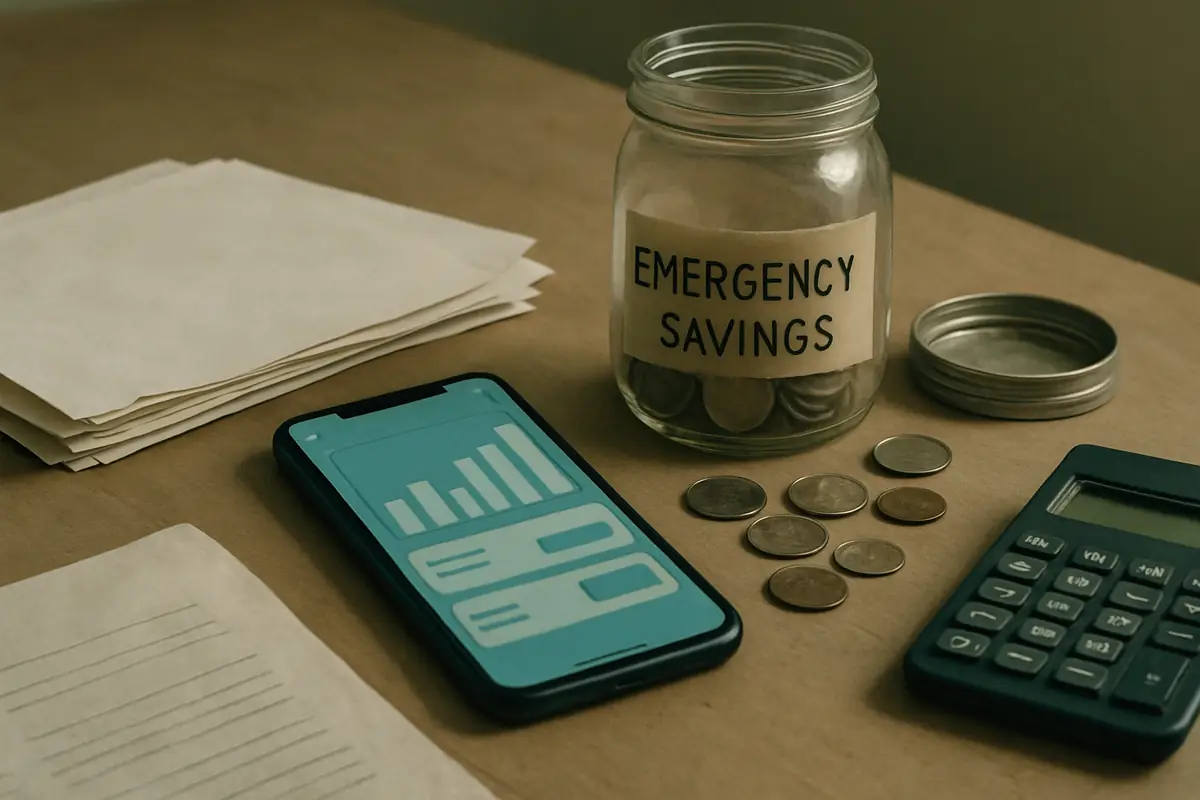
Financial resilience shifts attention from a single month's plan toward buffers and flexible systems built for unpredictability. The centerpiece is the emergency fund—cash set aside for surprises, reachable within a day or two. The standard target is 3–6 months of essential expenses—$9,000–$18,000 for a household spending $3,000 a month. Parking it in a high-yield savings account (HYSA)—a federally insured account paying substantially more than a standard one—currently earns about 3.5–4.5% annual percentage yield (APY, the rate after compounding), versus the 0.01–0.05% many traditional savings accounts still pay. On a $10,000 buffer, that is roughly $400 a year of passive growth versus pocket change.
Consider James, whose freelance earnings swing from $3,200 in a slow month to $7,500 in a strong one against a $1,850 mortgage. Rather than pinning exact amounts to every category, he maintains a reserve equal to three months of mortgage plus essentials—about $9,500—and runs a rolling twelve-week cash flow plan. In a lean stretch he draws the mortgage from reserves; in a flush month he refills before spending on wants. His system tolerates a 50% income drop for a full quarter; a rigid monthly budget breaks in the first bad month.
Emergency Fund Priority
Build cash reserves covering 3–6 months of loan payments plus essentials, held in a HYSA earning 3.5–4.5% APY rather than a checking account earning nearly nothing.
Flexible Payment Planning
Most card issuers and many servicers will move a due date free—shifting a payment from the 3rd to the 18th aligns it with payday and ends a chronic squeeze.
Buffering Variable Expenses
Use sinking funds—small monthly set-asides for predictable but irregular costs. $50 a month covers a typical $600 annual car maintenance cycle before the bill arrives.
Scenario Breakdown: Two Households Navigating Debt Differently
How this can look in practice
Emma's Tight Monthly Budget - Emma earns a steady salary and assigns every dollar a purpose before payday. Her $9,500 personal loan at 11.5% APR costs $209 a month—a non-negotiable line item. Then her car needs $700 of work mid-cycle. With no set-aside funds, she puts half on a card at 26% APR and squeezes half from grocery and utility money—triggering a $32 overdraft when a forgotten autopay clears early. One repair becomes three new problems.
Emma's commitment is real, but her plan works only when income and expenses hit their marks precisely. A single $700 deviation—routine in car ownership—turns a disciplined budgeter into a revolving borrower paying more than twice her loan's rate on the overflow.
How this can look in practice
Luis's Resilient Approach - Luis earns commission income ranging from $2,800 to $6,200 a month, but he has built a buffer equal to four months of his $315 loan installment plus essentials—just over $10,000 in a HYSA earning 4.1% APY. When his payment is due the first week of May but his commission lands mid-month, he pays from the cushion and refills it when the check arrives. He tracks one number weekly—total liquidity, meaning cash he can access within two days—instead of thirty category balances.
Luis's method exemplifies resilience: anticipating variability lets him carry debt sustainably despite income swings of more than 100% between best and worst months. He makes the same payments Emma does—just never under duress, and never at card rates.
Stress Points: Timing Mismatches and the Emotional Toll
For borrowers like Emma, the gap between paycheck and deadline triggers a daily countdown of anxiety—will there be enough, and will a miss hurt the credit score? The stakes are concrete: a late fee typically runs $25–$40, and a payment reported 30 or more days past due can shave 50–100 points off a clean credit score. Billing cycles rarely respect budget boundaries—rent on the 1st, the loan on the 7th, payday on the 15th—so borrowers get caught between contractual obligations and daily living standards, and the friction chips away at sleep, focus, and household morale.
Households practicing resilience report otherwise, because their strategies anticipate disruption. Even a starter cushion of $1,000 changes the emotional weather around a due date: the bill is an event, not a threat. These benefits compound—calmer borrowers make fewer panic decisions, and panic decisions such as payday-style advances or minimum-only payments at 24% APR are where debt problems metastasize.
Benefits of Financial Resilience for Borrowers
- Cushions unexpected expenses without resorting to borrowing at 18–30% APR or paying $25–$35 overdraft charges.
- Reduces anxiety from rigid deadlines that misalign with variable income by weeks.
- Encourages proactive cash management aimed at sustainability, not just the next payday.
Challenges When Shifting from Budgeting to Resilience
- Building 3–6 months of reserves takes discipline and often 1–3 years for households saving $100–$300 a month.
- Resilient strategies demand tracking cash flow timing, not just category totals.
- Some lenders resist flexible scheduling, and not every servicer offers free due-date changes or hardship plans.
Real-World Trade-Offs: Sacrifices Behind Both Approaches
Monthly budgeting's allure is its simplicity—assign fixed categories and stick to them—but the cost is often invisible austerity. Borrowers quietly skip social plans, defer dental work, or stretch a grocery budget inflation has already outrun: food-at-home prices climbed roughly 20–25% cumulatively between 2020 and 2024, and even now, with overall consumer price inflation at a calmer 2.5–3.5% annually versus the roughly 9% peak of mid-2022, a family of four routinely spends $900–$1,300 a month at the store. Emma's plan means repeatedly cutting small comforts while staying exposed to anything large. Meanwhile subscription creep—the slow accumulation of streaming, app, and delivery memberships—quietly drains a typical household of $50–$100 a month without a single deliberate decision.
Resilience demands its own up-front sacrifice: less immediate spending power and slower visible payoff progress. Luis holds $10,000 earning about 4% while his loan costs 11.5%—prepaying would win on paper, and he knows it. He chooses liquidity because one missed payment during a two-month commission drought would cost more in fees, credit damage, and forced 26% card borrowing than the interest spread ever will. Sound logic, but emotionally taxing when debt-crushing peers post payoff milestones he cannot yet match.
Budgeting Trade-Offs
Sacrifices spontaneity and demands precise control; hidden stress accumulates beneath surface calm, and one $500–$700 surprise can unravel months of discipline.
Resilience Trade-Offs
Slows visible debt reduction—money earning 4% sits idle against loans costing 11–26%—and requires ongoing attention to liquidity.
Emerging Habits That Bridge Both Worlds
Borrowers do not have to choose a side. Keep the 50/30/20 skeleton, but treat the 20% slice as a sequenced pipeline—first a $1,000 starter cushion, then one month of essentials, then debt acceleration. Even $25 a week, automated, becomes $1,300 a year, and at 4% APY the account quietly adds to itself. Sinking funds turn the scariest category—irregular expenses—into boring line items: $50 a month for car repairs, $30 for insurance premiums, $40 for holidays.
Cash flow timing deserves the same treatment. Utilities in most states offer budget billing, which averages usage across 12 months so a $240 January heating bill and a $95 May bill both become a flat payment around $165—removing seasonal spikes entirely. Mapping paydays against due dates turns rigid deadlines into milestones you scheduled on purpose.
How this can look in practice
Maya uses a hybrid approach: she keeps a simple monthly budget but automates a $25 weekly transfer into a separate HYSA earning 4.2% APY, walled off from the account that pays bills. After fourteen months she holds just over $1,500—enough to absorb a typical $400–$800 emergency without touching a card. She also moved two due dates to just after payday and put her electric bill on budget billing. Her budget looks unchanged; her shock exposure is dramatically lower.
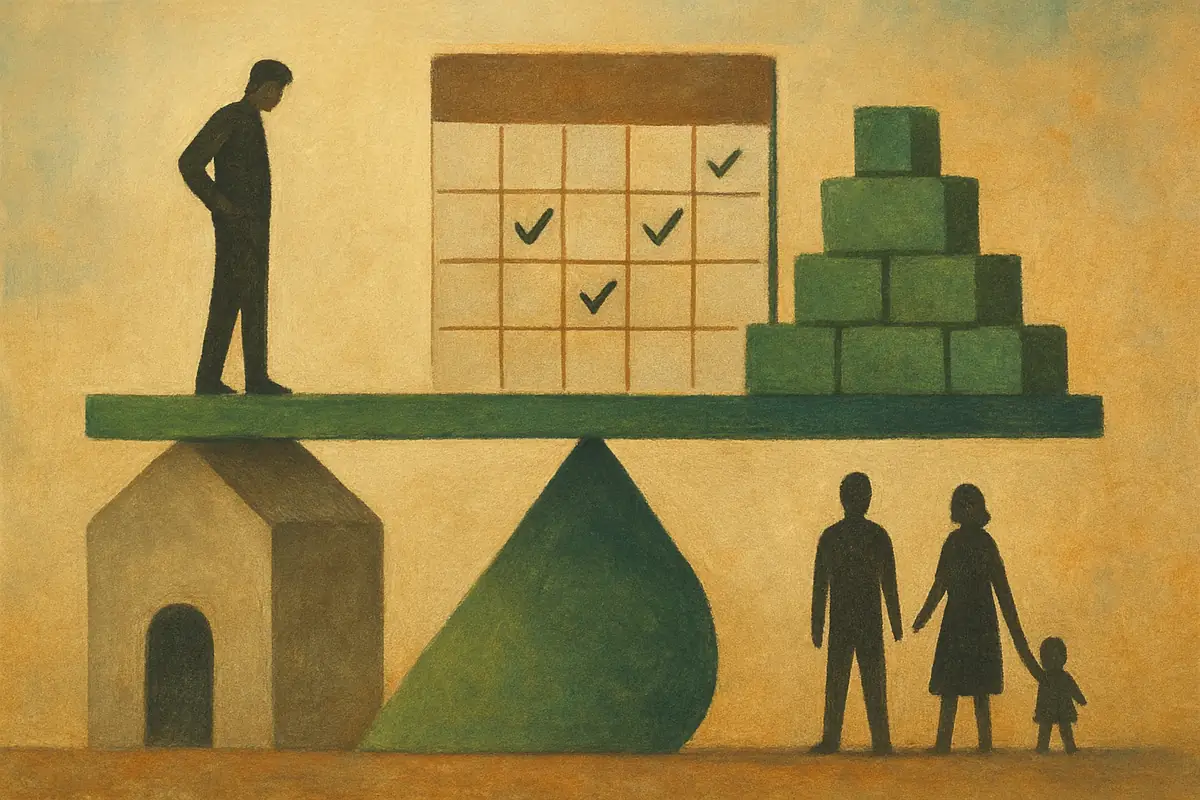
Blended methods like Maya's treat household finance as it actually behaves—not a static snapshot but a dynamic system needing both discipline and elasticity, like a bridge needing both rigid steel and expansion joints.
Where Hybrid Strategies Help
- Balancing predictability with flexibility prevents most sub-$1,000 surprises from becoming crises.
- Automated transfers of even $25–$50 a week build savings habit while keeping spending visible.
- Gradual, measurable progress—$500, then $1,000, then one month of essentials—offers real psychological relief.
Potential Pitfalls
- Requires consistent monitoring across two or three accounts, which some find burdensome.
- Adds complexity for anyone used to one checking account and one spreadsheet.
- Still vulnerable if a shock—a $4,000 medical bill, a job loss—vastly exceeds the buffer.
Practical Tips for Borrowers Transitioning Toward Resilience
Transitioning is not abandoning the budget overnight—it is incremental redirection. The most reliable cash sources are the categories no one defends: unused subscriptions ($50–$100 a month in a typical household), grocery brand swaps worth $40–$60 a month, and a trim of the "wants" bucket the 50/30/20 rule caps at 30%.
Here is the arithmetic for a concrete case. Step 1: a borrower takes home $4,400 a month, with essentials of $2,800 (rent $1,450, groceries $620, utilities $210, car and insurance $520). Step 2: her first resilience target is one month of essentials—$2,800. Step 3: she cancels $55 of forgotten subscriptions, saves $45 through grocery substitutions, and redirects $100 from dining out, freeing $200 a month. Step 4: $2,800 ÷ $200 = 14 months to a funded starter cushion. Step 5: because the money sits in a HYSA at 4.0% APY, the growing balance earns roughly $65 of interest along the way, arriving slightly ahead of schedule. Fourteen months feels slow—until you compare the alternative: the same span containing two or three surprises financed at 24% APR.
Track Your Cash Flow Patterns
Map two or three months of actual dates—when income lands versus when each debt payment leaves—and identify every gap wider than five days.
Build an Initial Cushion
Aim for one month of essential expenses—commonly $2,500–$3,500 for a mid-size-city household—before pursuing the full 3–6 month reserve.
Negotiate Payment Terms
Ask lenders about due-date changes and income-aligned schedules; most card issuers grant date moves free, and many servicers offer 3–6 month hardship adjustments when contacted early.
Setbacks during the transition are signals, not failures. Raiding the cushion for a $600 repair is the cushion doing its job; pause debt acceleration for a month, refill, and resume—rebalancing rather than restarting.
When Monthly Budgets Still Matter Most
Despite its limits, monthly budgeting remains foundational—especially for borrowers new to debt. A credit card minimum payment typically runs 2–4% of the balance, so a $3,000 balance demands roughly $60–$120 every month regardless of what else happens; a budget makes that obligation impossible to overlook.
In early repayment stages, or when income is genuinely unstable, concrete numerical targets keep payments from slipping through the cracks. Fluid "resilience thinking" without a written baseline can drift into wishful accounting—assuming next month will cover this month's overage. A beginner who has missed payments before is better served by a rigid plan that guarantees the $209 loan payment than by a sophisticated liquidity strategy executed inconsistently.
Once minimums are met reliably for six months or more, the priority inverts: buffers and flexibility become the difference between surviving and genuine stability. The budget does not disappear—it becomes the floor of a larger structure rather than the whole building.
Monthly Budget Strengths
- Establishes clear baseline obligations—minimums, due dates, fixed bills—essential during early repayment phases.
- Simplifies decisions with defined limits per period.
- Prevents missed payments and their $25–$40 late fees when discipline or attention is limited.
Monthly Budget Weaknesses
- Creates false security if buffers are not built alongside it—balanced on paper, fragile in practice.
- Inflexible against real-world timing gaps between paydays and due dates.
- Amplifies stress when a $500-plus surprise lands with nowhere to absorb it except a credit card.
The Psychological Dimension of Financial Resilience
Financial resilience is more than arithmetic—it reshapes how a borrower experiences money. Budgeting focuses on allocation and tracking; resilience cultivates a mindset that expects disruption and pre-positions resources for it. A borrower with even a $500–$1,000 cushion is far less likely to reach for payday-style credit, where effective annualized costs can run into the triple digits, and more likely to contact a lender early when trouble looms. Viewing finances as an adaptable system rather than a monthly pass/fail test also changes self-perception: a budget miss becomes data—a signal to adjust—rather than personal failure. That reframe keeps people engaged instead of quitting after the first bad month, where most budgeting attempts die.
Mental resilience also shapes goal-setting. A borrower who loses a client or a shift can flex spending down 15–20% for a quarter rather than experiencing the event as catastrophe. Strict monthly budgets tend to register any deviation as defeat, feeding avoidance—the borrower who stops opening statements usually felt the plan had already failed. Building in slack, celebrating each $500 saved, and measuring progress in quarters rather than weeks keeps the long game playable.
Integrating Financial Resilience into Debt Repayment Strategies
Repayment plans built purely around fixed monthly payments crack when expenses spike. Resilience-driven repayment adds a buffer layer: in a $5,200 commission month against a $4,100 baseline, the surplus flows first into the reserve, then into extra principal. Sequencing matters—extra principal cannot be retrieved when the transmission fails; reserve dollars can. Once the reserve holds 3–6 months of essentials, every surplus dollar can safely attack the highest-APR balance first—a dollar against a 26% card saves far more than one against an 11% loan.
Resilient borrowers also negotiate before delinquency rather than after. Lenders consistently offer better terms—deferrals, 3–6 month reduced-payment hardship plans, waived fees—to borrowers who call while still current than to accounts already 60 days past due. A proactive call in week one of an income disruption preserves options and credit standing; silence until the second missed payment forfeits most of the leverage. Paired with a traditional budget, this posture produces repayment plans that bend under pressure instead of breaking.
Technology's Role in Enhancing Both Budgeting and Resilience
Budgeting apps range from free to about $15 a month, and the spread reflects real differences. Free tiers handle category tracking and balance alerts; paid tiers add shared household access, automated savings rules, and cash flow forecasting that flags a projected shortfall 3–7 days ahead—turning a would-be $35 overdraft into a transfer made in advance. For irregular earners, that forecasting alone can repay the subscription several times over in avoided fees.
Automation is where technology serves resilience most directly. Round-up features that sweep spare change typically capture $20–$40 a month without conscious effort; scheduled transfers move fixed amounts into a HYSA the morning after payday; and subscription-audit tools surface the recurring charges silently consuming $50–$100 a month. None of it replaces judgment, but it removes the friction and forgetfulness that sink most manual systems.
Case Studies: Borrowers Who Benefited from Emphasizing Financial Resilience
Consider Maria, a single mother repaying student loans at $310 a month while freelancing in a seasonal field where spring and fall are strong and January is reliably thin. Under a strict monthly budget she missed two payments in two years, each costing a late fee and a score hit. After reworking her system, she began banking $120 a month during her four strongest months—about $480 per busy season—to pre-fund the lean ones, and asked her servicer for an income-adjusted winter schedule. The adjustment cost nothing but a phone call. She has not missed a payment in two years, and the January dread that used to start in November is gone.
James took a technology-forward path to the same principle. Working a commission job with income swinging between $3,400 and $6,800 a month, he automated a $150 transfer to savings every payday and set alerts at 80% of each spending category. When the forecast showed a $600 shortfall ahead of the holidays, he throttled discretionary spending for six weeks instead of touching the reserve. His loan payments have run uninterrupted for three years—not because his income smoothed out, but because his system absorbed the volatility his paychecks never stopped producing.