Each year, millions of Americans incur late payment penalties on their credit card bills, with fees typically ranging from $25 to $40 per missed payment. These penalties are not just an extra line on a statement—they can have a significant impact on both finances and emotions, affecting how consumers manage their credit, perceive their obligations, and form payment habits. This article explores how the structure and timing of late payment penalties intersect with human behavior, influencing everything from monthly budgets to long-term credit health.
Understanding Late Payment Penalties and Their Mechanics
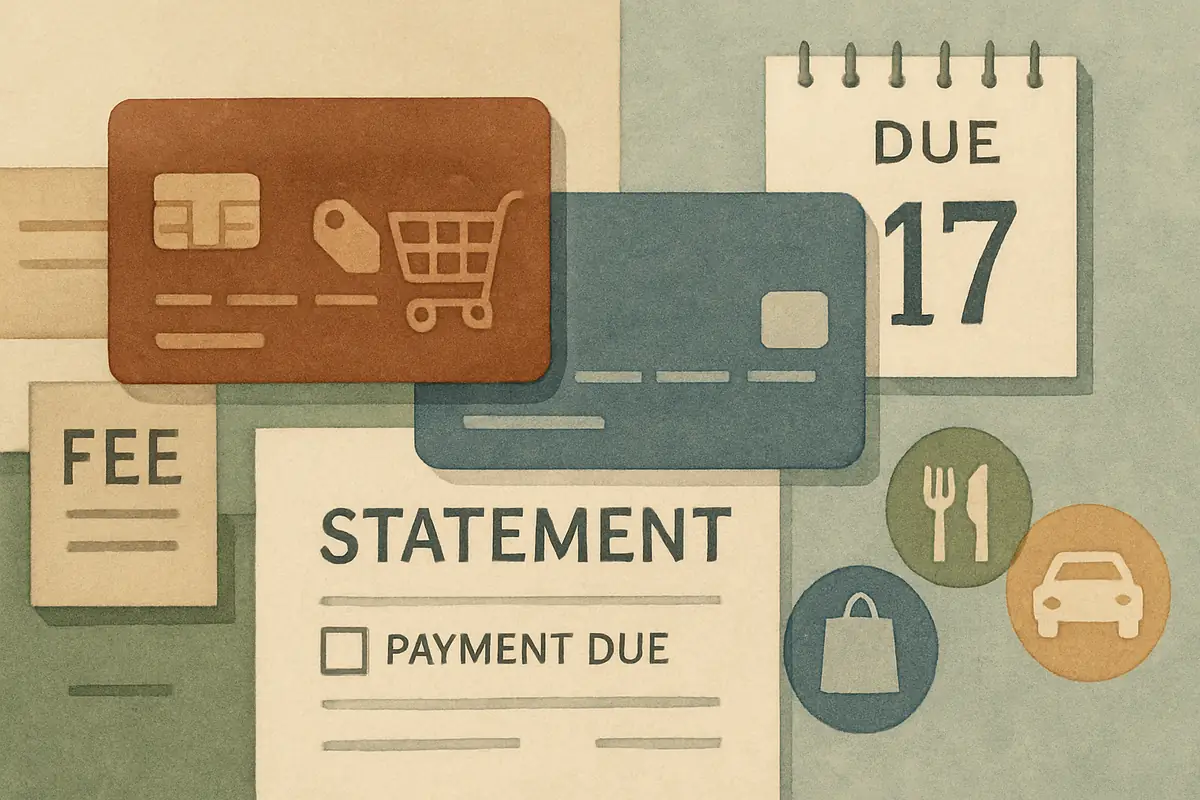
Late payment penalties are one-time fees charged by credit card issuers when a cardholder fails to make at least the minimum required payment by the due date. These fees generally range from $25 to $40 per missed payment, though repeat offenses can see fees at the higher end of this spectrum. Unlike ongoing interest charges—which are calculated as a percentage of your outstanding balance and typically accrue daily once the grace period ends—late fees are assessed as a flat amount for each billing cycle in which a payment is missed.
For instance, if your due date is June 15 and you pay on June 16, you could immediately incur a late fee, regardless of whether you pay the full balance or just the minimum. The psychological impact of this sudden, fixed charge is often more acute than the gradual buildup of interest, as it serves as a clear signal of a missed obligation. While interest rates, known as Annual Percentage Rates (APRs), commonly fall between 18% and 30% on credit cards, late fees are a distinct penalty that can quickly add up if not addressed.
Mistakes That Make Late Fees More Costly
One common mistake is misunderstanding the minimum payment deadline. Many cardholders believe that paying a few days late is harmless, but most issuers apply the full late fee as soon as the due date passes—sometimes even if the payment is just hours late. Additionally, issuers may report late payments to credit bureaus after 30 days, which can damage your credit score for up to seven years.
Missing issuer communications is another pitfall. If a cardholder overlooks an email reminder or loses a mailed statement, the likelihood of missing a payment increases. Without automated payments or digital reminders, even organized individuals can fall behind, especially if juggling multiple cards or due dates. According to industry data, more than 60% of cardholders admit to having paid late at least once, highlighting how easily these mistakes occur.
Timing and Its Effect on Late Payment Costs
Timing plays a crucial role in the financial consequences of late payments. The sooner after the due date a payment is made, the fewer additional costs accrue, but the late fee is almost always applied immediately. Interest on the unpaid balance is calculated daily, so each extra day a payment is overdue increases the total cost.
For example, suppose you have a $1,000 balance and your card’s APR is 24% (which means a daily rate of about 0.066%). If you miss your due date and pay seven days late, you will incur a $35 late fee and approximately $4.62 in additional interest ($1,000 x 0.066% x 7 days). The total extra cost for being a week late would be about $39.62, not including potential impacts on your credit report if the payment is delayed beyond 30 days.
| Factor | What it means | Impact on Cost |
|---|---|---|
| Payment Date | Date payment is received relative to due date | Late by 1 day triggers full fee of $25–$40 |
| Fee Amount | Flat penalty per missed payment | $25–$40 for each instance |
| Interest Accrual | Daily interest after grace period ends | Increases with every day overdue |
| Grace Period | Time (usually 21–25 days) after statement date before interest applies | Lost immediately if payment is late |
| Reporting Delay | When issuer notifies credit bureaus of lateness | Typically after 30 days of nonpayment |
Emotional and Behavioral Impact of Late Fees
Late fees often feel disproportionately punitive compared to other charges of similar size. This is partly because they are tied directly to a missed deadline, triggering feelings of personal failure or loss. Behavioral finance research suggests that the pain of losing money—especially as a penalty—is felt more intensely than the satisfaction of earning or saving the same amount, a phenomenon known as loss aversion.
For many, the sudden appearance of a $30 or $40 fee on a statement is a jarring reminder of a lapse in attention or control. This can create a cycle of stress, where anxiety about money management leads to further mistakes, compounding the problem. Approximately 15% of cardholders report feeling shame or embarrassment after incurring a late fee, which can discourage proactive engagement with their accounts.
Strict Late Payment Policies: Benefits and Drawbacks
Where strict policies help
- Encourage timely payments and financial discipline among cardholders, reducing delinquency rates that can otherwise exceed 5% annually.
- Allow issuers to recover costs associated with account monitoring and collections, which can run into millions of dollars each year for large banks.
- Signal the seriousness of credit obligations, reinforcing responsible borrowing behavior.
Where caution is needed
- High fees can trap struggling cardholders in cycles of debt, especially if balances are already above $2,000—the average revolving balance in the U.S.
- Emotional strain from penalties may lower trust and satisfaction with credit providers, contributing to customer attrition rates of 10% or more annually.
- Immediate application of fees can disproportionately affect those facing short-term hardships, such as illness or job loss, who may already be financially vulnerable.
How Grace Periods Actually Work
Many cardholders believe that being "just one day late" shouldn’t matter, but most credit cards do not offer a grace period for late payments. A grace period, in this context, refers to the time between the statement date and the payment due date—typically 21 to 25 days—during which no interest accrues if the balance is paid in full. However, once the due date passes, the late fee is usually assessed immediately, and the grace period is lost for that billing cycle.
It’s important to know whether your card’s issuer processes payments based on the date you submit or the date funds are received. For instance, if you initiate a payment two days before the due date but your bank takes three business days to process, you could still be marked late and incur a fee. This is especially relevant for payments made via mail or from external bank accounts, where processing delays of 1–3 days are common.
How this can look in practice
Imagine Sarah, who schedules a $500 payment from her checking account two days before her card’s June 10 due date. Her bank processes payments in two business days, but June 10 falls on a Friday. The payment isn’t credited until Monday, June 13. Despite her early action, Sarah is assessed a $30 late fee because the payment posts after the due date, underscoring the importance of understanding posting times and building in a buffer for processing delays.
Building Habits to Avoid Late Payment Pitfalls
Beyond understanding timing, changing payment behavior is essential to avoiding late fees. Setting up automatic minimum payments can provide a safety net, ensuring at least the minimum is paid on time even if you forget. Manual payments can then be used to pay off the full balance and avoid interest charges, which, at typical APRs of 18% to 30%, can add up quickly for balances carried month to month.
Tracking statement arrival dates is equally important. If you miss a statement, the risk of missing a payment increases. Using calendar alerts or personal finance apps to remind you five to seven days before the due date can help. It’s also wise to check your account at least once per billing cycle to catch any errors or unexpected charges that might throw off your payment schedule.
Rewards Programs and the Cost of Late Payments
Rewards programs—offering points, miles, or cash back—are a major draw for credit card users. However, a single late fee of $35 can easily wipe out the value of several months’ worth of rewards, which typically accrue at 1%–2% of spending. Some issuers may even suspend rewards earning privileges for accounts that are delinquent, and a late payment can trigger a penalty APR, sometimes as high as 29.99%, on future balances.
For example, if you spend $1,500 per month and earn 1.5% cash back, that’s $22.50 in rewards per month. A single $35 late fee erases more than a month’s value, not to mention the potential for increased interest costs if balances are carried over. This dynamic underscores the importance of prioritizing timely payments over maximizing rewards.
Consequences of Multiple Late Payments
Missing payments repeatedly can escalate financial and credit consequences. Penalty fees may increase to the maximum allowed by the issuer (often $40 or more), and your APR can jump to a penalty rate, frequently between 29% and 31%. After 30 days of nonpayment, most issuers report the late payment to credit bureaus, which can drop your credit score by 60 to 110 points, depending on your starting score and history. This can make future borrowing more expensive or even result in denial of new credit.
Behavioral Triggers: Why Penalties Pack a Punch
Late payment penalties do more than dent your wallet—they activate powerful behavioral triggers. The experience of loss aversion means the sting of a $35 fee feels sharper than the satisfaction of a $35 reward. This can cause cardholders to focus more on avoiding penalties than on other financial goals, sometimes leading to avoidance behaviors like ignoring statements or delaying action, which ironically increases the risk of further late payments.
The way penalties are presented also matters. When fees are clearly disclosed and explained on statements, consumers are more likely to recognize their significance and adjust their habits. In contrast, poorly communicated penalties can lead to confusion and resentment. Transparent, timely communication by issuers—such as alerts 3–5 days before the due date—helps reinforce the importance of on-time payments and can improve compliance rates by up to 20%.
Habit Formation and Payment Management
Habit formation is central to managing credit card payments. Behavioral psychology shows that consistent positive actions—such as making payments on time—are reinforced by rewards or by avoiding negative outcomes like fees. Penalties act as negative reinforcement, but their effectiveness depends on timing and certainty. If a late fee is applied inconsistently or long after the missed payment, its deterrent effect weakens.
Technology can help reinforce good habits. Automated reminders, personalized alerts, and digital dashboards provide cues that make timely payments easier, reducing reliance on memory alone. Over time, these supports help automate financial behaviors, making on-time payment the default rather than the exception. Credit card issuers that integrate these tools report lower delinquency rates, often by 10% or more compared to those without such features.
Economic Impact: How Late Fees Reduce Spending Power
Late payment penalties can have a cascading effect on a consumer’s finances. A $35 fee may not seem large in isolation, but for households living paycheck to paycheck—nearly 60% of Americans, according to industry estimates—it can mean postponing essential purchases or reducing savings contributions. If late fees are incurred multiple times per year, the cumulative cost can exceed $100–$200 annually, straining already tight budgets.
Unpaid late fees also increase total debt, which can raise a cardholder’s credit utilization ratio—the proportion of available credit being used. Utilization above 30% can negatively impact credit scores, making future borrowing more expensive. Over time, repeated late fees and higher interest rates can create a debt spiral, particularly for those with balances above $3,000 or more.
Cultural Contexts Shape Views on Penalties
Cultural background influences how late payment penalties are perceived and managed. In countries where punctuality and contract adherence are strong social norms, such as Germany or Japan, consumers may view penalties as fair and necessary. In cultures with more flexible approaches to deadlines or where community support is prioritized, penalties may be seen as harsh or punitive.
These cultural differences shape both individual behaviors and institutional policies. Multinational issuers often adapt penalty communication and enforcement to local norms, improving acceptance and compliance. For example, in some regions, reminders may be more frequent or phrased more empathetically, recognizing the role of community and circumstance in payment behavior.
Technology’s Role in Reducing Late Payment Penalties
Technological innovation is making it easier for cardholders to avoid late payment penalties. Artificial intelligence and machine learning can analyze spending and payment patterns to predict when a customer is at risk of missing a payment. Issuers can then send targeted reminders, offer flexible payment options, or temporarily adjust credit limits to help prevent a missed deadline.
Modern billing platforms increasingly allow users to split payments, request short extensions, or set up multiple reminders—features that can reduce late fee incidence by up to 30% for some user segments. These tools not only help consumers avoid penalties but also improve satisfaction and loyalty, reducing costly churn for issuers.
How Penalties Influence Consumer Decisions
Late payment penalties shape consumer behavior by creating strong incentives to pay on time, but they can also trigger stress and avoidance if not managed carefully. The immediate emotional response to a penalty—often anxiety or frustration—can sometimes lead to further delays, especially for those already facing financial challenges. For diligent cardholders, however, the threat of a $35–$40 fee serves as a powerful motivator to prioritize timely payments.
Loss aversion plays a key role here: consumers are often more driven to avoid losing $30 than to earn an equivalent amount in rewards. However, for those with recurring financial difficulties, repeated penalties can lead to a sense of helplessness or shame, making it harder to seek help or negotiate with issuers. This underscores the need for penalty policies that balance deterrence with support, rather than relying solely on punitive measures.
Financial Literacy: A Key Defense Against Late Fees
Financial literacy—the ability to understand and effectively use financial concepts like interest rates, penalty structures, and credit scores—is a critical factor in avoiding late payment penalties. Consumers who know that even a single late payment can lower their credit score by 60 to 110 points are more likely to prioritize timely payments, even when budgets are tight.
Well-informed cardholders are also more likely to use tools such as automatic payments, statement reviews, and calendar reminders. Education initiatives aimed at raising financial literacy have been shown to lower late payment rates by as much as 15% in some studies. Conversely, consumers with low financial literacy may misunderstand how quickly penalties apply or how interest compounds, leading to unexpected charges and increased debt. Clear, accessible education is essential to reducing these negative outcomes.
Issuer Strategies to Lessen Negative Effects
Credit card issuers are increasingly using behavioral science to design strategies that reduce late payment penalties’ negative impact. One approach is the use of short grace periods—such as waiving the first late fee if payment is made within five days of the due date—which can help consumers recover from occasional lapses without long-term harm. These policies are most effective when clearly communicated and paired with timely reminders.
Personalized alerts, hardship programs, and real-time account dashboards are other tools issuers use to support customers. For example, some banks offer temporary fee waivers or payment plans for customers experiencing genuine financial hardship, while others provide visual cues on their apps showing upcoming due dates and potential penalty risks. These interventions can reduce late payment rates and improve customer satisfaction, especially when combined with transparent communication and empathetic customer service.
Weighing Leniency and Strictness in Penalty Enforcement
Practical Steps to Avoid Late Payment Penalties
To steer clear of late payment penalties, consumers should establish robust bill management routines. Setting up automatic payments for at least the minimum due is one of the most effective safeguards, ensuring that payments are made on time even if a statement is missed or forgotten. For those with variable income or concerns about overdrafts, setting calendar alerts five to seven days before the due date provides an additional layer of protection.
Using personal finance apps or mobile banking features to monitor account activity and due dates can help prevent oversights, especially for those managing multiple cards or accounts. Reviewing statements promptly upon receipt—rather than waiting until the due date—allows time to spot errors or address unexpected charges. For consumers with irregular schedules or frequent travel, maintaining a buffer of three to five days for payment processing can avoid last-minute surprises. By combining technology, habit formation, and financial literacy, cardholders can minimize the risk and cost of late payment penalties, preserving both their credit health and peace of mind.
References
- https://www.consumerfinance.gov/consumer-tools/credit-cards/
- https://www.fdic.gov/consumer-resource-center/credit-cards
- https://www.consumerfinance.gov/consumer-tools/credit-reports-and-scores/
- https://consumer.ftc.gov/articles/what-know-about-identity-theft
- https://www.consumerfinance.gov/ask-cfpb/what-is-a-credit-score-en-315/
- https://www.consumerfinance.gov/consumer-tools/debt-collection/