You’ve got a travel rewards card in your wallet. Maybe you signed up for the big points bonus, or maybe you were promised airport lounge access and flashy perks. But here’s the real question for most people: should you actually use that travel card for your grocery runs, bills, or everyday spending — or is it smarter to stick with a no-fee cashback card? Behind the scenes, things like annual fees, statement cycles, interest rates (APR), and your own payment habits can make a travel card either surprisingly rewarding — or quietly expensive. This guide breaks down what really happens when you use a travel rewards card for ordinary purchases instead of just saving it for flights and hotels.
Is Everyday Spending on a Travel Card Worth It?
Most travel credit cards promise rewards every time you make a purchase — but they also come with fine print: annual fees ranging from $95 to $550 are common, and reward points often have complicated rules or are worth less if you don’t redeem them for flights or hotel stays. Meanwhile, everyday purchases like gas, groceries, or streaming services usually only earn 1–2 points per dollar spent on most travel cards unless there’s a special bonus category. If you spend $1,500 per month on everyday items using a typical travel card earning 1 point per dollar (and each point is worth about 1 cent toward travel), that’s only $15 in value per month — $180 per year. If your annual fee is $250, you’re actually coming up short unless you rack up enough bonus points elsewhere. That’s before thinking about interest: the average credit card APR (annual percentage rate) now falls somewhere between 18% and 30%. Carrying even a moderate balance wipes out most everyday rewards fast.
How Fees and Interest Change the Math
Annual fees are only part of the equation. The real wildcard is interest. Travel cards rarely offer low introductory APRs except during special promotions; most charge between 18% and 30% if you carry any balance past your monthly due date. Even one missed payment can trigger penalty APRs — often above 29%. Let’s look at an example: Suppose you charge $1,200 worth of groceries and utilities each month but pay only the minimum payment (typically about 2–3% of your balance). Over several months, your balance could climb above $4,000 — and at an APR of 22%, that’s roughly $880 in annual interest. Your yearly rewards? Likely under $200 unless you spend much more or redeem points at top value. For people who always pay their statement balance in full by the due date (using the so-called grace period), interest isn’t charged at all: this is where disciplined users can come out ahead — as long as they get enough out of their points to cover fees.
| Factor | Typical Range | Impact on Everyday Spending |
|---|---|---|
| Annual Fee | $95–$550 | Cuts into total value unless heavily offset by rewards |
| Regular Points Rate | 1–2 points/$ | Limits returns vs. cash back cards on daily items |
| APR (Interest Rate) | 18–30% | High cost if carrying any balance |
| Minimum Payment | ~2–3% of balance | Only postpones repayment; interest accumulates |
| Redemption Value | $0.01–$0.02/point | Best value usually requires booking travel |
Credit Utilization: How Daily Use Affects Your Score
"Credit utilization" means what percent of your total available credit is being used at any time. For example: if your total card limit is $10,000 and your balances add up to $3,000 right before your statement closes, your utilization rate is 30%. Most experts recommend keeping this ratio under 30%, but lower is safer for strong credit scores — closer to 10% is often ideal. If you put all everyday spending on your travel card but don’t pay it off before the statement date (not just the payment due date), it could show a high utilization level to credit bureaus even if you pay in full later. Too-high utilization usually translates into lower credit scores over time — especially if balances creep up month after month.
Statement closing vs payment due date
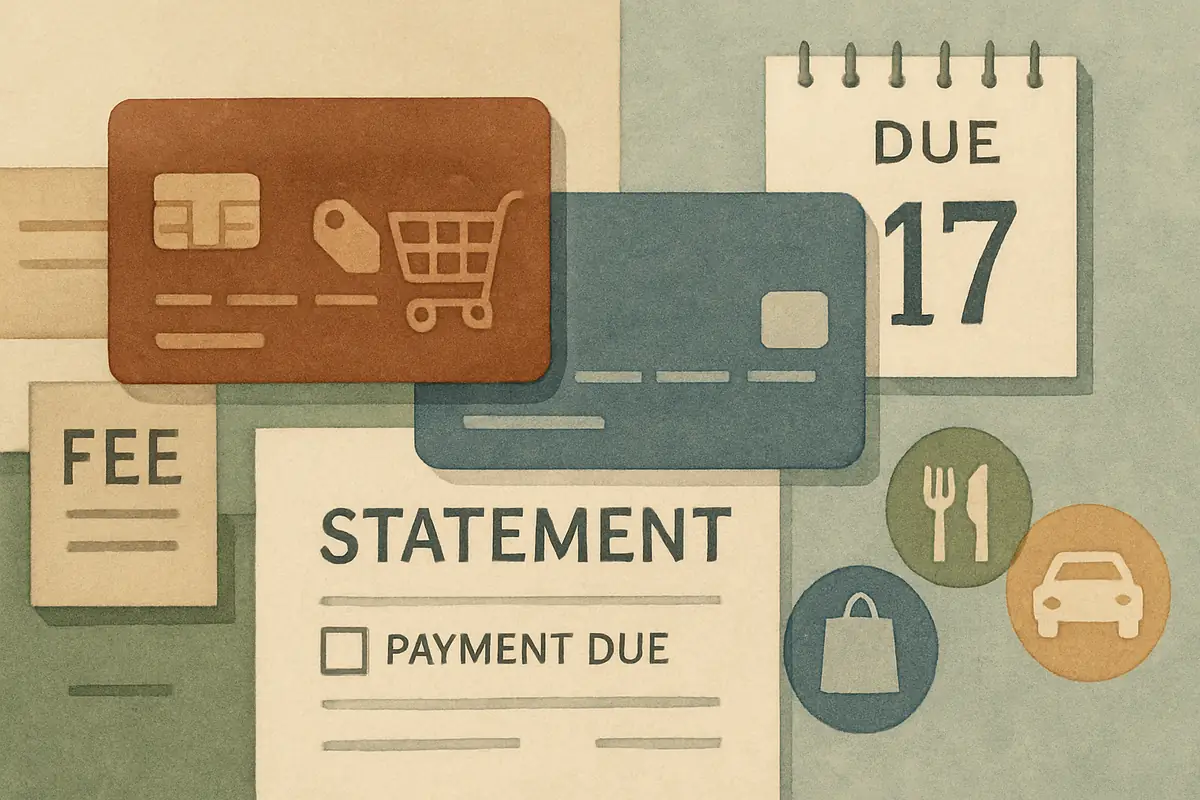
"Statement closing date" is when your month's charges are tallied for reporting to credit bureaus; "payment due date" is when your bill must be paid to avoid late fees and interest.
"Grace period" basics
"Grace period" means no interest accrues if you pay your full statement balance by its due date each month; missing this window triggers interest charges on new purchases.
"Minimum payment" math
"Minimum payment" is often just 2–3% of your total balance; paying only this amount keeps your account current but can take years to clear a large debt because interest keeps piling up.
Everyday Spending vs Special Bonus Categories
Many travel cards offer “bonus categories” — like extra points for airfare or dining out — but restrict regular everyday purchases such as groceries or utility bills to their base earning rate (often just 1 point per dollar spent). In contrast, some cash-back cards earn higher rates (sometimes up to 5%) on rotating categories or essentials. Let’s say you spend $400/month on groceries with a travel card at the base rate (1 point/$ = $4/month in value) versus a cash-back card offering 3% ($12/month). Over a year that’s a difference of $96 in favor of the cash-back card just from grocery shopping alone. If most of your monthly spending isn’t in bonus categories — or if you rarely fly or stay in hotels — using a travel card for everything may not be as rewarding as it seems.
"Hidden Costs": What Gets Overlooked
"Reward fatigue" can sneak up quickly: complicated rules mean some points expire unused and not all redemption options deliver full value. Many people forget about lost value from unused perks too—like airline credits that require proactive use every year. There's also fraud protection to consider: federal law limits liability for unauthorized charges reported promptly (usually to no more than $50), but dealing with fraud claims mid-trip can be disruptive. Using a separate “everyday” low-fee card for routine purchases can help minimize headaches if your main travel card gets lost or compromised. Finally: not all transactions qualify for rewards (for example, some utilities or tax payments are excluded). Cash advances from ATMs using your credit card often incur double-digit fees instantly plus sky-high interest from day one—with zero reward points earned.
"I Want Simplicity": When Travel Cards Don’t Fit
If you don’t want to track categories or calculate redemption values every time you pay for coffee or dog food, a straightforward cash-back card may suit you better—especially one with no annual fee and flat-rate rewards. Travel cards tend to work best for people who: - Plan several trips per year - Regularly redeem points for flights/hotels at high-value rates - Can reliably pay off statements in full every month - Don’t mind managing bonus categories and tracking perks If none of these describe you—or if keeping balances low is tough during tight months—using that “prestige” travel card as an everyday workhorse can get expensive fast.
"But What About Fraud Protection?"
All major U.S.-issued credit cards provide strong fraud protection compared to debit cards—if someone steals your number or physical card and racks up unauthorized charges, federal law generally caps your liability at $50 if reported promptly (and many issuers waive even that). However: resolving fraud while traveling can take days to weeks depending on issuer speed. For this reason alone some travelers keep their main rewards card locked away except when needed on trips—and use a separate everyday card with lower limits and less hassle risk day-to-day.
Worked Example: Rewards Earned vs Interest Paid
Let’s take Alex: they put $2,000/mo on their premium travel card ($450 annual fee) mostly on everyday expenses—not much air travel planned this year. - Annual spending: $24,000 ($2k x 12) - Earns base rate: ~24k points = ~$240 in flight/travel value - Annual fee: -$450 - Net reward value: -$210 (negative) Now imagine Alex misses two payments this year—balance carried averages $3,000 at an APR of 25%. Interest paid over three months? Roughly ($3k x .25 /12 x 3 months) ≈ $187 more lost value. Result? Even with regular use Alex comes out behind unless they change habits—such as maximizing high-value redemptions or switching spending patterns.
Checklist: When Does Using Your Travel Card Make Sense?
- You reliably pay every statement in full (never charged interest)
- You redeem points mostly for flights/hotels at max value;
- The annual fee doesn’t outweigh total yearly benefit;
- You keep utilization below 30% at statement close;
- You monitor perks so credits/bonuses don’t go unused;
Optimizing Everyday Purchases With Travel Cards
Many consumers initially overlook travel credit cards for daily purchases, assuming these products only benefit frequent flyers or globetrotters. Yet, savvy cardholders have discovered that, when chosen wisely, travel cards can provide substantial rewards even on common expenses such as groceries, gas, streaming services, and dining out. For example, some travel cards offer elevated points on supermarket purchases or recurring subscriptions—categories that may represent a significant chunk of your monthly budget. By aligning your card usage with bonus categories and leveraging multipliers on everyday spend, you can steadily accumulate points or miles for future trips. This approach transforms routine expenditures into passport-building opportunities without requiring a major shift in shopping habits. However, the key is to fully understand the earning structure of each card and to evaluate whether the value of the rewards truly offsets any annual fees or spending requirements. Cardholders who automate bill payments and use their travel card as their default payment method often see quicker points accumulation and maximize potential benefits.
It's also important to consider the flexibility of redemption options available through your chosen travel card. Many premium travel cards now allow you to redeem points for statement credits, gift cards, merchandise, or even experiences—beyond just flights and hotel stays. Some issuers partner with a variety of retailers or service providers, making it easy to turn rewards into tangible value for non-travel expenses. For instance, if you’re not planning a trip anytime soon, you might cash in points for groceries or home goods via select online merchants. This adaptability makes travel cards more practical for everyday users who want both aspirational travel and real-time savings. Still, not all redemptions are created equal: typically, using points for airfare or hotel bookings provides higher value per point than redeeming for cashback or merchandise. Therefore, taking a flexible but strategic approach boosts the practical utility of your card while ensuring you extract maximum value.
Risk management is an essential component when leveraging travel cards for daily spending. While these cards often come with attractive sign-up bonuses and generous earn rates, they also tend to have higher interest rates than basic cash-back products. This makes it imperative to pay off balances in full every month; otherwise, interest charges can easily outweigh any rewards earned. Furthermore, frequent use of a single credit line can quickly impact your credit utilization ratio—a key factor in your credit score. Keeping track of ongoing balances relative to your total credit limit helps preserve your score’s health while still taking advantage of daily-spending rewards. Some experienced users set up multiple alerts: one for payment due dates and another when their balance approaches a self-imposed threshold (such as 20-30% of their limit). Integrating these safeguards into your routine ensures that you enjoy the upside of points accumulation without falling prey to unnecessary debt.
A nuanced aspect of maximizing travel cards lies in coordinating supplementary benefits alongside core rewards programs. Many premium options bundle purchase protection, extended warranties, rental car insurance, lost luggage reimbursement, airport lounge access, and even exclusive event invites with their annual fees. For everyday spenders who regularly buy electronics or book rental cars—even domestically—these perks can lead to significant savings and peace of mind over time. For example, using a card’s purchase protection feature could mean reimbursement on a damaged smartphone soon after purchase—a benefit not offered by all standard cash-back cards. Combining these protections with consistent reward earnings amplifies the overall return from daily card use. The caveat is that cardholders must be proactive about understanding which protections apply automatically versus those that require activation or registration.
When considering which travel card fits best with your lifestyle, it pays to analyze spending patterns over several months before applying. Most reputable issuers now provide online tools or app-based dashboards that break down expenditures by category—useful data when mapping potential reward outcomes against real-world habits. For example, if your budget shows heavy grocery and gas spending but little on dining out or airfare each year, seek out cards with bonus multipliers in those high-spend areas rather than generic ‘all purchases’ earn rates. Some travelers prefer flexibility and opt for transferable points programs (like Chase Ultimate Rewards or Amex Membership Rewards), while others prioritize co-branded cards tightly aligned with favorite airlines or hotel chains for elite-status shortcuts or free checked bags.
The intersection between lifestyle shifts—like remote work trends—and credit card strategies has become increasingly relevant over recent years. As more people work from home or adopt hybrid schedules, there’s often less money spent on traditional travel but more allocated toward home improvement, digital subscriptions, meal delivery services, and local experiences like road trips or short getaways within driving distance. Travel cards that have adapted their rewards structures to include flexible redemption and expanded bonus categories resonate strongly with this new reality. For instance, during the height of the pandemic several issuers pivoted by awarding extra points for takeout orders and streaming services—demonstrating how adaptable these products can be in response to changing consumer needs.
Scenario: Everyday Use Versus Occasional Big Purchases
Consider two hypothetical cardholders: Alex uses his premium airline-branded travel card almost exclusively for day-to-day spending—groceries, utilities, local dining—while Jamie reserves her similar card mainly for large periodic expenses such as flights and hotel stays booked once or twice per year. Over time, Alex accumulates smaller but steady streams of points; Jamie accrues large chunks infrequently but may leave potential rewards untapped between those big-ticket purchases. When annual fees are factored in alongside missed earning opportunities on routine transactions (especially if bonus categories are left unused), Alex’s strategy may yield greater net benefit provided he pays off his balance each month. Jamie might find a no-annual-fee cash-back alternative more suitable unless she maximizes her premium benefits during major trips.
Balance transfer offers sometimes tempt consumers who carry balances on high-interest retail cards—but this approach warrants caution if you primarily use travel cards for ongoing spend. Introductory 0% APR periods can help reduce interest costs temporarily; however, once promotional periods end on many top-tier travel cards (often after 12–15 months), standard rates kick in sharply higher than those found on basic reward products or dedicated balance transfer cards. If you’re using a travel card as an everyday tool but are unsure about paying off new balances each cycle, consider pairing it with a lower-interest option strictly for carrying balances until paid in full.
Many people overlook how annual fees can be offset by lesser-known credits that come bundled with certain travel cards—such as statement credits toward rideshare apps, food delivery services like DoorDash or Uber Eats, TSA PreCheck/Global Entry reimbursements, fitness memberships, wireless phone bills, or specific streaming platforms. A careful audit of these side benefits often tips the scales in favor of maintaining an annual fee card even during periods with less frequent traditional travel activity. It’s wise to do an honest calculation: tally up what you actually use from these credits versus what remains unused each year—this exercise alone can clarify whether a particular premium product continues to make sense based on your realistic day-to-day spending.
- Pros
- Cons
References
- https://www.consumerfinance.gov/consumer-tools/credit-cards/
- https://www.fdic.gov/consumer-resource-center/credit-cards
- https://www.consumerfinance.gov/consumer-tools/credit-reports-and-scores/
- https://www.consumerfinance.gov/ask-cfpb/what-is-a-credit-score-en-315/
- https://consumer.ftc.gov/articles/what-know-about-identity-theft
- https://www.consumerfinance.gov/consumer-tools/bank-accounts/