Sarah faces a challenge shared by millions of Americans: she’s carrying $6,000 in credit card debt, with interest rates on her cards ranging from 20% to 27%. To cut down on interest expenses, she transfers her balances to a new card offering 0% APR—Annual Percentage Rate, or the yearly cost of borrowing—for 18 months. But only six months later, she’s surprised to see her expected savings shrink. What happened? Balance transfers can be effective for managing debt, but overlooking critical details can turn a promising strategy into an expensive misstep.
Meet Sarah: A Typical Balance Transfer Journey
How this can look in practice
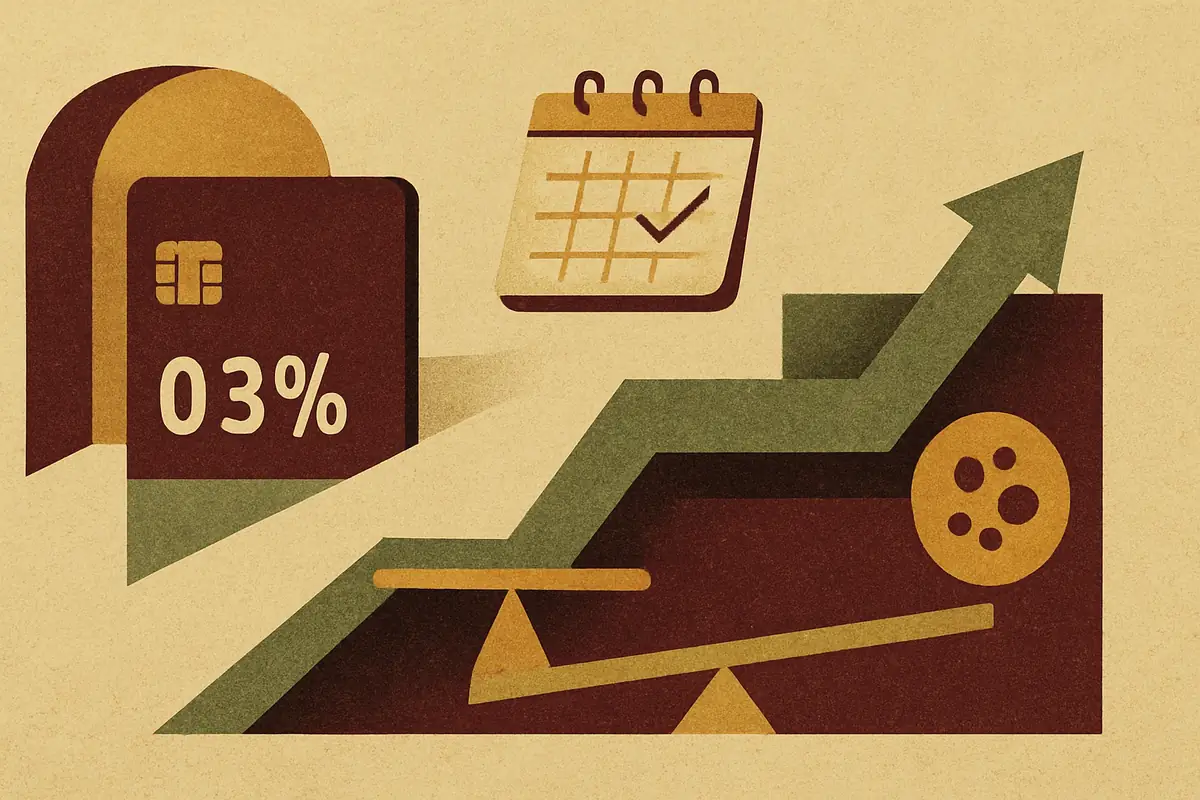
Sarah’s situation is not unusual. With $6,000 in debt at rates above 20%, she finds a new card with a promotional 0% APR on balance transfers for 18 months. She moves all her balances, hoping to pay off the full amount before the intro period ends. But she overlooks several key factors: a 3% transfer fee, the need for higher monthly payments, and the risk of new charges accruing interest. These oversights begin to erode the savings she had counted on.
Balance transfers involve moving debt from a high-interest card to one with a lower or zero introductory APR for a set period—often between 6 and 21 months. This can sharply reduce interest costs and help pay down debt faster. However, details like transfer fees, payment schedules, and fine print can create hidden pitfalls that reduce or even eliminate the benefits if mishandled.
Mistake #1: Overlooking Balance Transfer Fees
Balance transfer fees are typically 3% to 5% of the amount moved. For Sarah’s $6,000 transfer, a 3% fee adds $180 to her balance right away. If the fee is 5%, the cost jumps to $300. This fee is charged upfront and is not included in the promotional APR period. If you transfer $10,000, a 4% fee would mean $400 added instantly to your total debt. These fees can offset a significant portion of the interest savings if not accounted for in your repayment plan.
While the fee may be justified if your original card APR is 20% or higher, it’s essential to include this cost in your payoff calculations. Many people focus on the zero percent APR headline and ignore the fee until it appears on their statement.
Mistake #2: Failing to Match Your Payoff Plan to the Promo Period
Introductory APR offers on balance transfers are temporary, usually lasting 6 to 21 months. Sarah’s card gave her 18 months at 0% APR, but after the promo period, her rate would jump to a typical variable APR between 18% and 29%. If she hasn’t paid off her balance by then, interest charges can quickly erase her savings.
To avoid this, you need to calculate the monthly payment required to pay off the transferred balance before the promotional period ends. For example, if you transfer $6,000 with a $180 fee (3%), your new balance is $6,180. To pay this off in 18 months, you’d need to pay $343.33 each month ($6,180 ÷ 18). If you only pay the minimum—often 2% of the balance, or about $124 in the first month—you’ll still owe thousands when the promo period ends, and the remaining balance will start accruing high interest immediately.
Mistake #3: Making Only Minimum Payments During the Promo Period
Minimum payments are usually calculated as 1% to 3% of your balance. For a $6,180 balance, the minimum payment might be just $124 to $185 per month. Paying only the minimum means most of your payment goes toward fees and barely reduces your principal. If you only make minimum payments, you’ll likely have a large balance left when the promotional APR ends, which then accrues interest at the regular rate—often 18% to 29% APR.
"With balance transfers, minimum payments often don't cover enough of the principal," explains Sophie Bennett. "You’ll risk not finishing your payments before the promo ends." To maximize savings, set your monthly payment based on the full payoff amount divided by the number of months in the promo period.
Mistake #4: Using the New Card for Purchases After a Transfer
Many consumers assume all charges on a new card will benefit from the promotional APR. In reality, new purchases typically accrue interest at the card’s standard purchase APR—commonly 18% to 28%—from the day of purchase unless you pay them off in full each month. If you add $500 in new purchases to your balance and only pay the minimum, you’ll immediately start accruing interest on that $500, even while your transferred balance remains at 0% APR for the promo period.
Mixing transferred debt with new purchases can quickly erode your savings and make tracking your payoff progress more complicated. It’s best to use the balance transfer card only for debt repayment until the transferred balance is fully paid off.
Mistake #5: Not Considering the Impact on Your Credit Score
Opening a new credit card for a balance transfer can temporarily lower your credit score by 5 to 30 points, mainly due to the hard inquiry and reduced average account age. However, transferring balances can also improve your credit utilization ratio—the percentage of your available credit you’re using. Credit utilization is a major factor in credit scores, and keeping it below 30% is generally recommended for good credit health.
Problems arise if you apply for multiple new cards in a short period, or if you max out the new card’s limit with your transfer, keeping your utilization high. Responsible use—making on-time payments and avoiding new debt—can help your score recover within several months.
Mistake #6: Skipping the Fine Print on Transfer Terms
Balance transfer offers vary widely. Some cards exclude certain types of balances, such as loans from the same issuer or store cards, or cap the amount you can transfer—sometimes as low as $5,000 to $10,000. If you plan to transfer $12,000 but your card only allows $8,000 at the promotional rate, you’ll need to manage multiple payments and may miss out on the full benefit.
Additionally, some cards require you to complete the transfer within 45 to 60 days of opening the account to qualify for the intro APR. Missing this window could mean your transfer is charged the regular APR from the start. Always review the terms for exclusions, limits, and deadlines before initiating a transfer.
Mistake #7: Returning to Old Spending Habits After the Transfer
One of the most common pitfalls is resuming previous spending patterns after completing a balance transfer. If you start using your old high-interest cards again, it’s easy to accumulate new debt while still paying off the transferred balance. This can increase your total credit card debt and defeat the purpose of the transfer.
"Discipline matters," stresses Sophie Bennett. "A balance transfer is only one piece of managing credit wisely—it doesn’t erase poor spending decisions or lack of budgeting." Developing a plan to avoid new debt and focusing on repayment is essential to making a balance transfer work in your favor.
| Factor | What It Means | Risk If Ignored |
|---|---|---|
| Balance Transfer Fee | Upfront percentage cost (3%–5%) when moving balances | Can increase total debt unexpectedly |
| Promo Period Length | Time (6–21 months) zero/low interest applies | Interest spikes if balance remains after expiration |
| Minimum Payment Trap | Paying just minimums (1%–3%) extends payoff time | Leftover balances accrue high interest |
| New Purchases Interest | Charges after transfer may have 18%–28% APR | Unexpected interest buildup |
| Credit Score Effects | Impact from new account and utilization changes | Temporary dips or long-term damage from mismanagement |
FAQs on Using Balance Transfers Effectively
Is paying a balance transfer fee ever worthwhile?
It can be, especially if your current APR is high (20% or more) and the promo period is long enough for you to pay off most or all of the balance. Always compare the total cost of the fee versus expected interest savings.
Can you keep transferring balances to stay at a low rate?
While it’s possible, repeated transfers can lead to multiple fees, temporary credit score drops, and increased risk of accumulating more debt. Over time, this strategy often becomes less effective.
What if you miss a payment during the promo period?
Missing a payment can cancel your promotional APR immediately. The remaining balance may be charged interest retroactively at the regular rate, which can be 18%–29% APR.
Should you close old cards after transferring balances?
Usually not. Keeping old accounts open helps maintain your credit history and keeps your credit utilization ratio lower.
Hidden Costs That Can Undermine Balance Transfers
Balance transfers can seem like a quick fix, but hidden costs can erode their benefits. Transfer fees—typically 3% to 5%—add $90 to $250 to every $3,000 to $5,000 moved. For example, if you transfer $5,000 and pay a 4% fee, you’ll owe $200 more immediately. If you don’t pay off the balance within the promotional period, the remaining amount starts accruing interest at the regular rate, which can be 18% to 29% APR.
Some cards also charge setup or maintenance fees, which can total $50 to $100 over a year. Additionally, if you transfer balances from a card that offered rewards like 1%–2% cashback or travel points, you may lose out on these perks during your payoff period. For frequent card users, this could mean missing out on $100 or more in rewards annually. Always weigh these opportunity costs against the interest savings from your balance transfer.
Strategically Timing Your Balance Transfer Maximizes Savings
Timing is crucial to maximize the benefits of a balance transfer. Initiating a transfer just before your billing cycle ends can minimize interest charges on your old account, since interest is typically calculated daily. Delays in processing—sometimes up to 2 weeks—can result in extra interest charges on your existing card that won’t be covered by the new card’s promotional offer.
Many promotional offers require you to complete the transfer within 30 to 60 days of account opening to qualify for the intro APR. Missing this window means the transfer will be charged the regular APR, which can be as high as 29%. Additionally, applying for multiple cards in a short period can result in several hard inquiries, which may lower your credit score by 10 to 30 points and reduce your chances of approval for the best offers. Waiting at least 3 to 6 months between applications gives your credit profile time to recover.
Misunderstanding How Promotional Periods Expire Can Be Costly
Promotional APR periods usually last from 6 to 21 months. Many consumers mistakenly assume they have more time than they do, or that the issuer will notify them when the period ends. Once the promotional period expires, any remaining balance is charged the standard variable APR—commonly 18% to 29%—immediately. This can cause monthly payments to jump by $100 or more, depending on the remaining balance.
To avoid surprises, mark your promo period’s end date on your calendar and set reminders at least 2 months in advance. Some issuers allow you to convert your remaining balance into a fixed-rate installment plan near the end of the promo period—often at rates between 8% and 15% APR—which can provide a more manageable path to pay off remaining debt.
Ignoring Credit Utilization and Score Effects Can Backfire
Balance transfers affect your credit profile in several ways. Credit utilization—the ratio of your total credit card balances to your total credit limits—should ideally stay below 30% for a strong credit score. If you transfer a $7,500 balance to a card with an $8,000 limit, your utilization on that card is over 93%, which can lower your score, even if your overall debt hasn’t changed. On the other hand, spreading debt across higher total credit limits can lower your overall utilization, which benefits your credit score.
New accounts also reduce your average account age and create hard inquiries, both of which can lower your score temporarily. These effects generally fade over 3 to 6 months with responsible use, but multiple new accounts or high utilization can cause longer-term damage. Consider your credit goals before initiating a transfer, especially if you plan to apply for a mortgage or car loan soon.
Relying on Multiple Consecutive Balance Transfers Can Increase Debt
Using a balance transfer once can help you pay down debt efficiently, but repeatedly moving balances from card to card can create a cycle of fees and rising debt. Each new transfer typically involves a 3% to 5% fee—so transferring $10,000 twice in two years could cost you $600 to $1,000 in fees alone. Chasing promotional rates without a clear payoff plan can extend your debt repayment timeline by years and make budgeting more difficult, as you juggle multiple due dates and minimum payments.
Each new application also triggers a hard credit inquiry, and the combined effect of several inquiries in a year can lower your credit score by 20 to 50 points. Instead of relying on repeated balance transfers, focus on a sustainable repayment plan that fits your income and expenses.
Penalty Rates Can Erase Your Savings Instantly
Penalty APRs are high interest rates—often 29% to 32%—that issuers apply if you miss a payment or exceed your credit limit. Unlike standard APR increases at the end of a promo period, penalty APRs can take effect immediately and may apply retroactively to your transferred balance and new purchases. For example, missing one $100 payment could trigger a penalty APR on your remaining $4,000 balance, causing your interest charges to jump by $80 to $100 per month.
Always pay at least the minimum by the due date to avoid penalty rates. Even one missed payment can increase your total repayment amount by hundreds or thousands of dollars over time.
Not Having a Clear Exit Strategy Can Lead to More Debt
Many people focus on securing a balance transfer but fail to plan how they’ll pay off the transferred balance before the promo period ends. A successful exit strategy means budgeting to pay off the entire balance within the 6 to 21 month window. For example, for a $7,000 transfer with a $210 fee (3%), you’d owe $7,210. To pay this off in 15 months, you’d need to budget $480.67 per month ($7,210 ÷ 15). Setting up automatic payments for this amount helps ensure you don’t fall behind.
Without a clear plan, it’s easy to fall into the trap of making only minimum payments, leaving a large balance to accrue high interest once the promotional period ends. Treat the balance transfer as a temporary relief—your goal should be to become debt-free by the end of the promo period.
Failing to Read Card Terms and Conditions Can Cause Surprises
Balance transfer offers often include fine print that can dramatically affect your costs. Terms may exclude transfers from certain accounts, cap the total amount eligible for the promo rate (such as $10,000), or require that the transfer be completed within a specific window—often 45 to 60 days. Some issuers also impose retroactive interest if you miss a payment during the promo period, or disallow combining multiple promotional offers on the same account.
Carefully review all terms and conditions before proceeding. Understanding the rules can help you avoid unexpected fees, interest charges, or disqualification from the promotional rate.
Editorial Takeaway: Make Balance Transfers Work With Careful Planning
References
- https://www.consumerfinance.gov/consumer-tools/credit-cards/
- https://www.fdic.gov/consumer-resource-center/credit-cards
- https://www.consumerfinance.gov/consumer-tools/credit-reports-and-scores/
- https://consumer.ftc.gov/articles/what-know-about-identity-theft
- https://www.consumerfinance.gov/ask-cfpb/what-is-a-credit-score-en-315/
- https://www.identitytheft.gov/