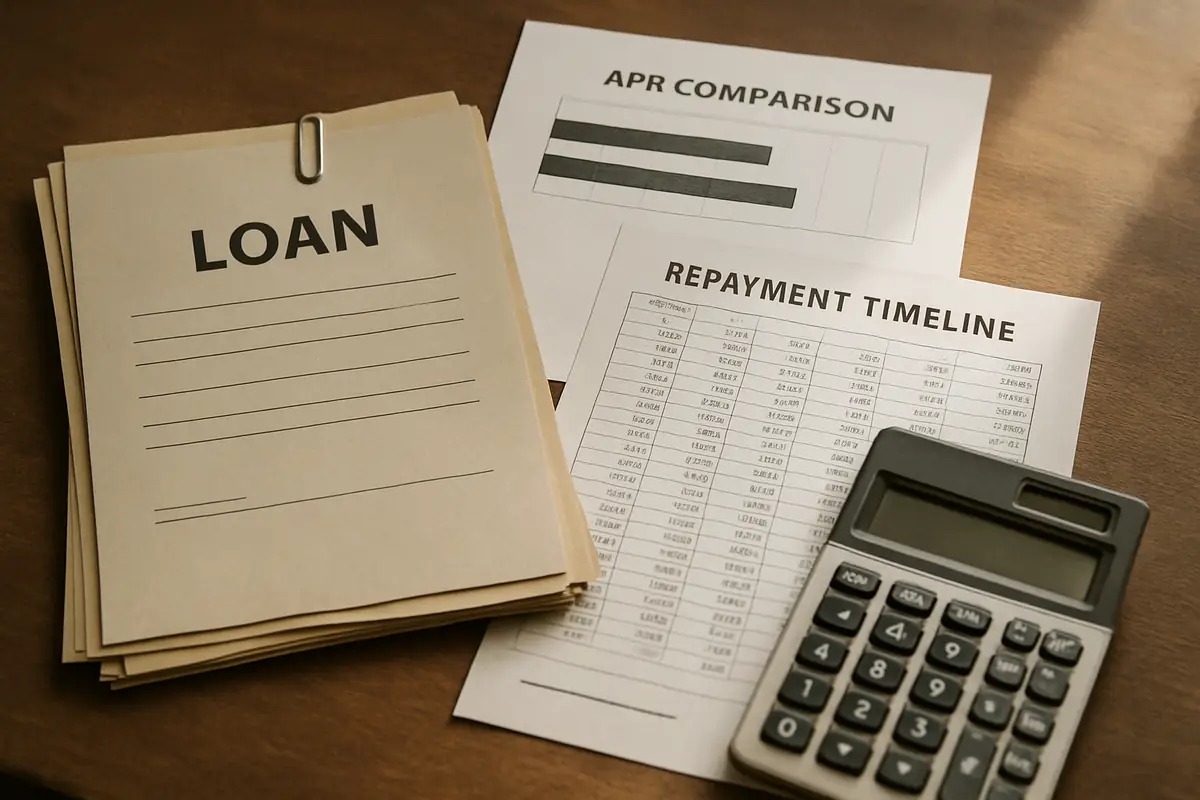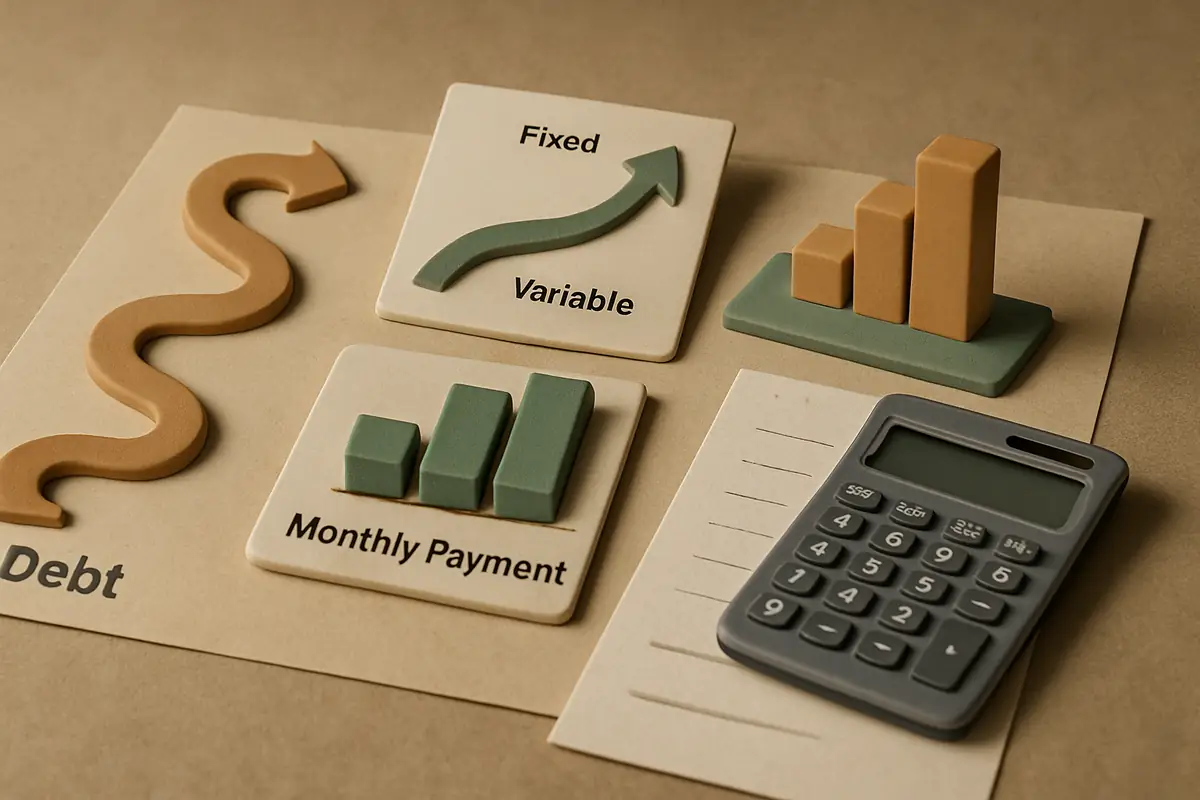
Every year, millions of borrowers weigh loan offers, often focusing on the monthly payment as their main decision point. Yet this single figure can obscure the true cost of borrowing. The Annual Percentage Rate (APR) provides a clearer lens, revealing not just the interest rate but also lender fees, repayment terms, penalties, and the overall loan structure. Understanding APR can help you identify hidden costs and avoid expensive trade-offs before committing to a loan.
Monthly Payments Can Hide True Loan Costs
Judging a loan by its monthly payment is a common pitfall. While a $250 monthly payment may appear more manageable than $350, this difference often results from extending the loan term or rolling fees into the balance. For example, stretching a $10,000 loan from 3 to 5 years could reduce the monthly payment by over $70, but increase total interest paid by $900 or more, depending on the rate. Fees such as origination charges—often $200 to $1,000—may be added to the principal, further inflating the amount owed. Without factoring in APR and other loan terms, borrowers risk selecting loans that seem affordable month-to-month but result in thousands in extra costs over the life of the loan.
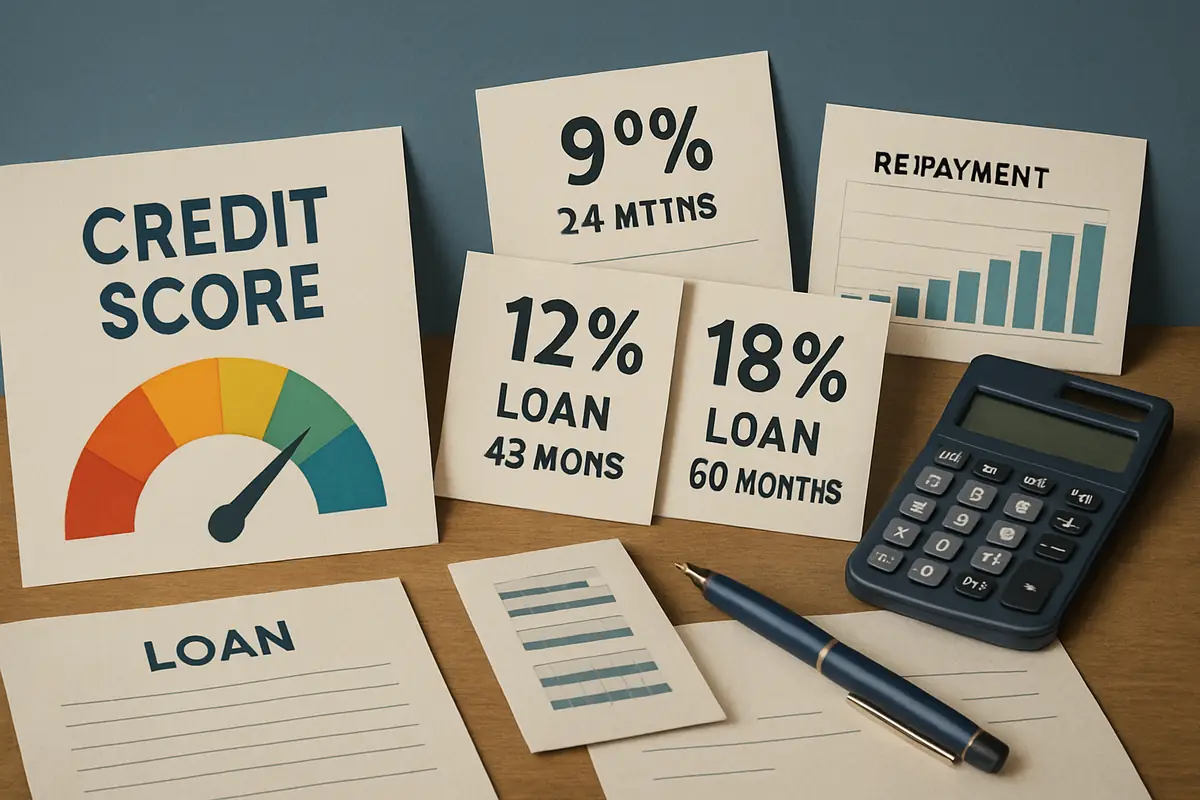
Consider two loans: both offer a $300 monthly payment, but Loan 1 is for 60 months with a 10% interest rate and $500 in fees, while Loan 2 is for 84 months at 8% but with $1,200 in fees. The lower payment on the longer-term loan may be attractive, but the total paid over time is much higher. This illustrates why monthly payment alone is not a reliable measure of loan affordability.
APR: What It Measures and Its Boundaries
APR, or Annual Percentage Rate, is a standardized measure expressing the yearly cost of borrowing as a percentage of the loan amount. Unlike the nominal interest rate—which only accounts for the cost of borrowing money—APR combines the interest rate with mandatory lender fees such as origination, processing, or underwriting charges. For example, if a $10,000 loan carries a 7% interest rate and a $500 origination fee, the APR typically lands between 7.5% and 8.5% depending on the term.
However, APR does not include every possible cost. Penalties for late payments, non-sufficient funds, or prepayment can add hundreds of dollars but are not reflected in the APR. Nor does APR consider optional products like insurance add-ons or service plans sometimes bundled with loans. Recognizing these exclusions is vital, as they can significantly affect your total outlay.
Fees Directly Shape APR and Your Total Cost
Loan fees are a primary reason why the APR is often 0.5% to 5% higher than the advertised interest rate. Origination fees, typically ranging from 1% to 6% of the loan amount for personal loans, or $200 to $1,000 for auto loans, are either paid upfront or rolled into the loan balance. Processing fees, document charges, and sometimes mandatory insurance premiums can also be included.
When these fees are added to your principal and amortized—meaning spread out evenly over the repayment period—they increase the total interest you pay. For example, if you borrow $15,000 with a 6% interest rate and a $600 origination fee, the APR might rise to 6.7% over a 5-year term. This higher APR reflects the true annual cost of the loan, allowing for a more accurate comparison between lenders.
Calculation Example: How Fees Affect APR
Suppose you take a $10,000 personal loan at a 7% interest rate for 4 years, with a $400 origination fee added to the loan. The total amount financed becomes $10,400. Your monthly payment on $10,400 at 7% over 48 months is about $248. Over the loan term, you pay $11,904 in total ($248 x 48). Subtracting the original $10,000 principal, you pay $1,904 in interest and fees. The effective APR is higher than 7%—closer to 8.1%—because it includes the impact of the $400 fee spread over the loan period.
Loan Term Length Influences Repayment and Total Interest
Loan term, or the length of time you have to repay, has a major effect on both monthly payments and the total cost. Longer terms—such as 72 or 84 months for auto loans, or 30 years for mortgages—lower the monthly payment but increase the total interest paid. For example, a $20,000 car loan at 6% over 3 years results in monthly payments of about $608 and total interest of roughly $1,000. The same loan over 6 years drops the payment to $332 but raises total interest to over $3,000.
APR incorporates both the interest rate and fees over the full loan term. Two loans with identical interest rates but different terms may have different APRs if their upfront fees or compounding methods differ. When comparing offers, weigh both the APR and the repayment period to understand not just what you’ll pay each month, but how much you’ll pay in total.
Scenario: Comparing Two Loans With Similar Monthly Payments
Loan A: $300/month for 5 years, 9% APR, $500 origination fee included. Loan B: $300/month for 7 years, 7% APR, minimal fees. Loan B’s lower APR looks appealing, but because the term is longer, total interest paid is higher—about $2,200 more over the life of the loan. Loan A costs more upfront but is paid off sooner, reducing total interest. Your choice depends on whether minimizing total cost or monthly outlay is more important to you.
Collateral’s Impact on Rates, Terms, and Risks
Secured loans require collateral—such as a vehicle or home equity—as a guarantee for repayment. Collateral reduces lender risk, so secured loans often feature lower interest rates and APRs, sometimes by 2% to 6% compared to unsecured options. For example, auto loans secured by the vehicle may have rates from 4% to 8%, while unsecured personal loans often range from 7% to 25% APR.
However, using collateral introduces the risk of asset loss if you default—a consequence not reflected in APR. Collateralized loans may also include contract clauses that accelerate repayment or impose additional penalties if you miss payments. Always consider both the rate benefit and the risk to your assets before choosing a secured loan.
Penalty Fees Can Increase Borrower Costs
Penalty fees—such as late fees, returned payment charges, or prepayment penalties—are not included in APR but can add significant expense. Late fees typically range from $25 to $50 per occurrence, and some lenders charge up to 5% of the overdue payment. Prepayment penalties, common on some mortgages and personal loans, can cost from 1% to 3% of the remaining balance if you pay off the loan early.
For example, paying off a $15,000 loan early with a 2% prepayment penalty results in a $300 fee. While some lenders allow early repayment without penalty, others do not. These costs can push your effective borrowing rate well above the stated APR if you trigger them, so review all penalty clauses before signing.
Repayment Structure and Borrower Pressure
Affordability is not just about numbers; loan repayment structure can add pressure. Payment schedules that require weekly or bi-weekly payments, immediate automatic deductions, or short grace periods (often just 5 to 15 days) can strain your cash flow, even if the monthly payment fits your budget. Some loans offer flexible restructuring or hardship options, while others do not—these features are not captured in APR but can be critical if your finances change.
Payment Timing Flexibility
Check if payment due dates can align with your pay cycle to reduce risk of missed payments and late fees.
Grace Periods Allowed
Find out if late fees apply immediately or after a grace period—common grace periods are 10 to 15 days.
Prepayment Rules
Determine if you can pay off your loan early without penalty to save on interest.
Advertised Offers vs. Actual Loan Obligations
Lender advertisements often highlight low interest rates or attractive monthly payments but may omit key details. For example, 'teaser' rates may last only 6 to 12 months before resetting to a higher rate, or may only be available to those with top-tier credit scores. Closing costs, insurance premiums, or mandatory add-ons—ranging from $200 to $2,500—may not be included in the headline rate but are reflected in the APR or hidden in the contract fine print.
Carefully reviewing the full loan agreement, including all disclosures and fee breakdowns, is crucial. Watch for adjustable-rate loans where the APR can rise after an introductory period, and for clauses that allow the lender to change terms mid-loan. Monitoring your total payment schedule and understanding which charges are included in APR versus those that are not helps prevent costly surprises.
Steps to Evaluate Loan Offers Effectively
When reviewing loan offers, ask: How much will I pay each year (APR)? What fees are included or excluded? Does the use of collateral match my risk tolerance? How does the term length affect total cost? What penalties or flexibility provisions apply? And how do advertised features translate into binding obligations?
Request a detailed loan estimate from each lender, showing both the interest rate and APR, as well as a full breakdown of fees. Use online calculators that factor in fees and term length to compare total repayment amounts. Read the contract thoroughly, paying special attention to penalty and restructuring clauses. Comparing offers in this way—'apples to apples'—can reveal differences of $500 to $3,000 or more in total cost between seemingly similar loans.
APR: A Vital Metric, But Not the Whole Picture
APR delivers a standardized snapshot of borrowing costs, including many—but not all—fees that impact your loan. As Daniel Foster notes, understanding where APR fits among other contract elements allows borrowers to make smarter choices, rather than just pursuing the lowest monthly payment.
The best approach is a thorough comparison that blends quantitative metrics like APR with qualitative factors such as collateral requirements, penalty clauses, and repayment flexibility. By analyzing both the numbers and the contract terms, you can select a loan that fits your financial circumstances—not just one that looks attractive at first glance.
APR’s Role in Comparing Loan Offers
Monthly payments may catch your eye, but APR provides a more complete tool for comparing the true cost of loans. By combining interest rates with mandatory fees, APR allows borrowers to evaluate which offer is more cost-effective over time. For example, two loans with $250 monthly payments might differ in total cost by $1,000 or more if one carries a higher origination fee, reflected in a higher APR.
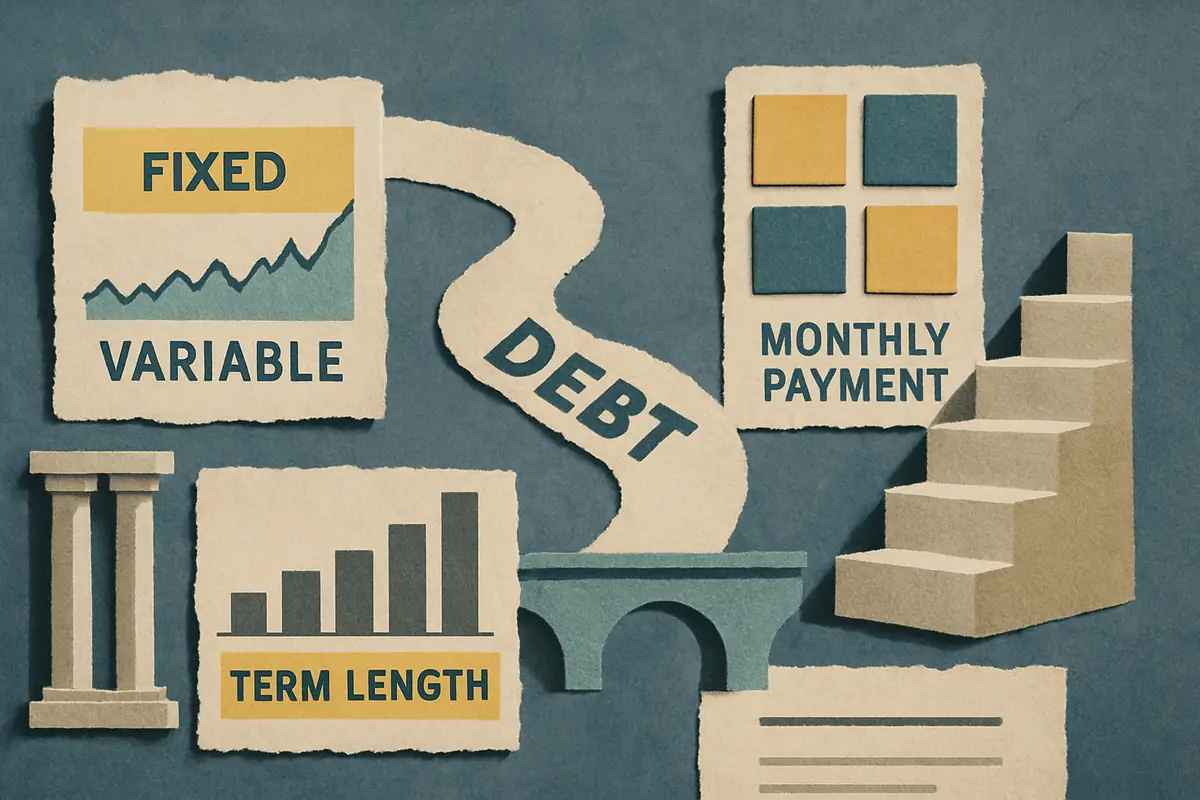
APR also clarifies the real financial commitment, especially when comparing fixed-rate and adjustable-rate loans. Adjustable-rate products may offer initial APRs as low as 3% to 5%, but these can rise to 7% or higher after the introductory period. Comparing APRs helps you anticipate and plan for such changes, supporting more informed decisions and reducing the risk of unexpected expenses.
When shopping for loans—be it for a car, home, or personal use—examining both the APR and the payment schedule ensures you understand both immediate affordability and long-term costs. This holistic view can prevent costly mistakes by exposing hidden fees and clarifying the effect of different loan structures on your total repayment.
APR Helps Reveal Hidden Loan Costs
One of APR’s key strengths is its ability to expose hidden costs embedded in loan agreements. Lenders may advertise low interest rates but add fees such as processing charges, insurance premiums, or balloon payments. These costs can add $500 to $2,000 or more to the total expense, even if the monthly payment remains unchanged.
APR integrates these charges into a single percentage, offering a clearer picture of the true cost. For instance, a mortgage with a 4% interest rate and $3,000 in closing costs could have an APR of 4.5% to 5%, depending on the loan term. Without considering APR, you might focus on the lower rate and overlook substantial ancillary fees.
By focusing on APR, borrowers can also identify financial traps such as mandatory insurance products, balloon payments, or large end-of-term balances that are not obvious from the payment schedule alone. This awareness can help you negotiate better terms or seek lenders with more transparent and competitive offers.
APR Calculation Differs by Loan Type
APR is calculated differently across loan types. Mortgage APRs typically include closing costs like appraisal and title insurance, which can range from 2% to 5% of the loan amount. Credit card APRs, which often fall between 18% and 30%, primarily reflect interest charges, as most cards do not have upfront fees. Auto loans may include dealer add-ons or document fees, raising the APR above the base rate.
Personal loans often have origination fees of 1% to 6%, which can elevate the APR by 0.5% to 3% above the nominal rate. Some government-backed loans may cap fees, resulting in a lower APR relative to conventional loans. Understanding these distinctions ensures you are comparing similar products and not misled by headline numbers that omit key costs.
Knowing the specific components of APR by loan type allows for accurate, apples-to-apples comparisons and prevents you from underestimating your true repayment obligations.
Loan Term Directly Affects APR’s Impact
Loan term length significantly affects how APR translates into total cost. Short-term loans—such as 24 or 36 months—have higher monthly payments but lower total interest, while long-term loans—up to 84 months for autos or 30 years for mortgages—reduce the monthly burden but increase cumulative interest paid. For example, a $5,000 personal loan at 10% APR for 2 years results in about $550 total interest, while the same loan over 5 years can result in over $1,350 in interest.
Some lenders offer promotional APRs—such as 0% for the first 12 months—before rates increase to 15% or more. Prepayment penalties or rate adjustments can further affect your cost. Reviewing these terms alongside the APR helps you anticipate future changes and avoid unpleasant surprises.
Practical Ways to Use APR When Comparing Loans
To make the most of APR when evaluating loan options, request complete disclosure documents from each lender. These should detail both the interest rate and the APR, along with all fees and charges. Compare these figures side by side, rather than relying on monthly payment amounts alone.
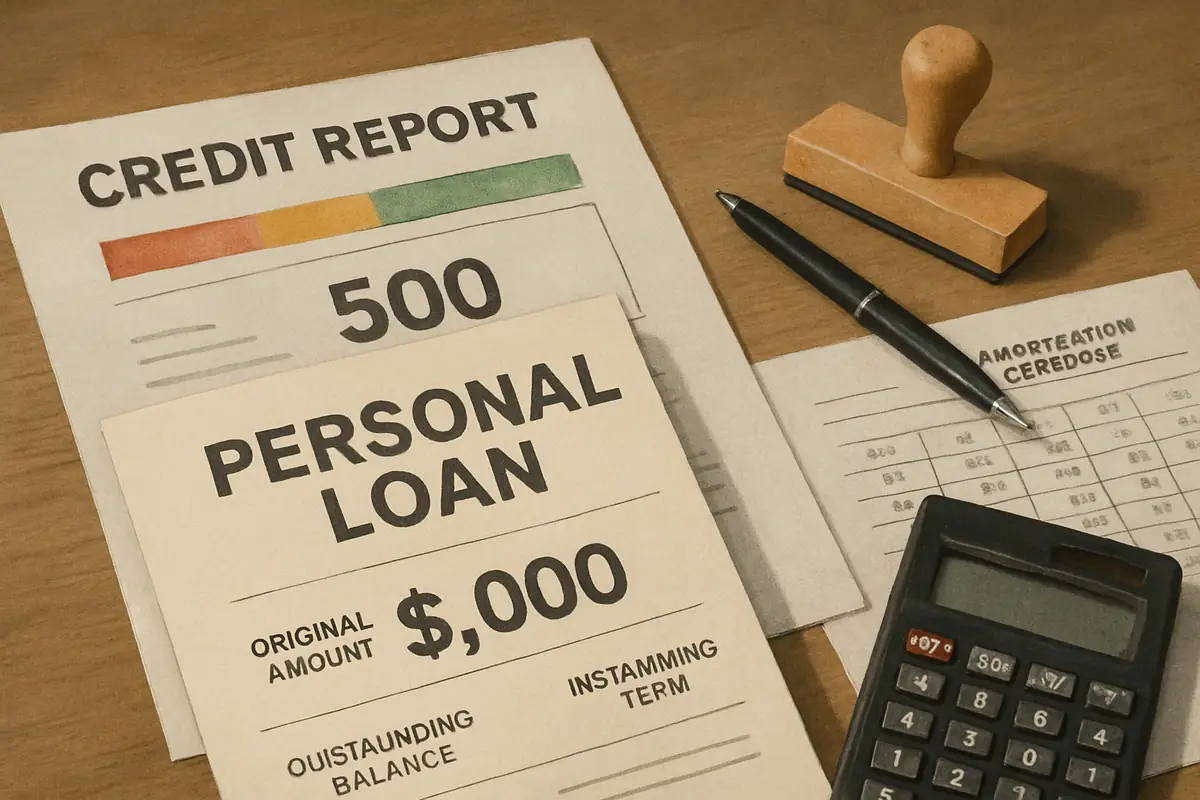
Next, consider your likely repayment timeline. If you expect to refinance or pay off the loan early, factor in any prepayment penalties or changes in APR. Use online calculators that include amortization schedules—a process that spreads payments evenly over the term—to see exactly how much of each payment goes to principal versus interest and fees.
By grounding your decision in both the APR and the loan’s fee structure, you can better estimate your true cost and avoid being misled by surface-level figures. This approach ensures your borrowing aligns with both your budget and your long-term financial goals.
References
- https://www.consumerfinance.gov/consumer-tools/
- https://studentaid.gov/manage-loans/repayment/plans
- https://www.consumerfinance.gov/consumer-tools/auto-loans/
- https://www.consumerfinance.gov/ask-cfpb/what-is-apr-en-45/
- https://www.fdic.gov/consumer-resource-center/loans
- https://www.consumerfinance.gov/consumer-tools/mortgages/