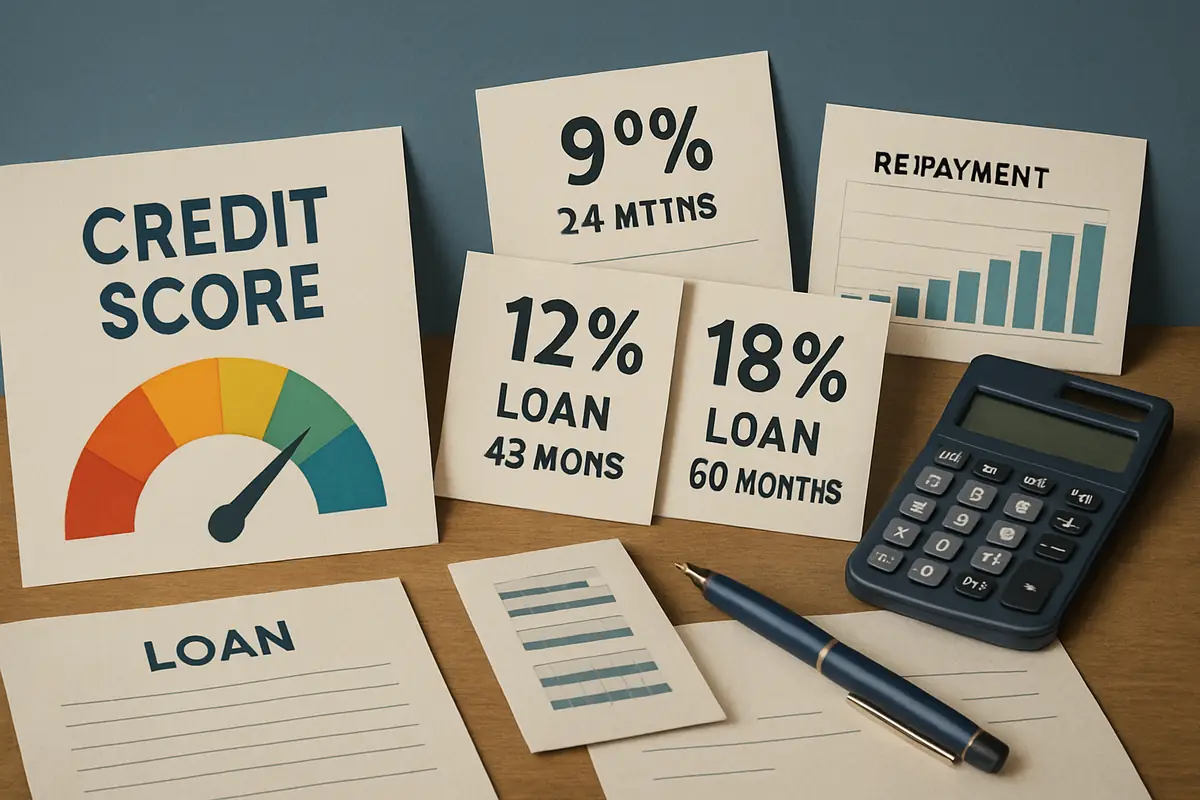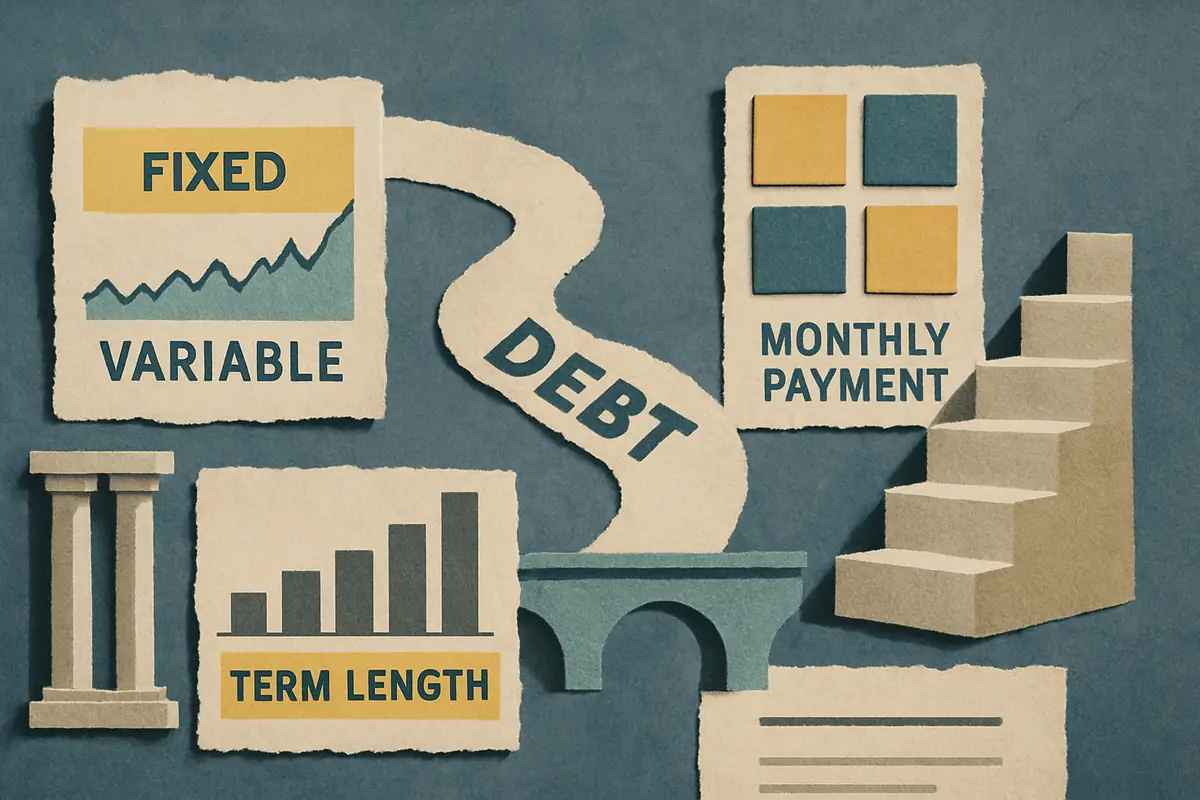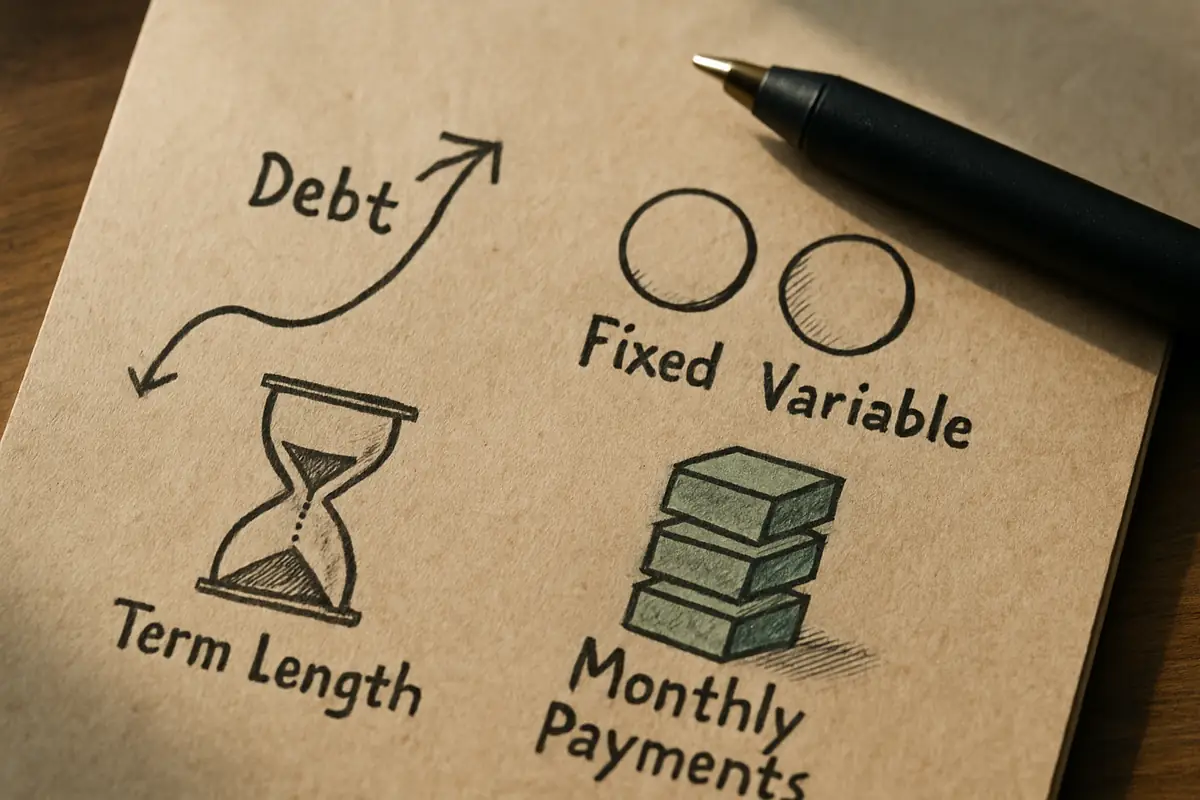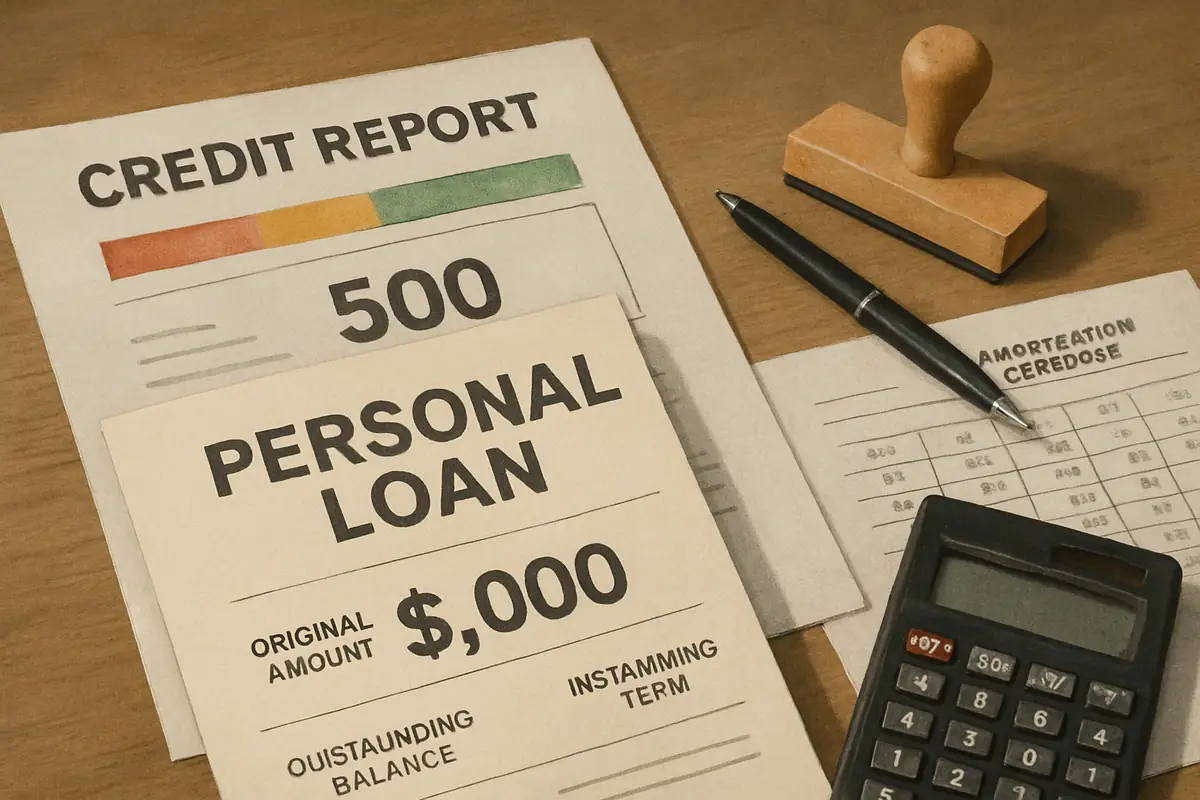
Many borrowers are surprised to learn that the true cost of a loan can differ by thousands of dollars depending on whether they focus on the Annual Percentage Rate (APR) or just the fixed interest rate. Understanding how each figure works—especially as loans range from $5,000 personal loans to $500,000 mortgages—can help borrowers avoid hidden costs and make smarter financial decisions.
APR and Fixed Interest Rate: Definitions and Key Differences
The Annual Percentage Rate (APR) is a standardized measure that expresses the total yearly cost of borrowing as a percentage, including the nominal interest rate plus most mandatory fees such as origination charges, closing costs, and required insurance premiums. For example, if a $10,000 loan has a 6% interest rate but charges $400 in fees, the APR will be higher than 6% once fees are included and spread over the loan term.
A fixed interest rate is the agreed-upon percentage charged only on the loan principal, remaining unchanged throughout the loan's duration. This rate excludes most fees and does not reflect additional costs. For instance, a fixed rate of 5% on a $200,000 mortgage means the interest portion of each payment is calculated at 5% annually, but does not include the impact of a typical $3,000 to $7,000 in closing costs.
Understanding these terms is crucial. While a fixed rate provides payment predictability, the APR gives a fuller picture by accounting for all recurring and upfront expenses, allowing for a truer comparison between loan offers. Borrowers comparing a 4% fixed rate loan with a 4.8% APR to a 4.5% fixed rate loan with a 4.6% APR may find the latter is actually less expensive over time, despite the higher nominal rate.
Fees and Their Impact: Why APR and Fixed Rates Can Differ Significantly
Loan fees are a major source of divergence between APR and fixed interest rates. Fixed rates do not include upfront origination fees (often 1% to 5% of the loan amount), closing costs (which can range from $500 for small personal loans to $10,000 or more for large mortgages), or required insurance premiums. These costs, when paid at the start of the loan, can add 2% to 8% to the overall expense but remain invisible if only the fixed rate is considered.
The APR incorporates these fees into a single annualized figure, following standardized calculation rules. For example, two five-year auto loans of $25,000 each might both advertise a 4% fixed rate. If Loan A includes $1,250 in origination and documentation fees, its APR could rise to 4.9%, while Loan B with just $250 in fees might have an APR of 4.2%. Although monthly payments appear similar, the total repayment on Loan A would be roughly $300 higher over the loan term due to the higher fees reflected in the APR.
Origination Fees
These are upfront charges to process the loan, typically 1% to 3% of the principal for mortgages or $100 to $500 for personal loans. Included in APR but not in the fixed rate.
Closing Costs
Third-party charges such as appraisals ($300–$700), title insurance ($500–$2,000), and legal fees are usually factored into APR calculations for home loans.
Discount Points
Prepaid interest paid at closing to reduce the fixed rate; each point typically costs 1% of the loan amount and is reflected in the APR, increasing upfront costs.
Loan Term Length: How Duration Changes Cost Visibility
The length of the loan term—whether 12 months, 5 years, or 30 years—affects how APR and fixed rates translate into real payments and total costs. Longer-term loans, such as 30-year mortgages, spread both interest and fees over more payments, which can lower monthly installments but increase the total cost due to more interest accruing over time. For instance, a $300,000 mortgage at 6% fixed rate over 30 years results in total interest paid of about $347,500, while a 15-year loan at the same rate would accrue only about $155,000 in interest.
APR annualizes all costs, including fees, over the loan’s duration, making it easier to compare a 15-year loan with a 30-year loan. Fixed rates, by contrast, do not reflect how fees are amortized (spread out) over the loan term. For example, a $15,000 personal loan with a $600 origination fee will have a much higher APR if the term is 2 years compared to 5 years, because the fixed fee is divided by fewer payments.
Borrowers should always consider both the APR and the fixed rate in the context of the loan term. Relying only on a low fixed rate for a 30-year loan, while ignoring $8,000 in closing costs, could mean paying $20,000 or more in extra fees and interest over the life of the loan compared to a higher-rate, shorter-term option with lower upfront expenses.
Collateral and Its Effect on Loan Rate Structures
Collateral—assets pledged to secure a loan, such as a house for a mortgage or a car for an auto loan—usually results in lower fixed interest rates, often by 2 to 6 percentage points compared to unsecured loans. For example, secured auto loans may offer fixed rates between 5% and 8%, while unsecured personal loans of the same amount can range from 8% to 20%.
However, APR still includes fees tied to collateral, such as $100–$500 for lien recording, $200–$600 for property appraisals, and insurance premiums that can add 0.5% to 1% of the loan amount annually. Unsecured loans may have higher fixed rates but often feature minimal upfront fees, causing the APR and nominal rate to be nearly identical. Borrowers must weigh the lower fixed rates of secured loans against the additional fee layers, which can add thousands to the total cost over time.
Where readers should be careful
Do not assume that a lower fixed rate automatically means a cheaper loan. Always review associated collateral-related fees included in the APR, as these can increase total repayment amounts by 5% or more compared to the headline rate alone.
Penalty Clauses: Additional Risks Not Captured by APR
Penalty clauses—such as prepayment penalties (often 1% to 3% of the remaining balance), late payment fees (typically $25–$50 per occurrence), balloon payments, or refinancing restrictions—can substantially increase the effective cost of a loan, even though these are not included in the APR calculation. For example, paying off a $200,000 mortgage early could trigger a $4,000 prepayment penalty, erasing savings from a lower APR.
Late payment charges can add hundreds of dollars over the life of a loan if a borrower misses multiple due dates. Balloon payments, common in some five-year auto loans, may require a lump sum of $5,000 to $10,000 at the end of the term. These risks can dramatically alter the real-world cost of borrowing, so borrowers should always read the fine print for penalty clauses not reflected in the APR.
Repayment Pressure: What Borrowers Often Overlook
Repayment pressure refers to the financial strain created by a loan's payment schedule and total costs. While a low fixed rate might suggest manageable monthly payments, high fees that raise the APR can translate into larger upfront expenses or higher total payments over time. For example, a $20,000 auto loan at 3% fixed rate with $1,200 in fees (APR of about 4%) results in a monthly payment of roughly $359 over five years, with total repayment of about $21,540. If another loan offers a 4% fixed rate but no fees (APR also 4%), the monthly payment is about $368, but the total paid is $22,080. The difference in upfront fees and monthly payments illustrates how both APR and fixed rate affect repayment pressure.
Scenario: Comparing Two Auto Loans
Suppose a borrower is choosing between two $20,000 auto loans, each with a five-year term. Loan A: 3% fixed rate, $1,200 in fees (APR 4%). Loan B: 4% fixed rate, no fees (APR 4%).
Loan A: $359/month x 60 = $21,540 total paid (including fees).
Loan B: $368/month x 60 = $22,080 total paid.
While Loan A has a lower monthly payment, the upfront fees mean the total cost is close to Loan B. This example demonstrates why it is essential to consider both APR and fixed rates, as well as all associated fees, to understand true repayment obligations.
APR and Fixed Rates: Effects on Borrower Budgeting
Understanding the difference between APR and fixed rates is crucial for effective budgeting. Fixed interest rates offer predictable monthly payments, which is especially valuable for borrowers with tight budgets or fixed incomes. For example, a $250,000 mortgage at a 5% fixed rate results in a consistent payment of about $1,340 per month over 30 years, making long-term planning easier.
APR, on the other hand, reflects the total cost of borrowing by including fees and other charges. This means that two loans with the same fixed rate can have different total costs if one has higher fees. For borrowers, this difference might translate to paying $5,000 to $10,000 more over the life of a mortgage, even if the monthly payment appears similar. Variable-rate loans, which are often quoted with an APR, can introduce payment uncertainty if interest rates change during the term. Borrowers should ensure they understand whether their monthly payments could increase and how much flexibility they have if their financial situation changes.
APR as a Comparison Tool: Real-World Loan Shopping
APR is designed to help borrowers compare the total cost of different loan offers by consolidating interest and most fees into a single percentage. For example, credit card APRs commonly fall between 18% and 30%, while personal loans might range from 6% to 24%. Comparing two loans with the same nominal rate but different fees becomes much easier when using APR. A 5% fixed rate mortgage with $8,000 in closing costs might have an APR of 5.6%, while another with a 5.25% fixed rate and $2,000 in fees could have an APR of 5.3%, making the latter the less expensive choice over time.
However, APR assumes the loan is held to maturity and does not include penalty clauses or some optional insurance products. If a borrower pays off a loan early, the actual cost may be less than the APR suggests. Additionally, lenders may vary in which fees they include in APR calculations, so it is important to verify which costs are counted before comparing offers. Nevertheless, using APR remains one of the most effective ways to make apples-to-apples comparisons between competing loan products.
Fixed Rates: Providing Stability During Economic Shifts
Fixed-rate loans are especially attractive when interest rates are expected to rise. For instance, between 2021 and 2023, average 30-year mortgage rates in the U.S. fluctuated from around 3% to over 7%. Borrowers who locked in a fixed rate at the lower end of this range saved tens of thousands of dollars compared to those who took out loans at higher rates. Fixed rates protect against payment shocks, making them popular during economic uncertainty or inflationary periods.
However, if market rates fall after a borrower locks in a fixed rate, they may miss out on savings unless they refinance—often incurring new fees of $2,000 to $5,000. Borrowers should weigh their expectations about future interest rates and consider how long they plan to keep the loan before choosing a fixed-rate product.
APR Shows the Total Cost of Borrowing—Not Just Interest
APR includes more than just interest charges. It accounts for origination fees, closing costs, mortgage insurance premiums (if required), and certain mandatory service charges. This comprehensive approach exposes how non-interest expenses can add up, sometimes increasing the total cost of a loan by 10% or more over its life. For example, a $30,000 auto loan with a 5% fixed rate and $1,500 in fees will have an APR of about 6.1%, costing the borrower roughly $1,000 more over five years than a no-fee loan at the same rate.
Comparing loans solely on the nominal rate can be misleading, especially when one loan advertises 0% interest but adds $2,000 in processing fees. The APR reveals the true annual cost, helping borrowers avoid costly surprises and make better-informed decisions.
Practical Example: Choosing Between Fixed Rate and APR-Focused Loans
How this can look in practice
Jessica is evaluating two mortgage offers for a $400,000 home. Offer 1: 3.5% fixed rate, $7,000 in closing fees, and an APR of 3.8%. Offer 2: 3% nominal rate, but $15,000 in points and fees, leading to an APR of 3.9%. If Jessica only considers the nominal rate, Offer 2 appears cheaper. However, the higher upfront fees increase her total cost by over $8,000 over the 30-year term compared to Offer 1. By examining APR, Jessica can see that the lower nominal rate does not translate into lower overall expense, especially if she plans to stay in the home for more than five years. This scenario highlights the importance of comparing both APR and fixed rates, as well as considering personal plans and fee structures, before making a final decision.
References