Every year, millions of borrowers are drawn to loans promising approval in as little as 24 hours, yet many overlook the fine print that determines the true cost and risk of borrowing. This oversight can result in higher interest charges, burdensome repayment schedules, and lasting impacts on credit health. Recognizing why loan terms outweigh approval speed is crucial for protecting your finances and long-term stability.
The Hidden Costs Behind Fast Approvals
Quick loan approvals are often pitched as a lifesaver for urgent expenses, such as unexpected car repairs or medical bills. However, the convenience of a same-day decision frequently masks higher costs. Lenders offering rapid approvals may offset their risk by setting interest rates in the range of 20% to 36% APR (annual percentage rate), adding origination fees of 1% to 8% of the loan amount, or requiring repayment periods as short as 6 to 18 months. Borrowers focused solely on speed risk locking themselves into agreements that drive up the total repayment or make monthly payments unaffordable if their budget is tight.
Behind the instant approval is the real contract—a combination of APR, term length, collateral requirements, and penalty clauses. The APR, which includes both the interest rate and mandatory fees, can make a loan several times more expensive than advertised. For example, a $3,000 loan with a 30% APR over one year could result in over $500 in interest alone. Fast approval does not guarantee a fair deal; it can obscure these crucial details until it is too late to reconsider.
Where readers should be careful
Do not mistake a fast 'approved' offer for a good deal. Without analyzing the APR, all fees, repayment period, and penalty terms, you could be signing up for a loan that drains your finances or forces you into late payments.
APR and Its Long-Term Impact on Borrowing
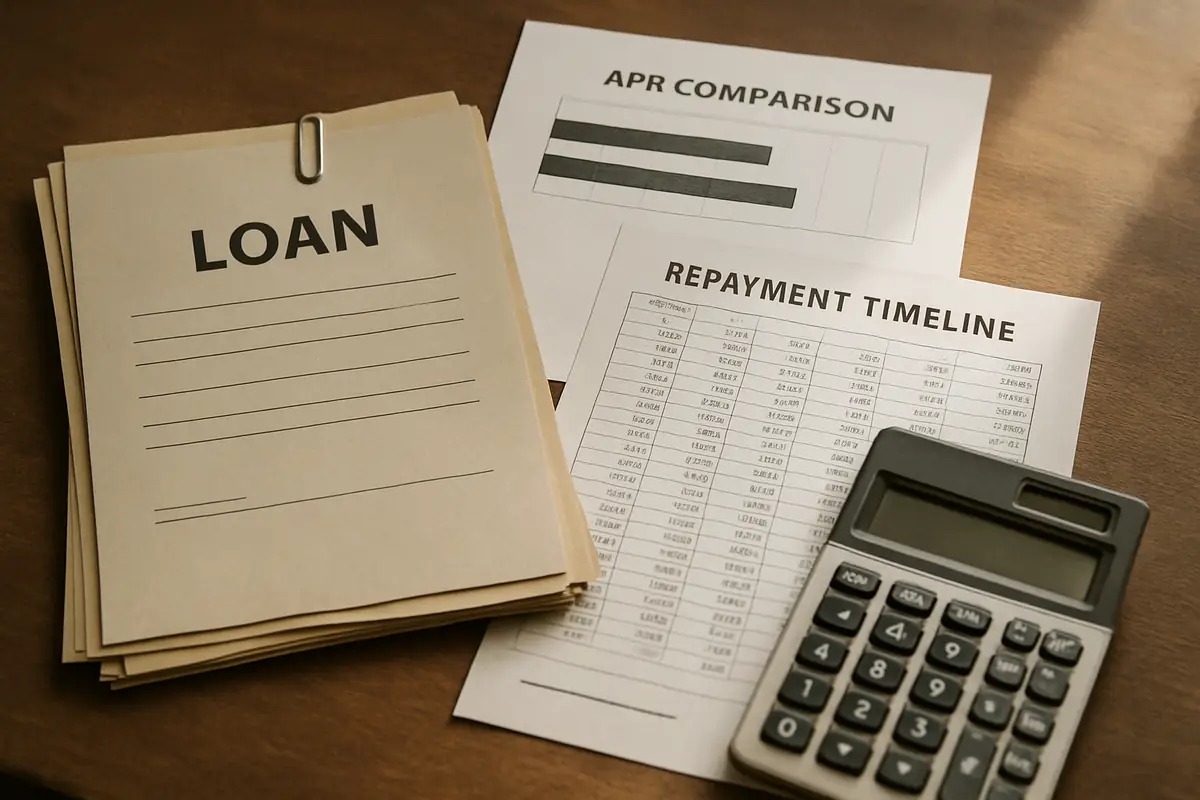
APR, or annual percentage rate, is the yearly cost of borrowing expressed as a percentage, including both the interest rate and any required fees. It is the most important figure when comparing loans, as it reflects the actual cost beyond just the monthly payment. For example, credit card APRs commonly fall between 18% and 30%, while personal loan APRs can range from 6% for excellent credit to over 35% for riskier borrowers. Low monthly payments can be misleading if paired with a high APR, since the total paid over the life of the loan can be much higher.
A loan with a lower APR but longer term—such as 8% over 48 months—might appear less appealing than a 24-month loan at 18% APR, but the total interest paid could be significantly less. Conversely, a short-term loan with a high APR can result in monthly payments that exceed 15% to 20% of your monthly income, increasing the risk of default. Overlooking APR differences for fast approvals often means paying hundreds or thousands more in the long run.
| Factor | What it means | Risk |
|---|---|---|
| APR | Total yearly borrowing cost, including interest and required fees | Misjudging APR can cause you to underestimate the total cost |
| Term Length | Time period for full loan repayment, usually 12 to 84 months | Short terms raise monthly payments; long terms increase total interest |
| Fees | One-time or recurring charges added to the loan | Hidden fees can raise the effective cost by 5% or more |
| Penalties | Charges for late payments, defaults, or early payoff | Penalties can escalate costs and harm your credit score |
Term Length: How Repayment Periods Shape Your Costs
The term length of a loan—typically ranging from 12 months up to 7 years—directly affects both how much you pay each month and the total interest you owe. Shorter terms, such as 12 to 24 months, mean higher monthly payments but less total interest. Longer terms, such as 60 to 84 months, lower the monthly payment but can increase the total interest paid by thousands of dollars.
For example, a $10,000 loan at 10% APR over 3 years results in a monthly payment of about $323, with total interest around $1,630. The same loan over 6 years drops the payment to about $185, but total interest rises to over $3,300. Fast-approved loans often come with shorter terms that seem manageable at first glance but can strain your budget if the monthly payment approaches or exceeds 20% of your take-home pay.
Scenario: Choosing Between Two Loans With Different Terms
Jane needs $5,000 urgently and receives two fast-approved offers: Loan A has a 12-month term at 20% APR; Loan B has a 36-month term at 15% APR. Loan A’s monthly payment is about $463, with total interest of roughly $550. Loan B’s payment drops to about $173 per month, but total interest rises to around $1,230. Jane must weigh whether her budget can handle the higher payment now to save on interest, or if she needs the lower payment and is willing to pay more over time.
Collateral: How Pledging Assets Changes Loan Terms
Collateral is an asset—such as a car or savings account—pledged to secure a loan. Loans backed by collateral, like auto loans or home equity loans, often offer lower APRs (sometimes as low as 4% to 8%) because the lender bears less risk. However, the risk shifts to the borrower: if you miss payments, the lender can seize your asset. Unsecured loans, which do not require collateral, usually come with higher APRs, often between 12% and 36%, to compensate for the lender’s risk.
For instance, a secured $15,000 auto loan at 6% APR over 5 years may have a monthly payment of about $290, while an unsecured personal loan for the same amount could cost over $350 monthly at a 15% APR. Fast approvals for unsecured loans might seem attractive, but the tradeoff is higher interest and a greater risk of default. Borrowers should consider whether pledging collateral is worth the lower rate, especially if losing the asset would cause financial hardship.
Fees: The Overlooked Costs of Fast Loans
Fast approval loans often come with fees that can add hundreds to your total borrowing cost. Common fees include origination charges (typically 1% to 8% of the loan), processing fees ($25 to $100), prepayment penalties (1% to 5% of the remaining balance), or monthly service fees ($10 to $30). These fees may not be obvious up front, especially when contracts are signed quickly under time pressure.
For example, a $7,000 loan with a 5% origination fee means you only receive $6,650, but you must repay the full $7,000 plus interest. Ignoring these charges can turn an apparently affordable loan into a costly mistake. Always ask for a full fee schedule and compare it to slower loans with more transparent costs.
| Fee Type | Typical Purpose | Risk If Ignored |
|---|---|---|
| Origination Fee | Upfront charge for processing the loan | Reduces amount received and increases effective APR |
| Prepayment Penalty | Fee for paying off the loan early | Makes refinancing or early payoff less attractive |
| Late Payment Fee | Penalty for missing a payment due date | Can add $15 to $40 per missed payment and damage credit |
| Service Charges | Monthly or yearly administrative fees | Raises ongoing cost of borrowing |
Penalties: How Missed Payments Multiply Your Risk
Penalty clauses in loan contracts can dramatically increase your costs if you miss payments or default. Late fees typically range from $25 to $50 for each missed due date. Some loans include default interest rates that can jump by 5% to 10% above your original rate after a single missed payment. Others enforce balloon payments—large lump-sum amounts due at the end of the term—or accelerate the full balance upon default. Fast-approved loans may have stricter penalty enforcement, designed to protect the lender, not the borrower.
When monthly payments become unaffordable due to job loss or unexpected expenses, penalties can stack up quickly. For example, missing three payments on a $4,000 loan with a $35 late fee each time adds $105 in fees, plus possible penalty interest, and can drop your credit score by 50 points or more. Reviewing these clauses before you sign is critical to avoid financial shocks that can spiral into long-term debt problems.
Where readers should be careful
Failing to review penalty clauses after a fast approval can result in escalating costs and serious credit damage, even from a single missed payment.
Repayment Pressure: Why Budget Fit Is More Important Than Speed
The most practical factor for loan success is whether your monthly payments fit your income and expenses, not how quickly you get approved. Loans with rapid processing often skip thorough affordability checks, resulting in payments that can exceed 15% to 25% of your monthly take-home pay. This increases the risk of missed payments, fees, and credit score drops.
For example, if your monthly income is $2,500 and a fast loan requires $500 in payments, you’re committing 20% of your income to debt—a level that can crowd out essential expenses. Carefully compare repayment schedules to your actual budget, and consider if you could still manage payments during periods of reduced income or unexpected costs. This approach ensures you borrow sustainably, even if approval takes a few days longer.
Comparing Advertised Offers to Actual Loan Obligations
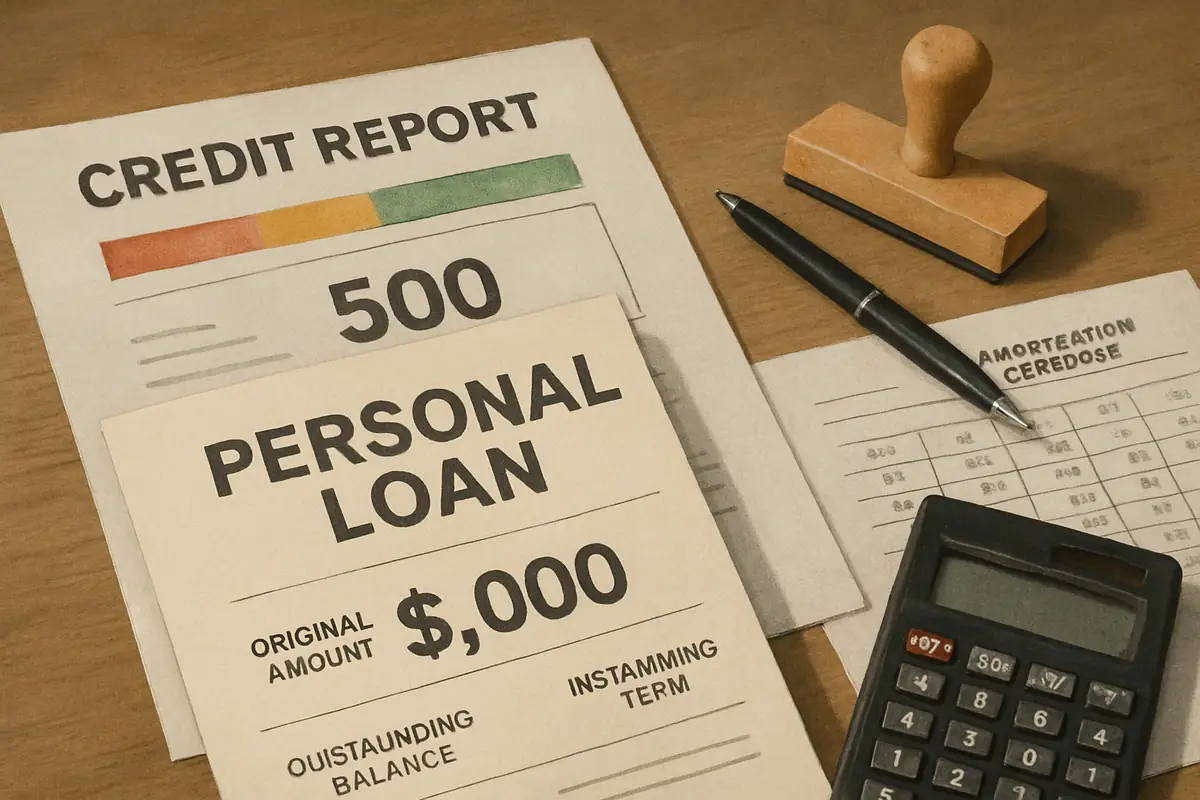
Loan advertisements often highlight fast approvals or headline rates as low as 5% APR, but may not mention all fees, required collateral, or exact repayment schedules. For example, a loan advertised at 7% APR may include a 3% origination fee and mandatory insurance, raising the effective cost. Amortization, or the schedule of principal and interest payments over time, may not be disclosed up front, making it hard to see how much you’ll owe in total.
Always request the full loan agreement in writing before signing, even after instant approval. Review the amortization schedule, total repayment amount, and all conditions. This step can reveal hidden costs and help you avoid surprises that could undermine your financial goals.
Steps to Manage Risk When Considering Fast Loans
First, set aside marketing claims about speed until you’ve reviewed the APR, term length, fees, collateral requirements, and penalties. Second, calculate whether you can comfortably make the proposed monthly payments, even if your income drops by 10% to 20%. Third, ask the lender for a complete disclosure document before signing—fast approval should never mean rushing into a contract.
Fourth, try to negotiate better terms, such as a lower APR or longer repayment period, even if it means waiting an extra few days. This can save you hundreds or thousands of dollars over the life of the loan. Finally, keep written records of all loan communications and agreements, so you have proof of terms in case of disputes.
Interest Rates: The Key Factor in Total Loan Cost
Interest rates, which can range from 4% for secured loans to over 30% for unsecured or riskier borrowers, are a primary driver of both monthly payments and total repayment. Even a 2% difference in rate can add up to hundreds of dollars over a multi-year loan. For example, a five-year $8,000 loan at 7% interest results in a monthly payment near $159 and total interest of about $1,540, while the same loan at 12% interest costs $178 per month and $2,680 in total interest. Evaluating interest rates alongside loan duration provides a true picture of affordability.
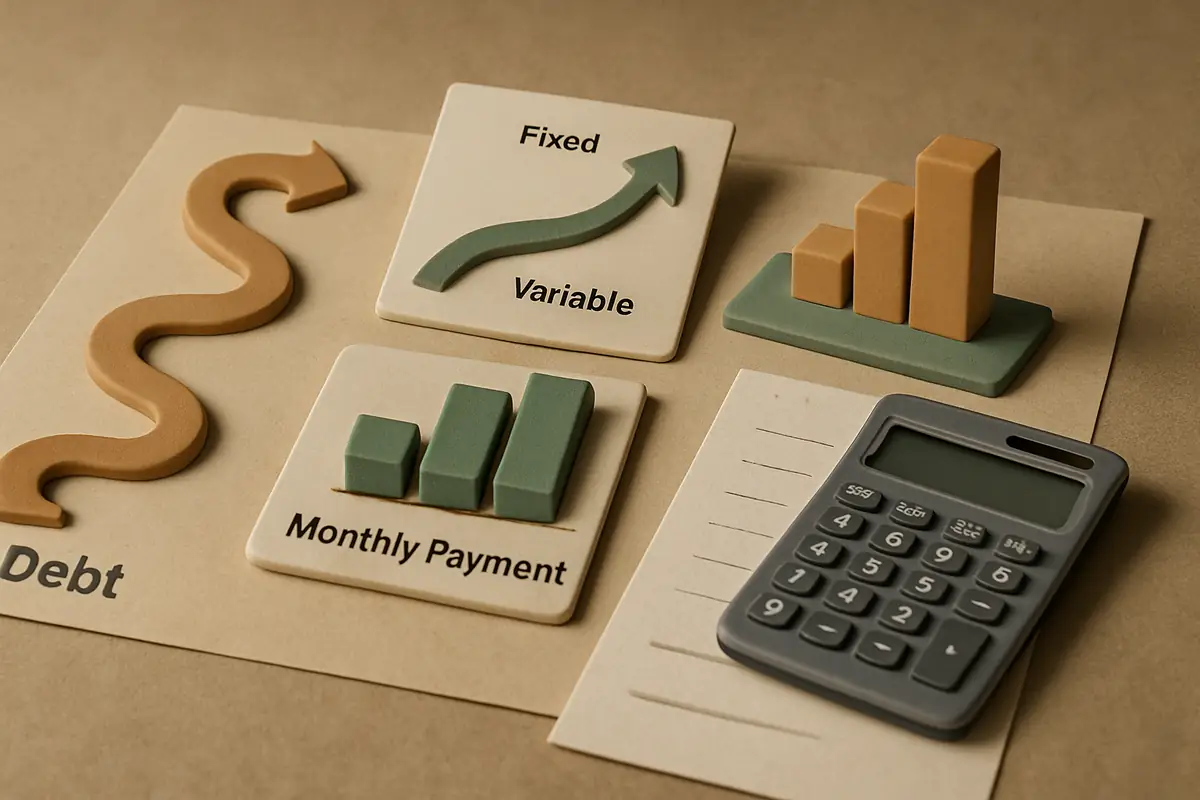
Interest rates depend on your credit score (with scores above 750 typically qualifying for the lowest rates), lender policies, and economic conditions. Fixed rates lock in your payment for the duration, while variable rates can rise or fall, affecting your monthly budget unpredictably. Borrowers should understand how these structures interact with loan terms to anticipate future costs and avoid surprises.
Loan Duration: How Repayment Periods Affect Financial Planning
Loan duration, or the length of time you have to repay, shapes both your monthly budget and your long-term debt obligations. Shorter durations—such as 2 to 3 years—require higher monthly payments but reduce overall interest, helping you become debt-free faster. Longer durations—such as 10, 20, or even 30 years for mortgages—lower monthly payments but can double or triple the total interest paid.
For instance, a 30-year mortgage of $200,000 at 6% interest results in monthly payments around $1,200 and total interest exceeding $230,000 over the life of the loan. In contrast, a 15-year mortgage at the same rate raises the payment to about $1,690, but total interest drops to roughly $105,000. Aligning loan duration with your income and goals is essential: those expecting income growth may choose shorter loans for faster payoff, while those with variable income may need the flexibility of longer terms.
Worked Example: Calculating the Real Cost of Two Loan Options
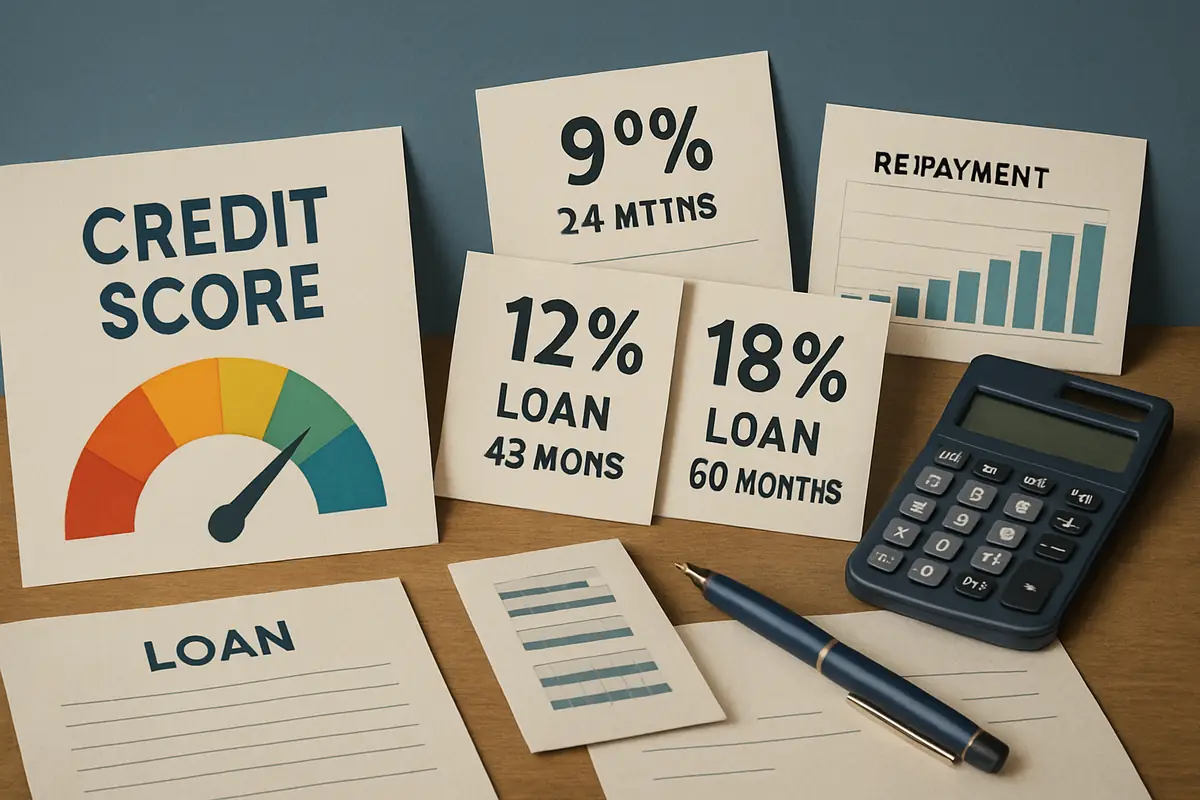
Suppose you need to borrow $6,000. Option 1 is a 24-month loan at 12% APR; Option 2 is a 48-month loan at 18% APR. For Option 1, your monthly payment is about $282, with total interest paid of approximately $768. For Option 2, your monthly payment drops to $176, but total interest jumps to around $1,448. This example shows how a longer term and higher APR can nearly double your interest cost, even if the monthly payment feels more affordable.
Fees and Penalties: The True Value of Your Loan
Beyond principal and interest, fees and penalties can add hundreds or thousands to your loan cost. Origination fees, late payment penalties, and prepayment penalties are common. For example, a 5% origination fee on a $10,000 loan means $500 is deducted before you even receive the funds. Late payment penalties of $30 to $50 can accrue quickly, and some lenders charge 2% to 5% of the outstanding balance if you pay off the loan early.
Reviewing all fees before accepting a loan can prevent unexpected costs that negate the benefits of a low interest rate or flexible term. Transparent lenders will list all fees clearly, helping you compare offers and avoid surprises that could derail your financial plans.
The Psychological Impact of Loan Terms
Loan term length affects not just your finances but also your peace of mind. Longer loans with lower monthly payments may reduce immediate stress but can lead to "debt fatigue" as you face years or decades of repayment. Shorter loans require stricter budgeting but provide the satisfaction of debt freedom sooner. Studies show that carrying debt for more than five years can increase financial anxiety and affect decision-making, such as delaying major life events or investments.
Choosing a term that fits your financial and emotional comfort can help you stay motivated and avoid the pitfalls of prolonged debt. Consider how much monthly payment you can handle without sacrificing essentials, and how long you are comfortable carrying that obligation.
Loan Calculators: A Tool for Smarter Borrowing
Online loan calculators allow you to model different scenarios by adjusting loan amount, term length, and interest rate. These tools instantly show how changing one factor—such as reducing the term from 60 months to 36 months—increases the monthly payment but slashes total interest paid. For example, a $5,000 loan at 15% APR over 5 years has a monthly payment of $119 and total interest of $2,140. Shortening the term to 3 years increases the payment to $173 but cuts total interest to $1,230.
Experimenting with these calculators helps you visualize the impact of various loan terms, making it easier to negotiate or select offers that best match your budget and long-term goals. Use these tools before committing to any loan, especially those with fast approvals, to ensure you understand the full financial picture.
References
- https://www.consumerfinance.gov/consumer-tools/
- https://www.consumerfinance.gov/consumer-tools/credit-reports-and-scores/
- https://www.fdic.gov/consumer-resource-center/loans
- https://www.consumerfinance.gov/ask-cfpb/what-is-the-difference-between-a-fixed-rate-and-adjustable-rate-mortgage-arm-loan-en-100/
- https://www.consumerfinance.gov/consumer-tools/auto-loans/
- https://www.consumerfinance.gov/consumer-tools/mortgages/