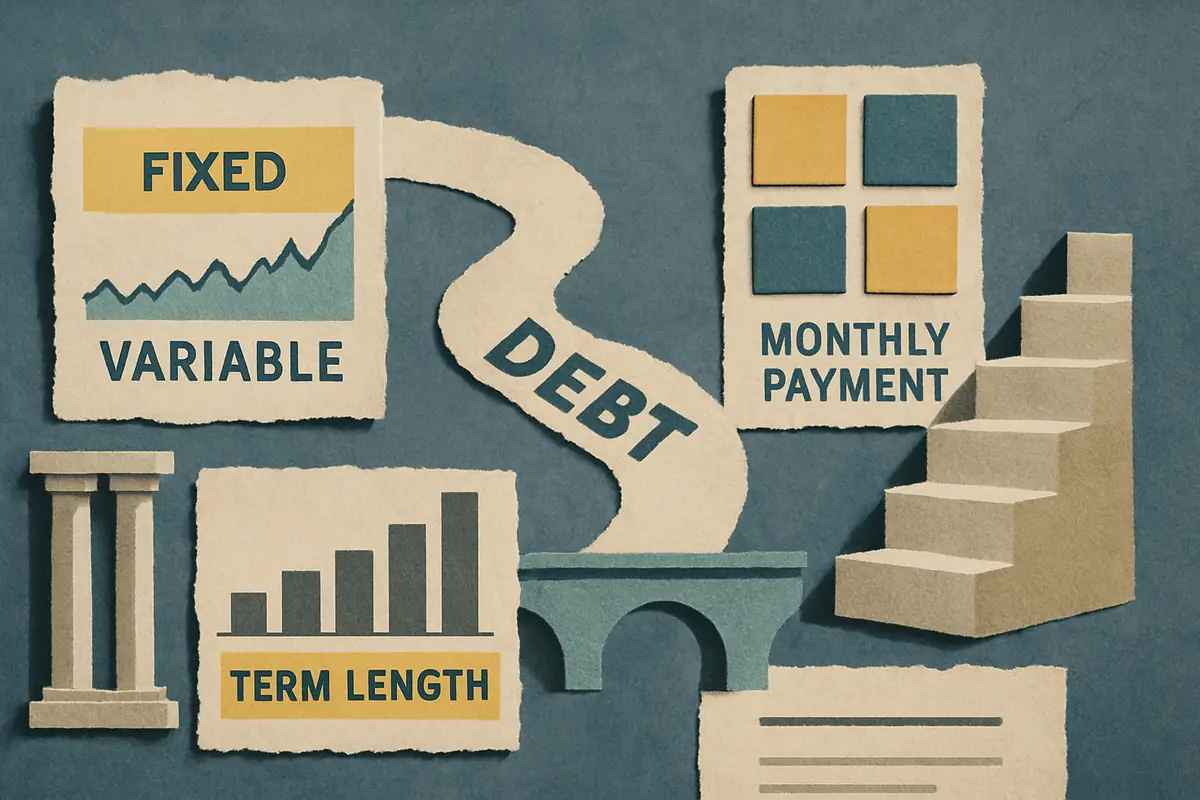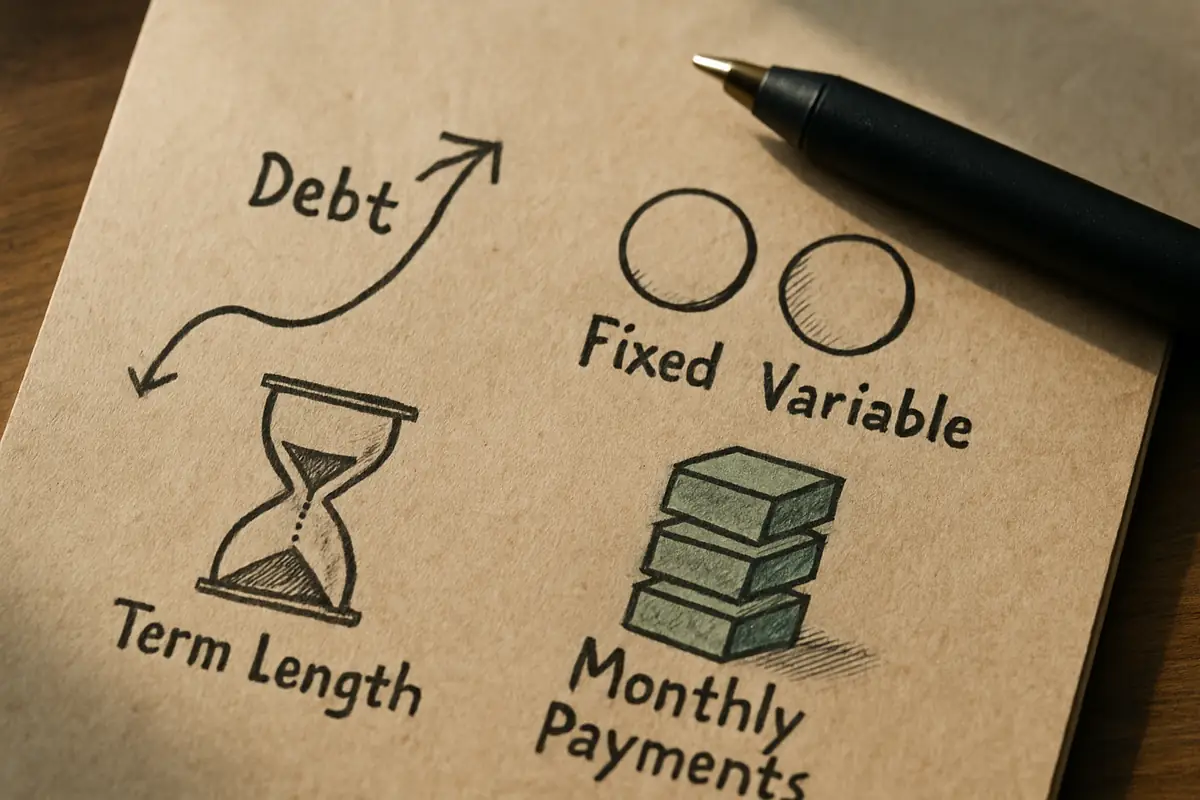
When interest rates shift, borrowers face real changes in the cost and structure of installment loans—financial products that provide fixed amounts repaid over set periods. In 2023, the average personal loan interest rate ranged from 10% to 28% APR (annual percentage rate, which includes both the interest rate and fees), and origination fees can add 1% to 8% of the borrowed amount. This article unpacks the practical risks and trade-offs of relying on installment loans in a changing rate environment, highlighting the effects of fees, APR changes, contract terms, collateral requirements, and repayment pressures with real-world household examples.
Fixed-Rate Installment Loans Offer Predictable Payments During Rising Rates
Jennifer and Mark, a suburban couple earning a combined $85,000 annually but with less than $5,000 in emergency savings, chose a $20,000 fixed-rate installment loan for home improvements. Their lender advertised a 9% interest rate, fixed for five years (60 months). They assumed locking in the rate meant stable payments, regardless of whether market rates rose to 12% or higher in the coming years. However, Jennifer did not realize the $1,000 origination fee (5% of the loan) was added to the principal, nor that the contract included a prepayment penalty of 2% of the remaining balance if they refinanced early.
With a fixed-rate loan, their monthly payment was about $415, calculated by amortization (the process of spreading payments evenly over the term to pay off principal and interest). However, including the origination fee, their effective APR was closer to 10.2%. If market rates dropped to 7% two years later, the prepayment penalty—about $320 at that point—made refinancing less attractive. This scenario shows that the nominal interest rate is only part of the total loan cost; fees and penalties can significantly impact the true cost, especially over longer terms of 36 to 72 months.
Where fixed-rate installment loans help borrowers
- Provide payment predictability even as market rates rise (e.g., from 7% to 12%).
- Reduce risk of monthly payment shocks from variable interest.
- Simplify budgeting with fixed amortization schedules—monthly payments stay the same for 12, 36, 60, or even 84 months.
Where caution is needed
- Origination fees (commonly 1%–8%) can raise total borrowing cost.
- Prepayment penalties (often 1%–3% of outstanding balance) restrict refinancing if better rates emerge.
- Longer terms (60–84 months) may lock borrowers into higher cumulative interest if rates fall.
Variable-Rate Installment Loans Increase Payment Uncertainty as Rates Fluctuate
The Johnson family consolidated $15,000 of credit card debt using a variable-rate installment loan. The initial rate was 7% APR, but the contract allowed for adjustments every 12 months, tied to a benchmark rate. Within 18 months, the benchmark rose by 2.5 percentage points, pushing their rate to 9.5%. Their monthly payment increased from $290 to $320, straining their budget since their income remained flat and their monthly expenses were already 90% of take-home pay.
Variable-rate loans expose borrowers to the risk that payments will rise if market rates increase. If the Johnsons' rate reached 12%, their payment would climb to $340—$50 more per month than they originally budgeted. Since their credit score dropped from 700 to 660 due to high utilization, switching to a fixed-rate loan was more difficult and expensive.
Where readers should be careful
Warning: Variable-rate loans may start with low introductory rates (sometimes 5%–8%), but rate increases can raise payments by 10%–30% over the term. Borrowers must assess whether their income can absorb higher future payments before committing.
Fees Beyond Interest: Origination, Late Payment, and Collateral Costs Add Up
Installment loans carry costs beyond the stated interest rate. Origination fees, often 1%–8% of the loan amount, are charged upfront or included in the loan principal, raising the effective APR—the true annual cost including all fees. Late payment fees typically range from $25 to $50 per missed payment and can quickly add up if cash flow is tight. Collateral requirements—such as using a car or home as security—may lower the interest rate by 1–4 percentage points compared to unsecured loans, but put the asset at risk if payments are missed.
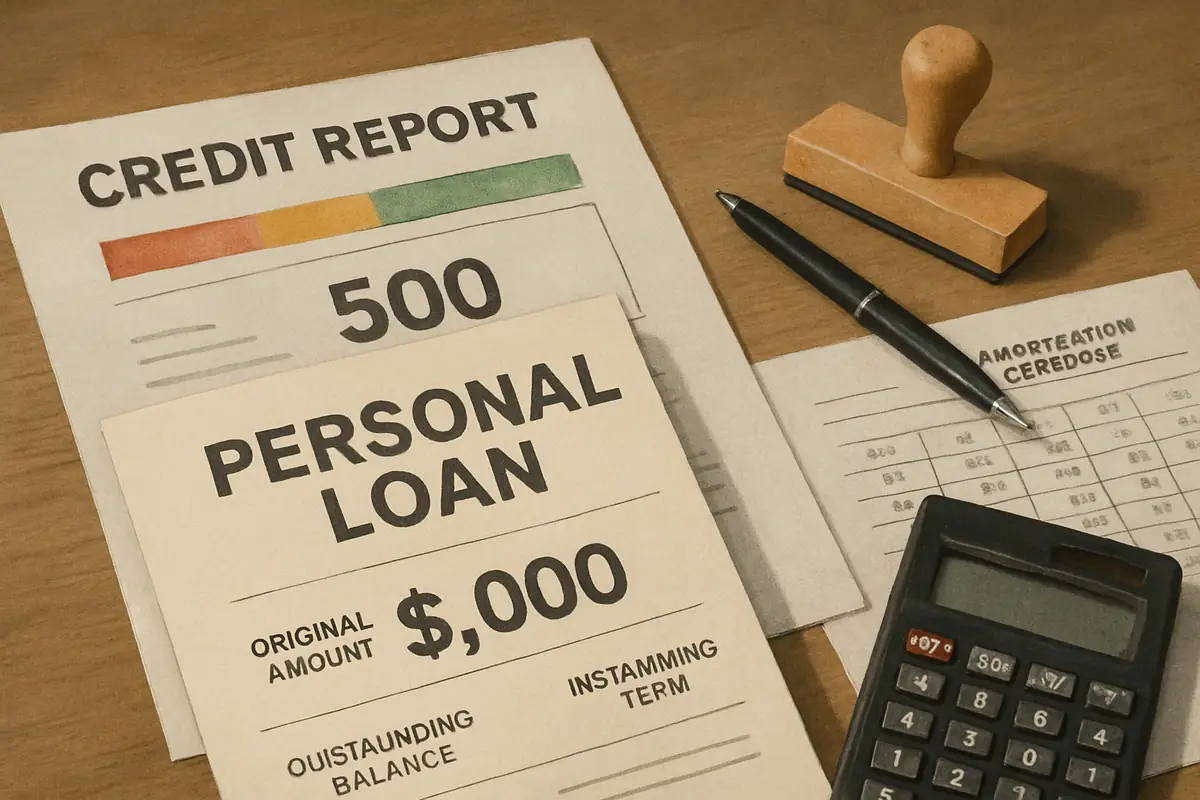
For example, consider a $10,000 personal loan with a 10% interest rate, a 5% origination fee ($500), and a 36-month term. The borrower receives $9,500 but repays $10,000 plus $1,616 in interest, totaling $11,616. The effective APR is about 12.7%, not 10%, because the borrower pays interest on the full $10,000 even though only $9,500 was received. This calculation highlights how fees and interest combine to raise the real cost of borrowing.
| Cost Factor | Description | Risk Aspect |
|---|---|---|
| Origination Fee | One-time charge (1%–8%) for processing loan | "Hidden" APR increase; reduces net funds received |
| Late Payment Fee | Penalty ($25–$50) for missed payments | 'Snowball' effect worsening financial strain |
| Collateral Requirement | Secured asset as loan guarantee | Potential loss of asset if repayments fail |
| Prepayment Penalty | Fee (often 1%–3% of balance) for early payoff | Limits refinancing or debt reduction flexibility |
Repayment Pressure: Term Length and Payment Schedule Affect Budgets
Repayment pressure describes how monthly installments fit into a household’s disposable income after essentials. For example, a $15,000 loan at 10% over 36 months results in a payment of about $485 per month, while extending to 60 months lowers payments to $320 but increases total interest paid from $1,460 to $3,200. Shorter terms reduce total interest but raise monthly payments; longer terms ease the monthly burden but increase overall cost. Grace periods (the time between bill and due date, often 7–15 days), due dates relative to paychecks, and lender flexibility all influence whether borrowers can make payments without stress.
Emily’s Tight Budget Balancing Act
Emily took a 24-month installment loan with high monthly payments of $600 but minimal total interest of $400. When her work hours were cut for two months, she missed a payment, incurring a $35 late fee and a negative mark on her credit report. A 48-month term would have lowered her payment to $320 but increased her total interest to $900. This trade-off between cash flow and loan cost is critical for households with variable income.
Contract Pressure: Legal Terms Can Restrict Borrower Flexibility
Contract pressure refers to how legal loan terms can limit borrower options after signing. Common features include mandatory insurance (such as requiring $1,000–$3,000 per year in auto coverage for vehicle loans) and prepayment penalties (often 1%–3% of the remaining balance). These clauses may prevent borrowers from refinancing or paying off loans early without incurring extra costs.
Samuel, for example, signed a $12,000 auto loan with a 6% interest rate, a required insurance clause, and a prepayment penalty equal to two months’ interest (about $120) if paid off early. When his credit improved after 18 months, he could have refinanced at 4%, but the penalty and insurance requirements made switching less attractive. These contract terms kept him in a higher-cost loan longer than necessary.
Where readers should be careful
Warning: Review all contract terms carefully before signing. Hidden clauses—such as mandatory insurance or prepayment penalties—can create long-term cost traps, even if headline interest rates seem attractive.
Comparing Alternatives: Assessing Other Loan Types and Strategies
Installment loans are just one option for borrowing during periods of rate volatility. Alternatives include credit cards (with APRs commonly between 18% and 30%), promotional balance transfers (often 0%–5% APR for 6–18 months), personal lines of credit (with variable limits and rates typically from 8% to 20%), or home equity loans (secured by property, with rates often 6%–12%). Each has trade-offs in APR transparency, repayment flexibility, fee structures, and collateral risk. For example, home equity loans offer lower rates but put your home at risk, while credit cards provide flexibility but can accumulate high interest quickly if not paid off within the promotional period.
Advantages of Alternative Loan Options
- Flexible repayment schedules can better match variable income.
- Lower upfront fees or penalties than some installment loans; many balance transfers have no origination fee.
- Early refinancing is often possible without substantial penalties.
Disadvantages Compared to Installment Loans
- Higher variable rates (e.g., credit cards at 20%–30%) may create payment uncertainty.
- Stricter qualification standards, especially for unsecured lines of credit.
- Collateralized loans (home equity, auto) increase risk of asset loss if payments are missed.
Practical Checklist: Key Items to Verify Before Signing an Installment Loan
Confirm True APR
Calculate all fees (origination, application, etc.) folded into the principal or monthly cost—not just the headline interest rate. For example, a 10% interest rate with a 5% origination fee could mean a true APR of 11%–13%.
Review Prepayment Terms
Check for penalties (typically 1%–3% of balance) limiting your ability to refinance or pay off early.
Understand Collateral Requirements
Assess the risk of asset loss—auto loans and home equity loans may have lower rates, but missing payments could result in repossession or foreclosure.
Are fixed-rate installment loans always safer during rising rates?
No; while they lock in payments if market rates go up, fees and penalties can raise true costs by several percentage points above the advertised rate.
Can I switch from a variable-rate loan to fixed?
It depends on your credit and contract terms. Prepayment penalties (1%–3%) or declining credit scores can limit your ability to refinance cost-effectively.
What happens if I miss an installment payment?
Late fees (typically $25–$50) apply immediately; repeated delays can lower your credit score by 50–100 points and may trigger default after 60–90 days.
Is collateral required for all installment loans?
No; unsecured loans are available but often come with higher rates (by 2%–6%) to offset lender risk.
How Rate Volatility Raises Borrowing Costs for Installment Loans
When interest rates move up or down, borrowers can see monthly payments or total costs change by hundreds or thousands of dollars over a loan’s life. Variable-rate installment loans may adjust every 6–24 months, depending on the contract. A loan starting at 7% could climb to 11% if benchmark rates rise, increasing a $20,000 payment from $400 to $440 per month. Even fixed-rate loans are affected indirectly, as lenders may raise origination fees or tighten credit criteria during volatile periods, making it harder to qualify or increasing upfront costs. In periods of rising rates, borrowers may find fewer lenders willing to offer long terms, and those who do may charge higher fees or rates to offset their own funding costs.
For example, during a year when benchmark rates increase by 2%, average personal loan APRs may rise by 1.5–2.5 percentage points, and origination fees may increase by $100–$300 on a $10,000 loan. Borrowers relying heavily on installment credit could face less attractive terms or reduced access if rates rise rapidly.
Strategies for Managing Installment Loans in a Rising Rate Environment
Borrowers should take proactive steps when considering installment loans as rates rise. First, determine the loan’s rate structure: fixed rates offer stability, while variable rates can change every 12–24 months. For variable-rate loans, review the adjustment frequency and any caps on rate increases—some contracts cap increases at 2%–5% per year or 6%–10% over the life of the loan. Comparing at least three loan offers can reveal differences in rates, fees, and flexibility. For example, a $15,000 loan might have monthly payments ranging from $320 to $370, depending on the APR and term.
It’s also important to assess your financial flexibility. If a $30 increase in monthly payments would strain your budget, consider a fixed-rate loan or a shorter term (e.g., 36 months instead of 60). Maintaining an emergency fund covering at least 2–3 months of payments (often $600–$1,200) can help cushion against unexpected hikes. For some, choosing a shorter loan term reduces total interest paid, even if the monthly payment is higher, helping minimize exposure to future rate increases.
Installment Loan Types Respond Differently to Interest Rate Changes
Installment loans come in several forms—personal loans, auto loans, and home equity lines of credit (HELOCs)—each with unique sensitivities to interest rate changes. Personal loans are often unsecured, with fixed rates from 8% to 18% and terms of 24 to 60 months. Auto loans are typically fixed-rate, with terms of 36 to 84 months, and rates from 4% to 10%. HELOCs, however, usually have variable rates tied to the prime rate, which can change several times per year. A HELOC starting at 7% could rise to 10% if the prime rate increases, raising monthly payments by 20% or more.
Understanding these differences helps borrowers select the right product for their needs. For example, someone with stable income who wants predictable payments may choose a fixed-rate personal or auto loan, accepting a slightly higher rate for stability. A borrower expecting rates to remain stable or decline may use a HELOC for flexibility, planning to pay down the balance aggressively before rates increase.
Credit Scores Play a Key Role in Installment Loan Costs as Rates Change
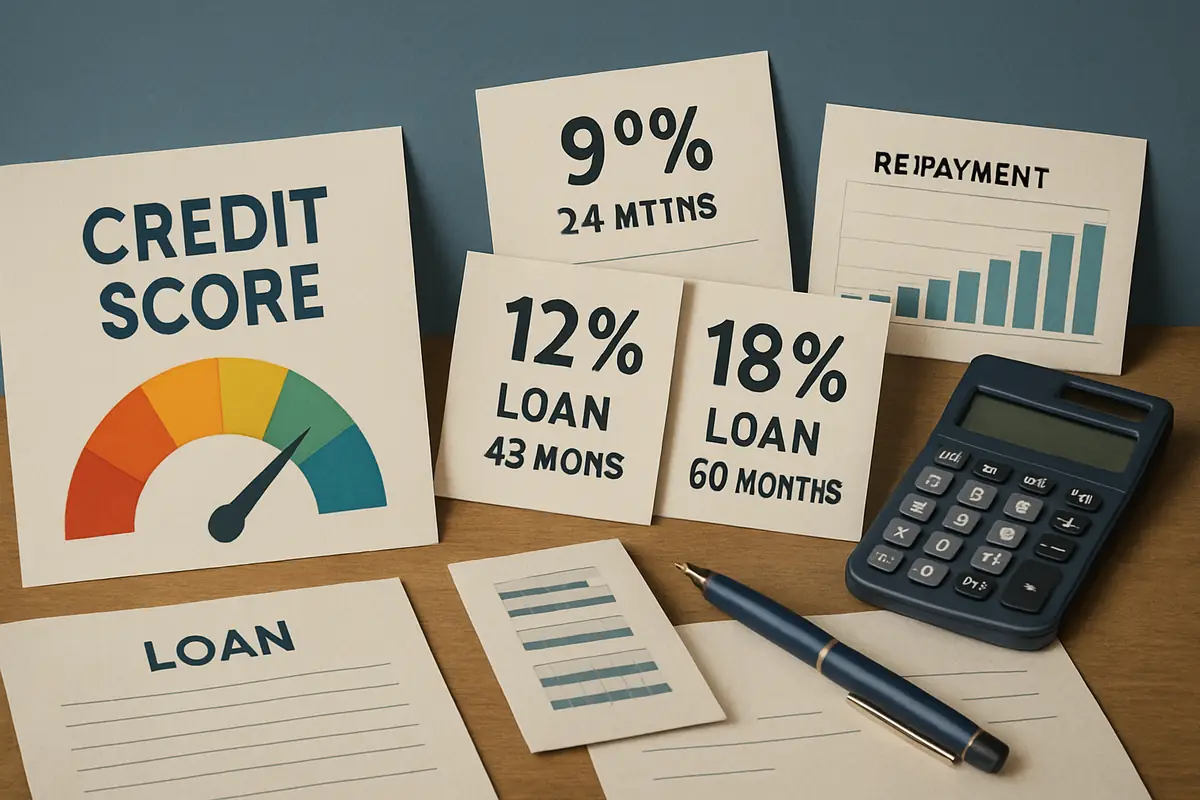
Credit scores—numerical measures of creditworthiness, typically ranging from 300 to 850—heavily influence installment loan access and pricing. In rising rate environments, lenders may offer their best rates (e.g., 8%–10%) only to borrowers with scores above 720. Those with lower scores (600–679) may face APRs 3–8 percentage points higher, and may be required to provide collateral or accept shorter terms. A strong credit score can save hundreds to thousands of dollars over the life of a loan.
Maintaining a high credit score through timely payments, keeping credit utilization below 30%, and correcting errors on your credit report helps secure better rates and terms, especially when lenders tighten standards during periods of economic uncertainty.
Evaluating When Installment Loans May Not Be the Best Option
While installment loans provide structured repayments, they may not always be optimal when rates are climbing rapidly. Alternatives such as balance transfer credit cards (with 0% APR for 12–18 months), short-term lines of credit, or delaying non-essential expenses can sometimes offer lower short-term costs. However, these options may carry higher rates after promotional periods (jumping to 18%–29% APR), strict qualification criteria, or higher late fees ($35–$40 per missed payment). Borrowers should weigh these trade-offs against their repayment discipline and timeline before moving away from traditional installment loans during volatile rate cycles.
References
- https://www.federalreserve.gov/releases/h15/
- https://www.consumerfinance.gov/ask-cfpb/what-is-apr-en-45/
- https://www.consumerfinance.gov/consumer-tools/auto-loans/
- https://www.consumerfinance.gov/consumer-tools/
- https://www.consumerfinance.gov/ask-cfpb/what-is-the-difference-between-a-fixed-rate-and-adjustable-rate-mortgage-arm-loan-en-100/