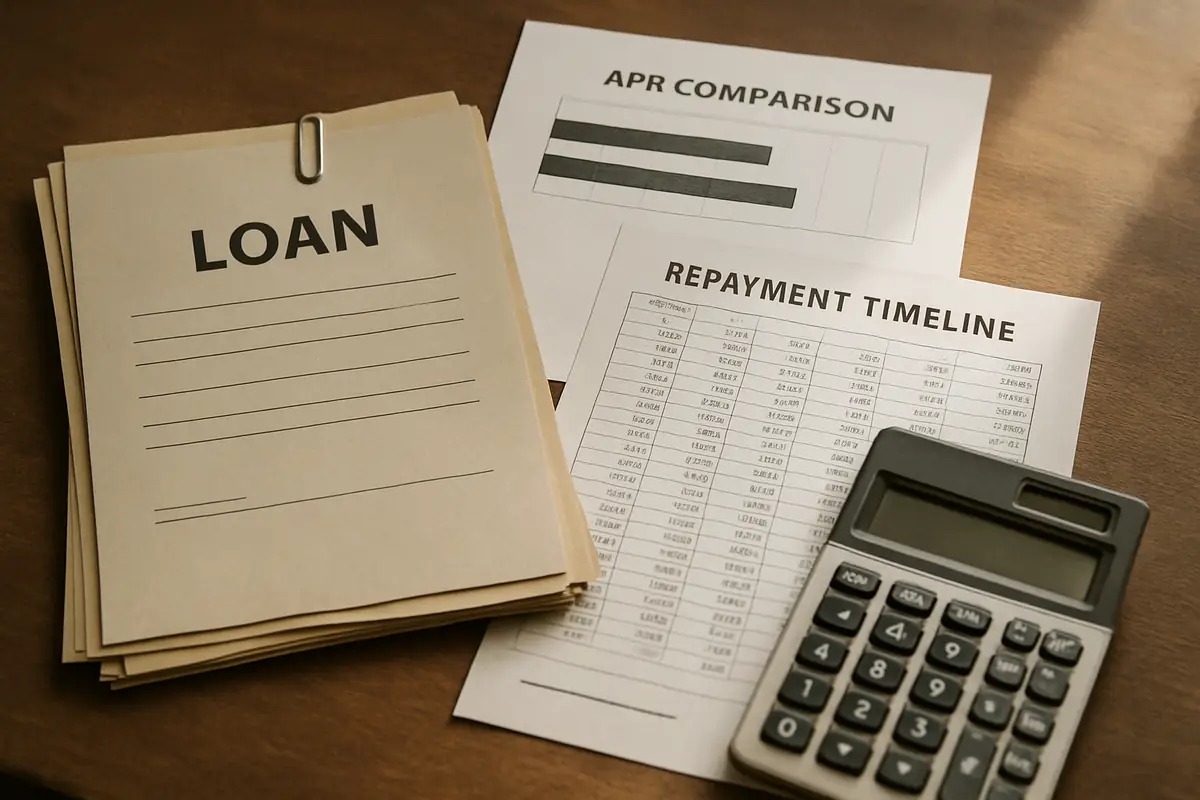
When reviewing loan offers, borrowers often focus on the Annual Percentage Rate (APR), a standardized figure that aims to express the yearly cost of borrowing. However, this number alone does not reveal the full financial impact of a loan. Factors such as origination fees, loan term length, collateral requirements, and penalty charges can all significantly affect your total repayment obligation. Understanding why financial professionals focus on APR means recognizing what it does—and does not—capture in the real cost of borrowing.
APR Is Not the Whole Story: Why Comparing Only APR Can Mislead
Many people believe that simply comparing APRs across loan offers will always identify the most affordable option. In reality, APR—which stands for Annual Percentage Rate—combines the interest rate with certain required fees (like origination or closing costs) to express the annualized cost of borrowing. But APR does not include every possible charge. For instance, prepayment penalties (fees for paying off a loan early) or late payment fees are often excluded from APR calculations, despite their potential to add hundreds or even thousands of dollars to what you ultimately pay.
The length of the loan term also plays a crucial role. For example, a 4% APR on a 30-year mortgage can result in far higher total interest paid than a 6% APR on a 10-year loan, simply because interest accrues over a much longer period. While APR reflects yearly costs, it does not directly show the total dollar amount you will pay over the entire life of the loan. This is why financial experts caution against relying solely on APR when comparing loan products.
Where readers should be careful
Focusing only on APR can hide additional expenses such as origination fees (often 1% to 5% of the loan amount), balloon payments due at the end of some loans, or requirements to pledge assets as collateral, all of which can dramatically change your financial risk.
Understanding What APR Covers and What It Leaves Out
APR is calculated to include the interest rate and certain mandatory fees—such as origination fees, which typically range from $100 to $1,000 or 1% to 5% of the loan principal. This makes APR a more comprehensive measure than the nominal (or stated) interest rate, which reflects only the cost of borrowing money, not the fees required to obtain the loan.
However, not all fees are part of the APR. Administrative charges, late payment penalties (which can range from $25 to $50 per missed payment), and optional add-on services like credit insurance are often excluded. This means that two loans with the same APR could have very different total costs, depending on which additional fees or penalties apply during repayment. Experts stress the importance of reading the fine print and reviewing the full schedule of charges before choosing a loan.
Origination Fees
These are upfront charges for processing your loan application, commonly ranging from 1% to 5% of the loan amount, and are usually included in APR.
Late Payment Penalties
Fees for missed payments, often $25 to $50 or a percentage of the overdue amount, are not typically included in APR but can increase your overall cost.
Prepayment Penalties
Charges for paying off your loan early, which can be up to 2% of the remaining balance, are rarely included in APR but can affect your total expense.
How Loan Term Length Alters Total Repayment
Loan term length—the period over which you repay—has a major influence on your total financial commitment. Longer terms, such as 60- to 72-month auto loans or 30-year mortgages, lower monthly payments but increase the total interest paid over time. For example, a $20,000 car loan at 6% APR over 5 years will have higher monthly payments (about $387) than the same loan over 7 years (about $293), but the 7-year loan will cost you nearly $1,000 more in total interest.
"APR is an annualized measure," explains Daniel Foster, borrower risk editor, "but the real cost to borrowers emerges only when you calculate payments across the entire loan period." Experts recommend evaluating both total repayment and monthly affordability before committing to a loan.
"Two Loans With The Same APR But Very Different Outcomes"
Consider Loan A: $10,000 at 6% APR over 5 years, and Loan B: $10,000 at 6% APR over 10 years. Loan A’s monthly payment is about $193, while Loan B’s is about $111. Over 5 years, Loan A’s total repayment is approximately $11,580. Over 10 years, Loan B’s total repayment grows to about $13,320—meaning you pay $1,740 more in interest simply by extending the term, even though the APR is the same.
Zero Percent Offers: Why Headline Rates Require Scrutiny
Zero percent financing promotions, especially common in auto and retail loans, can look highly attractive. These offers typically last for 6 to 24 months, during which no interest is charged. However, if the balance is not paid off within the promotional period, deferred interest rates—often 20% to 30%—can be retroactively applied to the original purchase amount. Additionally, fees such as processing charges or mandatory insurance can add hundreds of dollars to the cost.
"Zero-percent offers may conceal expenses through required fees or significant penalties for missed deadlines," Foster notes. "A single missed payment can trigger high interest rates, erasing any initial savings." For this reason, experts urge borrowers to review all terms and ensure they can meet the repayment schedule before accepting a zero-percent deal.
Collateral Requirements: Lower APR, Higher Asset Risk
Secured loans—those backed by collateral like a car, home, or savings account—often feature lower APRs, sometimes as low as 3% to 7% for auto loans or 6% to 10% for home equity lines of credit. This is because lenders can seize the collateral if you default, reducing their risk. However, this also means you risk losing valuable property if you cannot keep up with payments.
Unsecured loans, such as personal loans or most credit cards, typically have higher APRs—ranging from 10% to 36%—since there is no asset for the lender to claim in case of non-payment. Borrowers must weigh the lower rates of secured loans against the potential for significant financial loss if circumstances change.
Where readers should be careful
While low-APR secured loans can reduce borrowing costs, they also transfer risk to you: failure to repay could mean losing a car, home, or other pledged asset. Carefully assess your ability to meet repayment obligations before pledging valuable property.
Penalties and Repayment Pressures: Hidden Costs Beyond APR
Many loans come with penalty structures that can raise your total cost dramatically if you miss payments or default. Late payment fees (commonly $25 to $50), returned check charges, or default fees may not be included in the APR but can accumulate quickly. For example, missing three payments on a typical personal loan could add $75 to $150 in fees alone.
Some loans also have strict repayment schedules, with grace periods as short as 10 days, after which penalties apply. Limited options for modifying your repayment plan can further increase risk if your financial situation changes unexpectedly. Experts recommend reviewing all penalty clauses and understanding lender hardship policies before signing any agreement.
Is a lower APR always better?
Not always. Lower APRs may be paired with longer terms, higher fees, or stricter collateral requirements that increase your total repayment.
Can fees outside the APR really add up?
Yes. Over time, late payment penalties or collateral loss can add hundreds or thousands of dollars to your costs.
How do I compare loans effectively?
Calculate the total cost over the full term, including all fees and penalties, and ensure you can reliably meet the monthly payments.
Are zero-percent offers safe?
They can be risky if you don’t repay in the promotional period, as deferred interest and penalties may apply.
Evaluating Loans: Weighing Real Costs and Risks, Not Just APR
Financial professionals emphasize APR as a standardized starting point for comparing loans. However, it is never a complete measure of cost. Borrowers must recognize that the advertised APR often omits complexities such as additional fees, variable loan terms, collateral requirements, and penalty structures—all of which shape the true financial obligation.
Choosing a loan based solely on the lowest APR can lead to overlooking contract terms that may cause significant financial strain later. A thorough evaluation means reading all disclosures, calculating total expected payments (including possible penalties), and honestly assessing your ability to meet repayment commitments under various scenarios.
No loan is free from trade-offs: lower rates might mean longer repayment periods or stricter penalties; secured loans offer lower APRs but put your assets at risk; zero-percent deals require strict adherence to deadlines to avoid retroactive interest charges.
Where readers should be careful
Be wary of any low-rate offer until you fully understand all associated costs, terms, and potential consequences—not just what’s highlighted in advertisements.
Making informed decisions reduces the risk of costly surprises. Treat loan agreements as binding contracts that shape your future finances, not as simple opportunities for easy money.
How APR Shapes Loan Affordability and Budgeting Over Time
APR directly impacts how much you will pay in both monthly installments and total interest over a loan's life. Even a seemingly small difference in APR—such as 1% or 2%—can translate into substantial dollar amounts when spread over several years and thousands of dollars borrowed. For example, credit card APRs commonly fall between 18% and 30%, while personal loans typically range from 6% to 36% APR, depending on creditworthiness and collateral.
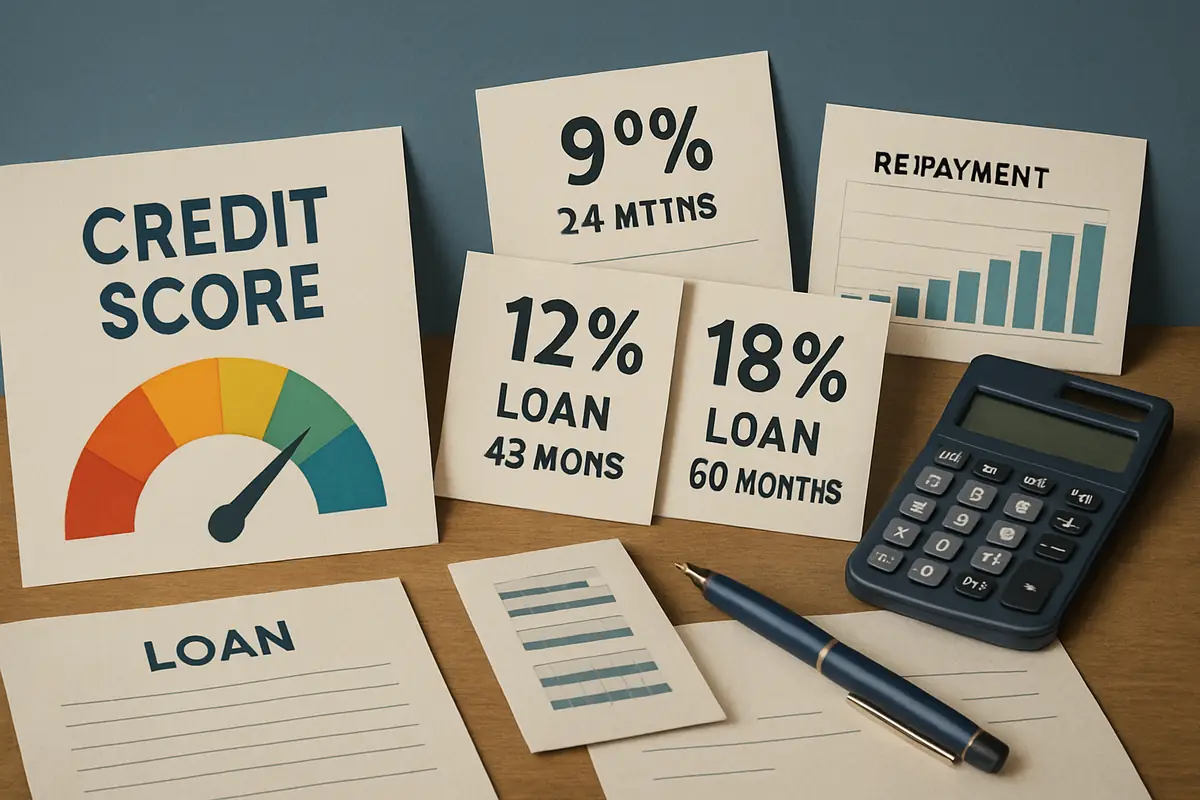
Borrowers with higher APRs face higher monthly payments or may need to extend the loan term to keep payments affordable, leading to greater total interest paid. For instance, a $5,000 personal loan at 12% APR over 3 years results in a monthly payment of about $166 and total interest of roughly $976. If the APR increases to 18%, the monthly payment rises to about $182, and total interest jumps to about $1,560—nearly $600 more over the same period. This demonstrates how even moderate APR differences can strain budgets, especially for those with variable or unpredictable income.
Lenders sometimes offer introductory or "teaser" rates that appear attractive for the first 6 to 12 months but revert to higher APRs—sometimes 20% or more—after the initial period. Focusing only on the initial payment, rather than the full APR, can lead to unsustainable debt if the rate adjusts upward.
APR and Interest Rate: Understanding the Distinction in Loan Costs
The interest rate on a loan is the percentage charged annually on the principal—the amount you borrow. APR, or Annual Percentage Rate, expands on this by including required fees and certain closing costs, giving a more comprehensive view of the annual cost of borrowing. For example, a mortgage with a 5% interest rate but $3,000 in closing costs may have an APR closer to 5.5% to 6%, depending on the loan amount and term.
Two loans with the same interest rate can have different APRs if one includes higher fees. For instance, a $200,000 mortgage at 4% interest with $2,000 in fees may have a lower APR than a similar loan with $6,000 in fees. Borrowers who focus only on the nominal interest rate risk underestimating their total costs. Financial experts recommend always comparing APRs to understand the real annual expense of each loan option.
Worked Example: Calculating Total Repayment Using APR
Let’s walk through a concrete example. Suppose you are offered a $15,000 personal loan at 9% APR for 4 years (48 months), with a $300 origination fee included in the APR calculation.
- Monthly payment (using standard amortization): about $373
- Total paid over 48 months: $373 × 48 = $17,904
- Total interest and fees: $17,904 - $15,000 = $2,904
Now compare this to a $15,000 loan at 7% APR over the same term, with no origination fee:
- Monthly payment: about $359
- Total paid: $359 × 48 = $17,232
- Total interest and fees: $17,232 - $15,000 = $2,232
The difference in APR—just 2%—results in $672 more paid over the life of the higher-APR loan, even with similar terms. This step-by-step calculation highlights why APR matters for total cost, not just monthly affordability.
How Regulation Ensures Transparent APR Disclosure
Government regulations require lenders to present APRs clearly to protect consumers from hidden costs. For example, in the U.S., the Truth in Lending Act (TILA) mandates lenders disclose the APR, total finance charges, and all key loan terms before a contract is signed. This allows borrowers to compare offers on an "apples-to-apples" basis, regardless of how fees or interest are structured.
Similar regulatory frameworks exist internationally, requiring lenders to display APRs prominently and to outline all costs that factor into the calculation. These rules, in place since the late 1960s in some jurisdictions, help prevent misleading advertising and empower consumers to make informed decisions across a range of financial products.
Practical Steps for Evaluating Loans by APR
When shopping for a loan, gather written offers from at least three lenders and compare their APRs. Ask each lender to itemize all fees, including origination, processing, and any mandatory insurance. Use online calculators to enter both the interest rate and fees for each loan, so you can see the total repayment amount over the term.
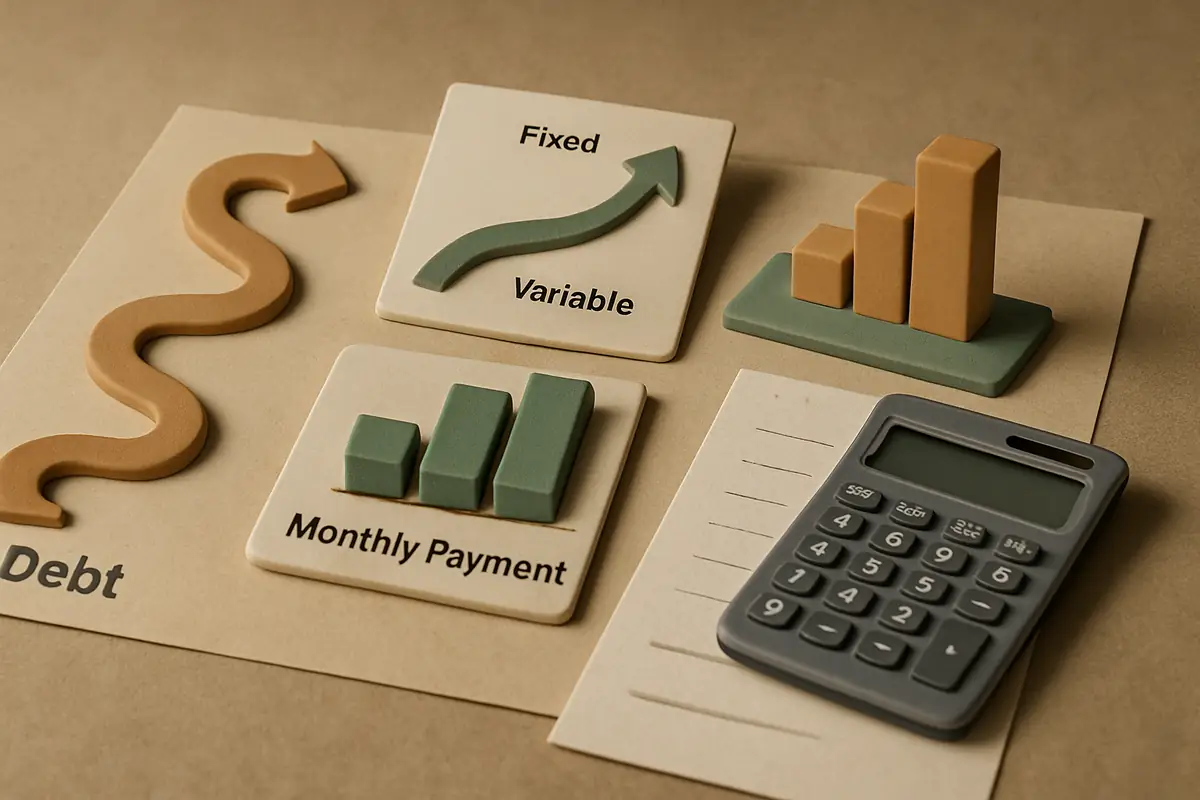
Be sure to check whether the APR is fixed or variable—variable APRs can start low but rise with market rates, sometimes increasing by several percentage points over a few years. If you are uncertain about any term or fee, consult a trusted financial advisor or consumer advocacy group for clarification before signing any agreement. Evaluating loans by APR, total repayment, and your own ability to meet payment schedules will help you avoid costly surprises and select the best option for your financial situation.