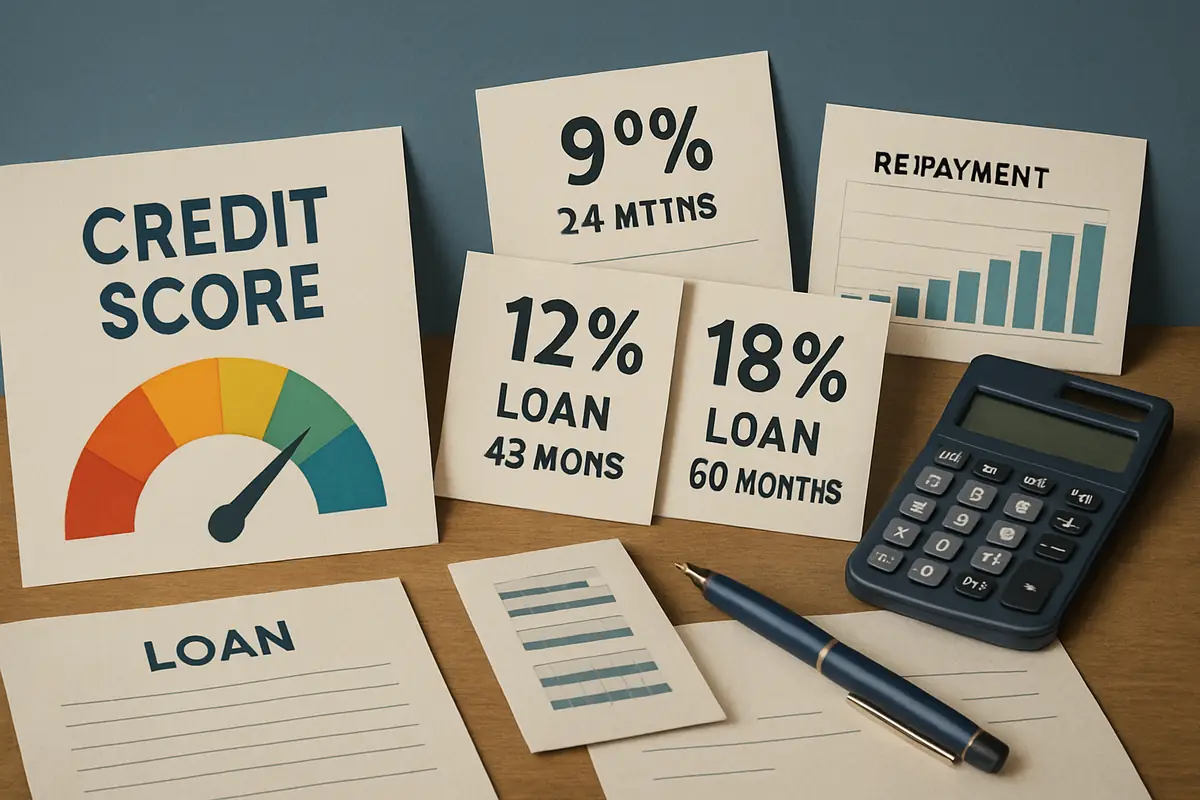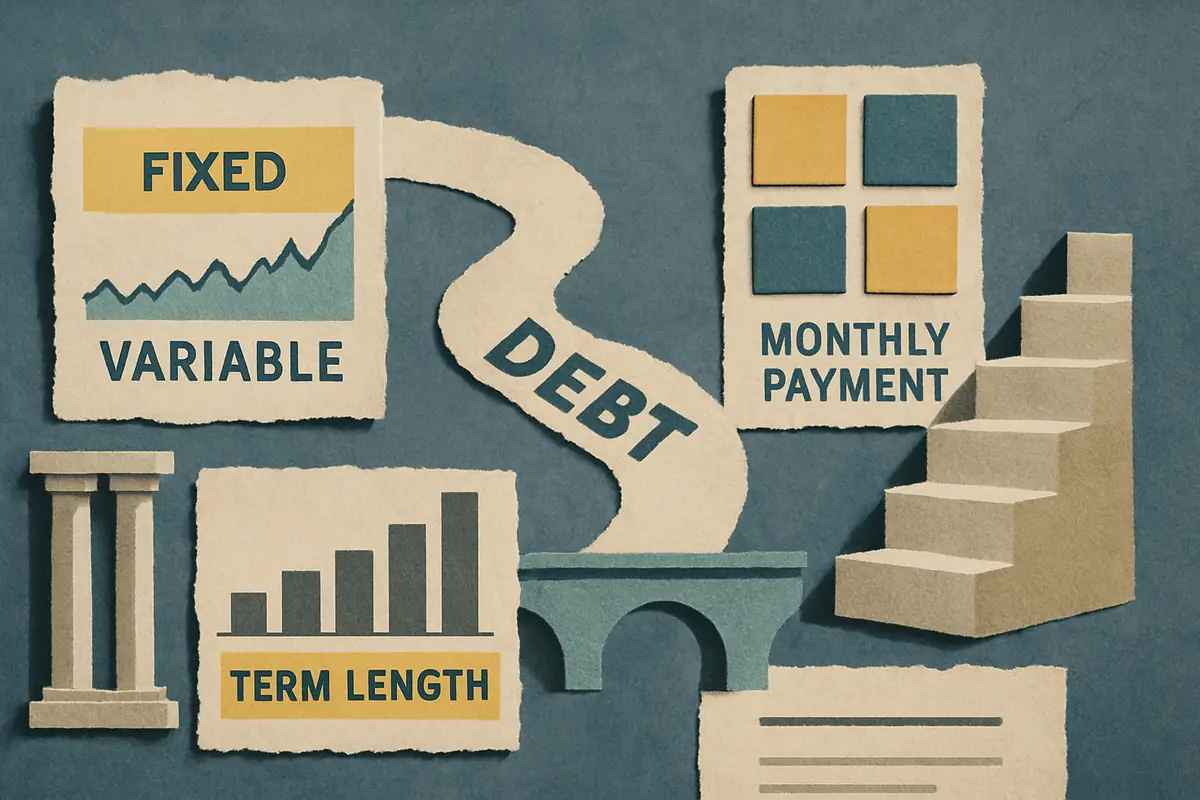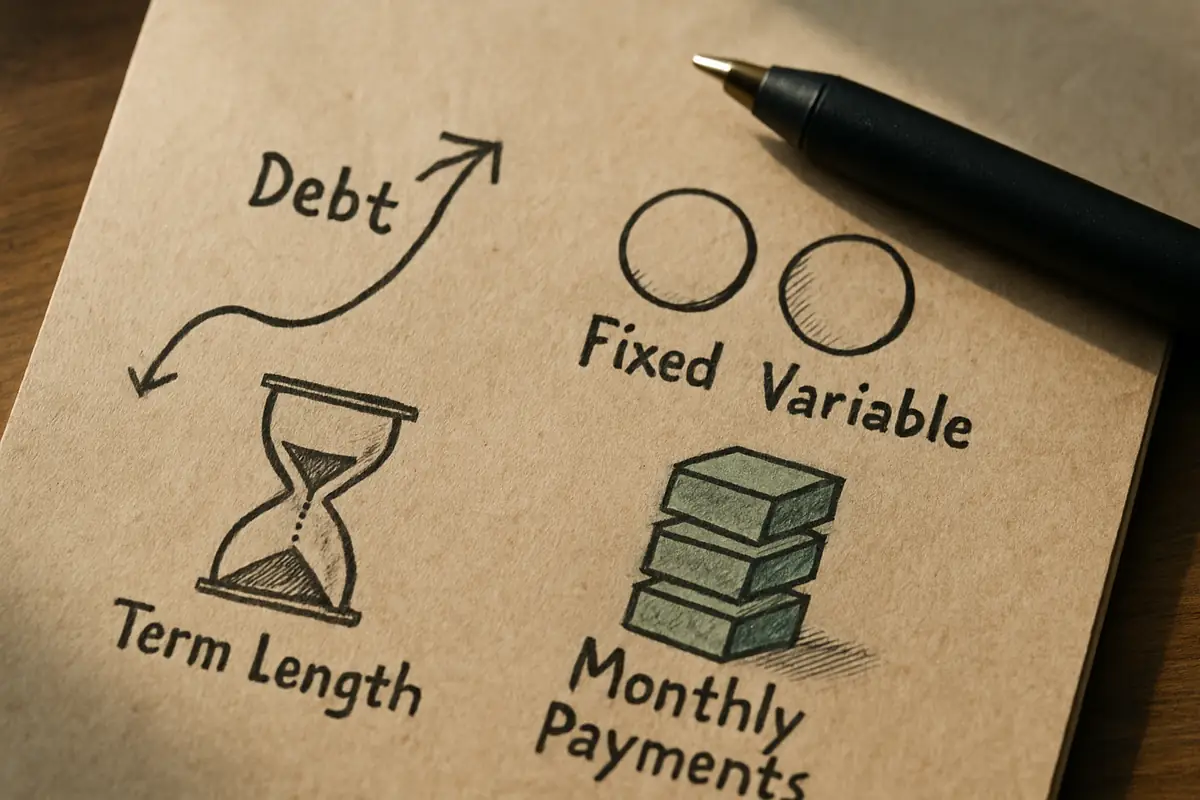
Locking in a fixed interest rate on a loan is a popular strategy for those seeking stable monthly payments, but the reality is more complex than it appears. While fixed rates provide important predictability, the true cost and flexibility of a loan are shaped by a combination of factors—such as loan term, fees, penalties, and broader market trends—that all play significant roles in long-term repayment planning.
Misconception: Fixed Rates Do Not Guarantee Total Predictability of Loan Costs
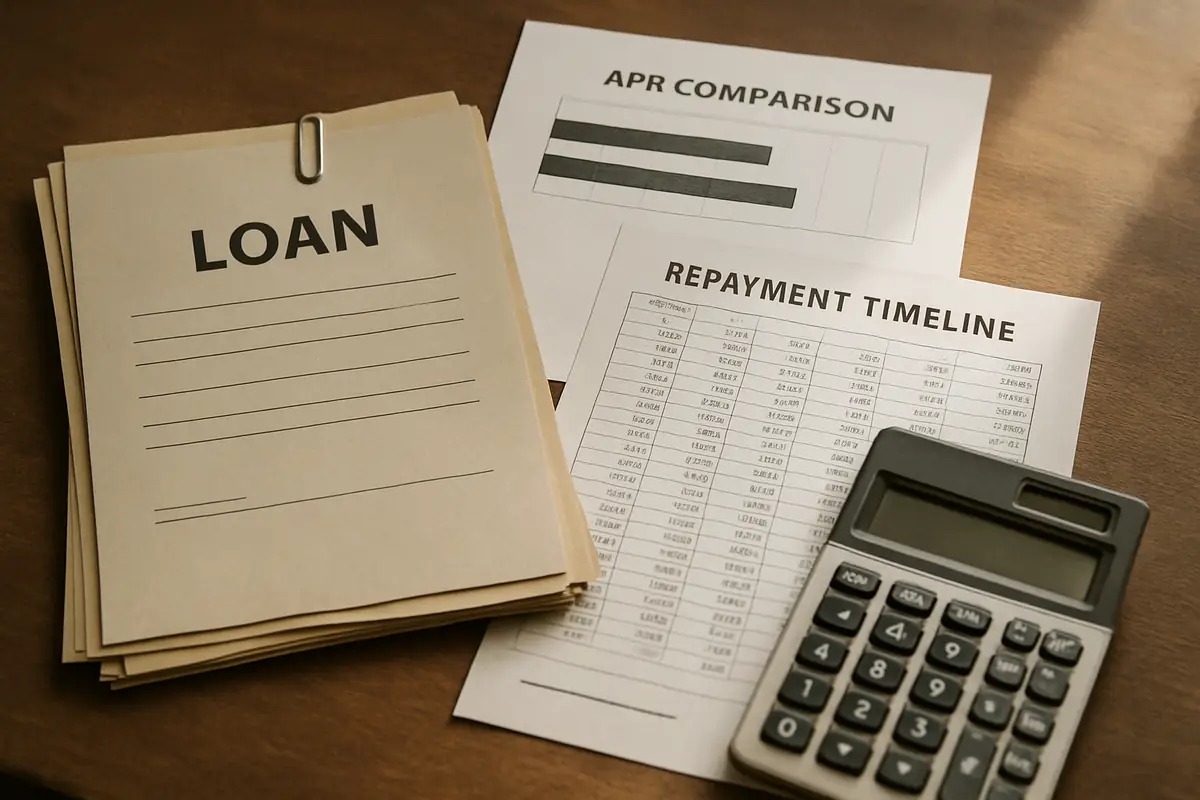
Many borrowers believe that a fixed-rate loan means their repayment schedule and total interest expense are set in stone. Fixed rates do ensure that the interest percentage you pay—often ranging from 4% to 8% for mortgages or 6% to 15% for personal loans—remains unchanged for the duration of the loan contract. This stability, however, can be misleading if other cost elements are overlooked. For example, the Annual Percentage Rate (APR)—which represents the true yearly cost of borrowing including fees and interest—can vary widely even among loans with the same nominal fixed rate. Two loans with a 6% fixed rate may have APRs of 6.5% and 7.2%, respectively, if one charges higher origination fees or uses more frequent compounding, such as daily versus monthly.
Additionally, upfront fees can range from 1% to 5% of the total loan amount, and early repayment penalties may add hundreds or even thousands of dollars if you decide to pay off the loan ahead of schedule. These costs are not always obvious at signing and can disrupt the expectation of complete predictability, especially if your financial circumstances change or you wish to refinance.
Loan Term Length Significantly Shapes Fixed Rate Outcomes
The length of time over which a loan is repaid—commonly 3 to 7 years for auto loans and 15 to 30 years for mortgages—has a major impact on both monthly affordability and total interest paid. Fixed rates locked for shorter periods, such as five years, may reset to a new rate at the end of the term, potentially exposing borrowers to rate increases of 1% to 3% or more, depending on market conditions. In contrast, long-term fixed rates, such as 30-year mortgages, offer stable payments but often come with higher initial rates (for example, a 30-year fixed mortgage may be 0.5% to 1% higher than a 15-year fixed mortgage) because lenders assume more risk over a longer period.
Locking in a high fixed rate for 20 or 30 years can be costly if market rates drop significantly—sometimes by 2% or more—after you sign. On the other hand, opting for a shorter fixed term with a variable reset might save money if rates remain stable or decline, but it also introduces the risk of payment increases at reset. Understanding this trade-off is crucial for matching your loan to your risk tolerance and future financial plans, rather than assuming that a longer term is always safer.
| Factor | What It Means | Risk |
|---|---|---|
| APR | True annual borrowing cost including interest and all fees | Can vary by 0.5% to 2% above nominal fixed rates |
| Term Length | Loan repayment period (e.g., 5, 15, 30 years) | Longer terms lower monthly payments but may increase total interest by 50% or more |
| Early Repayment Penalties | Fees for paying off a loan early, often 1% to 3% of principal | Reduces flexibility and can cost hundreds to thousands of dollars |
| Collateral Requirements | Assets pledged to secure the loan | Can affect eligibility and risk of asset loss |
| Fee Structure | Upfront and ongoing costs, such as origination and servicing fees | High fees (up to 5% of loan) can offset benefits of lower fixed rates |
Fees and Penalties Add Substantial Costs to Fixed-Rate Loans
Focusing solely on the fixed interest rate can lead borrowers to underestimate the impact of fees and penalties. Lenders may charge origination fees—typically between 1% and 5% of the loan amount—plus processing charges or required insurance. For example, on a $250,000 mortgage with a 2% origination fee, you’d pay $5,000 upfront in addition to interest costs. Early repayment penalties, which can range from 1% to 3% of the remaining balance, may apply if you pay off the loan before the term ends, limiting your ability to refinance or reduce interest through early payments.
These additional costs can significantly affect the total amount repaid. For instance, a $20,000 personal loan at a 7% fixed rate over five years with a 3% origination fee incurs $600 in upfront fees. If you decide to pay off the loan after three years and face a 2% early repayment penalty on the remaining $8,500 balance, you’d pay an extra $170, bringing your total cost above what the fixed rate alone suggests.
Origination Fees
Upfront charges, often 1%–5% of the loan, added during loan setup and increasing the initial debt balance.
To accurately assess affordability, review all APR details and penalty clauses, not just the monthly payment, to avoid unexpected costs during hardship or refinancing opportunities.
Collateral in Fixed-Rate Loans: Security and Potential Risks
Collateral, the asset pledged to secure a loan, is often misunderstood in the context of fixed-rate loans. While a fixed rate ensures payment stability, it does not eliminate the risk of asset loss if you default. For example, a mortgage is typically secured by real estate, and missed payments can lead to foreclosure regardless of the interest rate. Auto loans, with rates often between 5% and 12%, are secured by the vehicle, and repossession is possible after just 60–90 days of missed payments. Personal loans may require valuable property as collateral, increasing the risk if your financial situation changes.
Real Estate Collateral
Common in mortgages; nonpayment can lead to foreclosure, often after 90 days of delinquency.
Auto Collateral
Used in car loans; repossession possible within months of missed payments.
Personal Property Collateral
Valuable possessions pledged; risk of seizure if default occurs.
Market Conditions Can Alter the Value of Fixed Rates Over Time
Borrowers often expect that securing a low fixed rate—such as locking in a 5.5% mortgage in a rising rate environment—guarantees a long-term advantage. However, if market rates fall to 3.5% within a few years, those with older loans miss out on potential savings unless they refinance, which may involve closing costs between 2% and 6% of the loan balance. Conversely, if rates rise to 7% or higher, fixed-rate borrowers benefit compared to those with variable rates, whose payments may rise by hundreds of dollars per month.
This asymmetry means that the timing of your loan relative to market cycles can affect your long-term repayment strategy and overall financial benefit. Borrowers should consider economic forecasts and their own flexibility needs before committing to a fixed rate.
Repayment Flexibility Is Not Always Guaranteed With Fixed Rates
While fixed rates provide stable payments, they do not always grant full repayment flexibility. Contracts may limit early repayments or require escrow accounts for taxes and insurance, adding administrative burdens. For example, some mortgages restrict additional principal payments to once per year or impose fees for extra payments exceeding a set amount, reducing your ability to pay off debt faster and save on interest.
Before committing to a fixed-rate loan, carefully review policies regarding prepayments and partial paydowns. Early payoff penalties or restrictions can add several months—or even years—to your effective repayment period and increase total interest paid.
Inflation’s Impact on Fixed-Rate Loan Repayment Planning
Inflation, which typically ranges from 2% to 4% annually in many economies, plays a major role in shaping the real cost of fixed-rate loan payments. As inflation rises, the purchasing power of money declines, meaning your fixed monthly payment becomes less expensive in real terms over time. For example, if your wage increases keep pace with inflation, the proportion of your income needed for loan repayment shrinks each year.
Suppose you have a $200,000 fixed-rate mortgage at 5% for 30 years, with a monthly payment of $1,073. If inflation averages 3% per year, then after 10 years, that $1,073 payment is equivalent to about $795 in today’s dollars. This dynamic can make it less urgent to pay off the loan early, since the real burden diminishes over time. However, during periods of low inflation or deflation, your payment retains or even increases its real value, potentially making early repayment or refinancing more attractive to reduce long-term interest costs.
Monitoring inflation forecasts and wage growth helps borrowers optimize payment strategies and leverage the benefits of fixed rates during volatile economic periods.
Refinancing Fixed-Rate Loans: Opportunities and Associated Risks
Refinancing—replacing an existing loan with a new one, often at a lower rate—is a common strategy for managing fixed-rate loan costs. If market rates drop from 7% to 4.5%, refinancing a $300,000 mortgage could reduce monthly payments by $400 or more, potentially saving tens of thousands over the loan’s life. However, refinancing involves closing costs, typically 2% to 5% of the balance ($6,000 to $15,000 on a $300,000 loan), and may trigger early repayment penalties.
It’s important to conduct a cost-benefit analysis: compare the total refinancing costs to the projected interest savings over the remaining term. Also, consider changes in eligibility criteria, such as a minimum credit score of 620–680 for mortgages and acceptable debt-to-income ratios below 43% for many lenders. Only proceed if the long-term savings clearly outweigh the immediate expenses and if your financial situation supports a new loan structure.
Fixed Repayment Amounts Can Affect Borrower Psychology
Knowing exactly what you owe each month—whether it’s $300 for a car loan or $1,200 for a mortgage—offers significant peace of mind and simplifies budgeting. Fixed payments eliminate surprises from fluctuating rates, which can swing by 2% to 5% in variable-rate loans, causing payments to jump by $100 or more per month.
However, this predictability can lead to complacency. Borrowers may overlook opportunities to pay extra toward principal or consolidate debt, even when financially able, simply because their current obligation feels manageable. To counteract this, set annual reminders to review your loan terms and assess whether accelerating payments or refinancing could improve your financial position and reduce total interest paid.
Fixed Rates Versus Adjustable Rates: Strategic Long-Term Trade-Offs
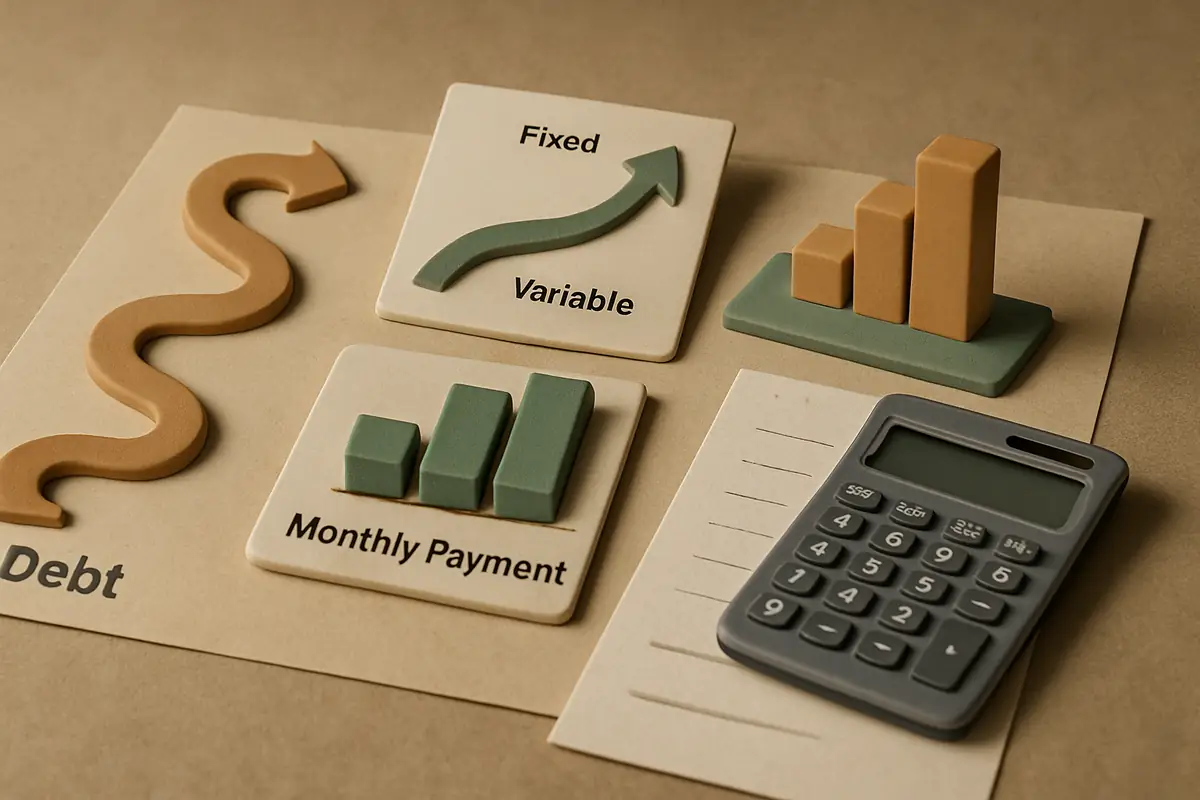
Choosing between fixed and adjustable (variable) rate loans requires balancing stability with potential cost savings. Fixed rates, which may start 0.5% to 2% higher than initial adjustable rates, offer consistent payments ideal for borrowers planning to hold a property or loan for 10 years or more. Adjustable-rate loans, on the other hand, often begin with lower rates—sometimes as low as 3% to 4%—but can increase substantially after the initial period, exposing borrowers to payment hikes of $200 or more per month if rates rise by just 2%.
For those with higher risk tolerance or shorter expected loan duration, adjustable rates may yield savings if market rates remain low. However, fixed rates provide insulation against upward rate swings and are generally favored for long-term commitments and conservative financial planning.
Fixed Rates and Their Effect on Financial Flexibility
While fixed-rate loans anchor your monthly payments, they can also constrain your financial flexibility. If rates fall by 2% or more after you lock in a fixed rate, you may be unable to benefit without refinancing and incurring costs. The fixed payment, which might be $500 to $2,000 per month for major loans, becomes a non-negotiable budget item, potentially limiting your ability to redirect funds during periods of income fluctuation or changing life circumstances.
Fixed-rate loans may be less suitable for those with variable incomes, such as freelancers or small business owners, or for anyone anticipating major life changes. If income drops temporarily, maintaining the fixed payment could strain finances and risk late payments or credit score impacts. Carefully match loan terms to your risk tolerance, expected income stability, and future plans.
Comparing Fixed-Rate Loans With Variable-Rate Alternatives
To fully understand the impact of fixed rates on repayment planning, consider how they differ from variable-rate loans. Variable rates are often tied to benchmarks like LIBOR or the prime rate, and can fluctuate every 6 to 12 months. They may start at 2% to 3% lower than fixed rates, but if market rates rise by 3% over the loan term, your payments could increase by $150 to $500 per month, depending on loan size.
Variable-rate loans require more active management and careful attention to market trends. For borrowers who prioritize budgeting certainty—especially over periods of 10 years or longer—fixed rates remain the preferred choice despite sometimes higher upfront costs. Your decision should reflect your comfort with risk, ability to absorb payment increases, and outlook on interest rate trends.
Worked Example: Calculating Total Cost of a Fixed-Rate Loan
Consider a $30,000 auto loan at a 6% fixed interest rate for five years (60 months), with a 2% origination fee and a 1% early repayment penalty if paid off in year three:
- Origination fee: 2% of $30,000 = $600 (added to the loan balance)
- Monthly payment (principal + interest): $30,600 amortized over 60 months at 6% = approximately $591/month
- Total paid over 60 months: $591 x 60 = $35,460
- Interest paid: $35,460 - $30,600 = $4,860
- If paid off after 36 months: Remaining balance ≈ $13,000; early repayment penalty = 1% of $13,000 = $130
- Total cost if paid off early: ($591 x 36) + $130 = $21,396 + $130 = $21,526 (plus the origination fee already paid)
This example illustrates how fees and penalties can add hundreds of dollars to your total loan cost, even with a fixed rate.
Long-Term Financial Planning With Fixed-Rate Loans
Fixed-rate loans make it easier to forecast expenses and allocate funds for other goals, such as retirement savings or education, because you know your payment will not change—whether it’s $800 per month for a mortgage or $350 for a car loan. This predictability supports disciplined budgeting and helps reduce stress from financial uncertainty.
However, if wages stagnate or inflation rises faster than expected, your fixed payment may consume a larger share of your income over time. Building a buffer—such as setting aside 10%–20% of your monthly income for emergencies—can help ensure that loan payments remain manageable even if other expenses increase or income falls.
How Inflation Alters Fixed-Rate Loan Repayments
Inflation, which can average 2% to 4% annually, reduces the real burden of fixed payments over time if your income keeps pace. For example, a $1,000 monthly payment today may feel like only $800 in real terms after a decade of 2% annual inflation. However, if living expenses rise faster than your income, the portion of your budget available for loan payments may shrink, creating new financial pressures. Assessing both inflation and income trends is essential when planning long-term repayment strategies for fixed-rate loans.
Practical Tips for Managing Fixed-Rate Loan Repayments
To optimize repayment of a fixed-rate loan, set up automatic payments to avoid late fees, which can be $25 to $50 per missed payment. Whenever possible, make extra payments toward principal—just $50 more per month on a $200,000, 30-year mortgage can save over $15,000 in interest and shorten the loan by several years. Regularly review your budget to identify surplus funds for additional repayments, and stay alert to market trends that could make refinancing attractive. Lastly, maintain an emergency fund equal to three to six months of expenses to safeguard against unexpected job loss or income reduction, ensuring you remain on track with your loan even during challenging times.
References
- https://studentaid.gov/manage-loans/repayment/plans
- https://www.consumerfinance.gov/ask-cfpb/what-is-the-difference-between-a-fixed-rate-and-adjustable-rate-mortgage-arm-loan-en-100/
- https://www.consumerfinance.gov/ask-cfpb/what-is-apr-en-45/
- https://www.consumerfinance.gov/consumer-tools/
- https://www.consumerfinance.gov/consumer-tools/student-loans/
- https://www.federalreserve.gov/releases/h15/