Every year, millions of Americans use credit cards with care—paying on time, keeping balances well below their credit limits, and tracking purchases closely. While these habits are vital for maintaining a healthy credit profile, responsible cardholders can still face financial pitfalls that aren’t always obvious. Even the most diligent users may encounter hidden costs, such as annual fees ranging from $50 to $550, or foreign transaction charges of 1% to 3% per purchase. Let’s explore how seemingly smart card strategies can backfire, and why understanding the mechanics behind your card is as important as paying on time.
Hidden Costs Extend Beyond On-Time Payments
Paying your credit card bill on time is critical, but it doesn’t shield you from all fees or interest. For instance, many rewards cards charge annual fees—typically between $95 and $450—which can erode the net value of any perks you earn. Foreign transaction fees, often around 3% of each purchase in a non-U.S. currency, can quietly add up if you shop internationally or subscribe to foreign-based services, costing $30 on every $1,000 spent abroad.
Another subtle risk is the timing mismatch between purchases and billing cycles. Credit cards operate on billing cycles that usually last 28 to 31 days. If you make a large purchase just after your statement closes, that charge won’t appear until the next month’s statement, delaying your awareness and potentially causing budgeting missteps. This gap can result in accidental carryover balances or difficulty tracking your true monthly spending.
Rewards Chasing: How Timing Can Create Liquidity Risks
How this can look in practice
Lisa and Ahmed are diligent about maximizing credit card rewards, timing their purchases to coincide with limited-time bonus offers. They pay their balances in full each month and never incur interest. However, by making several large purchases across multiple cards just before statement cutoffs, they inadvertently committed to more spending than their monthly budget allowed. Because credit card statements can close on different days, they underestimated the total due across all cards and faced a temporary cash shortfall, forcing them to dip into their $2,000 emergency fund to cover payments.
This example highlights how the pursuit of rewards, even with full monthly payments, can lead to liquidity challenges. When purchases total $3,000 across two cards with different billing cycles, and $1,500 of that isn’t due for nearly two months, it’s easy to lose track and strain your monthly cash flow.
Annual Fees Can Undermine Net Savings
How this can look in practice
Tom pays off his premium credit card each month, enjoying perks like airport lounge access and travel insurance. His card’s annual fee is $195. Over a year, Tom earns $210 in rewards and perks. However, after subtracting the fee, his net gain is only $15—less than $1.50 per month. If he misses out on just one lounge visit or uses fewer card benefits, the fee could outweigh his rewards, effectively costing him money despite responsible use.
This scenario is common: many users focus on payment discipline but overlook fixed costs. If a cardholder pays $450 annually for a high-end card but uses only $300 worth of perks, they lose $150 each year. Evaluating whether the value of benefits truly exceeds the fee is essential to avoid hidden losses.
Foreign Transaction Fees: The Cost of Global Spending
How this can look in practice
Sophia uses her main credit card for international online shopping and subscriptions. She always pays her balance in full, but each foreign currency purchase incurs a 3% transaction fee. Over a year, $1,200 in international spending costs her $36 in fees—an amount that can go unnoticed if not reviewed line by line.
Foreign transaction fees are rarely highlighted in statements or alerts, making them easy to overlook. Even if you avoid interest entirely, these charges can accumulate to $50 or more annually for moderate international spending. Responsible payment alone doesn’t prevent these stealth expenses from reducing your overall rewards.
How Payment Timing and Billing Cycles Interact
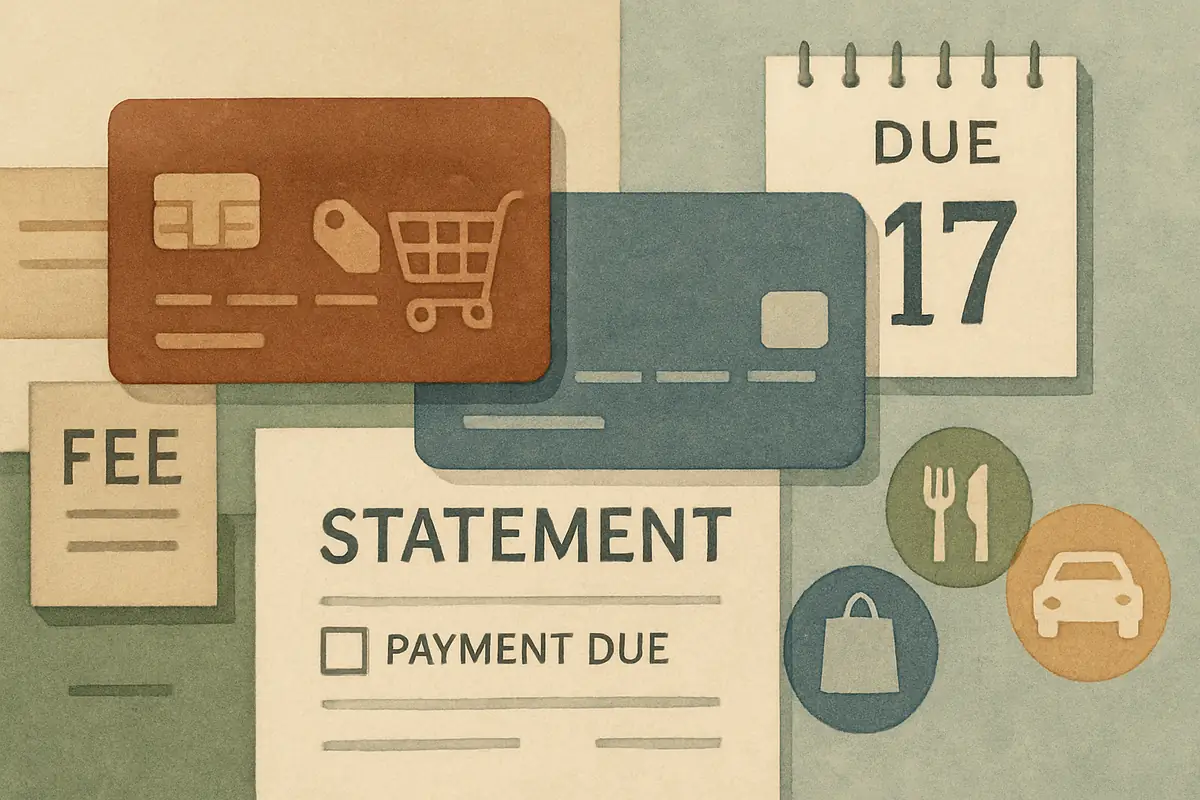
Credit cards operate on billing cycles, typically 28 to 31 days, with a statement closing date followed by a payment due date about 21 to 25 days later. Purchases made just before the statement closes appear on the current bill; those made just after fall into the next cycle. This timing can affect when you owe money and how you manage your budget.
For example, if you buy a $500 appliance two days after your statement closes, that charge may not be due for payment for up to 50 days. This delay can make it seem like you have more available funds than you actually do, potentially leading to accidental overspending or carrying a balance into the next month.
Worked Example: How Interest Accrues on a Partial Balance
Suppose you have a card with a 22% APR (Annual Percentage Rate—the yearly cost of borrowing if you carry a balance). If you carry a $1,000 balance for one month, your monthly interest rate is approximately 1.83% (22% divided by 12). At the end of the month, you would owe $1,018.30 ($1,000 x 1.0183). Over six months, if you made only minimum payments and the balance remained, interest would compound, costing you roughly $113 in total interest—showing how quickly costs can rise, even with responsible habits most months.
On-Time Payments Don’t Eliminate All Risks
Julia’s story is common. While paying on time is crucial, it’s just one piece of the puzzle. Hidden costs—like a $95 annual fee or multiple $3 foreign transaction charges—can quietly add up to $100 or more per year, reducing the benefits of responsible use. True financial safety requires awareness of all potential fees, not just interest or late charges.
Conservative Card Use: Balancing Safety and Missed Opportunities
Many cautious cardholders stick to a single no-fee, low-reward card to minimize risk. While this approach reduces the chance of high-interest debt—credit card APRs commonly fall between 18% and 30%—it can also mean missing out on higher-value rewards or 0% introductory APR offers, which can last 12 to 18 months and be worth $100 to $300 in savings if managed wisely.
'Advantages of Conservative Card Use'
- 'Minimizes risk of high-interest debt accumulation.'
- 'Simplifies budgeting with fewer accounts.'
- 'Reduces chance of late payments by focusing attention.'
'Disadvantages of Overly Cautious Credit Behavior'
- 'Forfeits higher-value rewards and perks.'
- 'Limits opportunities for strategic financing offers.'
- 'May increase overall expenses by ignoring beneficial promotions.'
For example, using only one card with 1% cashback could yield $120 on $12,000 annual spending, while a card offering 5% in select categories could provide $300 or more in rewards, assuming you optimize your usage.
Emergency Preparedness and Credit Card Discipline
Emergencies can strain even the most disciplined card users. Keeping your utilization ratio—the percentage of available credit you’re using—below 30% is generally recommended for credit health. But if you avoid using credit entirely, you might lack quick access to funds in a crisis. For instance, if your only card has a $2,000 limit and you face a $1,500 emergency expense, you may need to use most of your available credit, potentially impacting your score and ability to borrow elsewhere.
Maintaining some available credit as a backup—while still paying balances promptly—can help you avoid high-cost alternatives like payday loans, which may charge APRs above 300%. Regularly reviewing your available credit and adjusting your usage to match changing needs is key to balancing discipline with preparedness.
Detecting Subtle Risks in Monthly Statements
Many people skim their statements, focusing only on the total due or minimum payment. But hidden fees—such as $10 subscription renewals, $2 cashback reversals, or changes in reward point values—can be buried in the details. Over a year, unnoticed charges of $10 per month add up to $120, erasing much of the value from responsible habits.
Cross-checking each line item against your records every month helps catch creeping costs early. For instance, if a subscription increases from $8 to $12 monthly without notice, that’s an extra $48 per year. This level of vigilance reinforces true accountability and ensures your payment discipline actually results in savings.
Effective Strategies for Truly Safe Card Use
Being responsible with credit cards means more than just paying on time. It involves reviewing all fee structures—like annual fees of $95 to $550, and foreign transaction fees up to 3%—and understanding how rewards, statement cycles, and your own financial habits interact. Evaluate whether your rewards cover your card’s costs, and if your payment timing aligns with your actual cash flow.
Ask yourself: Are you aware of every fee your card charges? Do you know when your statement cycle closes and how it affects your due dates? Are your rewards worth more than what you pay in fees each year? Regularly reassess your strategy to ensure it balances discipline with flexibility.
Warning: Don’t Let Good Habits Hide Risks
Even the most careful cardholder can face danger from hidden fees or poor timing. Scrutinize your statements monthly, monitor for changes in reward programs, adjust your spending strategies as your needs evolve, maintain an emergency buffer, and consider using more than one card to tailor benefits to different spending categories. Staying vigilant is the best way to ensure your responsible habits translate into real financial security.
Responsible Use Can Mask Financial Strain
Paying balances on time, avoiding unnecessary purchases, and keeping your utilization ratio below 30% are all positive habits. Yet, these can sometimes mask underlying financial stress. For example, someone who pays off their cards each month might still be relying on credit to manage basic cash flow, using $1,000 of credit each month to cover routine expenses and leaving little margin for emergencies. Over time, this dependence can erode financial stability and increase vulnerability to unexpected costs.
Emotional strain can also result from responsible credit use. If your income doesn’t keep pace with rising living costs or debt obligations, you may feel trapped by your own discipline—paying on time but still struggling to get ahead. This cognitive dissonance can lead to anxiety or avoidance, such as ignoring statements or postponing payments, which ultimately undermines your financial health.
Financial education often stresses good habits but may not address the complexities of real-life challenges. Even cardholders who follow all guidelines can face setbacks from stagnant wages, medical bills, or family emergencies. These situations may force difficult choices, like prioritizing card payments over essentials or accumulating balances despite best intentions. Recognizing these nuanced risks is crucial for building long-term resilience.
High Credit Limits: A Double-Edged Sword
High credit limits—often $10,000 or more—are seen as a sign of financial strength, but they can also tempt overspending. The psychological "credit limit effect" describes how having more available credit can create a false sense of security, leading to higher spending that may not be noticed until it’s too late. For example, using 40% of a $10,000 limit ($4,000) can quickly become unmanageable if your income or expenses change unexpectedly.
Unused credit can also affect your credit score by lowering your utilization ratio (the percentage of available credit you’re using). While a low ratio is generally good, it may encourage complacency in monitoring spending. Relying on credit as an emergency fund can be risky—if you use $2,000 for a sudden expense and don’t pay it off immediately, you could face interest charges of $30 to $50 per month at typical APRs.
It’s wise to review your credit limits annually and adjust them to fit your budget and lifestyle, ensuring you have flexibility without unnecessary temptation or risk.
Interest Rates Can Undermine Even Responsible Borrowing
Interest rates—expressed as APR (Annual Percentage Rate), the yearly cost of borrowing—can significantly impact your finances even if you’re generally disciplined. Most credit cards have variable APRs between 18% and 30%. If you ever carry a balance, interest compounds monthly, increasing the total cost quickly. For instance, carrying a $2,000 balance for six months at a 24% APR could cost about $240 in interest, even if you pay on time every month.
Promotional offers like 0% APR for 12 to 18 months can encourage deferred payments, but if you don’t pay off the balance before the offer ends, you could face a sudden jump to the regular APR, adding hundreds in interest charges. Understanding how interest is calculated and planning for the end of introductory periods is essential to avoid surprises. Tools like amortization calculators (which show how payments reduce your balance over time) can help you forecast costs and make informed decisions.
Interest also affects your available credit. As interest accrues, your outstanding balance rises, which can increase your utilization ratio and potentially lower your credit score. Being aware of these interactions helps you decide when to use credit cards versus other financing options with lower costs or risk.
Integrating Card Use With Overall Financial Health
Focusing solely on responsible card use without considering your full financial picture can limit your long-term success. Budgeting should include not just monthly card payments, but also income fluctuations, savings goals, and emergency fund adequacy. For example, someone who never pays late fees could still overspend in other areas, leading to a negative cash flow of $100 or more each month.
Integrating credit card management into a broader financial plan enables proactive adjustments. Using personal finance apps or automated alerts can help you track spending versus income in real time, supporting timely interventions before problems escalate.
Ultimately, "responsible use" should evolve into "strategic use"—optimizing rewards without incurring unnecessary fees, and leveraging credit cards as part of a diversified toolkit that includes savings, investments, and insurance. By understanding the full range of costs and benefits, you can ensure your habits build genuine financial security, not just the appearance of it.
References
- https://www.consumerfinance.gov/consumer-tools/credit-cards/
- https://www.fdic.gov/consumer-resource-center/credit-cards
- https://www.consumerfinance.gov/consumer-tools/credit-reports-and-scores/
- https://consumer.ftc.gov/articles/what-know-about-identity-theft
- https://www.consumerfinance.gov/ask-cfpb/what-is-a-credit-score-en-315/
- https://www.federalreserve.gov/consumerscommunities/shed.htm