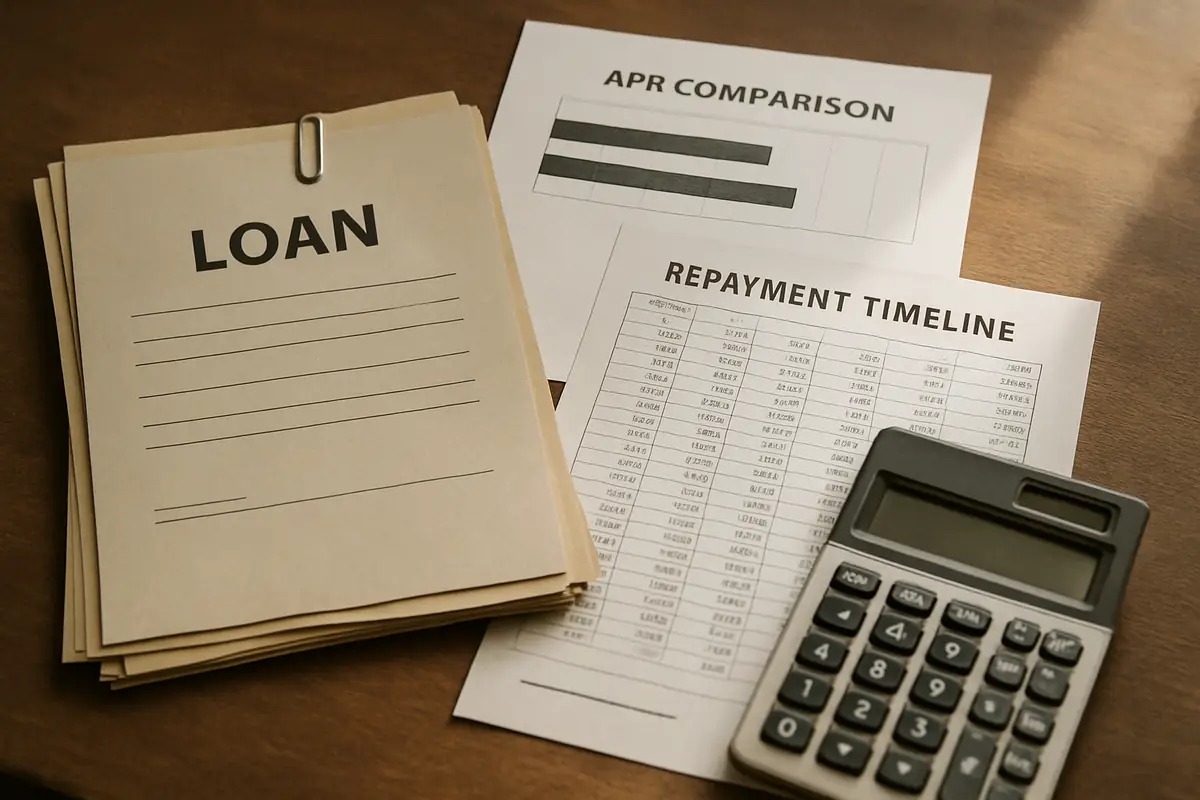
When Sarah received two personal loan offers each advertising interest rates under 8%, she expected the choice to be simple. But as she examined the fine print, differences in fees, repayment terms, and penalty clauses revealed that the true cost of each loan could differ by hundreds of dollars over time.
The Interest Rate Is Only One Piece of the Loan Puzzle
Many borrowers begin their search focused on the advertised interest rate, which lenders often highlight as low as 6% to 8% for personal loans or 3% to 6% for mortgages. While the interest rate is a key factor, it rarely tells the whole story. Most advertised rates do not include other costs—such as origination fees, late payment penalties, or insurance requirements—that can raise the total loan expense by several percentage points.
For example, a personal loan with a 7% interest rate but a 5% origination fee could have a higher effective cost than an 8% loan with no fees. To make a sound borrowing decision, it’s crucial to look beyond the headline rate and understand all the elements that influence the total repayment amount and the flexibility of the loan.
Comparing Two Offers: How Similar Rates Can Mean Different Costs
How this can look in practice
Take Sarah’s scenario: she is choosing between two $10,000 personal loan offers. The first advertises a 7.5% annual percentage rate (APR)—a figure that includes the interest rate plus most fees—while the second lists a 7.8% APR. The first lender charges a 3% processing fee ($300), while the second has no upfront fees but stretches repayment over five years instead of three.
Although a 0.3% difference in APR may seem minor, the upfront $300 fee on the first loan increases Sarah's initial borrowing cost. Meanwhile, the longer 60-month term on the second loan reduces her monthly payments but means she will pay interest for two extra years. Over a five-year term, even a $10 difference in monthly payment can add up to $600 more paid in interest.
This example shows how fees and loan duration can significantly affect the total amount repaid, even when interest rates appear nearly identical.
Key Loan Features to Evaluate Beyond the Rate
To fully assess a loan, borrowers should examine several important factors beyond the advertised rate:
- APR (Annual Percentage Rate): The APR is the annualized cost of borrowing, including the interest rate plus most fees. For example, a loan with a 6.5% interest rate and a 2% origination fee might have an APR closer to 7%.
- Fees: These can include origination fees (typically 1%–8% of the loan amount), application charges ($25–$100), and document fees ($10–$50). Some lenders also charge maintenance or servicing fees of $5–$15 per month.
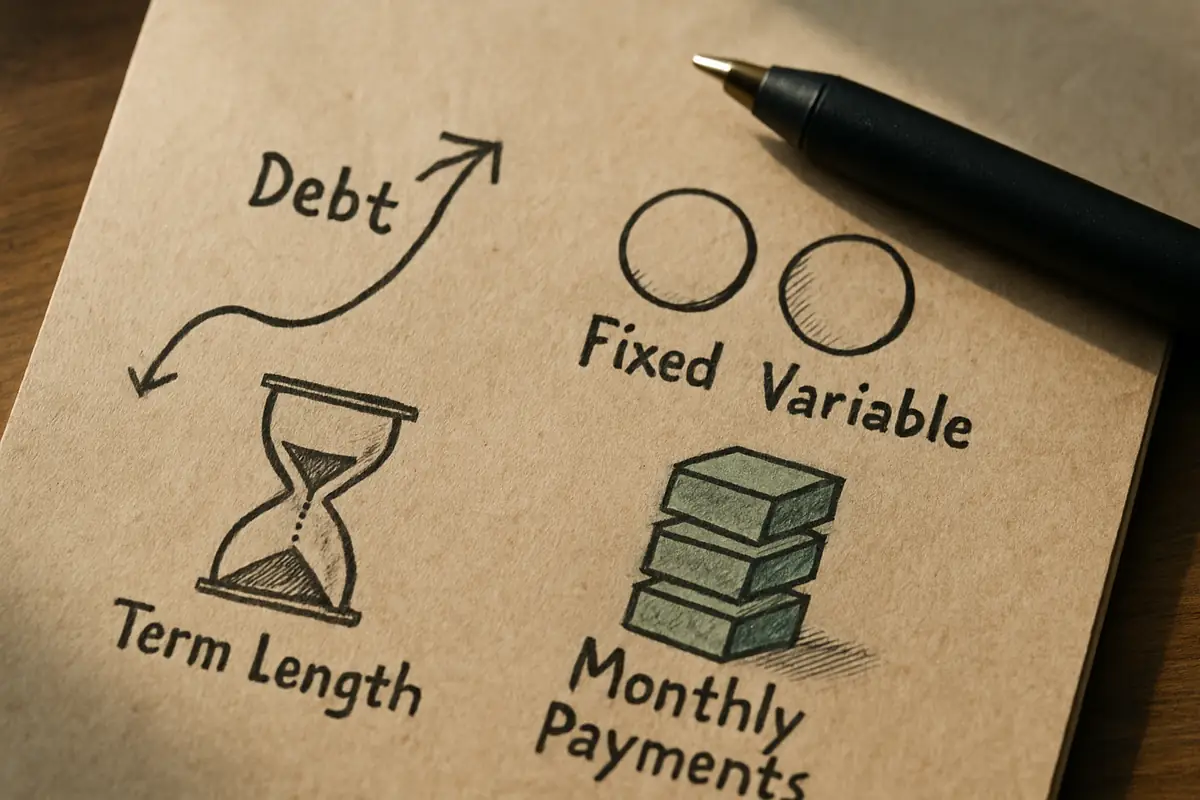
- Term Length: Longer terms, such as 60 months instead of 36, lower monthly payments but increase the total interest paid. For instance, a $10,000 loan at 8% over three years results in about $1,280 in interest, while the same loan over five years accrues closer to $2,160 in interest.
- Collateral Requirements: Secured loans (like auto loans) may offer rates 1%–3% lower than unsecured loans but require pledging an asset, which can be repossessed if you default.
- Penalties: Late payment fees typically range from $25 to $40 per incident. Prepayment penalties, if present, can equal 1%–2% of the remaining balance.
- Repayment Options: Some loans allow biweekly or flexible payments, while others require fixed monthly payments. The ability to make extra payments without penalty can help reduce total interest.
Each of these factors can alter your real repayment obligations. Overlooking any of them risks underestimating how much the loan will ultimately cost.
A Closer Look: Calculating the Real Cost Step by Step
Let’s work through a concrete example. Suppose you borrow $10,000 at a 7% interest rate for three years with a 3% origination fee. Here’s how the costs break down:
- Origination Fee: 3% of $10,000 = $300. This is either deducted from your loan or added to your balance.
- Loan Amount Received: If deducted, you receive only $9,700 but pay interest on the full $10,000.
- Monthly Payment (on $10,000 at 7% for 36 months): About $308 per month.
- Total Interest Paid Over 3 Years: $308 × 36 = $11,088 total payments; subtract $10,000 principal = $1,088 in interest.
- Total Cost Including Fee: $1,088 (interest) + $300 (fee) = $1,388.
Now, compare this to a no-fee loan at 7.8% over the same term. The monthly payment is about $312, and total interest paid is $1,232. Because there’s no fee, the total cost is $1,232—less than the lower-rate loan with a fee.
Understanding How Fees Shape Your Loan Expenses
Upfront fees, such as origination or processing charges, can range from 1% to 8% of the loan amount. On a $20,000 loan, a 5% origination fee adds $1,000 to your cost before any interest accrues. Application fees, typically $25–$100, and document charges, $10–$50, further increase your initial outlay. Some lenders also require credit insurance, which can add $10–$30 per month.
Prepayment penalties—fees charged for paying off your loan early—can eliminate potential savings from refinancing or accelerated repayment. These penalties are often 1%–2% of the outstanding balance. Late payment fees, usually $25–$40, can quickly add up if you miss multiple payments. Always request a full list of all fees and penalties before agreeing to a loan.
In some cases, lenders require credit life or disability insurance as a loan condition. While these policies may offer peace of mind, they add to your monthly payment and total cost. For example, a $20 monthly insurance premium over a five-year loan adds $1,200 to your total repayment.
Loan Terms and Repayment Schedules Directly Affect Total Costs
Loan term—the number of months or years over which you repay—directly impacts both your monthly payment and total interest. For example, a $15,000 car loan at 6% over 36 months has a monthly payment of about $456 and total interest of roughly $1,400. Stretching the term to 60 months drops the payment to about $290 but increases total interest to around $2,600, nearly doubling the cost.
Repayment frequency matters too. Biweekly payments (every two weeks) instead of monthly can reduce the principal faster and save hundreds in interest due to more frequent reductions in balance. Some lenders allow lump-sum payments or extra principal payments without penalty, which can shorten the loan term and reduce total interest by 10%–20% compared to the original schedule.
Understanding amortization—the process of paying off a loan with regular payments over time—helps borrowers see how much of each payment goes to interest versus principal. Early in the loan, a higher percentage of each payment covers interest; by the end, most goes toward principal.
How Your Credit Score Shapes Loan Offers and Costs
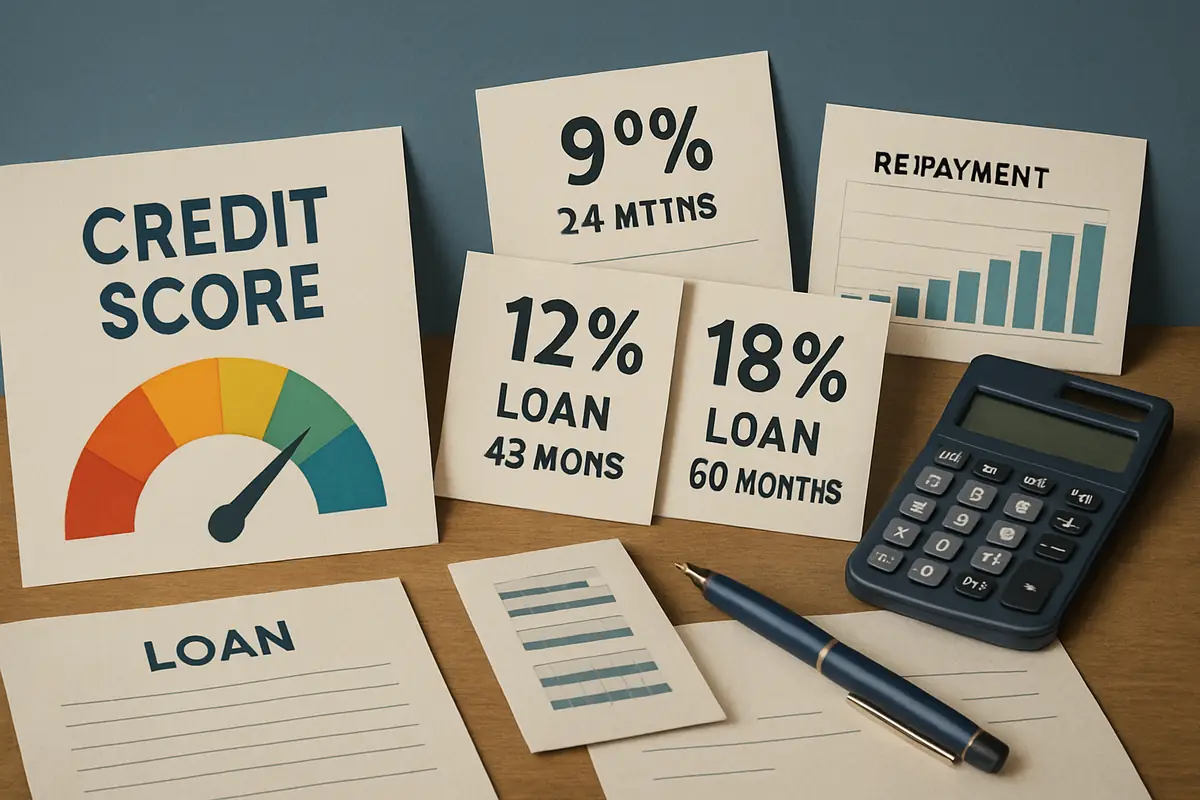
Your credit score—a number typically ranging from 300 to 850—plays a major role in determining both your eligibility for a loan and the rate you’ll be offered. Borrowers with scores above 750 often qualify for the lowest rates, sometimes 2%–4% lower than those with scores below 650. For example, a borrower with a 780 score might get a 6% APR, while a 630 score could mean a 10% APR or higher.
Improving your credit score by paying down debt, correcting errors on your credit report, or avoiding new credit applications in the months before applying can save thousands over the life of a loan. Even a 1% difference in APR on a $25,000, five-year loan can mean over $700 in extra interest paid.
Lenders may use different scoring models, so it’s wise to request offers from multiple sources. Comparing at least three to five pre-approval offers can reveal how your score impacts available rates and terms.
Fixed, Variable, and Hybrid Rates: What Each Means for Borrowers
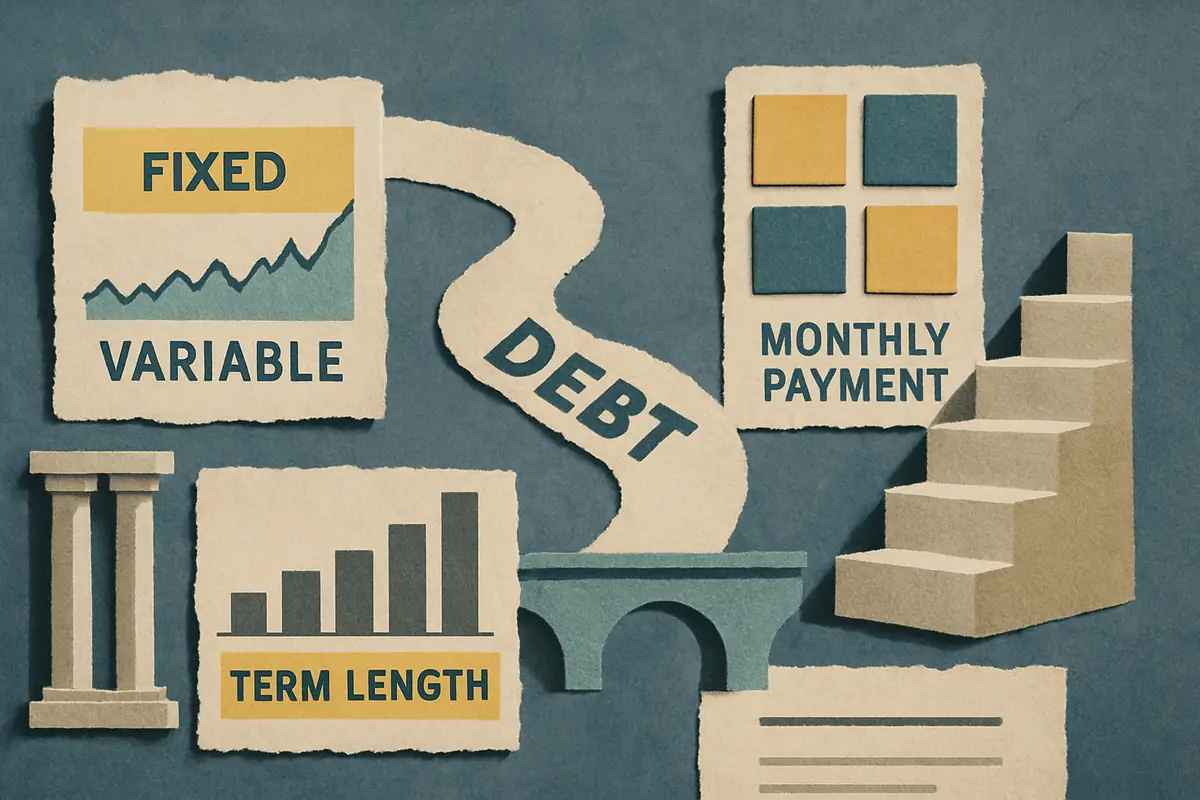
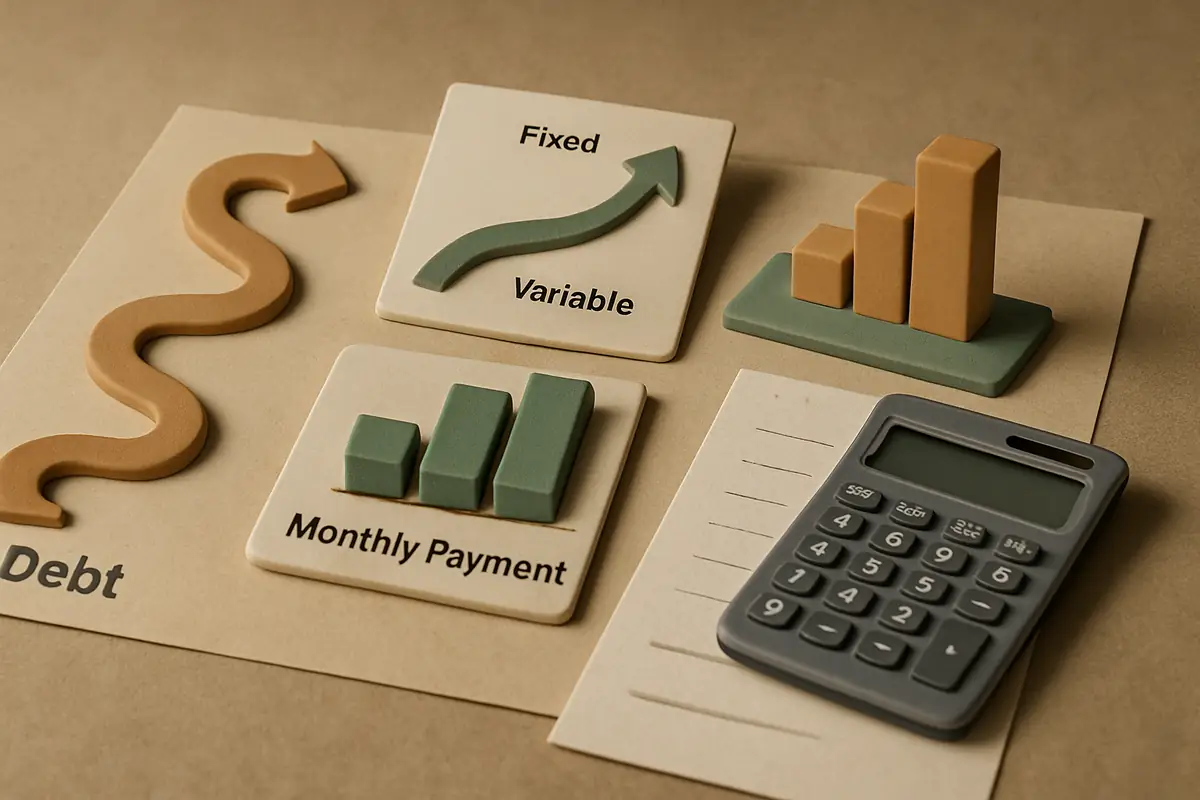
Most advertised rates are for fixed-rate loans, where the interest rate remains constant for the entire term, providing predictable monthly payments. For example, a fixed-rate mortgage might be set at 5.5% for 30 years. Variable-rate loans, by contrast, are tied to benchmarks like the prime rate or Treasury yields and can fluctuate over time. These loans may start with rates as low as 4%–5% but can rise to 8% or more if market rates increase.
Hybrid loans combine both features, with an initial fixed period (e.g., three years at 4.5%) followed by a variable rate for the remaining term. While variable and hybrid loans may offer lower starting payments, borrowers risk higher payments if rates rise after the introductory period. When choosing between fixed and variable rates, consider your ability to handle potential increases in monthly payments—especially if you plan to hold the loan for more than a few years.
APR Versus Advertised Interest Rate: The Best Tool for True Comparisons
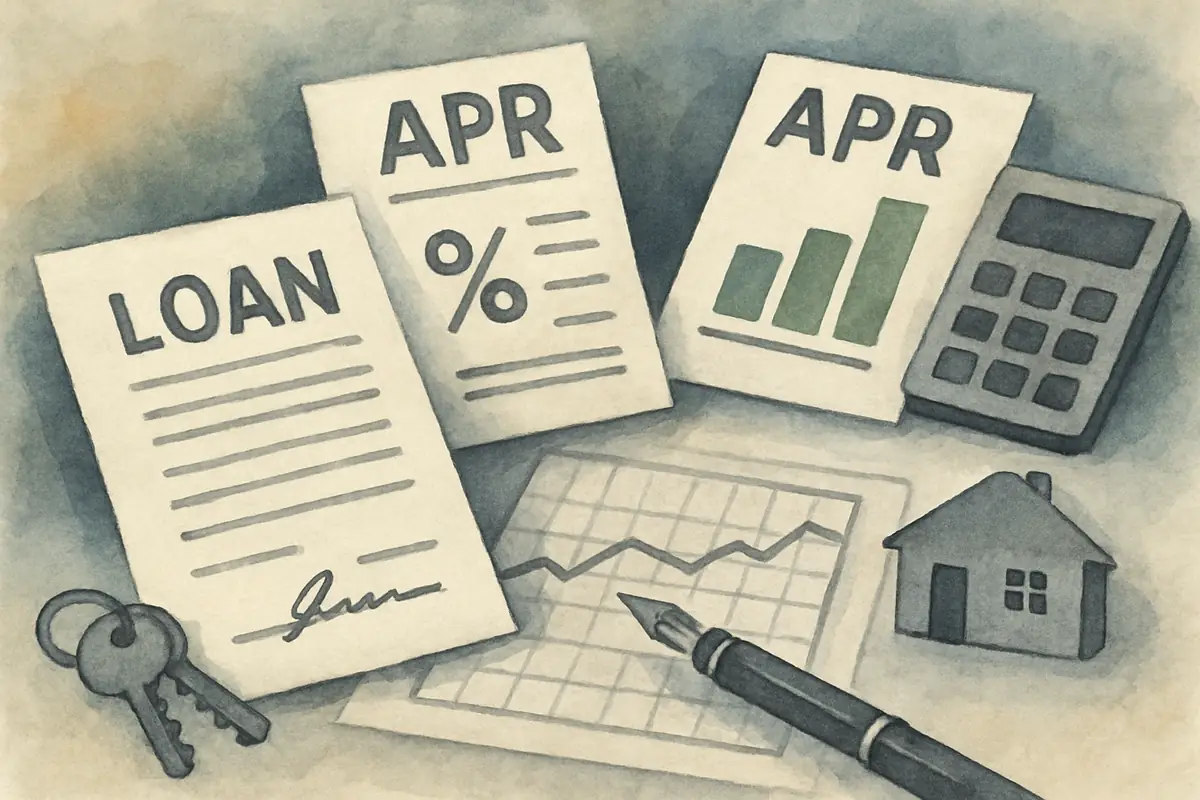
The Annual Percentage Rate (APR) is a standardized measure that combines the nominal interest rate with most fees, expressed as a yearly rate. This allows borrowers to compare loans on an apples-to-apples basis. For example, two loans might both advertise a 7% interest rate, but if one has a 4% origination fee, its APR could be 7.6% or higher, revealing the true cost.
However, APR assumes you keep the loan for the full term and make all payments as scheduled. If you pay off a loan early or refinance, your actual cost may differ from the APR calculation. For this reason, it’s wise to use loan amortization calculators to run custom scenarios—such as paying off a loan in three years instead of five—to estimate your real expenses.
Where this helps
- Makes it easier to compare different loan offers on total cost.
- Includes most fees and charges in a single figure.
- Helps avoid being misled by low headline rates with high hidden fees.
Where caution is needed
- Does not always include all possible fees, such as late payment or prepayment penalties.
- Assumes the loan is held for the full term, which may not match your plans.
- May not capture differences in repayment flexibility or collateral requirements.
Sarah’s Experience: The Importance of Reviewing All Loan Terms
After carefully comparing the two offers, Sarah realized that the 7.5% loan’s 3% upfront fee raised its effective APR above the 7.8% no-fee loan. Although the longer five-year term on the no-fee loan increased the total interest paid by about $400 compared to the three-year option, the lower monthly payments—about $200 versus $310—fit her budget better and offered more flexibility.
Sarah’s experience underscores the importance of reviewing all aspects of a loan agreement, not just the advertised rate. Factoring in fees, term length, and repayment options can reveal which offer truly aligns with your financial needs and avoids costly surprises.
Understanding the Full Range of Loan Fees
When comparing loan options, it’s easy to focus only on the interest rate. But fees—such as origination charges (1%–8%), application fees ($25–$100), processing costs, prepayment penalties (1%–2% of the balance), and late payment fines ($25–$40)—can significantly increase your total cost.
For example, a $10,000 loan at 6% with a 5% ($500) origination fee costs more upfront than a $10,000 loan at 7% with no fee. Insurance requirements, such as credit life or disability insurance, can add $10–$30 per month to your payment, totaling $600–$1,800 over a five-year term.
Always request a complete fee schedule from lenders and calculate the total repayment—including all fees—before signing any agreement. Ask if insurance is mandatory and weigh its cost against its benefits.
Loan Terms and Payment Schedules Shape What You’ll Pay
Loan duration and payment frequency have a major impact on total cost. A 10-year loan at 5% on $20,000 accrues about $5,450 in interest, while a five-year loan at the same rate accrues about $2,650. More frequent payments—such as biweekly instead of monthly—can reduce total interest by $300–$500 on a typical personal loan.
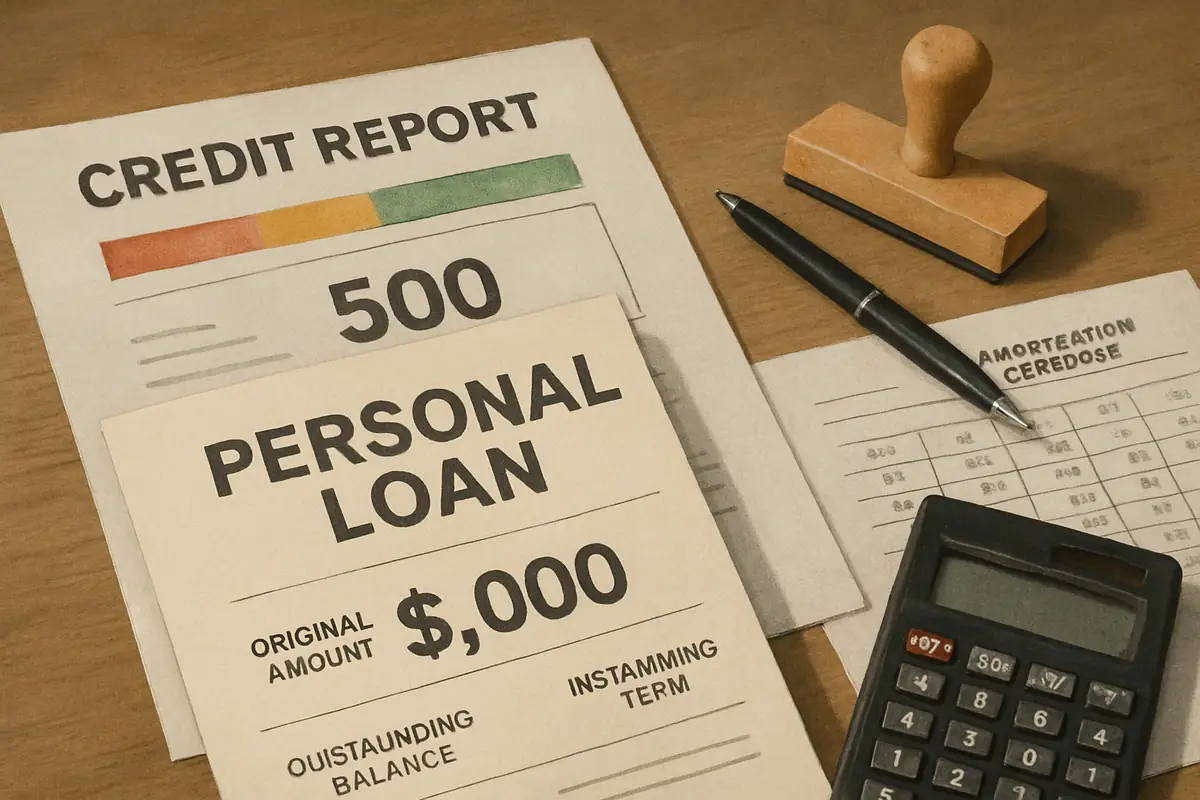
Some loans allow lump-sum or extra payments without penalty, letting you pay off the balance faster and save on interest. Reviewing the amortization schedule (a table showing how each payment is split between interest and principal) helps you understand how your balance decreases over time and how much you’ll pay in total.
Credit Score’s Role in Loan Terms and Approvals
Lenders use your credit score to assess risk. Scores above 700 often result in lower APRs and better terms, while scores below 650 may lead to higher rates, additional fees, or even loan denial. For example, the difference between a 6% and a 10% APR on a $15,000, five-year loan is more than $1,600 in additional interest.
Improving your score by 50–100 points before applying can open the door to lower rates and better offers. Checking your credit report, disputing errors, and reducing your credit utilization (the ratio of your balances to your credit limits) are practical steps to take before seeking a loan.
Fixed, Variable, and Hybrid Interest Rates—How They Affect Payments
Fixed-rate loans keep your payment stable for the full term—common for auto loans and mortgages. Variable-rate loans, which may start at 4%–5% but can rise to 8%–10% or more, expose you to payment increases if interest rates climb. Hybrid loans lock in a fixed rate for a few years before switching to variable, blending predictability and risk.
Consider your budget and how long you plan to keep the loan. If you expect to pay off the loan quickly, a variable or hybrid loan might save money. If you need stable payments for budgeting, a fixed rate may be safer—even if the initial rate is slightly higher.
APR: The Most Reliable Metric for Comparing Loans
The APR brings together the interest rate and most fees into a single annualized figure, making it easier to compare offers. For example, a 6.5% APR on a loan with no fees is typically cheaper than a 6% interest rate loan with a 4% origination fee (which could have an APR of 7% or higher).
However, APR calculations assume you’ll keep the loan for the full term. If you plan to pay off early or refinance, use an amortization calculator to estimate your real cost based on your expected payment pattern.
Benefits of Looking Beyond Advertised Rates
- Gives a clearer picture of total borrowing cost.
- Reveals hidden fees and potential extra expenses.
- Highlights important differences in repayment flexibility and risk.
- Enables true comparison across multiple loan offers.
Challenges When Focusing Beyond Rates Alone
- Requires careful review of detailed disclosures and fine print.
- Some fees or penalties may be difficult to spot or calculate.
- Comparing all factors can be time-consuming and complex.
References
- https://www.consumerfinance.gov/consumer-tools/
- https://www.consumerfinance.gov/consumer-tools/auto-loans/
- https://www.fdic.gov/consumer-resource-center/loans
- https://www.consumerfinance.gov/consumer-tools/mortgages/
- https://www.consumerfinance.gov/ask-cfpb/what-is-the-difference-between-a-fixed-rate-and-adjustable-rate-mortgage-arm-loan-en-100/