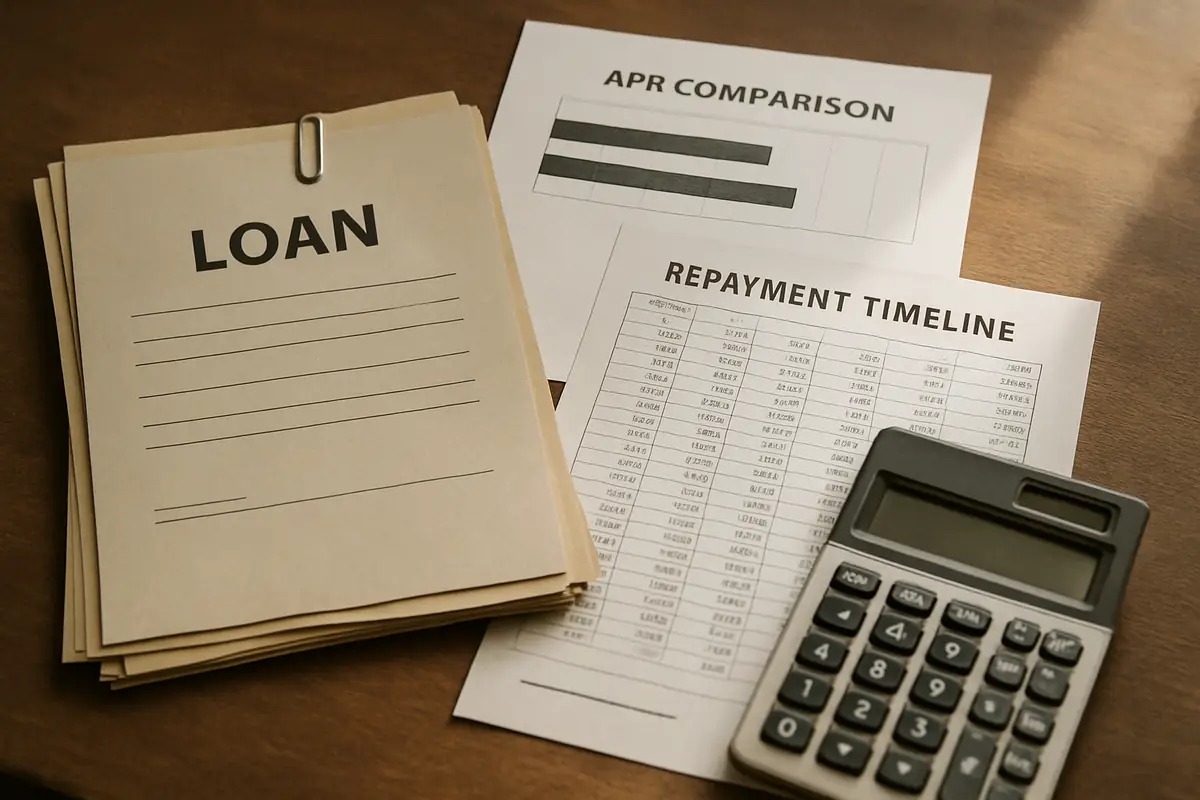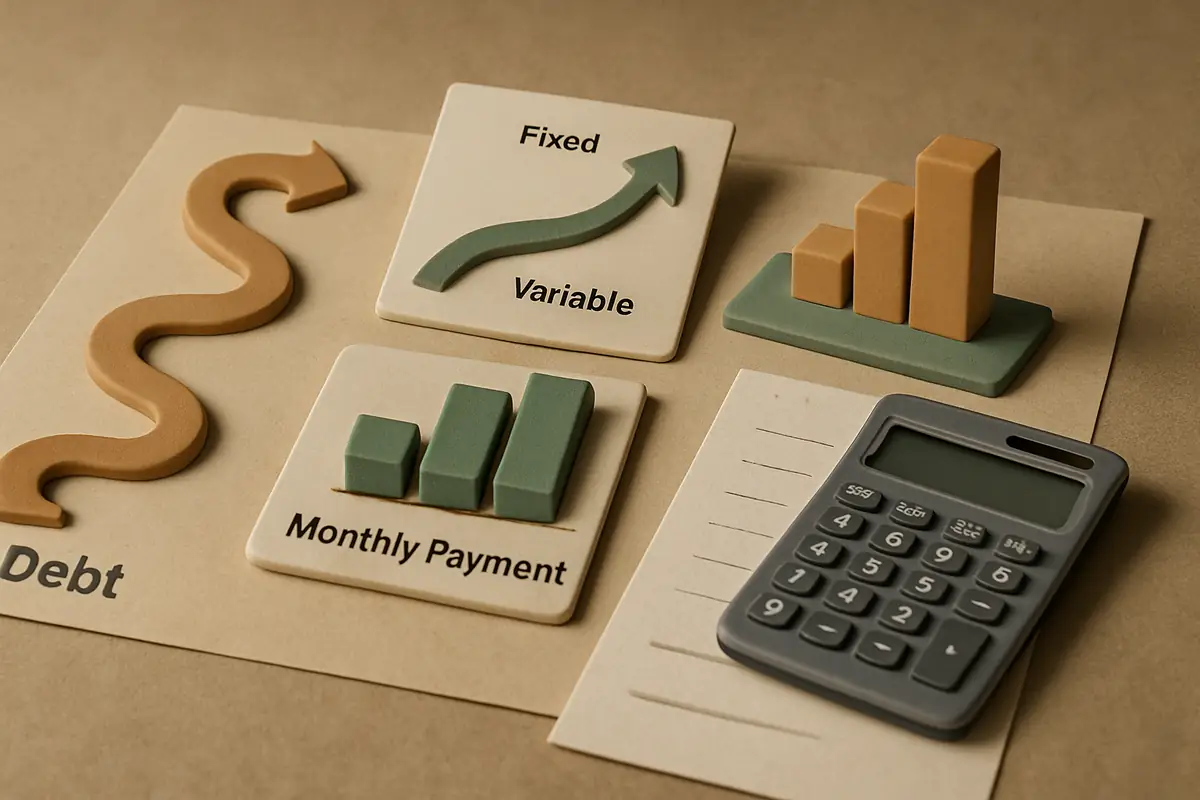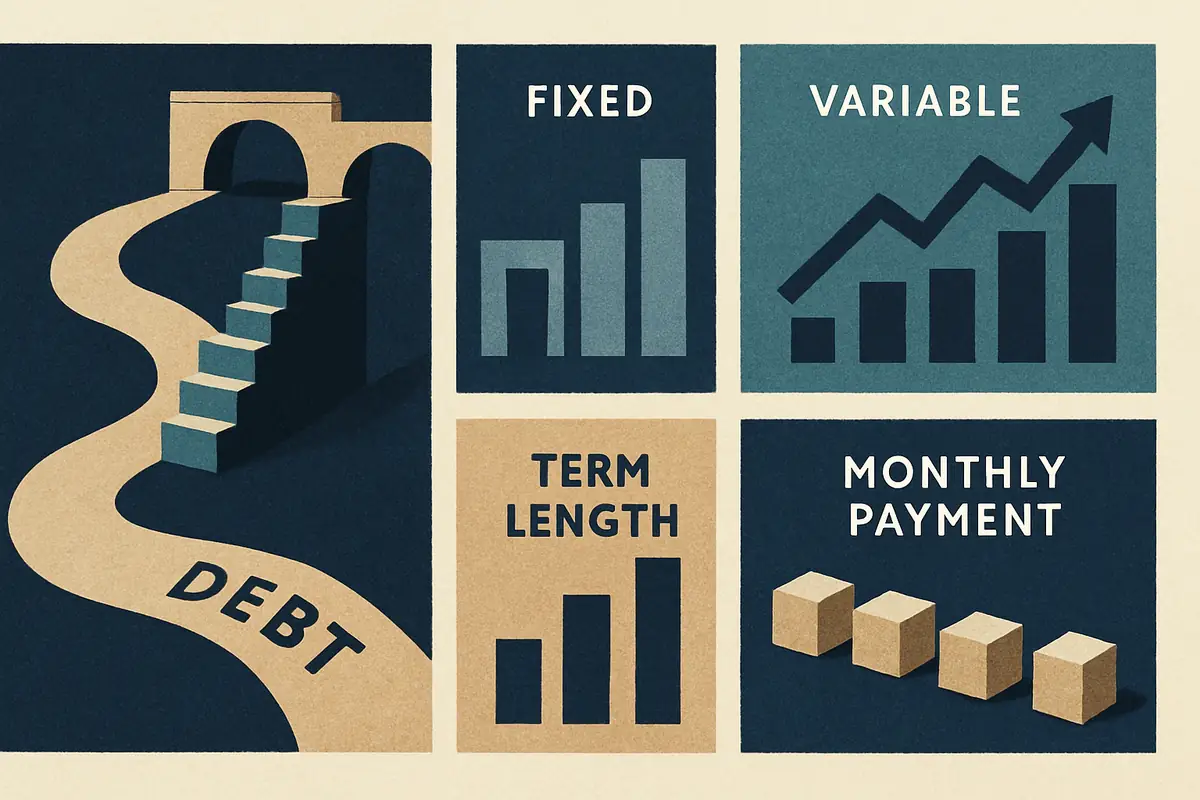
A 30-year fixed mortgage has hovered between 6% and 7% through 2025, personal loan APRs span roughly 7% to 36%, and credit cards commonly charge 18% to 30%. Against that backdrop, choosing between borrowing more money and refinancing existing debt can swing total obligations by tens of thousands of dollars over a loan's life. This guide walks through exactly what changes under each option, with sharp focus on fees, terms, penalties, and repayment pressure.
Understanding Borrowing and Refinancing
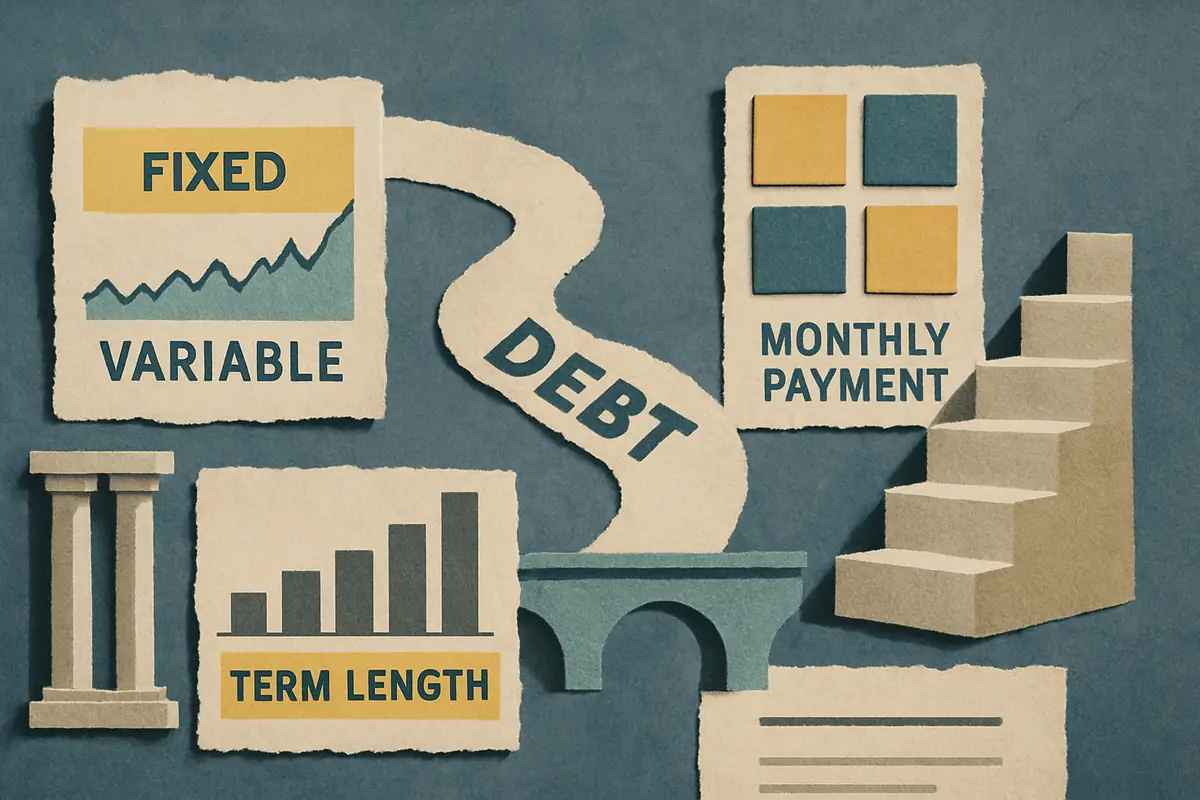
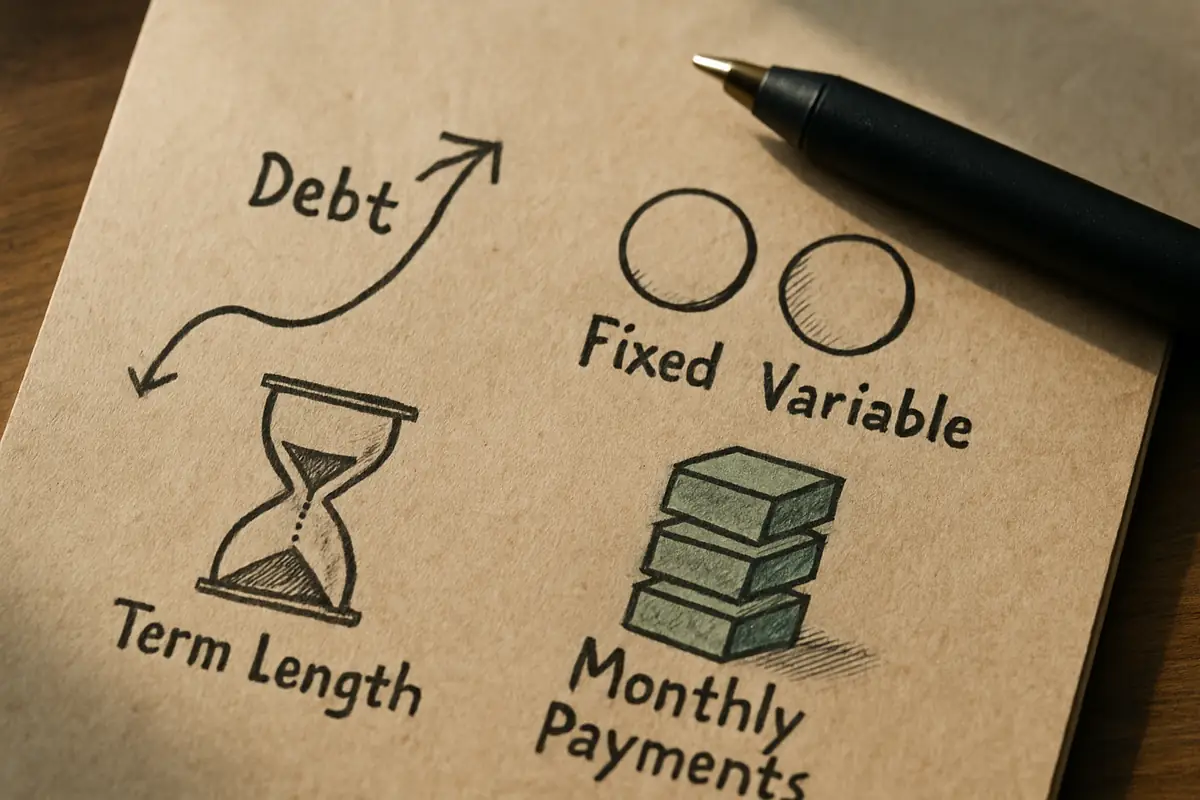
Borrowing means taking out a new loan — often to cover fresh expenses or to consolidate several debts into one. It involves signing a new credit agreement with its own interest rate, fees, and repayment schedule. Refinancing means replacing an existing loan with a new one, typically to secure a lower rate, a different term length, or a switch between fixed and variable pricing. The two look similar on paper but affect your balance sheet very differently.
The immediate impact diverges: new borrowing increases your total debt load, while refinancing restructures current debt without necessarily adding principal. Both, however, change your effective Annual Percentage Rate — the APR, which is the yearly cost of a loan including interest and most required fees, expressed as a single percentage. A borrower consolidating $12,000 of card debt at 24% APR into a personal loan at 13% APR restructures cost; a borrower adding a second $12,000 loan simply owes more.
Key Contract Features That Change
When you borrow anew, expect a fresh contract with an APR set by market conditions and your credit profile at that moment. Personal loans in 2025–2026 typically price between 7% APR for strong-credit applicants and 36% at the subprime end, and origination fees — an upfront charge for processing and funding the loan — commonly run 1% to 8% of the amount borrowed. Term length varies too: two to seven years is standard for unsecured loans, while secured loans backed by property can stretch to 15 or 30 years.
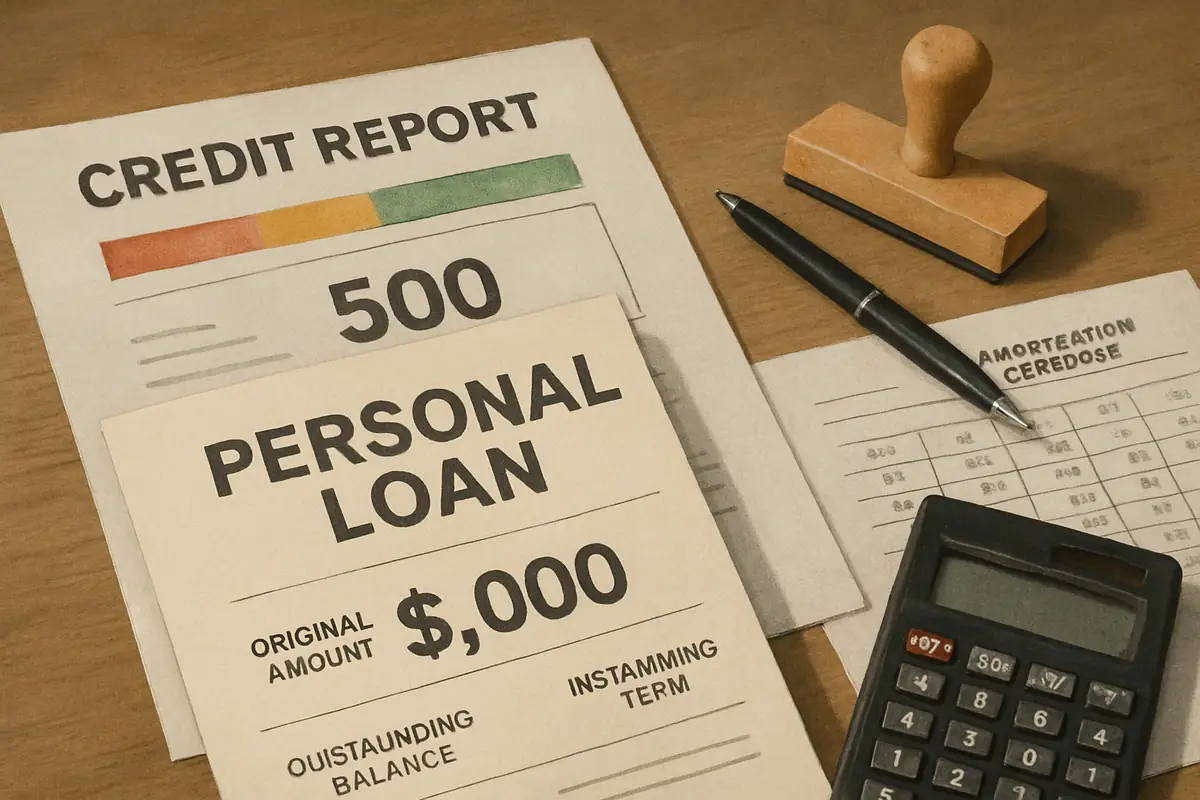
Refinancing comes with its own cost stack. Mortgage refinances typically carry closing costs of about 2% to 5% of the loan balance, and some older contracts impose prepayment penalties — charges of roughly 0% to 2% of the balance for paying a loan off early. The new contract may also reset the amortization schedule, the timetable that splits each payment between interest and principal. Early in any amortized loan, the majority of each payment goes to interest, so restarting a 30-year clock after five years of payments quietly sends you back to the interest-heavy phase.
APR Impact: Advertised Rate vs Real Cost
Advertised APRs can mislead if you stop reading at the headline. New-loan offers often quote a rate that excludes fees rolled into the principal, and refinance ads rarely mention that closing costs plus any prepayment penalty on the old loan can erase a full percentage point or more of apparent savings. Many lenders also advertise a rate that assumes a 0.25% autopay discount you only get by enrolling in automatic payments.
A break-even calculation cuts through the fog. Take a borrower with a $320,000 mortgage balance at 7.25%, paying about $2,183 a month in principal and interest. Step one: price the new loan — refinancing to 6.25% on a fresh 30-year term produces a payment of roughly $1,970. Step two: find the monthly saving — $2,183 minus $1,970 equals $213. Step three: total the upfront cost — closing costs at 2.5% of $320,000 come to $8,000. Step four: divide cost by saving — $8,000 divided by $213 is about 38 months. This borrower needs to keep the new loan for just over three years before the refinance genuinely saves money; selling or refinancing again sooner means the fees were paid for nothing.
That break-even point — the month when accumulated savings finally cover upfront costs — is the single most useful number in any refinance decision, and lenders almost never volunteer it.
Pros and Cons of Borrowing More vs Refinancing Existing Debt
Use the trade-offs in this guide as a working checklist before proceeding. Borrowing more adds capacity now but raises your debt-to-income ratio, and lenders generally want total housing costs below the 28% to 30% of gross income benchmark. Refinancing can lower cost without adding debt, but only when the rate drop outruns the fees.
Each borrower's situation differs based on credit standing, current market rates, and tolerance for repayment pressure. A rule of thumb many professionals use: a refinance deserves a serious look when the new rate is at least 0.75 to 1 percentage point below the old one, and new borrowing deserves skepticism whenever it pushes total monthly debt service past roughly 36% of gross income.
Common Fees and Hidden Charges to Watch For
New borrowing often involves application fees ranging from flat charges of $25 to $75 up to percentage-based origination fees of 1% to 8% of principal. Origination fees are frequently built into the loan balance rather than paid upfront — a $10,000 personal loan with a 5% fee deposits only $9,500 in your account while you repay, and pay interest on, the full $10,000. That structure makes the true cost easy to miss.
Refinancing triggers its own list: appraisal fees of roughly $400 to $700 on secured loans, title search and title insurance costs that often total $1,000 to $2,000, document preparation charges, and government recording fees. If a mortgage refinance leaves you with less than 20% equity, lenders typically require private mortgage insurance (PMI) — coverage that protects the lender, not you, if you default — at an annual cost of roughly 0.5% to 1.5% of the loan balance. Prepayment penalties of up to 2% on the old loan can also apply; ignoring them leads borrowers into expense traps when trying to retire original debt early.
Where readers should be careful
Always request a detailed cost breakdown before committing. For mortgages, lenders must provide a standardized Loan Estimate within three business days of application, itemizing every anticipated fee separately from principal. Compare these figures line by line between new-borrowing offers and refinancing deals — a 6.4% offer with $9,000 in fees can easily cost more than a 6.7% offer with $2,500 in fees over a five-year horizon.
Collateral Requirements and Their Risks
Secured borrowing ties collateral such as property or vehicles directly to the new debt through a lien — the lender's legal claim on the asset until the debt is repaid. Miss enough payments and the asset can be repossessed or foreclosed, even if your other loans are current. The pricing reward is real: a home equity product might price near 8% while an unsecured personal loan for the same borrower quotes 12%.
Refinancing secured debt replaces one lien with another, but lenders reassess collateral value at that moment. A home appraised lower than expected can shrink the available loan amount, force cash to closing, or trigger PMI. The down-payment math borrowers faced at purchase echoes here: conventional loans avoid PMI at 20% down, while government-backed programs allow as little as 3.5% down in exchange for ongoing insurance premiums. In volatile markets, the gap between what you owe and what the asset appraises for is the risk that decides whether a refinance is even possible.
Term Length Adjustments: Short-Term Gain vs Long-Term Risk
Stretching out repayment is the most common refinancing move, and the arithmetic is unforgiving. A borrower five years into a 30-year loan who refinances into a fresh 30-year term converts 25 remaining years of payments into 35 total years of interest. On a six-figure balance at rates in the 6% to 7% range, total lifetime interest on a 30-year term routinely approaches or exceeds the amount originally borrowed — extend the clock and that figure climbs further even as the monthly bill falls.
Borrowing more creates a different hazard: overlapping repayment schedules. Three loans with individually reasonable terms can stack into a monthly obligation that crowds out the 3 to 6 months of expenses most planners recommend holding as an emergency fund. When surveys repeatedly find that roughly 4 in 10 adults would struggle to cover a $400 surprise expense, layering payment obligations without a cash buffer is how a missed $35 payment snowballs into default.
Prepayment Penalties and Repayment Pressure
Prepayment penalties survive mainly on older mortgages and certain secured loans as protection for lenders against early payoff. The typical range is 0% to 2% of the outstanding balance, often on a declining schedule — 2% in year one, 1% in year two, nothing afterward. On a $250,000 balance, a 2% penalty is $5,000, enough to wipe out a year or more of interest savings from a refinance if you fail to count it before signing.
New borrowings rarely carry formal prepayment penalties, but some lenders impose early-payoff fees structured differently — either a percentage charge or a fixed sum if the loan closes within the first 12 to 36 months. Always ask the direct question: what does it cost me to pay this off tomorrow?
Repayment pressure is about timing as much as amount. Late fees on consumer credit typically run $30 to $41 per occurrence, and a payment more than 30 days late can appear on your credit report, where payment history drives roughly 35% of common scoring models. Refinanced loans may lower the monthly figure while imposing rigid due dates that leave no grace room — a real hazard when multiple debts converge on the same week of the month after a consolidation.
Comparing Variable vs Fixed Rates in Both Choices
Borrowed money can carry a variable rate that floats with a market benchmark or a fixed rate locked at origination. The environment matters: after the 2022–2023 hiking cycle pushed the policy rate above 5%, variable-rate borrowers absorbed payment increases within months, while fixed-rate borrowers who had locked earlier were insulated entirely. With 10-year Treasury yields sitting around 4% to 4.5%, the spread between fixed and introductory variable pricing is narrower than it once was — which weakens the classic case for floating.
Refinancing lets you switch rate types in either direction. The trap to check for is the reset clause: some refinance products convert a fixed rate into a variable one after an introductory window, so a borrower who thought they bought certainty discovers an adjustable payment in year four. Predictable payments are the entire value of a fixed rate for household budgeting; read the rate section of the contract before anything else.
Variable Rate Benefits
- Potential savings when benchmark rates trend downward, as payments adjust automatically.
- Typically a lower initial rate than comparable fixed offers, often by 0.5 to 1 percentage point.
Variable Rate Risks
- Exposure to sudden rate increases raising monthly payments beyond budget forecasts.
- Harder long-term budgeting due to payment unpredictability, unlike fixed rates that hold one number for the full term.
- Caps and adjustment schedules buried in fine print determine how fast payments can climb.
Understanding the Changing Landscape of Borrowing Risk
When borrowers consider refinancing, the risk profile of their debt shifts in ways the original loan documents never anticipated. At origination, a borrower assesses terms against their income and the market of that moment. Refinancing reopens every one of those assumptions. Extending a term cuts the monthly payment but raises lifetime interest; on long loans the extra cost is measured in tens of thousands of dollars. Switching from fixed to variable pricing trades a known payment for exposure to benchmark moves that, in the recent cycle, added hundreds of dollars a month to some adjustable payments within two years. Borrowing risk is not static — it evolves with each restructuring decision, and the borrowers who fare best treat every refinance as a full re-underwriting of their own situation.
Refinancing also reopens credit risk. The lender pulls fresh credit, verifies current income, and recalculates debt-to-income ratios against today's standards. That review can surface changes the borrower has stopped noticing: a utilization ratio that has crept above the 30% guideline scorers prefer, a new car payment, income that has become variable. Borrowers whose profiles have weakened since origination may be offered rates 1 to 3 percentage points above what they expected, or declined outright.
External conditions matter just as much. Policy rates, inflation running around 2.5% to 3.5% now versus the roughly 9% peak of mid-2022, and employment trends all feed lenders' pricing models. A borrower holding a 3% pandemic-era mortgage gains nothing from refinancing into a 6.5% market; a borrower holding a 8.5% loan from the rate peak may gain plenty. Timing a refinance against the rate cycle — rather than against a mail advertisement — is the difference between capturing savings and paying fees to stand still.
Refinancing Strategies That Mitigate Borrowing Risk
Effective refinancing starts with triage: attack the most expensive debt first. Ranked by typical cost, payday loans at 300% to 400% APR sit at the top, credit cards at 18% to 30% next, then personal loans at 7% to 36%, then secured debt in the 6% to 9% neighborhood. Consolidating $15,000 of card balances averaging 24% into a personal loan at 12% cuts the interest meter roughly in half and replaces several due dates with one. The same logic makes refinancing a 6.5% mortgage to chase 6.4% pointless — the fees eat the spread.
A second strategy preserves flexibility on term length. Borrowers expecting rising income can refinance into shorter terms — a 15-year mortgage typically prices about 0.5 percentage point below a 30-year — accepting a higher monthly payment in exchange for dramatically lower lifetime interest and faster equity. Borrowers bracing for rate hikes can lock fixed pricing even at a slight premium, buying payment certainty. Neither choice is universally right; the match between loan structure and the borrower's next five years is what reduces risk.
A third strategy is negotiating protective features into the new contract. Prepayment privileges without penalty let you accelerate payoff whenever surplus cash appears — even an extra $100 a month against a long amortization schedule removes years of payments. Hardship provisions such as temporary payment deferrals or interest-only windows provide breathing room without triggering default. Lenders may price these features into the rate, sometimes an eighth to a quarter of a point, but for households with variable income — where planners suggest holding 6 to 9 months of expenses in reserve rather than the standard 3 to 6 — that flexibility is cheap insurance.
The Psychological Impact of Refinancing on Borrowers
Beyond the arithmetic sits a psychological dimension that shapes outcomes. A completed refinance creates a sense of renewed control, which can power better budgeting and on-time payments — the behaviors that actually reduce default risk. But the same relief can breed complacency. A payment that drops from $2,183 to $1,970 frees $213 a month; households that redirect it to spending rather than savings or principal have converted a financial win into a lifestyle bump while the total debt horizon quietly lengthened.
The refinance-as-reset illusion is the specific trap: borrowers feel their liabilities have been wiped clean when in fact the same principal now stretches over more years at more total cost. The corrective is simple and mechanical — route some or all of the monthly savings into an emergency fund earning 3.5% to 4.5% in a high-yield savings account, or back into the loan as extra principal. Either move locks in the benefit before it evaporates into ordinary spending.
The Impact of Credit Scores on Borrowing and Refinancing Risks
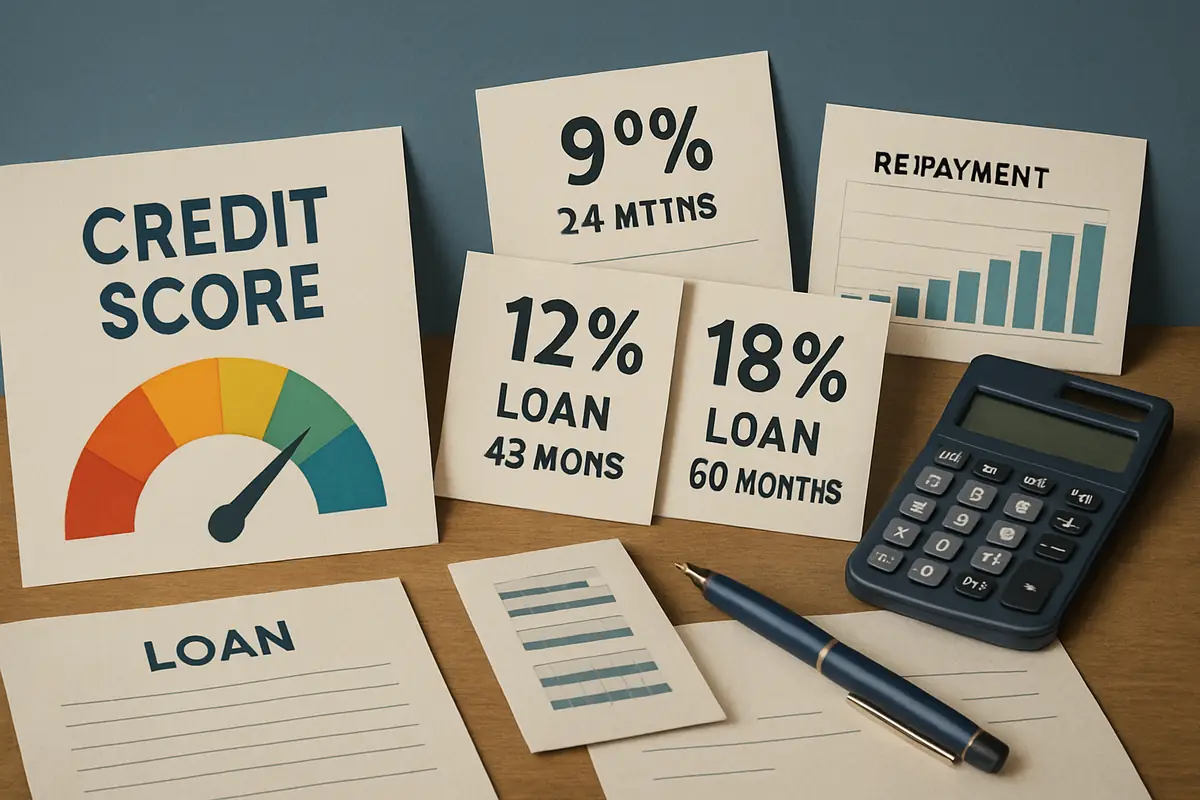
Credit scores price every stage of the borrowing lifecycle. At origination, the score determines the offer: on common scales running 300 to 850, applicants above roughly 740 see the best advertised rates, while those below about 640 can pay several percentage points more for the identical loan — on a $30,000 personal loan, the gap between a 9% and a 24% APR is thousands of dollars over a five-year term. At refinance, the updated score matters just as much. A borrower whose score has fallen since origination may find refinancing offers worse than the loan they already hold; a borrower whose score has climbed 50 or 80 points may unlock terms that make refinancing genuinely transformative. The score is the price tag.
The mechanics reward specific habits. Payment history carries roughly 35% of the weight in common scoring models, so a single 30-day late payment before a refinance application can undo a year of careful preparation. Utilization — the share of available credit currently in use — is the next major factor, and keeping it below 30% of limits in the months before applying measurably improves offers. Borrowers who pay down balances, dispute reporting errors, and avoid opening new accounts in the 90 days before applying routinely qualify for materially better pricing than their past selves would have.
Lenders also update their risk models continuously, weighting recent behavior more heavily than old history. The consequence is asymmetric: borrowers with stable or improving profiles enjoy steadily better access to refinancing, while volatile profiles face swinging offers and occasional denials. Treating credit maintenance as an ongoing discipline — not a pre-application scramble — is what keeps the refinancing option open when rates finally move in your favor.
Economic Factors Shaping Borrowing and Refinancing Decisions
Macroeconomic conditions set the boundaries of every individual decision. Central bank policy drives short-term borrowing costs, and after the hiking cycle that pushed the policy rate above 5%, refinancing activity collapsed for anyone holding loans originated in the low-rate era — replacing a 3% mortgage with a 6.5% one is a losing trade no matter how the fees shake out. When rates ease, the calculus flips, and borrowers holding loans from the peak of the cycle become the natural refinancing candidates.
Inflation cuts both ways. Prices rising 2.5% to 3.5% annually slowly erode the real burden of a fixed-rate debt — you repay tomorrow's cheaper dollars against today's fixed payment — which quietly favors long fixed-rate borrowing. But inflation above target also keeps lenders pricing new loans defensively, since they must be compensated for the same erosion. Recessions add a third force: lenders tighten underwriting, raise down-payment and equity requirements, and shrink the pool of approvable refinance applicants precisely when households most want relief.
The practical takeaway is that refinancing windows open and close with the cycle. Borrowers who know their current rate, watch benchmark yields like the 10-year Treasury in its recent 4% to 4.5% range, and have their credit file ready can move within weeks when a window opens. Borrowers who wait to prepare until the window appears often watch it close during the application process.
Behavioral Considerations Influencing Risk During Refinancing
Borrower psychology drives risk as surely as loan math does. The most common pitfall is capacity overconfidence: a refinance lowers the monthly payment, the borrower reads the freed cash as permanent surplus, and new spending commitments absorb it. When any payment later resets upward — a variable adjustment, an escrow increase, an expiring promotional rate — the budget has no slack left. Consolidation borrowers who zero out credit cards with a personal loan, then rebuild card balances at 18% to 30% APR within two years, end up carrying both debts.
Inertia is the opposite failure. Borrowers holding clearly refinanceable debt delay for years because the process feels complex or the fees feel scary, forfeiting savings that dwarf the costs. Others chase teaser offers — a low introductory rate that expires after 12 to 21 months, sometimes attached to a 3% to 5% upfront transfer fee — without modeling the post-promotional rate that actually governs most of the loan's life.
The antidote to both failure modes is the same: run the full-term numbers — lifetime cost of each option, break-even month for any fees, and the payment under the worst-case rate scenario — before deciding. Arithmetic is far harder to regret than instinct.
Practical Steps for Borrowers Considering Refinancing
Start by shopping seriously. Collect quotes from at least three to five lenders — banks, credit unions, and online lenders often price the same borrower differently by a full percentage point or more. Look past the headline rate to closing costs, prepayment terms, and whether the quoted APR assumes an autopay discount, typically 0.25%, that you must enroll to keep. Rate-shopping within a focused window of roughly 14 to 45 days is generally treated as a single inquiry by scoring models, so comparison shopping does not wreck your credit.
Request personalized quotes based on your actual file rather than relying on advertised rates aimed at ideal applicants. Then audit your own position: income stability, credit report accuracy, existing debts, and upcoming obligations such as a car replacement due next year.
Scrutinize how the new loan's structure differs from the old one. A fixed-rate original replaced by an adjustable-rate mortgage — an ARM, whose rate holds for an initial window of typically 5, 7, or 10 years and then adjusts periodically — trades certainty for a lower initial rate. That trade can be rational for a borrower planning to sell within the fixed window and hazardous for one planning to stay 20 years. The adjustment caps, which limit how far the rate can move per adjustment and over the loan's life, are the fine print that determines the worst case.
Examine the new amortization schedule with equal care. Extending the repayment term spreads payments thinner, reducing the immediate burden, but shifts the early years back toward interest and increases the lifetime total. A borrower who refinances repeatedly, resetting the clock each time, can remain in the interest-heavy phase of amortization for decades — lighter payments every month, and more total dollars to the lender than any single loan would have cost.
Serial refinancing deserves its own caution: each round costs 2% to 5% of the balance in fees and restarts the term, and three refinances in ten years can consume $20,000 or more while pushing final payoff into retirement years.
Set decision rules before you shop, not after. Define the minimum rate improvement that justifies acting — many borrowers use 0.75 to 1 percentage point — the maximum acceptable break-even period, often 24 to 36 months, and the term length you will not exceed. Offers then either clear your bars or they don't.
Finally, put the savings to work the same month the new loan closes — toward principal, an emergency fund, or retirement contributions. Savings never assigned a job tend to disappear.
Risks Related to Loan Fees During Borrowing Versus Refinancing
Fee risk differs sharply between the two paths. Original borrowing concentrates costs at approval: application fees, origination charges of 1% to 8% on personal loans or roughly 0.5% to 1% on mortgages, and appraisal costs of $400 to $700 tied to collateral valuation at that moment. These are visible, itemized, and — because they arrive alongside the excitement of approval — routinely under-scrutinized.
Refinancing layers on transfer costs that a first-time borrower never saw: title search and title insurance protecting against ownership disputes, legal and recording fees for moving the lien, and sometimes a fresh appraisal even when the property was valued recently. Together these typically push refinance closing costs into the 2% to 5% range that defines the break-even math.
Prepayment penalties on the outgoing loan are the stealth item. Contracts specifying minimum holding periods can charge up to 2% of the balance for early payoff, and that charge lands at exactly the moment you are trying to capture savings from a lower rate. Some lenders offer to roll all fees into the new balance, which preserves cash but means paying interest on your own closing costs for decades.
The discipline that protects against all of this is a single side-by-side worksheet: every fee itemized, the monthly saving quantified, and the break-even month computed. If property values are falling during the refinance window, add a margin — a loan balance inflated by rolled-in fees against a shrinking home value is how borrowers slide toward owing more than the asset is worth.
How Market Competition Affects Borrowing Versus Refinancing Risks
Lender competition works differently in the two markets, and borrowers can exploit the difference. In initial lending, lenders fight hardest for well-qualified new customers: promotional rates, reduced origination fees, and lender credits that offset closing costs are common bait for first-time homebuyers and prime personal-loan applicants. Government-backed programs widen the field further, allowing down payments as low as 3.5% against the traditional 20% conventional standard.
Refinance competition surges episodically. When benchmark rates drop meaningfully, lenders race one another with limited-time offers, streamlined applications, and waived fees to capture the wave of borrowers who suddenly benefit from switching. These windows reward preparation: the borrowers who capture the best pricing are those with documents gathered, credit polished, and decision rules already set.
The timing risk cuts the other way. A mortgage refinance takes roughly 30 to 45 days from application to closing, and market rates can move against you during that stretch. Rate locks — a lender's commitment to hold your quoted rate for a set period, commonly 30 to 60 days — are the defense, sometimes free and sometimes priced at a fraction of a point. A lock that expires before closing can convert an attractive refinance into a marginal one overnight.
Competition, in the end, is a tool rather than a guarantee. Lenders compete on the numbers they advertise, not the numbers that determine your outcome. Forcing every offer into the same full-cost, break-even framework turns a noisy marketplace into a simple ranking — and that is what separates refinancing that reduces risk from refinancing that merely relocates it.
References
- https://www.consumerfinance.gov/consumer-tools/
- https://www.fdic.gov/consumer-resource-center/loans
- https://www.consumerfinance.gov/consumer-tools/mortgages/
- https://www.consumerfinance.gov/consumer-tools/auto-loans/
- https://www.consumerfinance.gov/ask-cfpb/what-is-the-difference-between-a-fixed-rate-and-adjustable-rate-mortgage-arm-loan-en-100/
- https://www.federalreserve.gov/releases/g19/current/