The spread between a strong and a weak personal loan offer is enormous: in the 2025–2026 market, advertised APRs run from roughly 7% for borrowers with excellent credit to 36% at the top end, and origination fees of 1% to 8% can be deducted before the money ever reaches your account. On a $15,000 loan, that fee alone is $150 to $1,200. Yet many borrowers glance at the monthly payment and sign. This article walks through the contract details worth rechecking — fees, penalties, collateral, term length, and rate structure — because each one changes what you will actually repay and what you stand to lose.
Why a Second Look at Loan Terms Pays Off
Loan documents present numbers that seem straightforward: an interest rate, a repayment term, maybe a "small" origination fee. But those figures rarely tell the full story. An origination fee is an upfront charge subtracted from your loan proceeds — a 6% fee on a $12,000 loan means $720 comes off the top, so you receive $11,280 while repaying interest on the full $12,000. Variable-rate products carry a different risk: after 2022–2023 hikes pushed the policy rate above 5%, adjustable-loan payments climbed even for borrowers who never missed a due date. Rechecking borrowing risk means stepping past the headline offer to grasp the real cost embedded in the contract.
Signing a loan agreement is a legal commitment with long-term consequences, and most households have little slack for error: recurring surveys find roughly 4 in 10 American adults would struggle to cover a $400 surprise expense from savings alone. At that margin, a single overlooked clause — a $39 late fee, a rate reset, a mandatory insurance add-on — is not a rounding error. A second read guards against assumptions that turn into expensive mistakes.
APR Versus the Advertised Interest Rate
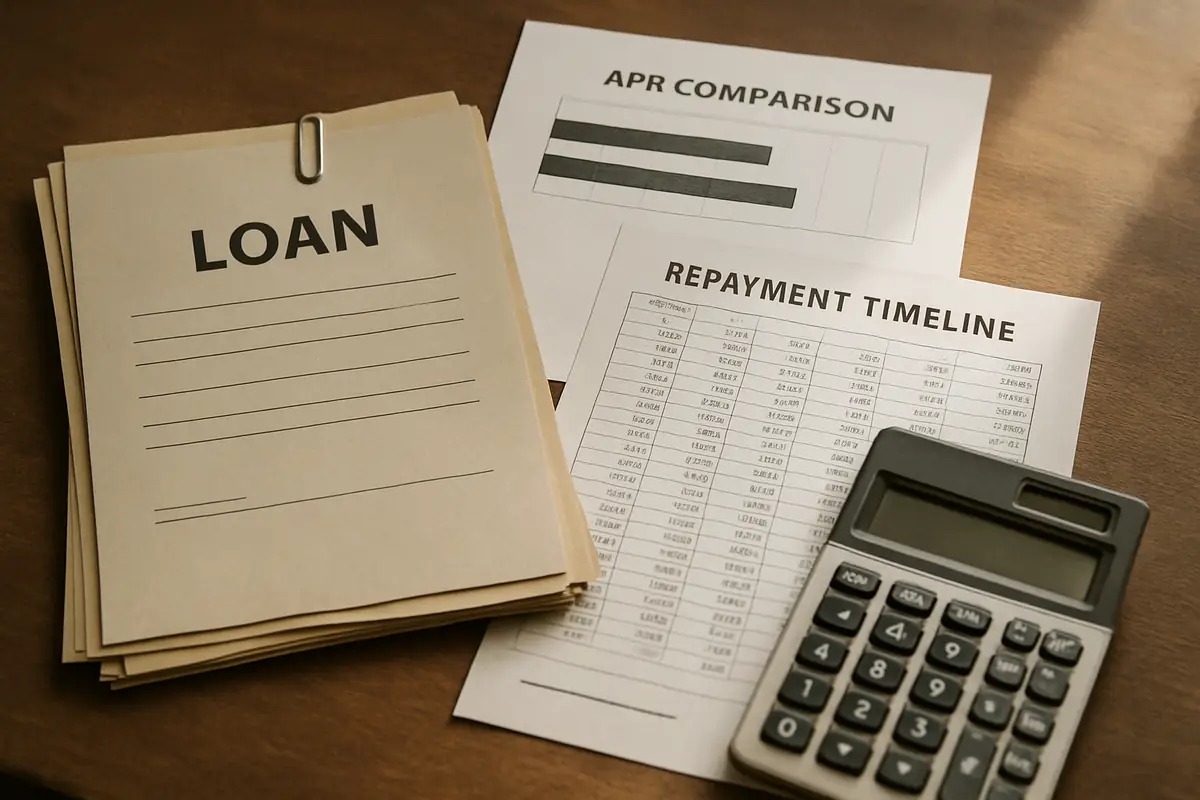
Advertisements often highlight a low interest rate, but that number may be the nominal rate only — the bare cost of interest before fees. The Annual Percentage Rate (APR) is the yearly cost of borrowing expressed as a single percentage folding in interest plus mandatory fees — the better comparison tool. The gap matters: a three-year loan quoted at 11.99% interest with a 5% origination fee carries an effective APR closer to 15.5%. At the extreme, payday loans quoted as a flat "$15 per $100 borrowed" translate to 300–400% APR once annualized.
Even APR disclosures deserve scrutiny. Confirm which fees were included, whether optional products like credit insurance were bundled in, and whether discounts are conditional — many lenders shave 0.25% off the rate for autopay enrollment, then remove it if you switch payment methods. Mortgage shoppers face the same dynamic: with 30-year fixed rates running about 6–7%, a loan advertised at the low end may require discount points paid at closing, which the APR reveals but the rate quote hides. Request the full disclosure and confirm which charges are mandatory before proceeding.
Hidden Fees Borrowers Often Overlook
Beyond upfront charges, watch for prepayment penalties, late fees, returned-payment charges, and default-related costs. Late fees on personal loans typically run $25 to $40 or around 5% of the missed payment; for comparison, credit card late fees generally fall between $30 and $41. A bounced payment usually adds a returned-payment charge of $25 to $35 — and your bank may layer its own overdraft fee in the same range. These amounts sound minor individually, but they stack, often buried in fine print under vague labels like "administrative costs."
Prepayment penalties matter most for borrowers who hope to pay early. A prepayment penalty is a charge — typically 0% to 2% of the remaining balance — for retiring a loan ahead of schedule, protecting the lender's expected interest income. On a $20,000 balance, a 2% penalty is $400, enough to wipe out much of an early payoff's interest savings. Read the fee schedule line by line and get every ambiguous term clarified in writing before signing.
Scenario: Unexpected Fees Escalate Total Loan Cost
Jane took out a $9,000 personal loan at 14% APR with no origination fee and a $246 monthly payment. Four months in, an unexpected $600 medical bill forced her to miss one due date. Her lender charged a $39 late fee; when her makeup payment bounced, a $30 returned-payment charge followed, plus a $34 overdraft fee from her bank. Because her contract allowed collection activity after two consecutive missed installments, a $75 processing charge landed the next month. Within six months Jane had paid roughly $340 in charges she never budgeted for — none of it reducing principal, none of it discussed during her application.
How Loan Term Length Shapes Your Risk Exposure
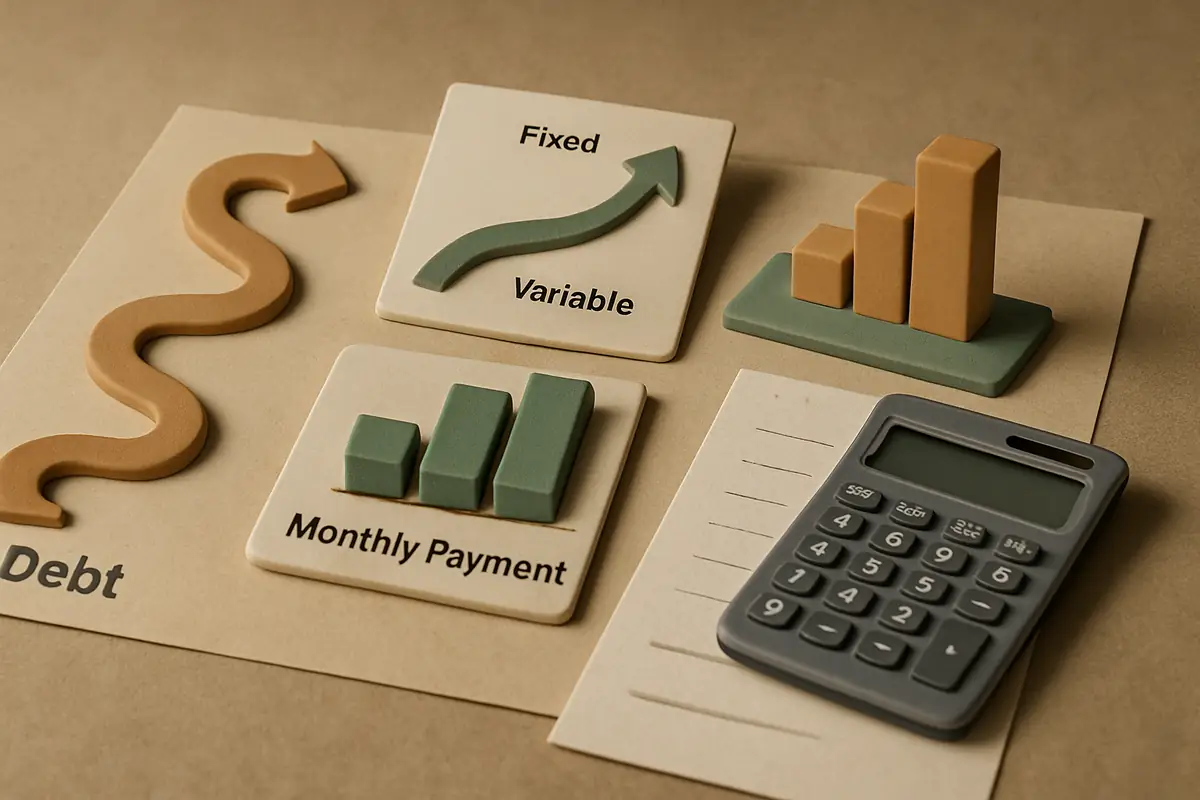
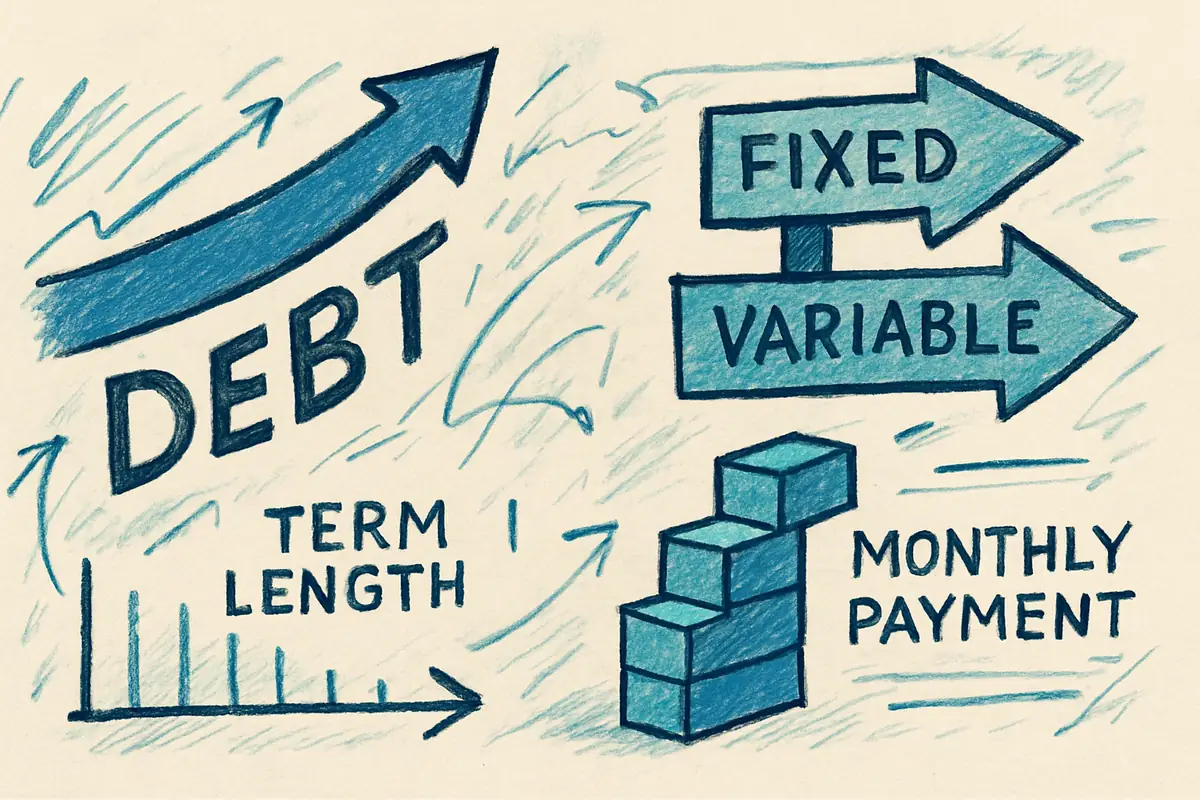
Longer terms reduce the monthly payment but raise total interest paid, and they keep you exposed to risk — job loss, medical events, rate changes — for more months. Shorter terms flip the trade: higher payments, less total interest, faster exit. Borrowers with unstable income often reach for the longer term because the payment looks safer, but stretching a loan can quietly double the interest cost while widening the window in which something can go wrong.
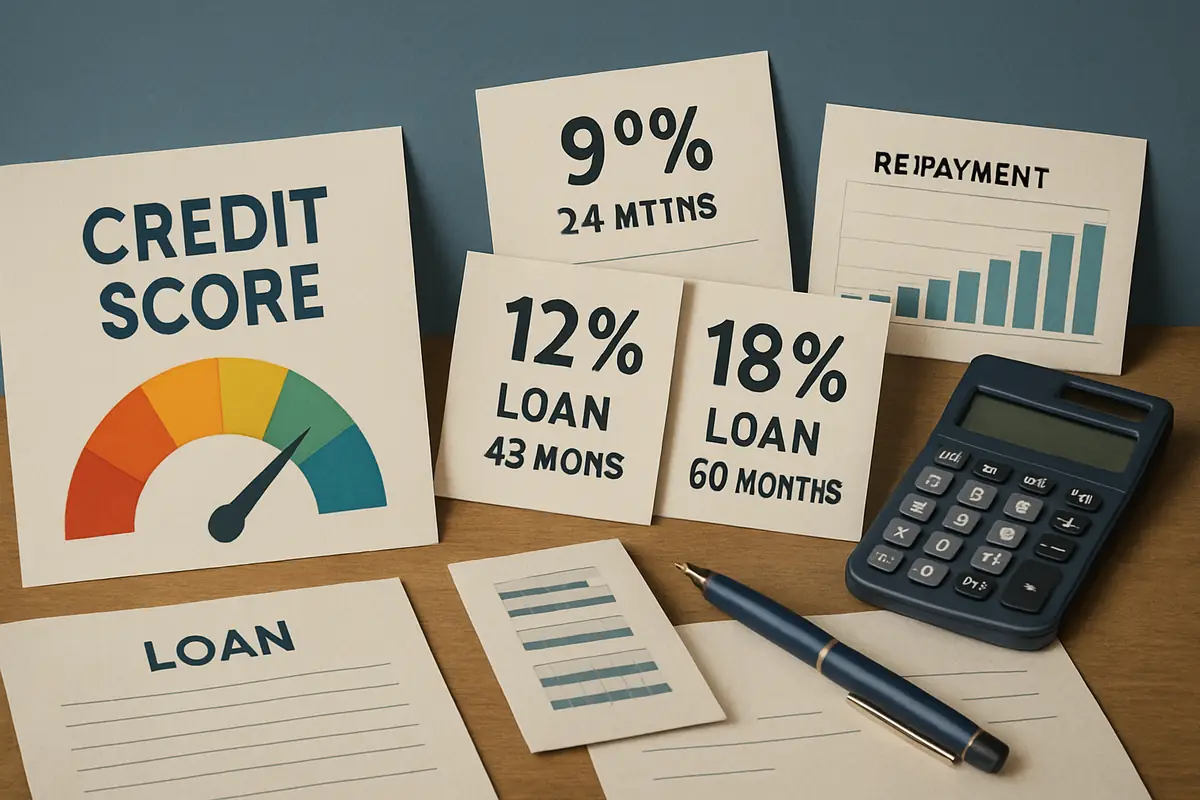
Run the numbers before choosing. Take a $15,000 personal loan at 12% APR. Step one: at a 3-year term, the monthly payment works out to about $498. Step two: multiply $498 by 36 payments — roughly $17,936 repaid in total, meaning about $2,936 in interest. Step three: stretch the same loan to 5 years and the payment drops to about $334. Step four: multiply $334 by 60 payments — about $20,020 repaid, or roughly $5,020 in interest. The longer term buys $164 of monthly breathing room but costs about $2,084 more in interest, a 71% increase, while adding two extra years of default exposure. That trade can still be rational for a tight budget — but it should be a deliberate choice, not a default.
Benefits of Longer Loan Terms
- Lower monthly payments ease immediate cash flow pressure — in the example above, $164 less per month.
- A smaller required payment leaves room to keep housing near the 28–30% of gross income benchmark and to keep saving.
Risks with Longer Loan Terms
- Total interest climbs sharply — roughly 71% more in the worked example, and far more on mortgages.
- More payment dates mean more chances for fatigue, missed installments, and $25–$40 late fees.
- Longer exposure to rate resets, refinancing difficulties, and changes in your income.
The Role of Collateral in Borrowing Risk
Secured loans use collateral — an asset you pledge, such as a car, home equity, or savings balance, that the lender can claim if you stop paying. Because the pledge lowers lender risk, secured rates often run several percentage points below unsecured offers. But the discount transfers risk to you: default on an unsecured loan and you face collections and credit damage; default on a secured loan and you can lose the asset itself. Auto title loans are the sharpest example — loans against a paid-off vehicle that frequently carry triple-digit APRs in the same 300%-plus territory as payday products, with repossession possible within weeks of a missed payment.
Equity cushions matter too. A homebuyer who put 3.5% down through a low-down-payment program has far less buffer than one who put down the conventional 20% — if prices dip 10%, the first may owe more than the home is worth while the second still holds equity. Before pledging anything, know which assets are at stake, how quickly seizure or foreclosure can begin, and whether the lender can pursue any shortfall after selling the collateral.
Where readers should be careful
Do not treat collateral as an abstraction. Losing a pledged asset affects more than your balance sheet — it can mean losing the car that gets you to work, the home your family lives in, or the equipment your business runs on. Price that possibility into the decision, not just the interest rate discount.
How Penalties Change the Repayment Experience
Penalties for late payments, defaults, returned checks, and early payoff add costs beyond scheduled principal and interest. Timing rules differ sharply by product: many installment loans allow a 10-to-15-day window before a late fee posts, while credit cards give an interest-free grace period of 21 to 25 days on purchases only if the prior balance was paid in full. Some contracts go further, imposing a penalty rate — an elevated interest rate, sometimes approaching 30% on revolving credit — that kicks in after a missed payment and can persist for six months or more.
Borrowers often assume penalties are minor or easily avoided, but many contracts give lenders wide discretion once a single trigger fires: one missed payment, one bounced check, one lapsed insurance policy on a financed vehicle. Being late four times in a year at $39 per incident hands over $156 for nothing. Avoiding penalty traps requires knowing precisely when each charge applies and being honest about your track record — automatic payments timed two days after payday solve most of this for free.
Anticipating Repayment Pressure Before It Arrives
Repayment pressure is the strain of meeting fixed obligations while covering everything else life demands. A useful screen is the 50/30/20 budgeting rule — 50% of after-tax income for needs, 30% for wants, 20% for saving and debt paydown — alongside the common lender guideline that total monthly debt payments should stay below about 36% of gross income. If a prospective loan pushes you past those markers, the pressure is predictable before you sign.
Stress-test the payment against realistic scenarios: What happens if your income dips 20% for three months? Does the lender accept partial payments, offer hardship deferrals, or restructure terms — or do penalties start immediately? A cash buffer changes the answer: standard guidance is an emergency fund covering 3 to 6 months of expenses, extended to 6 to 9 months for commission-based or variable income. Parking that buffer in a high-yield savings account earning 3.5–4.5% APY, rather than a big-bank account paying under 0.5%, means the safety net at least keeps pace while it waits.
Advertised Offers Versus Actual Obligations
Advertised offers showcase best-case terms — "rates as low as 7.49%," minimal fees, fast approval — but the rate actually offered depends on your credit profile, income verification, and loan size. Many approved applicants land in the middle of the 7–36% range, not at the floor. Promotional structures deserve special attention: 0% balance-transfer introductory periods typically run 12 to 21 months but charge a 3–5% transfer fee upfront, and once the window closes, remaining balances accrue at standard rates often between 18% and 30%.
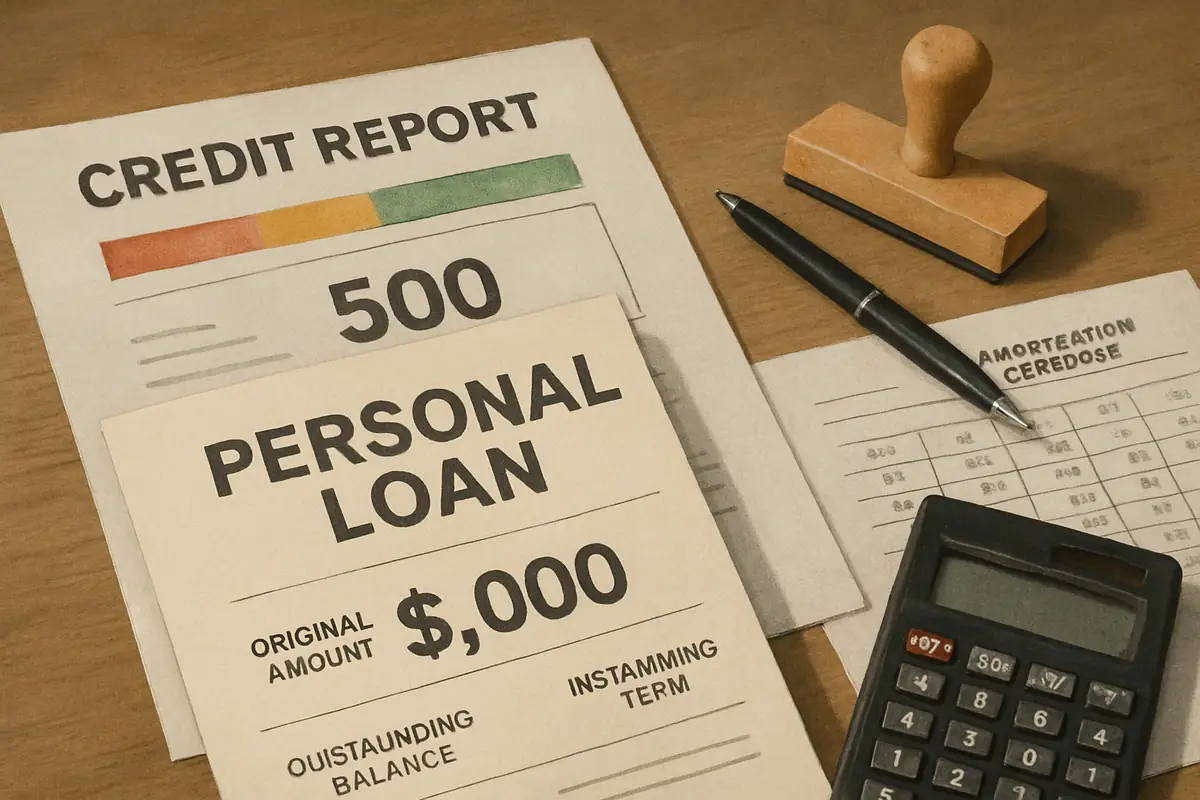
Variable-rate clauses are the other common gap between advertisement and obligation. A loan indexed to a benchmark can reset upward on a schedule you don't control, and some lenders make "optional" products effectively compulsory — required automatic payments from a specific account, mandatory insurance, bundled memberships. Before committing, request a sample amortization schedule — the payment-by-payment table showing how much of each installment goes to interest versus principal — under both the promotional rate and the fully adjusted rate.
When Advertised Terms Match Reality
- Transparent expectations simplify comparison shopping and decision-making.
- Clear, complete disclosure builds trust and makes budgeting around the payment reliable.
Where Discrepancies Increase Risk
- Borrowers who budget off the teaser rate miscalculate total cost and hit shortfalls when the real rate lands higher.
- Mandatory add-ons — insurance, memberships, account requirements — inflate the true monthly obligation.
- Variable resets after an intro period catch unprepared borrowers with payments they never modeled.
Questions That Help You Recheck Your Own Assumptions
After a thorough review, challenge your first impressions with targeted questions: Am I clear on every fee in this agreement, including the ones that only apply when something goes wrong? Have I modeled my payments under a lower-income scenario, not just my current paycheck? What collateral is at stake, and how fast can the lender claim it? Do I know each penalty trigger and its dollar amount? If the rate is variable, what is the maximum payment the contract allows? Does this debt fit my credit strategy — keeping revolving utilization below 30% of available limits and protecting the on-time payment record that drives roughly 35% of common credit scoring models?
Rechecking is not about distrusting every lender. It is about informed consent — making sure your yes is based on the contract's reality rather than the marketing's optimism. A borrower who can answer all of those questions in one sitting has genuinely evaluated the deal; one who cannot has evaluated an advertisement.
Where readers should be careful
If any answer remains unclear — even after asking the lender directly — pause before signing anything. A loan offer that expires tomorrow will usually be matched by a competitor next week; a bad clause you sign today can follow you for the full term. Taking an extra 48 hours protects your finances far more reliably than acting fast on an attractive headline rate.
Understanding the Full Spectrum of Borrowing Risks
When assessing borrowing risk, readers tend to fixate on the rate and the term. But risk also lives in loan structure, the economic environment, and your own financial stability. Variable-rate loans looked cheap when policy rates sat near zero; after the hiking cycle pushed short-term rates above 5%, holders of adjustable debt absorbed payment increases they never planned for. Fixed-rate loans trade that uncertainty for higher initial cost — a premium many found worth paying. Inflation adds another layer: consumer prices that peaked near 9% annual growth in mid-2022 have cooled to roughly 2.5–3.5%, but the rate environment they left behind still shapes every new loan quote.
Equally critical is your capacity to absorb shocks while servicing debt. Job loss, a medical emergency, or a major repair can derail a repayment schedule in a single month. Stress-test before borrowing: simulate a 20% income reduction lasting one quarter, or a one-time $2,000 expense, and check whether the payment still fits. If the simulation fails, the loan is too large for your buffer — shrink the loan, build the emergency fund toward the 3-to-6-month benchmark first, or both.
The credit-health dimension deserves renewed attention as well. Responsibly managed debt builds your score; excessive or poorly timed borrowing erodes it. A single payment reported 30 days late can knock meaningful points off a strong score, and maxed-out lines push utilization far past the sub-30% guideline scoring models reward. Because payment history carries the heaviest weight, protecting the on-time streak is worth more than almost any optimization. Review your reports from all three nationwide bureaus regularly — errors are easier to fix early.
Beyond personal factors lies the macro context. Central bank policy, inflation trends, and labor markets all feed into loan affordability. When policy tightens, lenders raise standards and trim credit availability; when 30-year mortgage rates hover in the 6–7% band, refinancing math that worked at 3% no longer does. You cannot control these forces, but tracking them helps you time discretionary borrowing — and warns when an adjustable obligation is likely to reset upward.
Legal and contractual nuances warrant equal scrutiny. Some agreements contain cross-default clauses — terms that let a lender declare your loan in default because you defaulted on a different obligation — or acceleration clauses that make the entire balance due at once after a trigger event. Prepayment penalties in the 0–2% range, mandatory arbitration terms, and automatic renewal provisions all change the risk profile of an otherwise ordinary loan. For complex products, an hour of review with a financial counselor or attorney is cheap insurance against a clause that could cost thousands.
The psychological dimension often goes unexamined but shapes decision quality. Optimism bias leads borrowers to assume raises will arrive on schedule; present bias makes a purchase today feel more real than a payment in month 40. Both push people toward more debt than they can comfortably carry. Countermeasures are practical, not heroic: write the payment into a monthly budget before applying, ask someone unaffiliated with the sale to review the numbers, and impose a self-enforced waiting period on any borrowing decision above a threshold you set in advance.
Self-employed borrowers and those with irregular income face added complexity. Without a fixed paycheck, matching rigid monthly payments to lumpy cash flow is a structural challenge, which is why standard guidance extends the emergency reserve to 6–9 months of expenses for variable earners. Negotiating flexible payment dates, choosing loans that permit penalty-free extra payments in strong months, and communicating early with creditors about income timing can all convert a fragile arrangement into a durable one.
Technology has reshaped the borrowing landscape and introduced new risks. Automated underwriting can approve a loan in minutes, but an algorithm that never sees your full financial picture may approve an amount you cannot realistically service. Online applications also concentrate sensitive data — income, account numbers, identification — making platform security part of your due diligence. Verify that a digital lender is licensed in your state, read its complaint history, and never provide bank credentials to an unverified site.
Takeaway: Proactive Monitoring as a Tool for Managing Borrowing Risks
Managing borrowing risk is an ongoing process, not a one-time assessment at signing. Build routines: payment alerts a few days before each due date, a quarterly review of every balance and rate, periodic credit report checks. Watch for refinancing windows — a borrower carrying a 24% APR loan who improves their credit profile may later qualify nearer the bottom of the 7–36% range, and refinancing a $10,000 balance from 24% to 12% saves well over $1,000 in interest on a three-year payoff. Proactive monitoring does more than limit downside; it positions you to seize the moments when your debt can be made cheaper.
References
- https://www.consumerfinance.gov/consumer-tools/
- https://www.fdic.gov/consumer-resource-center/loans
- https://www.consumerfinance.gov/consumer-tools/auto-loans/
- https://www.consumerfinance.gov/consumer-tools/mortgages/
- https://www.federalreserve.gov/releases/g19/current/
- https://www.consumerfinance.gov/consumer-tools/student-loans/