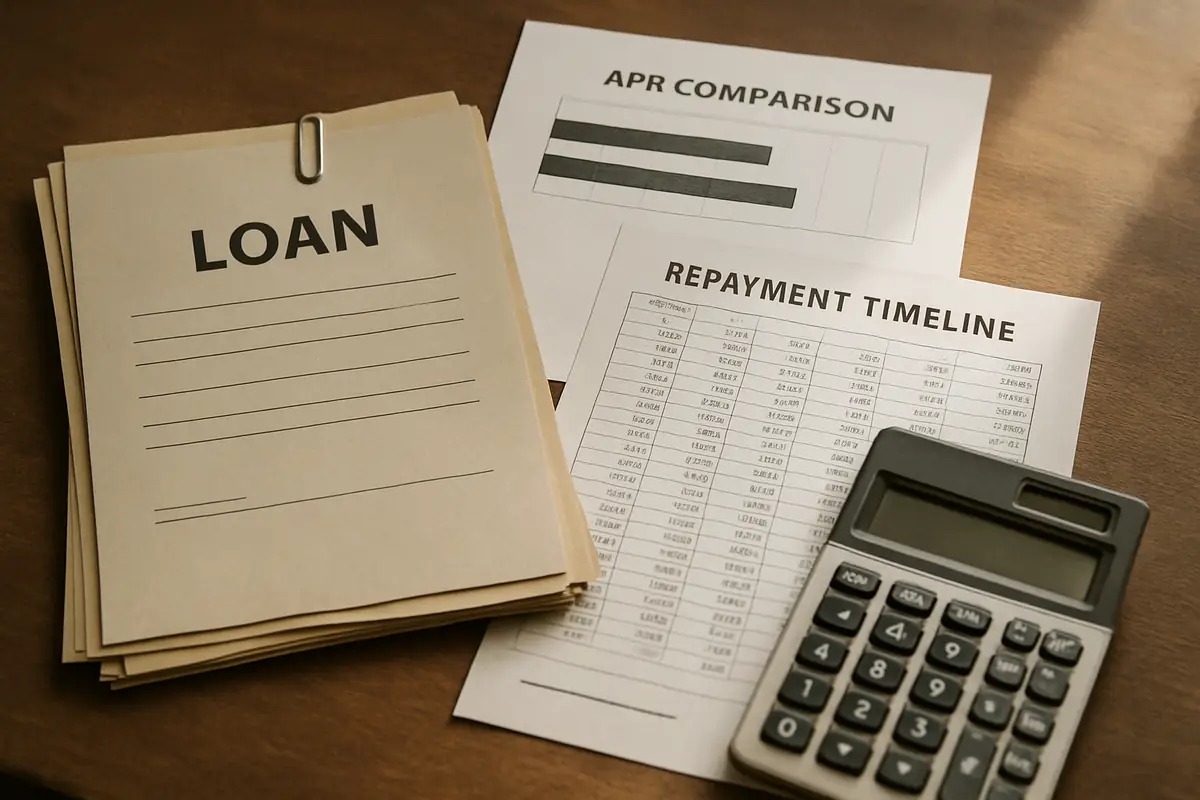
Borrowers today face a lending landscape where the annual percentage rate (APR)—the standardized annualized cost of borrowing that includes interest and certain fees—often fails to reflect the true cost of a loan. As inflation, rising interest rates, and evolving lender practices reshape the market, APRs can obscure risks and hidden expenses that directly affect loan affordability.
APR’s Original Purpose and Its Current Limitations
The annual percentage rate (APR) was established to help consumers compare loans by summarizing the yearly cost of credit, including the base interest rate and most upfront fees, as a single percentage. For example, if you borrow $10,000 at a 10% APR, you can expect to pay about $1,000 in interest and fees each year, assuming no compounding or changes. This transparency was intended to cut through confusing fine print and make lender offers comparable.
However, in today's volatile environment, with inflation rates fluctuating between 3% and 8% in recent years and central bank policy rates rising by as much as 5 percentage points in some economies, lenders frequently adjust their fee structures and repayment rules. Many of these adjustments—such as late fees, prepayment penalties, or collateral management charges—are not always included in the APR calculation. For instance, a loan may advertise a 7% APR but carry late payment fees of $35 per missed installment or prepayment penalties of 2% of the outstanding balance. These extra charges can significantly increase the real cost of borrowing, especially if economic pressures make timely repayment more difficult.
APR calculations typically exclude variable fees, such as those triggered by missed payments or early repayment, and may not reflect costs like mandatory insurance or collateral repossession expenses. In periods of economic stress, lenders are more likely to rely on these additional charges to manage risk, meaning that the APR on your loan application could understate your true financial obligation by hundreds or even thousands of dollars over the loan’s lifetime.
Mistakes Borrowers Make When Relying on APR Alone
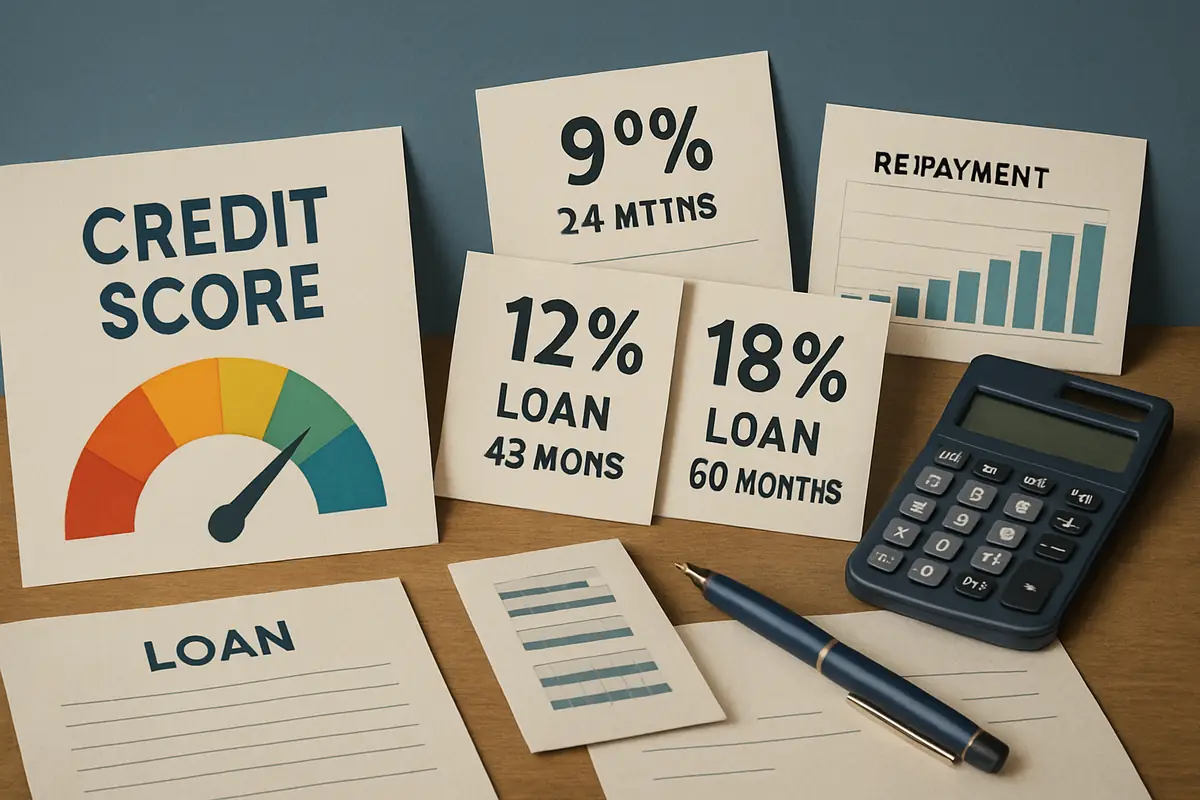
A common misconception is that the APR figure includes every possible cost associated with a loan. In reality, borrowers who focus solely on APR risk overlooking significant expenses. For example, a personal loan with a 9% APR might also carry a $200 origination fee and $50 administrative fees that are not fully reflected in the APR calculation, especially if the loan term is less than a year.
Another frequent mistake is misunderstanding how loan term length impacts total costs. Shorter terms, such as 24 months, often come with higher monthly payments but less total interest—while longer terms, like 72 months, may lower monthly payments but increase the total interest paid by $1,500 or more on a $15,000 loan. Focusing only on the APR can obscure these trade-offs. For instance, a 5-year auto loan at 6% APR might seem affordable, but stretching to a 7-year term at the same rate could add over $1,200 in extra interest.
Borrowers also often ignore how collateral requirements—assets pledged to secure the loan—change the risk equation. Secured loans may advertise APRs 2–5 percentage points lower than unsecured alternatives, but they expose borrowers to the risk of losing property if payments are missed. Penalty clauses, such as a 5% accelerated repayment fee or repossession costs ranging from $500 to $2,000, are rarely included in the APR and can catch borrowers off guard.
Where Understanding APR Still Helps
- Offers a basic benchmark to compare overall loan costs across lenders.
- Captures most standard fees, such as origination charges (typically 1%–6% of the loan amount).
- Promotes some upfront disclosure of costs by lenders.
Where Caution Is Needed With APR Today
- May exclude penalty fees for late payments, which often range from $25 to $50 per incident.
- Does not adjust for changes in borrower risk profile after the loan is issued.
- Can mislead on total costs when term length or prepayment options differ, potentially adding hundreds or thousands in extra fees.
Fees Beyond Interest That Distort True Loan Costs
Economic pressures have led lenders to introduce or raise ancillary fees not fully captured by APR. These can include payment extension fees of $30–$75 per request during hardship periods, administrative charges for collateral management (often $100–$300 annually), and late payment penalties that can reach 5% of the overdue amount.
For example, consider a borrower who takes a $5,000 personal loan with a 10% APR for three years. If the borrower incurs a $40 late fee three times during the loan term, and pays a $100 payment extension fee once, the total out-of-pocket cost increases by $220, raising the effective cost of borrowing by more than 0.5 percentage points. These fees, while individually modest, can add up quickly—especially for borrowers facing financial setbacks.
Some contracts also include conditional fees, such as rollover charges on payday loans (often $10–$30 per $100 rolled over) or early termination penalties of $200–$500. Because these are triggered only under specific circumstances, they are difficult to anticipate and are not included in standard APR calculations, making it challenging for borrowers to estimate worst-case total costs.
Where readers should be careful
Be wary of loans with advertised APRs below market averages—such as personal loans below 7%—that are paired with high penalty fees or aggressive collection practices. A small slip in your repayment schedule can double or triple your effective borrowing cost.
Term Length Directly Impacts the Real Cost of APR
The choice between short-term and long-term loans is not just theoretical—it has a direct impact on both monthly budgets and total repayment. Shorter terms, such as 12–24 months, usually result in higher monthly payments but less total interest paid. For example, on a $10,000 loan at 8% APR, a 2-year term results in monthly payments of about $452 and total interest of roughly $850. In contrast, a 5-year term lowers the monthly payment to $203 but increases total interest to about $2,180—a difference of $1,330 over the life of the loan.
APR is standardized for comparison, but it does not reflect how longer terms increase exposure to changing economic conditions or additional fees. If a borrower with a 5-year loan faces two late payments per year at $40 each, that’s $400 in penalties over the term, further increasing the real cost. Adjustment clauses and penalty fees in long-term contracts can compound over time, turning a manageable loan into a significant financial burden if not carefully monitored.
Advantages of Collateral-Backed Loans
- Often offer APRs 2–5 percentage points lower than unsecured loans (e.g., 6% vs. 11%).
- Can allow access to higher loan amounts—sometimes $50,000 or more for home equity loans.
- May have faster approval processes for applicants with adequate collateral.
Risks & Costs Not Shown by APR
- Risk of losing valuable assets if unable to repay—repossession costs can reach $1,000–$2,500.
- Additional fees for asset evaluation and maintenance (often $150–$500 per year).
- Penalty fees for missed payments can range from 4%–7% of the overdue amount.
Collateral Lowers Rates but Increases Borrower Risk
Secured loans—those backed by collateral such as a car or home—often advertise lower APRs because the lender’s risk is mitigated by the asset. For example, a secured auto loan might offer an APR of 5% while an unsecured personal loan is closer to 11%. However, this comes with the risk of asset seizure if payments are missed. Repossession costs, legal fees, and accelerated repayment clauses—such as requiring the entire balance to be paid within 30 days of default—are rarely reflected in APR calculations.
Borrowers must weigh the immediate benefit of a lower rate against the risk of losing property, especially if their income is unpredictable. Collateral-related administrative fees, such as annual property inspections or insurance requirements, can add $200–$600 per year to the cost of borrowing, further eroding the apparent savings of a lower APR.
Penalty Fees Are a Major Driver of Debt Stress
Penalty fees have become more prevalent as lenders seek to offset increased credit risk. These fees can take the form of late charges ($25–$50 per missed payment), returned payment fees ($20–$40), and even acceleration clauses that require immediate repayment of the outstanding balance if certain conditions are breached. These penalties are not included in the APR but can dramatically raise the total cost of a loan.
For example, missing three payments on a $3,000 loan with a $35 late fee per incident adds $105 in extra charges—equivalent to raising the effective APR by more than 1 percentage point over a one-year term. Multiple missed payments can also trigger negative credit reporting, raising future borrowing costs by several percentage points or causing loan denial.
Where readers should be careful
Review all penalty fee clauses in detail. A loan with a 6% APR but $50 late fees and a 5% accelerated repayment penalty can become unaffordable if your financial situation changes unexpectedly.
Repayment Pressure Increases as Lenders Adapt to Economic Volatility
Economic downturns prompt lenders to tighten repayment requirements and embed stricter enforcement mechanisms into loan agreements—often without increasing the advertised APR. These measures can include mandatory auto-debit from paychecks, reducing grace periods from 30 days to as little as 7–14 days, and adding new financial covenants that trigger penalties if not met.
For instance, a lender may reduce the grace period for missed payments from 30 days to 10 days, after which a $40 fee is charged. If the borrower misses two payments in a year, that’s $80 in extra costs, not reflected in the APR. Some lenders also require automatic payments, which can lead to overdraft fees from your bank if account balances are low, adding another layer of financial risk not captured by the APR.
How to Compare Advertised Rates With Actual Loan Obligations
To accurately assess the true cost of a loan, borrowers should break down every component: the base interest rate, all itemized fees, the impact of term length, collateral terms, and explicit penalty provisions. For example, a $20,000 auto loan at 7% APR over 60 months appears to cost about $3,760 in interest. However, if the loan includes a $300 origination fee, $50 annual administrative charges, and two $40 late fees, the total cost rises to $4,240—an effective APR closer to 8%.
Worked Example: Suppose you borrow $10,000 at a 9% APR for 3 years (36 months). Your monthly payment is about $318. If you incur three $35 late fees and a $100 payment extension fee during the loan term, your total extra fees are $205. The total interest over 3 years is roughly $1,430. So, your total repayment is $10,000 + $1,430 + $205 = $11,635, and your effective annualized cost is closer to 10.3%—not the advertised 9%.
This example shows why it’s critical to review all disclosures and ask lenders for a full breakdown of potential costs, especially those triggered by missed payments or early repayment.
Strategies Borrowers Can Use To Mitigate Economic Risks
To navigate today’s shifting loan environment, borrowers should demand full transparency on all fees—not just those included in the APR. Ask lenders to provide hypothetical scenarios showing how missed payments or early payoff would affect total costs. For example, request a breakdown of what happens if you miss two payments in a year or pay off the loan a year early.
Opting for shorter loan terms, such as 24–36 months instead of 60–72 months, can reduce total interest paid and limit exposure to penalty fees, even if monthly payments are higher. When considering a secured loan, evaluate whether the value of your collateral might fluctuate—such as a vehicle depreciating by 15%–20% per year—potentially increasing your risk if you default. Always compare the total dollar cost, not just the APR, across multiple lenders before making a commitment.
Loan Cost Transparency Is Evolving With Economic Changes
Regulators and industry groups are working to modernize disclosure standards, pushing for more comprehensive cost calculations that go beyond traditional APR. Proposals include requiring lenders to disclose the full range of potential penalty fees, dynamic fee structures that respond to macroeconomic changes, and clearer explanations of how total cost is affected by term length and collateral requirements.
While regulatory reforms may take years to implement, borrowers can protect themselves now by thoroughly reviewing contract details and seeking clarity on any ambiguous terms. Relying solely on advertised APR figures is increasingly risky—understanding the full spectrum of potential costs is essential to making informed borrowing decisions in a rapidly changing financial landscape.
Inflation’s Direct Impact on APR Trends
Inflation, which has ranged from 2% to over 8% in recent years, directly influences APRs for mortgages, auto loans, and credit cards. As prices rise, lenders increase interest rates to maintain profit margins and protect against the declining value of future repayments. For example, mortgage APRs that averaged 3%–4% in low-inflation years have surged to 6%–7% in inflationary periods, raising monthly payments on a $300,000 loan by $500 or more.
Higher APRs can reduce borrowing demand, particularly among borrowers with variable or lower incomes. For instance, a 2 percentage point increase in APR on a $20,000 auto loan can add more than $1,200 in interest over a 5-year term. Lenders now factor inflation expectations into underwriting, meaning APRs reflect both current and anticipated economic conditions, adding complexity for consumers comparing loan offers.
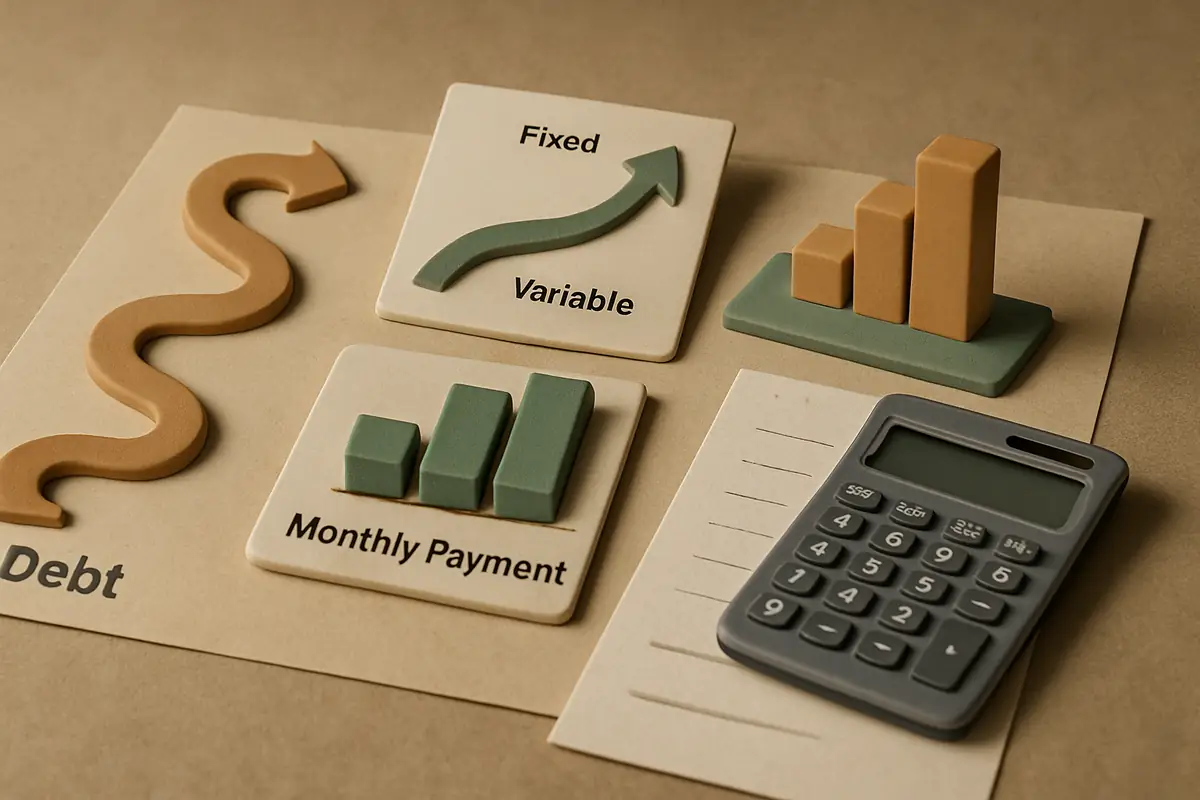
Fixed-rate loans offer predictable payments but may come with higher initial rates during inflation spikes. Variable-rate loans, with APRs starting 1–3 points lower, can become more expensive if inflation persists and central banks raise policy rates. Borrowers must weigh the stability of fixed rates against the potential savings—and risks—of variable rates in an uncertain inflationary environment.
Central Bank Policies Influence Loan APRs Across the Market
Central banks, such as the Federal Reserve, set benchmark interest rates that ripple through the entire lending system. When central banks raise rates by 0.25% to 1% increments to control inflation, commercial lenders quickly follow suit, increasing APRs on products ranging from credit cards (often 18%–30%) to auto loans (typically 5%–9%) and mortgages (now 6%–8% for 30-year fixed loans).
Short-term, variable-rate loans react most quickly to central bank moves, sometimes adjusting within 30–60 days. Fixed-rate loans protect borrowers from immediate changes but may be priced higher to account for anticipated rate hikes. As rates rise, lenders tighten approval criteria, requiring higher credit scores (often 700 or above) and lower debt-to-income ratios, limiting access for riskier borrowers.
Borrowers can monitor central bank announcements to anticipate rate changes. Refinancing before a rate hike or locking in a fixed rate can save thousands in interest over the life of a loan, but prepayment penalties or closing costs—often 1%–3% of the loan balance—should be considered before making a move.
Technology Is Changing How APRs Are Set and Disclosed
Advances in financial technology have enabled lenders to personalize APRs using artificial intelligence (AI) and big data. By analyzing credit scores, payment histories, and even employment data, lenders can offer rates tailored to individual risk profiles—sometimes resulting in APRs 1–4 percentage points lower for well-qualified borrowers compared to traditional underwriting.
Fintech platforms also provide interactive calculators that break down monthly payments, total interest, and all fees, making it easier for consumers to understand the true cost of borrowing. For example, a borrower can see that a $15,000 loan at 8% APR over 5 years results in $3,240 in interest and $18,240 in total payments, with additional fees displayed clearly.
However, reliance on AI raises concerns about data privacy and potential bias in lending decisions. Regulators are increasingly scrutinizing these algorithms to ensure fairness, especially for borrowers with limited credit histories or from underserved communities. Consumers should use these tools to enhance their understanding but remain vigilant about how their data is used.
Rising Loan Costs Have Broad Socioeconomic Effects
Shifting APRs, driven by economic pressures, have ripple effects beyond individual borrowers. Higher loan costs can reduce disposable income, leading to less spending in sectors like retail and real estate. For example, an increase in mortgage rates from 4% to 7% can make homeownership unaffordable for many, reducing demand and slowing housing market activity.
In communities with limited access to affordable credit, rising APRs—sometimes reaching 25%–36% for subprime borrowers—can deepen financial stress and limit opportunities for upward mobility, such as home buying or education financing. Conversely, periods of falling rates can encourage borrowing but raise risks of overleveraging, especially if rates rebound quickly.
Policy makers must consider these effects when designing interventions to stabilize credit markets and support vulnerable populations, ensuring that access to credit remains fair and transparent as economic conditions evolve.
Borrower Strategies for Navigating a Changing APR Environment
To manage debt effectively amid shifting APRs, borrowers should focus on maintaining strong credit scores (typically above 680 for the best rates), which can lower APRs by several percentage points. Carefully compare fixed-rate and variable-rate options, understanding that fixed rates offer payment certainty while variable rates may be lower initially but can rise rapidly with market changes.
Consider refinancing when rates drop, but always factor in closing costs or prepayment penalties, which can range from 1%–5% of the remaining balance. Use online calculators to model different scenarios, including late payments or early payoff, to fully understand the range of possible costs. Finally, prioritize transparency and ask lenders for detailed, scenario-based cost breakdowns before committing to any loan.
References
- https://www.consumerfinance.gov/consumer-tools/
- https://www.fdic.gov/consumer-resource-center/loans
- https://www.consumerfinance.gov/ask-cfpb/what-is-apr-en-45/
- https://www.consumerfinance.gov/consumer-tools/auto-loans/
- https://www.consumerfinance.gov/consumer-tools/mortgages/
- https://www.consumerfinance.gov/ask-cfpb/what-is-the-difference-between-a-fixed-rate-and-adjustable-rate-mortgage-arm-loan-en-100/