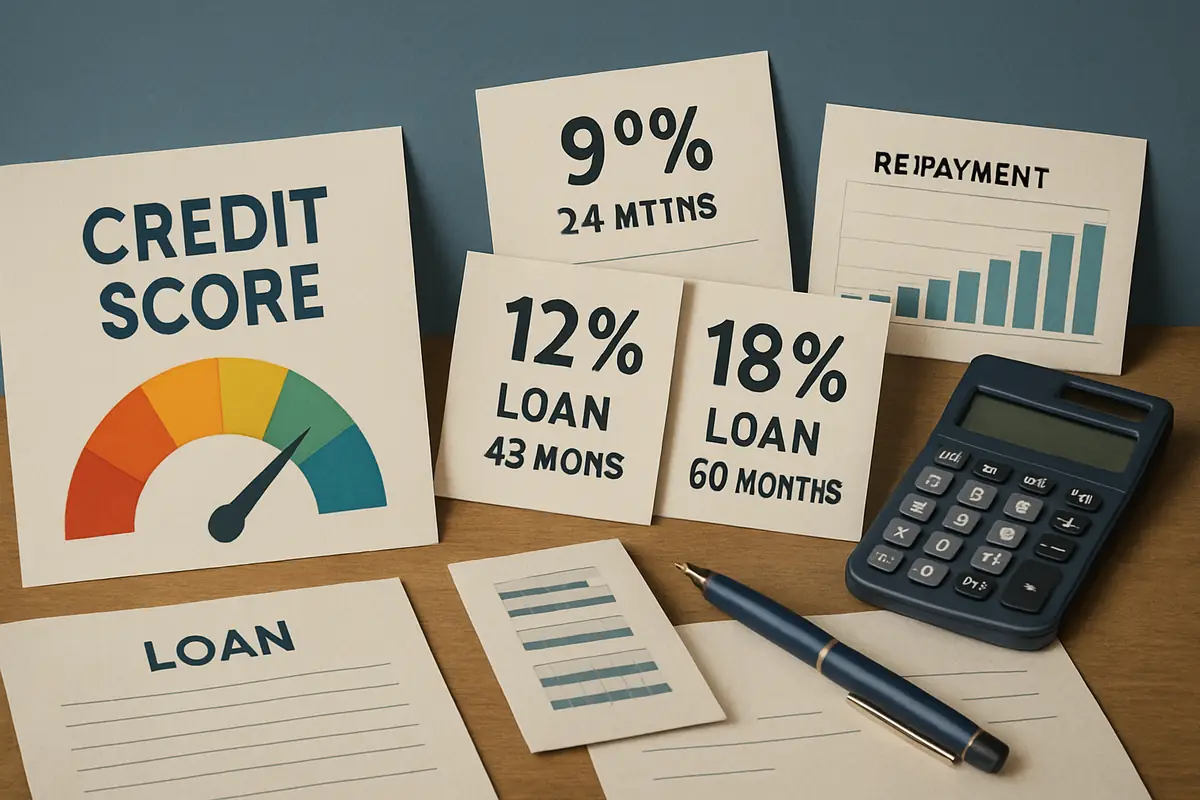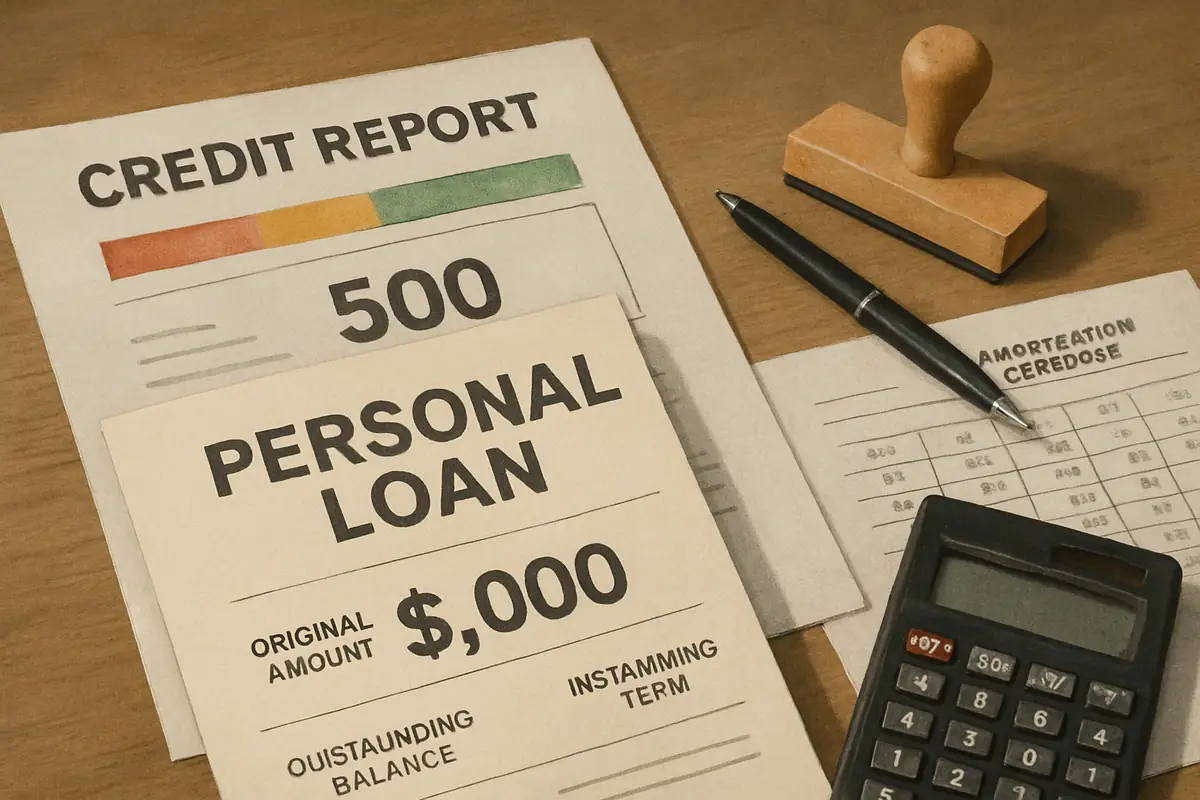
A borrower shopping for a home loan in 2025 typically sees 30-year fixed mortgages quoted between 6% and 7%, while adjustable-rate versions of the same loan often open 0.5 to 1 percentage point lower. That opening gap is only the visible part of the price. Advertised offers rarely reflect final obligations once origination fees—commonly 1% to 8% on personal loans—closing costs, rate caps, and penalty clauses are layered in. Thorough contract review is therefore essential: borrowers must look past marketing materials, compare the APR (annual percentage rate, the yearly cost of a loan with most fees folded in) rather than the sticker rate, and demand clarity on every hidden cost affecting cash flow requirements throughout the loan lifecycle.
Scenario: Rising Interest Rate Environment
Consider a borrower choosing a 30-year mortgage while the central bank signals tighter policy. The 2022–2023 cycle showed how quickly conditions can shift: the benchmark policy rate climbed from near zero to above 5% in roughly eighteen months, and quoted mortgage rates roughly doubled over the same stretch. Opting for a fixed rate locks the monthly payment, preventing costly surprises even as market rates climb. Selecting a variable rate instead exposes the borrower to scheduled resets—many adjustable mortgages allow the rate to jump as much as 2 percentage points at the first adjustment and 1 point per year thereafter, up to a 5-point lifetime cap. Within a few years that can mean a materially larger payment, straining the household budget or forcing a refinance under unfavorable conditions.
Scenario: Falling Interest Rates Followed by Rebound
A business takes out a five-year floating-rate loan priced at a short-term benchmark plus a fixed margin—say 7.5% all-in at signing. As benchmark rates drift down, the loan's cost eases toward 6.75%, temporarily flattering cash flow and encouraging expansion plans. When market conditions reverse and the same loan floats up toward 9%, payments escalate just as revenue assumptions are tested, squeezing cash flow stability and investment capacity. None of this was apparent at signing, because the projections baked in optimistic rate assumptions.
The safety trade-off between fixed and variable rates
Fixed loans reduce uncertainty, but that certainty is purchased: they typically price 0.5 to 1 percentage point above comparable variable offers at the outset and can be less flexible to exit. Safety ultimately depends on risk tolerance and buffers—a household holding 3 to 6 months of expenses in reserve can absorb a rate reset that would break a paycheck-to-paycheck budget.
Switching from variable to fixed after signing
Some loans permit conversion or refinancing into a fixed rate, but expect friction: conversion fees, possible prepayment penalties of 0% to 2% of the balance where contracts allow them, and a fresh credit assessment are all standard. Verify the conversion window, the fee schedule, and any rate markup before committing to the original loan.
How do I estimate my real borrowing cost?
Focus on APR rather than the nominal rate, since APR folds most mandatory fees into one yearly figure. Personal loan APRs alone span roughly 7% to 36% depending on credit profile. Add origination charges of 1% to 8%, subtract small concessions such as the 0.25% rate discount many lenders offer for autopay enrollment, and—if the loan is variable—stress-test your budget against a payment set 2 percentage points higher.
What happens if I miss payments on either loan type?
Late fees, commonly $30 to $41, apply similarly to both structures, and an account 30 days past due can be reported to the credit bureaus, where payment history drives roughly 35% of most scoring models. Variable loans can push default risk up more sharply because the payment itself is a moving target: a reset and a tight month can collide.
Understanding the Long-Term Implications of Fixed and Variable Rates
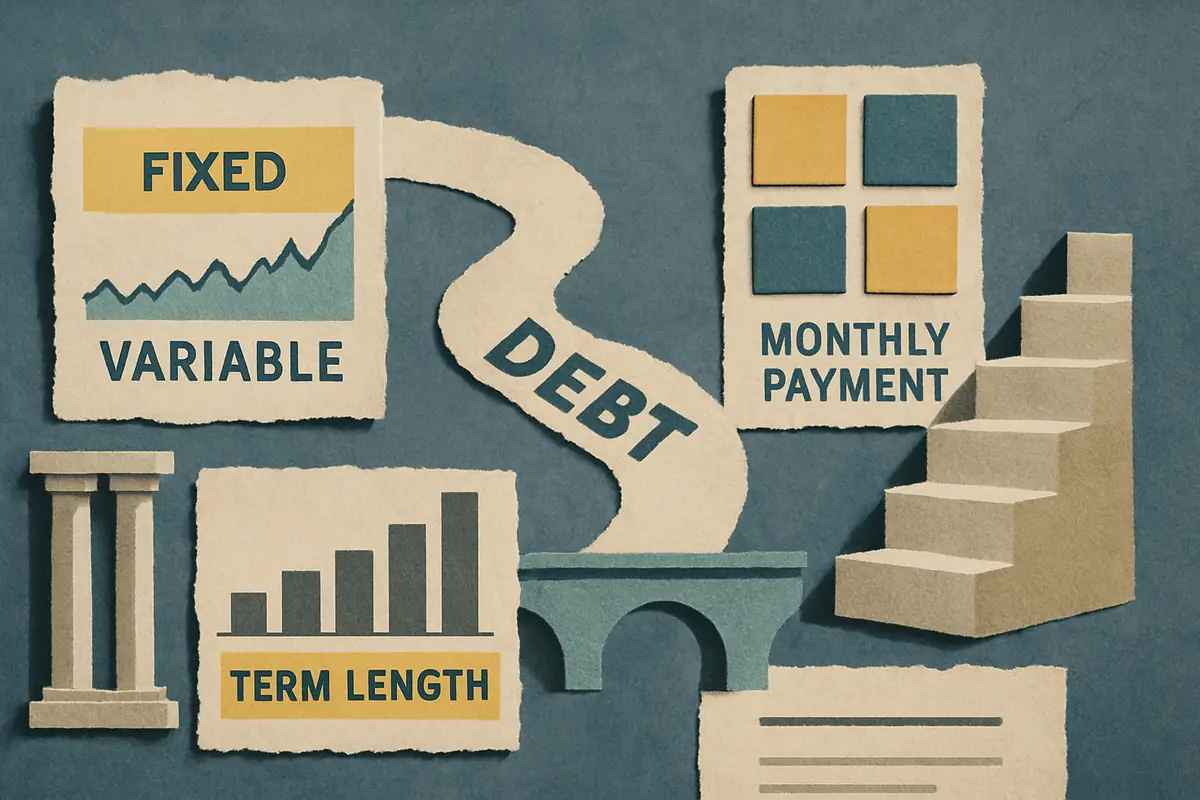
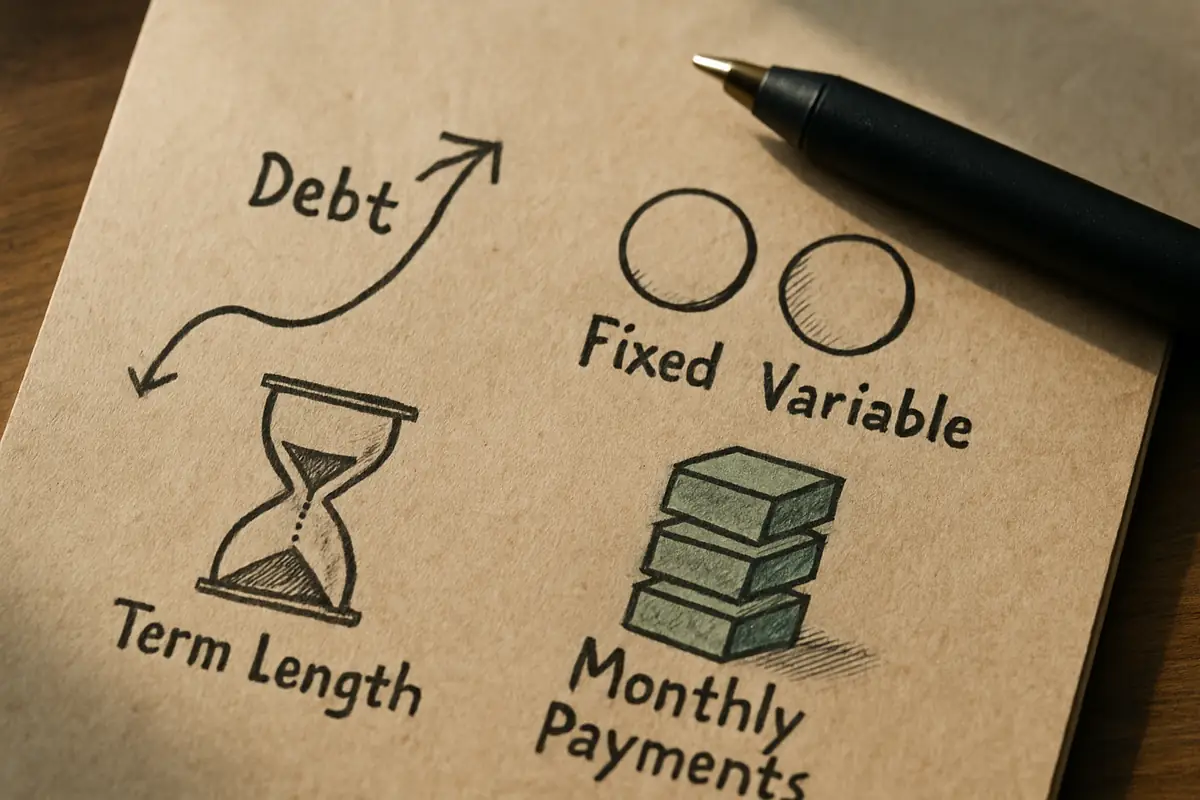
When borrowers choose between fixed and variable interest rates, the decision extends well beyond the first monthly payment. Fixed rates offer predictability: payments remain identical for the full term, which makes budgeting straightforward during rising-rate periods or economic uncertainty. Variable rates usually start lower, offering genuine early savings, but they float with market conditions and can move in either direction. The stakes compound over decades—on a 30-year loan priced in today's 6% to 7% range, cumulative interest can exceed the amount originally borrowed, and even a fraction of a point sustained over the full term moves the total cost by tens of thousands of dollars. The lifetime figure, not next month's bill, is what an informed choice weighs.
A borrower holding a variable-rate mortgage enjoys smaller payments in months when benchmark rates decline. But if the economy heats up and the central bank raises rates to cool inflation, the same payment can climb by hundreds of dollars per month within a couple of adjustment cycles. That unpredictability leads to budget strain—or missed payments—when it hasn't been planned for. Fixed-rate borrowers avoid the volatility but face the mirror-image risk: if market rates fall meaningfully after closing, they keep paying the higher contractual rate unless they refinance, which has transaction costs of its own. Honest self-assessment of risk tolerance, before signing, is the vital first filter.
Risk Tolerance and Borrower Profiles
A borrower's individual risk tolerance plays a pivotal role in determining which structure fits. Conservative borrowers who prioritize stability gravitate toward fixed rates because the payment never moves; they accept a starting rate perhaps half a point to a full point higher as the cost of never being surprised. Borrowers comfortable with uncertainty may prefer variable rates to capture lower initial costs and any future declines. Margin for error matters: with roughly 4 in 10 US adults reporting they would struggle to cover a $400 surprise expense from savings, a payment that can jump $200 or more a month is no theoretical risk.
Certain profiles naturally align with one structure. Young professionals with rapidly rising incomes can often absorb variable-rate increases because raises outpace resets, and they may sell or refinance within five to seven years anyway. Retirees and others on fixed incomes generally want expenses locked down and lean toward fixed rates to minimize stress. A useful screen for either group is the classic affordability benchmark: keeping housing costs near 28% to 30% of gross income leaves room for a reset, while a budget already stretched to 35% or 40% has no slack. Households with irregular or seasonal income should also hold larger reserves—6 to 9 months of expenses rather than the standard guidance—before accepting payment volatility on top of income volatility.
Economic Indicators Influencing Rate Movements
Interest rates do not exist in a vacuum; they respond to inflation readings, central bank policy, employment data, and GDP growth. The recent cycle is instructive: consumer price inflation peaked near 9% in mid-2022, the policy rate was pushed above 5% in response, and as inflation settled back into a 2.5% to 3.5% band, policymakers began easing. Variable loan rates track this machinery directly because they are tied to benchmarks—today usually SOFR (a rate based on overnight borrowing secured by Treasuries, which replaced the retired LIBOR index in mid-2023) or the prime rate, which moves in lockstep with policy decisions. Borrowers considering variable-rate debt should watch these indicators, since they telegraph payment changes months in advance.
Fixed-rate loans, by contrast, lock in pricing at closing regardless of what follows. Long-term fixed rates key off longer benchmarks—the 10-year Treasury yield, which has recently traded in the 4% to 4.5% range, is the anchor for 30-year mortgage pricing—so they reflect the market's expectations for the next decade rather than the next meeting. Locking shields borrowers from tightening cycles and inflation surprises, but it also means that if conditions improve and general rates fall, fixed-rate borrowers capture none of the benefit unless they refinance, at a cost. Reading the current trend and the forward outlook honestly helps decide whether locking now or floating is the better bet.
The Role of Loan Duration in Rate Selection
Loan term significantly changes how the two structures perform. Shorter terms expose borrowers to less uncertainty because there is a narrower window for rates to move; a two- or three-year variable loan may reset only a handful of times. For short horizons, variable pricing is often attractive: the initial discount is captured while the exposure to adjustment risk stays small.
Longer terms amplify the exposure. Over a 25- or 30-year commitment there are dozens of opportunities for adjustment, upward and downward, which is why fixed rates dominate decades-long borrowing like 30-year mortgages and extended business loans. Hybrid products split the difference: a 5/1 or 7/1 adjustable mortgage (fixed for the first five or seven years, then adjusting annually) delivers part of the variable discount with a defined calm period, bounded afterward by the standard adjustment caps. Borrowers weighing hybrids should also confirm exit costs—where prepayment penalties are permitted they typically run 0% to 2% of the balance, usually phasing out after the first few years—so the planned holding period and the penalty schedule line up.
Impact on Credit Scores and Refinancing Opportunities
Rate structure also shapes credit management and refinancing strategy. Fixed-rate borrowers commonly refinance when prevailing rates drop about 0.75 to 1 percentage point below their contract rate—the usual threshold at which savings outrun transaction costs, since refinancing typically costs 2% to 6% of the loan balance in fees. Each application triggers a hard credit inquiry, which usually trims a score by five points or less; helpfully, multiple mortgage inquiries within a 14- to 45-day shopping window are generally scored as a single event, so rate shopping does not compound the damage.
Variable-rate borrowers need to guard credit health continuously, because their escape routes—refinancing or converting to fixed—depend on qualifying at the moment rates spike, exactly when payment stress is highest. Keeping revolving balances below about 30% of available credit limits and maintaining a spotless payment record preserves those options. Borrowers who let a reset push them 60 days past due face both fees and score damage that can lock them out of the refinance that would have solved the problem. Understanding how rate structure interacts with credit standing is part of managing long-term debt strategy proactively rather than reactively.
Pros and Cons Summary: Fixed vs Variable Rates
The trade-off condenses to a few durable points. Fixed rates buy certainty at a premium of roughly 0.5 to 1 percentage point over comparable variable pricing: they protect against rising rates, simplify budgeting, and repay in ever-cheaper dollars during inflationary stretches, but they cost more if rates fall and can carry break costs if exited early. Variable rates start cheaper, capture declines automatically, and usually come with lower upfront fees, but they transfer rate risk to the borrower, bounded only by the contract's caps. Neither is universally cheaper in advance; the right answer follows from time horizon, cash buffer, and income stability.
Understanding the Impact of Interest Rate Changes on Loan Repayments
The most concrete question borrowers face is how a rate change translates into the monthly bill. Fixed rates make the answer trivial: the payment is identical in month 1 and month 360, whatever markets do. Variable payments float on benchmarks such as the policy rate or interbank funding costs, so when those benchmarks rise, repayments follow—sometimes within a single billing cycle for lines of credit, or at the next scheduled reset for adjustable mortgages. When benchmarks fall, borrowers pocket the difference, freeing cash for savings or other goals. This capped-but-real volatility is the risk priced into the variable discount, and it should be measured against the household's actual capacity to absorb a higher bill, not against a hopeful forecast.
The cumulative arithmetic is worth walking through step by step. Take a $350,000 mortgage. Step one: at a 6.5% fixed rate over 30 years, principal and interest come to about $2,212 a month. Step two: a 5/1 adjustable version at a 5.75% introductory rate costs about $2,043—a $169 monthly saving, worth $10,140 across the five-year intro period. Step three: after those 60 payments, roughly $324,700 of balance remains. Step four: if the first reset hits the typical 2-point cap, the rate becomes 7.75% and the payment on the remaining 25-year schedule jumps to about $2,452—$409 above the introductory payment and $240 more than the fixed-rate borrower ever paid. The variable borrower is still ahead on cumulative cost at that moment, but every subsequent month erodes the lead. Payment buffers, hardship programs, and short repayment holidays can bridge a spike but postpone rather than erase the obligation.
Inflation adds a quieter dimension. Central banks typically respond to hot inflation with rate hikes, so variable payments tend to rise exactly when groceries, insurance, and utilities are also climbing—a compounding squeeze on disposable income unless wages keep pace. Fixed-rate borrowers experience the opposite dynamic: their payment is frozen in nominal dollars, and even moderate 3% annual inflation erodes the real weight of that payment by roughly a quarter over a decade. A borrower whose income at least tracks inflation effectively watches a fixed mortgage payment shrink as a share of the budget year after year, which is a meaningful, if invisible, return on choosing certainty.
Horizon matters as much as rate path. Borrowers planning to sell or refinance within a few years often do better with variable pricing despite the volatility, because variable products tend to carry lower upfront fees and lighter exit costs, while fixed-rate loans may impose break fees or prepayment penalties—up to 2% of the balance in contracts that allow them—when repaid early. Paying a premium for 30 years of certainty makes little sense if the loan will live for four. A household settling in long-term may instead find the locked payment worth far more than the intro discount, since it insures against decades of tightening cycles.
The psychological ledger deserves equal weight. Even when the math favors a variable loan on average, many borrowers sleep better knowing precisely what they owe each month, and that peace of mind prevents stress-driven decisions—panic refinancing at a bad moment, or raiding retirement savings to pre-pay debt. Others genuinely value the flexibility of floating rates and treat resets as a manageable line item, appreciating that a falling-rate environment lowers their cost with no renegotiation and no refinancing fees. Knowing your own response to financial uncertainty is as much a part of the analysis as any spreadsheet.
Practical Strategies to Manage Variable Rate Risks
Borrowers drawn to variable pricing can blunt the risk with deliberate habits. The most effective is banking the discount: while the rate is low, route the monthly savings versus the fixed alternative into a dedicated reserve—ideally a high-yield savings account paying 3.5% to 4.5% APY rather than the under-0.5% common at large branch banks—so a cushion accumulates before the first reset can bite. Layered on a standard emergency fund, and expanded toward 6 to 9 months of expenses for anyone with variable income, that reserve converts a payment shock into a planned withdrawal. A second tactic is attacking principal during cheap years: extra payments while the rate is low shrink the balance that any future, higher rate applies to, permanently lowering the post-reset payment.
Contract features offer another layer of defense. Many variable loans embed rate caps or conversion rights that let the borrower flip to a fixed rate at scheduled windows or once the rate crosses a stated threshold; using them well means reading the fine print at signing, noting the conversion dates, and learning the fee in advance rather than mid-spike. Small optimizations help too—enrolling in autopay for the routine 0.25% rate discount, and reviewing the loan annually against current market pricing. Borrowers who track benchmark trends, keep their credit refinance-ready, and stay in touch with their lender or advisor act early when indicators point upward, rather than reacting after the higher bill arrives.
References
- https://www.consumerfinance.gov/ask-cfpb/what-is-apr-en-45/
- https://www.consumerfinance.gov/ask-cfpb/what-is-the-difference-between-a-fixed-rate-and-adjustable-rate-mortgage-arm-loan-en-100/
- https://www.consumerfinance.gov/consumer-tools/
- https://www.fdic.gov/consumer-resource-center/loans
- https://www.federalreserve.gov/releases/h15/