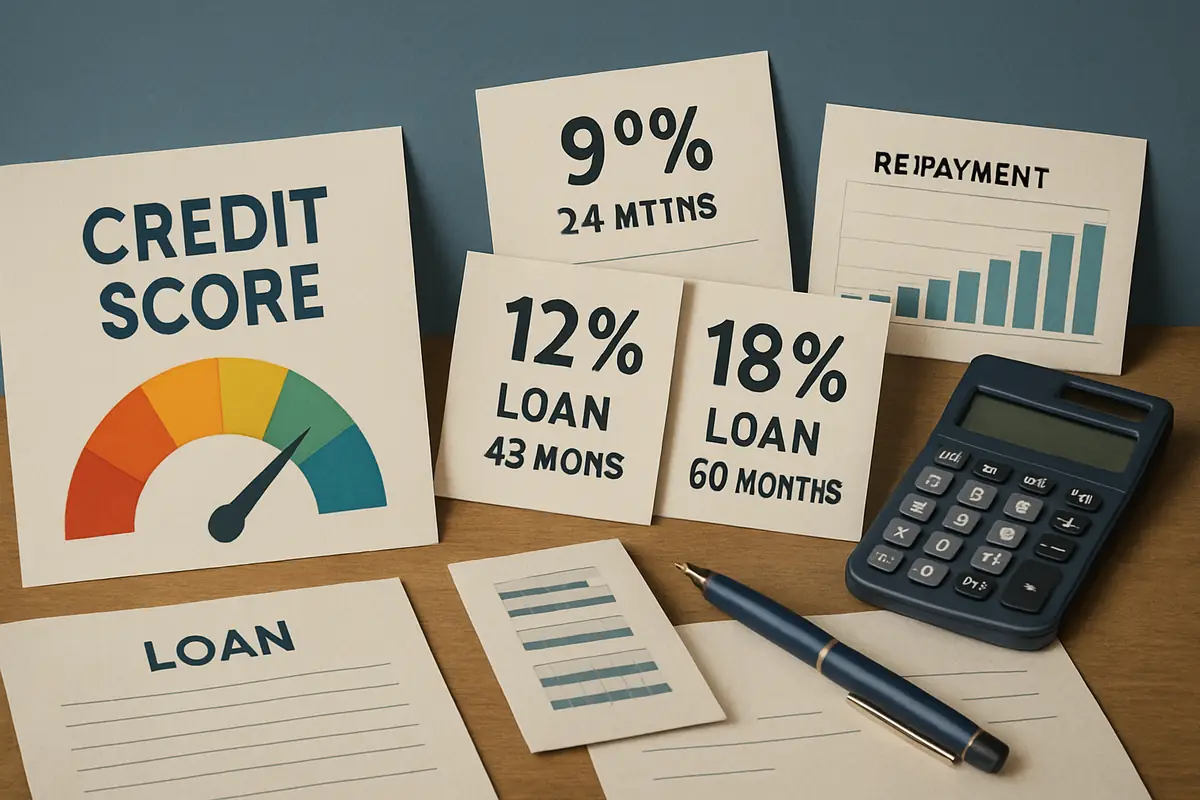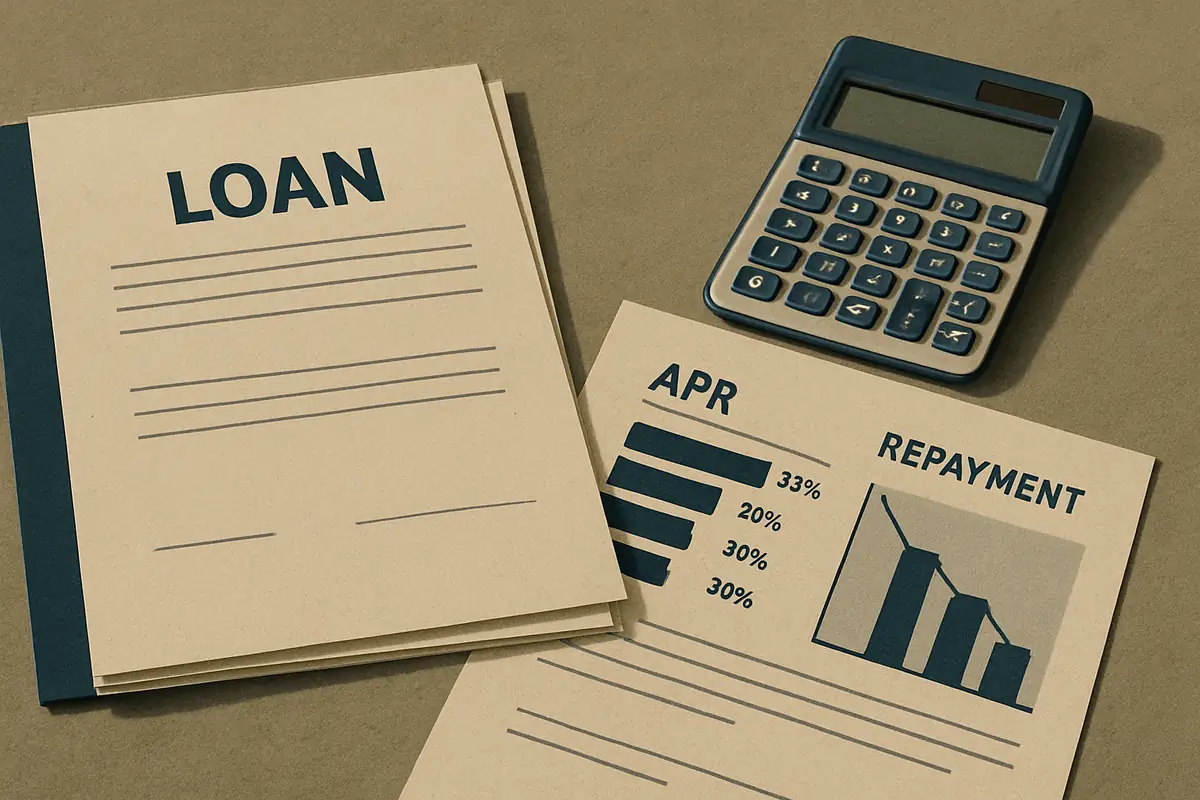
A $20,000, five-year personal loan that priced near 9% APR in 2021 commonly quotes 13–15% for a similar borrower today, and the benchmark policy rate — pushed above 5% during the 2022–2023 hiking cycle — has kept nearly every form of credit expensive since. Approval is still workable, but the arithmetic has changed. Lenders now test budgets against personal loan rates spanning roughly 7–36% APR, 30-year mortgages holding in the 6–7% band, and upfront fees that can claim 1–8% of the amount borrowed before the first payment is due. This review compares the factors that decide approval when costs rise, with emphasis on real cost assessment, repayment capacity, and contract risk.
How Rising Costs Reshape Loan Approval Criteria
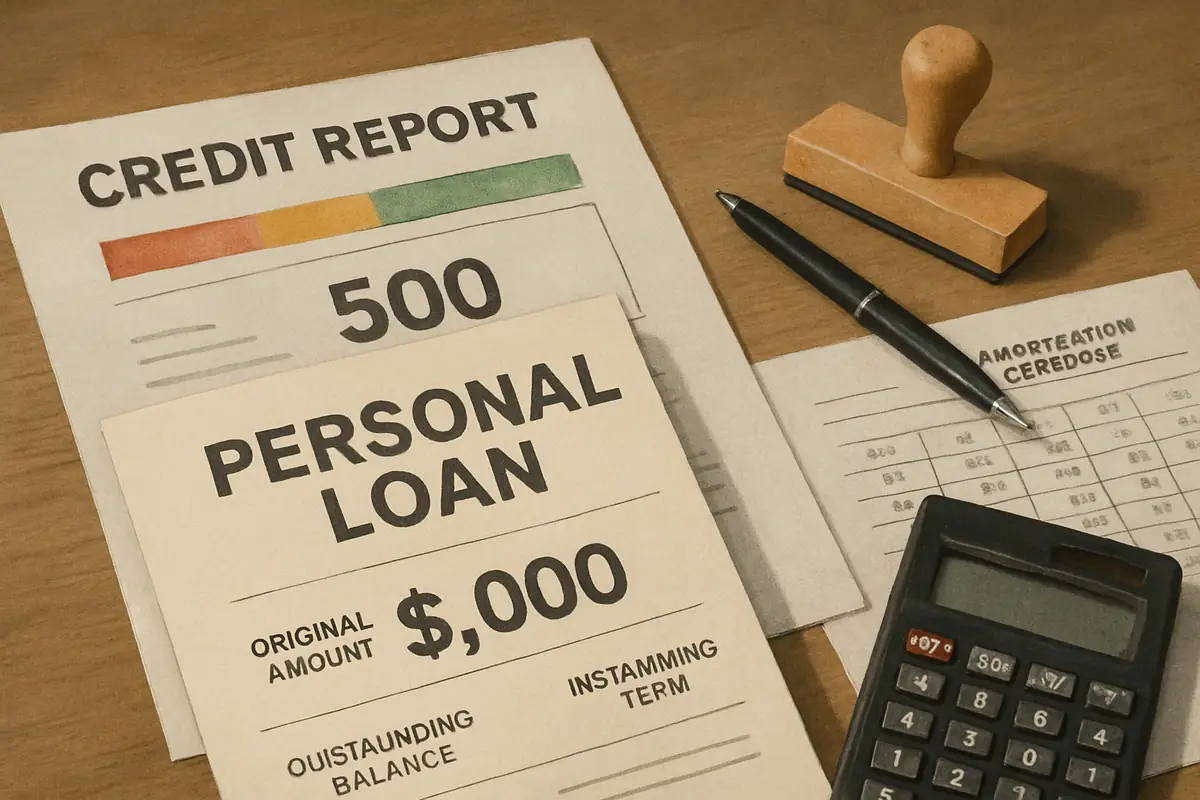
Underwriting — the lender's process of verifying income, debts, and collateral before committing money — tightens almost mechanically when rates climb. The first casualty is the debt-to-income ratio, or DTI: total monthly debt payments divided by gross monthly income. Many lenders prefer a DTI at or below 36%, most mortgage programs cap it near 43%, and only the strongest files stretch toward 50%. Because a higher annual percentage rate (APR — the yearly price of a loan, combining base interest with mandatory fees) inflates the payment used in that calculation, a rate move alone can push an applicant from comfortable to borderline. Ancillary charges compound the squeeze — appraisals alone commonly run $350–$600. Files below a 620 score increasingly meet outright denial, scores near the 670 "good credit" line draw restrictive pricing, and the best offers concentrate at 740 and above.
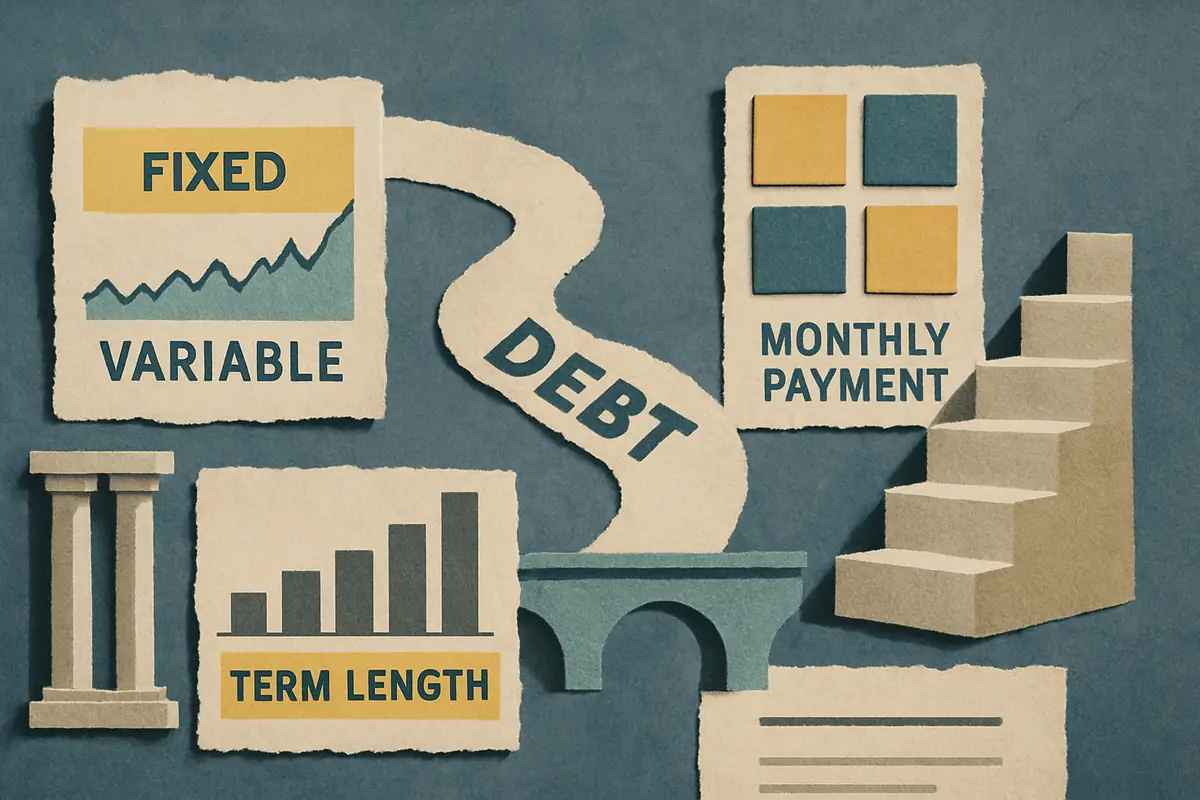
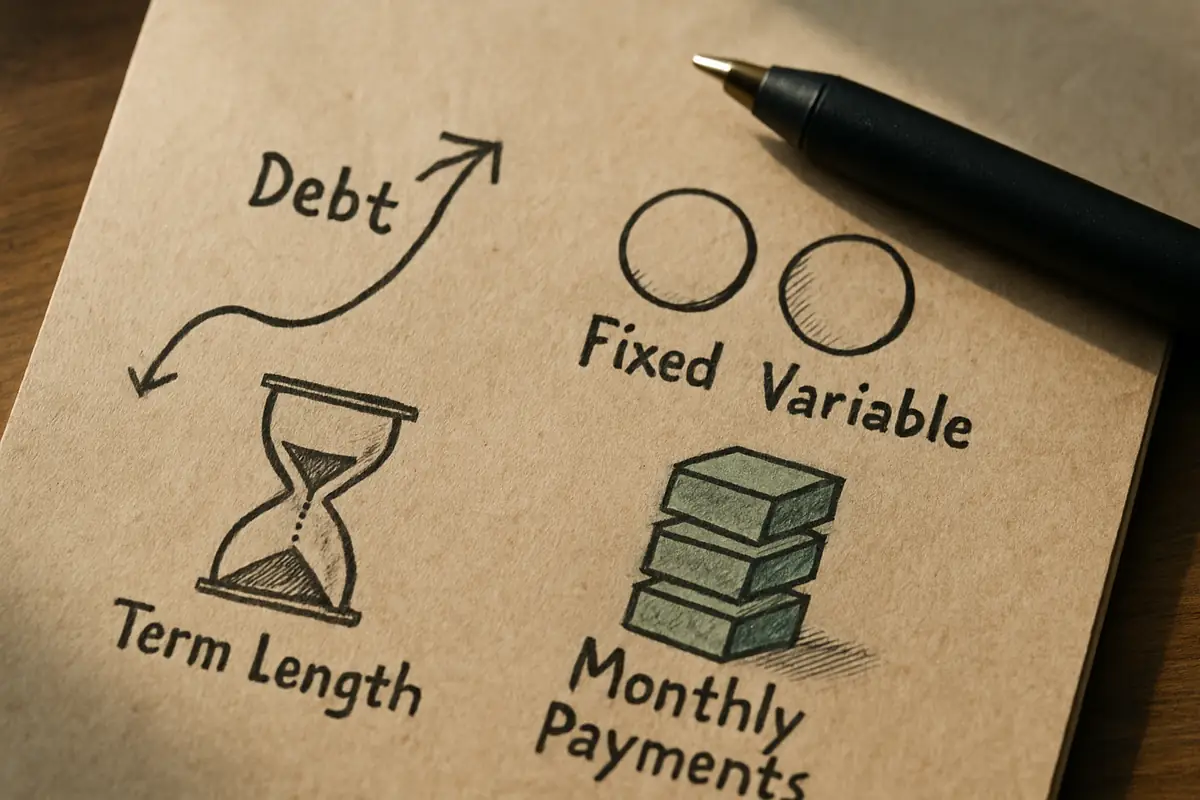
Term length interacts with cost in ways approval decisions weigh heavily. Stretching a loan from three years to six lowers each payment but can raise total interest paid by 60–80% on the same balance; compressing the term does the opposite — less lifetime interest, heavier monthly strain. Lenders run both mechanics through stress tests, and for adjustable products they frequently qualify borrowers at the fully indexed rate rather than the introductory one. Housing lenders still lean on the benchmark that housing should stay near 28–30% of gross income — a threshold rising rates breach quickly. Approval, in short, hinges less on the nominal amount requested and more on whether repayment survives the harder math.
The Hidden Cost Components Borrowers Often Miss
The advertised rate is rarely the price actually paid. Origination fees — upfront charges deducted from loan proceeds — typically run 1–8% on personal loans, so a $15,000 approval carrying a 5% fee delivers only $14,250 in usable cash while interest accrues on the full amount. Late charges of $25–$40, or about 5% of the missed installment, stack on top of that. Prepayment penalties of 0–2% of the outstanding balance can apply when a loan is retired early, usually within the first two or three years. Variable-rate products add a final layer: payments track an index that can climb after closing, so the affordability check performed at approval may not describe the loan you actually hold a year later.
Refinancing pressure is the quieter trap. When an introductory structure expires or market rates keep climbing, exit costs decide whether escape is realistic. Yield maintenance — a clause requiring the borrower to compensate the lender for interest lost to early payoff — can price a refinance out of reach, and a balloon payment (a large lump sum due at the end of a low-payment schedule) forces refinancing at whatever rate prevails on the due date. Reading these provisions before signing costs nothing; discovering them under deadline can cost thousands.
| Cost Factor | Description | Borrower Risk |
|---|---|---|
| APR | Yearly cost of the loan combining base interest and mandatory fees; personal loans span roughly 7–36% | Understates true cost when variable adjustments or penalty pricing kick in |
| Origination Fees | Upfront processing charges, commonly 1–8% of the amount borrowed, deducted from proceeds | Raise the effective APR; generally non-refundable even if the loan is refinanced later |
| Collateral Requirements | Assets pledged to secure repayment, often capped near 80% loan-to-value | Loss of the asset on default; ties up equity and limits flexibility |
| Repayment Term Length | Months or years over which payments spread, typically 24–84 for personal loans | Long terms can lift lifetime interest 60–80%; short terms strain monthly cash flow |
| Prepayment Penalties | Fees of 0–2% of the balance triggered by early payoff, usually in the first 2–3 years | Blocks inexpensive refinancing if rates fall or income improves |
Contract Structure and Borrower Risk Under Cost Pressure
Contract terms matter most when the cushion is thinnest. Covenants — promises written into the loan, such as keeping collateral insured and maintained — often carry acceleration clauses that make the entire balance due upon breach. Amortization, the schedule dividing each payment between interest and principal, becomes a pressure point too: stricter amortization requirements translate directly into higher required payments, and the early split is lopsided — on a 30-year mortgage near 6.5%, roughly two-thirds of the first year's payments go to interest alone. Cure periods, the contractual window of often 10–15 days to fix a missed payment before penalties attach, tend to shrink when credit tightens.
Penalty structures deserve line-by-line scrutiny because many escalate. A first late payment might cost $29; repeat lapses within six billing cycles can jump to $40 and trigger penalty pricing that adds several percentage points to the rate for the remainder of the term. Layered this way, a short income interruption — a lost job, a medical event — compounds into materially higher lifetime cost. The default section of a contract is the cheapest insurance a borrower will ever read.
Repayment Pressures That Build When Costs Increase
Rising borrowing costs land directly on the monthly payment unless offset by a longer term or a smaller principal, and each offset carries its own price. The margin is thin: roughly 4 in 10 US adults report they could not cover a $400 surprise expense from savings alone. Against that backdrop, even a $60 combined increase across a car loan, a card, and a personal loan can open a liquidity gap that snowballs into missed bills and minimum-only payments, each carrying its own fee.
Flexibility also contracts as costs rise. Grace windows on installment loans commonly run 10–15 days, after which late fees apply, and lenders under portfolio pressure enforce schedules more rigidly. The credit consequences arrive fast: payment history drives roughly 35% of common scoring models, so a single payment reported 30 days late can undo years of careful management. Borrowers juggling several obligations should sequence due dates against paydays deliberately rather than by default.
Collateral Demands Tighten When Loan Costs Rise
Higher borrowing costs prompt lenders to demand more security per dollar lent. The key metric is loan-to-value, or LTV: the loan balance divided by the appraised value of the pledged asset. A cap near 80% LTV is typical in calm markets; stressed lenders trim it to 70–75%, requiring more asset value for the same loan. Valuation adds friction — an appraisal can take one to three weeks to clear — and volatile assets get conservative haircuts. Vehicles illustrate the risk: a new car commonly loses 15–20% of its value in the first year, which can leave an auto borrower owing more than the collateral is worth.
For secured loans, collateral terms define the downside. The trade is real: pledging an asset often earns pricing 2–5 percentage points below comparable unsecured credit, because the lender's recovery odds improve. But when payment stress spreads across an economy, the probability the pledge is actually called grows quietly, portfolio-wide, just when budgets are most stretched.
Where Collateral Demands Help Borrowers
- Can cut pricing by 2–5 percentage points versus unsecured credit even as market rates rise.
- Opens a path to approval for files that would fail unsecured underwriting outright.
- Supports structured repayment plans matched to the asset's useful life and value.
Where Collateral Demands Require Caution
- Puts the pledged asset at risk of seizure if financial pressure escalates.
- Adds appraisal cost and one to three weeks of delay before clearance.
- Limits flexibility when assets depreciate quickly or cannot be sold easily.
Viable Alternatives When Loan Costs Push Approval Limits
When bank pricing crosses the affordability line, other channels deserve a look. Many credit unions cap consumer loan rates at 18% and return earnings to members through lower pricing; a borrower quoted 24% elsewhere may find the same loan several points cheaper after joining. Peer-to-peer platforms apply varied underwriting standards and sometimes accept files banks decline. Small secured products — share-secured loans against savings, for instance — target specific needs at lower risk premiums, and many lenders shave 0.25% off the rate for enrolling in autopay.
Each alternative carries a distinct risk profile: fee structures vary widely, oversight can be lighter than at chartered banks, and refinancing later on favorable terms is not guaranteed. The comparison that matters is total cost of credit — every dollar of interest and fees over the full term — not the headline rate. That discipline is what separates a workable alternative from an expensive detour, especially with storefront products advertising instant cash at effective APRs of 300–400%.
Where readers should be careful
Beware quick approvals from non-traditional lenders promising flexible terms without meaningful income verification. Offers like these often embed fees well above the 1–8% mainstream origination range, balloon clauses that come due in a lump sum, or renewal cycles that push effective APRs into triple digits. Immediate access is real; so is the repayment pressure that follows six months later.
A Borrower Checklist Before Committing When Costs Rise
- Confirm every fee beyond the advertised rate is disclosed and folded into the APR — origination alone can run 1–8%.
- Model how variable-rate adjustments would change your payment if the index climbs 1, 2, or 3 percentage points.
- Review penalties for missed payments (typically $25–$40) and early payoff (0–2% of balance) line by line.
- Evaluate collateral exposure, including how a 15–20% first-year depreciation would affect your loan-to-value position.
- Test whether the schedule fits your cash flow with housing near the 28–30% of gross income benchmark.
- Ask what refinancing options survive if conditions worsen after closing, including any yield-maintenance costs.
- Price at least one alternative channel — credit union, peer platform, or secured product — on total cost, not rate.
Rising Costs and Their Impact on Debt-to-Income Ratios
Inflation has cooled from its roughly 9% peak in mid-2022 to a 2.5–3.5% annual pace, but the price level never went back down — groceries, insurance, and rent all consume more of a paycheck than they did four years ago. That shift lands squarely on the debt-to-income ratio. A household carrying $2,100 of monthly debt on $6,000 of gross income sits just under the 36% comfort line; price the next loan at today's rates and the file drifts toward the 43% mortgage-underwriting cap. Gross income can hold perfectly steady while eligibility erodes, because the payment side of the ratio is what rising rates inflate. Borrowers who once qualified comfortably find themselves at the edge of eligibility or declined outright, so paying balances down before applying is one of the highest-leverage moves available.
Nor is the DTI test static. When inflation spikes or employment turns volatile, institutions tighten thresholds as a precaution — trimming maximum DTIs by several points, requesting longer income histories, or requiring documented reserves equal to two to six months of the proposed payment. Self-employed applicants feel this most, often needing two full years of tax returns where a single year once sufficed. Some lenders layer in residual-income tests, checking what remains after all obligations rather than relying on the ratio alone. Knowing how these models adapt determines which documents to gather and which debts to retire before applying.
Interest Rate Hikes: A Double-Edged Sword for Borrowers
Higher rates earn lenders more per loan while shrinking what each applicant can afford, and the effect is easiest to see worked through in dollars. Take a $20,000 personal loan over 60 months. Step one: at 9% APR, the payment is about $415 a month, so total repayment is roughly $24,910 — about $4,910 in interest. Step two: reprice the identical loan at 14% APR and the payment rises to about $465, total repayment near $27,920 — about $7,920 in interest. Step three: the difference is $50 a month and just over $3,000 across the term. Step four: add a 5% origination fee, and $1,000 comes out of the proceeds at closing — you walk away with $19,000 but repay as if you borrowed $20,000, lifting the effective APR by roughly two more points. Same borrower, same request, an outcome around $4,000 apart — which is exactly why the maximum loan size an underwriter will approve shrinks as rates rise.
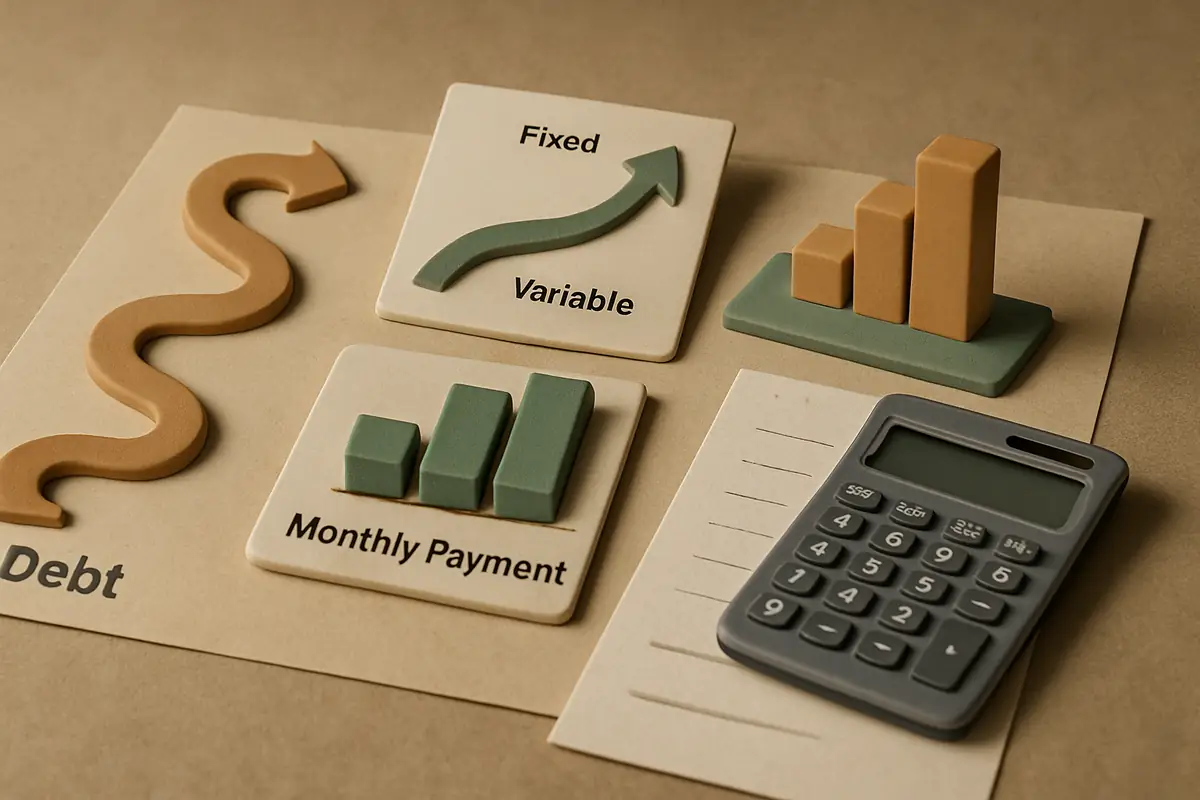
Rate increases also hit loan types unevenly. Fixed-rate loans purchase predictability at today's price; adjustable products start cheaper but carry adjustment risk, moderated only by caps — a common 2/2/5 structure limits the first reset to 2 percentage points, each later reset to 2, and lifetime movement to 5. The stakes scale with size: a $300,000 30-year mortgage costs about $1,896 a month at 6.5% but roughly $2,098 at 7.5%, some $200 more for the identical house. Lenders offset their exposure by reserving the best pricing for scores of 740 and up or asking for extra collateral — further hurdles in an already tighter landscape.
Strategies Borrowers Can Use to Enhance Approval Chances
Prospective borrowers can move several levers before applying. Paying revolving balances down below 30% utilization — the share of available credit in use — improves most scoring models quickly, and since payment history alone drives about 35% of those models, simply keeping every account current through the application window matters more than any single trick. Retiring a small loan entirely deletes its payment from the DTI calculation. Documenting side income — freelance work, a part-time schedule, recurring bonuses — adds verified dollars to the denominator of the ratio and signals resilience when regular earnings are constrained.
Shopping aggressively is the other half. Rate-shopping windows in common scoring models treat multiple inquiries for the same loan type within 14–45 days as a single event, so comparing three to five lenders carries little scoring cost. Credit unions and community banks often price strong local files better than national algorithms, and soft-pull prequalification tools show estimated pricing without any inquiry at all. Brokers and experienced loan officers earn their keep here, surfacing programs — from 3.5% down government-backed routes to the 20% conventional standard — that automated portals would reject.
Long-Term Implications of Cost Increases on Borrower Behavior
Beyond the immediate approval math, rising costs reshape behavior over years. Households delay home and vehicle purchases until the numbers improve, a deferment that slows growth but also builds discipline: more borrowers now target an emergency fund of three to six months of expenses — six to nine for variable incomes — and park it where it earns something, since high-yield savings accounts pay 3.5–4.5% APY while many large banks still offer under 0.5%. Applicants who re-enter the market a year later with lower utilization and thicker reserves often qualify for pricing tiers previously closed to them.
Navigating Interest Rate Fluctuations in Loan Approval
When borrowing costs climb, lenders and borrowers adjust simultaneously, and the approval funnel narrows from both ends. Lenders tighten criteria to protect portfolio quality; borrowers face payments consuming a larger slice of income, so fewer applicants clear DTI thresholds that may themselves drop from 43% toward 40% or less. Each point of rate movement reprices every pending application at once, and understanding how evaluation processes move with the cycle separates well-timed applications from repeated declines at the margin.
Cash-flow stability draws the sharpest scrutiny in expensive credit cycles. Even a modest rate uptick has outsized effects on variable-rate obligations, so lenders ask for more: longer employment histories, two years of returns for the self-employed, documented reserves covering two to six months of payments. For marginal files this can feel prohibitive, though some institutions respond with product design rather than denial — fixed-rate versions of variable products, or capped-adjustment structures — preserving standards while giving stretched applicants a survivable payment path.
The implications run past closing day. A borrower approved comfortably under a lower-rate scenario can find payments unaffordable if a variable rate resets upward two years in — the reason many lenders emphasize fixed-rate options during volatile stretches, and the reason rate locks matter. A typical lock holds pricing for 30–60 days while a loan closes; extensions usually cost a fraction of a point. Weighing that certainty against personal goals and risk tolerance shapes both approval odds and later payment stability.
At the portfolio level, expensive credit suppresses borrowing demand, and institutions respond strategically. Banks and credit unions tilt toward high-quality files with long clean histories, expand secured lending where collateral blunts default risk, and reprice riskier segments upward by several points to cover elevated default probability. The practical consequence for applicants: the gap between the best-priced offer and the worst widens precisely when shopping matters most.
For an individual application, the playbook is concrete. Reduce existing balances to improve utilization ratios, build savings that show up as reserves in underwriting, and consider a well-qualified co-signer where the product allows one, which can move an offer down several pricing tiers. Then shop widely, because risk appetite genuinely varies: one lender's automatic decline is another's approvable file.
Technology shapes the outcome too. Automated underwriting systems now analyze borrower data holistically and update risk models quickly as conditions change, returning decisions in minutes that once took days. The nuance cuts both ways: models recalibrated for rising rates can tighten overnight, yet they also credit offsetting strengths — long tenure, thick reserves, low utilization — keeping viable candidates in the approval pool despite broader cost increases.
Balancing Affordability and Approval: Borrower Considerations
For borrowers in a rising-cost market, affordability is the test that never expires — it matters at approval and at every payment thereafter. Project a realistic budget that includes future rate hikes if the product is adjustable: if the payment still fits with the rate 2 points higher and housing costs still under the 28–30% of gross income benchmark, the loan has genuine margin. Calculators that model multiple rate scenarios, or a session with a fee-only advisor, cost little next to overextension discovered mid-term. The quiet goal is simple: never sign a payment that only works if nothing goes wrong.
When mainstream pricing escalates sharply, keep the alternative channels on the comparison sheet. Credit unions pair competitive rates — often capped at 18% on consumer products — with underwriting that weighs the person as well as the file. Peer-to-peer platforms allow term negotiation that institutional policy sometimes forbids. Whatever the channel, the deciding number remains total cost of credit over the full term; compare three offers on that basis rather than the advertised rate, and the cheaper contract usually reveals itself.
References
- https://www.consumerfinance.gov/consumer-tools/
- https://www.consumerfinance.gov/consumer-tools/credit-reports-and-scores/
- https://www.consumerfinance.gov/consumer-tools/auto-loans/
- https://www.fdic.gov/consumer-resource-center/loans
- https://www.consumerfinance.gov/consumer-tools/mortgages/
- https://www.consumerfinance.gov/ask-cfpb/what-is-the-difference-between-a-fixed-rate-and-adjustable-rate-mortgage-arm-loan-en-100/