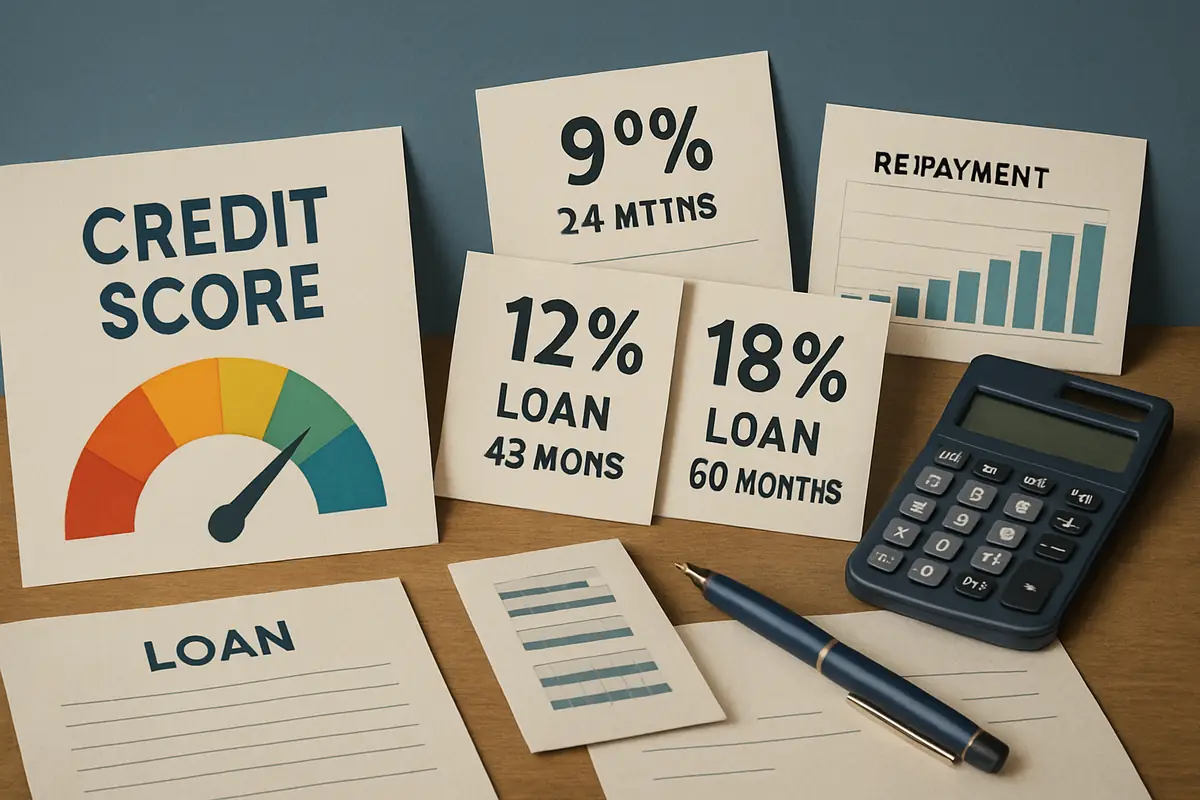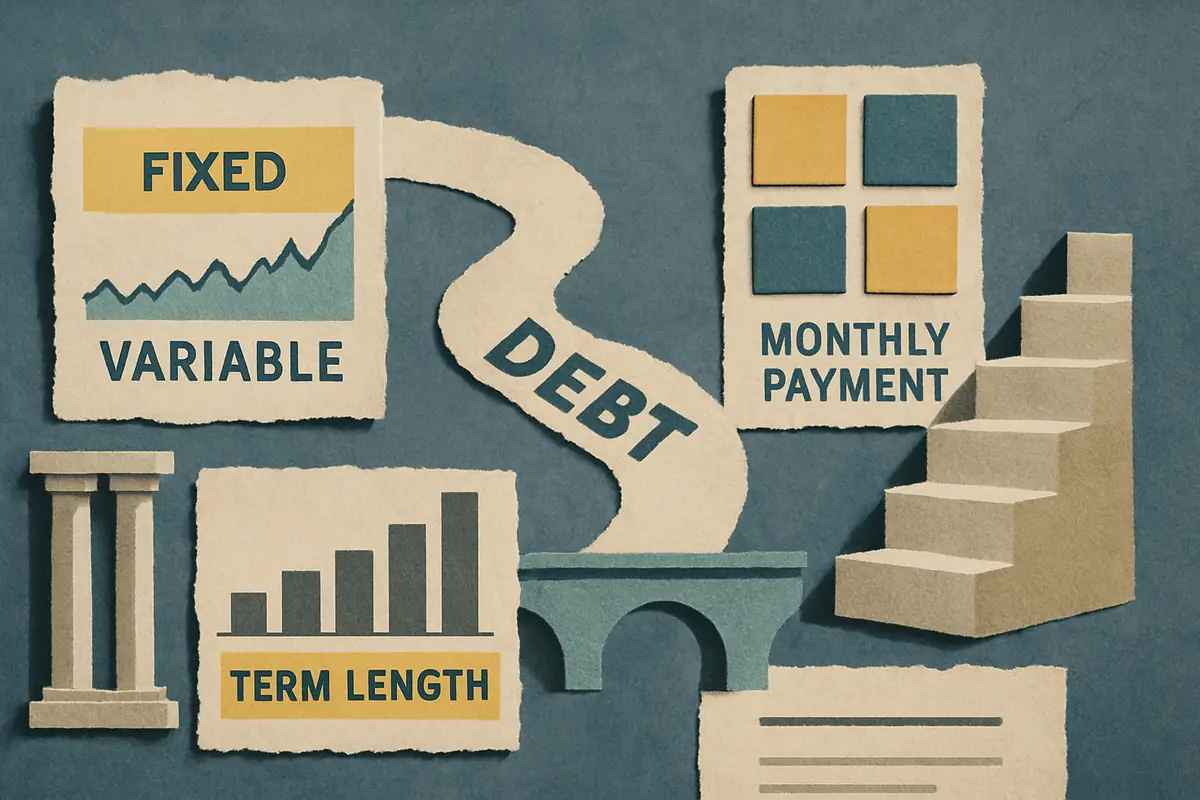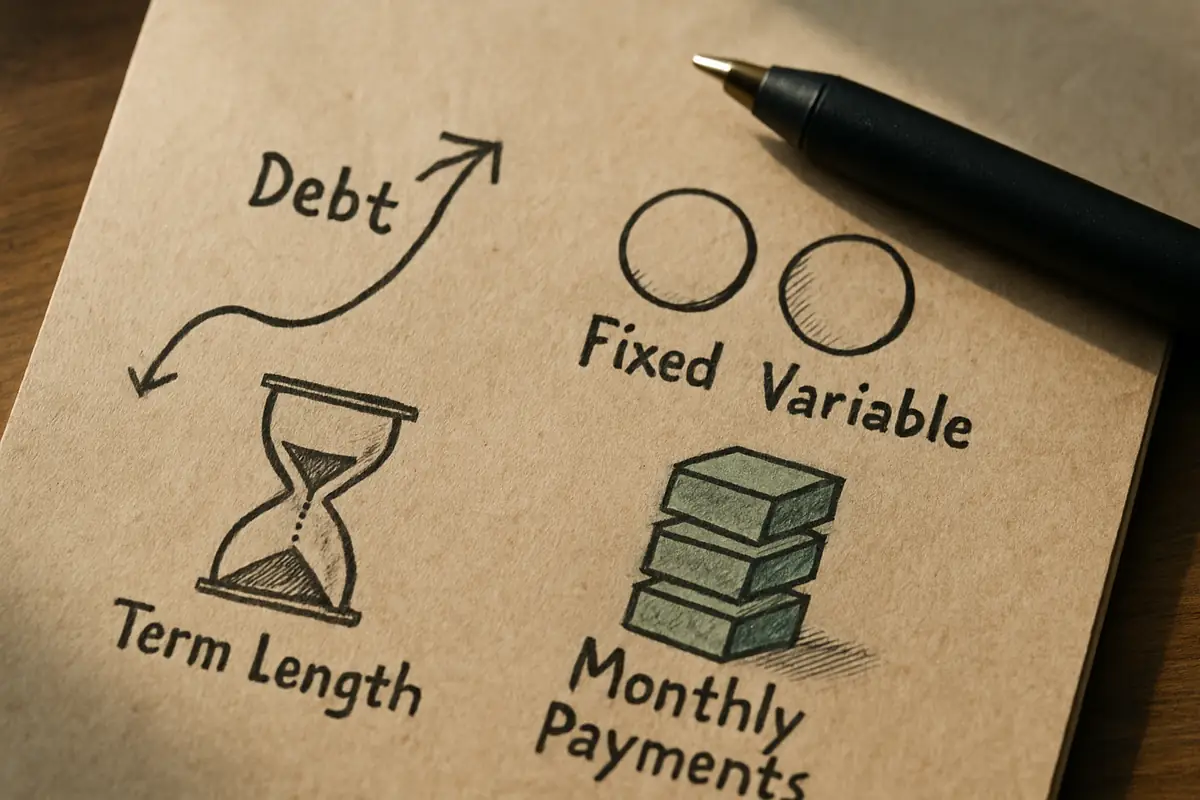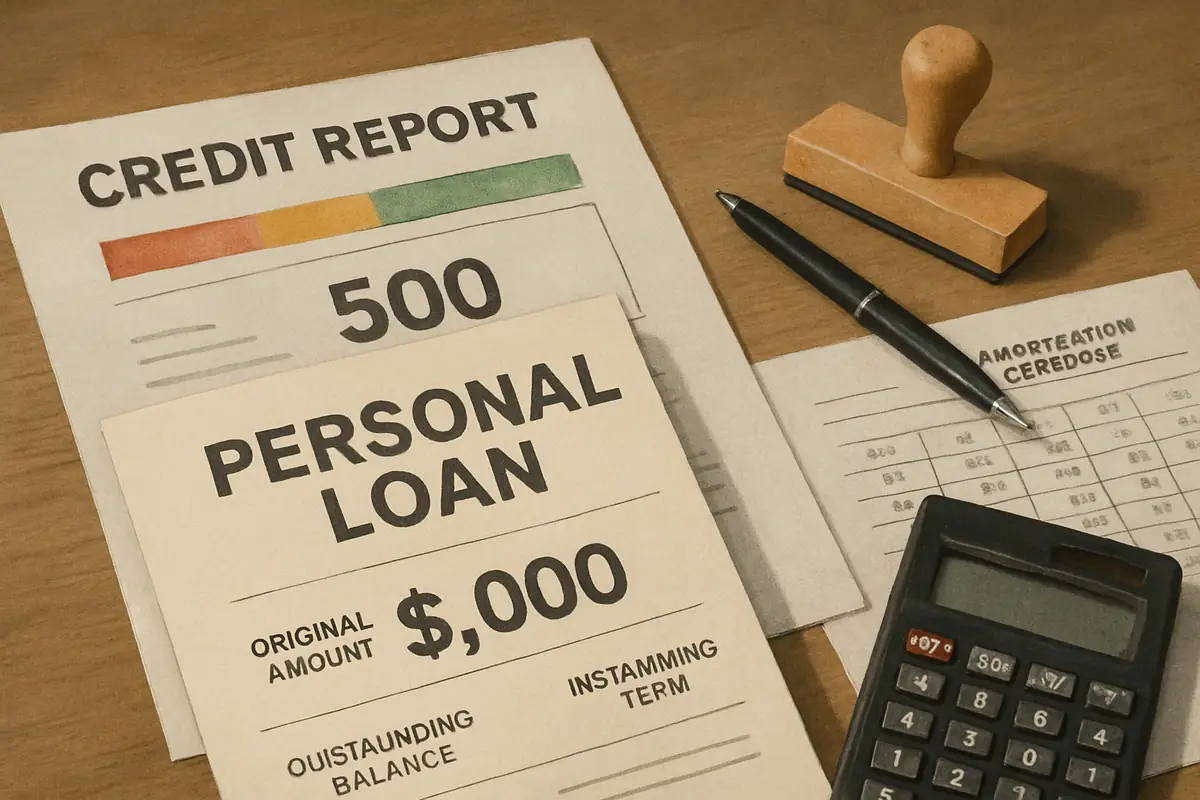
As interest rates and loan fees rise, the true cost of personal borrowing is increasing—often by hundreds or even thousands of dollars over a loan’s life. For example, a $10,000 personal loan that once carried a 7% annual percentage rate (APR)—which is the total yearly cost of borrowing, including interest and some fees—may now be offered at rates of 12% to 24% or higher, depending on creditworthiness. This shift can strain household budgets and limit refinancing options, making it essential for borrowers to understand the full range of cost drivers and contract risks before committing to a loan.
Rising Costs Represent the Core Risk for Personal Borrowers
The main risk borrowers face as lending costs rise is underestimating how much they will ultimately pay. The APR, which reflects the yearly cost of borrowing including interest and certain fees, often does not account for all possible expenses. Borrowers may focus on the advertised interest rate but overlook fees such as origination charges (typically 1% to 8% of the loan amount), prepayment penalties, and late payment fines (which can range from $15 to $50 per occurrence). These extra costs can increase the total repayment far beyond initial expectations.
When base interest rates increase, the time needed to repay loans at affordable monthly payments can also grow. For instance, a $15,000 loan at 9% APR over 5 years has a monthly payment of about $311, but at 16% APR, the payment rises to approximately $365—a $54 monthly difference, totaling $3,240 more over the loan’s life. Fixed monthly payment structures limit flexibility for those with variable incomes, while variable rate loans—where the interest rate can change with market conditions—add unpredictability. If rates rise from 10% to 18% on a variable loan, monthly payments can jump by $60 to $100 per $10,000 borrowed.
| Loan Cost Factor | What It Means | Risk to Borrower |
|---|---|---|
| APR | Reflects annual borrowing cost including some fees | Can be misread as total cost; excludes all fees and variable rate fluctuations |
| Origination Fees | Upfront charges to process the loan (typically 1%-8%) | Increase initial debt; often non-refundable even if loan refinanced early |
| Prepayment Penalties | Fees for repaying loan ahead of schedule (commonly 1%-5% of balance) | Discourage early payoff; can trap borrower in higher-cost debt longer |
| Variable Interest Rate | Rate that can change based on market conditions | Adds unpredictability; payments may rise beyond budgeted levels |
| Collateral Requirements | Assets pledged against the loan | Risk of loss if borrower defaults; increases personal financial exposure |
Borrower Situations That Amplify Risks
Personal loans are often used during periods of financial stress, such as medical emergencies or urgent home repairs. In these situations, borrowers may accept higher APRs—sometimes 20% to 36% for those with less-than-prime credit—without fully assessing long-term affordability. If interest rates or fees rise, a manageable $250 monthly repayment can quickly become unaffordable, leading to missed payments and additional penalties of $25 to $40 per incident.
Debt consolidation is another common use of personal loans, but higher borrowing costs can offset the benefits. For example, consolidating $20,000 of credit card debt at 21% APR into a personal loan at 14% APR seems advantageous, but if origination fees of 5% apply ($1,000 upfront) and the new loan term is extended to 7 years, total interest paid may still exceed $10,000. Some borrowers, after consolidating, resume using old credit lines, resulting in higher overall debt and extended repayment timelines.
How this can look in practice
A borrower secures a variable rate personal loan at 8% APR, planning monthly budgets accordingly. Within a year, market rates climb and the loan’s rate increases to 14%. Monthly payments on a $12,000 balance rise from $244 to $322, a $78 jump. The borrower misses two payments, incurring $60 in late fees and seeing their credit score drop by 40 points.
Contractual Complexities: Advertised Terms vs. Real Repayment
Loan agreements often contain clauses that impact costs and flexibility in ways borrowers may not anticipate. For example, automatic rate adjustments can occur after an introductory period, raising a 7% promotional rate to 15% or more. Late payment fees, which may start at $25 but can increase with repeated infractions, add up quickly. Some contracts include balloon payments—large, lump-sum final payments that can be 20% or more of the original loan amount—catching borrowers off guard.
Collateral requirements, where an asset such as a vehicle or savings account is pledged, introduce additional risk. If a borrower defaults, the lender can repossess or force the sale of the asset, sometimes at a value below market rates, resulting in further financial loss. Understanding all contract features—including amortization schedules (the breakdown of each payment into interest and principal over time)—is crucial to avoid surprises that may escalate financial stress.
Repayment Pressure: The Hidden Burden on Budgets
"Repayment pressure" describes the financial strain caused by loan installment timing and amounts compared to household income. As borrowing costs rise, monthly payments can consume 20% or more of take-home pay for some households, reducing flexibility for emergencies. Fixed payments may seem manageable, but if underlying rates or fees increase, a borrower’s budget can quickly become overstretched.
Soft defaults—such as late or partial payments—often signal trouble before major credit issues occur. For example, missing two payments on a $10,000 loan can result in $50 to $100 in penalties and a credit score drop of 30 to 50 points. This, in turn, can limit access to refinancing options or lower-rate loans, compounding financial stress.
Where Paying Off Personal Loans Quickly Helps
- Reduces total interest paid over loan life—for example, paying off a $5,000 loan two years early at 12% APR can save $600 to $900 in interest.
- Frees up cash flow for other needs, increasing monthly flexibility.
- Improves credit standing by lowering outstanding debt and reducing credit utilization (the ratio of debt to available credit, which impacts credit scores).
Where Caution Is Needed with Early Repayment
- Prepayment penalties, typically 1% to 5% of the loan balance, can offset interest savings.
- Large lump-sum payments may reduce liquidity, leaving less available for emergencies.
- Some contracts restrict refinancing or early payoff, limiting financial flexibility.
Alternatives and a Checklist for Risk-Aware Borrowers
With borrowing costs climbing, carefully weighing alternatives is essential. Delaying discretionary expenses, negotiating payment plans with existing creditors, or seeking lower-cost options such as home equity lines (often 8% to 12% APR) or promotional credit cards (0% APR for 12 to 18 months) may be preferable, though these come with their own risks and requirements.
Before signing any loan agreement, systematically review these key factors:
APR vs Total Cost
Calculate the expected total payment, including all fees, over the loan’s term. For example, a $10,000 loan at 15% APR with a 5% origination fee ($500) over 4 years results in total payments of about $13,360 ($278.34 x 48 months), plus the upfront fee, for a grand total of $13,860.
Term Length
Longer terms (60–84 months) reduce monthly payments but increase total interest paid. Shorter terms cost less overall but require higher monthly payments.
Collateral Requirements
Assess the risk of asset loss if unable to repay. For secured loans, default can mean losing a car or savings pledged as collateral.
Maintaining Control When Borrowing Costs Increase
Disciplined, proactive management is key to successful borrowing in a high-cost environment. Regularly review loan statements and recalculate affordability if rates change. For example, if a variable rate loan rises from 10% to 16%, recalculate monthly payments to spot budget stress early. Avoiding impulse borrowing—especially for non-essential needs—can help preserve financial stability.
Communicating with lenders at the first sign of difficulty can sometimes lead to renegotiated terms, such as temporary payment reductions or waived fees, preventing more severe actions like collateral seizure. Borrowers who understand contract details and seek professional guidance when uncertain are better positioned to avoid costly mistakes.
Rising Interest Rates Influence Borrower Behavior
As interest rates climb, borrowers often change their financial strategies. Personal loan APRs, which ranged from 6% to 12% for top-tier borrowers in recent years, now frequently exceed 15% to 28% for those with average credit. This increase discourages some from taking on new debt, especially if their income remains flat. For example, a household that once financed a $7,500 vacation with a three-year loan at 8% APR may now reconsider or opt for a smaller amount as rates reach 18%.
Not all borrowers respond the same way. Some, facing urgent needs like medical bills or home repairs, may accept higher rates out of necessity. For these individuals, a $5,000 loan at 24% APR results in monthly payments of about $196 over 3 years—over $2,000 in total interest. Borrowers with strong credit scores (typically above 720) may still secure loans near the lower end of the rate range, while those with scores below 640 may face higher costs or be denied altogether, highlighting how rising rates widen disparities in access and affordability.
Lenders Adapt Loan Products to Meet Changing Borrower Needs
In response to higher interest rates and evolving borrower profiles, lenders are introducing more flexible products. Some now offer graduated repayment plans, starting with lower payments that increase over time—helpful for borrowers expecting rising income. Others provide payment holidays or temporary interest reductions for loyal customers or those who improve their credit score by 50 points or more during the loan term. These features aim to keep personal loans accessible even as borrowing costs rise.
Technology-driven lenders are also using data analytics to set rates and terms based on a broader set of risk factors, not just credit scores. This can help responsible borrowers with thin credit files access loans at rates between 10% and 18% rather than being excluded or charged the maximum. Some lenders bundle loans with financial planning tools, helping clients manage debt more effectively in a higher-cost environment.
Credit Scores Grow in Importance as Costs Rise
Credit scores—numerical ratings of creditworthiness based on payment history, debt levels, and other factors—become even more important when rates increase. Borrowers with high scores (700 and above) may see APRs as low as 8% to 13%, while those below 650 may face rates of 20% or higher, or be offered shorter terms and lower amounts. This gap can mean a difference of $1,000 or more in total interest on a typical $8,000 loan over four years.
Maintaining good credit habits—on-time payments, low utilization ratios (debt compared to available credit, ideally under 30%), and avoiding new credit inquiries—can help preserve access to affordable loans. Lenders, meanwhile, are tightening risk models and monitoring portfolios more closely to limit losses as economic conditions shift.
Practical Strategies for Borrowers Facing Higher Personal Loan Costs
Before taking a personal loan in a rising-rate environment, borrowers should compare offers from at least three lenders, as rates can vary by 5 to 15 percentage points. Focus on total repayment amounts, not just the monthly payment. For example, a $6,000 loan at 18% APR over three years costs about $2,000 in interest, while the same loan at 10% APR costs about $970.
Alternatives such as home equity lines of credit (typically 8%–12% APR) or balance transfer credit cards (0% APR for 12–18 months) may offer lower costs for those with strong credit and assets. Building an emergency fund of three to six months’ expenses before borrowing can prevent repayment issues if unexpected costs arise. Open communication with lenders about income changes can sometimes lead to temporary relief or modified payment plans.
Peer-to-Peer Lending and Alternative Financing Trends
Peer-to-peer (P2P) lending platforms, which directly connect borrowers with individual investors, have become more popular as alternatives to traditional banks. P2P loans often feature APRs from 8% to 30%, sometimes beating bank rates for borrowers with good credit. However, as rates rise, investors may become more selective, and platforms may tighten approval standards or increase fees (commonly 1%–6% of the loan amount).
Regulatory oversight of P2P platforms is increasing to protect borrowers from predatory practices as volumes grow. While P2P loans can offer flexibility and competitive rates, borrowers should carefully review platform terms, fee structures, and default policies before proceeding.
Inflation’s Impact on Personal Lending Costs
When inflation rises, the cost of borrowing increases for both lenders and borrowers. Lenders may raise interest rates by 2 to 5 percentage points to offset inflation’s impact on future repayments. For personal loans—which typically have higher rates than mortgages (currently 6%–8%) or auto loans (5%–9%)—even a 2% rate increase on a $10,000 loan can add $400 to $800 in total interest over four years. Consumers must weigh the value of accessing credit against these increased costs.
Inflation also affects real interest rates—the nominal rate minus inflation—which determines the true cost or benefit of borrowing. If inflation outpaces nominal rates, real rates can turn negative, temporarily benefitting borrowers but often leading lenders to tighten standards or reduce loan availability. For example, if inflation is 6% and a loan’s nominal rate is 7%, the real rate is just 1%.
How Borrowers Adjust to Higher Lending Costs
As borrowing costs rise, consumers often reduce loan amounts or shorten repayment terms to limit total interest paid. For example, instead of taking a $15,000 loan over five years, a borrower may opt for $10,000 over three years, reducing total interest even if monthly payments are higher. Some delay major purchases or turn to alternatives like P2P loans or borrowing from family, where rates and terms may be more flexible.
Borrowers are also more likely to compare rates and scrutinize fees. Lenders respond by offering more transparent pricing, flexible terms, and bundled services—such as financial education or credit monitoring—to attract and retain customers. This trend encourages responsible borrowing and helps mitigate the risk of over-indebtedness.
Creditworthiness Takes Center Stage in a High-Rate Environment
When borrowing costs rise, lenders place greater emphasis on creditworthiness. Borrowers with strong credit (scores above 720) can still access loans at 8%–13% APR, while those with lower scores may face rates of 20%–36% or be denied. Maintaining a low debt-to-income ratio (ideally under 36%), paying bills on time, and limiting new credit applications are critical to preserving access to affordable loans.
Lenders may also use alternative data—such as employment history or utility payments—to supplement traditional credit scores. This can broaden access for responsible borrowers who lack extensive credit histories, but may also result in higher rates for those with inconsistent income or payment patterns.
Fintech Innovations Transform Personal Lending Amid Rising Costs
Financial technology (fintech) firms are reshaping personal lending by using artificial intelligence and automation to streamline approvals and tailor offers. Automated underwriting can reduce application times from days to hours, while personalized rates—based on dozens of data points—can help borrowers with non-traditional profiles access loans at 10%–20% APR, compared to higher rates from traditional lenders.
Many fintech platforms offer flexible repayment schedules, transparent terms, and budgeting tools that alert borrowers to upcoming payments. These features help consumers manage loans more effectively, even as costs rise. For example, some platforms allow borrowers to skip a payment once per year without penalty, or to adjust payment dates to align with paychecks.
Practical Steps for Borrowers Taking Personal Loans Now
Consumers considering a personal loan in today’s environment should:
- Calculate total repayment amounts for different interest rate scenarios. For example, a $7,000 loan at 12% APR over four years costs about $1,800 in interest, while at 20% APR, interest rises to roughly $3,200.
- Compare offers from multiple lenders, as rate spreads can range from 5% to 15% for similar borrowers.
- Ensure an emergency fund of three to six months’ expenses is in place before borrowing.
- Explore secured loans, which may offer lower rates (by 3%–8%) if collateral is available.
- Communicate proactively with lenders if repayment challenges arise—some may offer temporary relief or modified payment schedules.
By understanding the full spectrum of costs, risks, and alternatives, borrowers can make informed decisions even as personal lending becomes more expensive and complex.
References
- https://www.consumerfinance.gov/consumer-tools/
- https://www.fdic.gov/consumer-resource-center/loans
- https://www.consumerfinance.gov/consumer-tools/auto-loans/
- https://www.consumerfinance.gov/consumer-tools/mortgages/
- https://www.consumerfinance.gov/ask-cfpb/what-is-the-difference-between-a-fixed-rate-and-adjustable-rate-mortgage-arm-loan-en-100/