Secured loans—those backed by collateral like real estate, vehicles, or savings—make up a significant portion of consumer and business lending, especially when borrowing costs are rising. As interest rates and associated fees increase, the practical benefits and risks of pledging collateral change in ways borrowers must carefully evaluate. Understanding the mechanics of secured borrowing in a high-cost environment is essential to avoid unexpected financial strain or asset loss.
Collateral’s Role Changes as Borrowing Costs Increase
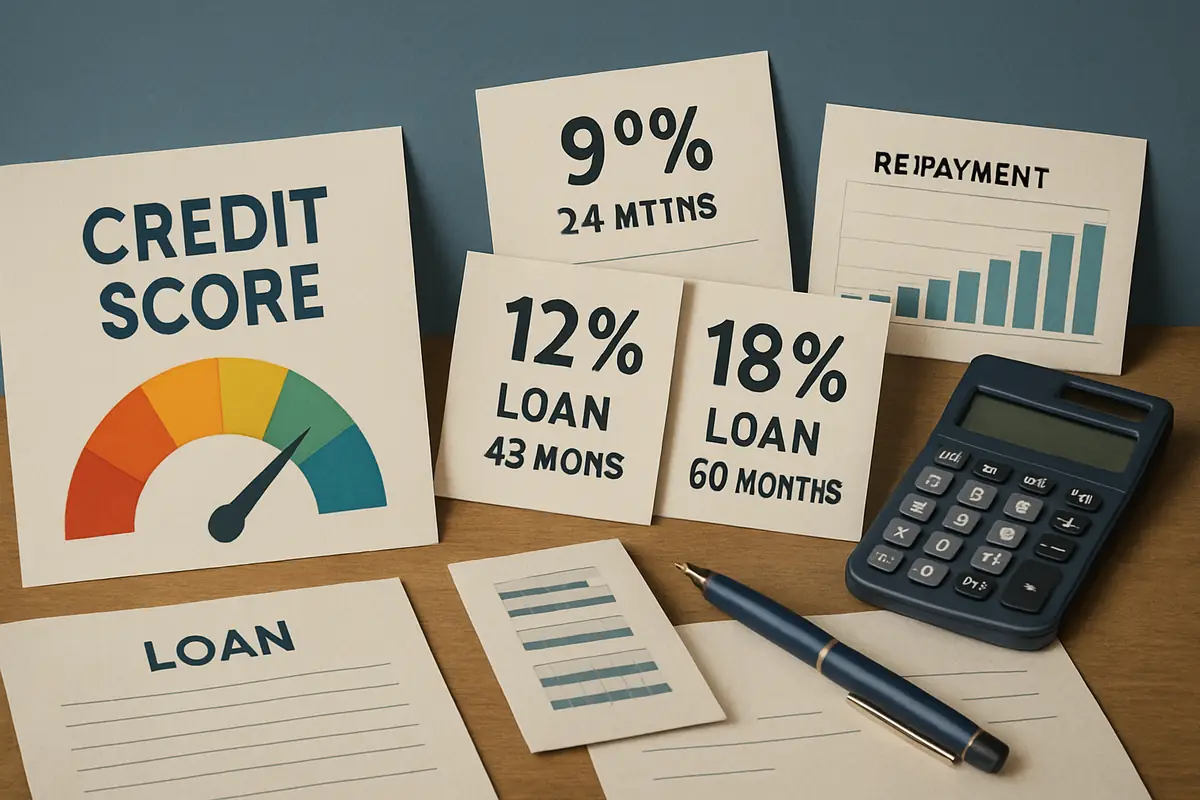
When central banks raise benchmark rates, lenders quickly adjust their loan pricing. Collateral, which refers to assets pledged to secure a loan, typically lowers the lender’s risk and can result in lower interest rates or higher borrowing limits. For example, home equity loan APRs (Annual Percentage Rates, which represent the yearly cost of borrowing including interest and fees) often range from 7% to 12%, compared to unsecured personal loans that may fall between 10% and 24% APR. However, when base rates climb by 2–3 percentage points within a year, both secured and unsecured loan costs rise, and the gap between them can narrow.
Inflation, which erodes the purchasing power of money, also pushes up the costs of collateral appraisals, insurance, and administrative fees. These expenses—routinely $200–$600 for property appraisals and $100–$400 annually for insurance—may increase by 10–25% year-over-year during periods of high inflation. As a result, borrowers must weigh the headline benefits of collateral against the reality of steeper overall repayment obligations and potential asset risk if they default.
It’s common to focus on the quoted APR, but this can obscure the impact of penalty rates (which can reach 24% or more), rigid loan terms, and the risk of forced collateral liquidation if payments fall behind. A full assessment requires looking beyond the surface to all costs, timelines, and risk triggers.
Frequent Borrower Errors When Pledging Collateral in Costly Environments
One frequent mistake is assuming that collateral always guarantees a substantial APR reduction. In reality, if your credit score is below 670 or you’re seeking a loan for a depreciating asset, the difference between secured and unsecured rates may shrink to as little as 1–2 percentage points. For auto loans, for instance, rates for borrowers with fair credit can rise from 7% to 15% within a year of rate hikes, with or without collateral.
A second error is overlooking the inflation of collateral-related fees. Appraisal costs, insurance premiums, and administrative charges—sometimes called expense ratios—often escalate as economic volatility rises. Over a five-year loan, these fees can add $2,000–$4,000 to the total cost, especially on real estate or business equipment loans.
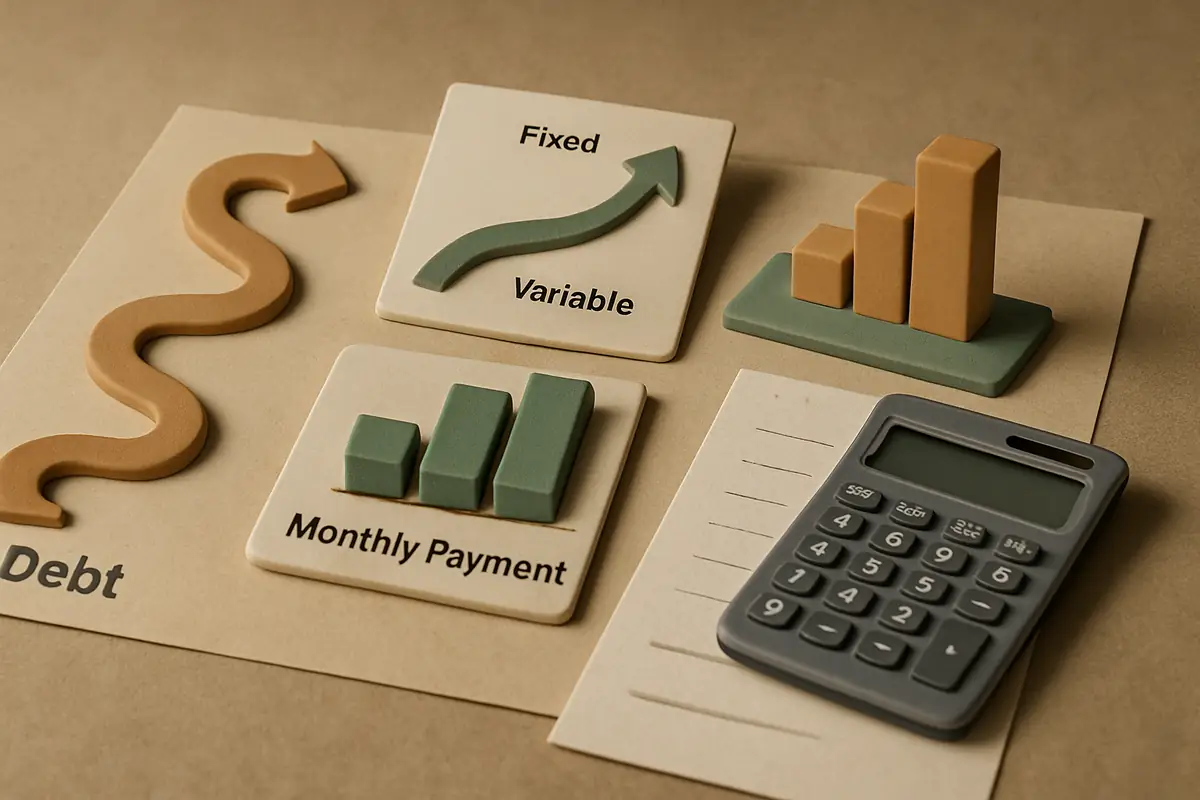
Third, borrowers may underestimate the pressure of higher monthly payments. If a variable-rate home equity line of credit (HELOC) jumps from 6% to 10% APR, a $50,000 balance could see monthly payments rise from about $300 to over $400—a 33% increase. Early repayment or refinancing to escape these costs can trigger prepayment penalties, which may be calculated as 1–5% of the outstanding balance, or force the sale of collateral at a loss if asset values decline.
Where readers should be careful
Warning: Pledging collateral under rising cost conditions exposes you to the risk of losing valuable assets—such as a home or vehicle—if you default. Review all penalty clauses and asset seizure procedures before signing any secured loan agreement.
Collateral’s Value Remains—But Only With Careful Analysis
Despite the challenges, collateral can still unlock better loan terms for qualified borrowers. Secured loans often provide access to larger amounts—up to 80% of asset value for home equity loans or 50–70% for business inventory lines—at lower baseline APRs than unsecured products. For example, a borrower with excellent credit and strong collateral might secure a $100,000 loan at 8% APR, versus 13% for an unsecured loan of the same size.
Some lenders extend repayment periods for secured loans to 10–30 years for real estate, or 3–7 years for vehicles and equipment. While this reduces monthly payments, it increases total interest paid over time—a process known as amortization, where payments are spread out, and more interest accumulates with longer terms. This can be a double-edged sword if rates rise during the loan period.
Where Using Collateral Helps During Rising Costs
- Secured loans often have baseline APRs 2–6 percentage points lower than unsecured equivalents.
- Repayment terms can be extended by 50–200% compared to unsecured loans, lowering monthly payments.
- Loan amounts may be 2–3 times higher due to reduced lender risk.
- Collateral can strengthen your position to negotiate fee reductions, especially for high-value assets.
Where Caution Is Needed Despite Collateral
- Appraisal, insurance, and administrative fees can rise by 10–25% annually in volatile markets.
- Variable-rate loans expose you to negative amortization—where payments don’t cover rising interest and your balance grows.
- Repayment pressure intensifies as debt service ratios (the share of income spent on loan payments) climb above 40%.
- Asset risk increases if default triggers forced sale or repossession, often at below-market prices.
Understanding True Borrowing Costs Beyond Advertised APR
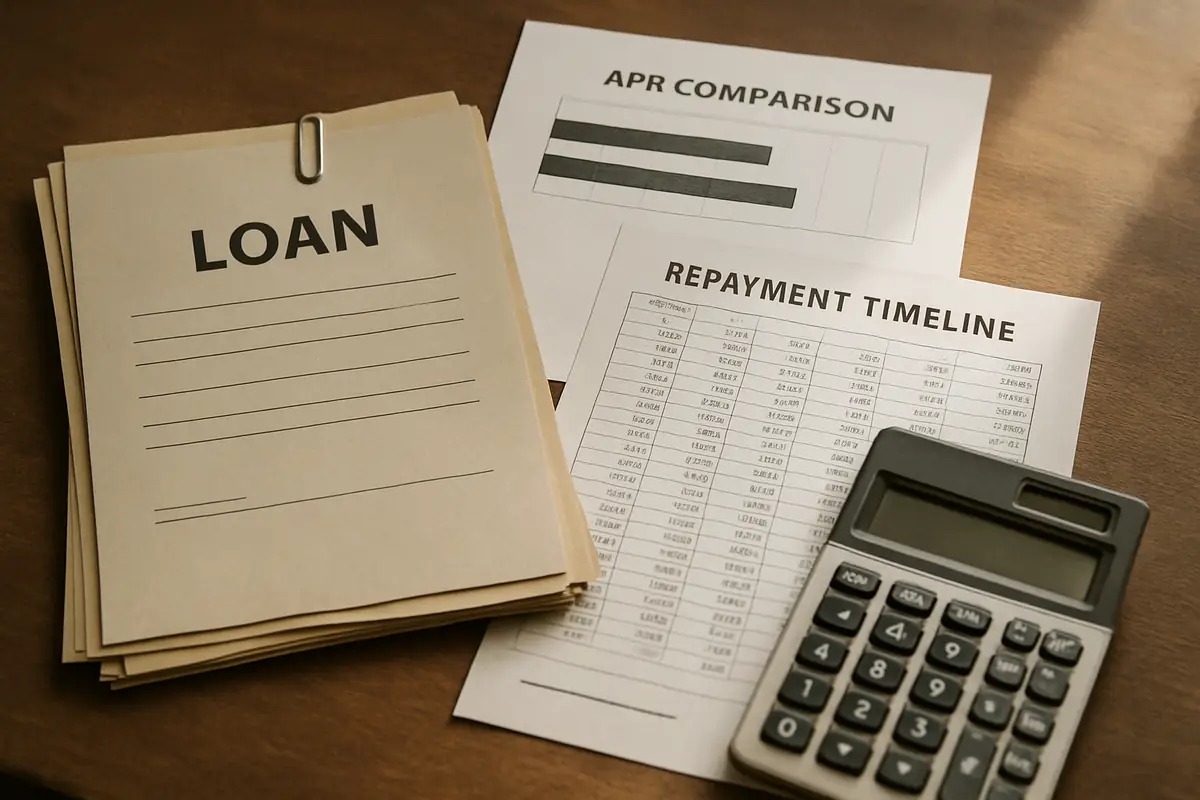
APR, which includes both interest and certain fees, is a useful benchmark but rarely captures the full cost in a rising-rate environment. For example, a $20,000 secured loan at 9% APR over five years may appear affordable, but if annual fees and insurance add $500 per year, the effective cost is closer to 10.2% APR. Over the loan term, this means paying about $4,900 in interest and $2,500 in additional fees—a total cost of $7,400, or 37% of the original amount borrowed.
Term length also impacts total interest paid. Extending a $50,000 secured loan from 5 to 10 years at 8% APR reduces monthly payments from roughly $1,013 to $606, but increases total interest from $10,800 to over $22,700—more than doubling the long-term cost. This illustrates how longer terms can provide short-term relief but increase the total burden, especially if rates are variable and rise over time.
Penalty clauses—such as prepayment penalties (fees for paying off a loan early) or acceleration clauses (requiring immediate repayment upon default)—can add 1–5% to your cost if triggered. These terms are often buried in loan documents but can have significant consequences if your financial situation changes unexpectedly.
Where readers should be careful
Warning: Always request a full breakdown of all fees, penalty triggers, and collateral-related charges before accepting a loan offer. The effective cost can be 1–3 percentage points higher than the advertised APR once all expenses are included.
Worked Example: Collateralized Loan Costs as Rates Rise
How this can look in practice
Suppose you pledge your car (valued at $15,000) as collateral for a $10,000 loan at a starting APR of 7% over 4 years. Your initial monthly payment is about $239. If rates rise and your variable APR increases to 11% after one year, your payment jumps to $258—a $19 increase per month. If annual insurance and appraisal fees rise from $250 to $350, you’ll pay $1,200 in extra fees over the loan term. If you miss payments and the car is repossessed, you could lose an asset worth more than your outstanding balance, especially if resale values fall. This scenario demonstrates how rising costs and fees can quickly erode the apparent savings from using collateral.
This example highlights the importance of stress-testing your repayment capacity and factoring in all possible cost escalations before committing assets.
Evaluating Secured Loan Offers When Borrowing Costs Are High
Begin by asking for comprehensive loan disclosures, including all fees tied to your specific collateral—such as insurance, periodic appraisals, and administrative charges. These can vary by asset type and lender, ranging from $100 for jewelry to $1,000 or more for real estate.
Compare the effective annual percentage rate (APR plus all recurring fees) rather than just the headline APR. Some lenders provide an “all-in cost” estimate, which can be 1–3 percentage points higher than the advertised rate.
Payment Timing
Check that payment schedules fit your cash flow. For example, quarterly payments may not align with monthly income, increasing default risk when costs rise.
Collateral Valuation
Understand how often your collateral will be revalued. If asset prices fall by 10–20%, you may need to pledge additional collateral or face higher rates.
Penalty Terms
Review all penalty triggers, including late payment fees (which can be $25–$50 per incident) and repossession procedures, before finalizing any agreement.
Timeline Factors: Collateral and Rate Hikes
FAQs: Collateral’s Effectiveness in High-Cost Lending
Does putting up collateral guarantee lower interest rates?
No. Collateral typically reduces risk and can lower APRs by 2–6 percentage points, but during periods of rapid rate increases, the advantage may shrink or disappear, especially for riskier borrowers or assets.
Are there hidden fees unique to collateralized loans?
Yes. Common fees include asset appraisal ($200–$600), insurance ($100–$400 annually), and storage or maintenance costs. These can rise with inflation and market volatility.
What happens if I can’t meet higher payments after rate hikes?
Missed payments can result in late fees, higher penalty rates, and ultimately the loss of your collateral if the loan goes into default. Asset seizure timelines can be as short as 60–90 days after missed payments, depending on contract terms.
Can I negotiate better terms on a secured loan in uncertain markets?
Sometimes. Borrowers with high-value collateral or strong credit may secure lower fees or flexible repayment terms, but lenders often tighten standards and lower loan-to-value ratios when volatility is high.
Checklist: What to Confirm Before Using Collateral in Today’s Market
Collateral can be a powerful tool, but its benefits depend on a clear-eyed analysis of all costs, risks, and contract terms. Before committing, confirm the following: you understand all fees (including those that may rise), are aware of penalty triggers, and can withstand higher monthly payments if rates increase by 2–5 percentage points. Scrutinize the loan’s effective cost, not just the APR, and stress-test your finances for worst-case scenarios. Only by approaching secured borrowing with detailed preparation can you protect your assets and avoid costly surprises.
Collateral’s Shifting Role in High-Inflation Periods
When inflation exceeds 5–8% annually, both lenders and borrowers must reconsider how collateral is valued and managed. Collateral—assets pledged to guarantee a loan—can fluctuate in real (inflation-adjusted) value. For instance, a property’s nominal price may rise by 10% in a year, but if construction costs jump by 15%, its replacement value has effectively declined. This gap can prompt lenders to demand lower loan-to-value ratios, often reducing maximum borrowing from 80% to 60–70% of asset value during inflationary periods.
Borrowers may see their asset values rise on paper, but the costs to maintain or insure those assets often climb in parallel. In sectors like construction, annual maintenance expenses can increase by 20–30%, and liquidating collateral may not cover outstanding debts if market prices surge after the loan is issued. Lenders respond by tightening credit standards and increasing required equity buffers, making it harder to borrow against assets during inflation spikes.
As central banks raise rates to combat inflation, borrowing costs can rise by 2–4 percentage points within 18 months. Even with collateral, higher debt service ratios (the portion of income spent on loan payments) can push borrowers toward default, especially if operational costs rise faster than revenues. In these periods, collateral’s effectiveness is closely tied to broader macroeconomic trends and not just its face value.
Collateral Performance in Cost Surge Case Studies
Historical inflationary periods reveal how different types of collateral perform under stress. During the late 1970s, U.S. real estate used as collateral often kept pace with inflation, allowing borrowers to refinance or sell without loss. However, business equipment and inventory, which can depreciate by 10–20% per year, sometimes failed to cover outstanding debts when sold after a default.
In emerging markets, rapid currency devaluation can erode collateral value. For example, if a business pledges equipment valued in local currency and the currency loses 30% of its value in a year, the real value of that collateral to a foreign lender drops dramatically. This risk often leads lenders to require collateral denominated in stable currencies or to apply a 20–40% haircut (reduction) to the asset’s assessed value for lending purposes.
To manage these risks, lenders increasingly use stress tests—modeling scenarios where asset values decline by 10–30% or costs rise by 20%—to set stricter loan terms or require additional collateral. Borrowers who understand these practices can better prepare for renegotiations or margin calls during volatile periods.
Effective Strategies for Borrowers and Lenders in Volatile Markets
Borrowers can strengthen their position by maintaining up-to-date documentation of asset values, repair and maintenance records, and recent market comparables. This transparency can improve loan terms or reduce required collateral. For example, demonstrating a 15% increase in property value with documentation may allow you to negotiate a higher loan amount or lower rate.
Lenders may diversify collateral requirements, asking for a mix of physical assets and liquid reserves, or require periodic revaluations every 6–12 months. Dynamic valuation models, which update collateral worth based on market trends, help manage risk and avoid sudden loan calls if asset prices drop.
Both parties benefit from flexible loan structures, such as adjustable-rate loans with caps (limits on how much rates can rise) or amortization schedules that adjust with inflation. Contingency clauses—triggering collateral revaluation or revised payment terms if costs rise by more than 10%—can help prevent defaults and asset loss.
Technology’s Role in Modern Collateral Management
Technological advances are reshaping collateral management. Digital platforms now track asset values in real time using integrated market data feeds, while automated appraisal tools can update values monthly rather than annually. Blockchain registries provide tamper-proof records of asset ownership and condition, reducing fraud and disputes.
Artificial intelligence (AI) models analyze economic data to predict how factors like inflation or commodity prices might impact collateral values. These systems can alert lenders if a borrower’s asset base is at risk—such as when input costs rise by 20% or market prices fall by 15%—enabling proactive renegotiation or additional collateral requests. For borrowers, these tools offer greater transparency and can help avoid surprises by providing early warnings about potential asset or payment risks.
References
- https://www.consumerfinance.gov/consumer-tools/auto-loans/
- https://www.consumerfinance.gov/consumer-tools/
- https://www.fdic.gov/consumer-resource-center/loans
- https://www.consumerfinance.gov/consumer-tools/mortgages/
- https://www.consumerfinance.gov/ask-cfpb/what-is-the-difference-between-a-fixed-rate-and-adjustable-rate-mortgage-arm-loan-en-100/
- https://www.consumerfinance.gov/consumer-tools/debt-collection/